THE PSYCHEDELIC & TRANSPERSONAL FILM FESTIVAL


FRIDAY, MAY 17th – 7:30PM

FILMMAKERS IN ATTENDANCE!

The Psychedelic Film and Music Festival invites you to an evening of mind altering shorts featuring the best of sci-fi horror, and psychedelia.

ONLINE TICKETS    FACEBOOK EVENT

TRATAK-ANTARS THE ICE AROUND TIME – Ep. 1
dir. Davide Carlini, 2019
Italy, 8 min.

The first chapter of this experimental mid-footage introduces Edam’s experience; a man like everyone who is between the sky and the abyss, between doubt and faith and among the endless “Influences of the Dark.”

CHESS AND THE STRANGER
dir. Charles Ortiz, 2016
USA, 24 min.

A desperate man encounters a stranger eager to play a chess match but the game becomes a path to something more.

CROWNED AND CONQUERING
dir. Zareh Tjeknavorian, 2019
USA, 12 min.

Shot on 16mm film, “Crowned & Conquering” is inspired by the philosophy of the occultist, ceremonial magician, and writer, Aleister Crowley. The work visualizes the alchemical process of chrysopoeia, the transmutation of the spirit from lead into gold: a cinematic allegory of the gnostic path in sight and sound.

MUSICA DE ESFERAS
dir. by Logan Fry, 2019
USA, 7 min.

A brain scan sequence set to music.

PROPOLIS
dir. Pat Wells, 2018
USA, 3 min.

Monsters reside in all of us for a reason.

Liz and Beaux are a sister and brother, trapped in a closet as punishment by an alcoholic mother, but escape means they must face a far more nefarious world outside the doors of the closet.

IN A FOREIGN TOWN
dir. Michael Shlain, 2019
France, 11 min.

Based on the stories of acclaimed horror author, Thomas Ligotti.
A troubled man recounts a strange childhood journey to a town with no name.

EVE
dir. Marcelo Mottola, 2017
USA, 13 min.

Eve, a young teen, is abducted and hidden away in a new city. She becomes captivated with a foreboding house and a young girl that astonishingly is her spitting image. Seduced by the cryptic house and mysterious girl, Eve is infused with their supernatural powers and readied for battle against the very evil that enslaves her.

ARTIST BURLESQUE
dir. John Bickerton, 2018
USA, 7 min.

This film uses found footage, public domain footage and stock footage to create a surrealist tone poem extending the collage techniques pioneered by Cornell in works like “Rose Hobart.”

ALEPH
dir. Jonathan Sirtes-Sharon, 2018
Israel, 5 min.

A writer prolongs his life to write a perfect suicide letter. This is not about death. This is about perfectionism.

STORMS
dir. Joao Pedro Oliveira, 2018
Brazil, 8 min.

A moving meditation on storms. Storms are unpredictable. They move fast and change suddenly. There is rain, static energy, light, noise
and movement. Colors are grey, dark blue white.

Now I am One, 2017
Dir by Gregory Hines
US, 5 minutes

EMOTIONAL TIME: The Films of Henry Jaglom

A true outlier of the American cinema, Henry Jaglom came up as an alum of the famed Actors’ Studio, studying under Lee Strasberg. Jaglom soon settled in Hollywood as a bit part actor, getting work on GIDGET and THE FLYING NUN before landing a memorable role as a hippie on a bad trip in Richard Rush’s PSYCH-OUT. Falling in with the BBS Productions crowd, Jaglom’s directorial debut A SAFE PLACE became a part of their initial slate of game-changing independents alongside Peter Bogdanovich’s THE LAST PICTURE SHOW and Jack Nicholson’s DRIVE, HE SAID.

Armed with the influence of Method acting and the mentorship of late Orson Welles (whose conversations he taped and transcribed), Jaglom’s subsequent directorial trajectory polished an elliptical, improvisational, and emotional style that has earned gushing comparisons to John Cassavetes or quick write-offs as self-indulgence. Jaglom’s troupe of actors often feature former or current girlfriends/wives, family members such as brother Michael Emil, and friends such as Zach Norman, whose real-life relationships are stoked or pushed to emotional extremes. His career has been largely self-funded (and self-promoted on Los Angeles billboards à la Angelyne), and it shows—this is fiercely independent filmmaking whose pace and subject matter are unlike any of the usual California exports. His films have a whole other logic, pace, and timbre: it’s not just cinematic time, it’s emotional time.


SITTING DUCKS
Dir. Henry Jaglom, 1980
USA, 90 mins

THURSDAY, MAY 16 – 7:30 PM
THURSDAY, MAY 30 – 7:30 PM

ONLINE TICKETS                FACEBOOK EVENT

Sparked by the success of EASY RIDER, the road movie came to be the essential American film genre of the ’70s, a pungent metaphor for “dropping out” and American self-searching. To his credit, Jaglom might have helped mount that throne, helping shape Jack Nicholson and Peter Fonda’s cross-country melange in the cutting room as an assistant editor. The motel pools of SITTING DUCKS’ America look a lot different than the backwoods expanse of RIDER, but then again the country had just elected Ronald Reagan. Health-nut Michael Emil and smooth-talking Zach Norman are en route to Central America after stealing a gambling racket’s money, and end up in a relationship merry-go-round. They get in with a cast of characters that include Patrice Townsend, Irene Forrest, and Richard Romanus as a would-be singer-songwriter.


CAN SHE BAKE A CHERRY PIE?
Dir. Henry Jaglom, 1983
USA, 90 mins

MONDAY, MAY 13 – 7:30 PM
TUESDAY, MAY 21 – 10 PM
TUESDAY, MAY 28 – 10 PM

ONLINE TICKETS               FACEBOOK EVENT

Filmed in a roughly 10-block radius in the Upper West Side, CAN SHE BAKE A CHERRY PIE? is Jaglom’s most unmistakably Manhattanite productions, a zany yet gentle comedy-of-manners in the mold of ‘70s Woody Allen and Peter Bodganovich’s They All Laughed. The crux of the film is the neurotic chemistry between Michael Emil, a pontificating nervous-wreck businessman, and Karen Black, an aspiring jazz singer in an unhappy relationship. The film also features Frances Fisher in her first feature role, Michael Ragotta as a pick-up artist birder, and a cameo from a fresh-from-Fridays Larry David.


ALWAYS (BUT NOT FOREVER)
Dir. Henry Jaglom, 1985
USA, 105 mins

MONDAY, MAY 13 – 10 PM
WEDNESDAY, MAY 20 – 10 PM
MONDAY, MAY 27 – 7:30 PM

ONLINE TICKETS               FACEBOOK EVENT

Shot almost entirely in the house that Jaglom and Patrice Townsend once shared and featuring actual home-video footage from their wedding, ALWAYS (BUT NOT FOREVER) tells the story of Judy (Townsend) who drops by her soon-to-be ex-husband David (Jaglom) to celebrate their divorce over a home-cooked meal while they finalize their divorce papers. The film unravels over the course of a July 4th weekend which re-stages their emotionally devastating breakup just a couple years after Jaglom’s and Townsend’s actual real-life split. Co-Starring Melissa Leo (In her very first on-screen role) and featuring incredible cameos by Bob Rafelson, Andre Gregory, and Michael Emil, Always is autobiographical filmmaking of a high order and is as emotionally complex as it is laugh out loud funny.


SOMEONE TO LOVE
Dir. Henry Jaglom, 1987
USA, 111 mins

TUESDAY, MAY 14 – 7:30 PM
THURSDAY, MAY 16 – 10 PM
WEDNESDAY, MAY 22 – 7:30 PM

ONLINE TICKETS               FACEBOOK EVENT

Filmed in a loosely-scripted, quasi-documentary style, Henry Jaglom’s 1987 film is a meandering study of generational loneliness highlighted by musical numbers and intimate direct-to-camera confessionals that increasingly blur the line between reality and fiction. Set in an abandoned old theatre set to be demolished and transformed into a shopping mall, Jaglom plays Danny, a filmmaker, who throws a Valentines Day party to discover why he and his friends are middle-aged and alone. Starring cabaret singer Andrea Marcovicci (Jaglom’s then-girlfriend), Oja Kodar, Sally Kellerman, Michael Emil, and the legendary Orson Welles, in his very last screen role.


NEW YEAR’S DAY
Dir. Henry Jaglom, 1989
USA, 89 mins

SATURDAY, MAY 11 – 10 PM
SUNDAY, MAY 12 – 7:30 PM
SUNDay, MAY 26 – 5 PM

ONLINE TICKETS                  FACEBOOK EVENT

The final of Henry Jaglom’s autobiographical trilogy, NEW YEAR’S DAY features Jaglom as a wayward recent divorcé who, through miscommunication, spends a long January 1st in a soon-to-be-vacated Central Park apartment with three young women each at a crossroads in their personal lives. He takes a special shine to Maggie Wheeler (later known for memorable stints on Friends and Seinfeld), a cartoon voice-over artist and former animal trainer debating her relationship with her brooding (and then-real-life) boyfriend David Duchovny in his silver screen debut. Over the course of a drunken evening gathering, featuring appearances by Milos Forman, Michael Emil, and Rodger Parsons (the voice of the narrator in Pokemon), all three women come to terms with their apprehensions, anxieties, and desires.


TRAIN TO ZAKOPANE
Dir. Henry Jaglom, 2016
USA, 104 mins

SUNDAY, MAY 12 – 5 PM
SATURDAY, MAY 25 – 10 PM

ONLINE TICKETS                  FACEBOOK EVENT

A rare period piece for Jaglom, TRAIN TO ZAKOPANÉ is based on the real-life experience of his father, centered around a Jewish man who falls in love with an anti-Semitic Polish nurse on a train in 1928. An adaptation of a long-running play by Jaglom.

MATCH CUTS PRESENTS: MANSFIELD 66/67

WEDNESDAY, MAY 15th
ONE NIGHT ONLY – 7:30 PM

ONLINE TICKETS    FACEBOOK EVENT

MANSFIELD 66/67
dir. P. David Ebersole & Todd Hughes, 2017.
USA/UK, 85 min.
English.

MANSFIELD 66/67 is about the last two years of movie goddess Jayne Mansfield’s life, and the rumours swirling around her untimely death.

(Text courtesy of IMDB)

MATCH CUTS is a weekly podcast centered on video, film and the moving image. Match Cuts Presents is dedicated to presenting de-colonialized cinema, LGBTQI films, Marxist diatribes, video art, dance films, sex films, and activist documentaries with a rotating cast of presenters from all spectrums of the performing and plastic arts and surrounding humanities. Match Cuts is hosted by Nick Faust and Kachine Moore.

CONTORTING METAPHYSICAL HIJINKS: An Evening With Amir George

SATURDAY, APRIL 27 – 8 PM 
ONE NIGHT ONLY!

ONLINE TICKETS                 FACEBOOK EVENT

Spectacle is thrilled to host Chicago-based multidisciplinary artist and “film alchemist” Amir George for an evolving program of works he likes to call CONTORTING METAPHYSICAL HIJINKS.

Like George’s own short film OPTIMUM CONTINUUM, the evening promises “an ongoing barrage of Blackness always in progress”; George’s work draws from a wide berth of inspiration, including archival material from the Chicago Film Archive (who have also commissioned “meditations” from George), psychedelic soul and funk, the defiantly idiosyncratic films of Sankofa Collective and the “LA Rebellion” and beyond. Even while acknowledging full stop that there’s nothing wrong with “pretty pictures”, George uses cinema to tackle the fetishization of memory and interrogate his own nostalgia towards certain types of images, fragmenting narrative to explore desire and ecstasy beyond the typical tried-and-trues of Black suffering endemic to so much 20th century visual media. Here’s a taste of what the program will include:

DECADENT ASYLUM
2017. 17 mins.

George describes DECADENT ASYLUM as a journey to a higher realm of consciousness, an “experimental fairy tale” in eight parts. A mundane doorman is transported through a broken door that leads him to metaphysical dimensions where he his put through practices of self-alchemy.

THE ENCOMPASSED WISDOM OF THE INEVITABLE MANIFESTATION
2017. 2 mins.

A spell-casting of images, guided by a voice in the light – recollections from Black Jesus.

BLACK CHAINS
2017. 4 mins.

A meditation on how oppression exacerbates interpersonal relations and mental health, connecting chain link fences, colorful street murals, black and white neighborhood defense footage from Chicago communities.

PASSAGES OF EXCESS
2017. 15 mins.

Ethereal movement and its relation to the physical world. Mundane gestures, ideas and images generated over time.

MUM
2016. 3 MINS.

A commissioned project for writer Julie Carr. MUM delves into the psyche and violence of motherhood.

MOMENTS OF INTENTION
2016. 8 mins.

The movement is the voice in the mirror. MOMENTS OF INTENTION is a vibration migrating from winter, spirits working in tandem as a force of creativity.

SHADES OF SHADOWS
2015. 6 mins.

Commissioned by Chicago Film Archives, this film is a collaboration with psychedelic soul band The O’Mys that delves into spiritual mysticism and ritual sacrifice. Created with all-archival footage, the characters in SHADES OF SHADOWS seek to manifest a better self.

AMIR GEORGE is a filmmaker and curator, based in Chicago. ​George is the founder of The Cinema Culture, a grassroots film programming organization, and co-founder, with Curator Erin Christovale, of Black Radical Imagination, a touring experimental short film series. As an artist, George’s films have screened at institutions and film festivals including Schomburg Center for Research in Black Culture, Institute of Contemporary Arts, London, Anthology Film Archives, Glasgow School of Art, The Museum of Contemporary Arts Los Angeles, Museum of Contemporary Arts Chicago, MoMa PS1, Ann Arbor Film Festival, Trinidad and Tobago International Film Festival, BlackStar Film Festival, Afrikana Film Festival, and Chicago Underground Film Festival, among others.

CHANNEL 101

TUESDAY, MARCH 10 – 7:30 PM

Channel 101 is New York’s premiere web video competition. Started by Dan Harmon in LA and brought to New York in 2005, Channel 101 has been showing some of the best, weirdest, funniest, and worst independent and DIY film making in the city for the past 14 years. Each month five brand new 5-minute-or-less mini tv shows are pitted against five returning shows with the audience deciding which shows come back for another episode and which shows get cancelled. Past shows include Animals (HBO), Broad City (Comedy Central) and Channel 101 New York Legend, Cool Cars and Science. Watch all of our past shows and submit your own at ny.channel101.com

TEMPE APOCALYPSE WEEKEND: POLYMORPH

POLYMORPH
dir. J.R. Bookwalter, 1996
86 min, USA

SUNDAY, APRIL 14 – 7:30 PM with director J.R. Bookwalter and star Sasha Graham in person for Q&A.
ONE NIGHT ONLY! 
(This event is $10.)

ONLINE TICKETS    FACEBOOK EVENT

Horror Boobs and Saturn’s Core present POLYMORPH with director J.R. Bookwalter and actress Sasha Graham in attendance for a post screening Q&A.

Lauded as one of America’s most revered regional, genre filmmakers, Akron, Ohio’s resident indie writer / director J.R. Bookwalter created a broad cinematic universe far outside of the Hollywood studio system and inspired a whole generation of backyard movie makers in the process. Horror Boobs and Saturn’s Core Audio & Video are proud to present “Tempe Apocalypse”; a jam-packed weekend of screenings and events all featuring J.R. Bookwalter in person for the first time in the NY area in over a decade.

Join us for a special screening of Bookwalter’s 1996, shot-on-video sci-fi / horror / action mash-up POLYMORPH. Shot on Mini-DV with a script penned by long time collaborator James L. Edwards, POLYMORPH was one of the pioneering feature films of the digital video revolution and remains a fan favorite amongst Tempe loyalists to this day. J.R. will be reuniting with star Sasha Graham (ADDICTED TO MURDER, VICIOUS SWEET) for a Q&A following the feature.

With the recent announcement that Bookwalter’s legendary company Tempe Video will be forever closing its proverbial doors and bidding adieu to the world of cinema, the “Tempe Apocalypse” weekend is certain to be a once in a lifetime, not to be missed happening celebrating the work of one of micro-budget cinema’s most beloved and influential filmmakers.

MERMAID WITH A MOVIE CAMERA: An Evening With Emilija Škarnulytė

SUNDAY, APRIL 21 – 7:30 PM
ONE NIGHT ONLY!
FILMMAKER IN PERSON!
(This event is $10.)

ONLINE TICKETS      FACEBOOK EVENT

What hides behind the veil of infrastructure, invisibly regulated by larger systems of power? Emilija Škarnulytė’s work looks into core questions undergirding the current geological period, wherein human activity continues to produce un-ignorable, worldwide ecological problems. For ONE NIGHT ONLY, the globetrotting Lithuanian filmmaker and installation artist will be at Spectacle for a screening of recent works centered on industry and environment, shot in a variety of locations the likes of which she is clearly obsessed: power plants, underwater research stations, the Super-Kamiokande Neutrino observatory in Japan, or the island of Spitsbergen (located in the Norwegian archipelago of Svalsbard, where the Europe meets the Arctic.)

In her works, Škarnulytė is concerned with the phenomena of neoliberal capitalism so massively distributed across ecosystems that they redefine the traditional notions of thing/place, what cultural critic Timothy Morton calls “hyperobjects”. While playful – perhaps no more so than when she turns herself into a mermaid, or “woman-torpedo”, to swim into a decommissioned NATO submarine base in SIRENOMELIA – Škarnulytė’s short films interrogate the role of people to their new landscapes and (crucially) questions of what happens in the coming strata, after those roles have served their intended purposes.

“My work poses indirect questions. It could be seen as an archaeological expedition into the future, often into inaccessible places: closed empty nuclear reactors, submarine bases, power plants, mines. These places have no humans, there are only artefacts and remains left. Indirect questions are raised, analyzing human activity and invisible structures, trying to make them visible, though not through political activism, but on the basis of mythology… The geological structure remains, observing one stratum of the Earth after another, starting with aerial shots, approaching the ground, going underground, and moving to a microscopic level. It is an inner cross-section of the modern world, opening and flooding with the topics of human violence, desire, greed.” – Emilija Škarnulytė

Programmed in collaboration with Lukas Brašiškis (New York University).

ALDONA
2013. 12 mins.
Lithuania.
In Lithuanian with English subtitles.

In the spring of 1986, Aldona lost her vision and became permanently blind. The nerves in her eyes were poisoned. Doctors claimed that it was probably due to the Chernobyl power plant explosion. The film follows her through a daily sojourn to Grutas Park, touching both the past and the present.


HOLLOW EARTH
dirs. Emilija Škarnulytė and Tanya Busse.
2013. 23 mins.
Arctic Region.
In Lithuanian with English subtitles.

This film examines the dramatic changes to the arctic landscape due to the extraction of natural resources. The work combines archive footage, research material and landscape shots of active drilling sites in Norway and Sweden, presenting them conversely as tourist destinations associated with untamed wilderness and highly contested geopolitical territories at the forefront of debates on climate change.

SIRENOMELIA
2018. 12 mins.
Lithuania / Norway.
In Lithuanian with English subtitles.

Set in far-northern territories where Arctic waters meet rocky escarpments on which radio telescopes record fast-traveling quasar waves, SIRENOMELIA links man, nature and machine and posits possible post-human mythologies. Shot in a decomissioned and abandoned NATO submarine base in Olavsvern, Norway, it’s a cosmic portrait of one of mankind’s oldest mythic creatures—the mermaid. Performing as a siren, Škarnulytė swims through the decrepit facility while cosmic signals and white noise traverse the entirety of space, reaching its farthest corners, beyond human impact.

ENERGY ISLAND
2017. 24 mins.
In Lithuanian with English subtitles.

ENERGY ISLAND invites viewer for an immersive sensorial trip into the Ignalina Nuclear Power Plant in Lithuania, now undergoing a decommissioning process. The images of contaminated ruins transform in the fire, light and shadow; the destruction of the industrial space consistently reveals how Cold War energy structures impact recent geopolitical processes and leave planetary threats over long periods of time. The project takes a geological approach – it reads things that compose this flat landscape as a stack of stratigraphic layers. The man­made space is understood as a sedimentary process and the infrastructures, as well as the mineral resources, are assessed as the key parameters defining a development of the project.

MIRROR MATTER
2018. 12 mins.
Lithuania / Switzerland.
In Lithuanian with English subtitles.

With this film, Škarnulytė links the past and future by exploring the memory of the Super-Kamiokande neutrino observatory in Japan, the Anti Matter Factory and The Large Hadron Collider (LHC) at the European Organization for Nuclear Research (CERN). The film consists of a fictional visual meditation about contemporary science from a retro-futurist perspective, opening with a shot of a digital rendering of the Super-Kamiokande neutrino observatory in Japan, which depicts water pools inside a cylindrical tube filled with mirrors, through which reflections of neutrinos are produced to achieve the speed of light. The slow-panning movement gives a sense of the immensity of the nearly 13,000 photo-multipliers inhabiting this strange vessel. Another sequence of shots imag(in)es the Hadron Collider at CERN, which is the largest particle accelerator and also the biggest scientific facility on the planet. As envisioned by the artist through LIDAR scans, the architecture produces a dynamic, transparent imprint in three dimensions.

EMILIJA ŠKARNULYTE is a visual artist and filmmaker. Poetic and yet informed by science, her films engage non-human temporalities, invisible architectures and systems of power, as well as processes of geoengineering. Škarnulytė studied at the Brera Academy of Fine Arts in Milan and graduated at Tromsø Academy of Contemporary Art. Recent group exhibitions include “Hyperobjects” at Ballroom Marfa, Texas; “Moving Stones” at the Kadist Art Foundation, San Francisco and Paris; and the first Riga International Biennial of Contemporary Art; as well as a new commission for Bold Tendencies, London and a solo show at Künstlerhaus Bethanien in Berlin. She was recently invited to Berlinale Talent Campus and shortlisted for the Future Generation Art Prize.

LUKAS BRASISKIS is a PhD candidate at New York University in the Department of Cinema Studies. He is an active film curator and critic. In his current academic research, Brasiskis examines the history and theory of representation of the non-human in film and media, explores various aspects of contemporary eco-cinema (with an emphasis on Eastern European cinema), as well as investigates intersections of philosophy, cinema and contemporary art.

TWO ADAPTATIONS BY HANS GEIßENDÖRFER


JONATHAN
Dir. Hans W. Geißendörfer, 1971
West Germany. 97 min

TUESDAY, APRIL 2 – 10 PM
SATURDAY, APRIL 6 – 7:30 PM
FRIDAY, APRIL 12 – MIDNIGHT
FRIDAY, APRIL 26 – 7:30 PM (SPECIAL INTRO BY FILMMAKER AND CRITIC SCOUT TAFOYA)
MONDAY, APRIL 29 – 7:30 PM

ONLINE TICKETS        FACEBOOK EVENT

The text of Dracula, authored by a sexually repressed and xenophobic Irish monarchist, has been the perfect backdrop for a century’s worth of questionable cinematic allegory. In 1931, Bela Legosi wore a Star of David under his cape. In 1992, Gary Oldman was the Voivode Vlad, an eternal victor against the Ottoman Empire. In early 70’s Germany, however, there was an allegorical subject too raw to touch—the exception being Hans Geißendörfer and his underseen treasure: JONATHAN.

Geißendörfer uses a krautrock soundtrack and almost Yusov-esque turns of the camera to portray a sunlight-basking, vampire ruling class. Under their control is a landless peasantry, subject to bloodletting and imprisonment by their opulent overlords. Enter a ragtag fellowship of urban vampire hunters, something of an anti-fascist league, who have a plan to drive the vampires into the sea. Jonathan is the scout, assigned to enter the castle of the head vampire and his horde of red-cloaked supplicants. When he arrives, Dracula explains: “If you could see through my eyes, you would understand completely.”

To quote an online review, “Sounds simple enough, right? Wrong. Sounds like an easy plot to follow, right? Wrong.” Let yourself be entranced by the entire atmosphere of this loose Dracula adaptation, which unfolds like a dense 14th century Flemish triptych. You will lose some blood, but only enough to lust for more.


( poster by Henri de Corinth )


THE GLASS CELL
Dir. Hans Geißendörfer, 1978
Germany, 99 min.

FRDIAY, APRIL 5 – 10 PM
FRIDAY, APRIL 26 – 10 PM
MONDAY, APRIL 29 – 10 PM

ONLINE TICKETS          FACEBOOK EVENT

Patricia Highsmith wrote a novel, The Glass Cell, based in part on letters she received from a fan in prison. Out of concern for prison conditions and the lasting damage of confinement, she crafted a crime story of an innocent man who is irrevocably changed by the five years he spends behind bars. It was adapted into a film by Hans Geißendörfer and nominated for an Academy Award in 1978.

Helmut Griem plays Philip, a sad-faced architect and family man. He is found the guilty party of a structural flaw at his company and serves five terrible years behind bars. He leaves prison only to enter a lifeless urban setting, steeped in drab greens and browns. Due to his criminal history, job interviews go nowhere and drinking becomes his distraction. Philip’s wife and son have developed close relationships with another father figure in his absence, namely the lawyer who poorly represented him in court. Hence a new prison-like environment develops within this family unit. It becomes unbearable until it is criminally unbearable…

WIND FROM IRAN: Four by Kamran Heidari

So far, Iranian director Kamran Heidari’s 2012 documentary MY NAME IS NEGAHDAR JAMALI AND I MAKE WESTERNS is his only film to receive any exposure in the States, and even that has been fairly limited. Hopefully, this series, which presents the New York premiere of his  2014 documentary DINGOMARO and world premiere of his latest, NONE OF YOUR BUSINESS, can help remedy that. Born in 1977 near the city of Shiraz, Heidari began directing films after graduating from college.  Parallel to that work, he has built up a substantial body of work as a photographer. The four  films included in this series insist on the specificity of  Shiraz and the south of Iran. At the same time, they exist in a dialogue that acknowledges national boundaries as well as the power of culture to bypass narrow nationalism. NEGAHDAR JAMALI engages in a complex feedback loop between American and Iranian cinema, while DINGOMARO and, to a lesser extent, NONE OF YOUR BUSINESS show how the power of the African diaspora’s music extends to Iran.

Programmed in collaboration with Steve Erickson. Special thanks to Garineh Nazarian, Maaa Film, and Mehdi Omidvari.


MY NAME IS NEGAHDAR JAMALI AND I MAKE WESTERNS
(من نگهدار جمالی وسترن میسازم)
dir. Kamran Heidari, 2012
65 minutes. Iran.
In Farsi with English subtitles.

SUNDAY, APRIL 7 – 5 PM
THURSDAY, APRIL 18 – 10 PM
SATURDAY, APRIL 20 – 7:30 PM
SATURDAY, APRIL 27 – 10 PM

ONLINE TICKETS          FACEBOOK EVENT

Paraphrasing a famous John Ford quote, this film profiles Negahdar Jamali, a director who lives in Shiraz and makes micro-budget Westerns in the desert outside the city. Having started out with silent Super-8 footage, living in poverty and spending all his spare money on this work, Jamali dreams of being accepted by his country’s film industry and being able to work on a much larger scale. However, the kind of movies he makes are too influenced by American culture, even if he has made sure that his Tarzan conforms to Islamic standards of modesty instead of appearing nude. Producers would prefer that he made actions films about the Iran/Iraq war, instead of setting films in Death Valley a century ago.

MY NAME IS NEGAHDAR JAMALI AND I MAKE WESTERNS falls into a tradition of reflexive Iranian movies about filmmaking and directors that includes Abbas Kiarostami’s CLOSE-UP and THROUGH THE OLIVE TREES, Mohsen Makhmalbaf’s SALAAM CINEMA, and A MOMENT OF INNOCENCE, Jafar Panahi’s THE MIRROR and most recently, Mani Haghighi’s PIG. It departs from them in that there’s very little roleplay on Heidari’s part here; the film presents itself as a Western of sorts while always remaining a documentary. MY NAME IS NEGAHDAR JAMALI AND I MAKE WESTERNS remains upbeat, even celebratory, for its first two thirds, as Jamali buys costumes for his films and talks about his plans to the camera. Then, life intrudes.

Ultimately, MY NAME IS NEGAHDAR JAMALI AND I MAKE WESTERNS strikes a more ambivalent tone than one would initially expect. Jamali has made a choice between art and his family, and he’s not very kind to his wife and son as a result. Indeed, his son calls Heidari a “fag” and “asshole,” apparently because this documentary’s project has taken so much time away from his father. In the film’s final stretch, Jamali provides pleasure to his community (he holds both rehearsals and screenings in the open air) but winds up as lonely and isolated as many heroes in American Westerns. MY NAME IS NEGAHDAR JAMALI AND I MAKE WESTERNS ends with an extreme long shot of Jamali riding alone on desert roads, to the tune of Ennio Morricone.

“His {Jamahli’s} minimalism and no-budget, semi- experimental films, like a crossover between the poorest of B westerns and Jack Smith, stands out as ultra primitive drafts of {Budd} Boetticher’s westerns, and, on the other hand, his individualism puts him is the same category as Randolph Scott’s laconic avengers.” – Ehsan Khoshbakht

( poster by Tyler Rubenfeld )


DINGOMARO
(دینگه‌مارو)
dir. Kamran Heidari, 2014
66 min. Iran.
In Farsi with English subtitles.
(Note: depicts animal slaughter briefly in the context of a religious ceremony.)

WEDNESDAY, APRIL 3 – 10 PM
THURSDAY, APRIL 11 – 7:30 PM
SUNDAY, APRIL 14 – 5 PM
WEDNESDAY, APRIL 24 – 10 PM

ONLINE TICKETS           FACEBOOK EVENT

Dingomaro is a wind that sweeps Iran from the African coast. It’s also the nickname of musician Hamid Said, adopted proudly to reflect his African heritage. A population of black Iranians live in the south of the country, having arrived both from voluntary immigration and slavery, but they’ve been almost entirely absent in the country’s arthouse films. (The recent HENDI AND HORMOZ, which played the Iranian Film Festival NY in January, is an exception.)

Heidari films Said, in the wake of his hit “Bad Shans” (“Hard Luck” in English), traveling around the province of Hormozan as he organizes a concert celebrating Afro-Iranian roots. This is his most joyful documentary. Sajjad Avarand’s cinematography – three different cameramen, including Heidari himself, shot the film – captures the region’s immense natural beauty without any of the ironic or melancholic undertones of MY NAME IS NEGAHDAR JAMALI AND I MAKE WESTERNS. (The two films’ endings rhyme exactly.) It’s a documentary that Jonathan Demme could have made.

However, it doesn’t focus wholly on music, never playing a song all the way through. As cheerful as it is, it’s not without drama, stemming from tension within families. But that gets defused at a father-son concert mixing hip-hop with older forms of Iranian pop. Racism is never expressed overtly in DINGOMARO, but the invisibility of black Iranian identity bites at Said. It’s the reason why he thinks his heritage needs to be explicitly pointed out and celebrated. When he meets up with his friend and fellow musician Carlos Nejad, Carlos says “our younger generation doesn’t even accept that they have African roots… I don’t even know why insist so much that you’re African.” While music is the main means by which DINGOMARO’s subjects assert their blackness, the film also shows ceremonies of the Zar sect, which mixes Shia Islam and indigenous African traditions in a manner akin to Santeria.


ALI AQA
(علی آقا)
dir. Kamran Heidari, 2017
82 mins. Iran/France/Switzerland.
In Farsi with English subtitles.

THURSDAY, APRIL 4 – 7:30 PM
MONDAY, APRIL 15 – 7:30 PM
FRIDAY, APRIL 19 – 10 PM
SUNDAY APRIL 28 – 5 PM

ONLINE TICKETS          FACEBOOK EVENT

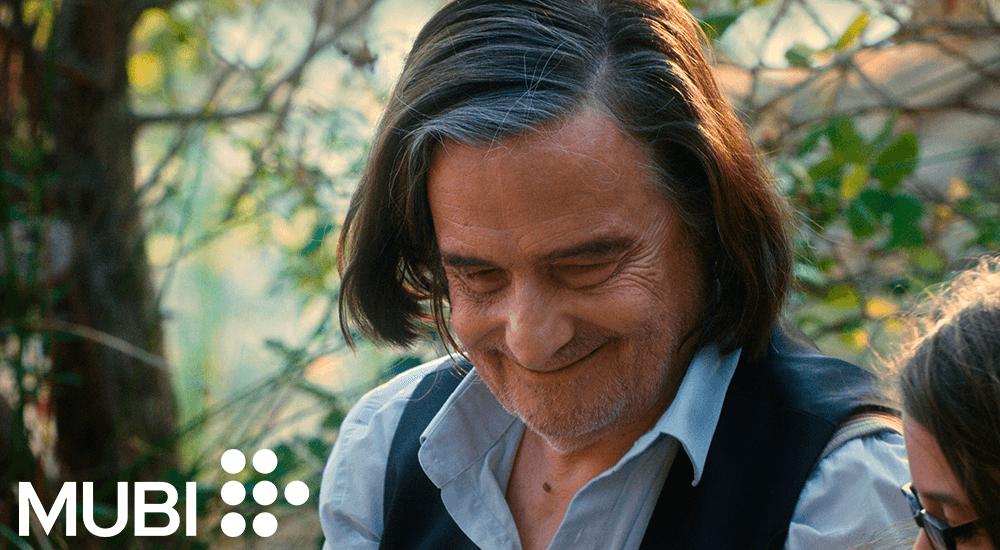
If I AM NEGAHDAR JAMALI AND I MAKE WESTERNS is a mostly sympathetic treatment of male obsession, ALI AQA returns to the subject with a much darker tone. Instead of profiling an artist, Heidari chose Ali Aqa, a man devoted to the pigeons whom he keeps on the roof of his apartment building. Ali pays more attention to the birds’ health than this own; his wife points out that he’s willing to perform surgery on them while delaying an operation that he needs himself. Now 70, he looks like an aging biker or Grateful Dead roadie, with white hair past his shoulders and a full beard. But he turns out to be a rage machine. There’s a stereotype that some people’s love for animals is actually an expression of misanthropy and contempt for their fellow humans, and in Ali’s case it’s quite true. He’s diabetic and starting to have difficulty getting around, but does nothing to try and preserve his quality of life.

Around the 45-minute mark, something happens which alters one’s perception of Ali: he goes from being a grumpy old man to a danger to the people around him. And while Heidari obviously isn’t a passive observer, Ali and his wife show their awareness of the camera. The film becomes a reflection on the responsibility of documentarians towards their subjects. On the website of the International Documentary Film Festival Amsterdam, Heidari revealed to Mark Baker that “Ali told us not to meddle with his personal life ever again, and even banned us from visiting his home for a while. But after some discussion with him, everything got back to normal and we resumed shooting.” A key moment is edited from the film, although after one has seen it, it’s quite clear what has happened. With this film, Heidari put his body (and camera) on the line in a way that raises the stakes considerably from the friendlier subjects of I AM NEGHADAR JAMALI AND I MAKE WESTERNS and DINGOMARO.

ALI AQA evolved from Heidari’s interest in photographing pigeons. The project started out as a documentary about them, but he settled on depicting men who love the birds instead. While it respects Ali’s passion, one watches in dismay as the film reveals his enthusiasm devolving from a healthy hobby to something that detracts from his attention to his family. If I AM NEGAHDAR JAMALI AND I MAKE WESTERNS had a similar underlying drama, ALI AQA raises it to the level of overt critique. But it makes one understand that Ali is trying to find something therapeutic in his pigeons that he can’t get from people, even if this is a largely failed quest.

NONE OF YOUR BUSINESS
(واکس چه)
dir. Kamran Heidari, 2019
67 mins. Iran.
In Farsi with English subtitles.

TUESDAY, APRIL 2 – 7:30 PM
TUESDAY, APRIL 16 – 7:30 PM followed by a Skype Q&A with Kamran Heidari
THURSDAY, APRIL 25 – 7:30 PM

ONLINE TICKETS        FACEBOOK EVENT

NONE OF YOUR BUSINESS is named after a song by Ibrahim Monsefi, which gets played in several versions during the film. Near the end, its narrator says “how I lived and died is up to me.” Nevertheless, this fictional autobiography tries to reconstruct his life without turning it into a conventional narrative. The film begins with images of the skyscrapers of Bandar Abbas, the city where he was born, taken from a drone. Most of it consists of drifting camera movements, relying heavily on drones, that try to capture the perspective of a person walking slowly while high on heroin. Monsefi died of an overdose of that drug, possibly deliberately. After descending from the sky, the camera takes us to the room where he died.

Heidari and two other screenwriters created a voice-over told by the dead Monsefi. He starts the film by taking about his early life, bringing us to his childhood home and the Hindu temples where he first got a taste of the power of music. As the camera travels around Bandar Abbas, musicians perform Monsefi’s songs in the city’s streets. (It’s reminiscent of the great Brazilian singer/songwriter Caetano Veloso.) While not overtly concerned with race in the same way as DINGOMARO, NONE OF YOUR BUSINESS still showcases the diversity of Southern Iran, emphasizing the coexistence of Islam and Hinduism and the presence of black Iranians.

Mixing elements of fiction and documentary, it tells the story of Monsefi’s life. If the voice-over moves ahead in a fairly linear manner, the images rarely simply illustrate his biography. Instead, the film takes many detours to enjoy the street life of Bandar Abbas and the pleasure of listening to Monsefi’s music. Real and fictional stories of musicians whose early promise – at his peak, Monsefi wrote poetry and acted in addition to his songwriting – vanishes in a haze of drugs may be very common, but NONE OF YOUR BUSINESS is formally unconventional enough that it never feels remotely like a BEHIND THE MUSIC episode. It uses home movie footage gingerly, but its most powerful moment is the ending, where a grainy video of Monsefi performing the title song disappears into flickering electronic snow.

STEVE ERICKSON is a film and music critic who writes for Gay City News, Cineaste, the Nashville Scene, Studio Daily and Kinoscope. He has written and directed 6 short films. His first foray into film programming was Anthology Film Archives’ Mehrdad Oskouei retrospective in February 2018.

KAMRAN HEIDARI was born in Gachsaran, near Shiraz, in 1977. He is a freelance documentary filmmaker and photographer, with an interest in street photography, graffiti and ethno-music. His work focuses on film and photography about the people of Shiraz (Fars Province) and the South of Iran. MY NAME IS NEGAHDAR JAMALI AND I MAKE WESTERNS was screened at many festivals around the world, including the 2013 Busan International Film Festival and Rotterdam.