FEBRUARY MIDNIGHTS

LASER_MISSION_BANNER LASER MISSION
Dir. BJ Davis, 1989
USA, 84 min.

SATURDAY, FEBRUARY 1 – MIDNIGHT

On Saturday February 1st at MIDNIGHT, we are celebrating what would have been the 49th birthday of BRANDON LEE. Who is that, you ask? You’re reading this on a computer, right?

Before he was THE CROW (but definitely after his LEGACY OF RAGE), Lee was Michael Gold – a cocky, self-righteous asshole who upends his fully free agent status and chooses to accept a LASER MISSION on offer from the CIA (but, like, eschewing CASH MONEY USA in favor of action man SWAGGER ethics). There’s something about the WORLD’S LARGEST DIAMOND gone missing, along with some LASER expert (expertly lazied by ERNEST BORGNINE) being held in Angola (or somewhere) by the KGB (or Cuban military or some Austrian madman or something). All this adds up to is TROUBLE and the potential END of the WESTERN WORLD as we KNOW IT. When not donning gross disguises to fool bumbling cartoon humans, Gold is totes in NEGGING WAR III with terminal television episoder DEBI MONAHAN (who may or may not be portraying a daughter or a double agent or whatever).

Even if you HAVE seen LASER MISSION, you won’t want to MISS our special WIDESCREEN presentation, with all the EXPLOSIVE action (and sometimes admittedly great wide tracking shots) as NEVER BEFORE SEEN in domestic US BARGAIN BINS and FIFTY-FILM DVD collections. Unfortunately we weren’t able to get our hands on the legendary FULLY UNCUT version on GERMAN VHS, but if you come by SATURDAY FEBRUARY 1ST, maybe we’ll SHOW you some STILLS AND talk you THROUGH THE cuts.

If you HAVEN’T seen LASER MISSION, then grab your favorite brand of adult diapers and head the hell over here. Sounds appealing? Then make like an ORANGE and GET JUICED.


PIZZA_BANNER

ARTIFACT VIDEO CLUB PRESENTS
PIZZA
Karthik Subbaraj, 2012
India, 127 min.
In Tamil with poor yet remarkably effective English subtitles

Artifact Video Club is conceptually premised upon screening international bootlegs of popular cinema. See end of description for notes on quality.

FRIDAY, FEBRUARY 7 – MIDNIGHT

What is two hours long and kicks ass? PIZZA.

You have never seen a movie like PIZZA. This charming and offbeat Kollywood romantic horror comedy thriller is sort of like a mix between Edgar Wright, Luis Buñuel, Henri George Clouzot, Nora Ephron, and pizza. It’s about a guy who delivers pizza and is compelled to marry his live-in girlfriend, an aspiring horror novelist, following an unexpected pregnancy. But after the protagonist suddenly finds himself participating in the exorcism of his boss’s daughter, really weird stuff — like, weirder than randomly participating in the exorcism of his boss’s daughter — starts to happen.. Forty minutes in, PIZZA ruptures into an extended, hallucinatory, and terrifying horror film sonata before taking another left turn or two through mystery and thriller genres and delivering a hot, satisfying conclusion. It leaves one feeling really, stupidly great. Movies really don’t get as sweet, terrifying, strange, smart, and funny as PIZZA.

Audiences agreed. PIZZA was a huge critical and commercial success in Tamil cinemas and has already been remade in Kannada, Bengali and Hindi, dubbed into Telugu, and followed up with a generally unrelated sequel, PIZZA II: VILLA, in which the title food, pizza, appears to play an even more tangential or perhaps even non-existent role.

Anyway, as with life itself: Kollywood cinema simply does not get better than PIZZA.

This is the second screening of Spectacle’s unauthorized contemporary international pop cinema bootleg midnight screening series ARTIFACT VIDEO CLUB. Nodding to our international colleagues running Ghana movie clubs and VCD videotheques, AVC is an intrepid exploration of vernacular cinema from around the globe. Intentionally half-baked in concept and execution, AVC dwells in the ether between armchair anthropology, misapplied critical theory, and superfried midnight madness.

Please be advised that PIZZA will be served with piracy-prevention watermarks and superimposed anti-smoking warnings that appear every time anyone smokes a cigarette. Which is a lot, ‘cause delivering pizzas is stressful!!!


samurai_banner

SAMURAI REINCARNATION (Makai tenshô)
Dir. Kinji Fukasaku, 1981
Japan, 121 min.
In Japanese with English subtitles

SATURDAY, FEBRUARY 8 – MIDNIGHT

“I don’t want a sword that can only kill human beings. I want to kill devils.”
Director Kinji Fukasaku (Battle Royale, Graveyard of Honor) teams up with his old pal Sonny Chiba (The Street Fighter series) facing off against Kenji Sawada (The Happiness of the Katakuris) for all the supernatural swordfighting you can handle in Samurai Reincarnation. After the defeat and massacre of his troops, a general renounces God and sells his soul for the ability to bring the dead back to life, building an undead army. Meanwhile, swordsman Yagyu Jubei seeks an evil sword able not only to kill people but demons as well. From here, there’s swordfights aplenty (no surprise this film was the inspiration for the video game Samurai Showdown), crazy effects, jaw-dropping award-winning art direction and more of everything — those expecting a staid Edo-era period piece might not like it, but any cold-as-ice Chiba fan will be delighted. There’s even an unhealthy dollop of nudity and Roman porno-style sexual depravity for the midnight trenchcoat crew! Keep an eye out for a small role by Tomisaburo Wakayama (Lone Wolf & Cub)!


VDN_bannerVASE DE NOCES
(aka Wedding Trough, aka The Pig Fucking Movie)
Dir. Thierry Zéno, 1974
Belgium, 79 min.

Special thanks to Thierry Zéno

SATURDAY, FEBRUARY 15TH – MIDNIGHT

40TH ANNIVERSARY! FIRST US SCREENING IN 20+ YEARS!

[TRIGGER WARNING: Contains simulated scenes of animal cruelty, animal killings, bestiality, defecation, coprophagia, and unsimulated scenes of vomiting and live animal birth.]

A nightmarish, haunting dirge with an often-maligned reputation, VASE DE NCOES is a notorious 1974 film concerning a lone farmer’s sexual relations with his favorite sow. And while the subject matter is shocking, it’s certainly not in the name of exploitation. In fact, there’s a fair amount going on for a film infamously bestowed the US title of ‘The Pig Fucking Movie’…

Set in a post-apocalypse rural farm, the unnamed man tends to his daily activities, before eventually fixing his eye on a large sqealing pig. A few fantasies later, the farmer finds himself alone with his love interest and they copulate, with the pig eventually giving birth to three piglets. When he takes an invested interest in raising them, the piglets try to rejoin their mother, setting off a chain of events that push the film into darker and more phantasmagorical territories…

Completely devoid of dialogue, fermented in Year Zero bleakness, shot in monochromatic black-and white and featuring a raucous sound design of Gregorian chants, early electronic synthesizers, and animal wailings of all kinds, the film feels beamed from another plane of existence. Indeed, its comparisons to Eraserhead are justified in the technical and aesthetics departments, though interestingly it was released two years prior to David Lynch’s debut.

The last exit on the fringe film highway, VASE DE NOCES is a film more whispered about than actually seen, chiefly due to its extremely limited screenings since its initial festival run (which included Cannes and New Directors/New Films, amongst others). Finally, in 2009, German distributor Camera Obscura granted the film its first-ever official release and a new restoration, though the film is still not commercially available in the US. Working with director Thierry Zéno, Spectacle is proud to present the new restored digital version of this legendary arthouse oddity on the occasion of its 40th anniversary.

“Both obscene and spiritual… not for the squeamish.” -MoMA

“A journey to the end of the night… a mystical allegory… continuously fascinating, continuously disquieting.” -Film Comment

“This bizarre, hypnotic, humorless tale of a demented farm boy and his four-legged barnyard sweetheart may be the ultimate in solipsistic filmmaking. Whatever one’s reaction to it… it cannot be passed of as a mere piece of cinematic sensationalism… a combination of grand-guignol, theatre-of-cruelty and demonic mysticism…” -Buck Henry


APbanner

ANIMAL PROTECTOR
Dir. Mats Helge, 1988
Sweden/USA, 96 min.

FRIDAY, FEBRUARY 21 – MIDNIGHT

Like Spectacle after-dark idols Godfrey Ho (HARD BASTARD) and Arizal (AMERICAN HUNTER), Swedish filmmaker Mats Helge singlehandedly helmed dozens of cornea-crushing Z-grade action pictures in the 70s and 80s, only a fistful of which are accounted for today. Perhaps second-famous after his much-whispered-about THE NINJA MISSION, ANIMAL PROTECTOR sees Helge standing at the cynosure of 80s late-night movie financing. Shooting in and around a Scottish castle, Helge’s camera betrays a magnetic pull towards David Carradine’s demented hardass Colonel Whitlock. Lording over an operation guarded by special ops, infantrymen and non-American Green Berets, Whitlock is no mere animal-experimenting megavillain but a damn Reagan-era Doctor Moreau.

For a time, Helge’s bleak vision is like watching a powerful Bond villain with no comeuppance anywhere near to the horizon. But justice does indeed touch down at Whitlock’s doorsteeple in the hands of C.I.A. agent Santino (A.R. Hellquist), plus a bevy of uzi-gun toting blondes in shredded jeans and camo. Impassioned to free Whitlock’s mammalian victims (if without an escape plan beyond the island), the crew chews up scores of foot soldiers and flunkies before running smack into its greatest obstacle: Whitlock. Carradine the order-barker suddenly morphs into Carradine the wild man of kung fu, exploding out of the castle and onto the beach. There, Santino’s mission vanishes into the sunrise in a one-on-one deathmatch that can only define both men as animal.

ROAR_BANNER ROAR
Dir. Noel Marshall, 1981
USA, 102 min.

SATURDAY, FEBRUARY 22 – MIDNIGHT

Made over the course of 10 years and with a reported 70 crew injuries – most notably a tiger mauling that resulted in what was perhaps Melanie Griffith’s first (and certainly not last) plastic surgery — ROAR emerges in hindsight as one of history’s most expensive home movies, a Hollywood albatross never released theatrically in the US.

Tippi Hedrin (THE BIRDS) and husband/producer Noel Marshall were at the time noted animal rights activists with a menagerie of cheetahs and tigers kept in waiting at their Acton, California ranch, “The Shambala Preserve”. They doubled the Golden State location as exotic Africa and cast themselves as an animal researcher and estranged wife, respectively, who reconnect against a backdrop of escaped tigers and evil game hunters, pouring $17 million dollars into a still-unrecovered black hole in the process.

But of course none of that counts in a film where Tippi Hedrin gets flipped upside down by an elephant en route to a would-be heartwarmer of an ending that lands closer to perverse surrealism. The notorious production had trouble corralling its fauna, and it shows all over: everything and everyone is out of control here. Perhaps most important is that however dunderheaded it may be, ROAR is exactly what it purports to be: a naïve safari picture in the tradition of Trader Horn and Hatari! whose raw encounter with the animal species triumphs over narrative, ethical, and – yes, hygienic – concerns.


smokeem_banner NUKING OZ AT MIDNIGHT: SMOKE ‘EM IF YOU GOT ‘EM & OTHER SICK HUMOR VISIONS OF THE APOCALYPSE IN AUSTRALIA 

SMOKE ‘EM IF YOU GOT ‘EM
Dir. Ray Boseley, 1988
Australia, 48 min.

FRIDAY, FEBRUARY 28 – MIDNIGHT

With:
DUCKED & COVERED: A SURVIVAL GUIDE TO THE POST APOLCALYPSE
Dir. Nathaniel Lindsay, 2009
Australia, 8:26 min.

I LOVE SARAH JANE
Dir. Spencer Susser, 2007
Australia, 14 min.

SPIDER
Dir. Nash Edgerton, 2007
Australia, 9 min.

From ON THE BEACH to THE ROAD WARROR to TOMORROW, WHEN THE WAR BEGAN, Australia has figured prominently in cinematic depictions of the events surrounding total war, including the use of thermonuclear weapons.

Maybe it’s something to do with the “Convict Stain,” but Oz has also found itself to be ground zero for some of the more twisted takes on atomic destructions (if not physical, then spiritual). Not quite bummers from Down Under, these shorts view The End of Civilization, whether overtly or not, with a bleak, black humor—this evening, the Spectacle presents two atomic war perspectives, one zombie apocalypse, and one relationship apocalypse, because sometimes a breakup really feels like the end of the world.

“So what are we going to do? Take it easy and conserve our strength, or are we gonna run ourselves ragged?!?”, demands party-thrower Jon (Rob Howard) in his well-stocked bomb shelter in Ray Boseley’s marvelous SMOKE ‘EM IF YOU GOT ‘EM (at 48 minutes, a sort of cinematic novella). The bombs have dropped, the land is scorched, and the heavy radiation is penetrating the bunker, dooming everyone.

At the shelter, all who survived are invited to knock back a few, chow down, and puff a bong. “This is a casual affair: Come as you are, smoke ’em if ya got ’em,” he says.

Released and highly praised by Chris Gore’s Film Threat in 1988, SMOKE ‘EM IF YOU GOT ‘EM was promptly lost and forgotten. Snappy and stylish, wearing its Aussie Punk Rock heritage on its sleeve (the singer in the film’s band has that Birthday Party look about him), it’s the best soiree you could ever be invited to—lots of good food, great booze and drugs, wanton sex—it’s just too bad the End of the World is happening.

Made in the Reagan-Bush Era when nuclear war was expected at any moment—Whew! Sure glad those days are over — SMOKE ‘EM IF YOU GOT ‘EM is infused with pitch-black, yet often dry or absurdist humor, which, as Slow Radiation Death creeps upon the characters, becomes philosophical, bittersweet and even sentimental sometimes.

Joining SMOKE ‘EM IF YOU GOT ‘EM are three additional short films, all of which are sick, sick, sick.

Nash Edgerton (director of 2008’s acclaimed THE SQUARE) helms the first short of the program: SPIDER (2007), where a hapless, immature prankster might as well be dropping an atomic weapon into his love life.

The Zombie Apocalypse makes its way Down Under in Spencer Susser’s I LOVE SARAH JANE (2007), but not even that can stop the serious crush young Jimbo has on classmate Sarah Jane (current “It Girl” Mia Wasikowska in a very early role) in this DAWN OF THE DEAD/LORD OF THE FLIES mash-up.

Early-1980s public safety films are expertly spoofed in Nathaniel Lindsay’s animated DUCKED & COVERED: A SURVIVAL GUIDE TO THE POST APOCALYPSE (2009) in this evening’s penultimate short. Now you will know what to do when the killer robots show up, or if you have too many skulls lying around.

BONGO-A-GO-GO: FACT VS. FICTION IN BEAT CINEMA

Norman Mailer called them the “white negroes.” Hollywood smeared them as drug-addicts, nihilists, and nymphomaniacs. They were the ‘Beats’, America’s original hipsters. Contemporary hysterical portrayals meet true slices of bohemian life this February at Spectacle Theater. See poets, junkies, and con men mawkishly adorn the affectations of the ‘Beat’ and learn why the Man has been trying to keep the hepcats down for so long.


BEAT GIRL banner
BEAT GIRL
AKA Wild For Kicks
Dir. Edmund T. Gréville, 1960
UK, 85 min.
MONDAY, FEBRUARY 3 – 7:30 PM
THURSDAY, FEBRUARY 27 – 10:00 PM

Beat goes to England in this over-the-top tale of a poor little rich girl rebelling against her wealthy dad’s remarriage. Why does the local stripper seem to recognize her new stepmom? Will the strip-club owner (played with oily perfection by Christopher Lee) get his hands on the young wildcat? Are drinking and fighting really for squares? With plenty of music, kicks, and nihilism for the disillusioned kids who survived the Blitz.

BEAT GIRL bannerBEAT GIRL
AKA Wild For Kicks
Dir. Edmund T. Gréville, 1960
UK, 85 min.
MONDAY, FEBRUARY 3 – 7:30 PM
THURSDAY, FEBRUARY 27 – 10:00 PM

Beat goes to England in this over-the-top tale of a poor little rich girl rebelling against her wealthy dad’s remarriage. Why does the local stripper seem to recognize her new stepmom? Will the strip-club owner (played with oily perfection by Christopher Lee) get his hands on the young wildcat? Are drinking and fighting really for squares? With plenty of music, kicks, and nihilism for the disillusioned kids who survived the Blitz.
Beat Girl 7

Beat Girl 2

Screening with:

Village Sunday banner
GREENWICH VILLAGE SUNDAY
Dir. Stewart Wilensky, c. 1960s
USA, 13 min.

Documentarian Stewart Wilensky’s crowd-pleasing short about the lighter (read: drug-and-murder free) aspects of bohemian life in 1960s New York City. Narrated by “Christmas Story” author Gene Shepherd, before he, like, sold out, man.


beat generation banner

THE BEAT GENERATION
Dir. Charles F. Haas, 1959
USA, 95 min.
WEDNESDAY, FEBRUARY 19 – 10:00 PM
MONDAY, FEBRUARY 24 – 7:30 PM

America’s hard-on for Beat depravity reached fever pitch with Charles Haas’ B-noir of perversion, crime, and striped boat-neck shirts. Steve Cochran (the eponymous “Legs Diamond”) stars as a womanizing coffee house creep, whose double life as a prominent scenester always lands him a step ahead of LAPD’s homicide unit.

Screening with:

street fair banner

STREET FAIR 1959
Dir. Edward Silverstone Taylor, 1959
USA, 7 min.

A home movie of San Francisco’s Grant Avenue during its heyday as a beat Mecca. Zeitgiesty luminaries Bob Kaufman, Wallace Berman, and their respective old ladies make appearances.


bucket of blood banner

A BUCKET OF BLOOD
Roger Corman, 1959.
USA, 66 min.
MONDAY, FEBRUARY 24 – 10:00 PM
THURSDAY, FEBRUARY 27 – 7:30 PM
“Life is an obscure hobo, bumming a ride on the omnibus of art.”
Chump janitor Walter Paisley spends all day surrounded by beatniks, jazz musicians, artists and their groupies at hip coffee shop The Yellow Door. He desperately aspires to the life of an artist, but hasn’t got an ounce of talent. What he does have is an accidentally dead cat, a lump of clay, and a vague idea…. When Walter’s new ‘sculpture’ makes him an overnight sensation, all the rats come out of the woodwork to get a piece of the action, and Walter’s forced to find more ‘subjects’ for his art. It’s a fast-paced Corman classic that manages sympathy for its hapless murderer while skewering the art world around him.

Screening with

BOBBIE JO AND THE BEATNIK
(from Episode 16, Season 1 of “Petticoat Junction”)
Dir. Paul Henning, 1964
USA, 26 min.

An episode of “Petticoat Junction” featuring young Dennis Hopper as a beat poet whose nihilistic vibes disrupt the square harmony of Hootersville.

BLACK LIZARD (KUROTOKAGE) 黒蜥蜴

blacklizard_bannerBLACK LIZARD (KUROTOKAGE) 黒蜥蜴
Dir. Kinji Fukasaku, 1968
Japan, 112 min.

MONDAY, FEBRUARY 10 – 7:30 PM
FRIDAY, FEBRUARY 28 – 10:00 PM

“Black Lizard, you are an old-fashioned romanticist. In this age, soiled by corruption and murder, you believe that crime should wear a gorgeous gown, with a train fifteen feet long.”

From the infamous 1969 pinku film HORRORS OF MALFORMED MEN, to Koji Wakamatsu’s 2010 film CATEPILLAR, legendary pulp novelist Ranpo Edogawa’s demented works have inspired Japanese artists and directors for the better part of a century.

One of his enduring creations is BLACK LIZARD, a femme fatale jewel thief who appeared in a detective serial in the 30s. In the 60s, Yukio Mishima wrote a stage adaptation of her story, and his interpretation in turn became the basis of Kinji Fukasaku’s film. In its fixation on the relationship between death and beauty, Mishima’s hand is evident—even before he makes a cameo as a human taxidermy specimen.

Akihiro Miwa, a celebrated female impersonator and Mishima’s close friend, plays the lead role fairly straight, even with a kind of queenly grace. The film itself is refreshingly sincere in its weirdness, never inviting laughter at its bewigged star, or even at its objectively wacked-out plot. Which is not to say that it isn’t funny, just that it probably wasn’t conceived as the campy marvel it is.

JUNGLE LOVE

junglelove_bannerJUNGLE LOVE
Dir. Sherad Anthony Sanchez, 2012
Philippines, 85 min.

WEDNESDAY, FEBRUARY 19 – 7:30 PM
FRIDAY, FEBRUARY 28 – 7:30 PM

Up-and-coming Filipino director Sherad Anthony Sanchez’s latest film JUNGLE LOVE follows a handful of people who have disappeared into the jungle: a woman who has kidnapped her sister’s child; an urbane couple and their indigenous guide; a bored and horny platoon; and a nameless, faceless tribe.

Disappearance has another meaning in Sanchez’s native Mindanao, where a decades-old conflict between the government and secessionists fighting for an Islamic state has made the region infamous for its kidnappings. Sanchez took inspiration from an incident in which a friend living abroad visited an exhibition, and found a photo of him labeled as one of the disappeared. JUNGLE LOVE is permeated with this sense of the uncanny, as narratives and identities fracture and fuse into one another in the reckless, lonely places people go to escape themselves.

ANTI-VALENTINES

AVD_banner

This February, Spectacle presents five tales of polygamy, age disparity, role-playing, revenge, and murder…

Join us in celebrating ANTI-VALENTINES: a salute to all the things that make love so awful.


TheBigamistBanner THE BIGAMIST
Dir. Ida Lupino, 1953
USA, 80 min.

SUNDAY, FEBRUARY 2 – 5:00 PM
TUESDAY, FEBRUARY 11 – 7:30 PM

It’s 10pm… do you where your loved one is?

Pioneering female proto-auteur Ida Lupino directs and co-stars in THE BIGAMIST, a minor-key tragedy of one man’s shameful, helpless descent into the depraved world of dual marriage. Planning to adopt a baby with gorgeous wife Eve (Joan Fontaine), Harry (Edmond O’Brien) can’t help but act suspicious in the office of adoption agent Mr. Jordan (Edmund Gwenn). Jordan begins to investigate Harry, quickly discovering his other marriage across town to strong-willed wife Phyllis (Ida Lupino). How the heck did Harry get into this mess?

Mid-century puritanism aside, THE BIGAMIST easily engages with a sustained tone of strong performances and a genuinely interesting narrative built out of Harry, Eve and Phyllis’ predicament. After its modest success, the film was to be the last—along with The Hitch-Hiker, released the same year—in a concentrated period of filmmaking for Ida Lupino, who would turn her attention to writing and directing for television and only helm one more feature film in her career: 1966’s Catholic comedy THE TROUBLE WITH ANGELS.

Interestingly, THE BIGAMIST was written by noir-screenwriter-turned-TV-writer/producer Collier Young, who was married to Ida Lupino from 1948 until 1951… and then married to Joan Fontaine from 1952 until 1961 (including, of course, during the production of this film). Allegedly the two marriages never overlapped (at least not legally)…


copacabana_banner COPACABANA ME ENGANA
(aka Copacabana Fools Me)
Dir. Antonio Carlos da Fontoura, 1968
Brazil, 96 min.
In Portuguese with English subtitles

SUNDAY, FEBRUARY 2 – 7:30 PM
TUESDAY, FEBRUARY 25 – 7:30 PM

We are also showing Antonio Carlos da Fontoura’s second film, THE DEVIL QUEEN, in our Out in the Streets series.

Brazilian Cinema Novo rides the nouvelle vague in COPACABANA ME ENGANA, the debut feature of Antonio Carlos da Fontoura. Shot in an off-the-cuff independent style that also recalls Cassavetes’ FACES, it tells the story of Marquinhos (Palestinian-born actor Carlo Mossy in his screen debut), a mixed-up middle-class twenty-something dodging responsibility while carousing on the streets of Rio with his idiot friends. When the catcalling odds game lands him in bed with a beautiful older woman whom he begins to see regularly, a whole wave of emotions flood into his alcohol-soaked consciousness: romance, amour fou, confusion, jealousy, intimidation, responsibility, insatiable wanton horniness. It’s eventually complicated by marital tensions among his parents, and the insinuation of his partner’s smuggler ex-husband into Marcos’s confidence, assuring the boy that he’s, basically, a rebound.

Transpose THE 400 BLOWS and ALL THAT HEAVEN ALLOWS to Rio, shove it amid boisterous posturing of MEAN STREETS, and lay down a tropicalia backbeat (including Gal Costa, Os Mutantes, and Caetano Veloso — plus a show-stopping needle drop by Otis Redding), and you start to get the idea. The soundtrack is critical, not only as a major cultural touchstone of the tropicalia movement (the musical-manifesto compilation Tropicália: ou Panis et Circencis was released that same year and might as well be considered COPACABANA’s unofficial soundtrack), but also in its contrapuntal disruptions that are pure coitus interruptus, rendering the light recurring strains of Gal Costa’s “Baby” downright iconoclastic. (One might also consider this technique is only just now being grasped by Scorsese in THE WOLF OF WALL STREET — and COPACABANA pre-dates his entire career.) Therefore, a plot summary does little to convey how alternatively fraught, elegiac, and numb COPACABANA can be. Though Fontoura’s style isn’t as outright radical as contemporaries like Rogério Sganzerla or Júlio Bressane, its subversion traffics in relative subtlety, making COPACABANA ME ENGANA not only an international coming-of-age classic, but a staggering achievement of eager first-time filmmaking.


HC_banner

HONEYCOMB
(aka La madriguera)
Dir. Carlos Saura, 1969
Spain, 98 min.
In Spanish with English subtitles

SUNDAY, FEBRUARY 9 – 7:30PM
MONDAY, FEBRUARY 10 – 10PM

Directed with controlled precision by Spanish auteur Carlos Saurs (Cría cuervos…, The Flamenco Trilogy) and starring Geraldine Chaplin (Doctor Zhivago) and Per Oscarsson (Hunger), this taut relationship drama concerns a bourgeoisie couple’s descent into kinky role-playing games following the unearthing of some (possibly phantasmic) family heirlooms.

Bored rich housewife Teresa begins having strange sleepwalking episodes after her basement gets filled with old family bric-a-brac… intense enough that her workaholic husband Pedro follows her downstairs and discovers her playing out elaborate fantasy scenarios in her sleep-waking state. At the same time, their marriage is heading down a path of banal routine, so what better way to revive it then with a little dominant/submissive role-playing? Following a breakthrough moment involving Teresa’s very heady Electra complex, the two draw the shades on their minimalist mansion and push their fevered games into the realm of the surreal… only they may have gone too far past the point for someone to utter the ‘safe’ word.

Made during Saura’s fruitful collaborative 12-year period with star/muse Geraldine Chaplin and scripted with the actors alongside titan screenwriter Rafael Aconza (Mafioso, The Big Feast), HONEYCOMB is an elaborate game of sexual one-upmanship in the mode of a destructive middle-class drama surrounded by madcap dream scenarios worthy of Buñuel.


scarletlady_banner THE SCARLET LADY
Dir. Jean Valere, 1969
France, 90 min.
In French with English subtitles

WEDNESDAY, FEBRUARY 5 – 10:00 PM
MONDAY, FEBRUARY 17 – 7:30 PM

Best known as Michelangelo Antonioni’s muse in his 1960s masterpieces, Monica Vitti gets a chance to show her underrated comedic chops in THE SCARLET LADY (also judgmentally, but more honestly, titled THE BITCH WANTS BLOOD for American audiences). Lucille Lombardi, a gorgeous, glamorous Italian businesswoman, finds out that her cad of a boyfriend/employee, Julien, has bankrupted her family business completely, leaving her broke and alone. Wallowing in self-pity and champagne and caviar, Lucille decides to kill herself, but wants the exquisite pleasure of killing Julien first – in Paris, no less. Lucille indulges her every whim in Paris, waiting for Julien to arrive; but will a handsome, kindly stranger ruin her plans?

Starring Vitti and shot by Carlo Di Palma, Antonioni’s preferred color cinematographer, THE SCARLET LADY is like an alternate-universe parallel to the duo’s previous collaboration RED DESERT, where the female protagonist takes control over her own life, while wanting to end it all. The film is part goofy comedy, part serious contemplation of what actually matters in life, themes that Woody Allen would later mine for his similar (but way less vengeance-minded) BLUE JASMINE. THE SCARLET LADY uses Vitti’s gorgeous face, considerable charm, and not-insignificant talent to make you actually care for Lucille, not to mention root for her to get her revenge. Come celebrate the month of love by dreaming about killing your scumbag lover!


vice_banner YOUR VICE IS A LOCKED ROOM AND ONLY I HAVE THE KEY
(aka Il tuo vizio è una stanza chiusa e solo io ne ho la chiave)
Dir. Sergio Martino, 1972
Italy, 96 min.
Italian with English subtitles

SATURDAY, FEBRUARY 8 – 10:00 PM
FRIDAY, FEBRUARY 14 – 10:00 PM (Introduced by Tenebrous Kate)

“I don’t feel like being involved in one of your spectacles.”

Made between Martino’s ALL THE COLORS OF THE DARK and TORSO, YOUR VICE IS A LOCKED ROOM AND ONLY I HAVE THE KEY is a misanthropic, brooding, manipulative and beautiful treatment of Edgar Allen Poe’s story “The Black Cat.” It also has a drunk author getting J&B shipped by the crate to his house, which might be the gialloest thing ever. Fans of Sergio Martino’s earlier film THE STRANGE VICE OF MRS. WARDH (from which this film gets it name) might be thrown a bit by the subdued, sullen quality, but it’s part of a greater plan, a plan that includes commune freak-outs, slaughtered mistresses, gratuitous POV (on line with Martino’s next film, TORSO) and perhaps greatest of all, Edwige Fenech, of whom I can say nothing without getting the vapors. With a storyline that’ll satisfy no-loose-ends mystery fans, enough jaw-dropping cinematography and costuming to please the art crowd, and Martino’s thoughtful and visceral style (there’s also a great Bruno Nicolai score to sweeten the pot), YOUR VICE…definitely fits the Anti-Valentine’s bill.

OUT IN THE STREETS

streets-banner

As a companion to our Anti-Valentines series, Spectacle finds company among the denizens of the streets: star-crossed hustlers, runners, cons, pushers, and peddlers. Taking a dimly romantic perspective of its subject, the films are mostly about a kind of damp, guttural love — a love marked by its elusiveness, its conflation with co-dependency, its ability to hurt.

Among the work is DUFFER, a staggering recent rediscovery about a bisexual London hustler torn between a loving prostitute and a wretched sadist. In THE DEVIL QUEEN, one of the first films about drug pushing in Rio’s favelas, a gang war erupts after a ruthless queen tries to frame a common criminal to take the fall for his boyfriend. For this series, German cult classic SUPERMARKT also returns to Spectacle, following a young hood rolling through the gutters of the Reeperbahn turning tricks and plotting heists. Leonardo Favio’s CHRONICLE OF A BOY ALONE is sort of an Argentinian take on ZÉRO DE CONDUITE, following a street kid who escapes reform school and returns to the streets. In THE ROSE SELLER, a fictional narrative is formed around incredible performances by impoverished Colombian youths selling drugs to the party-going leisure class. And A VIOLENT LIFE, which just barely predates Pier Paolo Pasolini’s directorial career, is an unheralded adaptation of his controversial novel of the same name, featuring the similarly-themed ACCATONE’s then-unknown star, Franco Citti.

Special thanks to The Shangri-Las for the inspiration.

chronicle-banner

CHRONICLE OF A BOY ALONE
aka Crónica de un niño solo
Dir: Leonardo Favio, 1965
Argentina, 79 mins.
In Spanish with English Subtitles

SATURDAY, FEBRUARY 8 – 7:30 PM
SUNDAY, FEBRUARY 16 – 7:30 PM

Leonardo Favio was a popular Argentine singer and film director with a long-standing affiliation with a third-position corporatist political movement known as Peronism. In 1976, after the last military coup of the Dirty War—a period of state terrorism that led to the disappearance of tens of thousands of alleged dissidents—Favio fled Argentina and spent 11 years in exile. He returned to massive national popularity and recognition by Argentine film critics, and in 2010 the current Peronist-oriented president Cristina Kirchner appointed him Ambassador of Culture. He died two years later in 2012.

In 1965, while Argentina was in a nearly two-decade long state of exception during which the elections were staged by the military and Peronism was officially outlawed, Favio made his directorial debut, CHRONICLE OF A BOY ALONE. Banned for 30 years on suspicion of being an intentional wholesale critique of the military junta, CHRONICLE follows 11-year old Polin, who is sent to an orphanage where the children are abused and berated by the tyrannical staff. The institution functions as a sort of reform school where the children are conditioned to live normal, obedient lives. Virtually every adult figure is fascistic, and Polin is driven to act out against his oppressors. After a brief stint in prison, he escapes and returns to the slum where he grew up, only to discover that for those that society has deemed dispensable, freedom exists as only a name.

Although it is occasionally compared to Truffaut’s 400 BLOWS and Vigo’s ZERO FOR CONDUCT, CHRONICLE is far more brutal. There is no redeeming humanity in the authoritarian adults, no whimsical soundtrack, and no promise of salvation. Like Truffaut and his iconically ambiguous closing freeze-frame, Favio ends CHRONICLE with Polin gazing directly into the camera. But unlike Antoine Doinel, who experiences an uncertain freedom when he reaches the sea, Polin is carried off by a policeman, and his gaze is certain. Certain that he will never be free.

duffer_banner DUFFER
Dir. Joseph Despins & William Dumaresq, 1971
UK, 72 min.

MONDAY, FEBRUARY 3 – 10:00 PM
TUESDAY, FEBRUARY 11 – 10:00 PM
SATURDAY, FEBRUARY 15 – 7:30 PM

Note change in showtimes: the February 21 show has now been rescheduled for Saturday, February 15 at 7:30 pm.

A revelatory, recent re-discovery, DUFFER is an independent British psychodrama that plays like an unholy melange of Hubert Selby Jr. and David Lynch. In his only acting role, Kit Gleave plays the title character, a wayward hustler who wanders the London streets between two lovers: Your Gracie (Erna May), a tender, matronly prostitute, and Louis-Jack (co-director and writer William Dumaresq), a wretched sadist who’s determined to control Duffer by having him bear his child. (You’ve read correctly.) As he contemplates love and codependency, Duffer’s world grows increasingly unhinged, culminating in a number of whimsical and disturbing episodes traversing gutters, bedrooms, and back alleys.

Narrated entirely in voiceover, with Dumaresq himself reading in the voices of the characters, DUFFER is delivered in an amiable cadence that, like the literary voices of Humbert Humbert or the narrator of Poe’s “Tell Tale Heart,” belies the gradual exposure of paranoid fissures. It might be simply described as a dark comedy, but the rough and wistful DUFFER contemplates the darkest recesses of the aching heart and disturbed mind.

Special thanks to Joseph Despins and James King.

rainha_banner A RAINHA DIABA
aka The Devil Queen
Dir. Antonio Carlos da Fontoura, 1974
Brazil, 99 min.
In Portuguese with English subtitles

FRIDAY, FEBRUARY 7 – 7:30 PM
TUESDAY, FEBRUARY 18 – 7:30 PM
TUESDAY, FEBRUARY 25 – 10:00 PM

It was six years between Antonio Carlos da Fontoura’s stunning debut, COPACABANA ME ENGANA, and it’s follow-up, A RAINHA DIABA. If the former film bears the stylistic tropes of François Truffaut, then it might be said that the later was clearly influenced by weed. In a stunning change-up, the gritty, black-and-white, often loosely-choreographed cinematography is abandoned in favor of a shocking explosion of bright color to tell the story of The Devil Queen, a ruthless, pansexual, drug-pushing queen who runs Rio de Janeiro’s favelas with a velvet-gloved fist.

A RAINHA DIABA is loosely based on the persona of Madame Satã (“Madam Satan,” a name adapted from the Cecil B. DeMille film), ex-slave, drag performer, self-described homosexual, biological father of seven, convicted murderer, and legendary cabaret performer who was an outlaw hero in Rio’s 1930’s underground. Fontoura’s contemporary seventies riff is also shaped by the director’s admission that every time he smoked a joint, he wondered about the bloodshed that came with it. And the movie has no shortage of it, in garish, Hershchell Gordon Lewis red, chronicling the war that erupts in the streets after The Queen and his henchmen attempt to frame a small-time street hustler to take the fall for his boyfriend. Milton Gonçalves dominates the title role with a ruthless, wry performance that garnered him Brazil’s preeminent Best Actor award. And Odete Lara (star of COPACABANA ME ENGANGA and Glauber Rocha’s ANTONIO DAS MORTES) is also spectacular as the hustler’s nightclub singer girlfriend.

Just as COPACABANA predates Scorsese’s soundtracks and self-styled tough guys (motifs further developed here), A RAINHA DIABA is startlingly prescient of Pedro Almodóvar’s subject matter and kitschy aesthetic approach, populated with a cast of hustlers, street walkers, addicts, and outcasts that would make fine Warhol superstars. (Come to think of it, this film also predates the Scorsesean montage where people run around with guns and slaughter each other over a thin wire of searing, acid-rock guitar.) A RAINHA DIABA was one of the first films to chronicle the culture of drugs and criminality that existed in Rio’s favelas, but it forgoes the neorealist approach in favor of a nicely toasted version of Late Cinema Novo expressionism; there are oblique feats of subtly fried cinematography that appear as if they were processed not through the camera lens, but somehow willed into existence by tetrahydrocannabinol itself.

Basically, if you like weed, drag, and violence, then good news from Earth: you have a higher purpose this month.

[Trigger warnings: drug use, violence, sexual slurs, and a disturbing scene of torture.]

supermarkt_banner SUPERMARKT
Roland Klick, 1974
Western Germany, 80 min.
In German with English subtitles

SATURDAY, FEBRUARY 1 – 7:30 PM
SUNDAY, FEBRUARY 16 – 5:00 PM

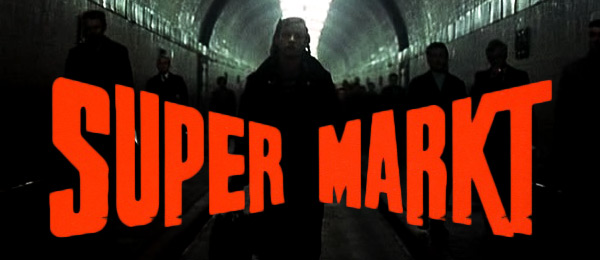
Two years after packing the house during our Roland Klick retrospective, SUPERMARKT returns to Spectacle.

A growing cult classic among upcoming German filmmakers and writers, Klick’s gritty masterpiece follows a young hood through the gutters of the Reeperbahn as he and other smalltime crooks plot a shopping mall heist to escape their welfare existence. Pitched somewhere between REBEL WITHOUT A CAUSE and TAXI DRIVER, this hugely stylized movie includes stunning photography by Jost Vacano (DAS BOOT, nearly all Paul Verhoeven movies), who essentially invented the steadicam on SUPERMARKT’s set—two years later Garrett Brown would introduce his version on BOUND FOR GLORY to enduring fanfare. The proof is on screen, and audiences are treated to some richly choreographed, visceral sequences that veer between bare-knuckle social realism and sleekly orchestrated action.

Initially achieving a degree of commercial success, Klick was ostracized by the contemporary Young German Cinema filmmakers, whose smear campaigns essentially saw him written out of German film history both at home and abroad. Though we formerly described Klick as ripe for rediscovery, it’s now underway: earlier this year, Klick was the subject of a documentary premiering at the Berlin Film Festival and shot partially at Spectacle during its 2011 retrospective.

Special thanks to Frieder Schlaich, Alex Jovanovic, and Filmgalerie 451.


roseseller_banner

THE ROSE SELLER
aka La vendedora de rosas
Dir. Victor Gaviria, 1998
Columbia, 118 min.
In Spanish with English subtitles

SUNDAY, FEBRUARY 9 – 5:00 PM
TUESDAY, FEBRUARY 18 – 10:00 PM

Victor Gaviria became internationally known in 1988 for his Palme d’Or-nominated homage to Italian neorealism, RODRIGO D. NO FUTURE, which portrayed life in the slums of his hometown of Medellín, the second largest city in Colombia and one-time base of operations for Pablo Escobar’s powerful drug cartel. Ten years later, Gaviria returned to Medellín, this time to give expression to the daily struggle of a group of teenage boys and girls who live in the city’s peripheral shantytowns and survive through the informal economy, selling drugs and roses to clubgoers and the city’s leisure class in the Carrera 70 and La Bolera districts.

Gaviria used Hans Christian Andersen’s short story “The Little Match Girl” as a narrative framing device, expanding the temporal scope of the original story and significantly complexifying it, while retaining and adapting many details from Andersen’s tale, replacing the titular matches with sparklers and having the young protagonist’s vision of her grandmother be occasioned by a glue high. In a statement smacking of Christian charity, Gaviria described this framing device as a means of lending universality to the particular and untold story of the street children of Medellín, “a way for them to become complete people, in the sense of being recognized.”

Of course, despite Gaviria’s charitable gesture of granting the teenagers a way to temporarily direct their lives away from petty crime and the fleeting relief of cheap drugs, it did not fundamentally change the material conditions of their lives. After two years of getting to know the children and writing the script with them, and after the ensuing sixteen-week shoot, Gaviria nonetheless left, and the twin forces of poverty and state repression claimed the fates of his beneficiaries. Many of the teenagers died within a few years of the film’s production, and star Leidy Tabares was sentenced to 26 years in prison in 2003.

violentlife_banner2 UNA VITA VIOLENTA
aka A Violent Life
Dir. Brunello Rondi & Paolo Heusch, 1961
Italy, 103 min.
In Italian with English subtitles

FRIDAY, FEBRUARY 14 – 7:30 PM
MONDAY, FEBRUARY 17 – 10:00 PM

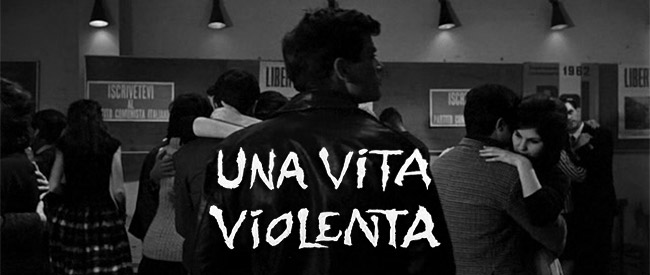
Virtually forgotten, A VIOLENT LIFE is Brunello Rondi & Paolo Heusch’s adaptation of Pier Paolo Pasolini’s 1959 novel, one completed before Pasolini had begun directing his similarly-themed first film, ACCATTONE. Franco Citti, who also stars in that and other Pasolini films, plays Tommaso, a young hood living on the outskirts of Rome, flirting with Fascists and Communists, stealing garbage, assaulting strangers, visiting prostitutes and going to the movies. When he falls in love with a young woman, his life takes an unexpected turn.

A VIOLENT LIFE is an exceptional film overshadowed mostly by Paoslini’s subsequent success as director. In the U.S., co-director Bruenllo Rondi is an unsung figure in Italian cinema. He was a career-spanning collaborator of Fellini who served as both writer and artistic advisor on 8 ½ and LA DOLCE VITA while also writing scripts for Rosselinni (THE FLOWERS OF ST. FRANCIS, EUROPA ‘51) and De Sica (A PLACE FOR LOVERS). His directorial career is almost entirely ignored: after UNA VITA VIOLENTA, he went on to direct the neo-realist exorcism movie IL DEMONIO. Following their dismal critical and commercial receptions he returned primarily to scriptwriting before helming a string of exploitation films in the 1970s.


LIQUID SKY

liquid-sky-banner

LIQUID SKY
Dir. Slava Tsukerman, 1982
USA, 112 min.

SATURDAY, FEBRUARY 1 – 10:00 PM
FRIDAY, FEBRUARY 7 – 10:00 PM
SATURDAY, FEBRUARY 15 – 9:30 PM
FRIDAY, FEBRUARY 21 – 8:00 PM (TSUKERMAN IN ATTENDANCE!)

Note: Due to a change in Mr. Tsukerman’s schedule, he will now be appearing on Friday, February 21. Note also the change in showtimes on the Saturday, February 15 and Friday, February 21 shows.

Spectacle is honored to present the unforgettable cult classic LIQUID SKY—the story of a weekend in New York’s hyperrealist, queer, neon, drug fueled, dangerous, and dystopian 1980s featuring cast of underground models, electroclash singers, shrimp-obsessed housewives, scumbag clubbers, addicts, necrophiliacs, and a German Ufologist. Deadpan humor and eroticism, satire and horror, camp and realism make LIQUID SKY several bolts of lightning striking the same bottle.

Tsukerman is currently working on LIQUID SKY REVISITED, a documentary about the film’s production and cult history. Check out the IndieGoGo campaign.

Trigger warnings: Graphic Sexual violence and drug use.

BEST OF SPECTACLE: EPHEMERALL™

EPHEMERALLbanner

EPHEMERALL™
Dir. Various, 1930s-1970s.
USA, 60 min.

MONDAY, JANUARY 20 – 7:30 PM
THURSDAY, JANUARY 30 – 10:00 PM

Please consult with your doctor or another qualified health care professional before starting EPHEMERALL™.

EPHEMERALL™ from Spectacle Theater on Vimeo.

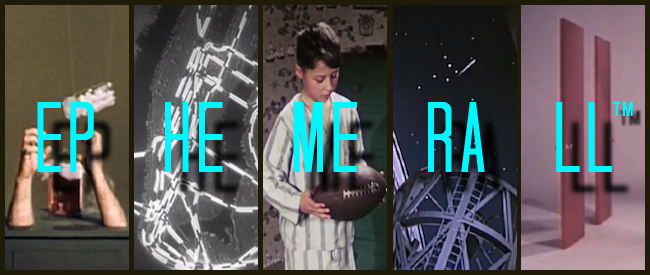
Bleeding our end-of-year BEST OF SPECTACLE tradition into the first month of the New Year is a summary of Spectacle’s 2013 EPHEMERA nights into one single, hour-long program: EPHEMERALL™.

EPHEMERALL2

No outlet served post-war American culture’s ebullient pride and prosperity better than that of the now-infamous educational film. Today these didactic artifacts are relegated to sideshow status by the likes of Pee-Wee’s Playhouse, Weird Al, MST3K and Adult Swim, all of whom freely lampoon these easy targets for their comically dated sensibilities.

Last year’s monthly EPHEMERA program aimed to present these documents to a contemporary audience in perhaps a more even light, ideally free from the ironic framing that can easily overwhelm some of their more interesting details.

EPHEMERALL4

EPHEMERALL™ is a the entirety of these values, advice, commodities and information, all neatly compressed into one ultra-convenient dose. In the course a single sitting, an entire century of knowledge and wisdom will be yours.

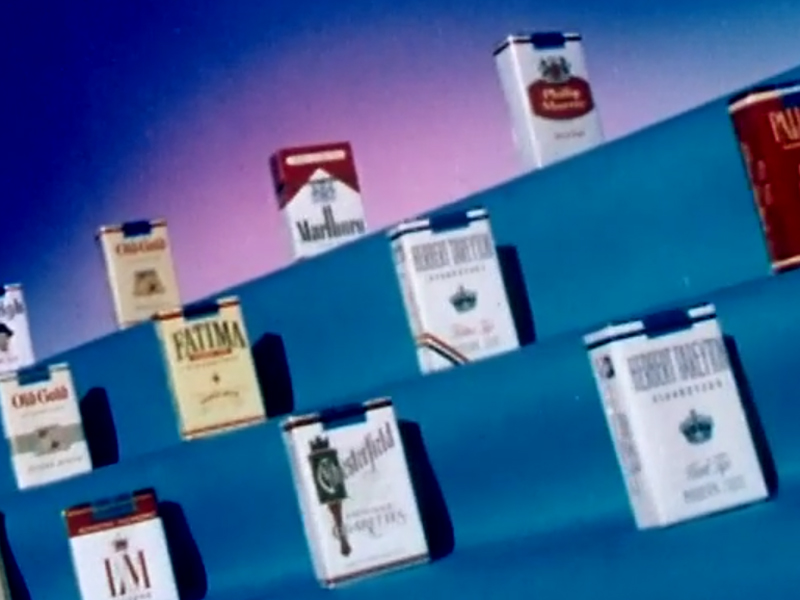
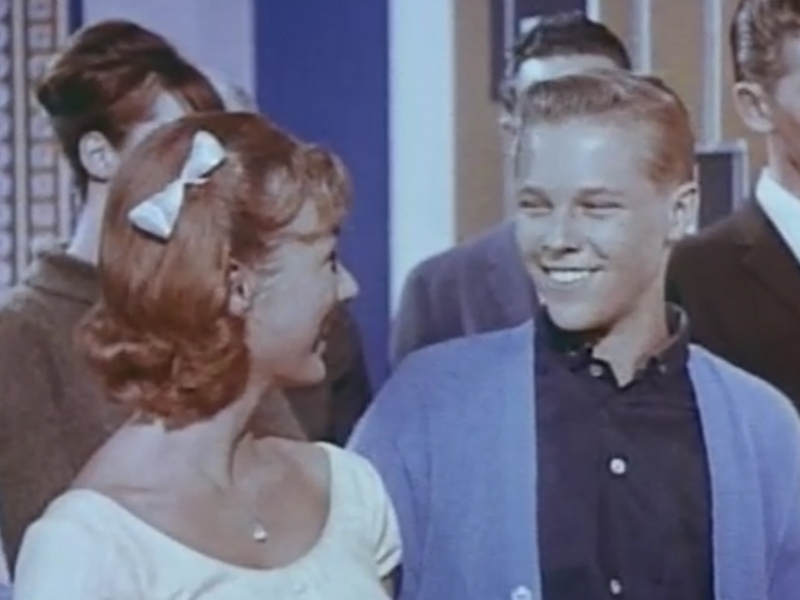
Sources for EPMEHERALL™ include brief portions of nearly every clip from each of 2013’s 8 EPHEMERA programs:
-March: THE PRELINGER ARCHIVES
-April: FOUNDATIONS OF SOCIAL GUIDANCE
-May: WHAT WAS NEW YORK?
-June: ACT NATURAL
-July: SEX, THE PREDATOR, AND YOU
-August: PSYCHOLOGY AND CONCERN
-September: POPULUXE
-October: SAFETY FIRST!

EPHEMERALL5

Special thanks to the Internet Archive, Rick Prelinger and everyone at the Prelinger Archive.

Rick Prelinger began collecting “ephemeral films”—all those educational, industrial, amateur, advertising, or otherwise sponsored—in 1982, amassing over 60,000 (all on physical film) before his Prelinger Archive was acquired by the Library of Congress in 2002. Since then, the collection has grown and diversified: now it exists in library form in San Francisco and is also gradually being ported online to the Internet Archive (http://archive.org), where 6,074 of its films are currently hosted (as of this writing).

EPHEMERALL1

Of course, the content of the Prelinger Archive’s films varies in accord with the variety of mankind. Historic newsreels, mid-century automobile infomercials, psychological experiments, medical procedurals, big oil advertisements, military recruitment videos, political propagandas, personal home videos, celebrity exposes, amateur narratives, scientific studies, war bulletins, instructional films, special interest op-eds, safety lessons, hobby guides, travel destination profiles and private industry productions all sit comfortably together in one marginalized category.

EPHEMERALL3

ROCKUARY


ROCKUARY_banner

This January, Spectacle brings you a supergroup of axe-shredding rock films: the no-budget odyssey of a female punk trio (along with its sequel), a dystopian punk comedy, a sci-fi post-punk musical, a snapshot of the early 80s Icelandic alternative music scene, a documentary on culture-jamming plunderphonic-ians Negativland, and a 60s concert film featuring perhaps the greatest amount of pop music stars ever assembled on one stage…

For those about to (watch movies about) rock: we salute you!


DTL_LS_banner

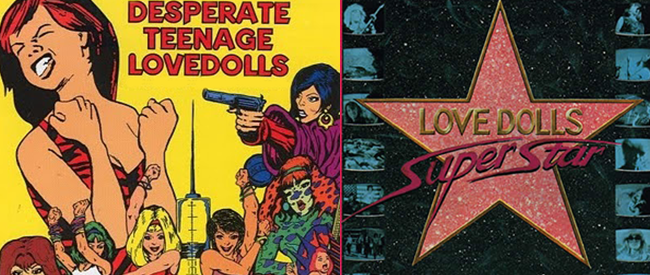
DESPERATE TEENAGE LOVEDOLLS
Dir. Dave Markey, 1984
USA, 60 min.

FRIDAY, JANUARY 10 – 7:30 PM
THURSDAY, JANUARY 23 – 7:30 PM

&

LOVEDOLLS SUPERSTAR
Dir. Dave Markey, 1986
USA, 81 min.

FRIDAY, JANUARY 10 – 9:00 PM
THURSDAY, JANUARY 23 – 9:00 PM (SPECIAL RELEASE SCREENING with Chris & Chad from King of the Witches in attendance!)

In the mid-1980’s Dave Markey and his WE GOT POWER crew were an unstoppable force in the Los Angeles underground scene. Armed with a Super-8 camera, together with the brothers MacDonald and their band Redd Kross Markey made what can only be described as a monument to the rough and tumble lifestyle that the genre embodied – DESPERATE TEENAGE LOVEDOLLS. A fiery tale of the meteoric rise of a group of all girl shredders known as The Lovedolls and, of course, their subsequent plummet back to the unforgiving streets. All told at a breakneck speed and accompanied by a fistful of hits for a soundtrack.

When Kitty Carryall and Bunny Tremelo decide to comb the mean streets of LA looking for a drummer to complete the line up of their band The Lovedolls, they have no idea what’s in store. With their pal Alexandria busting out of a mental institution to join their ranks, the girls think they have it made. But trouble strikes in the form of none other than Kitty’s mom when she comes looking for her dear lost daughter. Ms. Carryall has her own run in with a gang of street toughs and is quickly dispatched with by one Patch Kelly who will become their third member. Trouble rears it’s ugly head once again when sleazeball mogul Johnny Tramaine signs the girls and they learn the true price of fame.

“…a no-budget punk masterpiece.” – Zack Carlson, Destroy All Movies (Desperate Teenage Lovedolls)

Not two years later, Markey and company were back in action and managed to outdo themselves in nearly every area with the follow up LOVEDOLLS SUPERSTAR. Bigger gigs, higher stakes, hotter tunes, cults, assassinations, and more.

Rising from the their own ashes like a filthy gutter pheonix, The Lovedolls return! Patch Kelly has turned Patch Christ and together with her acid-casualty followers she rescues Kitty Carryall from a boozers life of on the street. Teaming up with Alexandria Axethrasher they reform and begin their climb back to the top. But the obstacles start mounting all around them. Relatives of enemies previously squashed come out of the woodwork to settle the score. Be on the look out for appearances from Jello Biafra and Sky Saxon, too!

“Any rock movie that mixes references to Billy Jack, Charles Manson, and Jim Jones is all right with me.” – Michael J. Weldon, The Psychotronic Video Guide (Lovedolls Superstar)

POPULATION1banner

POPULATION: 1
Dir. Rene Daalder, 1986
USA, 60 min.

FRIDAY, JANUARY 3 – 10:00 PM
WEDNESDAY, JANUARY 15 – 10:00 PM
TUESDAY, JANUARY 28 – 10:00 PM

“Yes, had I known then about the guilt and the pain caused by being the sole survivor of a mass suicide pact, I wouldn’t have hesitated for one split second. I would have joined my fellow men in death.”

Good news: the apocalyptic sci-fi post-punk musical you’d hoped might exist actually does, and it’s called POPULATION: 1.

Starring Tomata du Plenty of seminal L.A. synth-punk pioneers The Screamers, directed by visually-oriented Dutch camp-slinger Rene Daalder—best known for 1976’s prescient MASSACRE AT CENTRAL HIGH—and featuring a fierce supporting performance by the literally unknown Sheela Edwards, POPULATION: 1’s sonically and optically hallucinogenic depiction of one lone man’s imaginary experience in the end times just might have you hoping for the wrath of God.

In a breadth of styles and formats, Daalder’s acrobatic protagonist sings, dances and dreams his way through countless interrelated depictions of the recently bygone world, all in mad step with a choreographed mass of hidden cameras, historical footage, vintage vamps and flying appliances. Throughout his journey he evokes countless characters, many played by offbeat legends such as Carel Struycken, Vampira, members of Los Lobos, frontman of The Mentors (and murderer of Kurt Cobain*) El Duce, and, yes, Beck—in his first screen appearance at the age of 12!

Preceding the feature will be Rene Daalder’s 17-minute, Grammy-nominated music video for Supertramp’s progressive-pop epic “Brother Where You Bound” that premiered in 1985 — the year before POPULATION: 1 — and quickly became infamous for its unusual violence and surreal imagery, all of which segues nicely into Daalder’s subsequent work.

[*just kidding]


RIR_banner

ROCK IN REYKJAVIK
(aka Rokk í Reykjavík)
Dir: Friðrik Thór Friðriksson, 1982.
90 min. Iceland.
In Icelandic with English subtitles.

Special thanks to The Iclandic Film Centre

SATURDAY, JANUARY 18 – 7:30 PM
TUESDAY, JANUARY 21 – 10:00 PM
WEDNESDAY, JANUARY 29 – 10:00 PM

Filmed by acclaimed Icelandic director Friðrik Thór Friðriksson in the winter of 1981-82, ROCK IN REYKJAVIK is a brief but poignant snapshot of the Icelandic alternative music scene in its embryonic form, capturing an era that would lay the groundwork for future groups like Björk and Sigur Rós to connect with a worldwide audience. Acting as a sort of Icelandic Decline of Western Civilization, a total of 19 bands are captured as they invade various rock clubs around the capital, following the lifting of a national ‘no live music’ ban.

Taking equal inspiration from American radio and neighboring English punks, the bold Nordics offer a little of everything: Loverboy-copping arena rockers, all female goth chauntresesses, neo-Nazi thrashers, weirdo noise art freaks (who have their chicken-decapitating performance broken up by a group of befuddled cops) and, perhaps most memorably, a trio of glue-sniffin’, guitar-smashin’ tween-aged anarchist crusties! And be on the lookout for a teenage Björk in the fierce post-punk band Tappi Tíkarrass (which translates to ‘Cork the Bitch’s Ass!’).

Working with the Icelandic Film Centre, Spectacle is proud to present this cultural landmark in a new HD transfer from a recent 2K restoration.

(And be sure to grab a free copy of the film’s eclectic soundtrack here.)


sonic_outlaws_bannerSONIC OUTLAWS
Dir. Craig Baldwin, 1995
USA, 87 min.

SATURDAY, JANUARY 18 – 10:00 PM
TUESDAY, JANUARY 21 – 7:30 PM
TUESDAY, JANUARY 28 – 7:30 PM

“In 1991 the Bay Area collage band Negativland was sued by Island Records for infringement of U2’s copyright and trademark.”

Craig Baldwin (b. 1952) has been making subversive experimental films from cannibalized 16mm “found” footage since the late 1970s. His works have always incorporated pseudo-documentarian gestures – such as his seminal Tribulation 99: Alien Anomalies Under America (1991), which presents a satirical revisionist history of CIA interventionism in Latin America – but to date, Sonic Outlaws is his only actual documentary.

Rushing to support Negativland in their struggle against Island, Baldwin uses their legal troubles as a launching point into a larger conversation about appropriation, copyright law, and political activism, connecting these practices to their antecedents as well as their mainstream contemporaries.

Featuring interviews with artists Negativland, John Oswald, Emergency Broadcast Network, and The Tape Beatles, Baldwin’s film stands as an artifact of the golden age of “culture jamming,” as well as a record of the cultural moment when the legal concept of Fair Use first began to assert itself into the popular consciousness.

We are now at a point where the re-mix has become a firmly established form of artistic expression, but copyright laws still haven’t caught up. In today’s era of copyright trolls and DMCA takedown notices, Sonic Outlaws remains an incredibly important document of the litigious culture industry and a fiery call to reform a hopelessly outdated legal system.


TAMI_banner

THE T.A.M.I. SHOW
Dir. Steve Binder, 1964
USA, 123 min.

SATURDAY, JANUARY 11 – 10:00 PM
TUESDAY, JANUARY 14 – 7:30 PM
FRIDAY, JANUARY 17 – 7:30 PM

A seminal touchstone of rock and roll cinema featuring nearly every imaginable 60s pop music act under the sun, The T.A.M.I. Show might just be the greatest concert film ever based on the cast list alone: The Beach Boys, Chuck Berry, James Brown, Marvin Gaye, Smokey Robinson & The Miracles, Lesley Gore, The Supremes, The Rolling Stones, and a half-dozen more all make appearances, and all feverishly blast through their hits to 3,000 shrieking junior high-schoolers trucked in to fill the audience seats at the Santa Monica Civic Auditorium. But beyond the music bill, there’s a prevailing sense of lightning being captured in a bottle: that an important cross-section of pop music royalty is being documented in a five-hour filming frenzy.

Staged a mere eight months after The Beatles appeared on The Ed Sullivan Show, The T.A.M.I. Show (an acroynm for Teenage Awards Music International) was originally conceived as the first in a series of yearly concerts and award ceremonies for a musical non-profit organization, with proceeds going to scholarships for kids. None of that panned out. However, the leftover artifact – shot with proto-digital cameras (dubbed ‘Electronovision’), edited live, and mixed to ear-blasting mono – is a direct mainline into the then-burgeoning ‘Teenage America’ sound: West Coast surf rock, East Coast ‘girl groups,’ British Invasion, the Motown sound, and Southern soul are all heartily represented.

Everyone is in top form here – a fiery Lesley Gore and soulful Marvin Gaye elicit strong applauses, in particular- but these all merely set the stage for James Brown and the Flamekeepers in a performance that has ascended to near mythical status. For 17 spellbinding minutes, Brown gives everything: manic footwork, blood-curtling wails, theatrical dancing and dives… a performance so enigmatic, that show headliners The Rolling Stones famously didn’t want to go on after him!  Even after 50 years, this is still the greatest rock performance ever filmed.

Following a brief theatrical run, the film became tangled in legal rights for decades, vanishing into the netherworld of bootleg VHS dubs until finally receiving a restored release in 2009. Spectacle is proud to present the restored version in its original widescreen presentation and original mono mix (which we’ll be sure to turn up as loud as possible).


Terminal_City_Ricochet_Banner TERMINAL CITY RICOCHET
Dir. Zale Dalen, 1990
Canada, 107 min.

FRIDAY, JANUARY 3 – 7:30 PM
TUESDAY, JANUARY 14 – 10:00 PM
FRIDAY, JANUARY 17 – 10:00 PM

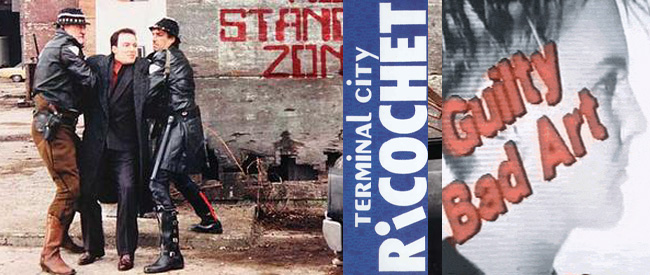
With special thanks to Alternative Tentacles Records it is Spectacle’s honor to present the Canadian punk cult classic, Terminal City Ricochet. TCR is set in an dystopian version of Earth where there are only 6 inhabitable cities left on the planet. Everything has fallen to shit quite literally (with space junk raining from the sky), but ego-maniacal corrupt Mayoral incumbent candidate & talk show host Ross Glimore (Peter Breck) is attempting to run the city even deeper into the ground. To maintain his grip on power he must stage an election, and for that he needs fresh fear.

Enter Alex Stevens (Mark Bennett), a fed-up, cynical newspaper delivery boy who happens to witness Glimore run over one of his own supporters in his car and leave the scene of the accident. Glimore and his right hand thug Bruce Coddle (Biafra) hatch a plot to brand Stevens “the #1 terrorist threat” (based on his connection to rock ‘n’ roll music which, along with meat, is banned) to cow Terminal City into submission and steal another tabloid election. Stevens flees underground, where he stumbles into a resistance movement led in part by his newfound friend Beatrice (Lisa Brown) and a fugitive brain-damaged goalie from the Glimore-owned hockey team, and finds himself caught up in a plot to bring Glimore down, with the not-so-secret police (DOA’s Joe Keithley and pro-wrestling legend Gene Kiniski) hot on the trail.

This film originally aired on Canadian TV and was never released on VHS. Check it out if you’re a fan of Repo Man, Network, Ladies & Gentlemen the Fabulous Stains, Max Headroom & Suburbia.

THE BITTER TRUTHS OF KAZUO HARA

I make bitter films. I hate mainstream society.

This January, Spectacle brings you two brutally honest documentaries from Japanese master Kazuo Hara. These intimate films present two unflinching portraits: one of the artist (and his failed love life) himself, and another of the horrors of World War II, 40 years later. Preceding the culture of reality TV and selfies by several decades, Hara puts a mirror up to himself, and his culture, without imposition or expectation.

Special thanks to Tidepoint Films


extremeprivateeros_banner

EXTREME PRIVATE EROS: LOVE SONG 1974
Dir. Kazuo Hara, 1974
Japan, 98 min.
In Japanese with English subtitles

TUESDAY, JANUARY 7 – 10:00 PM
SUNDAY, JANUARY 12 – 5:00 PM
MONDAY, JANUARY 27 – 10:00 PM

Shot over several years, Extreme Private Eros: Love Song 1974, a documentary about Hara’s ex-lover was a clarion call against a historically reserved Japanese culture. The film follows Miyuki Takeda, Hara’s ex and father of his son, as she navigates new relationships (first with a woman, and then with an American GI in Okinawa), raises her son, and explores life in 1970s Japan as an outspoken feminist. But the film isn’t just a portrait of the vulnerabilities of a radical feminist single mother, in a time when that wasn’t heard of; Miyuki often takes the opportunity of being filmed by her ex to let loose with what she really thinks about him as a partner, as a lover, and as a filmmaker.

As well as a portrait of two complicated, damaged people, the film is a portrait of Okinawa as a dysfunctional city, damaged by two decades of American military presence. Hara films the GI bars and the underage prostitutes that frequent the bars for business. Hara takes a detour into the life of a 14-year-old “Okinawa girl” Chichi, whose life converges and diverges from Miyuki’s story in intriguing ways.

Released around the same time as the groundbreaking PBS series An American Family (and predating the similarly-themed Sherman’s March by a decade), Extreme Private Eros takes a long, hard look at gender roles, romantic relationships, and what it means to be a family in 1970s Japan. Hara’s out-of-sync sound and hand-held photography are disorienting and intimate at the same time, giving the feel of an experimental film to a film with very real content. The results are bitter and sometimes hard to watch, but always compelling.


nakedarmy_banner

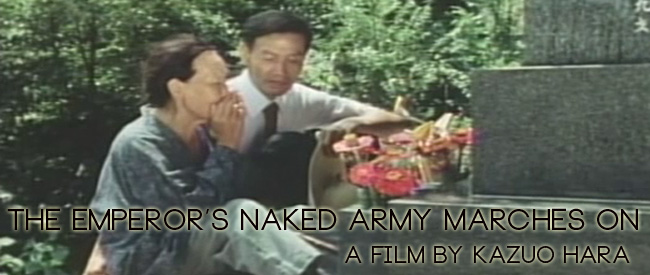
THE EMPEROR’S NAKED ARMY MARCHES ON
Dir. Kazuo Hara, 1988
Japan, 122 min.
In Japanese with English subtitles

TUESDAY, JANUARY 7 – 7:30 PM
SUNDAY, JANUARY 12 – 7:30 PM
MONDAY, JANUARY 27 – 7:30 PM

[TRIGGER WARNING: Wartime violence and atrocities]

The Emperor’s Naked Army Marches On is a more plainly political, but no less revealing, portrait of Japan since World War II. Kenzo Ozukaki was tireless in his campaign against the commonly held idea in Japan that Emperor Hirohito was not responsible for war atrocities during World War II, even getting arrested in the process. Ozukaki ambushes former soldiers into giving him the answers that he is obsessed with finding. His obsession is unsettling; even people who agree with him politically seem unwilling after a certain point to stand in solidarity with Ozukaki, as his methods get more outrageous, and eventually violent.

The film became surprisingly popular in Japan, earning Hara the New Director Prize from the Directors Guild of Japan (and only 16 years after his first film Goodbye CP!) and drawing relatively large crowds for such controversial and alienating subject matter. Errol Morris has put The Emperor’s Naked Army Marches On in his top 5 films of all time, high praise from a master of the documentary film (Michael Moore likes it too, if that’s more your speed). Through the entire movie, Hara remains a silent witness to Ozukaki’s increasing fanatacism and devotion to the only version of the truth he can possibly accept; but when is silence irresponsible? When are those in charge responsible for things they let happen? When is inaction morally indefensible?