WHERE’S ANTON?

WHERE’S ANTON
Dir. Joe DeNardo, 2012
22 min. USA.
FRIDAY, MAY 3 – 5:00 PM

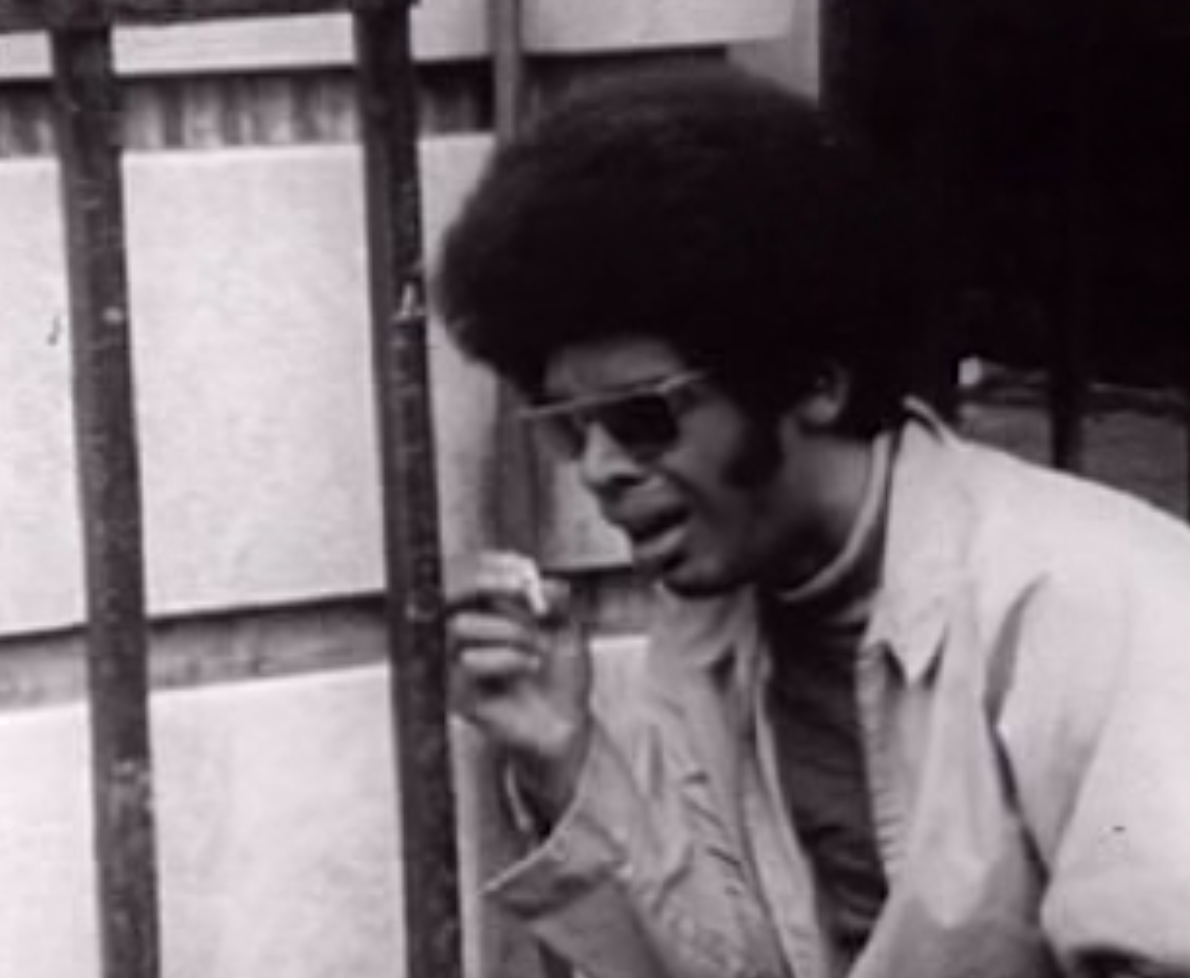
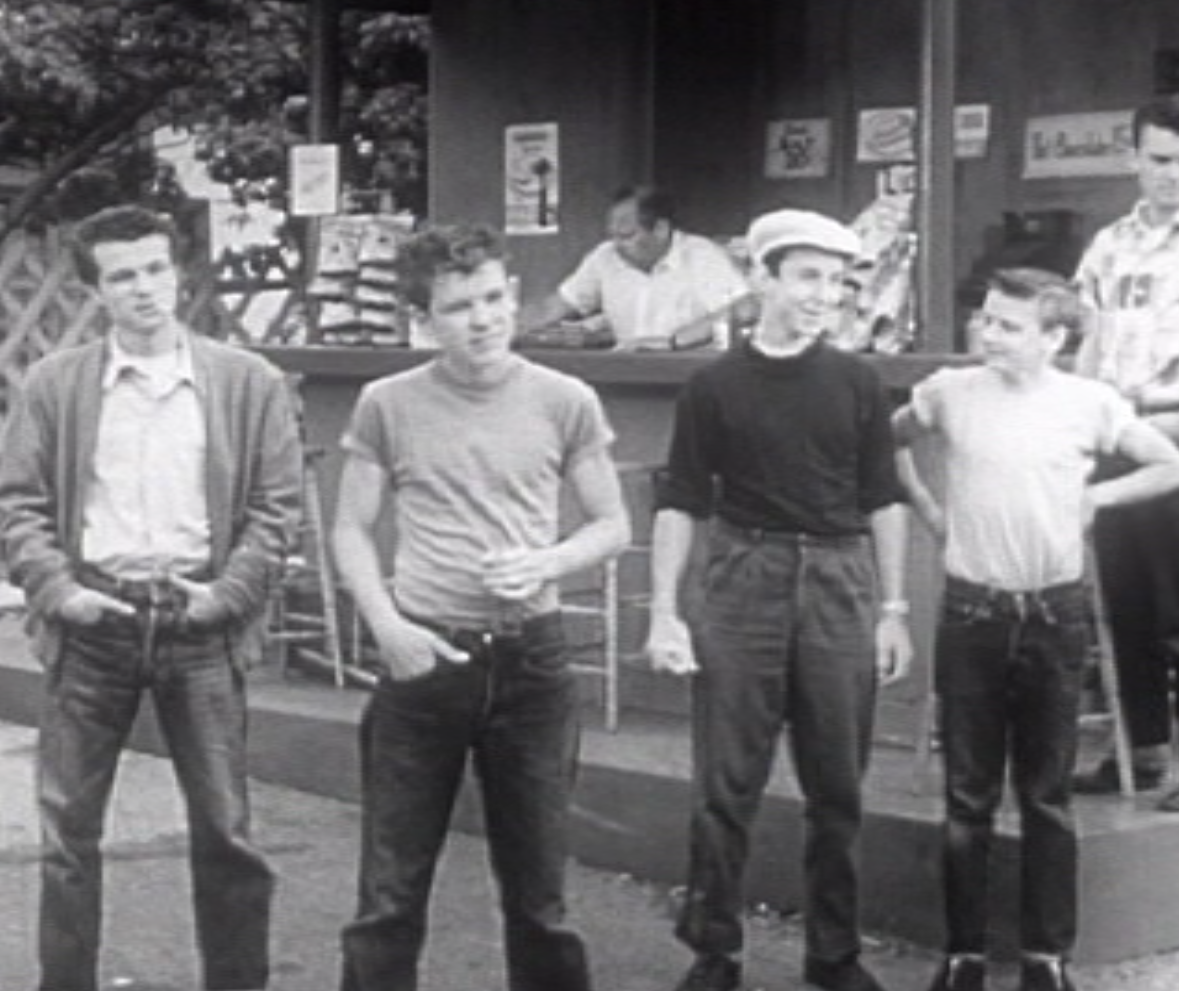
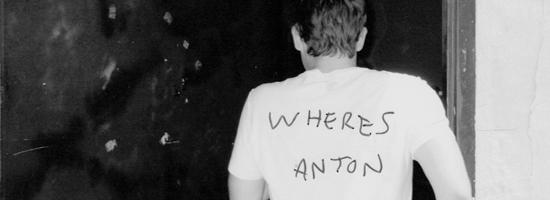
WHERE’S ANTON is a movie around Gun Outfit, the band, and the persons individually. WHERES ANTON moves through the band, and the band through it. WHERES ANTON is a musical story, shot on 16mm, blending the shared narratives of document and artifice. The band acts, and the band is itself. Utilizing the writings of Dan Swire, who also plays drums in the band Gun Outfit, WHERES ANTON offers that oft-attempted but rarely achieved unique window into the dream states of collective creativity.

wheres anton thing

PLAYING IN DECAY

Playing in Decay – Abandoned Theaters and the Paris Underground
Slide show and video followed by brief Q&A
THURSDAY MAY 2 – 8:00 PM
ONE NIGHT ONLY

Julia Solis (author of “New York Underground”) talks about her new book “Stages of Decay”, featuring photos of deteriorating theaters across the US and Europe. Lazar Kunstmann & Jon Lackman of the infiltration group Les UX – also known for setting up a secret cinema underneath Paris – will present the “Pantheon User’s Guide”, a video on their secret restoration of the Pantheon clock.

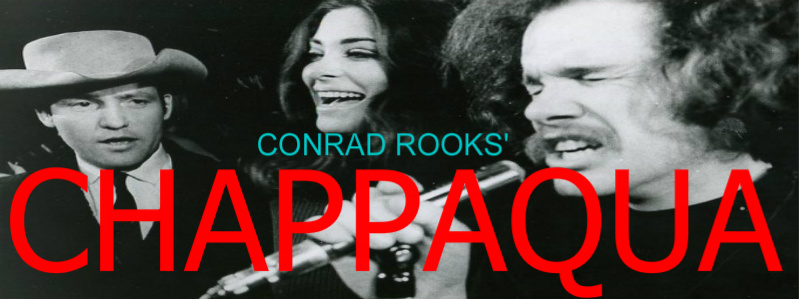
CHAPPAQUA

CHAPPAQUA
Dir: Conrad Rooks, 1966.
USA. 82 min.
WEDNESDAY, MAY 10 – 10:00 PM
SUNDAY, MAY 12 – 7:30 PM
FRIDAY, MAY 24 – 7:30 PM

Two years before Easy Rider, Conrad Rooks created a meditation on addiction and self discovery in CHAPPAQUA, a formally restless time capsule which captures the entropic soul searching and self destruction which hung like a long shadow over the 1960s counter culture.

Conrad Rooks’ short filmography (Chappaqua and his 1972 adaptation of Hesse’s Siddhartha) is characterized by the dual journey, without and within. In Chappaqua Rooks plays Russel Harwick, a globetrotting( Chappaqua was filmed in 48 of the United States, France, Mexico England and India), hopelessly addicted young man who checks into a Paris clinic in order to undergo a “sleep cure”. What follows is a hallucinatory journey in the form of a richly textured film poem which reflects Rooks’ own battle with addiction and spiritual awakening.

Rooks’ film is bombastic and strung out, wild and somber. Chappaqua is a mind laid bare, a chronicle of addiction, and an adventurous film experience. In Chappaqua we enter a maze of experimental film techniques and raw improvisation that invites us into the fury of the present, the pleasure and pain of the past, and, after passing through the fire, the dream of a better future.

Chappaqua is the Cannonball Run of the 1960s’ counterculture, featuring such literary, musical, and beat luminaries as William S. Burroughs, Ravi Shankar (who also contributed the film’s unique and powerful score), The Fugs, Ornette Coleman, Moondog, Allen Ginsberg, and Herve Villechaize.

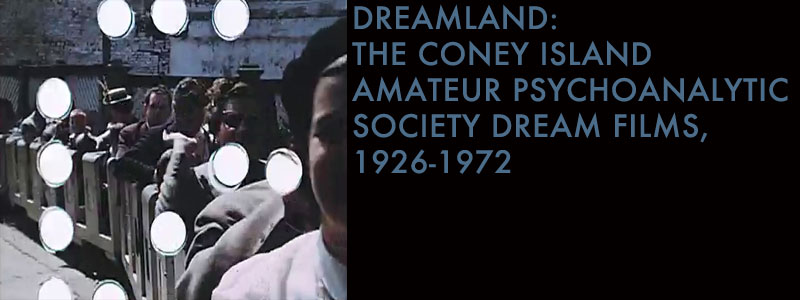
DREAMLAND: THE CONEY ISLAND AMATEUR PSYCHOANALYTIC SOCIETY DREAM FILMS

DREAMLAND: THE CONEY ISLAND AMATEUR PSYCHOANALYTIC SOCIETY DREAM FILMS
Presented by Zoe Beloff
USA, Approx. 80 minutes
Silent/English
THURSDAY, MAY 9 – 8:00 and 10:00 PM

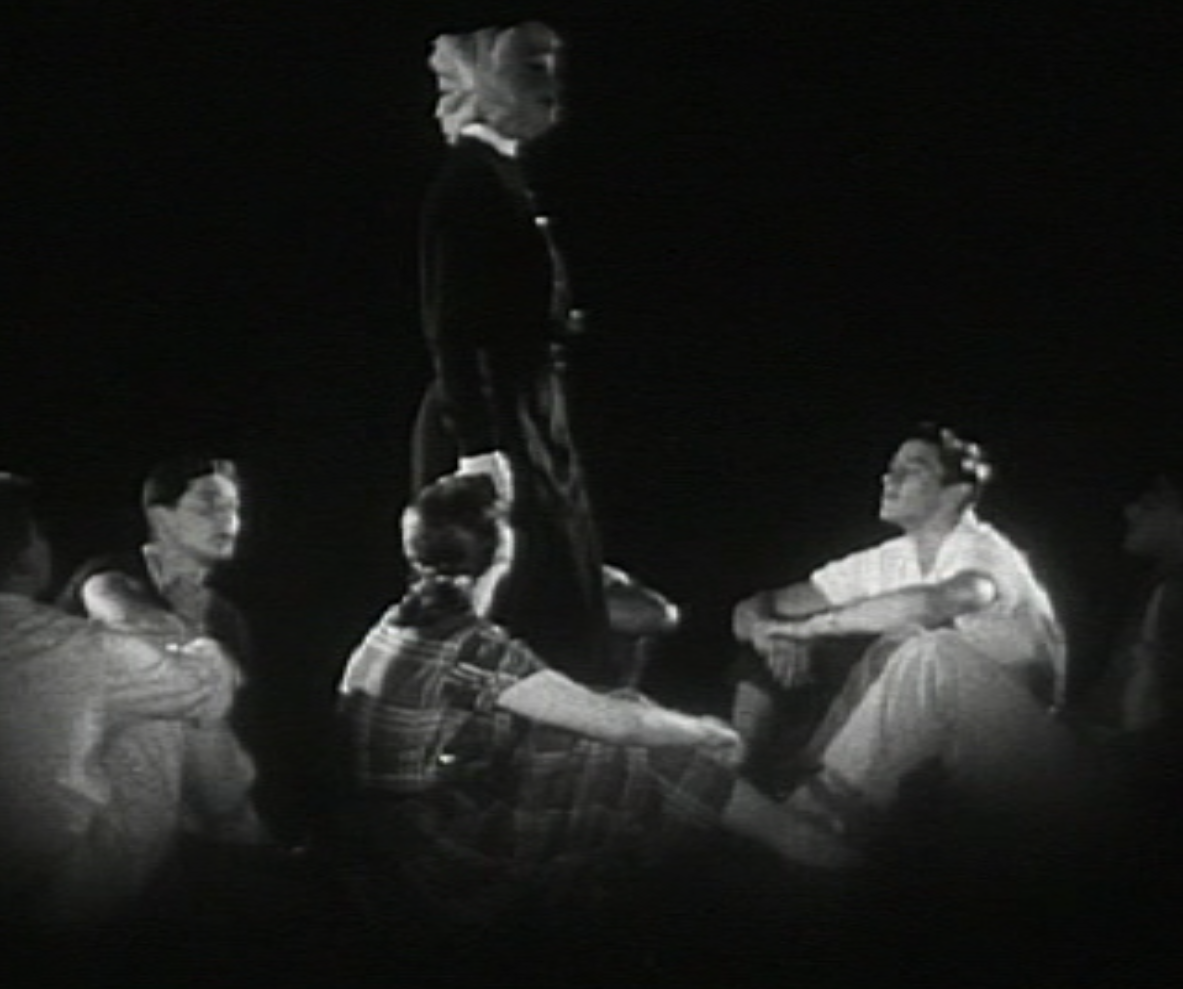
In 1926, after returning to New York after World War I, Albert Grass assembled a group of his friends (largely working-class people), all of whom had an interest in Sigmund Freud and psychoanalysis, into a society that met in an office on Coney Island to discuss their inner lives. A major project of the secretive Coney Island Amateur Psychoanalytic Society, as they were known, was making films of members’ dreams, in the service of understanding the life of the mind.  Years later, with the Society all but an urban legend, multimedia artist and filmmaker Zoe Beloff discovered some mysterious, Freudian 16mm home movies at a flea market, and made it her mission to collect and preserve, as well as understand, the films.

Now, for one night only at Spectacle, Zoe Beloff will present the collected films of the Coney Island Amateur Psychoanalytic Society in their original 16mm format. Filmed between 1926 and 1972, the films present the uncovered dreams, fears, and desires of Society members throughout the decades. These nine short films are beautiful, poignant, and surprising by turns, and present the raw, unfiltered inner emotional lives of several generations of Brooklynites.

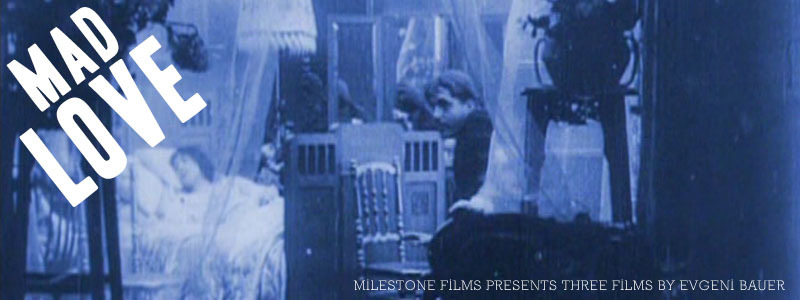
MAD LOVE: THREE FILMS BY EVGENI BAUER

Though his film making career lasted only four short years before his death in 1917 at age 52, Evgeni Bauer is a relatively unknown giant in the world of silent Russian cinema.

Graduating from celebrated set designer to director, Bauer pioneered camera techniques and elegant set pieces that would become popular years later. Though he worked in a number of genres (comedies, political pieces, drama, and tragedy), he is best known for an unmatched eye for detail and the ability to blend the elegance and beauty into the ghastly and macabre. No subject was taboo and his pieces are as startling as they are beautiful. Opulent doesn’t even come close to describing it.

Special thanks to Milestone Films


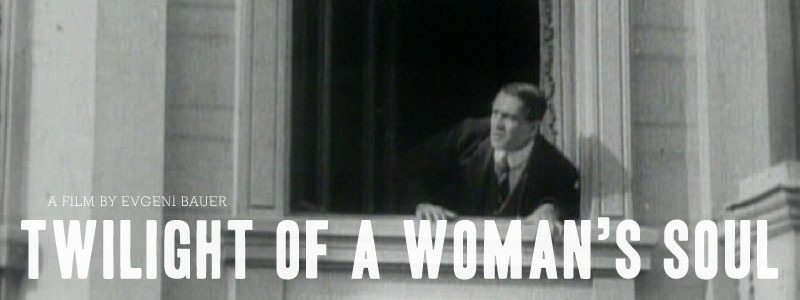
TWILIGHT OF A WOMAN’S SOUL
(aka Sumerki zhenskoi dushi)
Dir: Evgeni Bauer, 1913.
48 min. Russia.
Silent.
THURSDAY, APRIL 18TH – 8PM
WEDNESDAY, APRIL 24TH – 10PM

One of the earliest of Bauers surviving films, Twilight of a Woman’s Soul is the story of a noblewoman named Vera (played by Vera Chernova) who, in  attempt to break the mold of her class, vows to help the poor. This decision doesn’t come without a price.

While visiting the slums, she finds herself attracted to a handsome laborer. Their courtship is short lived and after he attempts to rape her, she defends herself and kills him. Though she escapes with her life, she is shunned by Prince Dolskij and cast out when she tells him what happened.

Defeated and alone, Vera pulls herself up and takes the stage, becoming the star of the opera. When the prince comes back around she must decide what path to take.


AFTER DEATH 
(aka Posle smerti)
Dir: Evgeni Bauer, 1915.
46 min. Russia.
Silent.
SATURDAY, APRIL 13TH – 8PM
TUESDAY, APRIL 23RD – 10PM

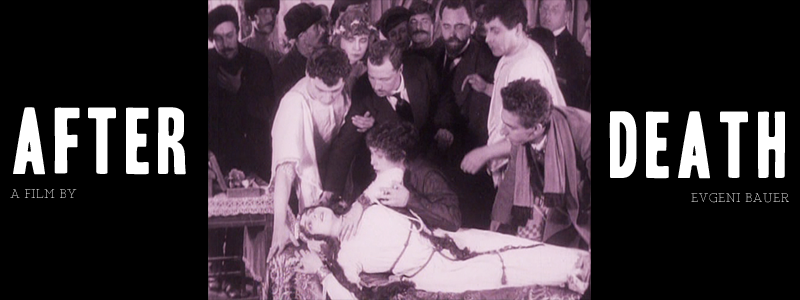
Released the same year as D. W. Griffith’s The Birth of a Nation, Bauer delved deep into not only this haunting tale of romance between the land of the living and that of the spirits, but also into new camera techniques and tints to elevate this film to another level entirely and often finds him referenced as “the Russian answer to Edgar Allen Poe.”

A young woman (played by Vera Karalli) falls hard for a man and, when she feels her desires are unrequited, she commits suicide. Racked with guilt over her death, the young man suffers both terrifying and sensual visions of a his lady love.

Bauers use of tints to denote time of day and the alternating worlds as well as his use of tracking shots is striking and unparalleled. This ghostly love story is a vision to behold and contains a violin-cello-piano score that is the perfect companion.


THE DYING SWAN
(aka Umirayushchii lebed)
Dir: Ebgeni Bauer, 1917.
49 min. Russia.
Silent.
TUESDAY, APRIL 9TH – 10PM
SUNDAY, APRIL 28TH – 8PM

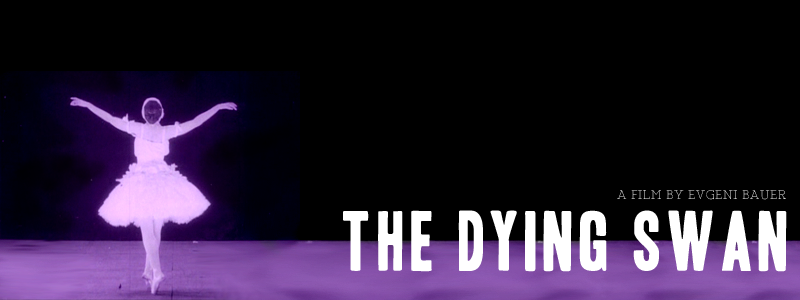
Perhaps the best known of Bauers work and far and away the most referenced, The Dying Swan is a classic story and Bauers treatment is nothing short of breathtaking.

When a mute woman, Gizella (again played by Vera Karalli) with a passion for dance finds herself deceived by the man she loves, she takes off in order to began a new life as a ballerina. While on tour performing The Dying Swan, an artist obsessed with death develops an unhealthy fascination with Gizella and goes to great lengths to garner her attention and trust. Needless to say, this ends badly.

In a film with a small cast, Bauer allows his sets and locations to act as characters in their own right. Melancholy reigns in Bauers world.

THE SKEPTIC: THE FILMS OF BASSEK BA KOBHIO

After colonialism, the tidal wave of African independence (starting in Ghana in 1949, ending in South Africa in 1994) produced optimism and elation across the continent. A handful of filmmakers used the medium to promote pan-Africanism and tear open old wounds from white oppression. But Cameroonian novelist and filmmaker Bassek ba Kobhio stands in stark contrast to these trends: his three-film catalog navigates the tricky waters of postcolonial hope, beautifully embodying both the supernova of African freedom and the bitter hangover of best laid plans.

Special thanks to California Newsreel

   
SANGO MALO 
Dir: Bassek ba Kobhio, 1990.
89 min. Cameroon.
In French with English subtitles.
TUESDAY, APRIL 9TH – 7:30PM
TUESDAY, APRIL 23RD – 7:30PM

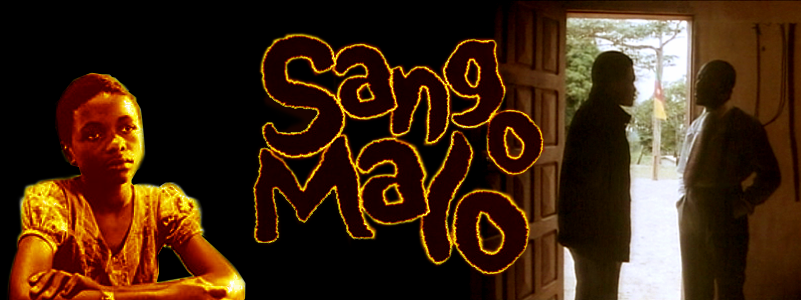
Ba Kobhio’s debut film is a post-independence classic on the logjam of village and city mores and the ever-elusive definition of “education”.

The crux of Sango Malo is a steady disagreement between Malo (a radical young teacher) and his “Eurocentric” headmistress. At the end of the day, defining education means defining responsibility – and by defining the villagers’ responsibilities from the outside, the supposedly enlightened mode of African being is called into question.

The director pins down root causes of post-independence prejudices- including prejudice against oneself- in a doggedly clear-headed but ultimately warm, humanist fashion, regularly inviting viewers to laugh along at the film’s varying strains of misguidedness.

“Offers a valuable look at the harsh realities of village life in a  little-seen land. The director shines with a lively script and complex characters.” – Variety

“A wonderful script full of scenes of sparkling lightness and humor.” – Cahiers du Cinema
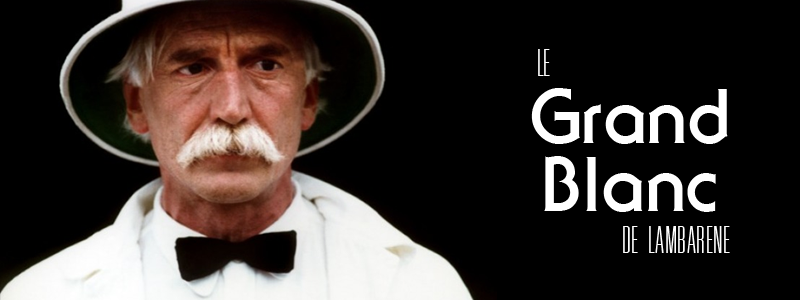

LE GRAND BLANC DE LAMBARENE
Dir: Bassek ba Kobhio, 1995.
94 min. Cameroon/Gabon.
In French with English subtitles.
THURSDAY, APRIL 4TH – 7:30PM
THURSDAY, APRIL 18TH – 10PM

“The independence of the people has never been your concern. You only wanted to share their hell in the hope of reaching your heaven.”

Albert Schweitzer – the world’s first superstar humanitarian – gets a rare biographical dissection in what is arguably Bassek ba Kobhio’s angriest film.

Schweitzer established a missionary hospital on the banks of the Ogooué river in present-day Gabon, a post he maintained until his death (just after the country achieved independence.) Surrounded by European nurses and African patients, Schweitzer controls his public image with an iron fist. But rather than making him an outright monster, the film works overtime to clarify his point of view, stressing a paternalism that can only come from an unrequited longing for worldliness.

Ba Kobhio filmed Le Grand Blanc on the actual site of Schweitzer’s mission, and as “the great white man” feels African opinion turning against him, he brokers a deal with the local chiefs that throws his hypocrisy into plain daylight. With a jarring sense of comedic timing and an overwhelming fidelity to the terrain and mood of Gabon, ba Kobhio comes out swinging, redrawing African independence as the consequence of – rather than a solution to – Western meddling.

“Gripping, vast, animated, with something profoundly magical… In Le Grand Blanc, the cinema truly meets Africa.” – Le Nouvel Observateur

“Challenging. Period detail is painstakingly recreated to present an utterly unromantic view of colonial Africa.” – Variety

“Though the subject is in the past, the filmmaker succeeds in describing today’s Africa of humanitarian NGOs and voluntary doctors of which Schweitzer was, unwittlingly, the forerunner.” – Ecrans d’Afrique
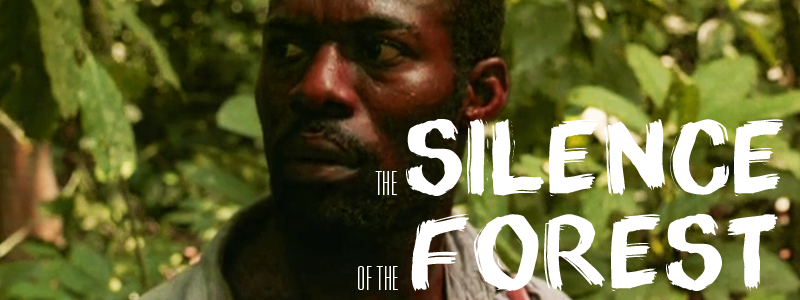

THE SILENCE OF THE FOREST 
Dir: Bassek ba Kobhio & Didier Ouénangaré, 2003.
93 min. Cameroon/Central African Republic/Gabon.
In French/Diaka/Sango with English subtitles.
FRIDAY, APRIL 12TH – 7:30PM
FRIDAY, APRIL 26TH – 10PM

“I can already see the day when I can triumphantly say: ‘Look what I did for this country.’”

ba Kobhio’s most recent work is a bittersweet interrogation of the limits of good intentions, even when native Africans seek to “develop” their countries’ human potential. Gonaba (Eriq Ebouaney, Lumumba) returns from France to his homeland in the Central African Republic with a degree and a cushy government post, but soon finds himself incapable of bringing about the changes in society he promised himself and his “pygmy” neighbors. His search for “authenticity” of culture in the forest’s tribes sees him re-enacting the same mistakes of the long-gone white occupiers, with dire implications.

Native traditionalism vs. throwback “traditionalism” vs. Western-led interventionism: if the flurry of quotation marks didn’t give it away, words come up short on impact inThe Silence of the Forest.

Scored by legendary jazz musician Manu Dibango, this is a singular movie so beautifully textured and dense with post-colonial theory that it invites viewers to sniff out the political substance of every stone or raindrop. Amidst a debate dominated by Invisible Children and the World Bank, ba Kobhio and Ouénangaré’s film stands as a work of supreme heartbreak. This is not your mother’s Central African Republic.

BLONDES IN THE JUNGLE

BLONDES IN THE JUNGLE
Dir: Lev Kalman, 2009.
48 min. USA.
FRIDAY, APRIL 19TH – 8PM (Filmmaker Lev Kalman in person!)
SUNDAY, APRIL 28TH – 10PM

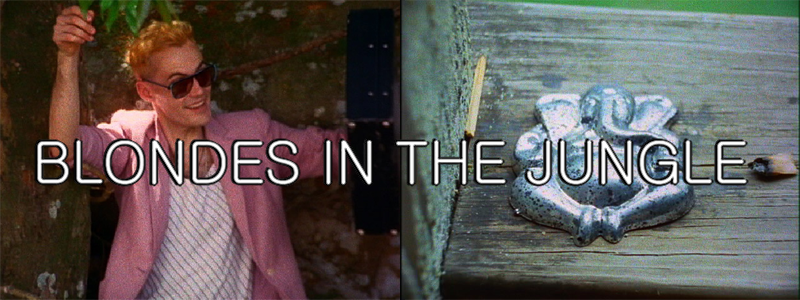
At the serpentine intersection of Degrassi and Wade Davis, you’ll find the dazzling 50-minute Blondes In The Jungle.  Lev Kalman and Whitney Horn’s 48-minute debut is a dazzling “tropical cyclone” – a metaphysical stoner comedy about a trio of spoiled WASP brats searching for the Fountain of Youth in the wilds of Honduras, shot on location. Color-saturated and empty-headedly hilarious, Kalman and Horn’s film is an deep dive into pampered ignorance and a wealth of 16mm riches.

Blondes In The Jungle is a cheerful, genial and strange comedy, yet it’s so good-natured and screwy that it’s easy to go along with all of the improbable happenings – and there’s certainly plenty of those. Plus, the scenery is absolutely beautiful to look at with gorgeous cinematography by Horn.” – Bad Lit

“Long story short, it’s amazing.” -Flavorwire

“We think of ourselves as Eric Rohmer if he were retarded.” -Whitney Horn

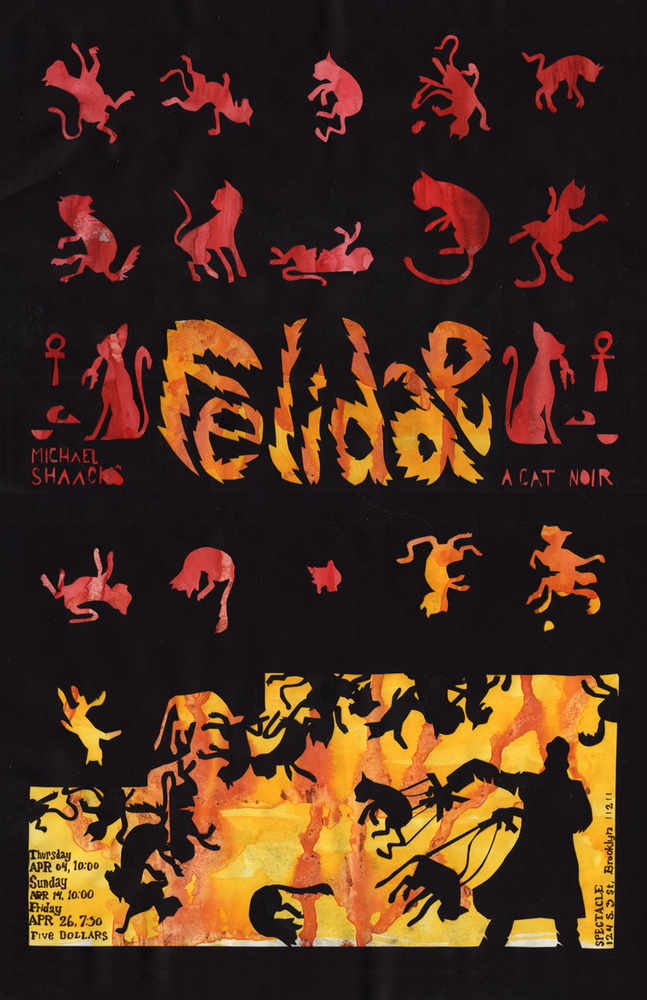
FELIDAE: AN ANIMATED CAT NOIR FROM GERMANY

FELIDAE
Dir: Michael Schaack, 1994.
78 min. Germany.
In German with English subtitles.

Special thanks to Senator Film

U.S. PREMIERE!
WITH CUSTOM ENGLISH SUBTITLES CREATED BY SPECTACLE!
THURSDAY, APRIL 4TH – 10PM
SUNDAY, APRIL 14TH – 10PM
FRIDAY, APRIL 26TH – 7:30PM

1994: While children all over America were falling in love with Disney’s The Lion King, Germany was captivated by a different kind of feline…

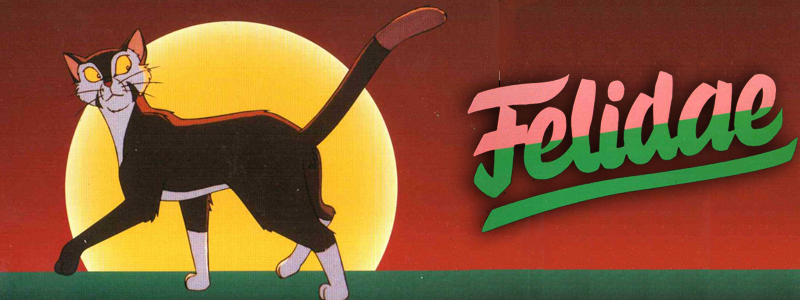
Adapted from the best-selling book series, Felidae is an animated noir thriller concerning an inquisitive cat named Francis who has just moved into a new neighborhood where a series of grisly cat murders has engulfed the kitty scene. With the help of his trusty (and always hungry) sidekick Bluebeard, Francis sets out to find the identity of the killer, whom he believes to be a cat as well. The clues point towards some dark secrets, as Francis discovers that his new home is charred with the history of something much more sinister…

An incredibly imaginative and downright stunning subversion of traditional cartoon storytelling, Felidae demonstrates tremendous ability to tackle complex, adult themes. Despite being an animated film, this is definitely not for kids.

Featuring depictions of violence, gore, racism, sex, swearing, cults, surreal nightmare sequences, and Holocaust allegories- all involving talking cats-  Felidaewill come as quite a shock to anyone expecting Disneyfied fare like The Aristocats.However, the film never veers into cheap sensationalism and seeks to maintain a serious approach to its subject matter, resulting in one of the most audacious animated films ever made.

The most expensive animated production in Germany’s history and a massive success upon release, Felidae has never received US distribution or English subtitling. However, with the endorsement and support of the film’s original German distributor, Spectacle has created brand-new, custom English subtitles exclusively for these three showings.

Nearly 20 years after its original German debut, Spectacle is honored to host the US premiere of this incredibly unique film.

“Though it doesn’t fit into any existing category of toon, “Felidae” is one of the best animated films to come out of Germany, and certainly the most daring.” -Variety

Oh… and Boy George did the film’s killer theme song…

EPHEMERA: FOUNDATIONS OF SOCIAL GUIDANCE

EPHEMERA: FOUNDATIONS OF SOCIAL GUIDANCE
1947-1963.
TRT: 90 min.
SATURDAY, APRIL 13TH – 10PM
WEDNESDAY, APRIL 24TH – 7:30PM
Our Prelinger Archives series returns for another installment this April!

No outlet served post-war American culture’s ebullient pride and prosperity better than that of the now-infamous educational film. Pioneered by the Coronet Instructional Films company, Centron Productions, McGraw-Hill and Encyclopaedia Britannica—as well as more eccentric individuals like Sid Davis and Jam Handy—these films today have been relegated to sideshow status by the likes of Pee-Wee’s Playhouse, Weird Al, MST3K and Adult Swim, who freely lampoon these easy targets for their comically dated sensibilities.

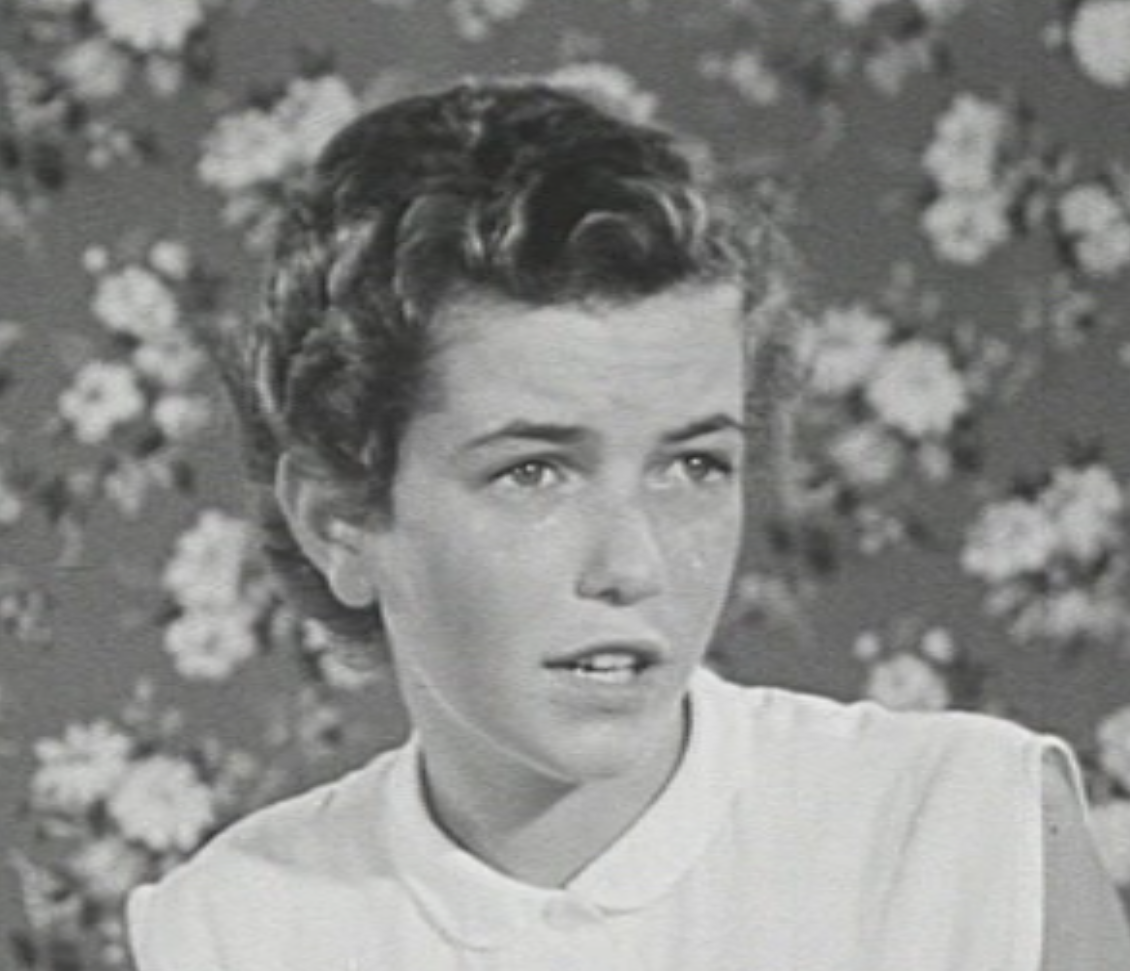
April’s EPHEMERA program FOUNDATIONS OF SOCIAL GUIDANCE compiles moments from these films that focus on the frequent theme of social development. Looking to properly shape the future sons and daughters of the U.S.A. into well-adjusted citizens, the milquetoast, aw-shucks sincerity of these shorts of course strikes an uncanny, off-kilter chord to today’s audience. This compilation arranges its selections into a rough narrative of growing-up; our protagonists age and learn lessons stage-by-stage, gradually maturing into utterly perfect adults ready to meet the challenges of tomorrow.

Preceding the feature collage will be the full short A DATE WITH YOUR FAMILY (1950, 10m, B&W, USA) interspersed with full-color outtakes from the set of the film itself, exposing glimpses of the personalities behind the actors in gag-reel relief; a fascinating peek beneath the characteristically unnatural, almost inhuman veneer of sponsored films from this era.

Sources for FOUNDATIONS OF SOCIAL GUIDANCE include: Act Your Age (1949), Appreciating Our Parents (1950), Are You Popular? (1947), Beginning Responsibility (1951), The Benefits Of Looking Ahead (1950), A Better Use Of Leisure Time (1950), The Bully (1952), Cheating (1952), Cindy Goes To A Party (1955), Don’t Get Angry (1953), Each Child Is Different (1954), Family Life (1949), Good Table Manners (1951), Gossip (1953), How Quiet Helps At School (1953), How To Be Well-Groomed (1949), Office Etiquette (1950), The Procrastinator (1952), Shy Guy (1947), The Snob (1958), Social Courtesy (1951), Ways To Settle Disputes (1950), What Makes A Good Party (1950) and Your Junior High Days (1963).

Special thanks to the Internet Archive, Rick Prelinger and everyone at the Prelinger Archive.Rick Prelinger began collecting “ephemeral films”—all those educational, industrial, amateur, advertising, or otherwise sponsored—in 1982, amassing over 60,000 (all on physical film) before his Prelinger Archive was acquired by the Library of Congress in 2002. Since then, the collection has grown and diversified: now it exists in library form in San Francisco and is also gradually being ported online to the Internet Archive (http://archive.org), where 3,801 of its films are currently hosted (as of this writing).

Of course, the content of the Prelinger Archive’s films varies in accord with the variety of mankind. Historic newsreels, mid-century automobile infomercials, psychological experiments, medical procedurals, big oil advertisements, military recruitment videos, political propagandas, personal home videos, celebrity exposes, amateur narratives, scientific studies, war bulletins, instructional films, special interest op-eds, safety lessons, hobby guides, travel destination profiles and private industry productions all sit comfortably together in one marginalized category.

ICARUS FILMS PRESENTS: OXHIDE II

OXHIDE II
Dir: Jiayin Liu, 2009.
132 min. China.
In Mandarin with English subtitles.

Special thanks to Icarus Films

Also featured as part of Big Shot Movie Club‘s How To… April series

TUESDAY, APRIL 2ND – 10PM
SATURDAY, APRIL 27TH – 7:30PM

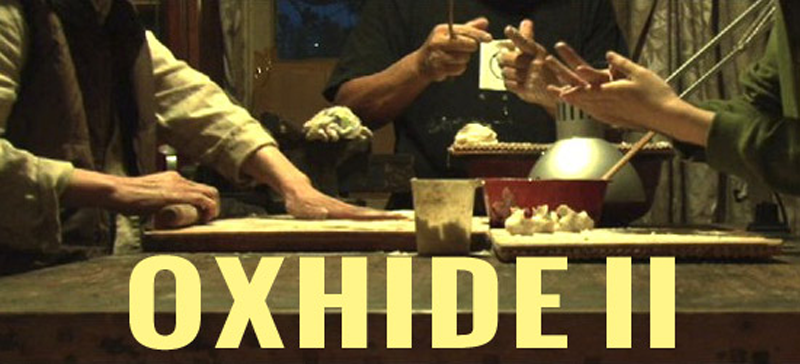
In Oxhide II, a family sits together at the table making dumplings. The repeated movements and collective concentration are mesmerizing as the action unfolds in real time. A static camera cuts only eight times, moving around the table in forty five degree angle intervals, giving new perspective to the landscape of knives, vegetables, bowls and busy fingers that inhabit the exaggerated wide screen. A mother, father, and daughter (played by director Jiayin Liu and her parents) adeptly prepare the filling and stuff the dumplings over the course of more than two hours.

Through the mundane and understated, the intricacies of a family dynamic become apparent resulting in a meticulously formalist film that is also surprisingly warm and personal.

“Oxhide II is unpretentiously inventive, quietly virtuosic.” -David Bordwell

“A direct, honest, miniature epic.” -Daniel Kasman, MUBI Notebook