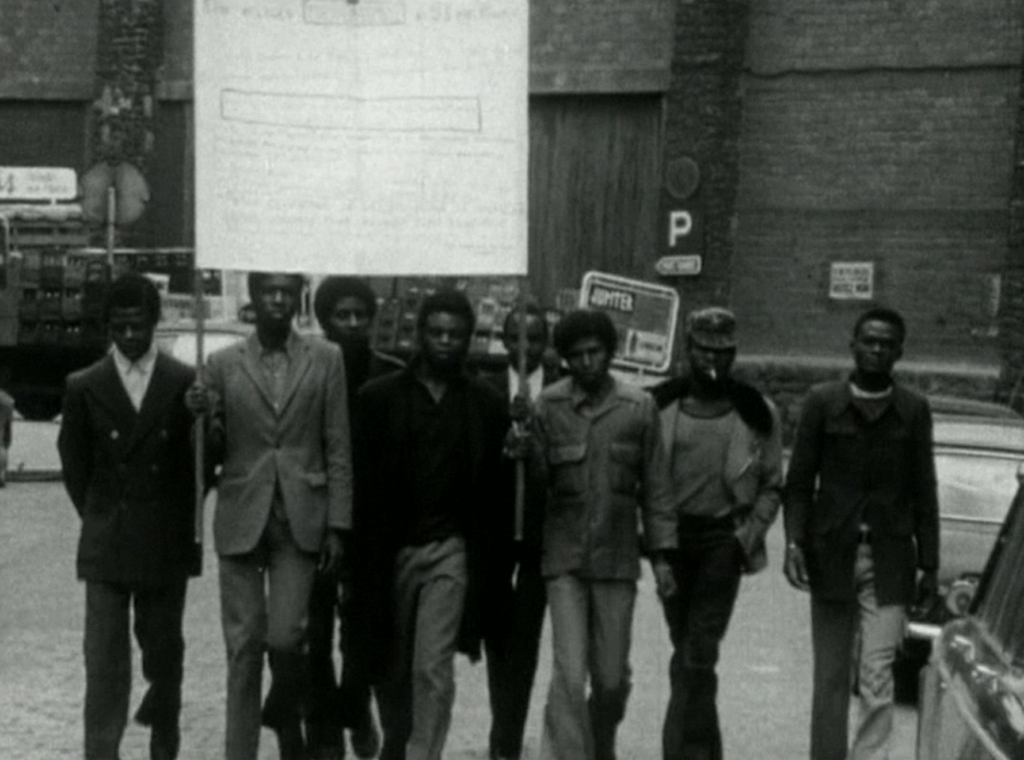
MATCH CUTS PRESENTS: ZACHARIAS KUNUK’S ATANARJUAT: THE FAST RUNNER

matchcuts_dec_banner

dir. Zacharias Kunuk, 2001.
USA, 174 min.
Inuktitut, with English subtitles
WEDNESDAY, DECEMBER 14 – 8PM
ONE NIGHT ONLY!

GET YOUR TICKETS!

Spectacle Theater is excited to collaborate with critical platform Match Cuts on a new series of screenings.

Match Cuts Presents was established with the mission of programming underrepresented masterworks, with First Nations and Decolonial cinema, amongst others, at its heart. ATANARJUAT THE FAST RUNNER is not only the first feature film made by an Inuit filmmaker (entirely spoken in Inuktitut, and shot on location in Igloolik) but, it’s the first movie made by an indigenous filmmaker about an indigenous way of life that’s completely independent of non-indigenous people or references.

Evil in the form of an unknown shaman divides a small community of nomadic Inuit, upsetting its balance and spirit.

Twenty years pass. Two brothers emerge to challenge the evil order: Amaqjuaq, the Strong One, and Atanarjuat, the Fast Runner. Atanarjuat wins the hand of the lovely Atuat away from the boastful son of the camp leader, Oki, who vows to get even. Oki ambushes the brothers in their sleep, killing Amaqjuaq, as Atanarjuat miraculously escapes running naked over the spring sea ice.

But can he ever escape the cycle of vengeance left behind?

ATANARJUAT THE FAST RUNNER is based on an ancient Inuit legend, set in the Arctic at the dawn of the first millennium. For countless generations, Igloolik elders have kept the legend of Atanarjuat alive through oral history to teach young Inuit the dangers of setting personal desire above the needs of the group.

ATANARJUAT THE FAST RUNNER demystifies the exotic, otherworldly aboriginal stereotype by telling a powerful, universal story – a drama set in motion by conflicts and emotions that have surfaced in virtually every culture known to humankind.

“When missionaries came,” explains director Zacharias Kunuk, “they proclaimed shamanism was the devil’s work. But they didn’t look into what the shamans felt, or how they gave life to the dying, visited the dead, found trails over land and underground or took to flight through the air. When the missionaries forced their religion on us, storytelling and drum dancing were almost banned. Our film is one way of bringing back lost traditions. I have never witnessed shamanism. I have only heard about it. One way of making it visible is to film it.”

Match Cuts is a weekly podcast centered on video, film and the moving image. Match Cuts Presents is dedicated to presenting de-colonialized cinema, LGBTQI films, Marxist diatribes, video art, dance films, sex films, and activist documentaries with a rotating cast of presenters from all spectrums of the performing and plastic arts and surrounding humanities. Match Cuts is hosted by Nick Faust and Kachine Moore, and produced by Meg Murnane.

THE METHOD

the-method-banner

THE METHOD
dir. Michela Monte, 16 min.
USA, 2016
THURSDAY, DECEMBER 15 – 7:30PM *Q&A WITH BROOKLYN LEGAL SERVICES*

GET YOUR TICKETS!

Living in Brooklyn has become an act of resistance, as working-class New Yorkers continue to be pushed out of their homes by real estate developments and landlords who strategically withhold repairs, heat, or hot water. The most successful technique to combat rights infringement is the coordinated work of residents, legal aids and community organizers. This short film documents residents in South Williamsburg, home to some of the largest rent spikes in the city, as they implement “The Method” to saving the neighborhood. After the film, members of Brooklyn Legal Services will explain their services, answer questions, and facilitate conversation. This film was made with the help and continued support of Los Sures (Southside United), St Nicks Alliance, The Peoples Fire House, and the office of Council Member Antonio Reynoso.

VIDEOFILIA (And Other Viral Syndromes)

VIDEOFILIA (And Other Viral Syndromes)
dir. Juan Daniel Molero, 2016
Peru, 103 mins.
In Spanish with English subtitles.
OFFICIAL PERUVIAN ENTRY, BEST FOREIGN LAUNGUAGE FILM ACADEMY AWARD 2017
Filmmaker Juan Daniel F. Molero and star Muki Sabogal will be at Spectacle for Q&As at all opening-weekend screenings.
FRIDAY, DECEMBER 2 – 7:00PM (US Theatrical Premiere!)
SATURDAY, DECEMBER 3 – 5PM (with Cinema Tropical’s Carlos Gutiérrez)
SUNDAY, DECEMBER 4 – 7:30PM
MONDAY, DECEMBER 5 – 7:30PM
TUESDAY, DECEMBER 6 – 7:30PM
WEDNESDAY, DECEMBER 7 – 7:30PM
THURSDAY, DECEMBER 8 – 5PM

GET YOUR TICKETS!

A Factory 25 release. Special thanks to Cinema Tropical and Marca Perú.

On the eve of the supposed Mayan apocalypse, a sleepy-eyed teenager named Luz (Muki Sabogal) encounters a 20something slacker named Junior (Terom) in a webcam chat room – but the world appears to go on the next morning, and a curious (and ultimately nervewracking) courtship ensues. In VIDEOFILIA, Peruvian filmmaker Juan Daniel F. Molero represents the world not just as it appears “IRL”; the story takes as much place in the capitol city of Lima as it does online, an alterna-verse drawn as a gobsmacking labyrinth of possible selves, where no choice is permanent and everything is thrown up for ingestion – “content” for the fishes. Junior fancies himself a burgeoning porn connoisseur, while Luz begins to experiment with drugs and the odd internet rendezvous to stave off the crushing boredom of a lonely, latchkey day-to-day life. (Molero litters this story with extra-textural signifiers, not the least of which is the Dragonball Z-themed restaurant where Luz works, typically serving much older men.)

VIDEOFILIA doesn’t attempt a 1:1 ratio of tableaux to criticisms; instead, the film finds its aesthetic gripped in damnable present tense, the casual clarity of Molero’s HD camera (for off-computer sequences) ultimately no more reliable than the glitched-out cyberworld occupied by Luz and Junior. It would be too easy to call this a work of magic realism, as VIDEOFILIA’s loose-limbed depiction of day-to-day life evokes SLACKER as much as it does LOS OLVIDADOS. Molero indulges a 21st century beauty that’s goofy, antic and yet harshly sobering – enamored of the possibilities of online, and yet wary of the void staring back at us whenever we sign on. A great darkness is held barely at arm’s length, with datamoshed compression artifacts slowly encroaching on the film’s otherwise spacious wide-panel frames, threatening to swallow Luz and Junior whole and emboss them in pixels; is this the end times, or just a weak connection?

Juan Daniel F. Molero is a filmmaker born and based in Lima. He has also lived in Buenos Aires and New York where he earned his first experiences in film journalism, video blogging, experimental film and film programming. In 2010 he directed the documentary feature REMINISCENCIAS. His work has screened at many renowned international festivals such as New Horizons, BAFICI, FIDMarseille, Valdivia, Lima Independiente and La Habana, and venues such as The Museum of Modern Art in New York, the Art Museum of Lima and La Casa Encendida in Madrid. His fiction debut film VIDEOFILIA (and Other Viral Syndromes), became the first Peruvian production to ever win the Tiger Award at the Rotterdam Film Festival, and received the Hubert Bals Fund for Post-Production.

“Compared to other thrillers that treat webcams as a structural gimmick or visualize social media in ways that look corny even by the time credits roll, VIDEOFILIA casts a singular spell.” – John DeFore, The Hollywood Reporter

You probably haven’t seen anything like VIDEOFILIA, a feature-length and extremely low-budget experimental narrative from Peru that combines elements from science fiction, psychedelia, and glitch art. Rather than taking risks, so many micro-indies coast by on charm—Videofilia is a rare, and welcomed, exception.” – Michael Joshua Rowin, Brooklyn Magazine

AWARDS:

Post-production Grant from Hubert Bals Fund 2014
Tiger Award for Best Film of International Feature Competition at IFFR 2015
Best Film of International Competition at Lima Independiente Film Festival 2015
University of Lima Jury Award at Lima Independiente Film Festival 2015
Critics’ Award at Atlántida Film Festival 2015
Distribution National Grant from Peruvian National FIlm Board – DAFO 2015
Grand Prix of International Competition at Split FIlm Festival 2015
Special Mention, International Competition, Ayacucho Film Festival 2015
Nominated for Best First Film at the Cinema Tropical Awards 2016


trlb

THE RED LIGHT BANDIT
(aka O BANDIDO DA LUZ VERMELHA)
dir. Rogério Sganzerla, 1968
Brazil, 92 mins.
In Portuguese with English subtitles.
FRIDAY, DECEMBER 2 – 10:00 PM (with introduction by Juan Daniel F. Molero)

“Sganzerla’s cannibalization of the dominating pop culture and his subversion of the colonized/colonizer dynamics opened for me a whole  world of doors for an undomesticated approach to representing a hazardously mutant identity to which so many of us peripheral beings -aliens to some- are born and subject to. Inspired by the local TV news and tabloids’ headlines (as I also did cut-upping Peruvian chicha newspapers and printed weblogs), THE RED LIGHT BANDIT chaotically portrays the absurd rise and fall of the Brazilian anti-hero of mediated reality.” – Juan Daniel F. Molero

I will never transmit sanitized ideas, eloquent discourses or plastic images before the garbage (…) Crushed and exploited, the colonized can only invent their own form of suffocation: the scream of protest comes from an abortive ‘mise en scène‘ (…) I’ll continue to make an underdeveloped cinema by condition and vocation, barbarian and ours, anticulturalist (…)”  – Rogerio Sganzerla


screen-shot-2016-11-30-at-6-36-33-pm

REMINISCENCIAS (Reminiscences)
dir. Juan Daniel Molero, 2010
Peru, 83 mins.
In Spanish with English subtitles.
SATURDAY, DECEMBER 3rd – 3:00PM  *DIRECTOR Q&A!*

“He is an original: So many avant-garde films feel derivative, but the combination of abstractions and concrete reality–achingly gorgeous and poignant–is unique.”
– Howard Feinstein, Indiewire

“What began as a means of recovering his temporary amnesia by watching his family’s home movies, Molero explored the visual archive of his life, and it gradually evolved into an experimental found footage autobiography. He collages disparate footage from various formats–8mm, VHS, miniDV, HD, and a cell phone camera–ranging from his grandfather’s 8mm films of a family outing at the river, which predates Molero himself, to universal scenes of growing up–the kindergarten classroom, the persistence of a boy learning how to skateboard–and footage he himself shot after his accident, in which he seeks out relatives in remote regions of Peru in the indigenous Quechua community. The singular vision with which Molero weaves a lyrical and visual narrative of his own history is both affecting and radical. Employing both celluloid and video textures, Molero uses the errant visual elements as metaphors for malfunctioning and wandering memory. REMINISCENCIAS is a self-reflexive exploration that both questions and relies on these fragments to remind us of our memories, and to salvage forgotten scraps of time. This unique document of life in Peru is also a testament to the mediated, image-saturated lives of those born after the advent of home movies, and the uncanny and fragmented depictions that these informal documents portray of our lives. ” Aily Nash


screen-shot-2016-11-30-at-6-33-15-pm

QUE SIGUE? Works-in-progress and short films that inspired VIDEOFILIA 
Peru, 80 mins.
SUNDAY, DECEMBER 4 – 5:00PM  *FILMMAKERS IN PERSON*

QUE SIGUE? features new, in-progress work from Juan Daniel F. Molero, Adam Khalil & Bayley James Sweitzer, along with bonus shorts from Molero and VIDEOFILIA star Muki Sabogal. All four filmmakers will be in person for discussion.

DECEMBER MIDNIGHTS

steeldawn_banner

STEEL DAWN
Dir. Lance Hool, 1987.
USA, 101 min.
SATURDAY, DECEMBER 3 – MIDNIGHT

Patrick Swayze (who is dead) wanders the shitty post-apotcalyptic wasteland with Brion James (also dead, Bladerunner) and Anthony Zerbe (not yet dead, Who’ll Stop the Rain, American Hustle) in this film directed by the producer of Crocodile Dundee in Los Angeles)


future-hunters_banner

FUTURE HUNTERS
Dir. Cirio H. Santiago, 1986.
USA, 96 min.
FRIDAY, DECEMBER 2 – MIDNIGHT
SATURDAY, DECEMBER 16 – MIDNIGHT
THURSDAY, DECEMBER 22 – 7:30PM

Robert Patrick (Terminator 2) meets a visitor from the shitty future is this US/Philippines production co-starring Taiwanese fake martial arts star Bruce Li. From the director of Stryker.


stryker_banner

STRYKER
Dir. Cirio H. Santiago, 1984.
Phillipines, 84 min.
SATURDAY, DECEMBER 10 – MIDNIGHT

Steve Sandor (Bonnie’s Kids) navigates the shitty landscape of a fucked up future. From the director of Future Hunters.


the_murder_of_santa_claus_b

THE MURDER OF SANTA CLAUS (L’ASSASSINAT DU PÈRE NOËL)
Dir. Christian-Jaque, 105 min.
France, 1941.
In French with English subtitles
SAT, DECEMBER 17 – MIDNIGHT

After the fall of France to Nazi forces in 1940, it took little time for the German government to end all film production except for a state-run production company. That company was Continental Films, established in October 1940, and its first film, released a year later, was L’Assassinat du père Noël, translated as The Murder Of Santa Claus. Based on the Pierre Very novel, the film is a kind of fairy tale that slowly turns both more magical and darker, a film at stark contrast to the circumstances of its creation, and yet deeply connected in ways which become stranger and more subversive as we reach the solving of the title’s riddle.

An old watchmaker, playing Santa Claus, is found dead, and on a primary level the film is a detective story led by the rules of the fantastic, as likely to drift into love story or fable as anything. Led by the great Harry Baur (THE GOLEM), who plays the watchmaker with charm to burn, the performances all bring a brio and mystery which ties perfectly with the astonishingly dreamlike setting. Director Christian-Jaque (A LOVER’S RETURN, FANFAN LA TULIPE), in one of his first films, works for the first time with actress Renée Faure, who would become not only his go-to star, but his wife as well. Anyone looking to avoid yuletide treacle should definitely investigate this rarely-seen gem.

Harry Baur, a year later, was arrested by the Gestapo after attempting to defend his wife; he was released in 1943 but died shortly thereafter under “mysterious circumstances”.


80Blocks_banner_2015

80 BLOCKS FROM TIFFANY’S (BEST OF SPECTACLE)
Dir. Gary Weis, 1979
USA, 67 min.
SATURDAY, DECEMBER 9 – MIDNIGHT


Special thanks to Gary Weis

A legendary cult documentary equally infamous for its subject matter as well as its scarcity, director Gary Weis traveled uptown in 1979 to provide an unflinching, hilarious, and sometimes shocking depiction of the South Bronx neighborhood and, in particular, two African American and Puerto Rican gangs known as the “Savage Skulls” and the “Savage Nomads.”

Facing severe sociopolitical decay throughout the 70s, the South Bronx is portrayed as a crime-infested, all out no-man’s-land war zone where the battle lines are drawn between warring factions of youth street gangs.

Commonly referred to as the real life version of THE WARRIORS, the film is a brilliant snapshot of a bygone era and a stark reminder of the damage that had been wreaked on parts of New York throughout the 70s; the abandoned districts, burnt-out buildings and human waste serving as the end point for a decade of mismanagement and unaddressed social problems. Spectacle is proud to present this landmark work in a brand new remastered version.


AN ART APART: CHARLES GATEWOOD

charles-gatewood_banner

ONCE THE TOOTHPASTE IS OUT OF THE TUBE – An Art Apart: Charles Gatewood
dir. Carl Abrahamson, 2015.
Sweden, 58 min.
English
SATURDAY, DECEMBER 3 – 8PM (WITH DIRECTOR Q&A!)
SUNDAY, DECEMBER 18 – 7:30PM

GET YOUR TICKETS!

American photographer Charles Gatewood started out in the 1960s as a young man with dreams of showing the world the radical cultural developments that were going on in his country. He met many of the iconic instigators of change and documented them for posterity. As the decades passed, Gatewood drifted more and more into a personal expression of sexual subcultures, both in America and abroad. His powerful photos of pioneers within the tattooing- and piercing scenes helped pave the way for the movement that was to be called “Modern Primitives”. It’s a classic example of when art, and in this example, specifically photography, merges with its general environment and takes on new forms that are impossible to stop. Or, as the San Francisco based photographer himself describes it: “Once the toothpaste is out of the tube, you can’t put it back”.


gustafbanner

WHERE IS HERE?
dir. Gustaf Broms, Sweden, 2009
Sweden 42 mins.
MAHAPRALAYA
for. Gustaf Broms, Sweden, 2015
Sweden 22 mins
SATURDAY, DECEMBER 3 – 10PM
SUNDAY, DECEMBER 18 – 8:30PM

GET YOUR TICKETS!

Swedish artist Gustaf Broms has, since the early 1990s, developed a symbolic language in order to help him understand his own being. On an adventurous journey stretching over photography, filmmaking, sculpting, collaging, music making and on to performance art, his artworks and the process become pieces of a puzzle that constitute not only the human being called Gustaf Broms but also human life itself in general. The grand scale of Broms’ ambitions signals a willingness to share his highly experimental attitude and its findings with other people. Thus his persona as an artist grows into something more ambitious, yet at the same time more undefined. The multifaceted expressions of his work seem to contain the very same theme, the very same question: where exactly lies “self” in the human being? Who exactly are we and which tools do we need to find out?

Broms films Where is Here? and Mahapralaya describe the human condition in a most poetic and mind-expanding way. Are we taking part of a dream-state? An ultimate reality? Broms’ rich cinematic textures facilitate an extended in-depth journey. Where it ends, no-one knows. But the journey itself is cosmic, colourful and ecstatically exploratory. It will lead you far, far away from where you left off. And you will be grateful for the experience.

ALSO SHOWING WITH THIS PROGRAM:
twiggs-pitch-image
THE SPIRITS OF A PLACE CALL
Dir. Katelan Foisy, 2016
USA, 20 min.

Katelan Foisy is a multimedia artist and writer. Katelan has been featured in NY Times, Elle magazine, Paper Magazine, GQ Italy, Time Out NY, and many others—for her work both as an artist and curator. She has written for Motherboard/VICE, Electric Literature, Luna Luna, ERIS magazine, and COILHOUSE, and has held events with Atlas Obscura and Morbid Anatomy. She was called a “Female Jack Kerouac” by Taylor Mead and a “Modern Day Francesca Woodman” by Cynthia von Buhler. Her film work was featured during the Romani Cinema festival in Paris.

“My films started as back and forth dialogue between a musician and myself. Inspired by “As I was Moving Ahead, Occasionally I saw Brief Glimpses of Beauty” by Jonas Mekas; I began to explore the medium as not only documentation, but a magical working crossing time barriers of past, present, and future. They became love letters to cities, people, eras, and places I traveled to.” -Katelan Foisy

PUSHING THE CONSISTENT FAILURE
Dir. Vanessa Sinclair, 2016
USA, 21 min.

Vanessa Sinclair, PsyD, is a psychoanalyst and clinical psychologist in private practice in New York City. She is a founding member of Das Unbehagen: A Free Association for Psychoanalysis, which facilitates psychoanalytic lectures, classes, and events in and around NYC. Together with artist Katelan Foisy, she explores the magic and artistic expression of the cut-up method and the third mind (www.chaosofthethirdmind.com). She contributes to a variety of publications, including the The Fenris Wolf, DIVISION/Review: A Quarterly Psychoanalytic Forum, ERIS Magazine, and The Brooklyn Rail.

THE BEGINNING OF THE END

beginningoftheend_seriesbanner

By almost any measure, 2016 sucked. From the death of David Bowie in January to the election of KKK-endorsed Donald Trump to the presidency in November, this year has offered little more than pain, suffering, outrage, despair, loss, bigotry, humiliation and death. As for the good news? There is no good news. Hope is dead. These four films anticipate our inevitable post apocalyptic future.


HandsofSteelbig
HANDS OF STEEL
Dir. Sergio Martino, 1986.
USA, 94 min.
THURSDAY, DECEMBER 1 – 10PM
WEDNESDAY, DECEMBER 7 – 10PM
THURSDAY, DECEMBER 15 – 10PM
SATURDAY, DECEMBER 17 – 7:30PM

GET YOUR TICKETS!

The future is pretty fucked in the cyborg arm wrestling movie co-starring John Saxon, directed by Sergio Martino (Torso, All the Colors of Dark).


steeldawn_banner

STEEL DAWN
Dir. Lance Hool, 1987.
USA, 101 min.
SATURDAY, DECEMBER 3 – MIDNIGHT
SUNDAY, DECEMBER 11 – 7:30PM
FRIDAY, DECEMBER 16 – 10PM
WEDNESDAY, DECEMBER 21 – 10PM

GET YOUR TICKETS!

Patrick Swayze (who is dead) wanders the shitty post-apotcalyptic wasteland with Brion James (also dead, Bladerunner) and Anthony Zerbe (not yet dead, Who’ll Stop the Rain, American Hustle) in this film directed by the producer of Crocodile Dundee in Los Angeles.


future-hunters_banner
FUTURE HUNTERS
Dir. Cirio H. Santiago, 1986.
USA, 96 min.
FRIDAY, DECEMBER 2 – MIDNIGHT
SATURDAY, DECEMBER 16 – MIDNIGHT
THURSDAY, DECEMBER 22 – 7:30PM

GET YOUR TICKETS!

Robert Patrick (Terminator 2) meets a visitor from the shitty future is this US/Philippines production co-starring Taiwanese fake martial arts star Bruce Li. From the director of Stryker.


stryker_banner

STRYKER
Dir. Cirio H. Santiago, 1984.
Phillipines, 84 min.
TUESDAY, DECEMBER 6 – 10PM
SATURDAY, DECEMBER 10 – MIDNIGHT
MONDAY, DECEMBER 19 – 7:30PM

GET YOUR TICKETS!

Steve Sandor (Bonnie’s Kids) navigates the shitty landscape of a fucked up future. From the director of Future Hunters.


THREE FROM KAH-WAI LIM

flymetominamibanner

FLY ME TO MINAMI
Dir. Kah-Wai Lim, 2013.
Japan. 103 min.
SATURDAY, DECEMBER 10 – 7:30PM (WITH DIRECTOR Q&A!)
MONDAY, DECEMBER 12 – 10PM

GET YOUR TICKETS!

A tale of two intersecting, international love affairs in Osaka. Busy fashion mag editor Sherine loses her photographer just before a big holiday shoot in Osaka’s fashionable Minami shopping district. With no other options, Sherine takes up a friend’s suggestion their brother Tatsuya, a talented amateur, help out. Meanwhile, Korean flight attendant Seol-a lands in Osaka after Christmas and immediately heads to K-Town to meet her married lover Shinsuke at his shop. Sherine and Tatsuya begin to fall in love, despite knowing Sherine must return to Hong Kong after New Year’s, while Seol-a demands so much of Shinsuke’s time his wife begins to suspect. Both relationships reach a breaking point of choice as the holiday season closes.


magiclossbanner

MAGIC & LOSS
Dir. Kah-Wai Lim, 2012.
Japan. 81 min.
MONDAY, DECEMBER 5 – 10PM
FRIDAY, DECEMBER 9 – 7:30PM (WITH DIRECTOR Q&A!)
SATURDAY, DECEMBER 17 – 5PM
MONDAY, DECEMBER 19 – 10PM

GET YOUR TICKETS!

On vacation at an isolated Hong Kong resort, Japanese Kiki and Korean Kkobbi meet and quickly become friends. Or have they met before? The two women spend their time silently exploring the Mui Wo resort and surrounding island, oddly empty save for a lone employee despite a sign reading ‘Full’. Languid pacing and uncertainty take precedent over concrete information, as the two women’s secrets slowly reveal themselves amid a sustained atmosphere of uncertainty and sexual tension.


afteralltheseyearsbanner

AFTER ALL THESE YEARS
Dir. Kah-Wai Lim, 2010.
Malaysia. 100 min.
FRIDAY, DECEMBER 9 – 10PM
SUNDAY, DECEMBER 11 – 5PM (WITH DIRECTOR Q&A!)
THURSDAY, DECEMBER 22 – 7:30PM

GET YOUR TICKETS!

Returning to his hometown after several years away, Ah Jie is disturbed to realize no one remembers him, not even his family. Increasingly depressed, he meets Lao Huang at a noodle shop, where Lao says he can help find the truth behind why no one recognizes him.


THE MURDER OF SANTA CLAUS (L’ASSASSINAT DU PÈRE NOËL)

the_murder_of_santa_claus_b

THE MURDER OF SANTA CLAUS
Dir. Christian-Jaque, 105 min.
France, 1941.
In French with English subtitles
TUES, DECEMBER 13- 10PM
SAT, DECEMBER 17- MIDNIGHT
WED, DECEMBER 21- 7:30PM
FRI, DECEMBER 23- 10PM

GET YOUR TICKETS!

After the fall of France to Nazi forces in 1940, it took little time for the German government to end all film production except for a state-run production company. That company was Continental Films, established in October 1940, and its first film, released a year later, was L’Assassinat du père Noël, translated as The Murder Of Santa Claus. Based on the Pierre Very novel, the film is a kind of fairy tale that slowly turns both more magical and darker, a film at stark contrast to the circumstances of its creation, and yet deeply connected in ways which become stranger and more subversive as we reach the solving of the title’s riddle.

An old watchmaker, playing Santa Claus, is found dead, and on a primary level the film is a detective story led by the rules of the fantastic, as likely to drift into love story or fable as anything. Led by the great Harry Baur (THE GOLEM), who plays the watchmaker with charm to burn, the performances all bring a brio and mystery which ties perfectly with the astonishingly dreamlike setting. Director Christian-Jaque (A LOVER’S RETURN, FANFAN LA TULIPE), in one of his first films, works for the first time with actress Renée Faure, who would become not only his go-to star, but his wife as well. Anyone looking to avoid yuletide treacle should definitely investigate this rarely-seen gem.

Harry Baur, a year later, was arrested by the Gestapo after attempting to defend his wife; he was released in 1943 but died shortly thereafter under “mysterious circumstances”.

INDIE BEAT: FLORENCE, ARIZONA

florenceazbanner

FLORENCE, ARIZONA
Dir. Andrea B. Scott, 2014
United States. 78 minutes.
TUESDAY, NOVEMBER 15 – 7:30 PM

GET YOUR TICKETS!

Florence, Arizona is a cowboy town with a prison problem. Founded in 1866, this bastion of the Wild West is home to 8,500 civilians and 17,000 inmates spread over nine prisons. Through an unconventional lens, Andrea B. Scott’s FLORENCE, ARIZONA weaves together the stories of four key residents, whose lives have all been shadowed in some way by the surrounding prison-industrial complex. The result is an intricately crafted cinematic tapestry, threaded through with deep strands of Americana, humor, intimacy, and pathos, revealing as much about ourselves as it does about our modern carceral state.

Festival Screenings / Awards:
DOC NYC
Camden International Film Festival
DOXA
Ashland Independent Film Festival
Collinsville Film Festival (Best Documentary)
Big Sky Documentary Film Festival
Greentopia Film Festival

Andrea B. Scott is a Brooklyn based documentary filmmaker and editor enamored with the worlds of Americana and nostalgia. Her debut feature length documentary FLORENCE, ARIZONA premiered at DOC NYC in November 2014. Her latest short film, JUST A DOG, premiered at Hot Docs in 2016 and was published online through The Nation. Andy edited the CNN documentary film, FRESH DRESSED and co-edited the Netflix documentary HOT GIRLS WANTED, both of which premiered at the Sundance Film Festival in January 2015. She was an editor and an associate producer on Participant Media’s documentary A PLACE AT THE TABLE, directed by Kristi Jacobson and Lori Silverbush, which premiered at the Sundance Film Festival in January 2012 and was released nationwide by Magnolia Pictures. Andy recently edited a documentary about a bird hoarder from upstate New York, and is at work on several short films.
Q&A with the director following the screening!

EROS + MASSACRE: 50 YEARS OF PINK FILMS

pinkubanner1

Pink Film remains one of the most fascinating, idiosyncratic, and puzzling of genres in Japanese film. It is also one of the most varied– and most misunderstood– genres in film history. On one hand, it was linked with the underground madhouse of the Japanese political avant-garde, especially through the auteur Wakamatsu Koji. The genre originally launched with a flurry of new director talent in 1962, and became immediately linked with a subversive counter-culture. Those college students with eyes glued to a Wakamatsu retrospective at a dingy Shinjuku theatre also participated full-force in the political protest movements of the 1960s. On the other hand, Pink Film is a sexploitation genre, and many of its films were churned out wholesale for profit– especially after the decline of political protest in the 1970s. After all, until the late 1980s, Pink Films easily comprised 75% of all Japanese film production in a given year. As a result, while some Pink Films are as stunning and understated as an Antonioni film, others are a mishmash of styles and techniques (for better or for worse). Some are full of grotesque and violent sex-acts, and others appear to have barely any sex at all. Some even have fewer sex than a standard Hollywood production.

To be labeled a Pink, each film must follow certain rules for production and distribution; after that, it is up to the director to choose whatever style or sensibility he or she desires. It must be shot within three to five days, and with a budget of about 3 million Yen; it must be around 60 minutes in length, shot on 35mm film on location and without synched sound, and is usually shown in specialized Pink Film theaters. Otherwise, as long as about six sex scenes are included at regular intervals, directors are granted a great degree of autonomy. The films are then free to experiment with form and narrative structure, resulting in parodies of a huge number of genres, from Ozu-like family melodramas to political thrillers, from surrealist dreamscapes to absurdist rom-com musicals.

Spectacle now presents the largest and most comprehensive retrospective of Pink Film in North America, spanning from its very early history in the 1960s to the wild and weird Pinks that continue to be made today. November’s screenings include a survey of Pinks made from the 1980s to the present day, riffing on genres from Ozu-like family dramas to murder mystery, action, and even slapstick. The result is a collection of rare films which continue to thrill, inspire, and occasionally completely freak out their audience, over 50 years since their inception.

abfambanner

ABNORMAL FAMILY
Dir. Masayuki Suo, 1984
Japan. 63 minutes.
In Japanese with English subtitles.
SUNDAY, NOVEMBER 6 – 7:30 PM
SATURDAY, NOVEMBER 12 – 8:30 PM
SUNDAY, NOVEMBER 20 – 8:45 PM
MONDAY, NOVEMBER 28 – 10:00 PM 

GET YOUR TICKETS!

This spoof of Ozu Yasujiro would make the Master of Japanese Cinema turn in his grave. The film– so deeply uncomfortable it borders on hilarious– is chock full of references to Ozu’s family dramas, from the “pillow shot” to the low camera angle, stilted dialogue, stylized movement, and still camera. ABNORMAL FAMILY, however, dials Ozu’s intensity and weirdness to 11. The result is a deeply strange film full of family intrigue, sex, and more than one (or two, or three) incestuous overtones. For any Japanese film aficionado, however, it’s not to be missed: it was the debut for its director, Suo Masayuki, who would go on to make SHALL WE DANCE? (1996), one of the most well-known Japanese contemporary films.


raigyobanner

RAIGYO
(aka THE WOMAN IN THE BLACK UNDERWEAR)
Dir. Takahisa Zeze, 1997
Japan. 75 mins.
In Japanese with English subtitles.
TUESDAY, NOVEMBER 1 – 10:00 PM
THURSDAY, NOVEMBER 10 – 10:00 PM
FRIDAY, NOVEMBER 18 – 10:00 PM

GET YOUR TICKETS!

A mysterious woman in black… a payphone… a murder seemingly without cause. Director Zeze Takahisa is known as one of the “Four Heavenly Kings of Pink,” and it certainly shows in this surreal and enigmatic film. An incredibly opaque but nonetheless beautifully filmed Pink, RAIGYO perplexes and intrigues. Allegedly based on a true story, and set in 1988, Raigyo depicts three characters: a woman with an unnamed, terrible illness, a fisherman, and a lecherous man who sleeps around while his wife is heavily pregnant. The symbolic title refers to a fish that restaurants generally don’t sell because it is known to carry worms — thus signifying the corruption of the main characters.

Although it is also known by its title THE WOMAN IN THE BLACK UNDERWEAR, Takahisa’s film is more art film than sexploitation. The pace is as oneiric as the plot, and the audience is drawn deeper into the web crafted by Zeze’s quiet, understated, and eerie masterpiece.


lonelycowbanner

A LONELY COW WEEPS AT DAWN
Dir. Daisuke Gotô, 2001
Japan. 61 mins.
In Japanese with English subtitles.
THURSDAY, NOVEMBER 3 – 7:30 PM
SATURDAY, NOVEMBER 19 – 10:00 PM
SATURDAY, NOVEMBER 26 – 5:00 PM

GET YOUR TICKETS!

An elderly dairy farmer goes to milk his cows in the morning, only to find his daughter-in-law, naked and on all fours, mooing with the rest of the herd. This bizarre occurrence begins the rest of the film, whose tone is strangely subdued and melancholic for the bewildering events on screen. Director Goto Daisuke claimed Ozu Yasujiro’s LATE SPRING (1949) to be an influence, along with Bernardo Bertolucci’s NOVOCENTO (1976).

The result is a strange, incestuous parable with overtones of social critique: class difference certainly makes itself known, as well as the rift between urban and rural. Beautiful, poignant, but nonetheless immensely weird, the film is a paradigmatic example of the newer generation of Pinks in the 21st century.


glamorousbanner

THE GLAMOROUS LIFE OF SACHIKO HANAI
Dir. Mitsuru Meike, 2003
Japan. 90 mins.
In Japanese with English subtitles.
Special thanks to Palm Pictures.
WEDNESDAY, NOVEMBER 16 – 10:00 PM
SATURDAY, NOVEMBER 19 – 5:00 PM
FRIDAY, NOVEMBER 25 – 10:00 PM

GET YOUR TICKETS!

No Pink Film retrospective would be complete without the absolutely charismatic weirdness of THE GLAMOROUS LIFE OF SACHIKO HANAI, a cult hit by the director Meike Mitsuru. Although an amazing film in its own right, SACHIKO is also an eerie time capsule of George W. Bush’s first few years of office, and is full of entirely un-subtle political overtones. And how could it not? One of the film’s main characters is Dubya’s middle finger! In the film, a call-girl– the eponymous Sachiko Hanai– accidentally witnesses an altercation between North Korean and Middle Eastern spies. When Sachiko is shot in the forehead, the bullet does not kill her, but instead gives her extraordinary genius and mental prowess.

When she ends up finding a metal capsule containing George W. Bush’s finger, whose fingerprint is singularly capable of launching a nuclear holocaust, she must make sure that the wrong side doesn’t find it… or else. The result is a wacky spoof on a political thriller, with memorable and hilarious scenes that will doubtlessly lodge into the viewer’s brain like Sachiko’s magic bullet. First released in 2003, the film has subsequently played at over 20 film festivals around the world.