THE COMPLETE HISTORY OF SEATTLE & NICK TOTI SHORTS PROGRAM

THE COMPLETE HISTORY OF SEATTLE
Dir. Nick Toti, 2016.
USA. 74 mins.
SATURDAY AUGUST 27 – 7:30 PM
ONE NIGHT ONLY – with director in person!

GET YOUR TICKETS HERE!

WHAT IS THIS FUCKING LIFE: THE SHORT FILMS OF NICK TOTI
Dir. Nick Toti, 2011-2016
USA, approx 90 mins.
SATURDAY AUGUST 27 – 10:00 PM
ONE NIGHT ONLY – with director in person!

GET YOUR TICKETS HERE!

“Weird, pretentious, inspiring, fragmented and impossible to shake off. And if that isn’t a perfect summation of a spiritual quest, I don’t know what is.” – Tony Kay, City Arts Online
“A documentary that very well could blow your mind” – Jake Uitti, The Monarch Review

THE COMPLETE HISTORY OF SEATTLE is a ballad about the bizarro-art-punk band Raft of Dead Monkeys, who rose from the ashes of two 90s Christian rock bands and an Adam Sandler joke. Disenfranchised and pissed off, they quickly became notorious for their radical live shows/performance art which included vomiting, bloody nurses, and male strippers. Nick Toti takes this story beyond a talking heads doc, and deploys Errol Morris-esque vignettes, which are then funneled through a nightmarish Dušan Makavejev strainer. THE COMPLETE HISTORY OF SEATTLE is a wholly unique endeavor- one in which the filmmaker’s results evoke the intended image of the short-lived band.

Following up THE COMPLETE HISTORY OF SEATTLE is a collection of Nick Toti’s short films that range from his peculiar focused docs in the vein of Les Blank to his more recent transgressive output. Included in this program is his obsessed fan doc GAGA, ME, HER BOYFRIEND, & THE RIVER; 3+3+3-2 (A DOG’S LIFE), a compact look into what truly was a shit year for one woman; the lower-classy avant-comedy narrative WHEN YOU CALL ME THAT SMILE; and a recently realized shorter alternate cut of THE COMPLETE HISTORY OF SEATTLE called ONCE WE MADE A RAFT OF DEAD MONKEYS.

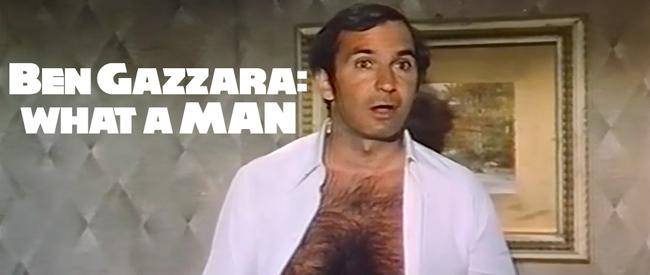
BEN GAZZARA: WHAT A MAN

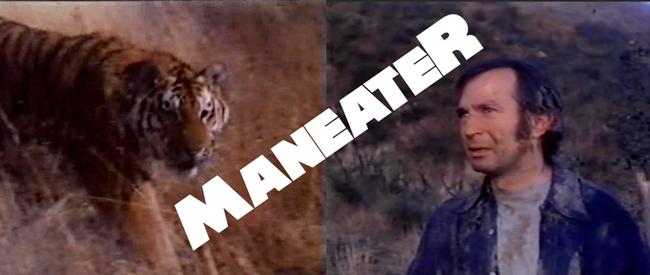
Spectacle celebrates one of the 1970s smoothest character actors this side of Seymour Cassel with four relative obscurities starring the one and only BEN GAZZARA. Born 86 years ago this month, Gazzara had his hot sexy hands in more than a handful of seminal New Hollywood works. None of the following films qualify. Instead, we present four films that this hard working actor did to bring home a paycheck. Rest assured however, that Gazzara could not help but bring his signature panache to the lowliest of productions, elevating Italian schlock (THE SICILIAN CONNECTION, THE GIRL FROM TRIESTE), cable sleaze (MANEATER) and made-for-TV family dramas (THE DEATH OF RICHIE) alike to dazzling heights of cool. Come and get hot and bothered all month long by that sideways glance, hirsute chest and well-cut suits on the hot hot body of BEN GAZZARA.


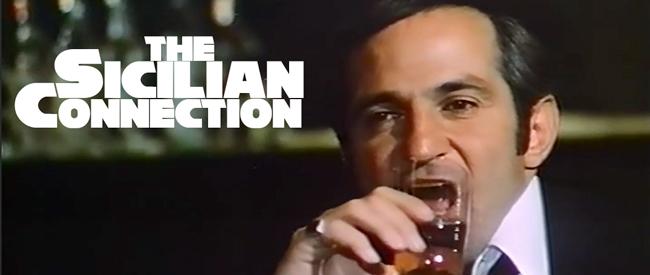
THE SICILIAN CONNECTION
(aka THE OPIUM CONNECTION, aka AFYON OPPIO)
Dir. Ferdinando Baldi, 1972.
ITALY, 100 min.
English
THURSDAY, AUGUST 11 – 5:00 PM
FRIDAY, AUGUST 12 – 7:30 PM
TUESDAY, AUGUST 16 10:00PM
FRIDAY, AUGUST 26 – 5:00PM

GET YOUR TICKETS HERE!

Gazzara headed off to Italy (You go where they love you…) for a run of low budget B-movie productions in the 70s and 80s, sometimes speaking the Sicilian dialect he learned from his parents and other times being the only actor on set speaking English. THE SICILIAN CONNECTION is one of the best of these, released in the US just after Cassevetes’ THE KILLING OF A CHINESE BOOKIE. Gazzara’s character “Joe” could be Cosmo Vittelli’s Brooklyn cousin; both are small time dreamers with style, trying to make good in the American criminal underground. Joe’s line is heroin, and lots of it, and he travels from Turkey to Sicily and back to New York again to try to make his big score. Plenty of fun is had along the way, and you get to see Gazzara in a wet suit.


THE DEATH OF RICHIE
Dir. Paul Wendkos, 1977.
USA, 97 min.
English
WEDNESDAY, AUGUST 10 – 7:30 PM
SATURDAY, AUGUST 13 – 7:30 PM
MONDAY, AUGUST 15 – 10:00 PM
THURSDAY, AUGUST 18 – 5:00 PM

GET YOUR TICKETS HERE!

Poor Robby Benson. He’s a teenage kid on drugs, buckling under the weight of peer pressure, with black light posters in his bedroom and parents (an exasperated Ben Gazzara and world-weary Eileen Brennan) who can’t seem to do anything with him. This made-for-TV movie’s title and its opening scene – which takes place at Richie’s funeral – establish right away that Richie will meet a sad end. But how will it happen?


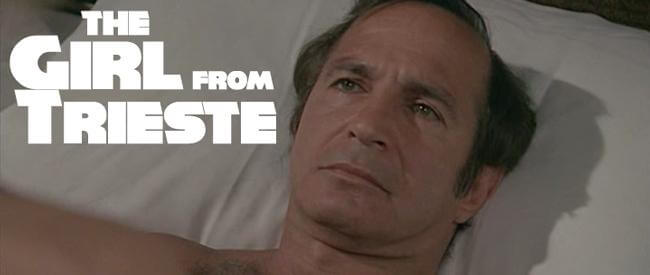
THE GIRL FROM TRIESTE
Dir. Pasquale Festa Campanile, 1982.
ITALY, 113 min.
In Italian with English subtitles.

SUNDAY, AUGUST 7 – 5:00 PM
THURSDAY, AUGUST 18 – 7:30 PM
TUESDAY, AUGUST 23 – 7:30 PM
WEDNESDAY, AUGUST 24 – 10:00 PM

GET YOUR TICKETS HERE!

Ben Gazzara is a little older and wiser as an artist looking for peace and quiet at the Italian seaside where he lives and works. That peace is shattered when a beautiful, unstable woman (Ornella Muti) is saved from drowning in front of him and they become lovers. Gazzara trades his free-wheeling, drug smuggling, sex-romping persona for something a bit more paternal, and his dominant facial expression in this film can be described as “quizzical”. The IMDB keywords for this movie include: “artist”, “beach”, “beach umbrella”, “mental hospital”, “mouth to mouth resuscitation”, “depression” and “sex in bed”.


MANEATER
(aka EVASION)
Dir. Vince Edwards, 1973.
USA, 74 min.
English
FRIDAY, AUGUST 12 – MIDNIGHT
SATURDAY, AUGUST 20 – MIDNIGHT

GET YOUR TICKETS HERE!

A creepy zoo keeper (Richard Basehart) laments that his tigers have only garbage to eat, and wonders aloud if soon they will be able to hunt for fresh meat once again. Along comes Ben Gazzara and his groovy wife and friends in a camper which runs out of gas nearby. In the struggle for survival that ensues, only Ben Gazzara’s quick thinking and sexy ways can save them.

PURPLE RAIN: TERROR BEYOND BELIEF

PurpleRainTBB_banner

PURPLE RAIN: TERROR BEYOND BELIEF
dir. John Wiese, 2014.
USA, 90 min.
English
FRIDAY AUGUST 5 – screening at 7:30 PM
UNIVERSAL PREMIERE – ONE NIGHT ONLY – artist in person!
ADVANCE TICKETS HERE

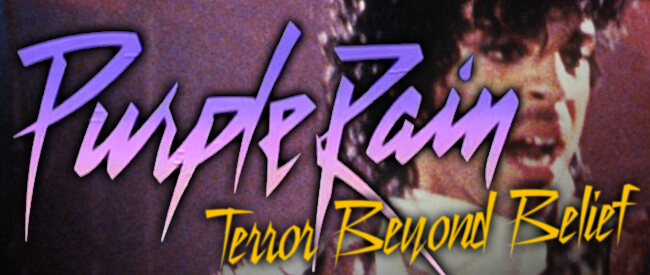
Having brought to our audience such spectacular single-work détournements like THE SHINING FORWARDS AND BACKWARDS and TOUGH GUYS, we are now pleased to premiere Los Angeles-based artist John Wiese’s 2014 effort PURPLE RAIN: TERROR BEYOND BELIEF.

Described by Wiese himself as “a new edit of PURPLE RAIN where Prince murders Apollonia and gets away with it,” PR:TBB shines a darker shade of purple on the “greatest music movie of them all.” If “Darling Nikki” was all it took for Tipper Gore to start the PMRC, one wonders what PR:TBB might have done for the MPAA.

Unlike other works of appropriation which selectively reorganize “bites” into a new decontexualized construct, PR:TBB pushes an existing, diegetic act of violence a few cinematic degrees further, and then lets the third act play through (albeit without Apollonia’s presence). This is PURPLE RAIN as you have seen it before (yet not).

Also check out an evening of Wiese’s original video works at Anthology Film Archives the night before, on Thursday August 4th – http://anthologyfilmarchives.org/film_screenings/calendar?view=list&month=08&year=2016#showing-46090

BIO:
An artist and composer living in Los Angeles, John Wiese is a highly respected figure, both in contemporary sound art as well as the international experimental music underground. Wiese is also known for his influential grind/noisecore band Sissy Spacek, extreme electronics unit LHD, and for numerous collaborations. He is also an accomplished visual and graphic artist, with a long list of international exhibitions and printed materials.

www.john-wiese.com

SWEET LOVE, BITTER

slbbannerSWEET LOVE, BITTER
(aka IT WON’T RUB OFF, BABY!)
Dir. Herbert Danska, 1966-68
USA, 93 min.
SATURDAY, AUGUST 6 – 7:30PM
THURSDAY, AUGUST 11 – 10:00 PM
THURSDAY, AUGUST 25 – 5:00 PM
TUESDAY, AUGUST 30 – 7:30 PM

GET YOUR TICKETS!

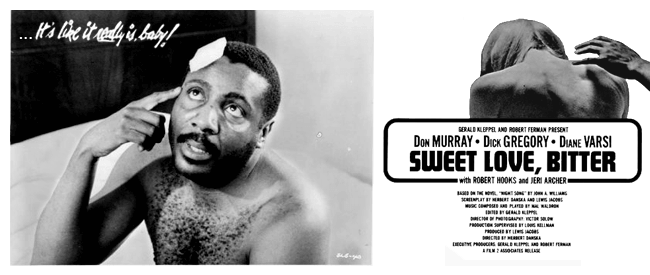
Adapted from John A. Williams’ novel Night Song, Herbert Danska’s SWEET LOVE, BITTER is a one-in-a-million collaboration, long overdue for a new audience (to say nothing of a gourmet, bells-out restoration or rerelease.) An unrecognizable version of stand-up comedian Dick Gregory – author of the incendiary memoir Nigger – stars as Richie “Eagle” Stokes, a brilliant, self-destructive sax player unmistakably modeled after Charlie Parker. The narrative originates, however, with David Hillary (Don Murray, of BUS STOP and THE HOODLUM PRIEST): a white academic who’s fallen into vagrancy after the death of his wife in a car accident. David and Eagle hit it off at the pawn shop, and become fast friends – eventually, David is entrusted with a paltry service position at Eagle’s nightclub of residency, owned and operated by his increasingly weary friend Keel (Robert Hooks).

Danska’s screenplay (cowritten with Lewis Jacobs) also probes Keel’s relationship with his girlfriend Della (Diane Varsi), a white woman frustrated by his insecurities about their taboo relationship. One of the film’s remarkable psychic digressions sees him paralyzed by the blown-up image of Della on a movie screen; he runs up to her and becomes a thumbnail-sized silhouette, while Eagle – the bane of Keel’s day-to-day existence, and a continuous threat to the solvency of his nightclub – enters screen right. Keel’s subplot reveals a trace of SWEET LOVE’s utopian pathos: that a movie about a black man enduring impotence with a white girlfriend could even get made, let alone distributed by a major studio, in the American 1960s. Eagle’s heroin problem slowly creeps to the fore, while David – well-intentioned but obviously far less brilliant than his friend – manages to put some semblance of his life back together, in no small part due to the fact of his whiteness.

When David walks into the esteemed halls of a university to apply for a teaching position, the film jaunts into another remarkable detour. Eagle accompanies him, received like a foreign dignitary, receiving a battery of “intellectual” (read: square) questions about jazz from the button-down faculty. Eagle passes a joint around to lighten the mood, managing to say more in a few words than all his surrounding academics put together. It’s a moment of levity that can’t last, as evidenced by a decisive encounter with a bigoted police officer (played by Bruce Glover, father of Crispin) back in the harsh sunlight of the exterior real world – an event that runs the risk of exposing the meager sum value of Hillary’s liberal comradery. This is a race-relation film about the warts-and-all experience of New York bohemia, whose politics fly in the face of everything Stanley Kramer’s then-lauded “message pictures” stood for; interracial solidarity appears, while not impossible, held hostage at every turn.

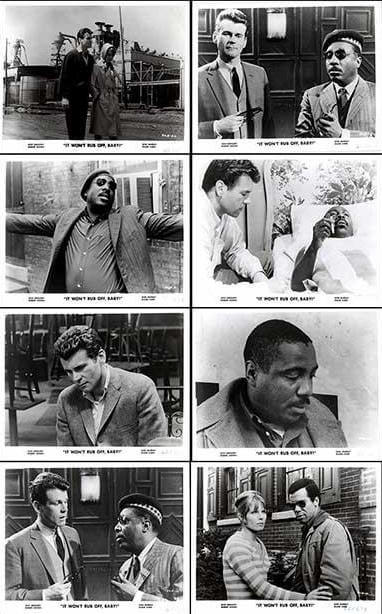
In his own right, Danska is a director ripe for rediscovery: His Last Poets documentary RIGHT ON! (1971) chronicled the birth of what would become hip-hop, and his world-wise MAURICE SENDAK & ALL HIS WILD THINGS (1986) predated the Spike Jonze treatment by nearly three decades. Sadly, he effectively disowned SWEET LOVE – his filmmaking debut, and only work of fiction – after the producers bestowed it the sleazier title IT WON’T RUB OFF, BABY!, reshuffled his narrative flow, and chopped out 20 minutes centering on a supporting character played by THE LANDLORD’s Carl Lee – based loosely (perhaps not loosely enough?) on Miles Davis. The resultant film descended into obscurity after being buried in a tawdry small-release circuit, and the three principals walked their separate ways. But even if Danska’s original cut is indeed lost to the ages, SWEET LOVE, BITTER makes for a powerful and profound glimpse at the Sixties most American films would still prefer not to talk about – backed by a woozy jazz score that alternates between honey and dereliction, by the great pianist and arranger Mal Waldron.

SLB_lobbycard (1)

“Incisive, sensitive probing of America’s racial hang-up. Quietly grips with a rare ring of truth and realism – the kind of independent film America needs.” – William Wolf, Cine

“Dick Gregory plays with surprising conviction and considerable realism, and now adds movie stardom to his other attainments… In real life he is an active, effective leader in the movement for social equality; he is a witty and engaging entertainer; he is also, as this film proves, a remarkably talented actor.” – Hollis Alpert, Saturday Review

“Assaying the role of a high flying jazz sax master vaguely patterned after the late Charlie ‘Byrd’ Parker, on a skittering and doomed downslide oiled by the twin devastation of drugs and booze, Gregory turns in a vigorous and fascinating non-performance.” – Variety

“A brilliant, provocative, frank film.”New York Amsterdam News

“Gregory gives a terrifying performance.” – Brendan Gill, The New Yorker

HISTORY IS A DREAM OF REGRET: THREE FILMS BY TADEUSZ KONWICKI

Tadeusz Konwicki’s idyllic teenage years in what was then interwar Lithuania ended with the outbreak of World War II. After his high school was shut down, he switched to a different sort of education — as a partisan, fighting first the Nazis, then the Soviet liberators who would annex Lithuania for the next 50 years (just as it had during Czarist domination of the former Polish-Lithuanian republic throughout the 19th century). Fleeing to Warsaw after the break-up of his unit, he became a journalist and writer, initially of popular Socialist Realist novels, but, as he became increasingly disillusioned with Communism by the mid-50s, of works that bitterly probed at the heart of a troubled Poland through memory, dream, and nightmare.

Now known mostly for blackly sardonic novels like 1979’s secretly published A Minor Apocalypse, in which a fading writer is selected by his literary peers to set fire to himself in protest of the Communist government, Konwicki also worked throughout his career in writing and directing films. Long unseen in the United States, his final three features of the 70s and 80s capture the end of the Soviet period in feverishly unforgettable images moving back from the present into the nearly mythological Polish literary past.

HISTORY IS A DREAM OF REGRET: THREE FILMS BY TADEUSZ KONWICKI from Spectacle Theater on Vimeo.

HOW FAR AWAY, HOW NEAR
aka Jak daleko stad, jak blisko
dir. Tadeusz Konwicki, 1972
Poland, 95 minutes
In Polish, with English subtitles
TUESDAY, AUGUST 2 – 10:00 PM
THURSDAY, AUGUST 11 – 7:30 PM
MONDAY, AUGUST 15 – 7:30 PM
SATURDAY, AUGUST 20 – 10:00 PM

GET YOUR TICKETS HERE!

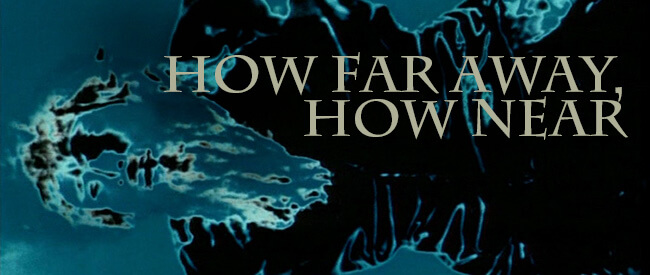
“I’m going to kill a man in 86 minutes.” These words launch, as our protagonist reveals an automatic pistol beneath his coat in a public square, one of the great postmodern dreams of Eastern European cinema. This timeframe is not referring to any linear course of events in a story where the present constantly collapses into a tangle of history and memory as elaborate as Wojciech Has’ THE HOURGLASS SANATORIUM the following year, but to the deterministic system of the film narrative itself, where all events must inexorably converge in the final confrontation. In this, his most personal film, this opening statement is also that of the director to a complicit audience, accepting the blood on his hands.

The film itself plays out as a metaphysical mystery. Haunted by a friend’s suicide, as much as by his memories of lost loved ones and the ever-present specters of WWII, our protagonist moves through the story like a detective in search of larger answers. Archetypal figures and ghosts appear out of the gloom to guide him: a comrade from his old partisan unit, a forgotten love, friends lost in the war, and eerie symbollic figures who pursue him throughout. These encounters thread through exquisitely shot tableaux of the rites and ceremonies of a once-multifaceted Polish culture — a highly ritualized Catholic wedding, a Jewish funeral, an unending booze-soaked party — as well as the oneiric burning houses and sunset landscapes of the mind itself.

Above all, Konwicki’s masterpiece is a symphony of regrets: for that which is gone, for that which cannot be saved, and for that which still goes on unchanged. Threading throughout, echoes of the Holocaust, a submerged subject in a post-war Poland that, at the time of shooting, was rediscovering anti-Semitism for political gain, a grim reality alluded to by scenes of departing friends and intellectuals abandoning the the country by train. Inter-war memories recall the macabre premonition presented by a rabbi’s death, and the protagonist (channeling Konwicki himself) reflects that his grandfather’s identity was never known, making him quite possibly Jewish himself and protected only by omission. Legendarily, the film draws its structure from that of Yom Kippur, the Jewish holiday of atonement and repentance.


ISSA VALLEY
aka Dolina Issy
dir. Tadeusz Konwicki, 1982
Poland, 110 minutes
In Polish, with English subtitles
MONDAY, AUGUST 1 – 7:30 PM
WEDNESDAY, AUGUST 10 – 10:00 PM
SUNDAY, AUGUST 21 – 5:00 PM
WEDNESDAY, AUGUST 24 – 7:30 PM

GET YOUR TICKETS HERE!

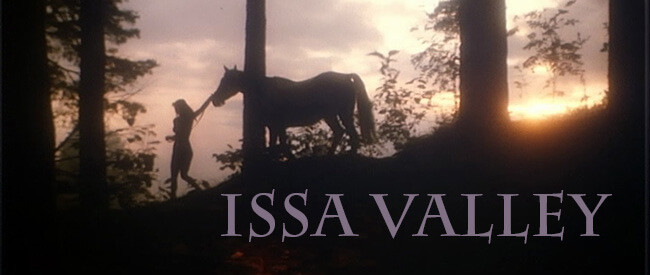
Konwicki’s later films continue to dissect the present late-Warsaw Pact Poland, but through the lenses of its literary past. Approached by the family of newly Nobel Prize-winning poet Czesław Miłosz, Konwicki accepted an adaptation of his Issa Valley, a pastoral coming-of-age story that resonated with Konwicki’s own youth in interwar Lithuania, a place he returned to again and again in his own works. His film is less directly story than a sweeping expressionist collage of landscape, cultural detail, and melodrama and is above all luminous with nostalgia for the lost world it represents. Despite this, his film is more multifaceted than a simple reminiscence or elegy, dancing from light into the shadow undercurrents of the modern era about to overtake the countryside in the form of two world wars: pious hypocrisies lead to suicide, Lithuanian-Polish tensions explode, children flirt with sacrilege, and a forester, isolated in the landscape, descends into madness and murder. Every image expounds on this balance of light and dark as the entire film seems to have been shot backlit by sunset, as if, as well, capturing the last moments of the entire fading era.

It is ultimately these images that linger in the memory more than any detail that could be conveyed by the synopsis, or the loosely-binding bildungsroman structure. Sun-flared skies, grasping foliage, suggestive spirits that haunt the ridgelines and ornate cemeteries in silhouette, each moment a voice in the chorus of memory. And the voice of Miłosz himself, echoed through his poems in the mouths of the cast, appearing out of character in interludes of modern Poland, as the past continues, always, to bleed inescapably into the present.


LAVA
aka A Tale of Adam Mickiewicz’s ‘Forefathers’ Eve’ aka Lawa
dir. Tadeusz Konwicki, 1989
Poland, 129 minutes
In Polish, with English subtitles
THURSDAY, AUGUST 4 – 5:00 PM
SATURDAY, AUGUST 20 – 7:30 PM
THURSDAY, AUGUST 25 – 10:00 PM

GET YOUR TICKETS HERE! 

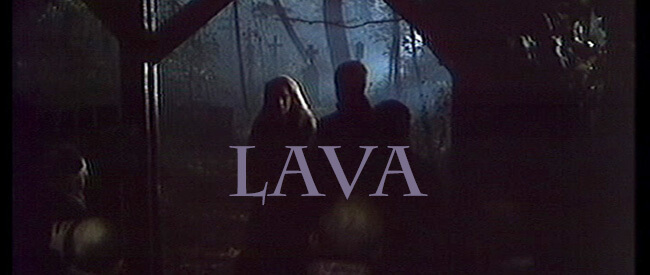
Konwicki’s final film was another adaptation, this time of the national epic of Polish literature, Adam Mickiewicz’s “Forefather’s Eve”, a 19th-century romantic poem merging a traditional feast guiding the spirits of the dead the afterlife, thwarted love, and political agitation against the occupying Russian government that abolished Poland as an independent state from 1795 until World War I. Though the Russian oppressors that sent Mickiewicz into exile in 1824 for student political involvements were Tzarists, the parallels were not lost on Soviet censors following WWII, who banned performance of the work as part of a general cultural-political crackdown in 1968. It’s no coincidence that Konwicki was only able to get his film version produced in the twilight days of the Warsaw Pact’s dissolution at the end of the 80s, sounding a final death knell for Russian goverment in Poland.

The film itself, interweaving Mickiewicz’s life and multiple plot threads with post-modern panache, shows Konwicki’s film magicianship in full effect. Non-diegetic shots of modern and pastoral landscapes break into monologues to spread their relevance over the whole of Polish history, cameras lurch past despotic Russian governors in period attire to display cars passing on the street outside, and Mickiewicz appears in various proxies, as an impassioned agitator inciting fellow prisoners in the limbo of political incarceration and then as a spectral poet (portrayed by the great Gustaw Holoubek, who also haunts HOW FAR AWAY, HOW NEAR) pouring out vitriol against oppression and against God across time and space. The stand-out sequences fully embody Mickiewicz’s 19th century romanticism — a gothic nocturnal seance that frames much of the action and suggests that all of Poland may have long existed only in a state of living death, and a sudden breakout into revolutionary song in prison, accompanied only by the clanking percussion of the austere surroundings and somehow attaining an a deathly seriousness with nothing in common with ordinary instances of musical numbers on film.

Dense, beautiful, confounding, and with a breathtaking urgency that comes through undiminished nearly three decades later.

 

JULY MIDNIGHTS

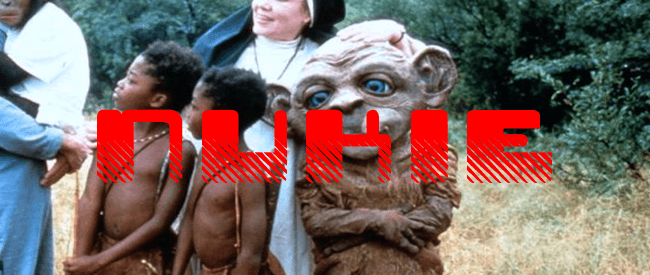
FRIDAY, JULY 1: NUKIE
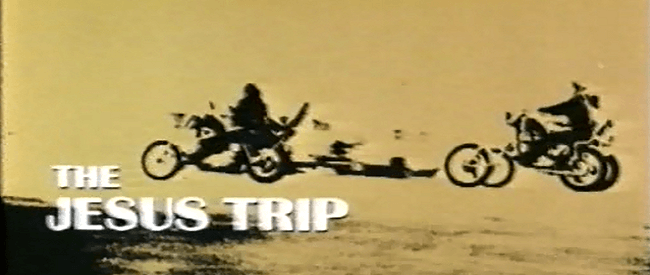
SATURDAY, JULY 2: THE JESUS TRIP

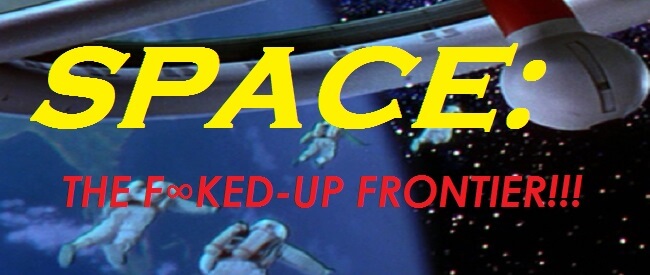
FRIDAY, JULY 8: SPACE, the F∞KED-UP FRONTIER
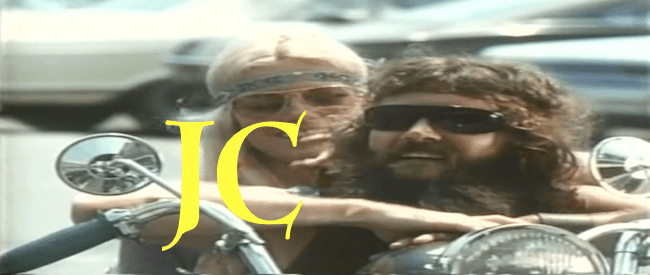
SATURDAY, JULY 9: JC

FRIDAY, JULY 15: NUKIE
SATURDAY, JULY 16: GOLDEN RENDEZVOUS

FRIDAY, JULY 22: GOLDEN RENDEZVOUS
SATURDAY, JULY 23: THE JESUS TRIP

FRIDAY, JULY 29: NUKIE
SATURDAY, JULY 30: JC


nukiebanner

NUKIE
dir. Sias Odenaal, Michael Pakleppa
South Africa. 92 mins.
FRIDAY, JULY 1 – MIDNIGHT
FRIDAY, JULY 15 – MIDNIGHT
FRIDAY, JULY 29 – MIDNIGHT

Described by Nelson Mandela as one of his very favorite films at the end of a three-plus decade prison sentence, Michael Pakleppa and Sias Odendaal’s NUKIE is a worthy contender for least-necessary motion picture experience of all time. Every DINOSAUR ISLAND has its JURASSIC PARK; there is simply no way to introduce NUKIE without invoking E.T. THE EXTRATERRESTRIAL early and often, as the film is at once a maudlin ripoff and expanded-universe spinoff of a type – if E.T. had relatives across the same galaxy with Boer accents, and/or Melissa Matheson’s original screenplay kicked off with ten minutes of E.T. and Elliot screaming each other’s first names, AKIRA-style. (Its approaches to 90s computer imaging technology and throbbing postcolonial tribal fantasia also harken back to Wim Wenders’ UNTIL THE END OF THE WORLD.)

Last year, the cinema journal of note Film Fun put it like this: “THE REVENANT is looking for America, but can’t find it.” The same is true for Nukie the character, whose twin brother Miko is held hostage in a NASA black site somewhere in Florida. While the fiberglass-and-rubber duo remain connected by space telepathy, Nukie touches down in the South African savanna in search of a Hollywood ending; his quest is jarring to the rational senses, like a hellish placeholder miniaturized metaphor for what NUKIE the movie wants to accomplish but never will. Eventually our disgusting hero befriends a pair of tribal kids (Siphiwe and Sipho Mlangeni) who, along with a missionary (Glynis Johns) and a slap-happy scientist (Steve Railsbeck), help bring Nukie around to bust Miko out of the laboratory. Like its twin taglines – “A magical space adventure” and “An adventure out of this world” – NUKIE is at once generic and unsettling as all get-out, a unique post-apartheid car crash of a movie that’s spent the last quarter-century with its head in the sand.


Jesus trip 650x275

THE JESUS TRIP
Dir. Russ Mayberry, 1971.
USA, 84 min.
SATURDAY, JULY 2 – MIDNITE
THURSDAY, JULY 7 – 5:00 PM
SATURDAY, JULY 23 – MIDNITE
FRIDAY, JULY 29 – 5:00 PM

GET YOUR TICKETS!

“Why did they call it THE JESUS TRIP? Because the high is Heaven, and the low is Hell…”

A bunch of drug smuggling bikers get chased down by rivals and cops, and by the grace of god manage to find shelter in an Arizona convent. This trashy bunch foul up clean linen sheets, disregard convent formalities, and beat a police officer close to death. The group flees the nunnery with a young blonde who is ultimately seduced by the earthly pleasures of shaggy haired men, desert riding, and helicopter demolition. This movie was also featured in The Jesus and Mary Chain’s first video off Honey, presumably for the sun-soaked, cactus-studded Jesus Americana.

SPACE: THE F∞KED-UP FRONTIER
Dir. Various.
70 min.
FRIDAY, JULY 8 – MIDNIGHT
WEDNESDAY, JULY 20 – 7:30 PM
** 47th anniversary of the faking of the moon landing! **

GET YOUR TICKETS!

SPACE: THE F∞KED-UP FRONTIER!!!!
Get HIGH with this show!

Weren’t we supposed to have astronauts on Mars by now?
Where is the space wheel?
How come the U.S. and Russia don’t have domed cities all across the moon?

Well, it looks that, in regards to the so-called “Conquest of Space,” we sure fucked up.
Mankind’s attempts to touch infinity have all failed, like legendary Icarus, and the mud of the earth will forever be our home, the stars perpetually out of reach. Even the shuttle program is dead, and all R&D is now conducted by plutocrats seeking to save themselves when our sad and pathetic Earth is finally, completely poisoned.

From genuine NASA footage to slick computer graphics to crude claymation, this series of shorts, created to celebrate the 47th Anniversary of the Faking of the Moon Landing, examines the stellar beauty just out of our reach, as well as casting a cosmic eye on the awful behavior humans are sure to take with them into the galactic void. For roughly 70 minutes, 25 short films take the viewer out of this world, sometimes calming the soul—and other times disturbing it.

See the planets dance!
See spaceships fight black holes—and lose!
See humans and aliens interact—poorly!
See how far the IRS will actually go!
See Patti Smith’s secrets about flying saucer!
See more eyeball kicks than stars in the galaxy!
See more things in Heaven and Earth and Mars than are dreamt of in your philosophies!

A show that will blast you off–
It is SPACE: THE F∞KED-UP FRONTIER!!!

JC
Dir. William F. McGaha, 1972.
USA, 99 min.
SATURDAY, JULY 9 – MIDNITE
FRIDAY, JULY 15 – 5:00 PM
SATURDAY, JULY 30 – MIDNITE

GET YOUR TICKETS HERE!

After one of cinema’s longer scenes of a joint being shared, biker “JC Masters” undergoes a dramatic messianic vision of himself as the second coming of Christ. Featuring the director as lead character, a group of bikers becomes a small cult energized by sermons for peace, beer and racial equality. Slim Pickins is the local sheriff, struggling to control JC and his crew due to an oft-articulated fear of national media attention and general interpersonal ineffectiveness. Small town bigotry fires up the ideals of the biker pack, causing sides to be taken, words to be said, and shots to be fired. JC feels like he has to shoulder it all, explaining the details of God’s wisdom at the risk of his own peril.


Raekwon - Wisdom Body (Instrumental) [Track 11]_6Qp8GLptZE8_youtube

GOLDEN RENDEZVOUS
(aka NUCLEAR TERROR)
Dir. Freddie Francis / Ashley Lazarus, 1977
South African / Cayman Islands. 109 mins.
SATURDAY, JULY 16 – MIDNITE
FRIDAY, JULY 22 – MIDNITE


Special thanks to Thor Communicators LLC.


1977’s doomed international coproduction GOLDEN RENDEZVOUS functions on a couple of unique registers. For one, it’s an ensemble thriller in the unabashedly problematic vein of Andrew McLagen’s THE WILD GEESE or FFOLKES; two, it’s a page-turner in the sleepytime airport paperback tradition of Clive Cussler and Robert Ludum; three, it bears the uncanny distinction of having a plurality of drunken cast members onscreen at all times. (GOLDEN RENDEZVOUS allegedly made its hellraising star Richard Harris un-insurable for future productions, even as he rewrote the screenplay between shoots.) Harris stars as Johnny Carter, Chief Officer of the S.S. CAMPARI (appropriate for the aforementioned booze-soluble ensemble), a military cargo freighter reconverted to a luxury schooner. John Vernon (ANIMAL HOUSE, POINT BLANK) leads a crew of terrorists who hijack the Campari with an elaborate ransom scheme in mind – unless Carter gets to him first. Harris’ then-wife Ann Turkel features as an ill-clad and coquette-ish love interest, appropriate to the macho wish-fulfillment milieu embodied in other MacLean adaptations (ICE STATION ZEBRA, WHERE EAGLES DARE).

Some movies are masterpieces, others are epic follies founded on good intentions; GOLDEN RENDEZVOUS is a cold-ass get-rich-eventually scheme, allegedly paid for in South African rand siphoned off of a government program intended to foment progressive, issue-driven cinema. It also suggests that a director credit for a legendary cinematographer – in this case, Freddie Francis, of DUNE and THE INNOCENTS – does not a beautiful or even pretty film make, although tales of behind-the-scenes sabotage (and a last-minute bailout from Ashley Lazarus) are many. Finally, alongside a stolid opportunity to watch old-school thespians drunkenly brandish machine guns with straight faces, RENDEZVOUS boasts a life-changing synthesizer score by Jeff Wayne – all the more inappropriate to the attendant movie for its taut imperative and toe-tapping melancholy.


SPACE: THE F∞KED-UP FRONTIER

SPACE: THE F∞KED-UP FRONTIER
Dir. Various.
70 min.
FRIDAY, JULY 8 – MIDNIGHT
WEDNESDAY, JULY 20 – 7:30 PM
** 47th anniversary of the faking of the moon landing! **

GET YOUR TICKETS!

SPACE: THE F∞KED-UP FRONTIER!!!!
Get HIGH with this show!

Weren’t we supposed to have astronauts on Mars by now?
Where is the space wheel?
How come the U.S. and Russia don’t have domed cities all across the moon?

Well, it looks that, in regards to the so-called “Conquest of Space,” we sure fucked up.
Mankind’s attempts to touch infinity have all failed, like legendary Icarus, and the mud of the earth will forever be our home, the stars perpetually out of reach. Even the shuttle program is dead, and all R&D is now conducted by plutocrats seeking to save themselves when our sad and pathetic Earth is finally, completely poisoned.

From genuine NASA footage to slick computer graphics to crude claymation, this series of shorts, created to celebrate the 47th Anniversary of the Faking of the Moon Landing, examines the stellar beauty just out of our reach, as well as casting a cosmic eye on the awful behavior humans are sure to take with them into the galactic void. For roughly 70 minutes, 25 short films take the viewer out of this world, sometimes calming the soul—and other times disturbing it.

See the planets dance!
See spaceships fight black holes—and lose!
See humans and aliens interact—poorly!
See how far the IRS will actually go!
See Patti Smith’s secrets about flying saucer!
See more eyeball kicks than stars in the galaxy!
See more things in Heaven and Earth and Mars than are dreamt of in your philosophies!

A show that will blast you off–
It is SPACE: THE F∞KED-UP FRONTIER!!!

GODS AND KINGS

GODS AND KINGS
Dir. Robin Blotnick, 2012.
87 min.
In Spanish and English with English subtitles.
SUNDAY, JULY 17 – 7:30 PM ** Filmmaker in attendance! **
FRIDAY, JULY 22 – 7:30 PM 
** Filmmaker in attendance! **
SUNDAY, JULY 31 – 5:00 PM

GET YOUR TICKETS!

Momostenango, a little town in the Guatemalan highlands, is experiencing a curious cultural revival through its unique Disfraz dance, in which volunteer dancers parade through religious festivals dressed in masks and costumes inspired by villains from contemporary pop culture of mostly Western origins. GODS AND KINGS explores this bizarre new custom by dissecting the history of faith, tradition, and colonialism in Guatemala. Rich in anthropological insights, the film interweaves colorful documents of the dances with archival footage and conversations with experts and the participants themselves to provide a vivid look at the power of images on culture in today’s globalized world.

This ethnographic gem has not been seen by many outside its festival runs. Spectacle is proud to present two screenings this month with filmmaker Robin Blotnick in attendance. Robin Blotnick is a Brooklyn-based filmmaker whose latest award-winning feature-length documentary The Hand That Feeds, co-directed with Rachel Lears, follows the inspiring story of a group of undocumented workers in an Upper East Side bakery fighting for fair wages and an end to abusive working conditions.


ALL MIXED UP: MATH ROCK COUNTDOWN & MIXTAPE MIXTAPE

Pile-of-VHS-Tapes

SATURDAY, JULY 9TH – 7:30 AND 10:00 PM
ONE NIGHT ONLY!
FACEBOOK EVENT: (click this)

Spectacle celebrates the art of the video mixtape with this night of smash cuts, samples, recontextualisation, and wholesale appropriation.

7:30 PM – MATH ROCK COUNTDOWN
10:00 PM – MIXTAPE MIXTAPE

MRCD_banner

MATH ROCK COUNTDOWN
Edited by Preston Spurlock, 2016.
???. 85 min.

The premier of MATH ROCK COUNTDOWN, a longform video mashup created by multimedia artist Preston Spurlock. Culled from scores of VHS tapes, MRC is an 85-minute bombast of talk shows, sitcoms, commercials, instructional videos, and pure analog glitch. Images aggressively jockey for foremost position in the viewer’s mind. Jingles, one-liners, purple prose weave in and out of inadvertent musicality, forming a clattering soundtrack. Smash edits, smeary abstractions, and overlays create subliminal threads between lust and sensitivity, sex and death, steak and lobster, Steve Urkel and nuclear holocaust. Visual diamonds picked and arranged out of a grungy heap of cultural detritus. A museum of microseconds. Dots on a timeline. Connect them as you see fit.

MTMT_banner

MIXTAPE MIXTAPE
Dir. ????? ?????, ????.
???. 80 min.

MIXTAPE MIXTAPE is an exclusive reel of our favorite mixtape moments. We’re dig deep into our collection of pre-internet video compilations, underground film fest screeners, VHS oddities, and contemporary mixes, pulling out the best and juiciest bits for you, and presenting you with a charcuterie plate of well-cured weirdness. Sure not to disappoint.

TWO CZECH FAIRY TALES: BEAUTY AND THE BEAST + THE LITTLE MERMAID

TCFT_banner

Running alongside (and eventually outlasting) the Czech New Wave movement, Czechoslovakia also created some of the most dazzling interpretations of classic fairy tales in the 1970s, with many of them eventually becoming a time-honored viewing tradition of the Czech Christmas experience.

Working with the Czech National Film Archive, Spectacle is delighted to present two fairy tales that featured work from numerous Czech New Wave players.

Special thanks to The Czech National Film Archive.


BATB_banner

BEAUTY AND THE BEAST
aka Panna a netvor
Dir. Juraj Herz, 1978
Czechoslovakia, 87 min.
In Czech with English subtitles

SUNDAY, JULY 10 – 5:00 PM
THURSDAY, JULY 14 – 5:00 PM
FRIDAY, JULY 15 – 7:30 PM
WEDNESDAY, JULY 20 – 10:00 PM
SATURDAY, JULY 23 – 7:30 PM

GET YOUR TICKETS!

A merchant gets lost and takes refuge in a half-ruined chateau in the middle of a forest. When he plucks a rose, the lord of the chateau appears- a monster resembling a giant bird of prey. The monster spares the merchant’s life, but on the condition that the man himself returns or sends one of his daughters. Only Julie is willing to save her father. Love changes the monster’s claws into human hands. Julie catches a glimpse of his body and, in horror, rejects his declaration of love. However, when the girl realizes that the monster, whom she actually loves, is dying without her, she returns to the castle…

Best known for Czech New Wave classics like THE CREMATOR and MORGIANA, director Juraj Herz brings a haunted, gothic atmosphere to the source material, creating perhaps the darkest-ever interpretation of the classic fairy tale.


TLM_banner

THE LITTLE MERMAID
aka Malá morská víla
Dir. Karel Kachyňa, 1976
Czechoslovakia, 86 min.
In Czech with English subtitles

BRAND NEW HD RESTORATION!

SUNDAY, JULY 10 – 7:30 PM
THURSDAY, JULY 14 – 7:30 PM
SUNDAY, JULY 17 – 5:00 PM
FRIDAY, JULY 22 – 5:00 PM
FRIDAY, JULY 29 – 10:00 PM

GET YOUR TICKETS!

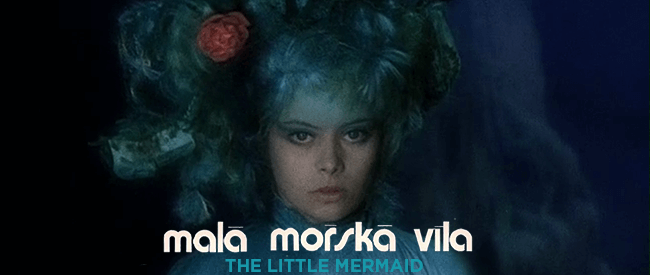
Two daughters of the Sea King are playing in the depths of the sea – the little mermaid and her elder sister. The Sea King has just sunk a ship as a birthday gift for his elder daughter. The little mermaid rescues a prince from drowning and falls for him. She makes a trade with an evil sorceress: her voice for a chance to live on land…

Featuring a captivating orchestral / electronic score, psychedelic swirls, and tech assists from Czech New Wave regulars like cinematographer Jaroslav Kucera (DAISIES, MORGIANA, FRUITS OF PARADISE), editor Miroslav Hájek (LOVES OF A BLONDE, THE FIREMAN’S BALL) and set decorator Ester Krumbachová (VALERIE & HER WEEK OF WONDERS), Karel Kachyna’s adaptation of Hans C. Anderson’s classic is a vision that could’ve only come from 70s Czechoslovakia.