BASEMENT MEDIA FEST

BASEMENT_banner

THE 5TH BASEMENT MEDIA FEST
Dir. Various
Various countries, approx. 75 mins.

THURSDAY, JUNE 25 – 7:30PM AND 10PM
ONE NIGHT ONLY!

THE BASEMENT MEDIA FEST IS A SURVEY OF CONTEMPORARY ARTISTS WORKING WITH LO-DEF, LO-TECH, AND LO-FI MOTION PIX TECHNIQUES.

FOUNDED IN RESPONSE TO HI-RES COMMERCIAL MEDIA AND CORPORATE-SPONSORED FILM FESTS, BASEMENT IS A CELEBRATION OF THE MEDIATED EXPERIENCE AS AN AESTHETIC EXPERIENCE. WE’LL BE PRESENTING A MIXD PROGRAM OF CELLULOID AND .MOVS. COME ENJOY SOME 100 YR OLD TECH IN A STATE OF THE ART CONVERTED BODEGA THEATER.

Yates – The Bags, Probably 1971 – 5 mins

Jarrett Hayman – Me, Dancing – 2 mins

John Wilson – How To Remain Single – 17 mins

Amelia Johannes – Family Crockery (Whiteness) – 2 mins

Eric Stewart – Wake – 8 mins

Paul Turano – Toward the Flame – 5 mins

Jared Hutchinson – The Infinity Scroll, pt. II – 3 mins

Hannah Piper Burns – Outer Darkness – 11 mins

Henning Frederik Malz – Rest in Me – 6 mins

Felipe Steinberg – Tudo Referente a Frio: Rua César Bierrenbach, 181, Campinas – 15 mins

PITTSBURGH POLICE SHORTS

pps bannerv2py

PITTSBURGH POLICE SHORTS
Dir. John Marshall, 1974
USA. 71 minutes.

FRIDAY, JUNE 5 – 7:30PM
WEDNESDAY, JUNE 10 – 7:30PM
FRIDAY, JUNE 19 – 7:30PM
MONDAY, JUNE 22 – 7:30PM

Manifold Controversy (3 min)
Vagrant Woman (8 Mins)
Youth and the Man of Property (7 mins)
After the Game (9 Mins)
Two Brothers (4 min)
A Forty Dollar Misunderstanding (8 min)
Henry is Drunk (7 Min); Wrong Kid (4 min)
Twenty-one Dollars or Twenty-one Days (8 Min)
You Wasn’t Loitering (6 Min)

John Marshall captures moments of contact between the people of Pittsburgh and their police, in this selection of ten observational vignettes filmed between 1969 and 1970. Cops interact with feuding families, irate customers, drunk drivers, vagrant divorcees and teenage glue-sniffers, bullying, negotiating, and mediating by turns.

Marshall was commissioned to make these films in part for police training purposes, and he gained a remarkable level of access to the Pittsburgh officers. A Cambridge, MA documentarian best known for his tender ethnographic/advocacy filmmaking with the !Kung people of the Kalahari, Marshall finds some humor and humanity in the daily police work grind – without losing sight of the abuses of power that happen in meetings between the cops and city residents. There’s not much point in asking to see a warrant in late 60s Pittsburgh, that’s for sure, and rounding up kids into a van for a trip to the station is a lawman’s staple of the time.

Some of the filmed scenarios feel obsolete, like when officers quietly hand over cab fare to a man who’s too drunk to drive in “Henry is Drunk.” Others seem depressingly contemporary; in “Twenty-one Dollars or Twenty-one Days” a black youth is sentenced to a fine or prison time on the basis of a vague accusation from a policeman. Made in an era before cameras became common tools for monitoring the police, (and long before TV’s Cops), the Pittsburgh Police shorts are revealing historical documents about a policing system that’s the not-too-distant ancestor of the one we live with today.

THE STRANGE LITTLE CAT

slcbanner

THE STRANGE LITTLE CAT
Dir. Ramon Zürcher, 2013
Germany, 72 min
In German with English subtitles.

SATURDAY, JUNE 13 – 7:30 PM
WEDNESDAY, JUNE 17 – 7:30 PM
WEDNESDAY, JUNE 24 – 7:30 PM
SUNDAY, JUNE 28 – 5:00 PM

Ecstatic yet precise, Ramon Zürcher’s debut feature deconstructs the domestic drama of a day in a Berlin apartment to riveting effect. Family tensions share dramatic weight with falling orange peels, a spinning bottle, a broken washing machine, a hair in a glass of milk; all the small, private moments in a day are disclosed like secrets. In meticulously simple framing and painterly light, the film finds the beautiful and the alien in everyday life.

VIRGIN MACHINE

VirginMachinebanner

VIRGIN MACHINE
aka Die Jungfrauen Maschine
Dir. Monika Treut, 1988.
Germany, 84 min.
In English and German with English subtitles.

FRIDAY, JUNE 5 – 10PM
MONDAY, JUNE 8 – 7:30PM
SATURDAY, JUNE 20 – 7:30PM
MONDAY, JUNE 22 – 10PM

With visual verve and wit to spare, Monika Treut chronicles a belated personal and professional awakening in the transatlantic outing VIRGIN MACHINE. Dorothee Müller (Ina Blum), a young journalist in Hamburg, fruitlessly and deliriously researches the scientific and sociological implications of love, before taking off to San Francisco to track down her absentee mother.

There, amid the Tenderloin district, Dorothee stumbles onto the city’s lesbian scene, rife with male impersonators, call girls, porn show ticket takers and more, as she learns to stop worrying and love the inscrutable nature of her quest. An underrated auteur who emerged in the wake of New German Cinema, Treut presents an unusual inquiry into female desire that is both heady and insightful.

“Treut is an agile, intelligent director who moves easily between feverish fantasy and grubby reality.” – Amy Taubin, The Village Voice

ALL MY BEST DAYS HAVE BEEN NIGHTS: YUGOSLAVIAN CINEMA OF REVOLT

Cinema of Revolt banner

ALL MY BEST DAYS HAVE BEEN NIGHTS: YUGOSLAVIAN CINEMA OF REVOLUTION

In the early days of the dissolution of the Yugoslavian state, right after the splintering now known as balkanization, in spite of the impending political chaos, the vibrant Yugoslavian counter-cultural movement was in the midst of a moment of particular power.

After the death of Josip Broz Tito, beloved state leader in power since 1945, and the disintegration of the dream of Brotherhood and Unity and the beginning of the territorial war and ethnic conflict in Bosnia between nationalists in Croatia, Serbia and Bosnia, increasingly alienated youth of the nation-turned-cipher were drawn towards the anti-authoritarianism and nihilism of punk.

This series of films reflects a period in the Balkans where filmmakers in Yugoslavia’s Hollywood and the counter-culture shared spaces and sought to criticize the destabilizing regime and a society unraveling around them.

Outsider banner

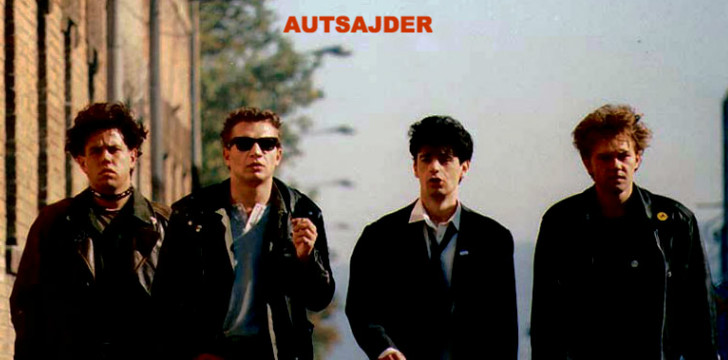
OUTSIDER
aka AUTSAJDER
Dir. Andrej Kosak, 1997
Slovenia, 105 min.
in Slovenian/Serbo-Croatian with English subtitles.

SATURDAY, JUNE 6 – 10PM
THURSDAY, JUNE 11 – 10PM
MONDAY, JUNE 15 – 7:30PM
TUESDAY, JUNE 23 – 7:30PM

While OUTSIDER was released in a Slovenia six years after it was the first state to secede from the Yugoslavian bloc on 25th of June, 1991, and following the onslaught of war in Bosnia, there was a trend of escapist cinema already in the former Yugoslavia. However, while OUTSIDER focused itself critically against the Titoist regime of communist Yugoslavia, it was also a nostalgic look backwards to a time of peace and prosperity while war raged not far beyond its doorstep.

The film, set in Ljubljana in 1979, follows Sead, a Bosnian transplant to Slovenia following his father a career officer with the Yugoslav National Army, finds himself a misfit transplant and unwanted Bosnian in a rigid Slovenian high school of socialist pageants and violent cliques. He quickly becomes involved with a group of young punks and quickly adopt the moniker “Sid”, as he rises to become the leader of the motley-crew-cum-rock-band. He quickly finds however that his new life and friendships come with harsh consequences as they all become social outcasts, targeted by the police, military and rejected by other proper communist Yugoslavians for their shameless individualism and their disorder. When Kadunc, the band’s drummer, is picked up by the military for vandalizing a building with statements disparaging head of state Josip Broz Tito, he is imprisoned. Soon after Kadunc’s release the disgrace of his actions marks the lives of Sead and the rest of his bandmates and quickly tears all their lives apart.

Far from blind Yugo-nostalgia, Kosak’s OUTSIDER looks back towards individual persecution in the Yugoslavian system and indicts an unwillingness to move beyond a culture of conformity and obedience as the reason for the failure of Yugoslavia’s utopian dream.
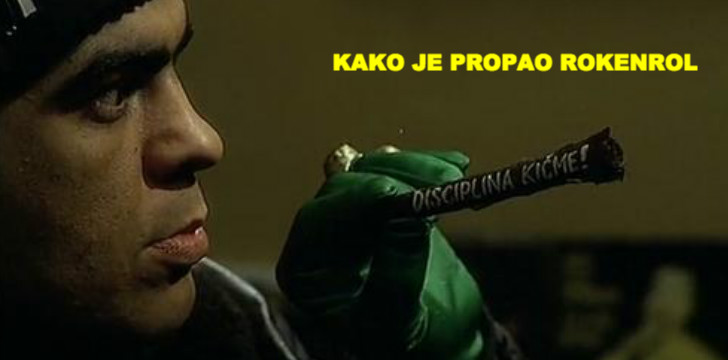

Kako je propao rokenrol banner 1

THE FALL OF ROCK AND ROLL
aka KAKO JE PROPAO ROKENROL
Dir. Goran Gajic, 1989.
Bosnia, 106 min.
In Serbo-Croatian with English subtitles.

SATURDAY, JUNE 13 – 10PM
THURSDAY, JUNE 18 – 10PM
SUNDAY, JUNE 21 – 7:30PM
MONDAY, JUNE 29 – 7:30PM

Goran Gajic’s surreal counter-culture comedy THE FALL OF ROCK AND ROLL was made in 1989 right before the start of the Bosnian war and at the beginning of the end of the golden age of Yugoslavian subculture and the heyday of Balkan punk. Gajic’s film was a virtual who’s who of Yugoslavian punk rockers and counter-cultural icons from this period, like Anica Dobra, Sonja Savic, Srdjan Todorovic and the lead singer of ex-yu punk band Disciplina Kicme in a cameo as slacker-superhero and mascot the Green Tooth, among others. All of these young Balkan men and women were part of the same cohort among the bright stars that made up the collaborative Belgrade art and rock scene which had also produced other films like CRNI MARIJA/BLACK MARIAH and DAVITELJ PROTIV DAVITELJ/ STRANGLER VS. STRANGLER.

THE FALL OF ROCK AND ROLL is a composed as a picaresque comedy in three parts, all written by different screenwriters and directors and with musicians from three Yugoslavian rock powerhouses, Elektricni Orgazm, Idoli and Disciplina Kicme. The three scenarios begin this ramble through the streets and back-alleys of Belgrade with a wager between Koma, a failed punk rocker (Srdjan Todorovic) and his producer father, a folk-singer staging a contest to see who can perform a more popular song leading Koma to become a masked folk singer calling himself Ninja. The film quickly careens into the second scenario, chronicling a romantic episode between a young punk (Anica Dobra) who is wooed by Darko, a man claiming to be Dracula. In the third Eve and Djuro, a troubled pair of frustrated bohemians, an aspiring rock musician and a struggling designer, who are on the verge of conceiving a child but are driven astray by a mysterious love letter.

THE FALL OF ROCK AND ROLL in spite of its absurdist elements is also a reflection collaborative project of Belgrade’s urban rock subculture preserved in amber. Its lighthearted approach and devil-may-care attitude are still valued highly by the now grown youth of Yugoslavia who remember this moment as a time of joy and experimentation before the austere war years soon to follow.
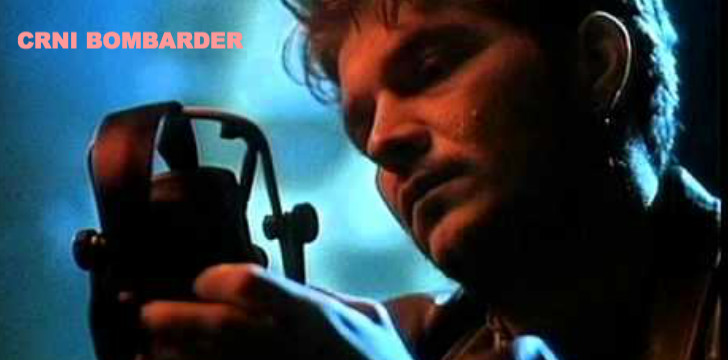

Crni bombarder banner

BLACK BOMBER
aka CRNI BOMBARDER
Dir by Darko Bajic, 1992.
Serbia, 116 min.
In Serbo-Croatian with English subtitles.

THURSDAY, JUNE 4 – 10PM
MONDAY, JUNE 8 – 10PM
SATURDAY, JUNE 20 – 10PM
MONDAY, JUNE 29 – 10PM

CRNI BOMBARDER/THE BLACK BOMBER upon its release it a disintegrated Yugoslavia in the midst of the ravages of war became an allegory for resistance among the youth of Belgrade’s artistic and counter-culture set who had faced violent repression by Slobodan Milosevic’s political regime. In many ways it foreshadowed the resistance to come in the forms of OTPOR! and the guerilla theater of the Serbian protest movements of the late 90’s.

The film, set in a dystopian cityscape, is meant to represent a Milosevic-era Belgrade strewn with barricades, martial law and other trappings of wartime. Blackie, an amnesiac radio DJ is finds himself censored by the government, he begins to push the boundaries of acceptable programming. He soon finds himself being chased by nationalist gunmen and the secret police and in the midst of an increasingly self-destructive attempt to speak truth to power. In the process, he sparks a romance with Luna, played by Ana Dobric, a ferocious punk singer who is waging an internal battle between creatively resisting the regime at home with like-minded rebels like Blackie or artistically thriving in self-imposed exile. After he is forced out of his home-base in the national radio station Blackie finally takes to the streets in an unmarked van, the Black Bomber to broadcast a pirate radio program in the midst of widespread repression and civil unrest of the capital, unintentionally sparking a youth uprising and becoming the voice of youth resistance in the form of his radio persona “The Walking Ghost”.

Not far enough away from reality to be science fiction and not far enough from Hollywood forms to escape tropes of romance this film nonetheless captures the miasma of a generation of ex-Yugoslavs caught between political conflicts in a nation divided, yet still struggling to remain young and alive.

AN EXERCISE IN REMEMBERING: Péter Lichter and the Contemporary Hungarian Experimental Cinema

hungarianbanner4

AN EXERCISE IN REMEMBERING: Péter Lichter and the Contemporary Hungarian Experimental Cinema
Dir. Various, 2002-2015
Hungary, 77 min.
Hungarian w/ English subtitles.

WEDNESDAY, JUNE 3 – 10 PM
THURSDAY, JUNE 18 – 7:30 PM
FRIDAY, JUNE 26 – 7:30 PM & 10 PM

BUY ADVANCE TICKETS HERE

“The future of Hungarian experimental film is open” – claimed Lóránd Hegyi in his 1983 review of the topic. Thirty years later the same is true, and Hungarian experimental film still exists – even if it is currently hiding. Following the elimination of creative workshops and restructuring of film theaters, museums and galleries became primary forums for experimental films, and they have been forced to share the space with video art pieces designed for this specific environment. Raymond Bellour connected the gallery installation experience with the loss of sustained concentration and defined the cinema with its specific features (isolation, darkness, strict positioning of the viewer) as the optimal environment for focused attention – somnambulism versus hypnosis.

As a result of the scarce attention new media curators and art historians have paid to the history of experimental film, Hungarian avant-garde film had to give up on the hypnotic potential of cinema, which had a great impact on the form of the films produced. Following the millennium pieces made by filmmakers (not by artists who work with film) include several surrealistic works, trance films, lyrical abstractions (Lichter’s No Signal Detected), animations, and found footage experiments (Lichter’s Rimbaud, Look Inside The Ghost Machine).

Péter Lichter is one of the few active contemporary experimental filmmakers in Hungary. Enacting visually the magic workings of remembering has long been a pet theme in filmmaking. Iconic filmmakers like Alain Resnais or Károly Makk have been preoccupied with recalling long-past events, and revealing minute and subtle linkages among them. Lichter’s films belongs to the trend defined by Marie Menken and Stan Brakhage: the lyrical film. Brakhage – whose visionary world is one of the main inspirations of Lichter’s films – is an unconcealed follower of the Freudian thinking. The most controversial parts of Freud’s scientific work – the exploration of the unconscious and the development of the body analysed from a psycho-sexual aspect – constitute the backbone of Lichter’s early films such as Light Sleep.

It is important to mention that although Lichter refers to predecessors he does not repeat them. His films gain the above-mentioned cultural and film genre reflections as well as taking the concept or corporeity to the next level by showing the results of chemical reactions (Lichter used nail polish, eye shadow, ink and milk to damage the film). Later on he screened the fractured material and recorded it with a camera. By making the material visible he revealed its body.
Hungarian experimental film has never been an isolated phenomenon and the problems it has to face are problems other countries share. To overcome the loss of its original forum but still secure the cinematic experience it needs to find a new space and remove itself from the artificially lit gallery walls. -Dorottya Szalay

Dorottya Szalay is a film theorist and historian focusing on Central and Eastern European film, and the editor of Hungarian avant-garde film forum kontracinema.com. She is currently based in Prague investigating the Czech experimental scene. The writing below was excerpted from several of her essays published in artinCINEMA – please visit artinCINEMA.com to enjoy the full articles.
unnamed

NO SIGNAL DETECTED
Péter Lichter, 2013. 3 min.
“A rhythmical combat of digital and chemical decay.” Lichter recycles an excerpt from Enter the Dragon to contrast the decay of cellulose with the “malfunction” of the digital moving image. The rhythm of the film and shifts between analog and digital are dictated by the sound of Bruce Lee’s punches, kicks and screams. -DS

RIMBAUD
Péter Lichter, 2014. 20 min.
Edited from thirty reels of Super8 home videos, Rimbaud shares stories about the adventures of the rebellious rhymer in three different languages: Swedish, Arabic and Indonesian. To overcome the disturbing eclecticism of the dissonant found footage materials, Lichter used the method of plastic cutting, so the movement within the frame is carried across the cut. As a result, footage from different sources melt together and form an organic whole. -DS

PURE VIRTUAL FUNCTION
Péter Lichter, 2015. 2 min.

POLAROIDS
Péter Lichter, 2015. 13 min.

LOOK INSIDE THE GHOST MACHINE
Péter Lichter, 2012. 4 min.

LOST WORLD
Gyula Nemes, 2004. 20 min.
Gyula Nemes’s grandiose work Lost World covers ten years of the life of Kopaszi dam. By using the sound of a previous, unfinished documentary, recorded by the Dunkeszi MÁV Orchestra, as its own music, the film strengthens the historical character of the images depicting the decay. Nemes follows the slower, more subtle trend of lyrical film, carries on with the formal inventions of Marie Menken’s Notebook and exploits the method of plastic cutting to create a quiet flow of images. -DS

HOTEL TUBU
Igor and Ivan Buharov, 2002. 5 min.
Taking elements from different religious, social and artistic ideologies such as surrealism, folklorism, Buddhism to create their own universe, the Buharovs also borrow from several avant-garde trends and incorporate their elements into a grotesque and metaphysical mish-mash. The damaged images unveil the materiality of film and emphasize the self-reflexivity of avant-garde cinema while the pure, bucolic surroundings override the elitism connected to experimentalism. -DS

LITTLE APOCRYPHA NO.1
Kornél Mundruczó, 2004. 6 min.
Kornél Mundruczó is one of the leading film directors in Hungary. His latest film, White Dog, screened at Sundance. This is one of his earlier experimentals. – PL

HANNA
Péter Klausz, 2012. 7 min.
Péter Klausz is a young experimental filmmaker making camera-less films. He is a beginner in the international scene, but Hanna

KRIK? KRAK! TALES OF A NIGHTMARE

KKbanner

KRIK? KRAK! TALES OF A NIGHTMARE
Dir: Jac Avila & Vanyoska Gee, 1988.
78 min. Haiti.
In Creole/French/English with subtitles.
Special thanks to Facets.

WEDNESDAY, JUNE 3 – 7:30PM
SUNDAY, JUNE 7 – 5PM
TUESDAY, JUNE 16 – 7:30PM
TUESDAY, JUNE 23 – 10PM

A blistering travelogue of hell, Jac Avila and Vanyoska Gee’s classic surrealist-documentary KRIK? KRAK! takes a traditional Haitian call-and-response and morphs it into a broad survey of national instability. The filmmakers capture roiling scenes of unimaginable poverty and repression, juxtaposed against the tropical paradise drawn by the official-ese of 24-year president François “Papa Doc” Duvalier and his backers in Washington.

Featuring interviews with the secret police, refugees, cane sugar harvesters, US immigration officials and black magic priests, Avila and Gee’s landscape of Haiti appears doomed to gridlocked schizophrenia. As the “first free black republic” is passed from one Duvalier to the next, KRIK? KRAK! deals images like clods of dirt, crumbling whenever the narrative begins to get a foothold – the ultimate document of life under voodoo dictatorship.

“Krik? Krak! carries the political documentary into the realm of the fantastic. The story of Haiti’s misery under two generations of Duvaliers is told impressionistically, mingling absolutely extraordinary documents of daily life (including an interview with Papa Doc himself) and scenes from fiction films to convey what a straightforward documentary cannot: the continual shifts between levels of reality in Haitian life, some of which are inaccessible to the camera, in particular, the omnipresence of the Voodoo religion. Krik? Krak! is at the same time a great horror film in the tradition of Haxan (Witchcraft through the Ages).” – Bill Krohn, Cahiers du Cinema

WAVES OF MUTILATION

WAVES_BANNER

WAVES OF MUTILATION

Ah, summer at the beach. The sand between your toes, the ocean breeze in your hair—but what’s that washing ashore? That’s right, it’s WAVES OF MUTILATION, Spectacle’s spectacular summer series of surf, sand, and slaughter! Ditch the boardwalk for these sea-side horror classics that will send chills down your spine on the hottest of nights.


Night-Tide-Banner

NIGHT TIDE
Dir. Curtis Harrington, 1961
USA, 85 min.

SATURDAY, JUNE 6 – 7:30PM
SUNDAY, JUNE 14 – 7:30PM
FRIDAY, JUNE 19 – 10PM
WEDNESDAY, JUNE 24 – 10PM

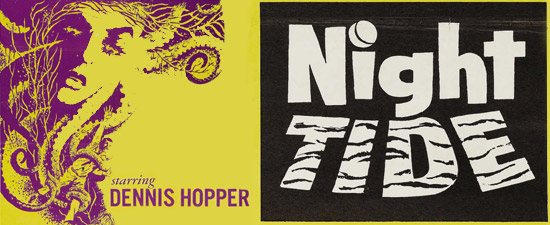
Dennis Hopper’s underseen first starring role is also one of his most memorable. In Night Tide he plays Johnny Drake, a sailor on shore leave in a sleepy port town. When the locals get word of his fledgling romance with Mora, the strange young woman who works as the mermaid attraction at the marina carnival, Johnny learns that Mora’s former suitors have a history of being mysteriously slain under the full moon. Might it have something to do with her conviction that she’s the cursed descendent of a mythic race of sea creatures?

Something like a waterlogged sister to Herk Harvey’s similarly low-budget Carnival of Souls, Night Tide creates an eerie atmosphere that lingers after the lights come on.


SEAWITCHBANNER

THE WITCH WHO CAME FROM THE SEA
Dir. Matt Cimber, 1976
USA, 88 min.

TUESDAY, JUNE 9 – 10PM
MONDAY, JUNE 15 – 10PM
SUNDAY, JUNE 21 – 5PM
TUESDAY, JUNE 30 – 7:30PM

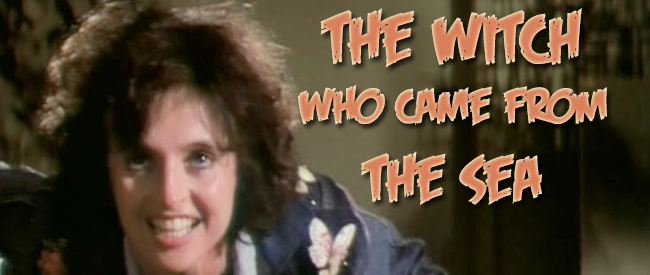
Molly (Millie Perkins) is a good-natured but troubled barmaid in a seaside town, haunted by repressed memories of the sexual abuse she suffered at the hands of her father. Her trauma manifests in a drinking problem and a twisted obsession with men; she dotes on her adoring nephews, idolizes her deceased father’s memory, and moons over burly football players like a lovestruck teen—even as she fantasizes about murdering them. During a night of particularly heavy binge drinking, Molly loses a few hours, and her grisly desires begin to leave the realm of fantasy.

Despite the dubious distinction of making the UK’s infamous ‘video nasties’ list, THE WITCH WHO CAME FROM THE SEA isn’t quite an exploitation flick. Surprisingly complex, and elevated by a truly inspired performance from Perkins, this little film is too weird, and too bold to be anything but art.

JUNE MIDNIGHTS

FRIDAY, JUNE 5: ENDLESS BUMMER: THE VAN
SATURDAY, JUNE 6: ENDLESS BUMMER: VAN NUYS BLVD.

FRIDAY, JUNE 12: LES EBRANLEES
SATURDAY, JUNE 13: DELIRIUM

FRIDAY, JUNE 20: ENDLESS BUMMER: THE VAN
SATURDAY, JUNE 21: LES EBRANLEES

FRIDAY, JUNE 27: ENDLESS BUMMER: VAN NUYS BLVD.
SATURDAY, JUNE 28: DELIRIUM


ENDLESS BUMMER

the_van_banner

THE VAN
Dir. Sam Grossman, 1977
USA, 92 min.

Later retitled Chevy Van to make the most of the Sammy Johns song in the soundtrack (despite the fact that the van in the film is a Dodge), The Van was the second of the Marimark Pictures series (the first being last year’s Superchick) and absolutely the best place to start our Endless Bummer series. Stuart Goetz (who later went on to a long career in film music; he won a daytime Emmy for his work on ALF!) plays Bobby, a red-blooded red-headed Californian who wants nothing more than to graduate high school and invest his life savings in his brand-new custom van, the (ahem) Straight Arrow. Bobby’s desperate attempts to turn himself into a van guy and find decadent imbroglios by the moonlit Pacific are not as easy as he hoped; between his increasingly complicated nature of his relationship with Tina (Deborah White — both White and Goetz would go on to be in the brain-rot epic Record City), the bad advice of his best buddy Jack (Harry Moses) and his boss Andy (DANNY DEVITO!), not to mention the constant bullying from local thug Dugan (Steven Oliver, who we’ll meet again later in this series) — how the hell is Bobby supposed to do any FUN TRUCKIN’? Van expos, boneheaded pranks, drunk driving, tasteful plot-required nude scenes — no, this is not a hidden gem of west coast cinema verite’, it’s a drive-in movie about vans, and that’s all right with me.


van_nuys_blvd-banner

VAN NUYS BLVD.
Dir. William Sachs
USA, 93 min.

William Sachs, probably best known for The Incredible Melting Man and Galaxina, here presents the story of a young man wanting to leave behind his boring life to make the cruising scene on Van Nuys Blvd, from the Santa Monica Mountains at the north through the San Fernando Valley to the Verdugo Mountains in the south. Half American Graffitti, half drive-in beach romp, it’s held together buy our lead, Bill Adler, who played Steve in The Van! He’s back as Bobby, who spends a crazy weekend meeting the locals: strippers, carhops, dopers and cops, but specifically old-school hot-rodder Chooch (David Hayward), who is sort of the grand master of Van Nuys. Did I mention ’74 Playmate of the Year Cynthia Wood plays Moon, and Melissa Prophet (who later had roles in Goodfellas and Casino) as Camille? PLUS go-karts, an adorable beach dog, hassling the man, all the LA cruising action you can handle and a badass disco-funk theme song! C’mon and meet us on the boulevard!


Les Ebranlees

LES EBRANLEES
aka Vibrating Girls
Dir. Jess Franco (as Clifford Brown), 1972
France, 81 min.
In French with English subs.

“You wanted to go to the house of vice. Well, we’re going now.”
For Franco aficionados, LES EBRANLEES makes an interesting double feature with SINNER–THE SECRET DIARY OF A NYMPHOMANIAC: both released in 1973, both featuring stories of strippers lured into an underworld of crime and violence, both focused on a detective desperately searching for the truth. In the case of LES EBRANLEES, that detective is none other than Franco staple Howard Vernon as Al Pereira in search of the murderer of a prostitute. Definitely a film that lives up to the Eurosleaze tag, it’s long been one of the rarest of Franco’s 70s films.


delirium_banner

DELIRIUM
aka Le foto di Gioia
Dir. Lamberto Bava, 1987
Italy, 94 min.
In English

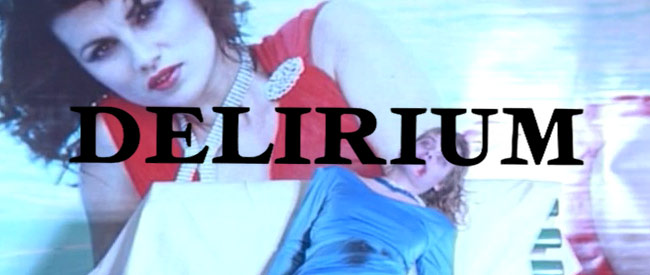
Originally helmed by Dario Argento, who dropped out of production at an early date and was replaced by one of his proteges, Lamberto Bava (son of the great Mario Bava, assistant director on everything from Suspiria to A Bay Of Blood to Cannibal Holocaust), DELIRIUM shifts our understanding of what a giallo is from the seventies to the eighties without a hint of nostalgia. Starring the almighty Daria Nicolodi (whose tumultuous marriage to Argento ended in 1985) and the stunning Serena Grandi (who you scuzzballs probably know from Anthropophagus), DELIRIUM is a glossy, flashy mid-80s Italian Vogue spread streaked in crimson. Serena Grandi plays Gloria, one-time prostitute turned head of a men’s fashion magazine called Pussycat. She begins receiving photos of her models murdered, disfigured, and displayed with photos of Gloria in the background. While the magazine drastically increases its readership due to the notoriety surrounding the murders, the noose closes in on Serena With lots of demented POV (where the killer imagines his victims with grotesque masks over their heads), lots of extra-sleazy Dynasty-inspired wardrobes, and drum machines aplenty, it’s an excellent example of where the giallo was by the mid-eighties, happily delivering all the style, perversity and murder set pieces any fan could want in a style entirely different from (but obviously deeply informed by) the 70s classics we most often think of as giallo. More from Lamberto (and fellow Argento protegee Michele Soavi) hopefully coming soon later this year!

MILLIGAN MIDNIGHTS

Milligan Midnights banner

SATURDAY, MAY 2: SEEDS OF SIN
FRIDAY, MAY 15: SEEDS OF SIN
SATURDAY, MAY 16: THE BODY BENEATH
FRIDAY, MAY 29: THE BODY BENEATH

There is no director like Staten Island’s own Andy Milligan. Made under extreme conditions, with miniscule budgets, Milligan makes seemingly simple horror flicks into nightmarish melodramas seething with rage, lust and hatred. Do they look cheap? Does everything seem entirely real? No? PAY ATTENTION. Milligan’s camera moves in ways so deeply foreign to viewers, and develops storylines closer to his early work staging Lord Dunsany and Jean Genet plays, that it’s no wonder he’s got his fair share of detractors (Stephen King said of The Ghastly Ones “the work of morons with cameras”), but over the years a small but fanatical following has formed, willing to look deeper into these films. Assisted by the late, great Mike Vraney of Something Weird, a tireless collector of Milligan original prints, and given deeper personal context thanks to Jimmy McDonough’s heartbreaking book The Ghastly One: The Sex-Gore Netherworld of Filmmaker Andy Milligan, the time is long overdue for a reconsideration of his work (thankfully recently begun in the UK by BFI as assisted by Vraney and director Nicholas Winding Refn), and with our Milligan Midnights series, we hope to bring a series of his films to Spectacle Midnights in the hope that Milligan himself might crack a rare smile from his unmarked grave somewhere in LA.

“I don’t see how anyone can write off Andy Milligan as just an exceptionally strange exploitation hack when his films are full of these beautiful eerie moments contained in these compositions that can last for a minute + or just a second because his weird camera is always moving and twisting and making your eyes travel in ways you’d never have expected them to…I can’t think of anyone else who’d have filmed a scene in which a woman lets her vampire cult leader into the house to have his minions bite her husband this way!” –Zynab Hashim


Seeds of Sin banner

SEEDS OF SIN
Dir. Andy Milligan, 1968
USA, 84 min.

SATURDAY, MAY 2 – MIDNIGHT
FRIDAY, MAY 15 – MIDNIGHT

“Sown in Incest! Harvested in Hate!”

Carol Manning takes the liberty to invite her siblings to a Christmas dinner at her familial home much to her mother’s displeasure. The members of the Manning family have not seen each other in years due to the resentment they have for each other. The only “love” that exists amongst them is limited to the incestuous affairs that they engaged in behind their mother’s back as children. The only tie between the siblings is the hatred they feel for their mother Claris. Claris is an aging widow who has survived many marriages and has amassed a large fortune as a result. She “dislikes” her children very much would rather not see any of them ever again. She feels that her children are like vultures flying overhead awaiting for the first sign of her death so they can swoop in and pick her pockets clean! Fortunately for the vultures, death is lurking just around the corner! For there is a murderer on the loose in the Manning estate! This shadowy figure is killing off members of the Manning family by orchestrating a series of “accidents”. Who could it be? Will Claris’s fortune survive? Who will reap THE SEEDS OF SIN?

SEEDS OF SIN has all of the trappings of a gothic tale. There is a stately familial home, dark secrets, incest, rape, murder and to top it all off there are beautiful roses featured throughout the entire film! Yet, unlike a “traditional” gothic tale, Seeds focuses on a Matriarchy instead of a Patriarchy. The story features several dominant female characters. These female characters greatly exert their power over the male characters in the film. It is a truly refreshing twist to the gothic “formula”. Think of it as a version of “Fall Of The House Of Usher”, but with more sex and violence and a lessened threat of being buried alive!

SEEDS is one of Andy Milligan’s greatest and most personal films. Andy is telling us the story of a broken family that is eerily similar to his own. He is breathing through his wounds in every frame. The overwhelmingly dominant female theme which is often explored in his work is presented here in full bloom in the form of Claris who is very similar to Andy’s mother. The character of Buster is like Milligan as a young man. The weak and down trodden paternal figure is a mirror image of Andy’s father. Seeds literally is Andy Milligan’s horrific family life scarred into celluloid. Sadly, SEEDS, like many other Milligan films has been tampered with badly by the greedy little hands of producers who wanted to make a buck selling sex. There are several “hardcore” scenes that have been edited into the film so that it would be more profitable. As a result certain scenes that were shot by Andy have been lost. Luckily, there is a trailer for the film that has pieces of some of the “lost” scenes from the film.

Always remember “Nothing can kill a bitch like momma!” Long Live Andy Milligan!


The Body Beneath banner

THE BODY BENEATH
Dir. Andy Milligan, 1970
UK, 82 min.

There is no director like Staten Island’s own Andy Milligan. Made under extreme conditions, with miniscule budgets, Milligan makes seemingly simple horror flicks into nightmarish melodramas seething with rage, lust and hatred. Do they look cheap? Does everything seem entirely real? No? PAY ATTENTION. Milligan’s camera moves in ways so deeply foreign to viewers, and develops storylines closer to his early work staging Lord Dunsany and Jean Genet plays, that it’s no wonder he’s got his fair share of detractors (Stephen King said of The Ghastly Ones “the work of morons with cameras”), but over the years a small but fanatical following has formed, willing to look deeper into these films. Assisted by the late, great Mike Vraney of Something Weird, a tireless collector of Milligan original prints, and given deeper personal context thanks to Jimmy McDonough’s heartbreaking book The Ghastly One: The Sex-Gore Netherworld of Filmmaker Andy Milligan, the time is long overdue for a reconsideration of his work (thankfully recently begun in the UK by BFI as assisted by Vraney and director Nicholas Winding Refn), and with our Milligan Midnights series, we hope to bring a series of his films to Spectacle Midnightd in the hope that Milligan himself might crack a rare smile from his unmarked grave somewhere in LA.

“I don’t see how anyone can write off Andy Milligan as just an exceptionally strange exploitation hack when his films are full of these beautiful eerie moments contained in these compositions that can last for a minute + or just a second because his weird camera is always moving and twisting and making your eyes travel in ways you’d never have expected them to…I can’t think of anyone else who’d have filmed a scene in which a woman lets her vampire cult leader into the house to have his minions bite her husband this way!” -Zynab Hashim

SATURDAY, MAY 16 – MIDNIGHT
FRIDAY, MAY 29 – MIDNIGHT

“Tonight is the yearly meeting. We must have the sacrifice.”

We begin with THE BODY BENEATH, a film Milligan made during his time in the UK. First-timers may find the film “talky” or “chatty” — that’s Milligan, and you’ll either get into it or you won’t. There’s a hypnotic slowness to Milligan’s films, which is one of the main reasons the “let’s see some boobs and blood” crowd never took to him, no matter how much green-faced nightgown action we get. And we get a LOT of it, with vampire lord Reverend Algernon Ford (played by Gavin Reed) realizing his pure bloodline was dying out after centuries of inbreeding. He seeks to find the non-vampire members of his bloodline and convert them, all of which sounds about right for a midnight, but it’s Milligan’s teeth-grinding misanthropy which brings us to a different level, so far from the laughable kitch it may at first seem. With one of Milligan’s best actors, Berwick Kaler, playing the hunchback Spool and a (comparably) larger budget than his earlier films, plus a jaw-dropping orgy of cannibalism that must be seen to be believed, It’s arguably one of the best entry points to his work. We have a slew of other Milligans coming up, so don’t sleep! Ever! MILLIGAN MIDNIGHTS SHALL NEVER DIE!

“Few filmmakers can boast of having a recognisable style, but when you see a Milligan movie, you are in no doubt whose film it is. He was sort of a Douglas Sirk figure – there’s so much subtext in his movies. And the more you get into them, the more you realise that they were made by someone who was very tormented, and very intelligent; a sensitive man who used film as an artform to express his views on life.” -Nicholas Winding Refn