MIRRORS OF THE PLANET

Mirrors of the Planet

MIRRORS OF THE PLANET
aka Planetens Spejle
Dir. Jytte Rex, 1990
Denmark, 100 min.
In Danish with English subtitles

TUESDAY, MAY 5 – 7:30 PM
FRIDAY, MAY 15 – 10:00 PM
MONDAY, MAY 18 – 7:30 PM
WEDNESDAY, MAY 27 – 10 PM

“Here is a passage through a wall of darkness; nothing appears anymore, neither beauty nor ugliness. It sounds easy, but in actual fact it rushes up from the heart of the planet. Like multicolored fire. An infinity of waste.”

Long before Love was the final frontier in INTERSTELLAR or Terence Malick balanced the universe between the poles of Nature and Grace in TREE OF LIFE, there was Jytte Rex’s MIRRORS OF THE PLANET – a dialectical discourse on death, lust and the cosmos that’s sorely due for reappraisal. The film is a probing battery of philosophical inquiries, with black holes and rock formations re-etched in the idiom of a dissolving (or not?) relationship between astronomer Adam Morgenstern (Ole Lemmeke) and his unnamed colleague (Cher Guetze). There is no scientific certainty to Morgenstern’s work; the infinite cosmos become mere projections of his individual fears and refracted half-memories. Aside from an earnestness that runs surprisingly deep, what makes MIRRORS OF THE PLANET one of a kind is Rex’s collaboration with cinematographer Manuel Sellner, writing a slow-morphing spectrum of spectacular locations and Borgesian fata morganas in long, mezmerizing Steadicam takes. Words don’t just fail MIRRORS OF THE PLANET–the movie renders them useless.

GUITAR SOLO: MATTHEW MULLANE AND TOM CARTER

WEDNESDAY, APRIL 29

PERFORMANCES FROM BOTH ARTISTS AT 8 AND 10 PM

ONE NIGHT ONLY

ATHENS ROUGH CUT FOR MATTHEW MULLANE
Dir. C. Spencer Yeh, 2015
USA, 20 min.

CAIRO ROUGH CUT FOR TOM CARTER
Dir. C. Spencer Yeh, 2015
USA, 20 min.

Music and movies, movies and music.  Unless you’re of Stan’s (Brakhage) Blood, you’ll agree that film has Milo’ed (or Oti’ed) organized sound since pretty much the beginning.  What is cinema’s favorite instrument?  I see you back there, waving to namedrop the Russian ANS Synthesizer.  For the purposes of this evening, I’m going to go with the GUITAR.

Join us for an evening of live scores by two of the finer contemporary slingers around (insert blues lick here) Matthew Mullane and Tom Carter.  We absolutely promise you no silly string – these sick fretted sounds guarantee a ride into the sunset most avant.  As added assurance, this evening is co-organized with the fine purveyor of dudes plus guitars on wax, Vin Du Select Qualitite (aka VDSQ) – http://www.vdsqrecords.com/

Cult hero Tom Carter returns to Spectacle, having washed brains with his PHANTOM MALLE live score a fistful of moons back.  Riding alongside the seasoned vet is young gun Matthew Mullane.  This evening they will be accompanying travel home videos shot recently by C. Spencer Yeh – Athens Greece and Cairo Egypt, to be specific.

BIOS:
Few figures are literally and figuratively instrumental in the contemporary underground musical landscape as Tom Carter.  Heads know the deal with Carter, from his longtime Texan legend Charalambides and solo explorations on Kranky, up through more recent ventures Eleven Twenty-Nine, Sarin Smoke, and collaborations with Martha Colburn.  And new ears are always welcomed into his inimitable take on the United States of Altered.

Matthew Mullane is a fingerstyle guitarist whose electric/acoustic solo performances are noted for their intricate beauty, unique phrasings, and idiosyncratic technique. His debut album was released on VDSQ Records in 2011, as part of the label’s Solo Acoustic series. Mullane’s second LP on VDSQ, Hut Variations, is forthcoming this year and features six new works for acoustic and electric guitar. Mullane last appeared at ISSUE in Winter 2014, debuting new and forthcoming work under his solo electronic moniker, Fabric. His 2011 album under said name was released by Spectrum Spools/Editions Mego.

Negative Pleasure Publications Presents Jeans 3 Launch Party

vlcsnap-2014-11-11-23h26m10s170

Negative Pleasure Publications (Felony Comics, Night Burgers)
celebrate the release of their latest comics anthology, Jeans 3, with
a night of erotic dread at Spectacle, featuring screenings of Death
Game (1977) and The Pit (1981), two twisted tales pulsating with lust
and rage, drenched in blood and guaranteed to hurt your emotions.

FRIDAY, NOVEMBER 21:
10:00 PM: DEATH GAME (1977)

MIDNIGHT: THE PIT (1981)
Separate $5 Admission for Each Screening

deathgame

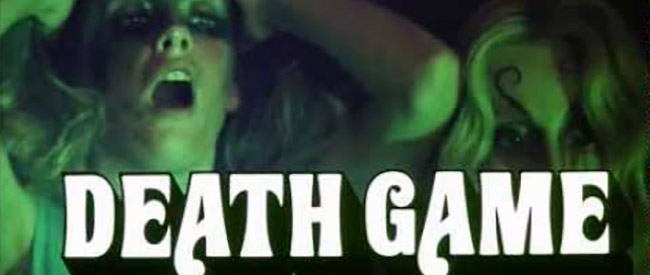
DEATH GAME
Peter S. Traynor, 1977

FRIDAY, NOVEMBER 21 – 10:00 PM

In Death Game (1977) (10:00 PM), a suburban family (Seymour Cassel) man finds two
free-spirited teenagers (Colleen Camp and Sondra Locke) on his doorstep one stormy night.  What starts as a night of seduction turns into a morning of madness and murder.

Death Game, allegedly based on a true story, is sick a sleazy, but showcases a surprisingly prestige pedigree. Seymour Cassel was nominated for an Academy Award for his role in John Cassavete’s Minnie In Moskowitz in 1971 and would go on to work with the likes of Sam Peckinpah, Barry Levinson, Warren Beaty, Nicolas Roeg and Wes Anderson. Sondra Locke had appeared in The Heart Is a Lonely Hunter and Willard and would go on to become a frequent collaborator with Clint Eastwood (as well as the director of the bizarre “Ratboy”). Colleen Camp had roles in both mainstream (Smile, Funny Lady) and exploitation (The Swinging Cheerleaders) before Death Game, and would go on to appear in dozens of films, including Apocalypse Now, Clue, Wayne’s World and Election. Despite this aura of legitimacy, Death Game is pure trash in the best possible sense, a sweaty, feverish collision of sex, violence and outright insanity.

the-pit-banner-resized

THE PIT
Dir. Lew Lehman, 1981.
97 min. USA.

FRIDAY, NOVEMBER 21 – MIDNIGHT

Death Game is paired with another tale of desire and despair, and one of the most mind breakingly weird movies ever made, The Pit (1981) (Midnight), a huge influence on the Negative Pleasure ethos.

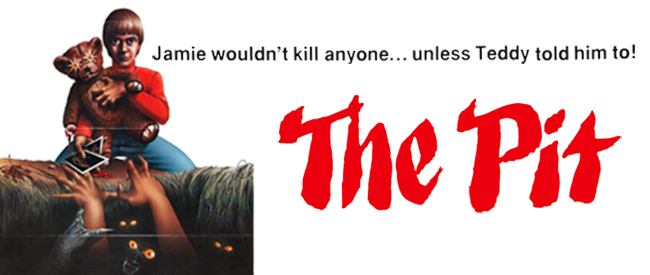
FORGET KILL BILL, DEATH WISH AND STRAW DOGS: here is a revenge fantasy you can actually relate to. At 12-years-old, Jamie Benjamin already has a CV of torture that would make Dawn Weiner blush: the hot librarian at elementary school tears up the erotic collages he makes with her photos; the cool kid at recess splits his lip open; Jamie’s nubile live-in babysitter only has eyes for an indifferent jock; and even the old woman down the street tries to mow him down with her motorized scooter (“he’ll probably grow into one of those hippies…”). It’s not clear exactly what’s wrong with the kid—he shows signs of autism, and a creepily over-affectionate mother might have something to do with it—but he finds solace in friendship with his teddy bear and the afternoons he spends visiting a pit in the woods full of bloodthirsty, primordial trolls. The youngster does his best to see that they’re looked after, but a kid can only steal so much meat from the butcher truck before another solution is in order—and if it can satisfy two problems at once, so much the better.

LINDA LOVELACE FOR PRESIDENT

LOVELACEbanner

LINDA LOVELACE FOR PRESIDENT
Dir. Claudio Guzmán, 1975.
USA, 95 min.

THURSDAY, OCTOBER 9TH – 8:00 PM
ONE NIGHT ONLY!

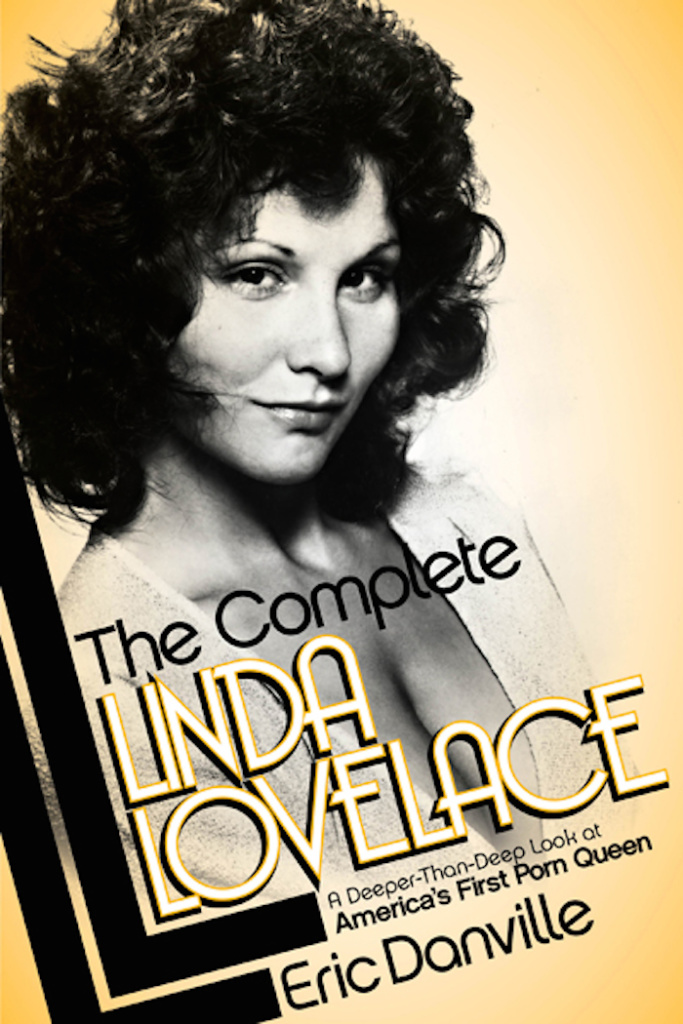
Industry fixture Eric Danville—author of “The Complete Linda Lovelace”—narrates a clip show of very NSFW Linda Lovelace rarities before a feature screening of the ultimate film that could never be made today (thank god)… LINDA LOVELACE FOR PRESIDENT!

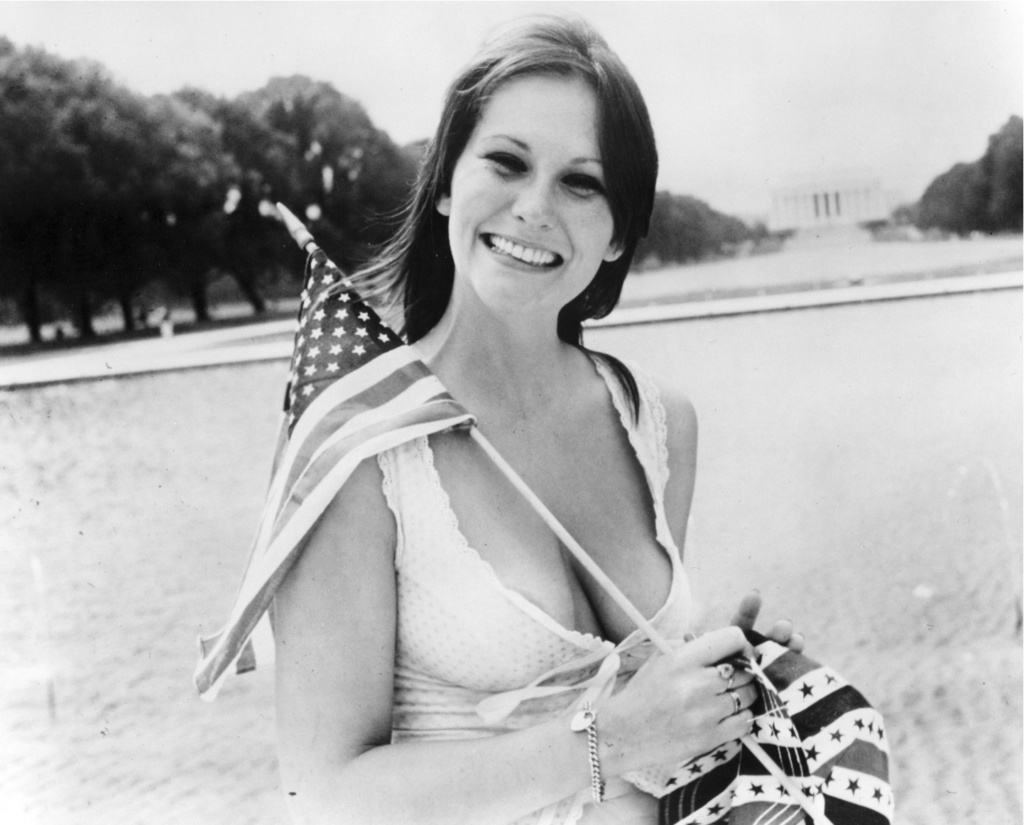
Linda with Flag

When a selection of independent delegates has a hard time choosing a candidate for President, they all come together and pick the most unlikely—and outrageous—candidate of all: Linda “Deep Throat” Lovelace! Join the world’s most famous cocksucker as she takes her ragtag supporters on a cross-country trip to get in touch with voters—and keeps one step ahead of an assassin hired to rub her out!

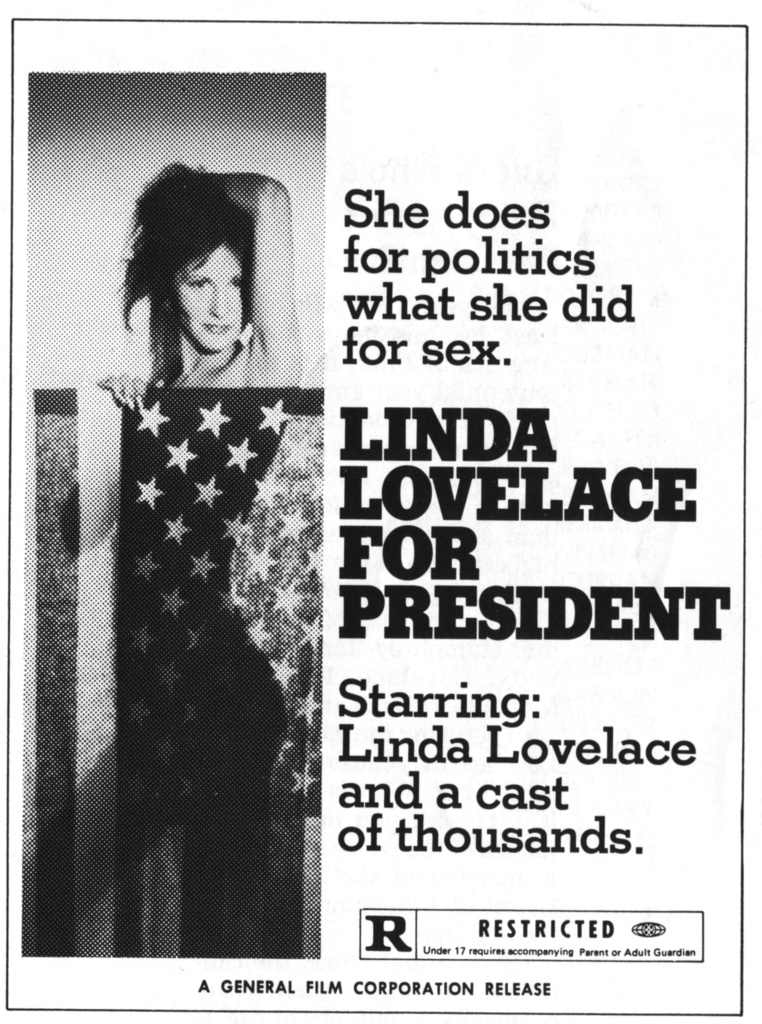
LLFP poster

Released in 1975, this politically incorrect comedy is guaranteed to offend everybody with jokes about race, sex, drugs and politics (and gratuitous nudity, too). The cast includes a host of ’70s sitcom mainstays including Scatman Crothers (CHICO AND THE MAN), Joey Forman (THE ODD COUPLE), Jack DeLeon (GET SMART), comedy legend Chuck McCann and ex-Monkees drummer Micky Dolenz as the bus driver!

lindalovelace_zps6595f9b7

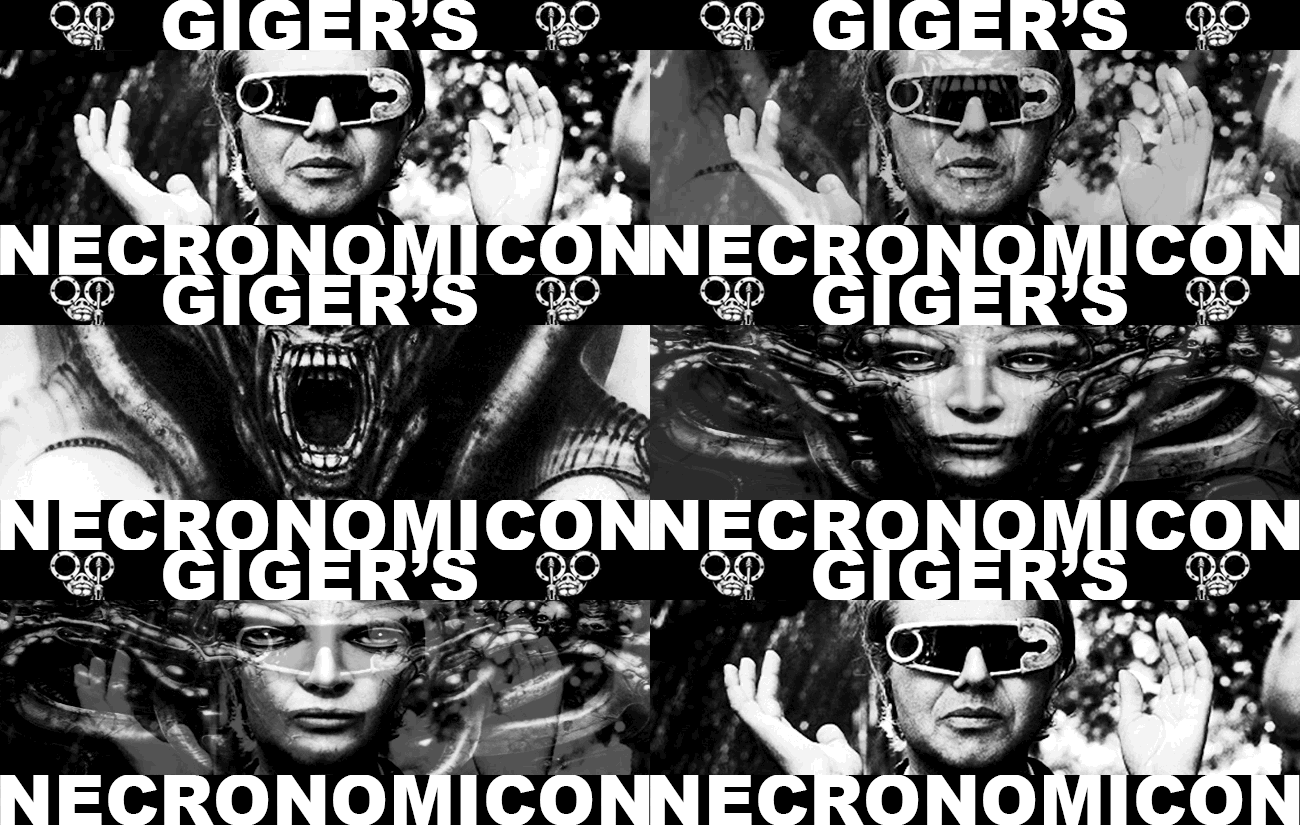
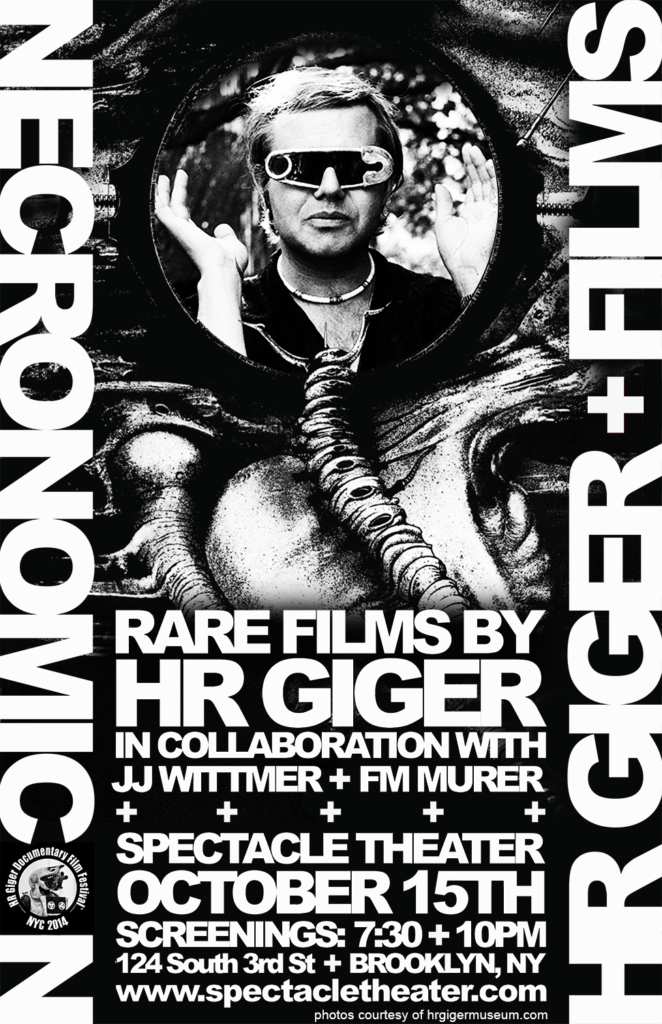
NECRONOMICON: THE FILMS OF H.R. GIGER

GIGER_BANNER

WEDNESDAY, OCTOBER 15
7:30 PM & 10:00 PM + MIDNIGHT SHOWING ADDED!
ONE NIGHT ONLY!

CLICK HERE FOR THE FACEBOOK EVENT

An up-close and personal cross-section of H.R. Giger’s elegantly morbid world at the height of his career, featuring rarely-seen documentaries, experimental films and music videos made in collaboration with longtime friends J.J. Wittmer and F.M. Murer.

heimkiller

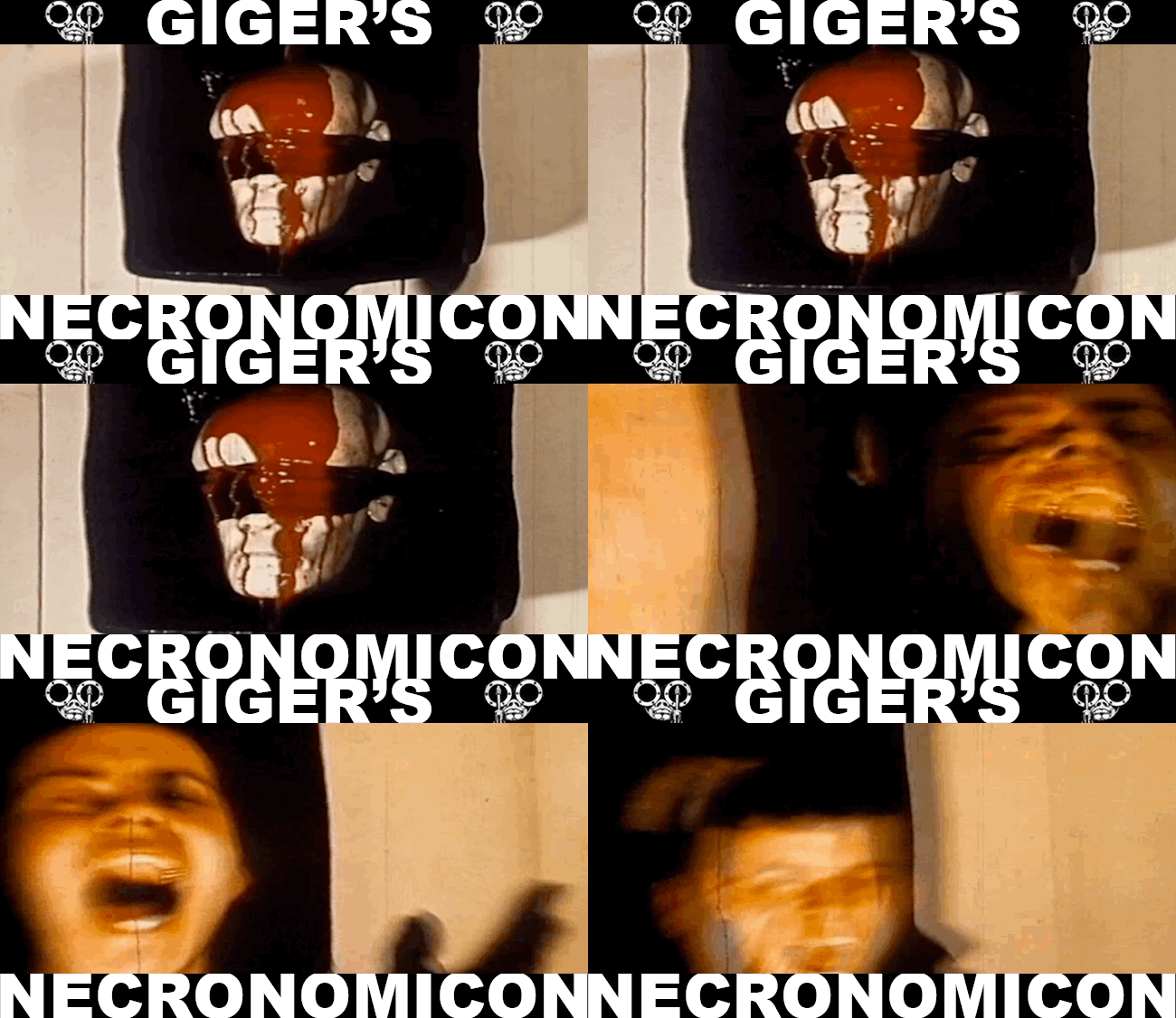
Following a succession of Giger’s experimental short-form work—all of which showcase Giger’s drawings, paintings and sculpture work of the late 60s and early 70s—we proudly present two rare documentaries directed by J.J. Wittmer: GIGER’S NECRONOMICON (1975, 40 min) and GIGER’S ALIEN (1979, 34 min), both created in a collaboration that affords the viewer an authenticity rarely achieved by documentarians. Additionally, both films are scored by Giger’s friend, experimental synth-lord Joel Vandroogenbroeck (of the brain-splattering band Brainticket), drenching the atmosphere in moody psychedelia.

necro_pizza

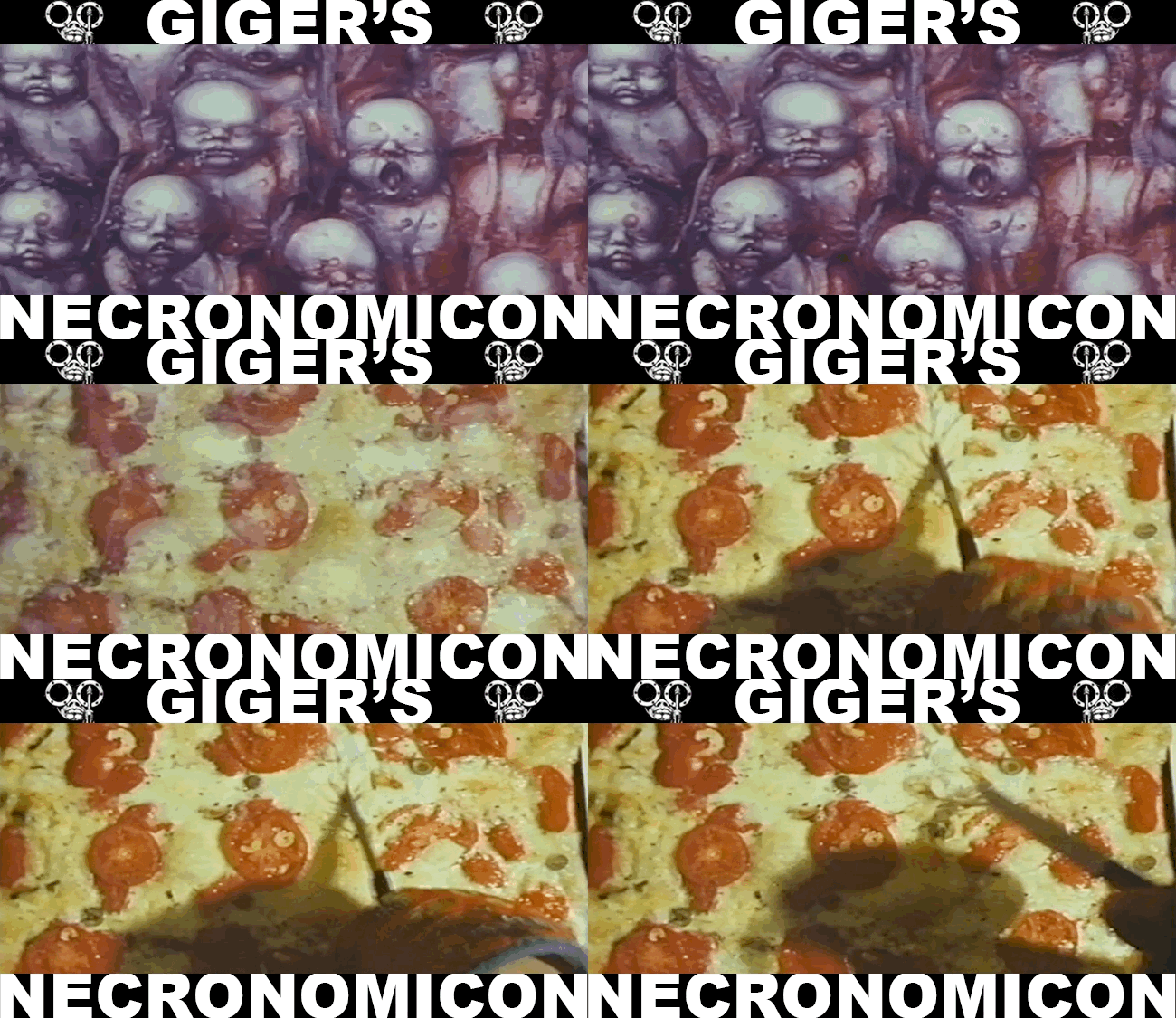
With GIGER’S NECRONOMICON (1975), Wittmer allows us to step into Giger’s literal POV as he moves through his studio, a gallery opening, meals with friends & family and more.  Narration consists of internal dialogue written by Giger himself. The film is littered with interviews with eccentric collectors and friends, images of never-before-photographed artwork, and a sequence in which Giger airbrushes an entire painting from scratch.

ALIEN

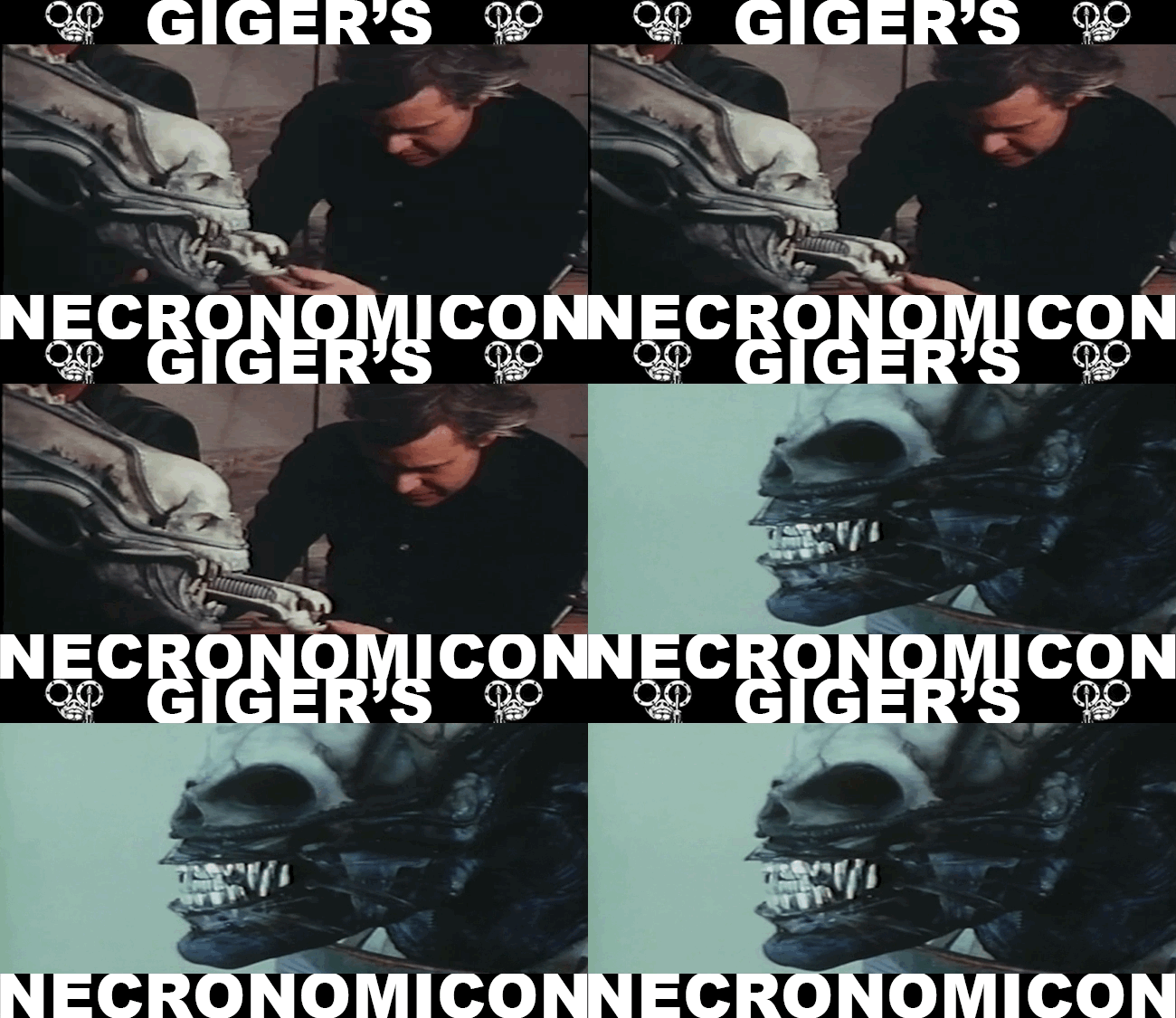
GIGER’S ALIEN (1979) is also narrated by Giger, providing an in-depth trek through the arduous process of realizing his work on Ridley Scott’s ALIEN.  As we watch Giger move through the stages of conceptualizing and fabricating his most well-known body of work, we get a first-hand account of the trials of protecting a sublimely original artistic vision against the pressures of working for a Hollywood Studio.

NEW_GIGER_POSTER_small


THE WOOSTER GROUP’S WHITE HOMELAND COMMANDO

whitehomeland-banner

WHITE HOMELAND COMMANDO
By The Wooster Group
Dir. Elizabeth LeCompte, 1992.
USA. 63 min.

WEDNESDAY, OCTOBER 1 – 8:00 PM
Introduced by EAI’s Rebecca Cleman and presented by The Wooster Group’s archivist Clay Hapaz

ENCORE SCREENINGS:
WEDNESDAY, OCTOBER 8 – 10:00 PM
MONDAY, OCTOBER 13 – 10:00 PM

Presented courtesy of The Wooster Group and Electronic Arts Intermix (EAI)

Spectacle is pleased to welcome legendary downtown performance troupe The Wooster Group for a very special screening of WHITE HOMELAND COMMANDO, their 1992 short feature that represents the group’s first work conceived solely for video rather than stage.

Referencing the form of the then-new police procedural drama and law enforcement reality TV, WHITE HOMELAND COMMANDO, written for the company by Michael Kirby in 1986, is composited from actual accounts of urban hate crimes to tell the story of a four-member task force assigned to infiltrate a New York City white supremacist organization. Split into eight chapters, the video by cinematographer Ken Kobland is rendered in an incredibly synthetic style with heavily processed imagery and brilliant colors, elevating the faux-documentary television drama format into the unreal. Company members Ron Vawter, Jeff Webster, Kate Valk, Peyton Smith, Nancy Reilly, Anna Köhler, Michael Stumm, and Willem Dafoe star. David Van Tieghem composed the original music.

The Wednesday, October 1 show will be presented by Wooster Group archivist Clay Hapaz and introduced by Rebecca Cleman of Electronic Arts Intermix (EAI). We’re also holding encore screenings on Wednesday, October 8 and Monday, October 13, both at 10:00 pm.

We’re also very pleased to present alongside other Wooster Group screenings organized by our friends at The Silent Barn and Microscope Gallery. Don’t miss The Wooster Group’s incredible 1977/2013 feature Rumstick Road on Monday, September 29 at The Silent Barn followed by another evening of Wooster rarities at Microscope Gallery on Friday, October 3.

ROOT HOG OR DIE

RHOD_banner

ROOT HOG OR DIE
Dir. Dan Stafford, 2014
USA, 45 min. (Roadshow Edit)

SUNDAY, SEPTEMBER 21 – 8PM
ONE NIGHT ONLY!

Desert Island and Spectacle are proud to welcome artist John Porcellino (KING-CAT) for a stop on his tour across these united states in support of the crowdfunded documentary film ROOT HOG OR DIE as well as his new book The Hospital Suite. John will be presenting a “roadshow” edit of the documentary as well as a slideshow, readings, Q&A, and more.

ROOT HOG OR DIE follows the life of John Porcellino, who has self-published King-Cat Comics and Stories for twenty-five years. His comics, with equal parts Thoreau and Hüsker Dü, showcase the moments-between-moments which make up the majority of our lives, but which many fail to notice.

“…perhaps no comics artist since Charles Schulz has rendered so much psychological detail with so few lines.” -Rain Taxi Review of Books

“I wanted to face existence. That’s like Punk and Buddhism and everything.” -John P.

“The Hospital Suite is a landmark work by the celebrated cartoonist and small-press legend John Porcellino—an autobiographical collection detailing his struggles with illness in the 1990s and early 2000s.

In 1997, John began to have severe stomach pain. He soon found out he needed emergency surgery to remove a benign tumor from his small intestine. In the wake of the surgery, he had numerous health complications that led to a flare-up of his preexisting tendencies toward anxiety and obsessive-compulsive disorder. The Hospital Suite is Porcellino’s response to these experiences—simply told stories drawn in the honest, heart-wrenching style of his much-loved King-Cat mini-comics. His gift for spare yet eloquent candor makes The Hospital Suite an intimate portrayal of one person’s experiences that is also intensely relatable.

Porcellino’s work is lauded for its universality and quiet, clear-eyed contemplation of everyday life. The Hospital Suite is a testimony to this subtle strength, making his struggles with the medical system and its consequences for his mental health accessible and engaging.” -Drawn & Quarterly

HOW ANNA GOT HER GROOVE BACK: KARINA AFTER GODARD

HOWANNA_banner

The Wall Street Journal Critic’s Pick!
Brooklyn Magazine Critic’s Pick!
Bedford + Bowery Critic’s Pick!
The L Magazine Critic’s Pick!

Anna Karina possesses an otherworldly style, magnetism and grace that has helped her become perhaps the most recognizable face in world cinema. Her legendary collaborations with Jean-Luc Godard on VIVRE SA VIE, BAND OF OUTSIDERS, PIERROT LE FOU, and several others made her an international star and an icon of the French New Wave, but their off-screen marriage was tumultuous, and they permanently separated in 1966.

Following their split, Godard took a turn for his most politically-minded directorial period and Karina branched out into different lead roles, working with everyone from Luchino Visconti to Rainer Werner Fassbinder. For this series, Spectacle has selected three of her lesser-known but equally enthralling works made after her separation from Godard: the radiant pop musical ANNA, the mysterious chamber drama RENDEZVOUS À BRAY, and the heady sci-fi thriller THE TIME TO DIE.

Special thanks to Ricki Askin, Clémentine De Blieck, Cathérine Delvaux, Chris Etscheid, Cinémathèque Royale de Belgique, and Universal Music.

ANNA_banner

ANNA
Dir. Pierre Koralnik, 1967
France, 85 min.
In French with English subtitles.

U.S. PREMIERE!
WITH CUSTOM ENGLISH SUBTITLES CREATED BY SPECTACLE!

SATURDAY, SEPTEMBER 13 – 10:00 PM
FRIDAY, SEPTEMBER 19 – 10:00 PM
MONDAY, SEPTEMBER 22 – 10:00 PM
TUESDAY, SEPTEMBER 30 – 10:00 PM

A kaleidoscopic, energetic burst of bright colors, infectious musical numbers, and absurdly charming performances, ANNA is a pop-art musical masterpiece that has been locked away for far too long.

Originally made as the first color film for French TV, Anna Karina stars as a shy artist who is unknowngly photographed one day and soon becomes the obsession of an advertising executive (played by French New Wave stalwart Jean-Claude Brialy). He plasters her image up all over town in an attempt to discover the mystery girl, whom he doesn’t seem to notice is the same girl that he keeps bumping into whose wearing those nerdy-chic glasses…

But really, this is all just an excuse for zany, irrestistable fun. The Yé-Yé music, scored and soundtracked by French pop icon Serge Gainsbourg (who also makes several on-screen appearances), is some of the most infectious and catchy work of his career, with Karina’s vocals shining throughout, including the famous ‘Roller Girl’ number that has since been referenced in countless fashion spreads. Every sequence features candy-coated visuals and sumptuous costuming soaked in the era’s impeccable style, all supported by ace contributions from key Godard personnel, including editor Françoise Collin (BAND OF OUTSIDERS, PIERROT LE FOU, 2 OR 3 THINGS I KNOW ABOUT HER) and DP Wally Kurant (MASCULINE FEMININE). Impossible to resist, the film feels like a pitch-perfect melding of Godard’s A WOMAN IS A WOMAN and Demy’s THE UMBRELLAS OF CHERBOURG, with Karina’s adorable beauty and effervescent charm as the center of attention. And be on the lookout for a Marianne Faithfull cameo!

The film was a hit on French television in the late 60s and received a brief Japanese theatrical run in the 90s, but has since vanished and, to the best of our knowledge, has never screened before in the US. Working with Universal Music, Spectacle is enthralled to present this lost gem of 60s French cinema.


RAB_banner

RENDEZVOUS À BRAY
Dir. André Delvaux, 1971
France/Belgium/West Germany, 86 min.
In French with English subtitles.

FRIDAY, SEPTEMBER 5 – 10:00 PM
WEDNESDAY, SEPTEMBER 10 – 7:30 PM
SUNDAY, SEPTEMBER 14 – 5:00 PM
MONDAY, SEPTEMBER 22 – 7:30 PM

*OFFICIAL SELECTION – 1971 BERLIN FILM FESTIVAL*

Paris 1917: a young pianist (Mathieu Carrière) receives a note from an old friend in the Air Force to join him at his lush country estate that happens to be close to the front lines of World War I. He arrives but his friend is nowhere to be found, with only the quiet, beautiful housekeeper (Anna Karina) present. While he spends days waiting for his friend’s arrival, his mind wanders to past events. At night, the mysterious woman appears again…

Based on a short story from surrealist Julien Gracq, Belgian auteur André Delvaux marries his trademark subtle blurring of fantasy and reality to Gracq’s shape-shifting text. Much like the film protagonist, Delvaux got his start by playing the piano to silent films in 1950s Brussels, and his musicality shows in the film’s sonata-like form, weaving variations of memories and moments into an ambiguous, intriguing mood piece. Cloaked in dense Gothic atmospheres and muted colors, RENDEZVOUS À BRAY gives off a melancholy, dream-like aura, subtle in approach but haunted by unspoken desires and half-remembered, half-imagined nostalgia.

Working with Delvaux’s daughter, we’re honored to present this classic of Belgium cinema.

“One of the most erotic films ever made… try to imagine a quiet blend of Jules and Jim and Gertrud filmed in color (the cinematographer is the great Ghislain Cloquet, who also did superb work for Demy, Bresson, Polanski, and Penn) and you’ll start to get some idea of the mood… as much as I revere some of the Belgian films of Chantal Akerman, if I had to choose only one Belgian film to take with me to a desert island, I’d have a pretty rough time forsaking this 1971 masterpiece by André Delvaux.” -Jonathan Rosenbaum


TTD_banner

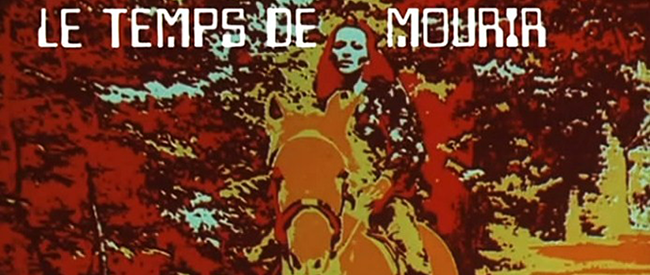
THE TIME TO DIE
(aka Le temps de mourir)
Dir. André Farwagi, 1970
France, 81 min.
In French with English subtitles.

WEDNESDAY, SEPTEMBER 10 – 10:00 PM
FRIDAY, SEPTEMBER 19 – 7:30 PM
MONDAY, SEPTEMBER 29 – 10:00 PM

A woman (Anna Karina) rides a white horse, carrying a videotape case. She approaches a metal tree and the horse throws her off, knocking her unconscious and sending the videotape case rolling down a hill. The case lands next to a sleeping bodyguard. He awakens and takes the case to his boss’s mansion. The tape shows security camera footage of his boss being assassinated. But the boss is still alive, and he is determined to find out the origins of the tape and his alleged future killer. Soon enough, the boss and bodyguards stumble upon the unconscious woman, who awakens and seems to know the future…

A stylish, puzzling sci-fi mystery dealing with time travel and destiny, THE TIME TO DIE features loads of retro-cool technology futurisms and immaculate production design, but also manages to treat its subject matter with philosophical seriousness and respect. It supposes that the future is something not only inevitable, but unavoidable. The best we can do is hurl forwards towards our destiny.

THE BEST OF LOST & FOUND FILM CLUB

lostfound_banner

THE BEST OF LOST & FOUND FILM CLUB

FRIDAY, SEPTEMBER 26 – 7:30 PM & 10:00 PM
ONE NIGHT ONLY!
ALL ON 16MM!

Over the last two years, The Cinefamily’s Lost & Found Film Club has made a name for itself as Hollywood’s greatest (and only) monthly showcase of rarely-screened ephemeral and unclassifiable short films– always presented in that most gloriously fuzzed-out of formats: 16mm film. Collecting eclectic oddities from estate sales, auctions, libraries, friends & neighbors, Lost & Found has made a hobby of rescuing under-appreciated treasures from oblivion. Now they’ve brought their greatest “finds” across the country for a “best-of” revue brimming with eye-popping experiments, student animation, strange docs and even a little harmless smut.

We’ll look at some of Jim Henson’s “for hire” work using Muppets to spice up dull corporate meetings, a sci-fi Arthur C. Clarke adaptation filled with outrageous aliens, and a real police training film discouraging the use of shotguns on public streets. Plus awkward teen dating, the first-ever commercial appearance by the Kool-Aid Man, 80’s insect love, and a secret 16mm surprise from the father of America’s favorite cartoon family.

Come see some LA ephemera as it was meant to be seen: leaders, scratches, splices and all!

Featuring:
MACHINE STORY
Dir. Doug Miller, 1983.
USA, 4 min.
CalArts Student Film

DOUBLETALK
Dir. Alan Beattie, 1975.
USA, 10 min.

MUPPET MEETING FILMS – MUPPET SIDE SPLITTER
Dir. Jim Henson, 1981.
USA, 9 min.

CIGARETTE STYLE
Dir. Unknown
USA, 3 min.

SHOTGUN OR SIDEARM
Sid David Productions, 1977.
USA, 14 min.
Pasadena Police Dept. Training Film

THE FIRST KOOL-AID MAN COMMERCIAL
Dir. Unknown, 1975.
USA, 30 sec.

WHY’D THE BEETLE CROSS THE ROAD
Dir. Jan Skrentny, 1985.
USA, 8 min.

RESCUE PARTY
Dir. Bernard Wilets, 1978.
USA, 25 min.
BFA Science Fiction series: Arthur C. Clarke adaptations

AND MORE SURPRISES!

MISS NUDE AMERICA

BANNER.MISSNUDE

MISS NUDE AMERICA
(aka The Miss Nude America Contest)
Dir. James P. Blake, 1976.
USA, 71 min.

SATURDAY, SEPTEMBER 6 – 10:00 PM
THURSDAY, SEPTEMBER 11 – 7:30 PM
SATURDAY, SEPTEMBER 27 – 7:30 PM

Naked City was a nudist colony in Roselawn, Indiana, the brainchild of Dick Drost, a charismatic cross between Hugh Hefner (his idol and nemesis) and Charles Manson, confined to a wheelchair due to muscular dystrophy. Drost was an ambitious man who planned to build several Naked Cities “with buildings and skyscrapers” all over the world.  This plan, and his ultimate dream “to be head of state of the United States or Communist China or the Soviet Union” was derailed in the 1980s after he was charged with molesting a 13-year old girl and plead guilty to 10 sex-related misdemeanors, exiling him from Indiana. Legal and financial woes forced Naked City to close in 1986, and Drost’s current whereabouts are unknown, though he is rumored to have died penniless and legless not long ago.

Filmed throughout 1975, MISS NUDE AMERICA was made during happier times. Even at its heyday, Naked City appears to be, in the words of a blogger named Steve, “a cross between a blue collar strip joint and a beer chugging stop for long distance truckers,” where the entrance gate is a giant woman’s leg which moves up and down to admit cars. But Drost’s own enormous, futuristic office resembles the Korova Milk Bar by way of 8½’s harem fantasy, a tin-foiled wonderland where various nude mistresses do his bidding, and clothed matronly women do his accounting.

Naked City comes alive during its annual Miss Nude America contest, which, though Drost describes it as “the most ambitious, Esalen-type group therapy in the whole world,” seems more like a fairly typical beauty pageant (“the incentive is that there is an automatic $1000-a-week booking fee [for stripping] attached to the winner”) where naked amateurs, $300-a-week strippers and aspiring Penthouse models prance around onstage, to the excited and befuddled gazes of gawking truck-drivers, curious midwestern tourists, and Drost’s own nude parents, who are among his disciples.

Too raunchy for widespread release, and too tame for the porn circuit, MISS NUDE AMERICA, which has remained largely unseen since its release, has found its rightful home in an old bodega on South Third Street. Playing like an episode of “Mad Mad House” directed by the Maysles, it is a hugely fascinating, highly entertaining and somewhat competently directed documentary from an era of carefree sexual permissiveness and creepy sexual predators.