
FRESH MASONRY: PRE-BREXIT THRILLS OF JAMES MASON

james_mason_series_banner

Just before his big break in Carol Reed’s ODD MAN OUT (1947), just after training at venerable Old Vic in London, setting the stage for his American debút in Max Ophüls’ CAUGHT (1949), preceding his having been voted the most popular British movie star in every year between 1944 and 1947, in the vein of his more well-known late-40s work in the melodramatic THE SEVENTH VEIL (1945) and adventuresome THE WICKED LADY (1945), always refusing to ever wear make-up on set, precisely at the time that he made the controversial decision to refuse to fight in WWII (estranging him from his family), long anticipating his American stardom—Nemo in the porto-steampunk 20,000 LEAGUES UNDER THE SEA (1954), unforgettable spy Vandamm in a lil’ flick called NORTH BY NORTHWEST (1959), creep H.H. in LOLITA (1962), his late-70s/early-80s genre renaissance—that established his intractable character presence… James Mason made a number of sleeper thrillers before his Brexit to America. We present four of them!!!

TheNightHasEyes_banner

THE NIGHT HAS EYES
Dir. Leslie Arliss, 1942.
UK. 75 minutes.

TUESDAY, SEPTEMBER 6 – 10:00PM
FRIDAY, SEPTEMBER 16 – 7:30PM
FRIDAY, SEPTEMBER 23 – 10:00PM

GET YOUR TICKETS!

“The Night Has Eyes (AKA: Terror House/Moonlight Madness) is directed by Leslie Arliss who also adapts the screenplay from the novel written by Alan Kennington. It stars James Mason, Wilfrid Lawson, Mary Clare, Joyce Howard and Tucker Maguire. Music is by Charles Williams and cinematography by Gunther Krampf.

‘You seem to regard me as some sort of male sleeping beauty who is restored to life by your kiss.’

“During the school term break, two lady school teachers travel to the Yorkshire Moors in the hope of finding out what happened to a fellow work colleague who vanished there a year previously. Arriving on the moors at night time, a storm breaks and the two women are thankful to stumble upon an isolated house where somebody is at home. The inhabitant is Stephen Deremid (Mason), a mysterious man who may just hold the key to what happened to the ladies’ missing colleague.

“OK! It’s a stage bound “Old Dark House” film that has noir shadings but is more in keeping with classic Gothic offerings like Jane Eyre, Uncle Silas and Gaslight. The setting is a doozy, a creaky and shadowy mansion with a secret room, add in a storm from hell, the foggy moors that hold secrets along with the patches of quicksand (quickbog?), a seriously brooding leading man greatly troubled by his past, a spunky heroine fronting up for love interest and some possible perilous shenanigans… and you are good to go for some dark deeds and closeted skeletons.

“Director Arliss builds the suspense very slowly, dangling snippets of information that teases the audience as to what might be going on in this shadowy abode. Stephen is a music composer, he is also a veteran of the Spanish Civil War, the effects of which has left him scarred. Why does he take tablets? Why is the moon significant? Now that his house servants have turned up, do they know what happened to the girl last year? It all builds towards the film’s chilling climax, where all is revealed, and not insultingly so.

“The cast all perform well under Arliss’ direction, with Mason honing the brooding lead man act that would serve him so well in his career. Cinematographer Gunther Krampf (Nosferatu/The Hands of Orlac) creates an eerie atmosphere of fog-bound menace out on the moors, and also a foreboding darkened house of shadows for the interior of the Deremid mansion. The slow pace may put some off, and you are asked to forgive one or two dumb character reactions to certain situations, but this rewards the patient and very much it’s a film for Gothic thriller fans to seek out.”

7/10 IMDB Review by Spikeopath from United Kingdom

TheyMetInTheDark_banner

THEY MET IN THE DARK
Dir. Carl Lamac, 1943.
UK. 90 minutes.

FRIDAY, SEPTEMBER 9 – 7:30PM
TUESDAY, SEPTEMBER 13 – 10:00PM
SUNDAY, SEPTEMBER 25 – 7:30PM

GET YOUR TICKETS!

“To begin, They Met in the Dark is a mystery that is seamlessly turned into a WWII espionage film, all the while remaining a film about two attractive and courageous people gradually falling in love. Analysts of recent vintage who try to watch the film, I suggest, routinely fail to understand its strengths and make too much of its very few weaknesses. It also confuses them because it is a film directed by a Czech, made with British actors, and yet its style is superior U.S. 1940s narrative of unusual clarity, swiftness of pace and occasional brilliance.

“The story involves a young naval officer who is cashiered from the service under suspicion of incompetence (James Mason) and who manages to become involved with a young woman (Joyce Howard) who finds a body and has cause to suspect him of having been the murderer. Following parallel paths–she to clear herself of suspicion in the case and he trying to find the truth about how his career came to grief over his botched assignment at sea–he tries to protect her while she is busy eluding him. The clues lead them both to a Dance Academy cum talent agency, which is really a nest of spies, wherein a quintet of villains has been manipulating innocents and finding a way to extract secret information from British naval officers, such as that knowledge those loss wreaked havoc on Mason’s life. The last portion of the film, maintaining the light-hearted tone carried out throughout the proceedings, becomes an anti-espionage caper led by Mason and a fellow officer, leading to a very satisfying conclusion.

“Carl Lamac (as Karel Lamac) directed with a fluid and amazingly adept camera style, handling varying sorts of indoor and outdoor, group and chase, two-shot and nightclub scenes with extreme skill. Marcel Hellman produced, with music by Ben Frankel, outstanding cinematography by Otto Heller, art direction by Norma G. Arnold and period dance arrangements by Philip Bruchel. The screenplay was adapted from the oft-imitated novel “The Vanished Corpse” by Anthony Gilbert. Others involved in the screenplay included Basil Bartlett, Anatole de Grunwald, Victor MacLure, Miles Malleson, and James Seymour. Phyllis Stanley is outstanding as a singer, David Farrar and Edward Rigby are Mason’s closest confederates. The evil quintet are portrayed by Ronald Ward, powerful Tom Walls as the leader, capable Karel Stepanek, Eric Mason, and Ronald Chesney, aided by Walter Crisham and Betty Warren. Brefni O’Rourke plays a police Inspector, with Kynaston Reeves, Terence de Marney, Robert Sansom, Patricia Medina and Peggy Dexter in supporting roles. As the young woman caught up in intrigue, Joyce Howard is far better here than she had been in the much darker “The Night Has Eyes”; though she lacks some voltage, she is attractive, and more than adequate. As the hero, James Mason gets to essay a great variety of interesting scenes, all of which he performs with convincing and skillful art throughout. He wins the girl in this one, but only after playing a variety of dramatic, comedic and challenging scenes; and as usual; he is able to sustain his character throughout the proceedings and make everyone around him look better than they do in the film at any other time.

“Comparing this delightful film to many routine program films of the war years, I suggest any critic worth his salt would have to applaud the success of this often brilliant entertainment. This is the sort of film people with a positive sense of life used to be able to make; I find it to be one within which complex story elements are made clear and scene follows scene with both logic and a continual sense of discovery. This is a very underrated noir adventure with most successful comedy used to advance the plot at every turn. Recommended.”

8/10 IMDB Review by silverscreen888 from United States

TheUpturnedGlass_banner

THE UPTURNED GLASS
Dir. Lawrence Huntington, 1947.
UK. 83 minutes.

SATURDAY, SEPTEMBER 3 – 7:30PM
SUNDAY, SEPTEMBER 11 – 7:30PM
THURSDAY, SEPTEMBER 29 – 10:00PM

GET YOUR TICKETS!

“This is a very unusual and intelligent thriller, like most thrillers involving doctors usually are. It is the first of James Mason’s very few own productions and features his own wife, Pamela Mason, here Pamela Kellino, as the second of the two ladies he is involved with, both of them leading to disaster. The intrigue cleverly leads astray at times while at the same time it sharpens as the doctor (James Mason) finds his own case constantly more crucial. He stages a kind of mock trial with himself by giving a lecture at the medical theatre with all rows filled with young attentive students, and one student almost sees through his show and sharpens his case even further. Is he in control or is he not? Has he the right to judge what’s right or wrong or has he not? The film poses many questions, and the questioning becomes increasingly more critical, until in the end he is faced with the final trial as a doctor, when an emergency calls on him to perform one more brain surgery. It’s the doctor who assists him who puts him to the final test, and these scenes are the most interesting and important in the film. James Mason as the doctor has no other choice than to be consistent with his own argument and conclude his own case after having received an understated sentence by his elderly colleague. It’s a remarkable film, not for its direction, which could have been better, but for its very thought-provoking story with the presentation of a case which not even doctors could in any possible way be called upon to give a fair judgement of. The tragedy of this case is that James Mason, one of the best actors ever, a constantly brooding romantic hero, more Hamletian than Byronic, has no other choice, which probably no one could reasonably disagree with.”

9/10 IMDB Review by clanciai from Sweden

IMetAMurderer_banner

I MET A MURDERER
Dir. Roy Kellino, 1939.
UK. 63 minutes.

TUESDAY, SEPTEMBER 6 – 7:30PM
SUNDAY, SEPTEMBER 11 – 5:00PM
WEDNESDAY, SEPTEMBER 28 – 7:30PM

GET YOUR TICKETS!

“If you are a true James Mason fan (as I am) here’s a lovely film. I Met a Murderer (England) was literally an original home movie production released in 1937 when Mason was yet under 30 years old (27-28).

“This curious and personal little movie was conceived and created by Pamela and Roy Kellino along with James Mason. It was not released in Great Britain immediately, having been rejected by Pamela’s family who controlled a large segment of the film distribution business in England. (This caused a painful schism between Pamela and James and the Osterer family.) Only costing 5000 pounds to make, the cinemagraphic production values are honest yet nearly amateur quality. Most of the actors in the film were their friends and performed for nothing or small favors. The story, written by Pamela, is simple and straightforward with lots of naive, old fashioned character interactions and impulsive, hot-tempered, reflexive responses to the problems of the day (like murdering your nagging wife because she shoots the dog-what a concept!). James Mason is exquisitely handsome, and there are lots of dreamy close-ups designed to propel this young superstar into the desiring hearts of swooning bobby-soxers and young moviegoers. His smooth, commanding voice (James Masons’ life long signature) is as potent at 28 years of age as it was throughout his life. James Mason and Pamela Kellino were, at this time, very personal and intimately close friends. Three years later Pamela would become Mrs. Mason and the rest is history.

“I can’t say this is a great movie, but it is an early short feature that shows the fiery intensity of a young James. His willful intensity portrayed here would characterize his appeal for much of his acting career. Indeed, he was the consummate screen actor, perfecting his trade tirelessly until the day of his death. The only complaint I have regarding this little gem is that the sound score is the silent film “follow-the-action-style” musical accompaniment with lots of rousing piano and jump-out-of-your-chair giddyup that can be annoying to modern listeners. Get a copy of this film if you can and enjoy the roots of one of the world’s finest actors.”

7/10 IMDB Review by Clement Concodora from Fort Meyers, FL
LA MANSION DE LA LOCURA (THE MANSION OF MADNESS)

La Mansion de la Locurna_banner

LA MANSION DE LA LOCURA (THE MANSION OF MADNESS)
Dir. Juan López Moctezuma
Mexico, 99 min.
In English

SATURDAY, OCTOBER 15 – 5PM
FRIDAY, OCTOBER 21 – 10PM
WEDNESDAY, OCTOBER 26 – 10PM  
GET YOUR TICKETS!                                   


“Abandon all hope, ye who enter here.”Based on Poe’s story The System Of Doctor Tarr and Professor Fether, in which a reporter visits an asylum to discover the system by which the roles of the insane and the caregivers have become a bit muddled, we enter into a film where political satire and surrealist horror blend into a truly astonishing mixture, a place out of time where a man becomes a chicken, the body becomes a musical instrument, and nothing is ever as it seems. Director Juan Lopez Moctezuma (ALUCARDA, MARY MARY BLOODY MARY) was a member of Mexico’s Panic movement alongside Alejandro Jodorowski and Fernando Arrabal: the three worked together on FANDO Y LIS, which should give you some idea of what you’re in for. With a cast led by the great Claudio Brook (CRONOS, THE EXTERMINATING ANGEL) in a dual role as the mad Dr. Maillard as well as Raoul Fragonard, the film is as a dream, a ritual, a series of living tableaux. Describing the plot would be to cheapen the film, but it’s worth noting no less than Leonora Carrington served as art director. We are honored to present this film in its longest known cut, with the original English dialogue, miles from public domain cuts. Those expecting cheap horror will be disappointed; those expecting clarity will be confused, those with eyes to see will behold a revelation.


SUCCUBUS

SuccubusBIG

SUCCUBUS
Dir. Cosmotropia de Xam, 2016
Italy/Germany. 68 mins.

THURSDAY SEPTEMBER 15 – 7:30PM

GET YOUR TICKETS HERE

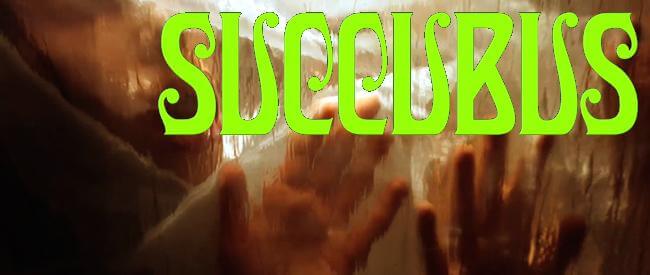
From the mastermind behind witchhaus icons Mater SUSPIRIA VISION, DRUG MACHINE and PHANTASMADISQUES comes the latest surreal multi layer narration mindfuck art horror film by Cosmotropia de Xam.  The Dream as a sin? A Dream that has been stolen and is being controlled? A bizarre trip between dream and reality. Welcome to the Witch House of Gretel F.
New York Premiere!


Bad2Worse

ff6 (1)

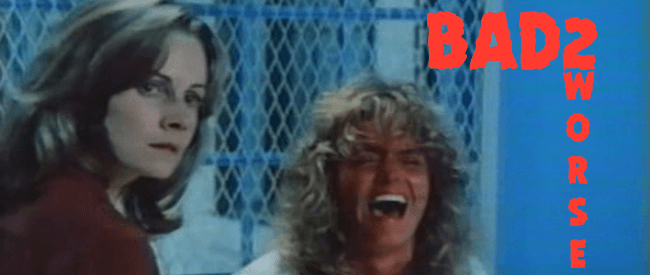
2016 has been a horrible year.  In just nine months, we’ve seen the loss of multiple cultural icons, the apparent erosion of the American political system, bigotry-fueled killings at the hands of police and madmen, while the destructive power of capitalism thunders on unabated and the environment rains down ecological disaster on a world that still refuses to acknowledge its own role in climate change.  As bad as things are, we at Spectacle Theater would like to remind you, dear moviegoers, that things can always get worse, and probably will.  In that spirit we have selected three films highlighting the failures of humanity to prepare itself for the inevitable downward spiral.  In Bad2Worse, witness the bleak inevitability of downfall at the hands of drug addition and false hope (in Born to Win), literal false imprisonment and the rational belief that being right will save you (The Fifth Floor) and the randomness of violence in a world without boundaries (Caged Terror).  Watch, enjoy, and remember, this WILL be YOU someday.


born to win_banner

BORN TO WIN
Dir. Ivan Passer, 1971.
USA. 85 minutes.

THURSDAY, SEPTEMBER 1 – 10:00PM
MONDAY, SEPTEMBER 12 – 10:00PM
THURSDAY, SEPTEMBER 22 – 7:30PM
MONDAY, SEPTEMBER 26 – 7:30PM

GET YOUR TICKETS!

“They say I’m a charmer… that I charm the people I hustle. Well, that comes after dealing with women, after hairdressing. I love to dress hair! But being that I know what to do, being that I’m hip enough to know, I do it!”  George Segal plays J, a down-on-his-luck-beyond-down-on-his-luck hairdresser, scam artist and junkie in this grim portrait of NYC in the early 70s, co-starring Robert DeNiro, Paula Prentiss, Hector Elizondo and the late, great Karen Black, from the director of the equally bleak Cutter’s Way.


the fifth floor_altbanner

THE FIFTH FLOOR
Dir. Howard Avedis, 1978.
USA. 90 minutes.

SATURDAY, SEPTEMBER 3 – 5:00PM
FRIDAY, SEPTEMBER 9 – 10:00PM
MONDAY, SEPTEMBER 19 – 10:00PM
SATURDAY, SEPTEMBER 24 – 7:30PM

GET YOUR TICKETS!

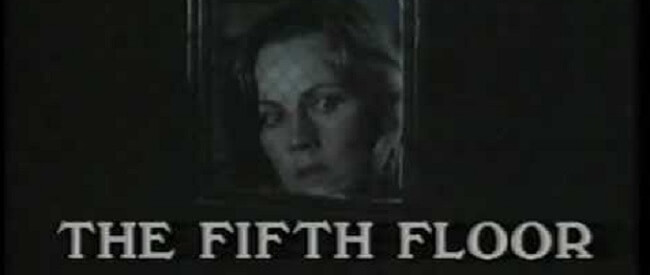
She was just looking for a night out on the town, but after collapsing on the dancefloor of a disco with strychnine poisoning, a young woman is committed to a mental institution for suicide watch. Like Sam Fuller’s “Shock Corridor,” “The Fifth Floor” begs the question, can sanity survive in a sea of insanity? Co-starring b-movie stalwarts Bo Hopkins, Robert Englund, Sharon Farrell, Julie Adams, Mel Ferrer, Earl Boen and Patti D’Arbanville. From the director of Mortuary and They’re Playing With Fire.


caged terror_banner

CAGED TERROR
aka GOLDEN APPLES OF THE SUN
Dir. Barrie McLean and Kristen Weingartner, 1973.
Canada. 96 minutes.

MONDAY, SEPTEMBER 5 – 10:00PM
SATURDAY, SEPTEMBER 17 – 5:00PM
TUESDAY, SEPTEMBER 20 – 7:30PM

GET YOUR TICKETS!

A young couple (or rather, a manipulative yuppie who convinces a young woman to go camping with him) is pushed to their physical and psychological limits when their vacation is interrupted by a sadistic cult. The man is caged, the woman is tormented. Things end badly.

ACTION U.S.A.

ACTIONUSA_banner

ACTION U.S.A.
Dir. John Stewart, 1989
USA, 89 min.

FRIDAY, SEPTEMBER 2 – 7:30PM
SATURDAY, SEPTEMBER 3 – 10PM
THURSDAY, SEPTEMBER 22 – 10PM
FRIDAY, SEPTEMBER 30 – 10PM

Special thanks to John Stewart

GET YOUR TICKETS!

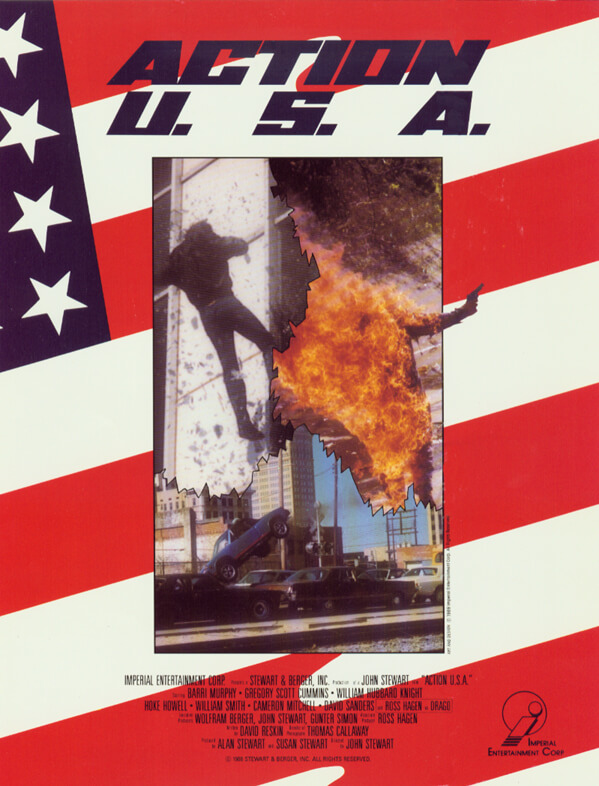
In 1987, Hollywood stuntman John Stewart (MIGHTY MORPHIN POWER RANGERS) broke the world record after falling 16 stories on fire for the Sharon Stone film COLD STEEL. The next year, Stewart grabbed a bunch of industry friends and went to Waco, Texas to film his directorial debut ACTION U.S.A.

The film opens with Billy Ray getting killed by gangsters because he supposedly stole some diamonds. His girlfriend Carmen goes on the run and falls under the protection of two FBI agents. The gangsters call in a cowboy with big guns to kill Carmen and the two FBI agents.

This plot is a framework so that we can see as many scenes as humanly possible of action, which Stewart and his stunt pros amply provide. There’s men being dangled from helicopters, men jumping through glass, men being repeatedly shot while yelling ‘MOTHERFUCKER!,’ men being lit on fire, cars blowing up, cars launching into buildings and blowing up, and cars launching into other cars and blowing up. Really, there’s just a lot of action. If you are looking for a film that contains action and is set in the U.S.A., then this is your film.

For the purists, we’ll be screening this VHS-only puppy on the analog format that God intended, courtesy of a VG+ tape from a defunct mom-and-pop video store.

“An excellent example of the type of escapist fun that packed drive-in theaters as recently as a decade ago but is now without a natural home.” -Variety

“Pounds and pounds of Grade A Texas-style action… damn near perfect.” -Bleeding Skull

“Truly the CRANK of its day… a hidden gem and a true fan favorite.” -Comeuppance Reviews

“The kind of movie you want to immediately show your friends as soon as it’s done. Totally unhinged.” -Letterboxd Review

“Clearly the premiere underground  b-movie action flick… see it at all costs.” -IMDB Review

spectacletheater_actionusa_poster_lowres

action_usa

AMERICA LATINA REBELDE

series banner ALR

The conquest of the Americas did not end with the defeat of the Aztecs and Incas, it was only the initiation of a procession of protests, strikes, and uprisings between the indigenous peoples and colonizers, immigrant workers and landowners, slaves and masters, mass movements and dictatorships. The films that retell these struggles portray a dramatic history fixed in flux.

The ability for South American artists to capture such struggles changes with the regimes–if one favorable to the people manages to obtain power, the heroism and atrocities of previous generations may finally be told. Argentinian director Hector Olivera is a case in point, his sometimes satirical but always deadly serious work focuses on the individuals who struggle through dark times of political violence. In 1973 he made a REBELLION IN PATAGONIA, a film telling the story of a Patagonian wool farmer’s strike in the 1920’s, based on a previously banned book by the anarchist writer Osvaldo Bayer. When the dictatorship returned the book and its adaptation were once again banned. With a renewal of democracy in the 1980’s Olivera was free to make political work again, telling the story of the dictatorship’s torture and execution of student activists in NIGHT OF THE PENCILS.

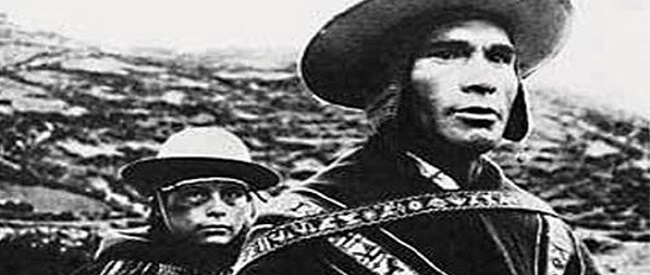
With a majority indigenous population, many of whom continue to live a largely traditional lifestyle, landlocked Bolivia historically lagged behind the economic advances of its neighbors. In the 20th century, the State’s solution to lagging modernization occasionally relied on neo-eugenics, and Jorge Sanjines’s BLOOD OF THE CONDOR tells of an uprising of an indigenous village against North American “Progress Corp” volunteers who they believe sterilized women without their consent.

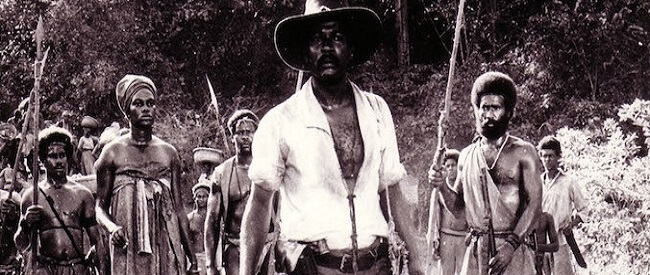
Together with the indigenous at the lowest rung of the caste system was the African slave, who, likewise, had a long history of struggle against their masters. The Maroon culture developed independently in Brazil with the Quilombos, the Black Seminoles in Floria, and Palenques in Colombia and Cuba. In the Cuban film MALUALA, a village of runaway slaves is depicted in colorful detail, both in terms of their music, traditions, and fashion, and their lifestyle of constant resistance to renewed subjugation.


patagonia-banner

REBELLION IN PATAGONIA
(aka LA PATAGONIA REBELDE)
Dir. Hector Olivera, 1974.
Argentina. 110 minutes.
In Spanish with English subtitles.

THURSDAY, SEPTEMBER 1 – 7:30PM
WEDNESDAY, SEPTEMBER 7 – 7:30PM
FRIDAY, SEPTEMBER 23 – 7:30PM
SATURDAY, SEPTEMBER 24 – 10PM
MONDAY, SEPTEMBER 26 – 10PM

**GET YOUR TICKETS HERE**

Oswaldo Bayer’s historical novel Patagonia Rebelde, about an anarcho-syndicalist labor union’s insurrectionary uprising against the Argentinian elite in the 1920s, was banned and publicly burned in the 70’s before becoming a bestseller and feature film. The story begins with a hotel workers’ strike so successful one forgets why the working class would ever lose given its objective strength. But as the victorious anarchists sing their anthem, a group of Chilean laborers, immigrants among immigrants, sit quietly in the back of the labor hall. Although they have been elevated to equals by the principal of international solidarity, their silence foreshadows the bloodshed to come.

For decades, Argentinian politics swung between the Nationalist populism of Juan Peron and a series of military coups, eventually centrally coordinated under Operation Condor, aimed at suppressing the socialist elements that made him so widely popular.

In 1970 Bayer’s book was banned and publicly burned, but with Peron’s return in 1973, the leftist Jorge Cepernic was elected governor of the Patagonian state of Santa Cruz. He worked with Bayer and director Hector Olivera to create an epic film version of Patagonia Rebelde, featuring large scale protest and battle sequences. In 1976 the military seized power once again, ushering in a brutal 7 year dictatorship in which the film was banned, Bayer, Olivera, and several of the film’s actors were blacklisted, and Cepernic was imprisoned. In jail, he asked his warden if he deserved such cruel treatment simply for being a member of a Left-of-center party. “ No, you’re not a prisoner because of your affiliation,” the warden reportedly said. “You’re a prisoner because you allowed Rebellion in Patagonia to be filmed.”


noche-banner

THE NIGHT OF THE PENCILS
(aka EL NOCHE DE LOS LAPICES)
Dir. Hector Olivera, 1986.
Argentina. 105 minutes.
In Spanish with English subtitles.

WEDNESDAY, SEPTEMBER 7 – 10PM
WEDNESDAY, SEPTEMBER 21 – 7:30PM
SATURDAY, SEPTEMBER 24 – 5PM
THURSDAY, SEPTEMBER 29- 7:30PM

**GET YOUR TICKETS HERE**

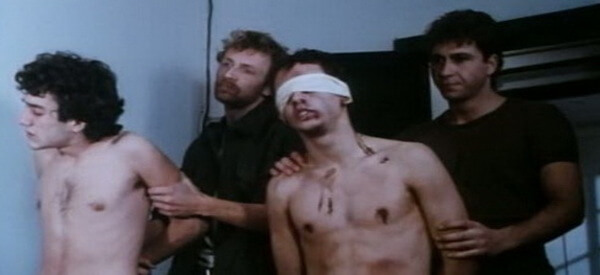
The repression of Operation Condor was centrally organized by military commanders of Chile, Argentina, Uruguay, Paraguay, Broliva, and Brazil, aiming to finally wipe out any traces of marxist or revolutionary thought. Argentina saw the highest numbers of disappeared and executed leftists, between 15-30,000. When democracy returned to Argentina in 1983, Olivera was free to make films about the State terror he witnessed. El Noche de los Lapices depicts the organization of a student strike against increased bus fares in La Plata. Only a few months into the dictatorship, some of these students were kidnapped, raped, tortured, starved, and killed.

Beginning with an seemingly innocent protest against the increase of bus fares in La Plata, a student march is attacked by police. In the night, several of the organizers are rounded up by men posing as police and taken to a dungeon. Used as test subjects for torture, the fate of the students would mirror tens of thousands of others in the coming years. A cultural element in the process for “justice and reconciliation,” which included the imprisonment of some of the students’ torturers in 1985, Olivera used the testimony of one of the few survivors for his adaptation.


condor-banner

BLOOD OF THE CONDOR
(aka YAWAR MALLKU)
Dir. Jorge Sanjines, 1969.
Bolivia. 70 minutes.
In Quechua, English, and Spanish with English subtitles.

THURSDAY, SEPTEMBER 8 – 10PM
MONDAY, SEPTEMBER 19 – 7:30PM
WEDNESDAY, SEPTEMBER 28 – 10PM

**GET YOUR TICKETS HERE**

Ignacio, the tragic hero of Jorge Sajines’s first film, was a perfect stand-in for the utterly impotent situation Bolivia’s indigenous population faced in the 1960’s. When his wife’s third consercutive pregnancy terminates, he is driven into a rage, and she is the target. A series of flashbacks and flashforwards shows more violence in every direction. We soon find out the reason for all of it is the sketchy, but outwardly well-meaning American aid workers who recently appeared in the village.

Inspired by anti-Imperialist Marxism and new wave European cinema, this was the first feature of Sanjines, who would become one of Bolivia’s most awarded directors and a central figure in Latin America’s “Third Cinema” movement. The heavy-handed villainy of the Progress Corps gringos and the obedient facilitation of their schemes against the indigenous population by Bolivian authorities represents a political cosmology that radiates through the history of post-Colonial South America.

Sanjines worked with native actors and audiences alike, designing the film to be watched in indigenous communities that were not yet familiar with cinema. The results were mixed, as many did not understand narrative motifs such as the flashback sequences. Overall, the film was influential enough that repelling Peace Corps volunteers became a cause of cultural autonomism, and they were expelled altogether in 1971. Although it’s unlikely the Peace Corps was running a sterilization program, the history of condescension, instrumentalisation, and exploitation of indigenous people made the allegations ring true. Their very presence, along with the self-congratulatory Western doctor character, were symptomatic of an all-pervasive imperialist influence, alluded to by use of rock music and the culturally assimilated but still helplessly subservient Sixto, ensuring repressive hierarchies, and the violence inherent within them, remain firmly in place at every level.


maluala_banner

MALUALA
Dir. Sergio Giral, 1979.
Cuba. 95 minutes.
In Spanish with English subtitles.

MONDAY, SEPTEMBER 5 – 7:30PM
WEDNESDAY, SEPTEMBER 14 – 10PM
TUESDAY, SEPTEMBER 20 – 10PM

**GET YOUR TIKETS HERE**

With several historical films reflecting on the experience of slavery in Cuba, Sergio Giral is perhaps Cuba’s best known Afro-Cuban director. In Maluala, he takes up the subject of Cuba’s Palenques, a network of about 30 communities hidden in Cuba’s Eastern coast mountains comprised of runaway slaves with different ethnic origins, but a common cultural rejection of the bondage that brought them across the Atlantic.

Among these was Maluala, whose chief, Gallo, present a petition to be left alone by the Colonial government. The counteroffer is for the habitants of the Palenques to turn themselves in before being formally freed, a proposition three other chiefs accept, but Gallo refuses in a conflict reminiscent of Gillo Pontecorvo’s divide-and-conquer epic BURN!, only from the colonized’s perspective.


MIND YOUR OWN BUSINESS: CINEMA AGAINST STREET HARASSMENT

WAR ZONE
Dir. Maggie Hadleigh-West, 1998.
USA. 75 minutes.

STOP
Dir. Julia Retzlaff, 2015.
USA. 5:24 minutes.

MICHELLE’S STORY
Dir. Aden Hakimi, 2015.
USA. 1:23 minutes.

THURSDAY, SEPTEMBER 8 – 7:30 PM (FEATURING SPECIAL Q&A)
SATURDAY SEPTEMBER 10 – 5:00 PM
FRIDAY SEPTEMBER 16 – 10:00 PM
SUNDAY SEPTEMBER 25 – 5:00 PM

GET YOUR TICKETS!

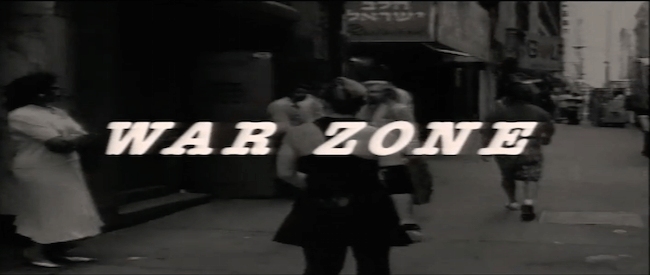
Maggie Hadleigh-West’s incendiary direct cinema documentary, WAR ZONE, is a battle cry for anyone who’s been harassed, catcalled, and assaulted while rightfully claiming their slice of public space. Twenty years ago, West videotaped herself and other women in cities across America as they idly walked down the street. The zip codes may change, but not the trash on the sidewalks: an unending array of men openly propositioning these women, commenting on their appearances and trying to cut them down to size. Camera in hand, West returned fire, confronting them about their wonton disrespect and forcing them to explain their disgusting behavior. The results are cathartic, at times terrifying, and enraging above all.

In 2010, non-profit advocacy group Hollaback! began encouraging targets of street harassment to document their assailants with an even handier weapon – their mobile phones. The ensuing six years have seen a dramatic expansion of the Hollaback! mission, with organizations in 79 cities across 26 countries worldwide. Screening with WAR ZONE are three short films inspired by this call for action. STOP, MICHELLE’S STORY, and WALKING HOME are different works with the same crucial message: MIND YOUR OWN BUSINESS.

On September 8, there will be a special intermission Q&A and discussion about what we can do to end this perverse – and pervasive – epidemic.


MIL KDU DES // YOURS, MINE, & HOURS

YOURSMINEHOURS_Banner
(aka: 37 Minutes of The Wolf)

Dir. Ingmar Bergman, 1968

Re-edit by Aaron Schimberg, 2016

Sweden, 37 min.

SUNDAY // AUGUST 28th // 8PM & 10PM // FORMAL ATTIRE REQUIRED

GET YOUR TICKETS!

MIL KDU DES // YOURS, MINE & HOURS from Spectacle Theater on Vimeo.

“The mirror has been shattered. But what do the splinters reflect?”

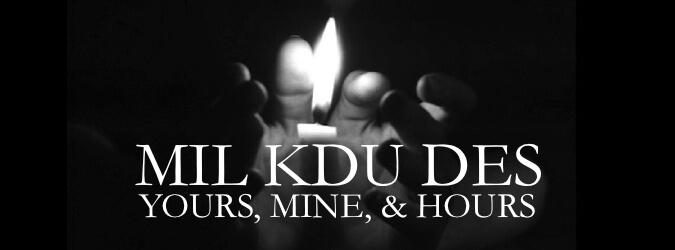
Painter Johan and his wife Alma seek refuge on a remote island but they soon find their stay to be anything but relaxing. While exploring the island, Johan is constantly approached by local weirdos who he soon begins to believe are actually demons. Johan details these encounters and gives names to the horrors surrounding him such as The Lady With A Hat. Insomnia sets in and night after night Alma sits by Johan’s side and hears his confessions. He is a man tortured. He tells her of the “vargtimmen” – The Hour of the Wolf while she sits by his side, afraid to sleep. He laments his lost love – Veronica Volger. He tells her of drowning a child.

Not long after, the couple are invited to a party hosted by the local baron. Johan and Alma fight over the attendance of Johan’s aforementioned lover – Veronica Volger. Enraged, Johan shoots Alma and rushes to the soiree. Upon his arrival Johan is aghast to find the other guests are none other than the ghouls populating his waking nightmares…then things start to get much, much worse.

MIL KDU DES return to Spectacle to lay waste to Summer 2016 with Bergman’s vacation hellscape presented as only we know how.You’ll never eat dinner again! Join us for an evening of wearing nice clothes on probably one of the hottest nights of the year and sweat the fear out.

SPIDER & FLY

SPIDER & FLY
Dir. Emily Esperanza, 2014.
USA. 47 min.

SUNDAY, AUGUST 14 – 10:00 PM
MONDAY, AUGUST 29 – 7:30 PM

Director in attendance for Q&A on August 14!!!!!

GET YOUR TICKETS!

Check out the Facebook event!

Blending existentialist ideals and lo-fi aesthetics with offbeat pacing, gritty in-camera sound, theatrical performances, and stark poetic romanticism, Emily Esperanza’s lo-fi debut featurette-length film, SPIDER & FLY, is an unpolished portrait of an impassioned outsider’s journey through an urban wasteland of archetype, transcendence, nostalgia, and truth. Featuring a feverish and haunting soundtrack from influential outsider musician, Jandek, and Santa Fe-based duo, Evarusnik, SPIDER & FLY is self-aware, self-indulgent, and patient, offering an unabashed look inside the most vulnerable parts of a person.

Called “an original voice in a sea of mundane posers,” by Jon Mortisugu collaborator Amy Davis, Emily Esperanza is a Chicago-based filmmaker exploring stillness, duration, atmosphere, and archetype, specifically relating to representations of femininity. Presented in a series of tableaus and two-channel videos, her works feature highly stylized sets and iconic locations, use of isolated and displaced sound, static and often very wide shots, and characters that exist simultaneously within and outside of time.

In addition to SPIDER & FLY, this program features:

Severance (5 min. 2016) A video ritual about cutting ties and reclaiming personal agency, set in the desert of Southern California.

GLORY/INFERNO (23 min. 2015) A murder mystery, in two parts.

day/night (12 min. 2015) Existing somewhere between dream state and the uncanny, day/night observes stillness, atmosphere, duration, anxiety, sensuality, and the confines of femininity.

Esperanza is currently working on her first feature titled, El Culto De La Muerte, shot in Oaxaca and Chicago. She is also the founder and curator of Chicago’s WRETCHED NOBLES, an immersive monthly film/video series & shorts program.

SUTURE

suturebannerSUTURE
Dirs. Scott McGehee & David Siegel, 1993
96 mins. English

FRIDAY, AUGUST 19 – 7:30 PM – FILMMAKERS IN PERSON!

GET YOUR TICKETS!

Thanks to an immaculate restoration released by the UK’s Arrow Films, Scott McGehee and David Siegel’s SUTURE is getting a long-overdue moment in the sun. For ONE NIGHT ONLY, the filmmaking duo (who would go on to make THE DEEP END and WHAT MAISIE KNEW, among others) will join us at Spectacle for a rare presentation of their fascinating 1993 neo-noir debut.

Clay (Dennis Haysbert) and Vincent (Michael Harris) are brothers who meet for the first time on the occasion of their father’s funeral in Phoenix; despite the obvious physical differences of Haysbert and Harris, SUTURE’s characters make periodic mention of the uncanny resemblance between Clay and Vincent. Before long, Vincent has tricked his newfound brother into a forcible an identity swap: a carbombing sends Clay to the hospital, while Vincent hits the lam with his inheritance. Newly mistaken as “Vincent” – and, as it turns out, suspected of having murdered their father – Clay wakes up with no course of action but to sift the detritus of his own jittery recollections, and to track Vincent down to restore his rightful identity.

But what, precisely, is that identity worth? The process entails Clay retracing his steps to an analyst (Sab Shimono), whose Lacanian musings on memory and selfdom (or lack thereof) give the film its introductory thrown gauntlet. Clay-as-Vincent’s trajectory makes McGehee and Siegel’s colorblind casting more than merely high-concept (or ahead of its time): it’s an opportunity to see an entire world with suspended disbelief, a clueing-in for the audience that makes SUTURE’s Rorschachian asymmetry unnerving down to the tiniest detail. (Clay’s face is reconstituted by a doctor who describes it as if talking about Harris’: “roman nose, thin lips…”) Ultimately Clay is demarcated less by Haysbert’s skin color than by the class disparity between him and the people surrounding him, which makes for several fascinating meta-comments in the film’s screenplay.

That said: if not exactly classical, SUTURE is also a work of genre par excellence. Executive produced by Steven Soderbergh, it’s hard not to take McGehee and Siegel’s film in hindsight as a signal bearer for the path not taken by American independents in their supposed 90s heyday: SUTURE betrays unabashed allegiances to Surrealism, Hiroshi Teshigahara and Hitchcock, mounted by the filmmakers (with cinematographer Greg Gardiner) in unerringly lux compositions and insinuating, slow-burn crane movements. By the time Clay and Vincent’s respective concentric circles have come back around to lock, you’ll know you’re watching one of the most serpentine and thought-provoking noirs of the last quarter-century.