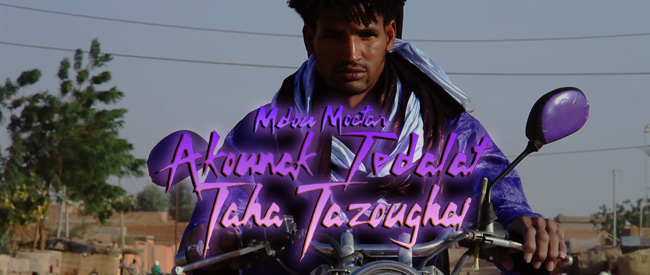
AKOUNAK TEDALAT TAHA TAZOUGHAI

AKOUNAK_BANNER

Akounak Tedalat Taha Tazoughai
AKA Rain the Color of Blue with a little Red in it
Dir. Christopher Kirkley
Niger/United States
2015, 75 min
In Tamashek with English subtitles

SATURDAY, AUGUST 8 – 7:30PM
WEDNESDAY, AUGUST 12 – 10PM
THURSDAY, AUGUST 20 – 7:30PM
SATURDAY, AUGUST 29 – 10PM

In 1979 Roger Corman wanted a disco movie, so his staff made sure that he was the only one on the production with a script that said “Disco High School.” Two weeks before shooting, director Allan Arkush broke it to his producer that everyone else’s scripts were called Rock ‘n’ Roll High School, and the Ramones were a punk band. “Why can’t they be disco,” Corman asked. Arkush responded, “You can’t blow up a high school to disco music.”

Since at least 1956, when Bill Haley & His Comets starred in Rock Around the Clock, the musician-centered rock drama has been one of the most versatile vehicles for pop proselytizing. There have been many tweaks to the Rock Around the Clock formula—musical genres, locales, vérité aesthetics—and Prince‘s Purple Rain might be called the capitalist variant. In 1975 the New York Time’s Vincent Canby famously asked, “What is Jaws but a big-budget Roger Corman film,” and by 1984 Corman’s operation had effectively been steamrolled by appropriation of exploitation formula’s amid Hollywood’s economies of scale. Purple Rain is also a big-budget Corman film, but despite its unabashedly generic construction it towers above other rock dramas as a true watershed: the genre’s first steroidally capitalistic Hollywood blockbuster.

So, it’s at least patently funny that the first fiction feature ever produced in the Tuareg language, which is spoken by about 1 million people in parts of Algeria, Libya, Mali, and Niger, is nominally a remake of Purple Rain. Or, sort of: there is no Tuareg word for “purple,” so Akounak Tedalat Taha Tazoughai actually translates to “rain the color of blue with a little red in it.” Constructed around the personality of naturally charismatic lead Mduo Moctar and set in the world of Tuareg guitar music in Agadez, Niger—most internationally recognized for the work of Bombino (who is, come to think of it, signed to a subsidiary of Prince’s former record label)—Akounak gushes with pure, earnest enthusiasm for its sweded source material. Shrouded in mystery and kicking up desert sands on his purple motorcycle while riding between home recording studios and guitar parties, Moctar is a brilliant and even more likable analog to Prince’s “The Kid.” Whereas Purple Rain is premised about calculated obfuscation of ostensibly autobiographical detail—I learned as much about Minneapolis and Prince from Purple Rain as I did string theory—Akounak‘s filmmakers take a Rouch-lite approach to their collaboratively produced riff on social mores, religiosity, and third world distribution models.

Make no mistake: Akounak Tedalat Taha Tazoughai works as blissful, effervescent entertainment, and it’s beautifully shot and edited like a fiction film even as its DIY production and documentary ethos shine through. Like the conglomerate clockwork strategies underpinning Purple Rain, it will make you a believer and a fan. —Jon Dieringer (Screen Slate)

CHEAP THRILLS: LARRY COHEN’S BONE and GOD TOLD ME TO

LarryCohen.SERIESBANNER-alt

Spectacle heats things up this August with two films by one of the most daring, subversive and inventive low-budget filmmakers ever!

Special thanks to Bill Lustig of Blue Underground.


Bone.BANNER

BONE
Dir. Larry Cohen, 1972
USA, 95 min.

FRIDAY, AUGUST 14 – 10:00 PM
THURSDAY, AUGUST 20 – 10:00 PM
FRIDAY, AUGUST 28 – 10:00 PM
MONDAY, AUGUST 31 – 10:00 PM

Initially titled BEVERLY HILLS NIGHTMARE, DIAL RAT FOR TERROR and HOUSEWIFE, Cohen’s first feature film dives headlong into racial and sexual politics in a way that is alternately brilliant and offensive. To this day, it’s difficult to imagine anyone but Cohen treading such treacherous waters so fearlessly.

Bill (Andrew Duggan) is a quintessential used car salesman, Bernadette (Joyce Van Patten) his trophy wife, and they’re lounging by their pool in Beverly Hills one day when Bone (Yaphet Kotto) enters their lives. Bone describes himself as a “big, black buck doing what’s expected of him”, but his initial plan to rob the couple gets seriously complicated as he becomes enmeshed in their rotten bourgeois lives. The film’s ostensible set-up involving the frightening nature of Blackness gradually gives way to one of the most bitterly negative portrayals of Whiteness to ever be committed to film.


GTMT.Banner

GOD TOLD ME TO
Dir. Larry Cohen, 1976
USA, 91 min.

WEDNESDAY, AUGUST 5 – 10:00 PM
FRIDAY, AUGUST 14 – 7:30 PM
SUNDAY, AUGUST 16 – 5:00 PM
THURSDAY, AUGUST 27 – 10:00 PM

In the outrageously radical GOD TOLD ME TO, NYPD Detective Peter J. Nicholas (Tony Lo Bianco) has to deal with some heavy shit when a series of ordinary New Yorkers go on senseless killing sprees, claiming that God told them to. His corrupt fellow cops are skeptical, but Nicholas, a shame-ridden closet Catholic who sneaks off to church every morning behind his girlfriend’s back, has a bad feeling that the violence is, in fact, divine in nature.

Who else but Larry Cohen could make a film that posits God as a murderous bastard who wreaks havoc on a turbulent New York City, and features a messiah of sorts with a stigmata-vagina on his side who talks about his “ancestahs”? God or whatever it is communicates through a cadre of twelve Wall Street types, suggesting that he’s learned a thing or two since the last time he came around to earth and got himself killed. The film’s climax takes place in a burned-out Bronx tenement and involves a variation on sex between men that would make many a Catholic tremble with sacrilegious excitement.

TEENAGE KICKS: SWEDISH TAEKWONDO PUNKS ON FILM

In the 1980s, Sweden’s youth culture was carried away by Bruce Lee, THE KARATE KID, and hip-hop, ushering a new wave of counter-culture and youth rebellion. Combined with Sweden’s own version of the “video nasties,” which elevated otherwise rote actioners to must-see status (among them Mats Helge Olsson’s essential, homegrown breakout VHS hit NINJA MISSION), delinquency was on the rise. And just as it swept midwestern American mini-malls, taekwondo made the juvenile offenders’ feet their weapons of choice.

The new subculture, known as “kickers,” was immortalized in the most unlikely of fashions: STOCKHOLMSNATT, a highly polished feature docudrama financed by Sweden’s state-owned telephone company and made for compulsory viewing to discourage payphone sabotage. This was a big mistake: a trend that most people weren’t even aware of went national, and the young hood stars, who played fictionalized versions of themselves, became icons. Years later, in 1993, SÖKARNA, featuring similar cast members, extended the core essence of STOCKHOLMSNATT into a more mature, sex, drugs, and violence-fueled portrait of Stockholm on the brink of full-on social collapse.

While one might be tempted to imagine Sweden as a bunch of blonde haired, blue eyed babes in a cultural bubble, the kicker films are unique in their frank acknowledgement of social problems, racial tensions, immigration and transatlantic cultural (re-)reappropriation. They’re a thrilling window into an obscure international subculture and, at the very least, unbelievably entertaining—if not always intentionally. And as Swedish Sensationsfilms author Daniel Eckeford argues, they represent the culmination of decades of violence and smut in Swedish films before relaxed censorship and the floodgates of the internet gave young punks less to kick back against.


stockholmsnatt-banner-alt

STOCKHOLMSNATT
aka STOCKHOLM NIGHT/THE KING OF KUNGSAN
Dir. Staffan Hildebrand, 1987
Sweden, 45 min.
In Swedish with English subtitles

FRIDAY, AUGUST 7 – 10:00 PM
MONDAY, AUGUST 10 – 10:00 PM
SATURDAY, AUGUST 22 – 7:30 PM
THURSDAY, AUGUST 27 – 7:30 PM

STOCKHOLMSNATT is a true gem: a super stylized, state-supported 1987 quasi-docu-drama made for compulsory viewing in Swedish schools and designed to wean teens off a generally non-pervasive wave of random jumpkicking crimes—a non-trend that the movie then inadvertently popularized, making unlikely folk heroes out of its juvenile delinquent stars and christening Sweden’s “kicker” subculture.

Martial arts outlaw Paolo Roberti, already a notorious youth criminal, was hired to play himself as a young Italian Swede struggling with identity and feelings otherness. And like a lot of lost teens, he works this out through delinquency and violence, uniquely in this case by jumpkicking stuff like windows, people, and payphones, and really I guess just anything he can ram his foot into. His best friend, Quincy Delight Jones III (Quincy Delight Jones III, son of Quincy Jones and Swedish supermodel Ulla Andersson), tries to steer him on the right course, partially through the power of righteous positive synth jams. Parties, beatdowns, smash-n-grabs, teen romance, and a whole lotta jumpkicking ensue. Will any lessons be learned? Yes: jumpkicking stuff is awesome.

Transcending national borders, STOCKHOLMSNATT is the most overwhelmingly 80’s object ever made. It’s seriously like if Billys Idol and Squier had a jumpkicking movie baby. The music and fashion is so incredibly on-point, and it’s the kind of movie where when something sad happens there’s an epic guitar wail and suddenly Paolo is standing in a stairwell in the Kungsträdgården metro station while his long beautiful hair is backlit by neon and random fog rolls down the stairs (cue progressive baby-to-troubled-teen photo montage). It’s like this gritty glossy punchdance-fueled neon-neo-realism aesthetic filtered through badly failed corporate anti-vandalism propaganda. There’s even Swedish beatboxing and rapping. If anything, the seamless synthesizing of hair metal, synth pop, and hip-hop is a major feat in itself. Actually, maybe this is just a feature-length expansion of the Aerosmith/Run-DMC “Walk This Way” video, only mixed with the Michael Jackson video where he transforms from panther form and smashes a car.

I don’t want to spoil anything but I seriously have to tell you about this one part where Paolo and his hoodrat friends smash a window to steal a diamond-studded jean jacket with tiger-print lapels and when they’re running down the street and the cops try to stop them Paolo just JUMP KICKS one. Hahahahahahaha. AND THE COP DOESN’T EVEN TRY TO REACT. He’s just as stunned as we are that this curly haired punk is ramming his foot into his chest. Hahahaha. This movie makes jumpkicking look seriously fucking cool.


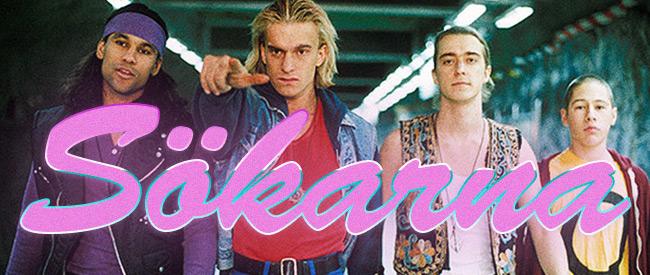
sokarna-banner

SÖKARNA
Dir. Daniel Fridell & Peter Cartriers, 1993
Sweden, 108 min.
In Swedish with English subtitles

FRIDAY, AUGUST 7 – 7:30 PM
SUNDAY, AUGUST 16 – 7:30 PM
WEDNESDAY, AUGUST 19 – 10:00 PM
SATURDAY, AUGUST 22 – 10:00 PM

Set in the world of teen delinquency, crime, drug addiction, race conflict, and violence, SÖKARNA (literally “The Searchers” or “The Seekers”) follows a couple of low-rent hoods weaned on nascent Swedish hip-hop and Taekwondo whose sole virtue is that they enjoy beating the shit out of skinheads. Existence is bleak: but after leader Jocke is sentenced to jail time for a violent mugging, life goes off the rails when he reenters society with some new friends. Jocke plunges into a world of high-stakes robberies, violent shakedowns and mob deals while smoking, snorting, shooting, and freebasing his way straight to Hell.

SÖKARNA is considered by author Daniel Ekeroth to be the explosive culmination of the trajectory of Swedish “sensationsfilms” that began in the early 1950s. At once horrifyingly disturbing and giddily cheesy, the film is a wickedly warped portrait of society on the brink set to an awesome/awful backdrop of Neneh Cherry-style Euro R&B. (Although controversial Swedish G-Funk classic “Shoot the Racist” by Infinite Mass is actually pretty hardcore. Appropriately, the movie does begin with Jocke throwing a neo-Nazi under a subway train.) SÖKARNA is further noted for its unique tone that elevates urban realism into something slightly suggesting dystopian science fiction: it’s like the Swedish BASKETBALL DIARIES with a tincture of CLASS OF 1984.

Adding to the film’s legend is the incredible fact that in 1996, nearly three years after it’s release, amateur leading man Liam Norberg—who also has a small role in STOCKHOLMSNATT and had run a Taekwondo shop with star Paolo Roberti—was convicted of of the largest cash heist in Swedish history, which had taken place in 1991. (There are undeniable shades of Scorsese’s GOODFELLAS in both this historic real-life crime and the Lucchese/Lufthansa heist as well as the films’ aesthetic exuberance.) In fact, alongside unbelievable state subsidies, Norberg’s stolen money had partially financed SÖKARNA’s production. For his role in this legendary heist, Norberg and his collaborator received whopping five year prison sentences. The third accomplice, Dragomir Mršić, recently consulted and provided his voice and likeness to the popular video Swedish video game PAYDAY 2 and even had a decent sized role in Doug Liman’s EDGE OF TOMORROW. Way to keep it real, Sweden. Norberg, meanwhile, is back in the national spotlight as an outspoken born-again Christian.

HATCHET TO THE HEAD: AN UNHOLY TRINITY BY ÁLEX DE LA IGLESIA

ADG (1)

This Summer™, Spectacle is pleased to show a trio of earlier works by the great, madcap Spanish auteur (anti-auteur?) Álex de la Iglesia, better known of recent for his Elijah Wood-starring The Oxford Murders and his surrealist drama of the Spanish Civil War, The Last Circus. de la Iglesia’s howlingly funny body of work is marked as much by its wanton bloodshed and suffering as it is by a dexterity with words and aphorisms – hat-tips to the audience that there are no holy cows in this world.

Trigger warning: films include murder, rape, kidnapping, human sacrifice, drug use, live experimentation and acts of terrorism. 

AM_banner

ACCIÓN MUTANTE (MUTANT ACTION)
Dir. Álex de la Iglesia, 1993
Spain, 90 min.
In Spanish with English subtitles

THURSDAY, JULY 2 – 10:00 PM
FRIDAY, JULY 10 – 7:30 PM
SATURDAY, JULY 25 – 7:30 PM

For those of us for whom DEMOLITION MAN wasn’t Boschian enough, there’s ACCIÓN MUTANTE! The film takes place in a dystopian near-future where a band of inept mutant troglodytes have made it their mission to target only the world’s most attractive – the other 1% – by blowing up sperm banks, attacking gyms and spas, etc. Led by the Frankensteinian Ramón (Antonio Resines), the  kidnap Patricia (Frédérique Feder), a glowing socialite bride-to-be, and haul her to the off-planet mining colony where Ramón has arranged to collect ransom money from her post-Francoist generalissimo father – but of course, things get more complicated en route. Awash in blood and metal, de la Iglesia’s nihlistic debut (produced by Pedro Almodovar!) is both a rib-brusingly hilarious satire of 90s society and a production of surprising detail and muscularity, likened often to the early collaborations between Jeunet and Caro.

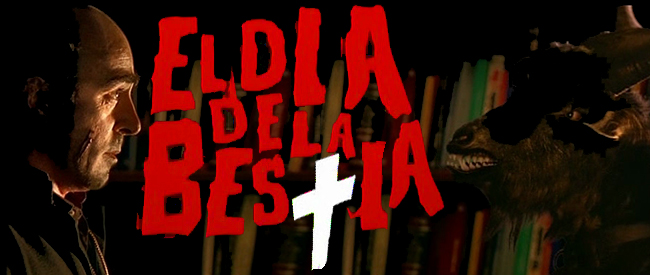
diadelabestiabanner

EL DÍA DE LA BESTIA (THE DAY OF THE BEAST)
Dir. Álex de la Iglesia, 1995
Spain, 103 min.
In Spanish with English subtitles

MONDAY, JULY 6 – 7:30 PM
FRIDAY, JULY 10 – 10:00 PM
TUESDAY, JULY 28 – 7:30 PM

After discovering the Antichrist will be born Christmas Eve, mousy but determined Basque theologian Ángel sets off for Madrid to be evil as possible in hopes of gaining Satan’s trust and stopping the Apocalypse before the holidays. He’s new to sin, but gets help from a friendly local metalhead in kidnapping TV psychic and paranormal investigator Cavan to help them out. Comic book goofiness barely disguises underlying social commentary – one priest stealing dead men’s wallets can’t compete with an overzealous, trigger-happy police force or xenophobic hate groups running amok.


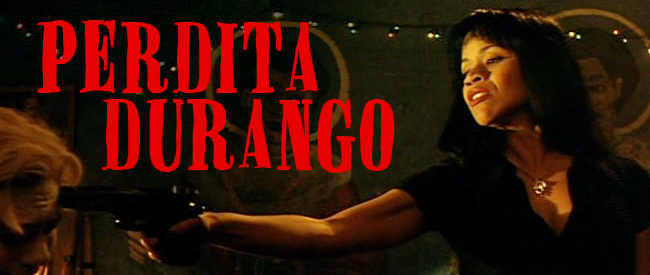
perditabanner

PERDITA DURANGO
Dir. Álex de la Iglesia, 1997
Mexico/USA/Spain, 121 min.

THURSDAY, JULY 2 – 7:30 PM
WEDNESDAY, JULY 15 – 7:30 PM
TUESDAY, JULY 28 – 10:00 PM

Starring Rosie Perez and Javier Bardem’s worst on-screen haircut, PERDITA DURANGO is a violent whirl of sex, drugs, and ritual murder weaving across the U.S./Mexico border. Still mourning her sister’s death, Perdita joins Santeria priest/drug runner Romeo on his latest run – delivering frozen human fetuses to a beauty company in Vegas for processing into fancy face cream. To spice things up, they kidnap two clueless American teens to screw and sacrifice along the way. de la Iglesias’ portrayal of America as land of the Square blurs with Perdita and Romeo’s Latin world of brutal vitality, creating a cartoonish existence where investigator Dumas (played by James Gandolfini) perpetually getting slammed by cars is slapstick, violence and sex are indistinguishably intermeshed, and the only common ground is Herb Alpert’s Tijuana Brass.

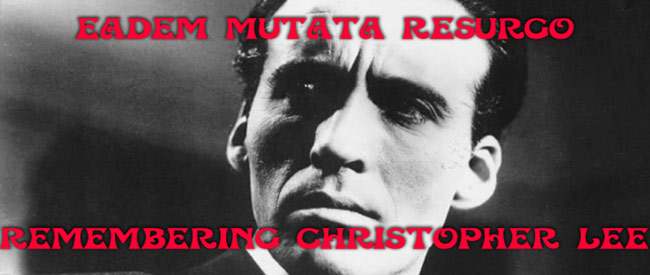
EADEM MUTATA RESURGO: REMEMBERING CHRISTOPHER LEE

eadem_mutata_resurgo_banner

Trying to sum the career of Christopher Lee in three films is absurd. This is better considered a look at three personal favorites, all films where Lee’s methodical ice-blooded elan redefined how generations of viewers considered tropes as well-worn as vampirism, devil worship and Bluebeardian bloodsoaked aristocracy. Not since the days of Conrad Veidt has anyone possessed a stare like Lee’s, and it’s our hope with these films that same stare pierces into your very soul this July.


dr_sadism_banner

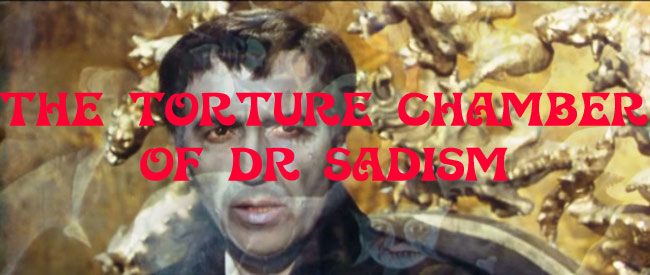
THE TORTURE CHAMBER OF DR. SADISM
(aka Die Schlangengrube und das Pendel)
Dir. Harald Reinl, 1969
West Germany, 80 min.

FRIDAY, JULY 3 – 10:00 PM
WEDNESDAY, JULY 8 – 10:00 PM
SUNDAY, JULY 12 – 7:30 PM
SATURDAY, JULY 25 – 10:00 PM

Based loosely on THE PIT AND THE PENDULUM, THE TORTURE CHAMBER OF DR. SADISM is a mix of Bava-influenced gothic revenge from beyond the grave and Corman’s Poe films, telling the ghastly tale of Count Regula (Christopher Lee), killer of maidens, sentenced to be executed with a Black Sunday-style spiked mask hammered into the skull. Regula swears he will return to exact bloody vengeance. Secret passageways, ruthless highwaymen, and the body of Regula in his glass coffin, waiting for his time to rise…


city_of_the_dead_header

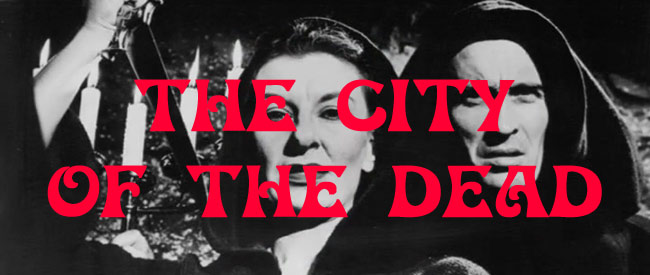
THE CITY OF THE DEAD
(aka Horror Hotel)
Dir. John Llewellyn Moxey, 1960
UK, 78 min.

MONDAY, JULY 6 – 10:00 PM
SUNDAY, JULY 11 – 7:30 PM
TUESDAY, JULY 14 – 10:00 PM
FRIDAY, JULY 24 – 10:00 PM

“For all eternity shall I practice the ritual of Black Mass. For all eternity shall I sacrifice unto thee.”

Our film opens in Whitewood, Massachusetts in the year of our lord 1692 with a mob hunting down Elizabeth Selwyn, an accused witch, and sentencing her to burn upon the pyre. Selwyn prays to Lucifer for aid, pledging her service and cursing the people of Whitewood for all eternity. As the flames rise higher, we find ourselves in a classroom where Professor Driscoll (Lee) discusses the trial and execution to a mostly bored group of students, with one notable exception, Nan Barlow (Venetia Stevenson), who is so into the subject she wants to visit Whitewood for her senior paper on witchcraft. Driscoll sends her off, despite warnings from her dopey boyfriend, her disapproving brother and a guy at the filling station, and checks into the Ravenswood Inn, only to learn the town is not as it seems, and the practice of witchcraft is not relegated to history…A moody, beautifully shot black and white creeper in the spirit of the Val Lewton films or NIGHT OF THE DEMON, we’re happy to show it in the original unedited version with none of the cuts made for the HORROR HOTEL US cut you may have caught on a late night Creature Feature.


satanic_rites_of_dracula_he

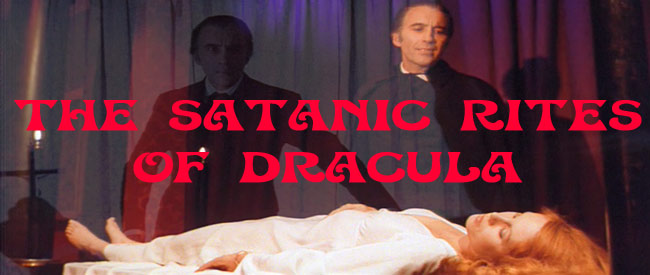
THE SATANIC RITES OF DRACULA
Dir. Alan Gibson, 1973
UK, 87 min.

SUNDAY, JULY 5 – 7:30 PM
SUNDAY, JULY 11 – 10:00 PM
THURSDAY, JULY 16 – 10:00 PM
MONDAY, JULY 27 – 10:00 PM

“Evil rules, you know. It really does.”

The last in Hammer’s run of Lee vs. Cushing Dracula films, the last Hammer film to use actual occultists as consultants, and a lurid stew of spy tropes, supernatural horror, black masses and one of the absolute best-ever monologues of cosmic dread and horror from Freddie Jones, playing Julian Keeley, a professor commanded to create a virulent variant on the black plague. Sidestepping earlier period-piece Gothic trappings for a thoroughly contemporary London, it’s both sleek and pulpy, with as many gunfights, dirtbike chases, double crosses, regular crosses, basement nightgown covens of undead brides and occult goings-on as one could possibly want. A secret sect of British VIPs perform unholy rites of sacrifice in order to appease their abominable lord! It’s always fun to watch Lee and Cushing face off, the secret agent/cop drama aspect keeps everything at a brisk clip, and it literally starts with a black mass in which a woman is sacrificed and returns from the dead.


horror_express_banner

HORROR EXPRESS
Dir. Eugenio Martin, 1972.
90 min. Italy/UK.
In English

SATURDAY, JULY 11 – MIDNIGHT

In this essential Trans-Siberian classic, the great Christopher Lee and Peter Cushing are rival anthropologists aboard a train en route from China to Moscow housing a crate with an amazing discovery: a primitive humanoid creature. The problem is, the creature’s body itself is the vessel for a shapeless, ancient alien entity hopping from body to body as hosts suck the memory, knowledge and brains from their victims. Lee and Cushing must combine their scientific expertise to understand and conqueror the otherworldly, demonic menace. In the meantime, Telly Savalas shows up as a domineering Cossack officer, and Argentinian spaghetti western star Alberto de Mendoza plays a nefarious, mad monk who renounces his faith and pledges his devotion to the ancient evil. Like THE THING re-written by Paul Theroux aboard a bullet train to hell and featuring creepy, eye-bleeding make-up effects, freaky blazing-eyed zombies and top-notch performances by Lee and Cushing, HORROR EXPRESS is a total classic!

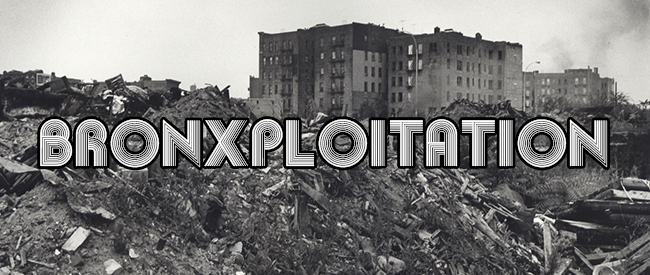
BRONXPLOITATION

BRONXPLOITATION_banner_2015

By the early 1970s, fallout from construction of Cross Bronx Expressway, misguided rent control policies leading to insurance fraud and arson, and economic stagnation drew international attention to the South Bronx as one of the most shocking instances of urban decay in United States history. As buildings blazed and lots turned to rubble, families struggled in tenement housing while police contended with an epidemic of gangs, drugs and prostitution; in the meantime, a revolution was happening with street art and the birth of hip hop.

BRONXPLOITATION takes a look at the northern borough as represented on film and video as an area of social, economic, cultural and commercial exploitation, but also one of enduring spirit and creative renewal. Through documentary and fiction alike, the series visits hip hop’s origins in dance parties amid apocalyptic rubble, rides alongside police patrolling the country’s most dangerous streets, sits inside gang hangouts, and examines the public perception of the Bronx crimewave, whether through a housing tenement under attack by vicious thugs or an Italian exploitation movie set in a sensationalized future Bronx.

80Blocks_banner_2015

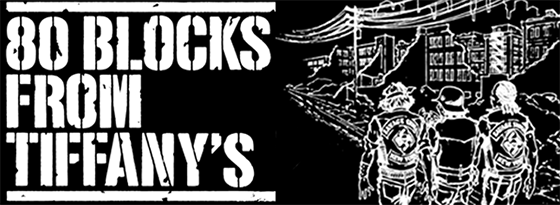
80 BLOCKS FROM TIFFANY’S (BEST OF SPECTACLE)
Dir. Gary Weis, 1979
USA, 67 min.

SATURDAY, DECEMBER 9 – MIDNIGHT
SATURDAY, DECEMBER 17 – 10PM
SUNDAY, DECEMBER 18 – 5PM
FRIDAY, DECEMBER 24 – 7:30PM

Special thanks to Gary Weis

A legendary cult documentary equally infamous for its subject matter as well as its scarcity, director Gary Weis traveled uptown in 1979 to provide an unflinching, hilarious, and sometimes shocking depiction of the South Bronx neighborhood and, in particular, two African American and Puerto Rican gangs known as the “Savage Skulls” and the “Savage Nomads.”

Facing severe sociopolitical decay throughout the 70s, the South Bronx is portrayed as a crime-infested, all out no-man’s-land war zone where the battle lines are drawn between warring factions of youth street gangs.

Commonly referred to as the real life version of THE WARRIORS, the film is a brilliant snapshot of a bygone era and a stark reminder of the damage that had been wreaked on parts of New York throughout the 70s; the abandoned districts, burnt-out buildings and human waste serving as the end point for a decade of mismanagement and unaddressed social problems. Spectacle is proud to present this landmark work in a brand new remastered version.

BronxWarriors_banner_2015

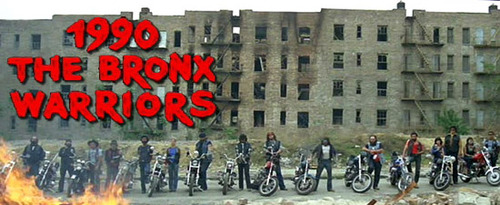
1990: THE BRONX WARRIORS

Dir. Enzo G. Castellari, 1982
Italy, 93 min.

FRIDAY, JULY 3 – 7:30 PM
THURSDAY, JULY 9 – 10:00 PM
FRIDAY, JULY 31 – 7:30 PM

Medieval in its brutality and psychedelic in its execution, 1990: THE BRONX WARRIORS is among the crowning achievements of exploitation master Enzo G. Castellari (THE INGLORIOUS BASTARDS, KEOMA, THE BIG RACKET). And at that, it’s one of the most compellingly over-the-top, guttural pictures to capitalize on the 1970’s South Bronx crime wave. Handily cribbing from both ESCAPE FROM NEW YORK and THE WARRIORS, it presents a dystopian future scenario in which the Bronx is quarantined as a mob-ruled No Man’s Land lorded over by colorful gangs marked by their flamboyant dress and manneristic quirks. Into this anarchic world a young heiress flees her evil capitalist father, who employs a mercenary army to slaughter its way through the gangs who variously harbor and fight over her.

This is perhaps the most lavish, colorful and explosive production of both Castellari’s career and the Italian post-apocalypse subgenre it inspired. Its highlights include epic slow-motion shootouts, sword-vs-hockey stick brawls, creepy mimes with nunchucks and a legion of mounted police officers strapped with flame throwers roasting out the gangs against the backdrop of the Manhattan skyline. The cast includes blaxploitation stalwart Fred Williamson alongside Vic Morrow in his penultimate role.

PoliceTapes_banner_2015

THE POLICE TAPES
Dir. Alan & Susan Raymond, 1977
USA, 88 min.

WEDNESDAY, JULY 1 – 10:00 PM
TUESDAY, JULY 7 – 7:30 PM
MONDAY, JULY 13 – 10:00 PM
SUNDAY, JULY 26 – 7:30 PM

Special thanks to Alan & Susan Raymond

An alarming and distressing look into the tumultuous work of the 44th Precinct police officers in the South Bronx (a one square mile area that, in 1976, had the highest crime rate in New York City), THE POLICE TAPES peels back the skin to reveal a city at war with the civil servants assigned to serve and protect them.

Utilizing some of the earliest Portapak video equipment available, filmmakers Alan and Susan Raymond capture raw scenes of domestic violence, crime, and murder as well as the officers who gallantly try to maintain a sense of order in a neighborhood coming unraveled. What emerges is an uncensored portrait of a community fighting the consequences of urban poverty and the law enforcers’ difficult task of remaining righteous in a soul-crushing job.

A vital landmark in cinema vérité, THE POLICE TAPES influenced everything from HILL STREET BLUES to COPS and kickstarted the future Oscar-winning careers of Alan and Susan Raymond. To this day, the film maintains its striking power.

Tenement_banner_2015

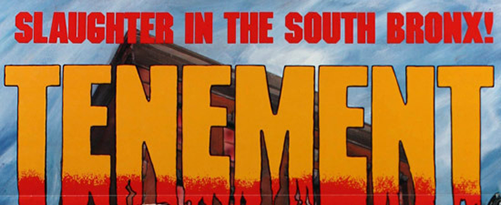
TENEMENT
aka GAME OF SURVIVAL aka SLAUGHTER IN THE SOUTH BRONX
Dir. Roberta Findlay, 1985
USA, 94 min.

WEDNESDAY, JULY 8 – 7:30 PM
THURSDAY, JULY 16 – 7:30 PM
MONDAY, JULY 27 – 7:30 PM

Special thanks to Roberta Findlay

Channeling NIGHT OF THE LIVING DEAD by way of DEATH WISH, this unabashedly sleazy thriller features a group of honest Bronx tenants fed up with the junkie punks squatting in their basement, who pass the time indiscriminately using rats as target practice and food alike. The residents call the police to remove the trespassers, but when the gang is released from booking that night, the vengeful siege begins. TENEMENT is a pat, fast-paced and action-packed thriller, but one of an uncommonly debased sensibility.

Director Roberta Findlay is best known for her sexploitation and hardcore films including ALTAR OF LUST and THE CLAMDIGGER’S DAUGHTER. Concurrently she and husband Michael created 1976’s SNUFF, inspiring outrage and widespread protest for its allegedly featuring actual murders later revealed to be a marketing ploy. Following Michael’s death, Roberta continued directing hardcore until becoming persona non grata among the industry for SHAUNA: EVERY MAN’S FANTASY, a hardcore documentary about drug addicted pornographic actress Shauna Grant’s shotgun suicide cashing in the following year.

But if anything pushes Findlay’s movies beyond the usual level of discomfort, it might be how shockingly well-made and entertaining they are despite an absolute disregard for taste and morality that makes LAST HOUSE ON THE LEFT and I SPIT ON YOUR GRAVE appear Puritanical in compare. Very clearly shot on location amid the rubble and decay of the decimated burrough, TENEMENT is a sleazy exploitation movie, to be sure, but one which by mere virtue of its existence is a bold, agitational indictment of a city squeezed through the bowels of Hell.

SOMETHING ELSE: A CELEBRATION OF ORNETTE COLEMAN ON FILM

You can’t see outside yourself, but we do have imagination. The expression of all individual imagination is what I call Harmolodics. Each beam of imagination is their own unison and there are as many unisons as there are stars in the sky. — Ornette Coleman

ALL WEEK LONG from July 17 – 23!

Spectacle presents a special tribute to the great ORNETTE COLEMAN beginning July 17th, featuring a week-long run of Shirley Clarke’s recently preserved ORNETTE: MADE IN AMERICA. Artist C. Spencer Yeh will present his original rendition of Conrad Rooks’ 1966 film CHAPPAQUA with Ornette Coleman’s original score – there is no existing version of the film with this score in place. We’ll also be screening ALL MAGIC SANDS/CHAPPAQUA by experimental filmmaker Andrew Lampert, which combines Ornette Coleman’s The Chappaqua Suite with a lost and found feature-length Christian children’s adventure film shot the same year The Chappaqua Suite was recorded.


Ornette.BANNER

ORNETTE: MADE IN AMERICA
Dir. Shirley Clarke, 1985
USA, 85 min.

FRIDAY, JULY 17 – 7:30 PM
SATURDAY, JULY 18 – 10:00 PM
SUNDAY–TUESDAY, JULY 19–21 – 7:30 PM
WEDNESDAY–THURSDAY, JULY 22–23 – 10:00 PM

Advance tickets available here.

Ornette Coleman told his bandmates not to follow him, but to be with him. Shirley Clarke’s documentary eschews conventions to create a fittingly free-form portrait of one of the most original innovators of all time. Clarke began filming with Ornette Coleman in the 60s, and her film documents the evolution of his life and work over three decades, incorporating performance footage, conversation with his friends and fellow musicians, his return to his boyhood home, recreations of his childhood, and experimental riffs that could only result from a deep and fertile creative connection between filmmaker and subject.

Friends, collaborators and admirers appearing in the film include Don Cherry, Ed Blackwell, Charlie Haden, William S. Burroughs, Brion Gysin, Buckminster Fuller, Yoko Ono, Robert Palmer, Jayne Cortez, George Russell, Denardo Coleman and John Rockwell.

Special thanks to Milestone films.


Chappaqua.BANNER

CHAPPAQUA with Ornette Coleman’s CHAPPAQUA SUITE
Dir. Conrad Rooks, 1966 | Remixed by C. Spencer Yeh, 2015
USA, 48 min.

FRIDAY, JULY 17 – 10:00 PM
SUNDAY, JULY 19 – 5:00 PM
TUESDAY, JULY 21 – 10:00 PM
THURSDAY, JULY 23 – 7:30 PM

Advance tickets available here.

C. SPENCER YEH PRESENTS HIS OWN RENDITION OF CONRAD ROOK’S CHAPPAQUA WITH ORNETTE COLEMAN’S ORIGINAL SCORE THE CHAPPAQUA SUITE.

Conrad Rooks wrote, directed and starred in this psychedelic cult film based on his own experiences with drug and alchohol addiction and his therapeutic use of psychedelic drugs to treat that addiction. CHAPPAQUA features appearances by Ornette Coleman (credited as “Peyote Eater”), William S. Burroughs, Jean-Louis Barrault, guru Swami Satchidananda, The Fugs, Allen Ginsberg, Moondog and Ravi Shankar.

Conrad Rooks originally commissioned Ornette Coleman to score CHAPPAQUA, resulting in Coleman’s Chappaqua Suite. Upon hearing it, Rooks allegedly decided that the piece would overshadow his film and decided not to use it. In a tribute to Ornette Coleman, Spectacle presents its own rendition of CHAPPAQUA with Ornette Coleman’s original composition in place.

Special thanks to Milestone films.

SCREENING WITH:

POPULATION EXPLOSION
Dir. Pierre Hébert, 1968
Canada, 14 min.

A product of the first world’s population panic of the 60s and 70s, Pierre Hébert set his cut-out animation to a score by Ornette Coleman. He suggests that in many countries, freedom from famine and disease has created the new problem of overpopulation and that wealthier nations should increase all forms of aid to struggling nations.

Special thanks to the National Film Board of Canada.


AllMagicSands.BANNER

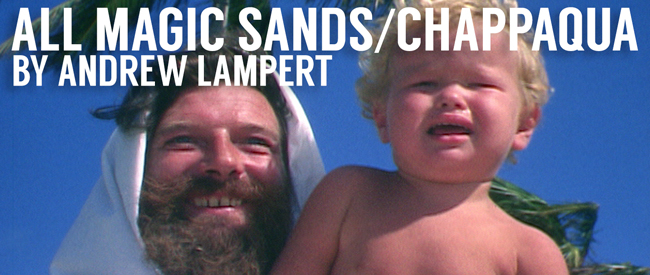
ALL MAGIC SANDS/CHAPPAQUA
Dir. Andrew Lampert, 2012
USA, 80 minutes

SATURDAY, JULY 18 – 7:30 PM
MONDAY, JULY 20 – 10:00 PM
WEDNESDAY, JULY 22 – 7:30 PM – FILMMAKER IN ATTENDANCE!

Advance tickets available here.

June 15-17, 1965. Ornette Coleman’s trio featuring guest Pharaoh Sanders and a small string orchestra records the soundtrack for Conrad Rooks’ in-progress feature film CHAPPAQUA. Upon listening, Rooks recognizes the exquisiteness of Coleman’s boisterous music, but believes it will overpower his imagery and instead hires Ravi Shankar to compose the score. Coleman’s unused recording is issued that same year as the double LP set CHAPPAQUA SUITE.

July 1965. Nashville TV bigwig Al Gannaway produces a 16mm Christian children’s adventure movie with the working title ALL MAGIC SANDS. The story centers on an orphaned quartet (boy, two girls, a baby) washed ashore on a desert island in what just might be the Bahamas. There, they encounter a pile of branches that transforms into a dubious Jesus-esque bearded man, as well as a doppelganger family of naked black children. A failed epic that is equal parts semi-professional production and curiously cruel home movie, the original footage was left sitting untouched for many decades in a lab that went out of business.

ALL MAGIC SANDS/CHAPPAQUA (2012) synchronizes reels from an unfinished film with a rejected soundtrack, both of which were originally created within a month of each other. Lampert acquired all the known camera footage for ALL MAGIC SANDS and has assembled the intact reels (takes, mistakes and re-takes included) into a sequence that, rather serendipitously, is nearly the exact same length as Coleman’s classic score. A darkly funny and deeply strange chance discovery that feels, in ways, tailor made, this unexpected pairing of exact opposites makes for strangely ideal company. Coleman’s emphatic performance infuses the eye-popping color footage with sorrowful undertones and mysteriously sympathetic resonances. Filled with flashbacks, fast-forwards, circular starts and loose ends, ALL MAGIC SANDS/CHAPPAQUA is a feature-length film made of just middle.

CRITICAL PARANOIA: DARK NIGHT RISING

CP2 BANNER

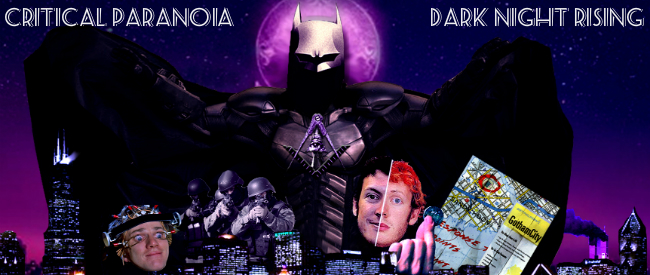
CRITICAL PARANOIA: DARK NIGHT RISING
A collection of conspiracy videos edited & curated by Ernest J. Ramon, 2015
USA, 87 min.

MONDAY, JUNE 1 – 10PM
SUNDAY, JUNE 7 – 7:30PM
TUESDAY, JUNE 16 – 10PM
TUESDAY, JUNE 30 – 10PM

You’re not allowed to believe in coincidences anymore. A Fast encroaching military police state, mind controlled assassins, domestic terrorism, secret societies, ritual sacrifices, clandestine psy-op programs, evil old billionaires clamoring for world domination! Tired old plots of a comic book franchise or prophetic and deliberate enigmas wrapped in bubblegum and subterfuge? Who or what really killed Heath Ledger? Has the Dark Knight vehicle become nothing more than a harbinger for horrors such as the Sandy Hook and Aurora Shootings, and the events of September 11th? What is the true meaning hidden behind the Dark Night Rising? Over the rainbow and through the looking glass, how deep does the rabbit hole go? All the way to a bat cave perhaps.

PITTSBURGH POLICE SHORTS

pps bannerv2py

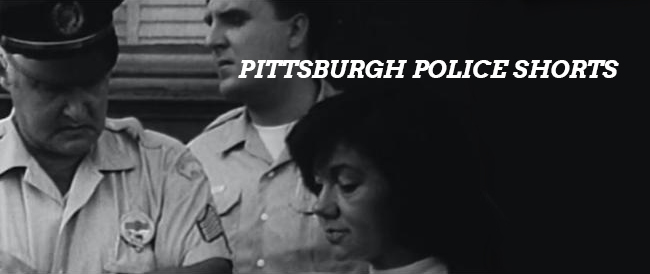
PITTSBURGH POLICE SHORTS
Dir. John Marshall, 1974
USA. 71 minutes.

FRIDAY, JUNE 5 – 7:30PM
WEDNESDAY, JUNE 10 – 7:30PM
FRIDAY, JUNE 19 – 7:30PM
MONDAY, JUNE 22 – 7:30PM

Manifold Controversy (3 min)
Vagrant Woman (8 Mins)
Youth and the Man of Property (7 mins)
After the Game (9 Mins)
Two Brothers (4 min)
A Forty Dollar Misunderstanding (8 min)
Henry is Drunk (7 Min); Wrong Kid (4 min)
Twenty-one Dollars or Twenty-one Days (8 Min)
You Wasn’t Loitering (6 Min)

John Marshall captures moments of contact between the people of Pittsburgh and their police, in this selection of ten observational vignettes filmed between 1969 and 1970. Cops interact with feuding families, irate customers, drunk drivers, vagrant divorcees and teenage glue-sniffers, bullying, negotiating, and mediating by turns.

Marshall was commissioned to make these films in part for police training purposes, and he gained a remarkable level of access to the Pittsburgh officers. A Cambridge, MA documentarian best known for his tender ethnographic/advocacy filmmaking with the !Kung people of the Kalahari, Marshall finds some humor and humanity in the daily police work grind – without losing sight of the abuses of power that happen in meetings between the cops and city residents. There’s not much point in asking to see a warrant in late 60s Pittsburgh, that’s for sure, and rounding up kids into a van for a trip to the station is a lawman’s staple of the time.

Some of the filmed scenarios feel obsolete, like when officers quietly hand over cab fare to a man who’s too drunk to drive in “Henry is Drunk.” Others seem depressingly contemporary; in “Twenty-one Dollars or Twenty-one Days” a black youth is sentenced to a fine or prison time on the basis of a vague accusation from a policeman. Made in an era before cameras became common tools for monitoring the police, (and long before TV’s Cops), the Pittsburgh Police shorts are revealing historical documents about a policing system that’s the not-too-distant ancestor of the one we live with today.

THE STRANGE LITTLE CAT

slcbanner

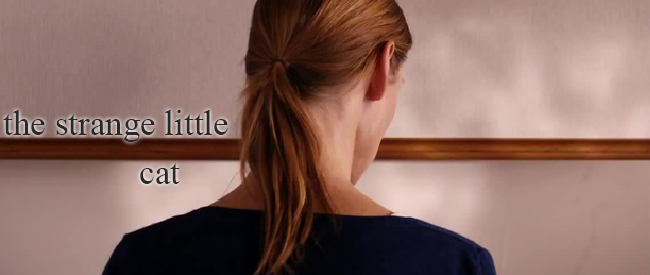
THE STRANGE LITTLE CAT
Dir. Ramon Zürcher, 2013
Germany, 72 min
In German with English subtitles.

SATURDAY, JUNE 13 – 7:30 PM
WEDNESDAY, JUNE 17 – 7:30 PM
WEDNESDAY, JUNE 24 – 7:30 PM
SUNDAY, JUNE 28 – 5:00 PM

Ecstatic yet precise, Ramon Zürcher’s debut feature deconstructs the domestic drama of a day in a Berlin apartment to riveting effect. Family tensions share dramatic weight with falling orange peels, a spinning bottle, a broken washing machine, a hair in a glass of milk; all the small, private moments in a day are disclosed like secrets. In meticulously simple framing and painterly light, the film finds the beautiful and the alien in everyday life.