THE COMEDIC ODDITIES OF TRENT HARRIS

lunamesabanner

LUNA MESA with THE GREATEST LOVE STORY EVER TOLD (1985)
Dir. Trent Harris, 2011
USA, 60 min.

SUNDAY, AUGUST 3 – 5:00 PM New York City Premiere!
FRIDAY, AUGUST 15 – 7:30 PM
THURSDAY, AUGUST 21 – 10:00 PM

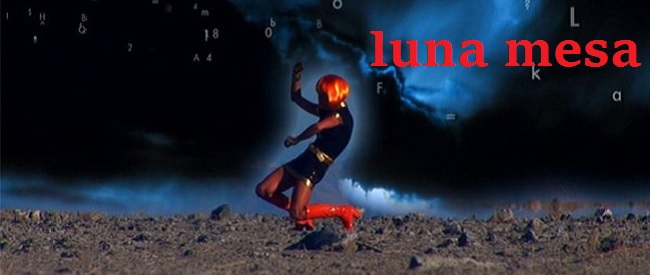
Trent Harris’ latest film LUNA MESA is his take on a travelogue that harkens back to the early booming days of mini-dv experimental features. With a mostly aimless and wandering narrative, the film follows along a photographer who is having a relationship with a videographer and then on one day, he is found shot dead in his hotel room in Cambodia. She discovers a mysterious notebook that is filled with random symbols and very cryptic messages and travels around the world to find out who murdered him. Harris’ mystery is void of his previously trademarked humor but instead flirts with unconventional convictions and focuses on jilted dialogue to round out his outsider outlook.

An added bonus to the screenings of LUNA MESA is an early little seen documentary from Trent Harris called THE GREATEST LOVE STORY EVER TOLD (20 min.) which interviews Joyce McKinney, a woman who was accused of kidnapping and raping a Mormon in London which became the subject of Errol Morris’ popular documentary TABLOID.


beaver trilogy banner

THE BEAVER TRILOGY
Dir. Trent Harris, 1979, 1981, and 1985.
USA, 83 min.

FRIDAY, AUGUST 8 – 7:30 PM
THURSDAY, AUGUST 14 – 7:30 PM
WEDNESDAY, AUGUST 20 – 7:30 PM
MONDAY, AUGUST 25 – 7:30 PM

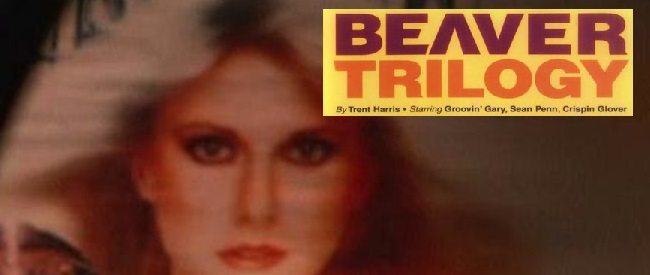
Perhaps one of the cornerstones of the comedy cult canon, THE BEAVER TRILOGY is a series of three shorts about a man named Groovin’ Gary. The first short is a documentary; filmmaker Trent Harris runs into the eccentric Groovin’ Gary by chance in a parking lot. After a series of relentless phone calls, Trent is convinced to go to a talent show at a high school where Groovin’ Gary will be performing in drag as Olivia Newton John. With performances from teenagers interspersed with this weirdo, the audience is predictably shocked and appalled by Gary’s talent.

The second short is a 100 dollar budgeted narrative remake with Sean Penn as Groovin’ Larry and is essentially a lo-fi parody of the original subject matter. The final vignette sees Crispin Glover in the starring role and is more robust, glossy, and thoughtful. It is also a slightly more delirious attempt at the narrative (perhaps taking more fictionalized liberties) with a turn to comedic melodrama. Each segment shows an evolution of the director’s perspective and respect for the subject while being delivered with warped humor and an oddly poignant finale.


Plan10Banner2

PLAN 10 FROM OUTERSPACE
Dir. Trent Harris, 1995
USA, 80 min.

FRIDAY, AUGUST 8 – 10:00 PM
TUESDAY, AUGUST 12 – 10:00 PM
SUNDAY, AUGUST 17 – 7:30 PM
TUESDAY, AUGUST 26 – 10:00 PM

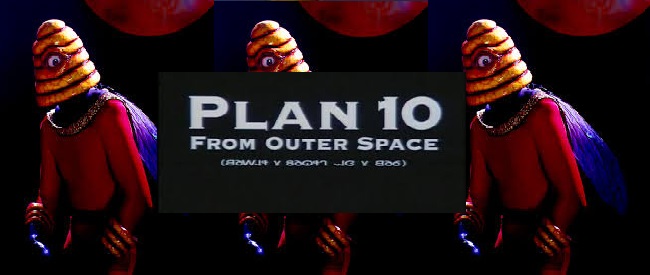
Perhaps set in a universe shared with Adventures of Pete and Pete or Pee Wee’s Big Adventure but shades dirtier and a 100% more Mormon, PLAN 10 FROM OUTERSPACE is Trent Harris’ madcap follow-up to his cult classic RUBIN AND ED. A female writer unearths a plague that might hold the secrets that ties the early Mormons with an alien race whose ultimate plan is for world domination. Filled to the brim with a cast of quirky outlandish characters, PLAN 10 FROM OUTERSPACE is a frantic conspiracy religious satire and remains true to Harris’ utter nonsense canon.

A COCKETTES DOUBLE FEATURE


luminous_procuress_header
LUMINOUS PROCURESS
Dir. Steven Arnold, 1971
USA, 73 min.

THURSDAY, JULY 3 – 7:30 PM
FRIDAY, JULY 25 – 10:00 PM
WEDNESDAY, JULY 30 – 10:00 PM

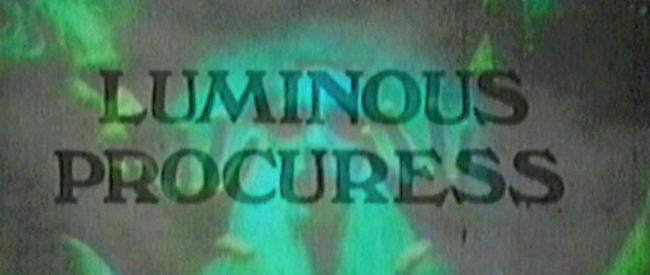
Two young men wander into a building on the shore, where they have heard they can see the most elaborate sexual fantasies performed, like a smutty Locus Solus, in Steven Arnold’s definitely West Coast take on the psychedelic film as practiced by Jack Smith, Ira Cohen and Kenneth Anger. Meandering among a series of decadent tableaux, deeper and deeper into a world where identities and sexualities merge and split, well performed by none other than the Cockettes and scored by synth guru Warner Jepson, until the two young men finally realize they’re not just spectators, they’re to become the new additions. Trying to sum it up as a plot, however, misses the point of a film like this: it’s a phantasmagorical vision, a Symbolist paean, taking inspiration from butoh theater to Erich Von Stroheim to form a shabbily glamorous vision.


elevator_banner

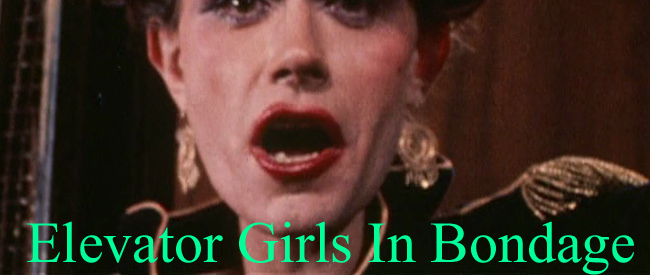
ELEVATOR GIRLS IN BONDAGE
Dir. Michael Kalmen, 1972
USA, 56 min.

THURSDAY, JULY 3 – 10 PM
WEDNESDAY, JULY 16 – 10 PM
WEDNESDAY, JULY 30 – 7:30 PM

Cockettes fans will find many similarities between Elevator Girls In Bondage and the live Cockettes shows of the late 60s and early seventies, combining psychedelia, slapstick and political critique into a film both of its time and unlike anything else.

Starring Spectacle favorite Rumi Missabu along with fellow Cockettes Pristine Condition, Hibiscus and Miss Harlow, the film gleefully subverts and exploits genre tropes, Marxist rhetoric and folks songs as the employees of a hotel decide to get revenge against poor wages and mistreatment as led by elevator girl Maxine (Missabu).

Fans of 70s underground cinema, queer cinema in general, and goofy satire mixed with sharp critique will definitely want to come out and see it for themselves.

MONDO AMERICA

KoA_banner

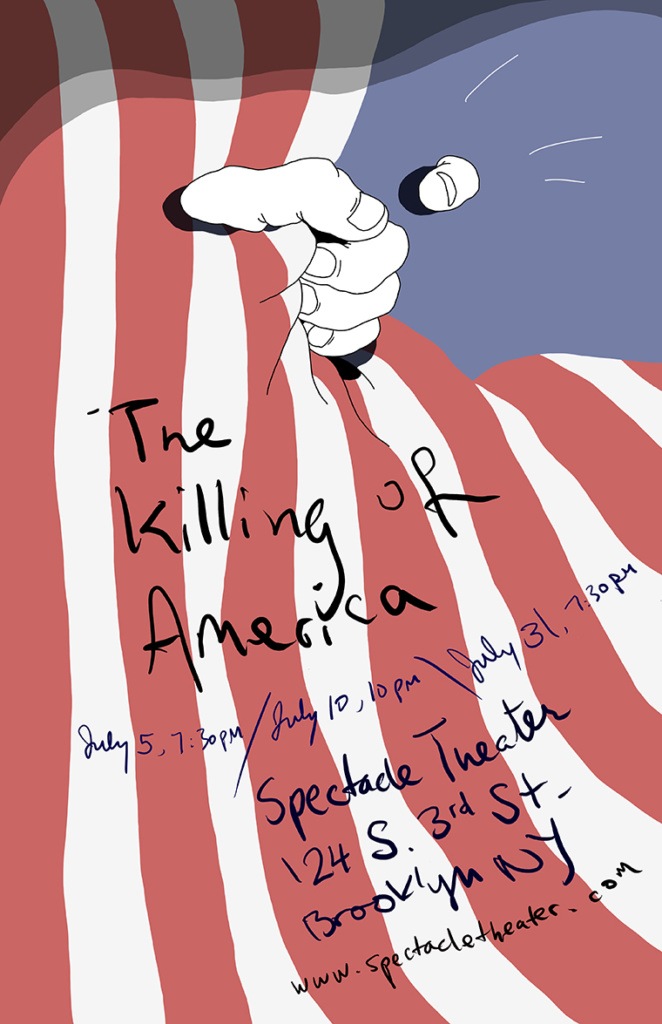
THE KILLING OF AMERICA
Dir. Sheldon Renan & Leonard Schrader, 1982
USA, 90 min.

SATURDAY, JULY 5 – 7:30 PM
THURSDAY, JULY 10 – 10:00 PM
THURSDAY, JULY 31 – 7:30 PM

ALL OF THE FILM YOU ARE ABOUT TO SEE IS REAL. NOTHING HAS BEEN STAGED.

So begins the 1982 shockumentary THE KILLING OF AMERICA, a film that, even among its mondo movie contemporaries, stands out as one of the grimmest and most infamous films ever produced. So much so, in fact, that to this day it remains effectively unreleased in The United States.

If violence is the disease, then THE KILLING OF AMERICA is the microscope. Compiled almost entirely from news broadcasts, security camera footage, etc, THE KILLING OF AMERICA chronicles nearly every major violent incident of the era, from the JFK assassination onward. The America presented here is land characterized by widespread burnout and disillusionment. Add to that the increasing pervasiveness of the mass media, as well as an obscene overabundance of firearms, and you are left with a sobering portrait of a sick society, in which insanity and paranoia breed easily. Meanwhile, three decades later…

Directed by Sheldon Renan & Leonard Schrader (brother of Paul Schrader), and featuring a noteworthy narration by voiceover master Chuck Riley.

tumblr_n852npjGn11rl6zmvo1_1280


goodbyeuncletom-banner

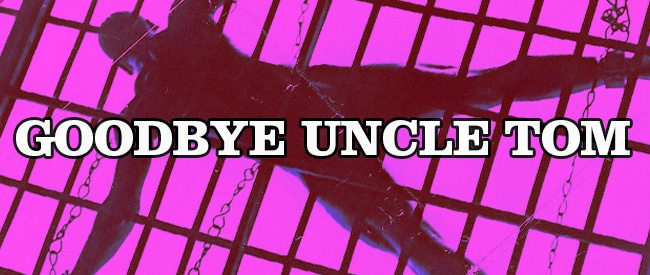
GOODBYE UNCLE TOM
Dir. Gualtiero Jacopetti & Franco Prosperi, 1971.
USA. 135 min. Director’s Cut.
In Italian with English subtitles

SATURDAY, JULY 5 – 10:00 PM
TUESDAY, JULY 8 – 10:00 PM
THURSDAY, JULY 31 – 10:00 PM

Rarely seen Director’s Cut featuring contemporary documentary footage and original narration • Special thanks to Bill Lustig and Blue Underground

Few films have the mixed legacy accorded to MONDO CANE, the first film by Gualtiero Jacopetti and Franco Prosperi. The box office smash was nominated for the Palme d’Or and nearly won an Oscar for Riz Ortolani’s song “More,” which became a staple at weddings. It invented it’s own dubious genre, shock anthropology, and transformed the common Italian word for “world,” mondo, into a neologism conjuring all that’s bizarre, outrageous, and stranger than the fiction it questionably purports not to be. It’s the international signifier for extreme international weird.

When critics caught up with the put-on, they were relentless in their assault on the duo. By the time they released AFRICA ADDIO, a lurid chronicle of violence in the wake of decolonization in Tanzania and Kenya, they were accused of every kind of ethical violation from flagrant racism to paying soldiers to murder people before their cameras. The duo was hurt, and felt they had to do something to dispel accusations of intolerance.

So they made GOODBYE UNCLE TOM — one of the most challenging, notorious, anti-American, and maligned films of all time.

At a glance, it has very little to do with mondo. Allegedly, the idea took root when Jacopetti suggested the duo make MANDINGO into a documentary — this being many years before Richard Fleischer’s own scintilating Hollywood adaptation. The result is like if Peter Watkins and Ken Russell adapted Kyle Onstott’s taboo-shattering pulp novel about slave breeding and deciding to drive the historically rooted horrors of slavery home further by cranking them up a notch.

Making the tongue-in-cheek claim of being an actual documentary about American slavery, the film charts the entire institution of slavery from arrival (it is widely acknowledged as being the first movie ever set significantly on a slave ship) through supposed emancipation. Pulling many of the least pleasant historical realities of American slavery out from under the rug and rendering them in unhinged expressionistic extremes, it presents the institution as a grotesque atrocity exhibition including rape, infanticide, bizarre medical experimentation, and even a Bathory-esque blood bathing. And it’s all framed with contemporary newsreel footage of present-day civil rights violations and quotes—many of them presented with wry-self critique—from leaders or controversial figures including Martin Luther King, Malcolm X, Eldridge Cleaver, and Amiri Baraka, resulting in what Pauline Kael called “the most specific and rabid incitement of the race war” (while acknowledging that people of color seem to appreciate it much more than herself).

Or as Roger Ebert wrote, “They have finally done it: Made the most disgusting, contemptuous insult to decency ever to masquerade as a documentary.” Yet to be fair, one might point out that the “mockumentary” genre the film pioneers—Watkins is the only filmmaker who comes to mind who previously described such a patently fabricated scenario, i.e., one taking place before motion picture cameras were invented, as a “documentary”—was still an almost totally unfamiliar lexicon.

And with that barefaced claim, few movies are as gleefully, sadistically fixed upon a program of not-giving-a-fuck — which one might recognize as a front for a genuine core of outrage. It predates Pasolini’s canonical SALO, a like-minded piece of shock as an instrument of anti-bourgeois (an aim for which its privileged critical positioning might indicate it has failed), but is explicitly linked to the contemporary reality of American racism. Richard Corliss shouts out GOODBYE UNCLE TOM in his positive review of 12 YEARS A SLAVE — and yet one could not leverage the criticism that many, including Kareem Abdul Jabbar, made of 12 YEARS: that it stirs a rage that is compartmentalized into the past and portrayed as history without an acknowledgement of the human motivations that allow slavery to continue to exist around the world. Conversely, GOODBYE UNCLE TOM concludes with documentary footage of peaceful black protesters being brutalized by the national guard, followed by happy-go-lucky Southern Civil War re-enactors who restage history with an outrageously apparent disregard for the complexity and human debasement it represents. As the Italian narrator happily intones on the final line of the film, “It’s wonderful to return home on this splendid day in May and take a nice shower to wash away the past.”

Of course, part of the trouble of GOODBYE UNCLE TOM is that we can’t simply settle upon a simple, revisionist attitude. It’s undeniably an unpleasant, problematic, and troubling film—but one worth revisiting for those willing to confront tangled knots of history and their representation on screen.

WAVES OF MUTILATION

WOMBANNER

Can’t make it to the beach this summer? This July, Spectacle invites you to snorkle in the depths of madness with three chilling features set by the sea. With a splash of carnage and psychological horror, WAVES OF MUTILATION will leave you shivering on the balmiest of nights.

Surf’s up—and it looks like a red tide.


INTERRABANG_banner

INTERRABANG
Dir. Giuliano Biagetti, 1969
Italy, 93 min.
In Italian with English subtitles.

WEDNESDAY, JULY 2 – 10 PM
THURSDAY, JULY 17 – 10 PM
TUESDAY, JULY 29 – 7:30 PM

“It’s a symbol made of a question mark plus an exclamation mark: it represents the uncertainties of our era”

Named after a punctuation mark that essentially translates to ‘WTF?’ in modern times, INTERRABANG is a proto-giallo thriller set on an island featuring cat-and-mouse murder games. Photographer Fabrizio sets sail with his wife, her sister, and a model to do some location shooting. When they have engine trouble leaving the island, Fabrizio hitches a ride on a passing boat and goes to seek help, leaving the women waiting… as word of an escaped killer comes in over the radio…

Playing like a low-key, b-side version of Polanski’s Knife In The Water, INTERRABANG mixes Antonioni’s sense of composition and ennui with some bizarre plot turns and double-crossings. If you’re the right amount of sun-drunk and vibing for some 60s Italian bombshells languidly discovering a murder plot, then you’ve struck gold. Bring a mojito while you’re at it.


SEAWITCHBANNER

THE WITCH WHO CAME FROM THE SEA
Dir. Matt Cimber, 1976
USA, 88 min.

MONDAY, JULY 7 – 7:30 PM
TUESDAY, JULY 15 – 10:00 PM
SATURDAY, JULY 26 – 10:00 PM

Molly is a good-natured but troubled barmaid in a seaside town, haunted by repressed memories of the sexual abuse she suffered at the hands of her father. Her trauma manifests in a drinking problem and a twisted obsession with men; she dotes on her adoring nephews, idolizes her deceased father’s memory, and moons over burly football players like a lovestruck teen—even as she fantasizes about castrating them. During a night of particularly heavy binge drinking, Molly loses a few hours, and her grisly desires begin to leave the realm of fantasy.

Despite the dubious distinction of making the UK’s infamous ‘video nasties’ list, THE WITCH WHO CAME FROM THE SEA isn’t quite an exploitation flick. Surprisingly complex, and elevated by a truly inspired performance from lead actress Millie Perkins, this little film is too weird, and too bold to be anything but art.


Marymarybanner

MARY, MARY, BLOODY MARY
Dir. Juan López Moctezuma, 1975
Mexico/USA, 101 min.

WEDNESDAY, JULY 2 – 7:30 PM
MONDAY, JULY 7 – 10 PM
SUNDAY, JULY 27 – 7:30 PM

Juan López Moctezuma (ALUCARDA, THE MANSION OF MADNESS) directs this Mexican-U.S. shocker about a bisexual seductress artist with an insatiable bloodlust. Eerie beaches and surreal flamboyance make this a uniquely tingling seaside chiller that straddles the line between arthouse and grindhouse.

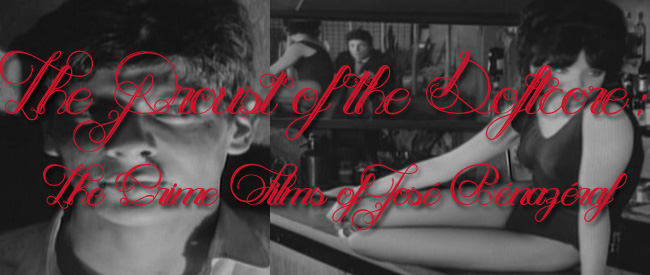
THE PROUST OF THE SOFTCORE: THE CRIME FILMS OF JOSÉ BÉNAZÉRAF

benazeraf-banner

If John Ford is Homer, then José Bénazéraf is… Marcel Proust.
-Tagline for JOË CALIGULA

If cinephiles speak about Moroccan-born, French filmmaker José Bénazéraf today, he’s remembered mostly for his prolific direct-to-video, increasingly hardcore output from the 1970s and 1980s. Not a terrible legacy, but few people remember that Bénazéraf started out on the fringes of the French New Wave: a cameo in Breathless is one of his first screen credits. This July, Spectacle is proud to present two under-appreciated 1960s crime films from Bénazéraf that straddle the line between French New Wave and sexploitation: NIGHT OF LUST and JOË CALIGULA.


night-of-lust-banner

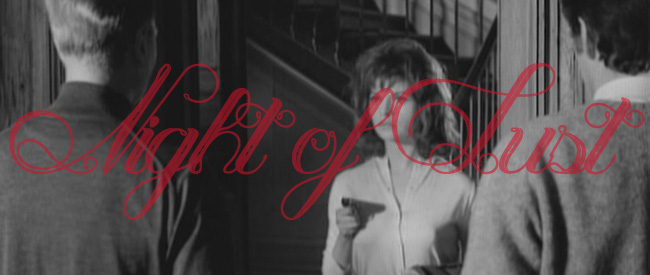
NIGHT OF LUST
AKA Le concerto de la peur
Dir. José Bénazéraf, 1963
France, 71 min.
In French with English subtitles.

TUESDAY, JULY 1 – 7:30 PM
SUNDAY, JULY 6 – 7:30 PM
SATURDAY, JULY 26 – 7:30 PM
MONDAY, JULY 29 – 10:00 PM

Less salty than its title might suggest, NIGHT OF LUST is a New Wave noir set at a string of Parisian strip clubs. Hans Verner and Jean-Pierre Kalfon star as two rival gang leaders, both fighting to rule the Parisian drug trade. Laboratory assistant Nora (Yvonne Monlaur) comes between the two gangs, and pays the price by getting kidnapped and held as a hostage in the war. The stakes are high, and the consequences become higher and higher until tragedy cannot be avoided.

A striking mix between a melodrama, a film noir potboiler, and a sexploitation film, NIGHT OF LUST was a hit upon its release in France in 1963, and was subsequently advertised in the United States as “Banned in over half the world!” The hazy, sometimes disjointed storytelling style echo the heroin-soaked plot, with dancers aplenty rolling around under the influence. There’s plenty of eye-candy, but it’s not for the trench coat crowd; a free jazz score by Chet Baker and Bénazéraf’s gorgeous shadowy photography that recalls Fritz Lang’s Hollywood best, make this film a curious, uncategorizable spin on the traditional gangster film.

Special thanks to Seth Sonstein at Independent International Films.


joe-caligula-banner

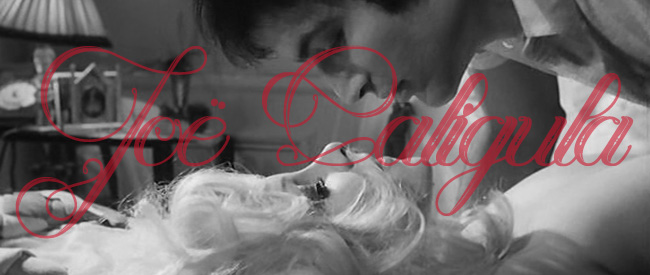
JOË CALIGULA
Dir. José Bénazéraf, 1966
France, 88 min.
In French with English subtitles.

SUNDAY, JULY 6 – 5:00 PM
WEDNESDAY, JULY 9 – 10:00 PM
FRIDAY, JULY 18 – 10:00 PM
MONDAY, JULY 28 – 7:30 PM

Called by Bénazéraf a story of “intellectual incest” between a brother and sister, JOË CALIGULA starts with a brilliantly tongue-in-cheel scene: a prostitute lures a man into her brothel by exhorting him, “Come, I’ll tell you about the New Wave!…You’ll see, Godard, Chabrol…it’s exhilarating!” This woman stands in for Bénazéraf, bringing the highbrow New Wave and the softcore genre audiences together for an experience that was sure to confuse both.

Joë Caligula himself is a small-time Parisian gangster who longs to make a name for himself in the Paris crime world, so pulls a series of heists with his small gang, which includes his sister. Eventually, the gang kills members of a powerful rival gang, and brings its leader to his knees, causing an all-out war.

Predating BONNIE AND CLYDE by two years, with the same moody stylistic flair, JOË CALIGULA was again banned by French censors because of Bénazéraf’s “apology for violence,” a decision that crushed Bénazéraf, as he considered it his finest film. The kinetic energy during the gang’s exploits is a loud, disruptive scream against the old guard, which, in 1966, was not quite ready to hear. The time is right for a rediscovery of this rebellious, ambitious softcore crime classic.

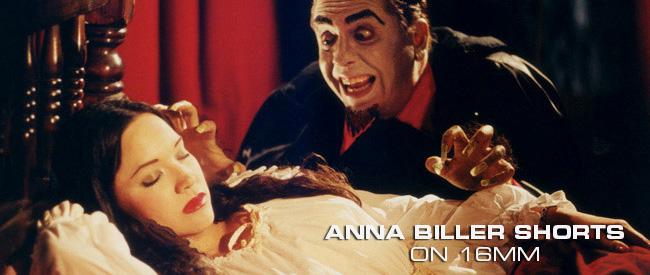
ANNA BILLER (VIVA & SHORTS)

biller-series-banner

For over twenty years, Anna Biller has been casting herself in candy-colored films, borrowing from various genres and translating the aesthetic into her world view. As not only the writer, director and star, but also the costume designer and set decorator, she concocts scenarios that seem cut right out of Hollywood films then recreated at a ten year old girls’ slumber party.


viva-banner

VIVA
Dir. Anna Biller, 2007
USA, 120 min.
Digital projection.

TUESDAY, JULY 1 – 10:00 PM
WEDNESDAY, JULY 9 – 7:30 PM
FRIDAY, JULY 25 – 7:30 PM
MONDAY, JULY 28 – 10:00 PM

Anna Biller’s take on 60s/70s sexploitation is so spot on – the film’s texture, clothing and natural nude bodies aren’t things you find laying around in the 2000s. Here she plays Barbi, a naive housewife abandoned by her husband, venturing out into the modern world of the 70s only to find one perversion after another. Biller’s abilities are in top form – the set decoration is so intricately thought through, you’ll be able to feel the shag carpet between your toes.


biller-shorts-banner

SHORTS PROGRAM

WEDNESDAY, JULY 23 – 8:00 PM
ONE NIGHT ONLY! All titles on 16mm

THREE EXAMPLES OF MYSELF AS QUEEN
16mm, 1994, 26 min.

A DIY fairytale musical! With elaborate sets and costumes, Three Examples of Myself as Queen finds Anna Biller playing out three scenarios of female domination – as head of an Arabian Nights harem, queen bee and disco dancer.

THE HYPNOTIST
16mm, 2001, 45 min.

A twist on the “you get a huge inheritance, but here’s the catch” story, The Hypnotist (the only film to not star Biller) sets three mean-hearted siblings at each other’s throats as they are forced to live together to collect their father’s money. A humorous spin on Technicolor melodramas, it sends up the genre while also displaying full love for its tropes.

A VISIT FROM THE INCUBUS
16mm, 2001, 27 min.

In this horror western musical hybrid, Biller plays Lucy, a woman who is victim to nightly assaults from an incubus. She seeks to boost her confidence by taking a job in a saloon singing and dancing for a bunch of rowdy cowboys, only to find her demonic tormentor also has a stage act! All of this should sound weird enough to have you sufficiently intrigued.

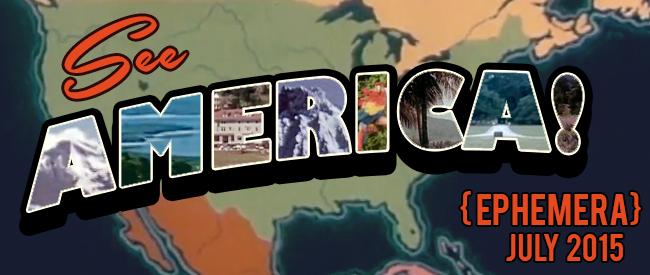
EPHEMERA: SEE AMERICA!

EPHEMERA: SEE AMERICA!
Dir. Various, 1939s-1970s.
USA, ~80 min., Color/B&W

SUNDAY, JULY 5 – 5:00 PM
MONDAY, JULY 13 – 7:30 PM
FRIDAY, JULY 24 – 7:30 PM

Our monthly EPHEMERA program aims to present educational films from the post-war era without the usual ironic framing, letting the films’ genuine charm and dated sensibilities shine through on their own.

Stuck at work on another gorgeous day? Longing for better times and warmer climes but trapped in city grime? Hit the road (and by road I mean screen) with Spectacle in July’s series, SEE AMERICA!, an optimistic trip across these United States.  

Back before they were haunted by fear and a failing economy, Americans worked hard and played even harder. Vacations weren’t relaxation so much as tactical planning opportunities swayed by tourism boards, cotton corporations, car dealers and the Government itself. But the blatant commercialism was win-win: you and your family enjoyed the country’s cultural capital (state fairs, museums, historic points and cities) or natural beauty (parks, beaches, well-maintained highways), and the economy was bolstered for everyone!

Today’s sad state of affairs, with ‘staycations’, ‘long-term unemployment’ and the least stable leisure time for average Americans since labor laws were passed, leaves little time for relaxation, with less to enjoy the journey itself. Travel used to be half the fun, whether lounging on a cruise, enjoying a four-course seafood banquet on a luxurious modern jet, or just cruising down the highway in the family car. Nowadays cruises are floating plague ships, planes charge double for the privilege of cramming you in, and gas prices hike ever upward.

SEE AMERICA! looks back at a time when Americans’ commercial capitalism and can-do attitude were harnessed on both sides of the lens to entice and enjoy the land’s wondrous sites. Whether visiting a tax-built National Park or dangling a Route 66 tourist trap, there is genuine enjoyment surrounding the films. Selections include several home movies from the 40s and 50s,  visits to newly-acquired commonwealth Puerto Rico, southwestern fashion shoots and tips on long car trips. Come SEE AMERICA! with us this July!

Special thanks to the Internet Archive, Rick Prelinger and everyone at the Prelinger Archive.

Rick Prelinger began collecting “ephemeral films”— educational, industrial, amateur, advertising, or otherwise sponsored—in 1982, amassing over 60,000 on physical film before his collection was acquired by the Library of Congress in 2002. Since then, the Prelinger Archive has grown and diversified: it exists in physical library form in San Francisco and is gradually being ported online to the Internet Archive (http://archive.org), where 6,490 of its films are currently hosted (as of this writing).

The contents of the Prelinger Archive vary in accord with humanity. Historic newsreels, mid-century automobile infomercials, psychological experiments, medical procedurals, big oil advertisements, military recruitment videos, political propagandas, personal home videos, celebrity exposes, amateur narratives, scientific studies, war bulletins, instructional films, special interest op-eds, safety lessons, hobby guides, travel destination profiles and private industry productions all sit comfortably together in one marginalized category. Get both sides of it- the polished lure of tourism boards and the rough-edit and poorly focused home movies at the actual sites.

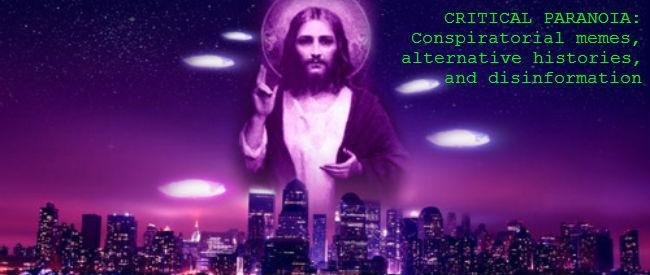
CRITICAL PARANOIA: CONSPIRATORIAL MEMES, ALTERNATIVE HISTORIES, AND DISINFORMATION

CRITICAL PARANOIA

CRITICAL PARANOIA: CONSPIRATORIAL MEMES, ALTERNATIVE HISTORIES, AND DISINFORMATION
Curated by Ernest J. Ramon
USA, 80 min, 2014

THURSDAY, JULY 10 – 7:30 PM
WEDNESDAY, JULY 16 – 7:30 PM

A sampling of some of the strangest and most thought provoking conspiracy videos to found on youtube including:

  • Listed for viewing in TV Guide Magazine Conspiracy of Silence, exposes a network of religious leaders and politicians involved in child sex orgies at the White House. It was to be aired on the Discovery Channel on May 3 1994 but was mysteriously pulled just prior to being aired. The rights to the documentary have been purchased by unknown persons who have ordered all copies destroyed.
  • Merck Vaccine Chief Brings HIV/AIDS to America, This censored interview conducted for public television was cut due to its huge liability–the admission that Merck drug company vaccines have systematically been injecting cancer viruses in people worldwide.
  • This segment of In Lies We Trust: The CIA, Hollywood & Bioterrorism features one of the world’s leading vaccine experts who explains why Merck’s vaccines have spread AIDS, leukemia, and other horrific plagues worldwide.
  • The Mena Connection, Eyewitness testimony paints an incredibly detailed and paradigm shifting view into the secret world of high-level politicians, the CIA, Iran Contra, cocaine, and the funding of a secret government. Hollywood Insider
  • Freemasonic and Occult Movies & Symbolism. Be assured the Illuminati and the Necronomicon are very real. Other topics include multi-dimensional beings feeding off humans, parallel universes, ghosts, sex magick, and Brad Pitt.
  • Hell’s Bell’s The Dangers of Rock ‘N’ Roll 1989 journey into the dark side of rock music and its negative effect on society (from a Christian perspective).
  • The Assassination of Jimi Hendrix, In the last twenty four hours only two things are certain it was no accident, and it was not a suicide.
  • The Borg Agenda, in its entirety is a marathon reaching over 14 hours in length, an intense exploration into critical issues of modernity. Is the Star Trek franchise and perhaps the whole of pop science fiction insidious propaganda aimed at coaxing all humanity into a steely robotic cage?
  • Is Jeff Ganon Really Johnny Gosch? connect the dots missing children milk cartons politicians black op tax funded pedophile sex rings.
  • Project Blue Beam, Fake alien invasion rapture jesus hologram physiological warfare ufos.
  • Kubrick’s Odyssey Secrets Hidden In The Film of Stanley Kubrick Part One Kubrick and Apollo. First in a series of documentaries revealing the secret knowledge embedded in the works of the greatest filmmaker of all time. In Part One, Jay Weidner, presents compelling evidence of Stanley Kubrick directing the Apollo moon landings. Was 2001: A Space Odyssey not only a retelling of Arthur C. Clarke and Stanley Kubrick’s novel, but also a research and development project that assisted Kubrick in the creation of the Apollo moon footage?
  • Operation Trojan Horse, One persons story of waking up to reality.

FROM THE CLOUD

FROM THE CLOUD

FROM THE CLOUD
Dir. Various
Approx. 80 min.

TUESDAY, JULY 15 – 7:30 PM
FRIDAY, JULY 18 – 7:30 PM

In February 2005, YouTube was launched and forever changed our relationship to moving images, both as viewers and producers. But even well before then, the web had made a large variety of new materials accessible to see and to download, as well as upload. “From the Cloud” is a video program that looks at found footage “films” in the Internet Age. The proliferation of archived photographs, digital images, and videos made available to everyone online as well as an exponential increase in production has changed the way artists interact with pre-existing material. The artists in this program both pull material from the cloud and implicitly comment on the cloud by doing so.

FEATURING:

“Arnold Schoenberg, op. 11 – I – Cute Kittens,” Cory Arcangel, 2009, digital video, color, sound, 4:21
Arnold Schoenberg’s Drei Klavierstücke, op. 11-I played by cats on pianos.

“Only Girl,” Hilary Basing, 2011, digital video, color, sound, 3:53 min.
My performances on camera aim to equalize identities through the adoption of their different characteristics and gestures. Only Girl explores the gestures of femininity and the breakdown of information through mimicry as I imitate drag queen Raja’s imitation of Rihanna’s Only Girl (In the World).

“Electric Sweat,” John Michael Boling, 2007, digital video, color, sound, 54 sec.
This video is a valentine to hardware that raises technolust to the level of technoromance.

“A Total Jizzfest,” Jennifer Chan, 2012, digital video, color, sound, 3:22 min.
A sample of the richest and sexiest men in computer and Internet history.

“New American Classic,” Jennifer Chan, 2011, digital video, color, sound, 1:44 min.
Is it sculpture or furniture?

“Am I Evil?,” Jacob Ciocci, 2011, digital video, color, sound, 4:14 min.
In her essay, “Mirror Horror”, Trinie Dalton describes, “In early times, since mirrors were rare commodities, only qualified shamans had mirrors. But in 1438, when Guttenberg started a mirror-making business, anyone untrained in magic could use and be tempted by one. This proliferation of mirrors perpetuated myths of witchcraft, since some theorized that mirrors were being used for maleficence by those corruptible, vain and immoral enough to admire their own reflections.”

The good witch (Harry Potter?) tries to understand his reflection but the mirror shatters as soon as he touches it. The evil witch (Wicked Witch of the West?) tries the same thing but the mirror again shatters. The mirror always shatters just before a fixed identity can be sustained. A mirror is magic in much the same way many newer image-making tools are magic: for a brief moment you are put under a spell, you believe in it. But the longer and the closer you look, everything begins to fall apart. That is the real magic. This is the 3rd piece in Ciocci’s ongoing series “Trapped and Frozen Forever,” an investigation into the relationships between online and off-line images: images trapped (not tangible) on-screen and images frozen (not moving) in the physical world. In this iteration Ciocci has scanned section by section each of the 2 large collages on the wall, using them as the basis for the animated projection.

“Apocalypse Now,” Jesse Darling, 2012, digital video, color, sound, 1:06 min.
A roundup of the year 2012, made especially for the end of the world.

“Too Many Dicks,” Feminist Frequency/Anita Sarkeesian, 2010, digital video, color, sound, 1:19 min.
It is no secret that the majority of video games these days star overly muscular men often carrying big swords, guns, baseball bats, chainsaws or other phallic weaponry. Many games normalize this extremely macho form of masculinity while uncritically glorifying war or military intervention. Sadly too many games tend to celebrate grotesque displays of violence instead of providing opportunities for creative, less violent, innovative forms of conflict resolution. Today with the growing dominance of the first person shooter genre players are encouraged to really participate in the destruction, testosterone and gore up close and personal. Not only are these games dominated by male characters but even the few women characters who do get staring roles are often made to replicate overly patriarchal, violent, macho behavior (but inside of a hyper sexualized female body). Not surprisingly the vast majority of game producers, designers and writers in the industry are still men.

“Erased de Kooning,” Mike Goldby, 2011, digital video, color, sound, 2:58 min.
In this video, Goldby brings an image of a de Kooning drawing into Photoshop and, as Robert Rauschenberg did 60 years ago, erases all the markings. But what is at stake when this is just a digital file, with another exact copy of the image available again to download or one can simply undo using ⌘Z?

“Analog Internet,” Faith Holland, 2012, digital video, color, sound, 5:12 min.
“Analog Internet” is a video-sculpture that reveals a pyramid of three-dimensional rendered CRT televisions, each with a different cat video appropriated from YouTube playing. This is the core of the Internet: an Egyptian site of worship for cats. Considering the Internet’s obsession with cats, Analog Internet re-imagines having the same relationship to cat videos in physical, not digital, space.

“Bieber Fever” Daniel Johnson, 2012, digital video, color, sound, 5:10 min.
Excerpted and looped from Justin Bieber’s music video “Baby,” in “Bieber Fever,” Bieber encircles us in all his glory while a symphonic slowed-down version of his song plays. As he spins, more and more about his gestures, posturing, and the environment emerges.

“No Fun,” Eva and Franco Mattes, 2010, online performance, color, sound, 15:46 min.
For No Fun Franco Mattes simulated committing suicide in a public webcam-based chat room. Thousands of random people, unwillingly recorded, watched while he was hanging from the ceiling, swinging slowly, for hours. The video documentation of the performance is an unpredictable, at times disturbing, sequence of reactions: some laugh, some are completely unmoved, some insult the supposed corpse, some take pictures with their mobiles.

“#Postmodem,” Jillian Mayer and Lucas Leyva, 2012, digital video, color, sound, 14:37
#PostModem is a comedic, satirical sci-fi musical based on the theories of Ray Kurzweil and other futurists. It’s the story of two Miami girls and how they deal with the technological singularity, as told through a series of cinematic tweets.

“Money2,” Lorna Mills and Yoshi Sodeoka, 2012, digital video, color, sound, 1:16 min.
“Money2″ by Lorna Mills and Yoshi Sodeoka is a brief, merciless video assembled from Lorna Mills’s found and altered animated gif collages. These looping animations play against a soundtrack by Plink Flojd, a super audiovideo collective started by David Quiles Guillo with co-founders Yoshi Sodeoka and Eric Mast. The video is the cacophonous, dysfunctional, absurd, idiotic sequel to Pink Floyd’s classic “Money.” The band’s original version from the 70’s exhorted their audience to reject wealth and conspicuous consumption, while at the same time launching them into the stratosphere of commercial success. Pink Floyd’s “Money” remains an enormously popular song, despite the fact that all of the ideas about capitalism embedded in the song are now four decades out of date. “Money2” expands the original imagery to include the darkness, desperation, folly and anxiety that surrounds wealth and the lack of it. By pairing a mashed, mangled musical version with found, then re-arranged, animated gifs, Pink Floyd’s “Money” is revived and buried alive at the same time.

“All Y’all,” Gracie Nesin, 2011, digital video, color, sound, 4:51 min.
“All Y’all” is one of a cycle of nine commemorative ‘songs’ called White Witch/Bluff City. The brief (song length), breathy sound and image collage is essentially a diaristic narrative about codeine, boarding school, the Athenian courtesan Phryne—dreams, shreds, parts. It’s impressionistic, creepy-trill, a drunk/dull/sleepy recollection of prostitution both low and sublime, sweet and cruel, a punchy Southern Gothic poem about After Empire sung somewhat underwater, smoked and muffled by a blue, New Age cloud, all collapsed and hilarious—yesterday today and tomorrow.

“Search by Image, Recursively Starting with a Transparent PNG,” Sebastian Schmieg, 2011, digital video, color, silent, 4:04 min.
With near-scientific method, Schmieg begins with a transparent PNG image file and allows Google’s Search by Image to visually free associate. The result is an insight into how Google’s algorithm “sees.”

“On Beauty,” Hennessy Youngman, 2011, digital video, color, sound, 5:11 min.
Is beauty still relevant in our future age where information is mad valuable and neoliberalism is the number one pop tune that seems like it will always be playing every time you turn on the radio forever into infinity? Well I don’t got answers to these questions, but that don’t stop me from enwisening y’all to this shit!

Special thanks to Faith Holland and the artists.

GUTS AND GOULASH: TWO OSTERNS BY GYÖRGY SZOMJAS

The kind of revelatory discoveries that give intrepid cinephiles faith there are always more would-be classics left to uncover, György Szomjas’s so-called “goulash westerns”—perhaps the first and only examples, and a genre unto themselves—blend period-specific social realism, documentary-level research, and extreme cinematic stylization and violence into something suggesting an unlikely marriage of Sergio Leone and Miklós Jancsó. They turn the “Ostern” or “Red Western” genre — better known for its more plentiful USSR, Czech, East German, and Romanian iterations — completely inside out, representing works that make serious, sobering inquiries into historical change while artlessly reconfiguring genre tropes.

Though we had previously screened THE WIND IS WHISTLING UNDER THEIR FEET last year, subtitles for its follow-up, BAD GUYS, have only recently become available. A significant amount of work has been done by Spectacle to clean up its best-available video source, resulting in a presentation that’s unlikely to be delivered anywhere else.


wind-whistling

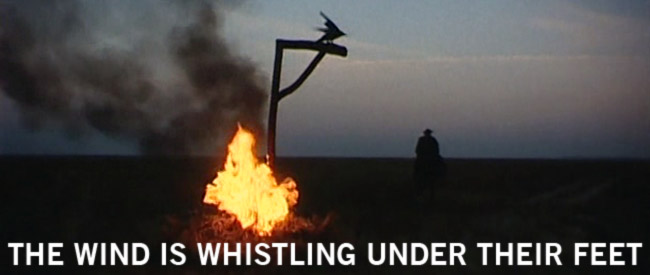
THE WIND IS WHISTLING UNDER THEIR FEET
Dir. György Szomjas, 1976.
Hungary. 95 min.
In Hungarian with English subtitles.

SUNDAY, JUNE 8 – 5:00 PM
SUNDAY, JUNE 22 – 5:00 PM

György Szomjas brings exquisite style and pacing to this elegiac gallows western about a betyár — a kind of highwayman popular in 19th century Hungarian balladry — set amid the Great Hungarian Plain in 1937. It follows the path of a brooding, aging outlaw newly escaped from prison whose personal revenge quest dovetails with the interests of the landless herdsman who oppose the state’s building a canal through the fields on which they work their trade. He becomes an unlikely hero to unwashed vagabond workers while facing down a mutually-admiring adversary in the form of a forthright squire who had captured him before. Meanwhile, an opportunistic youngster attempts to work both sides to his benefit. As ditches are dug for canals and corpses alike, the state puts increasing pressure on the wistful squire, who realizes the social order is changing and his fortunes are in decline; and yet he remains dutifully attached to his mission.

Though carefully paced and based on historical documents, THE WIND IS WHISTLING UNDER THEIR FEET aims squarely for populist appeal. The autumnal palette, period imagery, and sudden outbursts of hysterical grotesquery recall Andrzej Żuławski’s THE DEVILS. Yet most of all it brings to mind the unlikely grouping of Woody Guthrie, Miklós Jancsó, and Akira Kuroswawa — or maybe Béla Tarr meets Sergio Leone. Whatever the comparisons, THE WIND IS WHISTLING UNDER THEIR FEET is a stirring, forgotten gem in classic Spectacle tradition and not to be missed.

Trigger warning: Realistic animal violence 


Rosszemberek-Banner

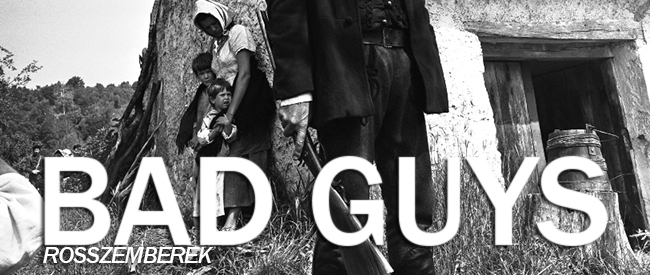
BAD GUYS
Dir. György Szomjas, 1979.
Hungary. 85 min.
In Hungarian with English subtitles.

SUNDAY, JUNE 8 – 7:30 PM
FRIDAY, JUNE 13 – 7:30 PM
SUNDAY, JUNE 22 – 7:30 PM

The year is 1864. Beginning with a brief historical treatise on the Revolution of 1848’s dissolution of Hungary’s feudal agriculture system and poor farmers’ struggles to adapt to capitalistic reorganization of society, then followed by a violent raid that leaves a judge with a knife in his gut and a bullet through in his heart, BAD GUYS is one of the most bleak, unremittingly violent leftist westerns ever made, making Sergio Leone’s DUCK, YOU SUCKER! look like QUACKBUSTERS.

THE WIND IS WHISTLING’s Dzsokó Roszics plays the opposite side of the law as peacekeeper Hegyessy, who is on the trail of bandits led by the notorious peasant outlaw Jóska Gelencsér. Though Gelencsér has been evading the law in part due to his popularity with the common masses, his previously non-violent group’s murder of a landowning judge has drawn increased pressure from the elite for Hegyessy to bring Gelencsér and his men to justice. And yet the lawman’s efforts to deliver their wishes are reeled in at every turn for fear they might damage the elites’ other capitalistic interests. Meanwhile, Gelencsér’s second-in-command hatches a plan with his wife to sell the group out in a bid for clemency, carefully orchestrating each betrayal so that they appear to originate from outsiders, whom the Gelencsér begins to savagely tear through, leaving a trail of guts and spilt goulash in their wake.

The Hungarian title, Rosszemberek, could also be translated to “Bad People” or “Wrong-Doers” — it’s not about “bad guys” in the stock genre sense so much as full-formed characters who are rotten to their core and determined to inflict their ugliness on decent people; the black undertow of historical sea change. There are clear villains, but no heroes—only those wise enough to accept their own helpless lot while the evil divide spoils and death.

Trigger warning: Realistic animal violence