SPECTOBER IV: MIDNIGHTS

FRIDAY, OCTOBER 3: SERGIO MARTINO – THE STRANGE VICE OF MRS. WARDH
SATURDAY, OCTOBER 4: SERGIO MARTINO – THE CASE OF THE SCORPION’S TAIL
FRIDAY, OCTOBER 10: SERGIO MARTINO – ALL THE COLORS OF THE DARK
SATURDAY, OCTOBER 11: SERGIO MARTINO – YOUR VICE IS A LOCKED ROOM AND ONLY I HAVE THE KEY
FRIDAY, OCTOBER 17: R2C – SOUTH THIRD STREET FOREVER
SATURDAY, OCTOBER 18: R2C – THE SIMPSONSSSSSSSSSSSSSSSSSSSSSSSSS
FRIDAY, OCTOBER 24: SERGIO MARTINO – TORSO
FRIDAY, OCTOBER 31: THE CURSE OF GHOUL FRIDAY

========= ALL THE COLORS OF GIALLO: SERGIO MARTINO MIDNIGHTS =========

martino-banner

All month we spotlight the five gialli the prolific Sergio Martino directed between 1971 and 1973. Ranging from Agatha Christie/Edgar Wallace-style mysteries to Polanski-esque paranoid thrillers and proto-slashers, these lurid pulp masterpieces are exquisite exercises in style and represent quintessential examples of the genre. They also feature incredible soundtracks and amazing leading ladies, most notably Edwige Fenech and Anita Strindberg, who appear side-by-side in YOUR VICE IS A LOCKED ROOM AND ONLY I HAVE THE KEY. Though Martino went on to make dozens of films in other, sensational genres, he never fully returned to giallo. Nonetheless, these are up there with the best of Bava, Argento, and early Fulci.

wardh-banner

THE STRANGE VICE OF MRS. WARDH
aka BLADE OF THE RIPPER
Dir. Sergio Martino, 1971.
Italy. 96 min.
In English.

FRIDAY, OCTOBER 3 – MIDNIGHT

Sergio Martino’s first giallo is also one of the genre’s most sexually dynamite works. Raven haired French beauty Edwige Fenech is Julie Wardh, an ambassador’s wife in Vienna still reeling from her sadomasochistic relationship with an intense ex-lover, Jean. As she arrives, a killer is stalking women on the streets—and Jean just happens to be in town. In the meantime, she meets George, the debonair cousin of her friend Carol, who thrives of seducing married women. Things heat up between the pair while bodies pile in the streets and Jean remains a menacing presence—and soon, the sets his sights on Julie, spinning the plot through dozens of twists.

THE STRANGE VICE OF MRS. WARDH is totally out-of-control, and a major genre classic: a hot mess of over-the-top stylization, kinky sex, nightmare interludes, brutal killings, suspense sequences, and, of course, a top-notch soundtrack by Nora Orlani including an insane version of “Dies Irae” that kicks in whenever Julie has flashbacks about having dirty sex with Jean. A giallo essential!

scorpion-banner

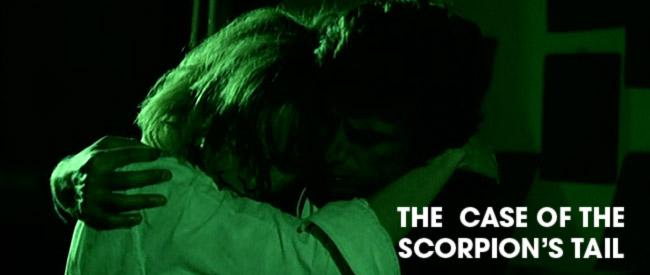
THE CASE OF THE SCORPION’S TAIL
Dir. Sergio Martino, 1971.
Italy. 91 min.
In English.

SATURDAY, OCTOBER 4 – MIDNIGHT

Bombshell Anita Strindberg anchors Martino’s most nimble and classic example of giallo tropes in THE CASE OF THE SCORPION’S TAIL, which ostensibly tells the story of a woman under investigation following the mysterious explosion of her wealthy husband’s airplane. When she travels to Greece to collect her inheritance, a number of variables come into play: a vindictive mistress and her hired thug, an insurance claim investigator, a stalker-killer on the loose, and a photojournalist, Cléo (Strindberg), assigned to the story. After a number of twists and turns, the investigator and journalist become the center of the story—and the killer’s prime target.

THE CASE OF THE SCORPION’S TAIL has a whole lot going for it: particularly, a simply incredible score by Bruno Nicoli that is among the best work ever done in the genre, and Martino’s best suspense sequence, in which a stealthy home invasion leads to a rooftop chase recalling Louis Feuillade’s classic LES VAMPIRES serial. THE CASE OF THE SCORPION’S TAIL is pure sex, suspense, and style — a total thrillride.


colors-banner

ALL THE COLORS OF THE DARK
Dir. Sergio Martino, 1972.
Italy. 95 min.
In English.

FRIDAY, OCTOBER 10 – MIDNIGHT

Sergio Martino reteams with muse Edwige Fenech for a Polanski-esque paranoid nightmare about a woman, Jane, who begins to lose her mind after taking heavy meds following a miscarriage. As she grows cold toward her partner, warms up to her sexy neighbor Mary—played by Marina Malfatti from THE NIGHT EVELYN CAME OUT OF HER GRAVE—who encourages her to get her act together by, er, joining a devil-worshiping sex cult. Somehow, this only makes things worse. When a phantasmic stalker gets into the mix and Jane participates in ever-more ritualistic murder orgies, things spiral further into madness.

ALL THE COLORS OF THE DARK is Sergio Martino’s most surreal film, featuring a number of delirious nightmare set pieces. As always, Fenech is fantastic, and as ROSEMARY’S BABY knockoffs go, this is one of the best.

vice-banner

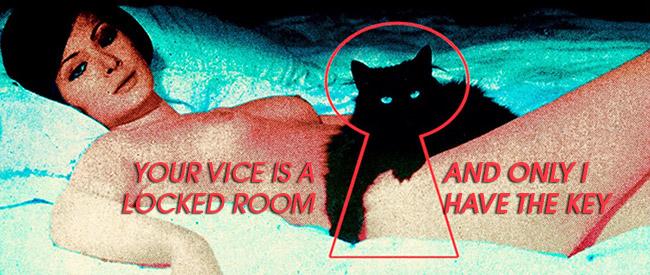
YOUR VICE IS A LOCKED ROOM AND ONLY I HAVE THE KEY
Dir. Sergio Martino, 1972.
Italy. 97 min.
In English.

SATURDAY, OCTOBER 11 – MIDNIGHT

“I don’t feel like being involved in one of your spectacles.”

Made between ALL THE COLORS OF THE DARK and TORSO, YOUR VICE IS A LOCKED ROOM AND ONLY I HAVE THE KEY is a misanthropic, brooding, manipulative and beautiful treatment of Edgar Allen Poe’s story “The Black Cat.” It also has a drunk author getting J&B shipped by the crate to his house, which might be the gialloest thing ever. Fans of Sergio Martino’s earlier film THE STRANGE VICE OF MRS. WARDH (from which this film gets it name) might be thrown a bit by the subdued, sullen quality, but it’s part of a greater plan, a plan that includes commune freak-outs, slaughtered mistresses, gratuitous POV (on line with Martino’s next film, TORSO) and perhaps greatest of all, Edwige Fenech, of whom I can say nothing without getting the vapors. With a storyline that’ll satisfy no-loose-ends mystery fans, enough jaw-dropping cinematography and costuming to please the art crowd, and Martino’s thoughtful and visceral style (there’s also a great Bruno Nicolai score to sweeten the pot), YOUR VICE…might be Martino’s finest.

torso-banner

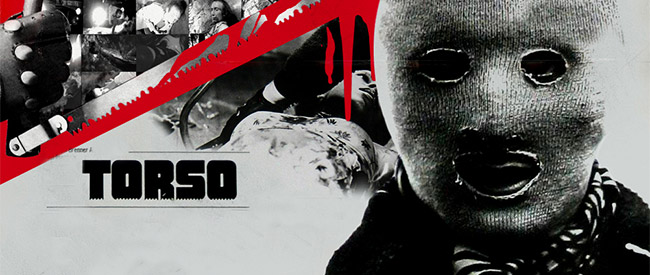
TORSO
aka The bodies bear traces of carnal violence
Dir. Sergio Martino, 1973
Italy. 93 min.
In English with a few previously cut scenes in subtitled Italian

FRIDAY, OCTOBER 24 – MIDNIGHT

TORSO is the fifth and final giallo by under-appreciated genre master Sergio Martino. Having perfected the lurid and stylish pulp-literary whodunnit with films like THE STRANGE VICE OF MRS. WARDH and THE CASE OF THE SCORPION’S TAIL, here he strips the giallo formula down to its raw essentials, breaking it down into a new form of distilled carnage-by-numbers that anticipates the American slasher—which has never approached this level of bravura panache.

The plot is absurdly minimal: a masked man is killing college coeds along with anyone else who threatens to reveal his identity. The police’s only clue is a red scarf, which is probably intended as a mocking allusion to the red herring. (At one point, a character who thinks she’s identified the killer remembers he was wearing a black scarf with an abstract red pattern rather than a red scarf with an abstract black pattern—yet they look identical.) No matter the details: the film is pure sex and dismemberment, ranging from necking in cars to lesbian exhibitionists to a drug-fuelled hippie orgy, which, in one of the film’s most memorable sequences, results in someone wandering half-naked and stoned through thick fog in a dew-drenched forest before encountering the killer, clad in a leather jacket and ripped stocking mask, appearing like a swampy apparition. The film unlikely culminates in an incredibly nail-biting and grisly protracted suspense sequence that is pure edge-of-your-seat cinema.

Thanks to our friends at Blue Underground, we’re pleased to present the film in a stunning transfer made directly from the film’s original, uncut elements. We’ll show it with the English-language soundtrack, which has a minute or two of previously excised footage in subtitled Italian.


=================== MIDNIGHTS: REMIX 2 COGNITION ===================

South_Third_Trash_Can_Banner

SOUTH THIRD STREET FOREVER: AIM FOR THE TRASH CAN
Dir. Various, Compiled by C. Spencer Yeh, 2014
USA. ?? min.

FRIDAY, OCTOBER 17 – MIDNIGHT

Following warm on the heels of SOUTH THIRD STREET FOREVER: APPROVED FOR ALL AUDIENCES (as seen at the Museum of Arts and Design’s NYC Makers: A MAD Biennial), a survey of custom-edited movie trailers compiled from the over-400 created since Spectacle’s scrappy beginnings, comes SOUTH THIRD STREET FOREVER: AIM FOR THE TRASH CAN. Whereas ALL AUDIENCES attempted a broad overview, strategically edited for the museum’s broad audiences, TRASH CAN kicks a 180 and lures all the nasty exploitation, howling horror, and explosive action-packed genre trailers out of the Spectacle gutter into one seamy vacation package. This hour-plus-long shitty cruise traverses all the rank detours and volatile twists and turns you might’ve missed unless you’ve spent mad N.I.S.S. (Nights In Spectacle’s Service). Spoiler alert – the calls are coming from inside the trash can and this boat never left the sewer.

Various versions of the SOUTH THIRD STREET FOREVER trailer compilations have screened at Pittsburgh’s Three Rivers Film Festival, the Kinomuzeum festival at Muzeum Sztuki Nowoczesnej w Warszawie. Yeh has also presented his own trailers to LAMPO at the Graham Foundation in Chicago, and the Museum of Modern Art in our very own NYC.

Warning: graphic violence, sexuality, and other adult subject matter


The_Simpsons25_Banner

THE SIMPSONSSSSSSSSSSSSSSSSSSSSSSSSS
Dir. Lenora Jarrett, 2013
USA, 90 min.

SATURDAY, OCTOBER 18 – MIDNIGHT

“Every aired moment of The Simpsons (from Ullman through the movie and up-to-date) sped up (a lot) to fit into a 90 minute program.”

What more do you need to dohhhhhhhhhhhhhhhhhhhhhhhhh?


=================== THE CURSE OF GHOUL FRIDAY ===================
_Curse Ghoul Banner 1

THE CURSE OF GHOUL FRIDAY
Another Psychotic Series of Short Films Celebrating the Supernatural!
Approx. 90 min.

FRIDAY, OCTOBER 31 – MIDNIGHT

Like a plutonium razor blade in a vampiric apple, The Spectacle celebrates All Hallows Eve with the return of the short film series that will steal your soul: THE CURSE OF GHOUL FRIDAY!

Risk your sanity with 90 minutes of werewolves, witches and warlocks—and all their unholy pals, like hungry ghosts, murderous toys, bad acid trips, Martian invaders, necrophiliacs, ice-cream-stealing monsters, and everybody’s best friend: The Apocalypse!

Are you brave enough to let yourself be exposed to the cosmic dread that lurks beyond the veil of human consciousness? Are you tough enough to withstand a maelstrom of animation and special effects techniques? Are you strong enough to deal with an utter disregard for propriety?

Sure you are—you go to movies at The Spectacle!

Featuring works by (or inspired by) Poe, Lovecraft, Angela Carter, Christopher Nolan, Stephen King, Guillermo Del Toro, H.G. Wells, Brian De Palma, the Butthole Surfers—and not to mention that most terrifying book in history: The Bible!

Like Dan O’Bannon’s zombies, THE CURSE OF GHOUL FRIDAY can’t be stopped with a bullet to the head—after all, you can’t kill something that was never alive!

With more than 20 shorts in an approximately 90 minute program, be the first kid on your block to experience unfathomable and indescribable evil; all for the low, low prices of $5—and your immortal soul!!! And it’s only at the Spectacle: BWAH-HAH-HAH-HAH!!!

TRIGGER WARNING: These are horror films, okay? It’s their job to push your buttons and freak you out with a myriad of twisted and disturbing methods! No refunds!


THE GOLDEN YEARS OF GREEK POSTWAR CINEMA

This September we present three masterpieces of Greek cinema that emerged from a renewed industry amid a wellspring of creativity in the mid-1950s.

During World War II, with the Greek government in exile, a left-wing resistance emerged against occupation. Following the axis’s defeat, Greece was flung into further conflict as a civil war broke out within a polarized political landscape between the emboldened, yet increasingly disorganized, Communist party and an American- and British-backed right-wing government. As a result, the population of the countryside dwindled, reemerging as a working class in urban centers, bringing along with it a demand for mass entertainment. After the civil war concluded in 1949, the film industry began to grow, artists returned (including Nikos Koundouros, a young painter/sculptor and left-wing resistance fighter returning from exile on a prison island), and Greek cinema came into its own—producing three masterpieces in the years 1954 and 1955 that heralded a new maturity definitive national cinema.


magiccity-banner

MAGIC CITY
Dir. Nikos Koundouros, 1954.
Greece. 80 min.
In Greek with English subtitles.

SATURDAY, SEPTEMBER 6 – 7:30 PM
WEDNESDAY, SEPTEMBER 17 – 10:00 PM
THURSDAY, SEPTEMBER 25 – 10:00 PM

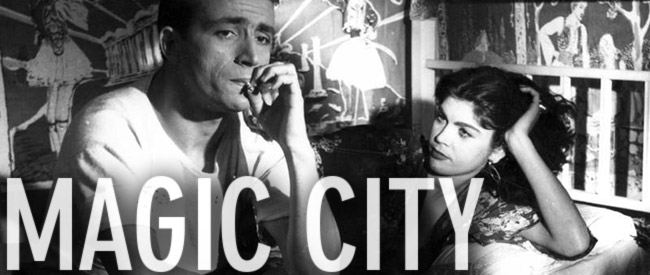
MAGIC CITY is the fantastic debut of Nikos Koundouros, one of Greece’s most iconoclastic postwar filmmakers. Blending Italian Neorealism with a personal stylistic sensibility that anticipates Jean-Pierre Melville’s gangster chic, MAGIC CITY stars Giorgos Foundas (also of STELLA) as Kosmas, a young man scraping by in the slums of Athens trying to make an honest living–while carrying on with a married woman and bumming around with hoods in the underground clubs and arcade alleys of “Magic City.” When the bank threatens to repossess his truck—source of his pride, a benefit to his community, and lifeblood of his labor—he reluctantly takes a smuggling gig in hopes of making his payments — but learns he’s in for a little more than he bargained for.

MAGIC CITY crafts a new urban poetic realism that champions the working poor while delving into modern issues of moral complexity. And it’s every bit a brilliant first film — exuberant, perhaps overly idealistic, and brimming with the discovery of a new national character in cinema. Nikos Koundouros went on to make O DRAKOS (aka THE FIEND OF ATHENS), which we showed back in Spring 2012.


stella-banner

STELLA
Dir. Michael Cacoyannis, 1955.
Greece. 91 min.
In Greek with English subtitles.

SUNDAY, SEPTEMBER 7 – 5:00 PM
SATURDAY, SEPTEMBER 13 – 7:30 PM
WEDNESDAY, SEPTEMBER 17 – 7:30 PM
WEDNESDAY, SEPTEMBER 24 – 7:30 PM

Stella is a bold, proud, resolutely independent woman–and every man she meets wants to possess her. As the most popular singer at a late-night bouzouki club, she meets Alekos, a mild-mannered middle-class kid who begrudgingly tries to accept that she won’t settle down. He asks whether there’s someone else, and she tells him that when there is, he’ll be the first to know. True to her word, she puts it to him straight when she becomes mutually enthralled with a reckless, domineering footballer, Miltos. In her own words, they enjoy life as “wild animals.” But when tragedy intervenes and Miltos tries to tie her down, Stella’s virtues of personal freedom are put to the test.

Few films from the 1950s are as risqué, funny, complex, or melancholy. One could imagine Stella picking Barbara Stanwyck and Rita Hayworth out of her teeth after breakfast. But she’s not so much the dubious “femme fatale” as a fearless woman who refuses to relent on the matter of her autonomy at any cost. It wouldn’t be a Greek drama without tragedy — but the film’s complex resolution seems to suggest Stella’s loss isn’t a result of internal failings, but a society incapable of producing someone who can live up to her. The story is rounded out by evocative urban-realist production that occasionally suggests the fantastic (particularly in its pitch-perfect opening credits), and legendary composer Manos Hatzidakis provides what some consider his best work.

Star Melina Mercouri was no less of a firebrand in real life. She became an outspoken critic of the state following the 1967 military junta, and when her citizenship was revoked, she famously stated, “I was born a Greek, and I will die a Greek. Mr. Pattakos [the Minister of the Interior] was born a fascist, and he will die a fascist.” She continued to speak out abroad even as she came under fire of assassination attempts. After the fall of the dictatorship in 1974, she co-founded the Panhellenic Socialist Movement and in 1977 was elected to parliament with the highest number of votes of any of the candidates in that election. In 1981 she became the first woman appointed to the position Minister of Culture for Greece, during which time she founded the European Capital of Culture program, a significant distinction that continues to play an important role in the socioeconomic development of European cities. STELLA, in which she provides the most iconic performance in Greek cinema, was shockingly her film debut.

If you only ever see one Greek film in your entire life, this should probably be it.


counterfeit-banner

THE COUNTERFEIT COIN
Dir. George Tzavellas, 1955.
Greece. 118 min.

SUNDAY, SEPTEMBER 7 – 7:30 PM
THURSDAY, SEPTEMBER 25 – 7:30 PM
SUNDAY, SEPTEMBER 28 – 7:30 PM

A masterfully made Hellenic take on Max Ophuls’ LA RONDE, THE COUNTERFEIT COIN tells four stories linked by the title forgery as it passes from pocket-to-pocket in Athens. It begins with the story of the creator, a master engraver whose conned into spending his retirement funds on a counterfeiting lab. It eventually transfers through the hands of a con artist pretending to be a blind beggar, a young prostitute, a poor family, and a hopeful newlywed couple, creating a social panorama of modern Greece that is by turns funny, tragic, tear jerking, and inspiring.

IN OUR OWN WORDS: FEMINIST NON-FICTION FILMS OF THE 70S

IN-OUR-OWN-WORDS

In the years after the birth of second-wave feminism in the 1960s, female directors began incorporating the spirit of the movement into their films. In particular, female directors began turning their cameras on themselves, and other women, in order to tell their own stories without interference.

With IN OUR OWN WORDS: FEMINIST NON-FICTION FILMS OF THE 70S, Spectacle presents a collection of (mostly) female-directed films, each with the aim of shedding light on underrepresented stories of women’s lives. From girls growing up, and women incarcerated, in the United States, to Native matriarchal societies in Canada, to a repressive boarding school in England, these films tell women’s stories, with minimal narration or outside voices.

Even though these films were made 40 years ago, they beg the question: how much has actually changed, and what has stayed the same?


THREE-LIVES
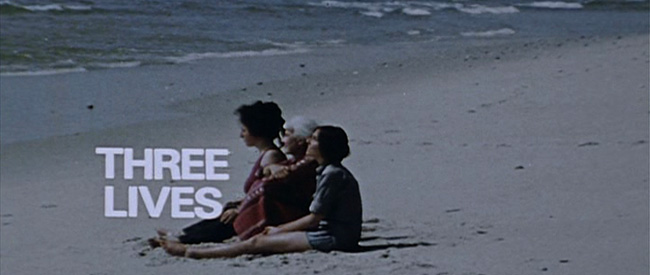
THREE LIVES
Dir. Kate Millett, 1971
USA, 70 min

FRIDAY, SEPTEMBER 12 – 10:00 PM
TUESDAY, SEPTEMBER 23 – 7:30 PM
SATURDAY, SEPTEMBER 27 – 10:00 PM
TUESDAY, SEPTEMBER 30 – 7:30 PM

“Kate Millett’s Three Lives is a moving, proud, calm, aggressively self-contained documentary feature…” – Vincent Canby, The New York Times

Feminist author Kate Millett was a second-wave powerhouse; in 1970, she published Sexual Politics, called by Norma Wilson “one of the first feminist books of this decade to raise nationwide male ire,” and which, obviously, made her an enemy of Norman Mailer. In 1971, Millett brought together an all-female crew, under the name Women’s Liberation Cinema, to film three women’s remembrances of their lives.

THREE LIVES portrays three women: Robin Mide, an artist; Lillian Shreve, a chemist; and Mallory Millet-Jones, Millett’s own sister. The camera is a quiet observer, letting the women, from three different paths and generations, tell their own stories without outside interference. Through these women’s personal revelations, a narrative of living under the patriarchy is revealed. The personal is political, indeed.

Courtesy of Kate Millett.


growing-up-female
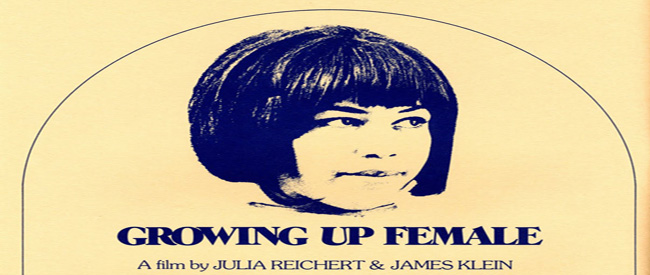
GROWING UP FEMALE
Dir. Jim Klein & Julia Reichert, 1971
USA, 50 min.

Screens with MOTHER OF MANY CHILDREN

TUESDAY, SEPTEMBER 9 – 7:30PM
FRIDAY, SEPTEMBER 12 – 7:30 PM
MONDAY, SEPTEMBER 15 – 10:00 PM
TUESDAY, SEPTEMBER 23 – 10:00 PM

“One of those painful experiences that’s good for you…I wish every high school kid in America could see this film.” – Susan Sontag

GROWING UP FEMALE proclaims itself as “the first film of the women’s movement,” and while that claim might be questionable, there is no double that the film proclaimed a new frontier in non-fiction filmmaking. GROWING UP FEMALE is the first major documentary about what it means to be a woman in America, and particularly, what it means to be a young girl, and how girls are de facto trained by society to live under the patriarchy.

Directed by documentary filmmakers (and partners) Jim Klein and Julia Reichert, GROWING UP FEMALE consists of a series of vignettes, in which women tell their own stories about, well, growing up female: schooling, social conditioning, and the eventual awakening to the dissatisfaction and frustration that accompanies being female in America. It’s often painful and heart-wrenching, but a powerful document of what female socialization actually looks like. Chosen by the Library of Congress for the National Film Registry, the film was used by consciousness-raising groups in the 70s to convince dubious audiences of the need for the feminist movement.

Courtesy of New Day Films and Jim Klein.


mother-of-many-children
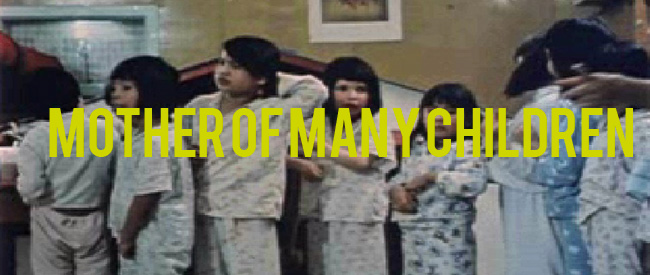
MOTHER OF MANY CHILDREN
Dir. Alanis Obomsawin, 1977
Canada, 58 min.

Screens with GROWING UP FEMALE

TUESDAY, SEPTEMBER 9 – 7:30 PM
FRIDAY, SEPTEMBER 12 – 7:30 PM
MONDAY, SEPTEMBER 15 – 10:00 PM
TUESDAY, SEPTEMBER 23 – 10:00 PM

As a counterpart to the American girls from GROWING UP FEMALE, Abenaki director-singer songwriter-artist Alanis Obomsawin trained her cameras on Canadian Native women and girls in MOTHER OF MANY CHILDREN. Obomsawin films women from different First Nations to portray the life cycle of a series of Native women in Canada, where the women’s traditionally matriarchal societies feel the pressure to conform to Canadian values.

Through interviews with women of many First Nations, we see the struggle between these women’s traditional values and those of white society, adding another layer of conflict between these women and the culture around them. The women interviewed in the film include an 108-year old Cree elder, and the film is a loving, subtly (yet radically!) political portrait of First Nations women.

Courtesy of Women Make Movies.


INSIDE-WOMEN-INSIDE
INSIDE WOMEN INSIDE
Dir. Christine Choy & Cynthia Maurizio, 1978
USA, 28 min.

Screens with PRIDE OF PLACE

TUESDAY, SEPTEMBER 9 – 10:00 PM
MONDAY, SEPTEMBER 15 – 7:30 PM
MONDAY, SEPTEMBER 29 – 7:30 PM

While the girls of PRIDE OF PLACE may often have felt, understandably, as if they were in prison, filmmakers Christine Choy and Cynthia Maurizio took their cameras to the North Carolina Correctional Center for Women and the Correctional Institute for Women’s at Riker’s Island to document the daily lives of female prisoners in INSIDE WOMEN INSIDE. The result is a gut-wrenching piece of cinema verite that reveals the barbaric conditions for women in these prisons.

From forced manual labor and unhealthy food to the substandard care for ill or pregnant women, INSIDE WOMEN INSIDE details the daily punishments and humiliations doled out at women in these institutions.

Courtesy of Third World Newsreel.


PRIDE-OF-PLACE
PRIDE OF PLACE
Dir. Kim Longinotto & Dorthea Gazidis, 1976
UK, 60 min.

Screens with INSIDE WOMEN INSIDE

TUESDAY, SEPTEMBER 9 – 10:00 PM
MONDAY, SEPTEMBER 15 – 7:30 PM
MONDAY, SEPTEMBER 29 – 7:30 PM

With PRIDE OF PLACE, director Kim Longinotto (the subject of a Spectacle series in March of this year) made her intensely personal directorial debut, co-directed with Dorthea Gazidis. Made while Longinotto was a film student, PRIDE OF PLACE is a non-fiction revenge film against a boarding school she was forced to attend as a teenager. Longinotto has said about her time at the school: “You were never told that anything you did was good; in fact, you were always told what was bad. The result was that I came out of that place with very low self esteem.” Longinotto returns to the school as a filmmaker, wielding her camera as a weapon against this place that systematically put girls down.

The film exposes the girls’ boarding school as a dark, dour place with inexplicable rules, repressive punishments, and even inedible food. Through interview with the students, Longinotto gets an inside perspective of the school as a place that crushes girls’ spirits. Thankfully, a year after PRIDE OF PLACE was released, the school was shut down, but the film still stands tall as a portrait of institutional rage against young girls.

Courtesy of Women Make Movies.

AUGUST MIDNIGHTS

FRIDAY, AUGUST 1: SPECTACLE ROULETTE
SATURDAY, AUGUST 2: ATOM AGE VAMPIRE
FRIDAY, AUGUST 8: TROMA’S HORROR BOOBS
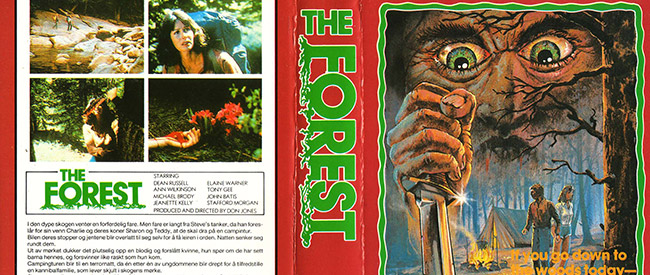
SATURDAY, AUGUST 9: THE FOREST
FRIDAY, AUGUST 15: DESPERATE TARGET
SATURDAY, AUGUST 16:
LITTLE MARINES
FRIDAY, AUGUST 22 & SATURDAY, AUGUST 23: DON’T GO IN THE WEEKEND – CANNIBAL CAMPOUT / WOODCHIPPER MASSACRE
FRIDAY, AUGUST 29:
SCIENCE TEAM


spectacle-roulette.jpg.scaled1000

SPECTACLE ROULETTE
Dir. ???, 19??/20??.
????. ??? min.
In any number of languages.

FRIDAY, AUGUST 1 – MIDNIGHT

Once again it’s time to spin the chamber! What are we going to show?

Cooking shows hosted by puppets from Iceland? Italian dancefighting epics? Hologramsploitation? Hostage situation bloopers? Dog Wedding Massacre? Open heart surgery? Prison slime fights?

Well, that’s up to you.

The first 6 people to show up with a movie will be given the chance to lobby by showing 5 minutes of that film. After all 6 are shown, everyone votes and that’s what we watch!

If you want to participate, please do the following:

1. Show up at least 15 minutes BEFORE midnight with your proposed film. (Either a DVD or digital copy!)
2. Be prepared to introduce your 5 minute clip and lobby hard for your candidate.
3. COME CORRECT. Bring the craziest thing you can find, no half-steps!
4. Tell your friends!


AAV_banner

ATOM AGE VAMPIRE
(aka Seddok, l’erede di Satana)
Dir. Anton Giulio Majano, 1960
Italy, 87 min.
Dubbed in English

SATURDAY, AUGUST 2 – MIDNIGHT

From the annals of public domain comes a tale of shocking science gone awry, a damsel in distress, and ***SPOILER ALERT*** absolutely no vampires.

Yes, 1960’s ATOM AGE VAMPIRE – originally released in Italy as SEDDOK, L’EDREDE DI SATANA – contains no vampires whatsoever.

Instead – a beautiful singer is horribly disfigured in a car accident and opts for a very unusual treatment. Under the care of the crazed Dr. Levin, she agrees to be injected with an experimental serum designed to restore her beauty. However, during the course of the treatments, Dr. Levin falls madly in love with her and as the serum gradually fails and her beauty deteriorates in front of him – he vows to go to any length to get it back, no matter how dastardly.

Spectacle will be screening this beast from the LOONIC VIDEO VHS, the way God intended.


tromahorrorboobs_banner

TROMA HORROR BOOBS
dir. John Brennan
USA, 80 mins

Spectacle’s favorite perverts are back at it again! This time Horror Boobs have teamed up with America’s oldest independent movie studio, Troma! A union defined by an appreciation for exposed flesh on film. Their mission: to bring you the breast nude scenes from the depths the Troma catalog!

Honestly with titles like THE TOXIC AVENGER, TERROR FIRMER and SGT. KABUKI MAN NYPD, it wasn’t very hard for the HB Crew to stuff this video mix to the max! We’re talking about the bare bosoms of Michelle Bauer, Julie Strain, Debbie Rochon, Carmen Electra’s Body Double and many, many more! With guest appearances by Kevin Costner, Trey Parker, Ted Raimi, Ron Jeremy, and Lloyd Kaufman.

Come experience horror & boobs of all sizes on the big screen. Seriously what more could you ask for? Penises. Well you never know, Lloyd Kaufman is involved, and you know how he likes his penises.


ForestThe

THE FOREST
Dir. Don Jones, 1982
USA. 85 min.

SATURDAY, AUGUST 9 – MIDNIGHT


Desperate_Target_Banner

DESPERATE TARGET
Dir. George Vieira, 1980
USA, 90 min.

FRIDAY, AUGUST 16 – MIDNIGHT

Starring Christopher Mitchum

“A Russian scientist who discovers the formula for a new synthetic fuel becomes the ‘Desperate Target’ of a group of desperate men.”


Little Marines Banner

LITTLE MARINES
Dir. A.J. Hixon, 1991
USA, 87 min.

SATURDAY, AUGUST 16 – MIDNIGHT

Awkwardly shot like a pervert peaking on these kids in the woods, A.J. Hixon’s LITTLE MARINES is the story of three turds that go camping. It’s not really an adventure film since it is mostly just a series of mishaps and fuck-ups and offers no resolutions to these kids problems. Most famous for its really long shaving scene featured at the Found Footage Film Festival, LITTLE MARINES has many more precious moments including bizarre flashbacks to their friend who died of cancer, a cool dude that tries to give them a handful of joints, a not so cool dude that is probably a child molester, a bully that has a gun, and a moment when the fatty admits that his father never said he loved him and the fatty’s friends say nothing. Its what you can expect from good ol’ Christian entertainment.

For this screening, the Spectacle will be screening the VHS tape that features the original music they probably couldn’t get the rights to when it came out on DVD!


dontgoinweekend_banner

Spectacle & Alternative Cinema present:
DON’T GO IN THE WEEKEND!

CANNIBAL CAMPOUT – FRIDAY, AUGUST 22 – MIDNIGHT
WOODCHIPPER MASSACRE – SATURDAY, AUGUST 23 – MIDNIGHT

GHASTLY SHOT ON VIDEO GORE (AND A LITTLE BIT OF SINGING) DEEP IN THE WOODS! NO ONE IS SAFE! DON’T SAY WE DIDN’T WARN YOU!!!!

Alternative Cinema/Camp Motion Pictures website: alternativecinema.com

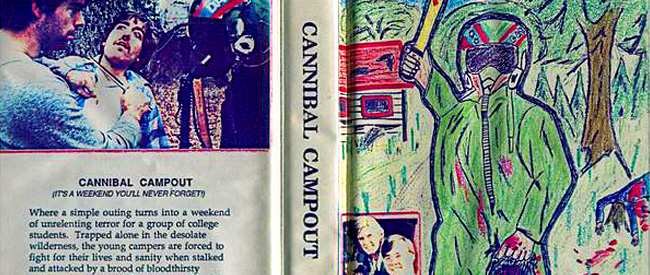
cannibal_campout_banner

CANNIBAL CAMPOUT
dir. Tom Fisher/Jon McBride, 1988
89 mins, USA
In English

FRIDAY, AUGUST 22 – MIDNIGHT

CANNIBAL CAMPOUT (1988) is the tender and terrifying tale of a band of man-eating maniacs. Desperate to survive, the deranged orphans honor a deathbed promise to dearly departed mother never to eat junk food again. Instead, they work up frenzied appetites that will only be satisfied by the taste of young flesh. When Amy and her college friends arrive for a fun-filled weekend of camping in the desolate wilderness, they quickly learn the horrors of being on the wrong end of the food chain. Only brutal murder, torture and mutilation await as one by one they are stalked and terrorized by this brood of bloodthirsty mountain dwellers who will stop at nothing to appease their hunger for sliced, diced and barbecued camper.

“I love this movie…perhaps it’s the completely tasteless ending that was so sickening that I couldn’t help but enjoy it enormously”. – DeadLantern.com

“…the grossest scenes this side of H.G. Lewis… will probably repulse even the staunchest vidiot.” – Fangoria Magazine

woodchipper_massacre_banner

WOODCHIPPER MASSACRE
dir. Jon McBride, 1989
90 mins, USA
In English.

SATURDAY, AUGUST 23 – MIDNIGHT

It’s The Brady Kids meets the Texas Chainsaw Massacre in this heartwarming, stomach-churning tale of a not so typical American family that unexpectedly finds itself caught up in a web of death, deceit and dismemberment. And what better way for this trio of demented siblings to discard of fresh human remains than turn it into garden variety mulch…by way of the biggest woodchipper ever to chop’n’grind a grown man into ground meat. In this family, blood really is thicker than water.


ST_banner

SCIENCE TEAM
Dir. Drew Bolduc, 2014
82 min, USA

FRIDAY, AUGUST 29 – MIDNIGHT

Way back in October of 2011 at the first annual Spectacle Shriek Show, we played host to a film called THE TAINT directed by Drew Bolduc & Dan Nelson. THE TAINT polarized not only the audience at the event but mired many of the Spectacle programmers in weeks of lengthy email chains leaving the film right on the tip of everyone’s brain long after the screening was over. Now, Bolduc has returned to the directors chair for SCIENCE TEAM and we couldn’t be more excited.

SCIENCE TEAM is a completely independent sci-fi feature length motion picture produced and shot in Richmond, Virginia. The film was partially funded by crowd-sourcing through Indiegogo and is a great example of how high-quality films can be created with a micro-budget.

When Chip returns home to visit his beloved mother, he finds himself caught in the middle of an interstellar war between a telepathic space alien and a bureaucratic government organization bent on incinerating all alien life. Chip must fight to survive this ego-shattering drama of epic proportions.

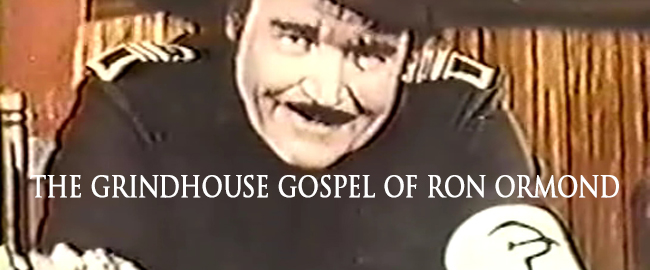
THE GRINDHOUSE GOSPEL OF RON ORMOND

RO_banner

Please note: Due to the scarce distribution of his vision, Ron Ormond’s work is here presented just as the Good Lord intended—via DVD-R rips of beat-up VHS transfers! They look gorgeous, though (see trailer).
By the end of the 1960’s, Ron Ormond, a Nashville-based filmmaker with several moderately successful exploitation pictures to his name (MESA OF LOST WOMEN, GIRL FROM TOBACCO ROW, THE MONSTER AND THE STRIPPER, etc), had undergone a spiritual transformation. After narrowly surviving two separate aviation incidents, Ormond was gripped with an evangelical fervor. From then on, he felt compelled to use filmmaking as a means of spreading Christianity to the unsaved. Ormond’s newfound convictions, however, could not fully overshadow his own B-fim past. The resulting contrast – high religious ideals paired with down and dirty Southern-fried grindhouse – lead to the creation some of the strangest and most tonally dissonant American films of all time.

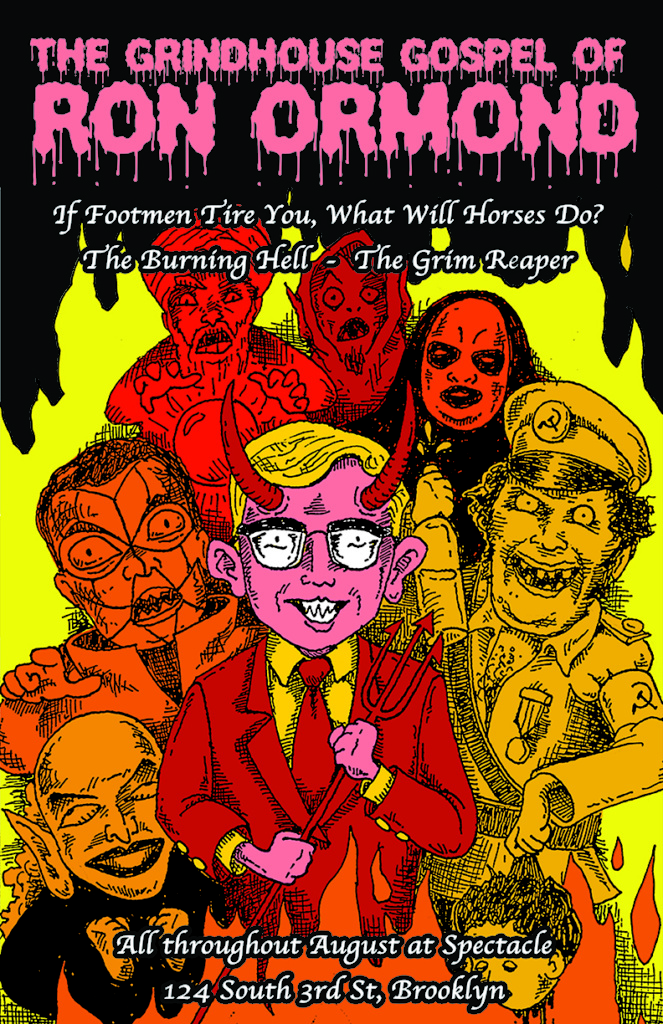
IF FOOTMEN TIRE YOU, WHAT WILL HORSES DO? (1971), THE BURNING HELL (1974), and THE GRIM REAPER (1976) comprise Ron Ormond’s loose trilogy of expectation-shattering, genre-nullifying religious exploitation films. Abject horror, straight-faced documentary, and unintentional comedy are recklessly fused together. Heartfelt sermons coexist alongside depictions of torture, murder, and assault. Children and elderly alike are done in mercilessly by the evils of secularism, Communism, and new-age spirituality. For every character who is saved, another is cast off into the fiery (though somewhat bizarrely rendered) abyss. Blood spills indiscriminately. Indefinable accents abound. Pristinely Z-grade production values. Questionable factoids. Performances so off-kilter that otherworldly intervention is perhaps the only explanation.

Running down a list of all of the jaw-dropping moments contained within these three films would diminish the impact of experiencing them for the first time (not to mention, take an absurdly long time). Suffice it to say that Ron Ormond deserves a place among the distinguished ranks of Herschell Gordon Lewis, Hal P. Warren, and Edward D. Wood Jr. This this is outsider cinema of the highest order.

ormond_poster_web-1


RO_IFTY_banner

IF FOOTMEN TIRE YOU, WHAT WILL HORSES DO?
Dir. Ron Ormond, 1971
USA, 52 min.

FRIDAY, AUGUST 1 – 10:00 PM
MONDAY, AUGUST 11 – 7:30 PM
WEDNESDAY, AUGUST 20 – 10:00 PM

A grim premonition of The United State’s defeat to Communism, as envisioned by real-life Pentecostal preacher Estus Pirkle. Rampant godlessness – drinking, dancing, sex education, television – have infiltrated American life so thoroughly, that it’s only a matter of time before uniformed Communist troops ride in on horseback and trample us down. Once here, they’ll machine-gun our friends and neighbors openly, rape our wives in our own homes, replace Jesus Christ with Fidel Castro in our schools, and leave the slit throats of our children to bleed atop our altars.

RO_BH_banner

THE BURNING HELL
Dir. Ron Ormond, 1974
USA, 58 min.

SUNDAY, AUGUST 3 – 7:30 PM
MONDAY, AUGUST 11 – 10:00 PM
SATURDAY, AUGUST 16 – 7:30 PM
SUNDAY, AUGUST 24 – 5:00 PM

Ormond’s second collaboration with Estus Pirkle features two easy riders learn a hard lesson about the afterlife, when one dies suddenly in a motorcycle accident. Because of his free-spirited ways, including a liberal slant on traditional Christianity, he is sent promptly to Hell, where he is scorched, taunted, and tortured for an eternity. Can Reverend Pirkle save the soul of the other biker (played by Ron Ormond’s son Tim), before he faces the same endless suffering as his comrade has?


RO_GR_banner (1)

THE GRIM REAPER
Dir. Ron Ormond, 1976
USA, 60 min.

MONDAY, AUGUST 4 – 7:30 PM
FRIDAY, AUGUST 15 – 10:00 PM
TUESDAY, AUGUST 26 – 7:30 PM

Verne Pierce is enraged when a pastor refuses to preach his son Frankie Pierce’s funeral, on the grounds that Frankie is probably in Hell. In hopes of making contact with his son to find out, Verne decides to recruit the services of Dr. Kumran, a new-age mystic with the power to communicate with the dead. Worried about his father’s newfound interest in the occult, Verne’s other son Tim (Ormond’s son Tim again) worries about the fate of his soul, and frets that Verne will end up in the same fiery abyss as Frankie. Featuring a cameo by Jerry Falwell!

THE REVENGE OF THE APACHES IS AS THE COURSE OF THE SUN ACROSS THE SKY: THREE EAST GERMAN WESTERNS

The Revenge of the Apaches banner

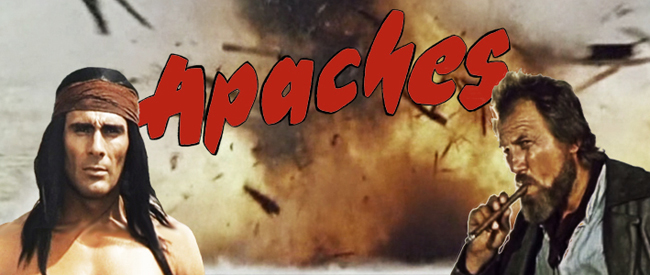
Between 1946 and 1990, the only production company in the German Democratic Republic was the astoundingly prolific DEFA (Deutsche-Film Aktiengesellschaft). Based in Potsdam at Filmstudio Babelsberg, where the legendary production company UFA had made films throughout the Weimar and Nazi periods, DEFA made it its mission to reclaim the studio from its fascist past. In addition to numerous biopics of illustrious figures in the history of German class struggle, from Martin Luther to Ernst Thälmann, the studio also produced a series of Westerns, known locally as Indianerfilme due to their principle of portraying Native Americans as the heroes in a centuries long struggle against Euroamerican colonial rule. There were twelve such films, all produced between 1965 and 1983, and shot in Yugoslavia, Bulgaria, Czechoslovakia, Romania, the USSR, and Cuba. Most of them were produced by the Arbeitsgruppe Roter Kreis, a collective that included directors Josef Mach, Richard Groschopp, and Gottfried Kolditz, who are responsible for the three titles in this series: THE SONS OF GREAT BEAR (1965), CHINGACHGOOK: THE GREAT SNAKE (1967) and APACHES (1973).

The history of portrayals of Native Americans in cinema does not give much cause for pride. James Fenimore Cooper established the canon of Native American stereotypes in his 1823-1841 series of frontier novels, and Hollywood adopted them wholesale for the classic “taming of the frontier” storylines of its Westerns. From the 1920 adaptation of The Last of the Mohicans onward, through 1956’s THE SEARCHERS all the way to the 2013 remake of THE LONE RANGER, starring Johnny Depp as Tonto—complete with mystical inclinations, reduced grammar, and an impenetrably impassive demeanor—the image of the mysterious and vicious yet sage and holistic Indian has thrived in Hollywood. DEFA’s Indianerfilme are certainly not free of stereotypes (especially in the case of the white settlers, who comprise a largely undifferentiated mass of sweaty, sunburned, whisky-guzzling racists), but their portrayal of various American Indian tribes are well-researched and sympathetic. Whereas American films tend to liberally mix various aspects of the dress, dwellings, and rituals of widely differing tribal cultures into completely invented tribal identities, the East German Westerns each focused on a different tribe—the Delaware, the Dakota, and the Apache in the case of the three films in this series.

American Indian scholar and activist Ward Churchill has pointed out that one of the ways in which Western narratives achieve their reduction and flattening of the history and contemporary reality of Native Americans has been by restricting the period and geographical area they cover to the Great Plains between roughly 1825 and 1880. DEFA’s Indianerfilme sometimes break away from this mold, but most often fit into its chronological bracket. THE SONS OF GREAT BEAR takes place in 1876 and APACHES in 1837, but CHINGACHGOOK: THE GREAT SNAKE takes place significantly earlier, in 1740. The only film out of the three to portray Plains Indians is THE SONS OF GREAT BEAR, while the other two take place in New Mexico and the Northeast. Undermining the East Germans’ achievement somewhat is the fact that these films still fit well into the established mold of portraying Native American life only in relation to the Euroamerican presence, never granting them a pre-colonial existence.

In much the same way that the Revisionist Westerns of Sam Peckinpah, Robert Altman, and Arthur Penn were Hollywood’s autocritique of its own conventions, the Indianerfilme were a response both to Hollywood and to West Germany’s brand of the Western. Hugely popular in the 60s, these films were based on Karl May’s novels, which themselves constituted a cultural legacy shared by both the East and the West. Gerd Gemünden has pointed out that the Indianerfilme themselves adopt the “noble savage” stereotype relied on by May, and that their critique of primitive accumulation stems from May’s romantic anticapitalism. This shared legacy is one of the things that points to a dialogue between East and West German cinema—one that is too often dismissed based on the perceived isolation and ideological blindness of East German culture. Eastern and Western productions often used the same Yugoslavian locations and extras, and East German audiences could see West German Westerns by traveling to Prague. The Indianerfilme have even been described as the East German equivalent of the New German Cinema, insofar as they were a reappropriation of a popular prewar form that had until then been used for reactionary or conservative purposes. Much in the same way, then, that Fassbinder adopted the melodrama to remove provocative themes from the exclusive purview of a difficult, rarefied, and elitist art cinema, so the Indianerfilme demonstrated that an effective critique of the logic of capital can be mounted through a form that is engaging, heroic, and naïve. A dramaturg at DEFA, Günter Karl, said that even though the Indianerfilme had to set themselves apart from capitalist films of the same genre, they would have to “use at least part of the elements that make this genre so effective, elements which are not devoid of a certain attraction and—as far as the Indians are concerned—a certain romanticism.”

With this series, Spectacle hopes to contribute to an understanding of the Indianerfilm as a form of radical cinema that—despite having been financed by a massive bureaucratic state—articulates a critique of industrialization and the myth of “progress” in general, whether in their capitalist or socialist form. By programming further series of East German films with the help of the DEFA Film Library at UMass Amherst, Spectacle will continue to battle against Western triumphalist notions of Eastern Bloc culture as more ideologically determined than its liberal capitalist counterpart.

Special thanks to the DEFA Film Library at the University of Massachusetts Amherst

defa logo


The Sons of Great Bear banner

THE SONS OF GREAT BEAR
a.k.a. Die Söhne der großen Bärin
Dir. Josef Mach, 1966
German Democratic Republic, 92 min.
In German with English Subtitles.

WEDNESDAY, AUGUST 6 – 7:30 PM
TUESDAY, AUGUST 19 – 10:00 PM
SATURDAY, AUGUST 30 – 7:30 PM

Opening on the Great Plains in 1874, THE SONS OF GREAT BEAR is the only of the three films to take place within the temporal-spatial framework of the “traditional” Western, with the U.S. government encroaching on the lands of the Dakota people. After gold is discovered to be in the possession of Mattotaupa, the chief of the Bear Clan, the unscrupulous settler Red Fox (not of Sanford and Son fame) murders him for refusing to reveal its source. His son, Tokei-Ihto (played by the prolific Gojko Mitić), then launches a series of skirmishes against the white settlers, which culminates in a proposal of negotiation from the local authorities. With the guarantee of diplomatic immunity, Tokei-Ihto agrees to meet with them. Though guaranteed their ancestral lands by treaty, the local government proposes to relocate the Bear Clan (of the Dakota tribe) to a barely arable stretch of land within a reservation. After rejecting these new treaty terms, he is imprisoned and his clan is attacked and forcibly relocated. After escaping from custody, with the knowledge of what treaties mean to the white man, Tokei-Ihto then leads what remains of his clan north, to the fertile areas beyond the Missouri.

In a speech, delivered during a 1998 screening of the film in Seattle, Ojibway tribe elder Richard Restoule said, “After everything that has been done to my people, also through bad films, it is good to know that already 30 years ago, people in East Germany began to think seriously how to do things differently.”


Chingachgook banner

CHINGACHGOOK: THE GREAT SNAKE
a.k.a. Chingachgook, die große Schlange
Dir. Richard Groschopp, 1967
German Democratic Republic, 86 min.
In German with English subtitles.

WEDNESDAY, AUGUST 6 – 10:00 PM
SATURDAY, AUGUST 16 – 10:00 PM
MONDAY, AUGUST 25 – 10:00 PM

Based on The Deerslayer, the last installment in the frontier adventure pentalogy that James Fenimore Cooper wrote between 1827 and 1841, CHINGACHGOOK: THE GREAT SNAKE once again showcases the talents of Gojko Mitić, the Serbian phenomenon who conquered the collective heart of East Germany with his chiseled looks, his athletic physique, and his moral rectitude. The son of a Yugoslavian partisan who fought against Hitler’s troops, Mitić had already acted in some West German Karl May adaptations before moving to the East. Cinema professionals moving from the West to the East was rare enough, and with his antifascist lineage, Mitić had the makings of a great popular idol. Like the chieftains he played, Mitić was also a staunch teetotaler. As a dedicated athlete, he didn’t have to be told about the corrupting effects of European alcohol on the Native Americans to publicly renounce it. As Gerd Gemünden puts it, Mitić was “a role model for children, the dream of teenage girls, … and model citizen.”

CHINGACHGOOK takes place in the years leading up to the French and Indian War of 1854-1863, when the Delaware tribe was allied with the English against the French and the Hurons. Chingachgook, “the last of the Mohicans” (Cooper’s Mohicans are a mixture of Mahican and Mohegan influences), has saved the life of the chief of the Delawares, and has been promised his daughter’s hand in marriage. Following a not-unheard-of narrative device, Chingachgook’s betrothed is kidnapped by the Hurons, and he swiftly slings his rifle over his shoulder and sets off in a canoe. Over the course of his adventure, Chingachgook discovers that allegiance with any of the European powers is foolish, since they all view the Indians as an obstacle to territorial control and stand to profit greatly from their extermination. After British troops attack a Huron encampment, Chingachgook makes it his task to convince the Huron leadership that their true, shared enemy is the European invader.

Not only does CHINGACHGOOK: THE GREAT SNAKE give us the satisfaction of seeing a slew of arrogant, bewigged lobsterbacks get the civilization knocked out of them with rifle butts, but it also subverts European domination on a formal level by relegating James Fenimore Cooper’s white protagonist, Leatherstocking, to Chingachgook’s sidekick, reversing the original power relation between them.


Apaches banner (1)

APACHES
a.k.a. Apachen, a.k.a. Apachen: Blutige Rache
Dir. Gottfried Kolditz, 1973
German Democratic Republic, 94 min.
In German with English subtitles.

SATURDAY, AUGUST 2 – 10:00 PM
SUNDAY, AUGUST 10 – 5:00 PM
TUESDAY, AUGUST 19 – 7:30 PM

Gojko Mitić returns as Apache chieftain Ulzana, bent on “bloody revenge” (as suggested by the German DVD title) against a band of white industrialists and their henchmen. Although the events of the film suggest that Mitić’s character is actually based on Mimbreño chief Mangas Coloradas, Ulzana was also a famous chieftain who led raids through New Mexico and Arizona in the 1880s, famously portrayed in Robert Aldrich’s unsympathetic (i.e. “complex”) 1972 Revisionist Western, ULZANA’S RAID.

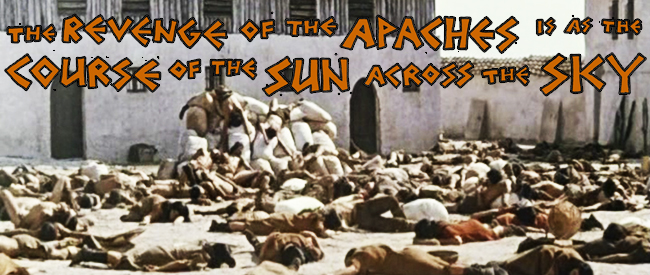
Whereas the action of THE SONS OF GREAT BEAR starts with the discovery of gold, this time, the coveted mineral is copper. Near Santa Rita, New Mexico, the local Mimbreños have enter into a contract with a Mexican mining company that promises them continued use of their hunting grounds in exchange for safe passage for the company’s convoys. This arrangement has already robbed the band of its self-determination (“Remember the tales of life before the White Man? We lived well without relief flour”), and in any case it can’t last. An American mining company wants in on the profits, and the Mexican government has put a price on Apache scalps: $100 for a brave, $50 for a squaw, and $25 for a child. The “White Eyes” arrive in Santa Rita to arrange the total subjugation of the Apaches with the help of the local administration. As the mining company’s engineer explains to Santa Rita’s meek collaborationist sheriff, “There is no doubt that the directors want more copper and fewer Apaches.” The atrocity that sets Ulzana and his band on the warpath takes place during the annual distribution of relief flour, when 400 Mimbreños are collected in the town square. An army cannon is suddenly uncovered and fired into their midst and the survivors are systematically massacred by grinning, whisky-swigging Americans who callously tally up their scalp totals. Ulzana witnesses this bloodshed and, narrowly escaping, swears to his companion, “The revenge of the Apaches is as the course of the sun.”

APACHES is satisfying both as a tale of indigenous vengeance against an imperialist invader and as a well-crafted adventure film. Mitić’s horseback acrobatics and dextrous archery are a delight to behold, and the Mimbreños’ lamentations over their lost way of life are sure to make all but the most hardened hearts yearn for a life before—or after—capitalism.

ROAR

ROAR_BANNER

ROAR
Dir. Noel Marshall, 1981
USA, 102 min.

SATURDAY, AUGUST 9 – 7:30 PM
WEDNESDAY, AUGUST 13 – 7:30 PM
FRIDAY, AUGUST 29 – 7:30 PM

!!!BACK BY POPULAR DEMAND!!!

Made over the course of 10 years and with a reported 70 crew injuries – most notably a tiger mauling that resulted in what was perhaps Melanie Griffith’s first (and certainly not last) plastic surgery — ROAR emerges in hindsight as one of history’s most expensive home movies, a Hollywood albatross never released theatrically in the US.

Tippi Hedrin (THE BIRDS) and husband/producer Noel Marshall were at the time noted animal rights activists with a menagerie of cheetahs and tigers kept in waiting at their Acton, California ranch, “The Shambala Preserve”. They doubled the Golden State location as exotic Africa and cast themselves as an animal researcher and estranged wife, respectively, who reconnect against a backdrop of escaped tigers and evil game hunters, pouring $17 million dollars into a still-unrecovered black hole in the process.

But of course none of that counts in a film where Tippi Hedrin gets flipped upside down by an elephant en route to a would-be heartwarmer of an ending that lands closer to perverse surrealism. The notorious production had trouble corralling its fauna, and it shows all over: everything and everyone is out of control here. Perhaps most important is that however dunderheaded it may be, ROAR is exactly what it purports to be: a naïve safari picture in the tradition of Trader Horn and Hatari! whose raw encounter with the animal species triumphs over narrative, ethical, and – yes, hygienic – concerns.

ROAR

FOUR FILMS BY PAUL MORRISSEY

P.Morrissey.Series.Banner

Spectacle is thrilled to present four films by inimitable director Paul Morrissey: the trilogy consisting of FLESH, TRASH, and HEAT, and the superb WOMEN IN REVOLT.

Morrissey assembled a cast of fascinating New York personalities including Joe Dallesandro, transgender icons Candy Darling, Jackie Curtis, and Holly Woodlawn, Andrea Feldman and Jane Forth and proceeded to shatter bourgeois sensibilities with unrestrained sex, nudity, and drug use, free-floating expressions of gender and sexuality and spot-on satirization of high society, among other things. Yet these films are no mere provocation. Writing, directing, photographing and editing the films himself with small budgets, Morrissey transposed his visions into anarchic, free-wheeling works of genius.

Morrissey’s approach to filmmaking involved shooting piecemeal over time, on weekends or at night, and coming up with new scenarios as he went along. There is improvisation within scenes among the actors, but the fact that Morrissey himself improvised his own writing process, using what he’d just filmed to inform the material he would shoot next, resulted in films which are remarkably alive, full of chaos, humor and “reality”. His actors play themselves (or their public personas), and he shapes the loose, episodic material into works which possess their own internal cohesion and bear his remarkable style. Morrissey succeeds in doing much more than others who merely captured or regurgitated an idealized cultural milieu; he created truly great and fitting art from the downtown underground scene itself.


Flesh.BANNER

FLESH
Dir. Paul Morrissey, 1968
USA, 105 min.

THURSDAY, AUGUST 7 – 10:00 PM
TUESDAY, AUGUST 12 – 7:30 PM
FRIDAY, AUGUST 22 – 7:30 PM
SUNDAY, AUGUST 31 – 5:00 PM

Featuring Joe Dallesandro, Candy Darling, Jackie Curtis, Patti D’Arbanville and Geri Miller.

In FLESH, the first of Paul Morrissey’s trilogy which also includes Trash and Heat, Joe Dallesandro is roused out of bed to go and earn money prostituting himself, so that his wife can pay for her girlfriend’s abortion. He visits clients, teaches a new guy the ropes and feeds his (real life) baby crackers on the floor, completely naked, of course. Coming full circle, he ends up back in his bed trying to get some sleep while his wife and her girlfriend have sex.

The first several minutes of FLESH feature Joe Dallesandro sleeping, and they’re captivating. Dallesandro (Little Joe never once gave it away. Everybody had to pay and pay…) became a sex symbol for the gay and straight alike, with Vincent Canby writing, “His physique is so magnificently shaped that men as well as women become disconnected at the sight of him.”


Trash.BANNER

TRASH
Dir. Paul Morrissey, 1970
USA, 110 min.

THURSDAY, AUGUST 7 – 7:30 PM
SUNDAY, AUGUST 17 – 5:00 PM
FRIDAY, AUGUST 22 – 10:00 PM

Featuring Joe Dallesandro, Holly Woodlawn, Andrea Feldman and Geri Miller.

In TRASH, the second film in Paul Morrissey’s trilogy, Joe Dallesandro is a heroin addict and burglar who can’t get it up thanks to junk. Holly Woodlawn makes her screen debut as Joe’s sexually-frustrated girlfriend/roommate. Woodlawn collects garbage for their ratty basement room in the Lower East Side, tries to get welfare by faking a pregnancy and preys on a teenaged boy from the suburbs who stops in to buy some grass. Meanwhile, Joe breaks into Jane Forth’s upscale apartment and surprises her there, and she can’t wait to see a real live junkie shoot up.

Upon the release of TRASH, George Cukor (a Lower East Side native) petitioned the Academy to formally nominate Holly Woodlawn for best actress for her role in the film. Needless to say, this went nowhere.

Warning: contains scenes of actual IV drug use (and simulated overdose).


heat.BANNER

HEAT
Dir. Paul Morrissey, 1972
USA, 102 min.

FRIDAY, AUGUST 1 – 7:30 PM
SUNDAY, AUGUST 10 – 7:30 PM
SATURDAY, AUGUST 23 – 10:00 PM
THURSDAY, AUGUST 28 – 7:30 PM

Featuring Joe Dallesandro, Sylvia Miles and Andrea Feldman. With music by John Cale.

For the third film in Morrissey’s trilogy, the filmmaker takes his coterie to Los Angeles for a sun-drenched parody of SUNSET BOULEVARD by way of Avenue B. Joe Dallesandro plays a former child star who lives in an LA motel and hustles to get by, pleasuring his repulsive landlady in exchange for a rent discount. Chain-smoking Sylvia Miles is a past-her-prime star with four ex-husbands and a big house in the hills who would love to keep Joe as her pet, except that her crazy daughter (Andrea Feldman) keeps getting in the way.

Feldman’s character is erratic and emotionally volatile, a role for which she was unfortunately well-suited. After having a smaller role in TRASH, she both anticipated and dreaded the fame she expected would follow the release of HEAT. Three weeks before the film’s premiere, she summoned a group of friends and ex-boyfriends to the living room of her parents’ 14th floor apartment and then proceeded to jump out the window in what she called her “final starring role.”


WomeninRevolt.BANNER

WOMEN IN REVOLT
Dir. Paul Morrissey, 1971
USA, 97 min.

MONDAY, AUGUST 4 – 10:00 PM
THURSDAY, AUGUST 14 – 10:00 PM
SATURDAY, AUGUST 23 – 7:30 PM
THURSDAY, AUGUST 28 – 10:00 PM

Featuring Candy Darling, Jackie Curtis, Holly Woodlawn and Jane Forth. With music by John Cale.

What do you mean “Come down off the trapeze and into the sawdust”? That’s circus talk.

Three of the most indelible transgender icons of all time play militant feminists in this incredible film which is so much more than parody. Jackie Curtis and Holly Woodlawn have had it with men and their foul ways, so they join a militant feminist organization called PIG (Politically Involved Girls). Candy Darling is a wealthy socialite from Park Avenue (or Long Island – they can’t keep it straight) who they draw into the group to give it legitimacy, but it turns out that she’s having an incestuous relationship with her brother. Regardless, the three quickly become enemies: “I could just plunge a knife right into her back.” “Oh no, it’s too bloody!” “Well, I could do it and just not look.” Holly Woodlawn becomes a Bowery bum and Jackie Curtis can’t stop hiring male prostitutes, while Candy becomes a famous actress: “I’m sick of incest and lesbianism. I’m ready for Hollywood.”

After WOMEN IN REVOLT previewed on 59th Street, it was protested by a feminist organization, who mistook the film for a caricature of feminism rather than a caricature of the popular discourse around feminism, not to mention a caricature of traditional gender roles. Candy Darling reportedly declared, “Who do these dykes think they are anyway? Well, I just hope they all read Vincent Canby’s review in today’s Times. He said I look like a cross between Kim Novak and Pat Nixon. It’s true – I do have Pat Nixon’s nose.”

Trigger Warning: This film contains depictions of sexual assault.

FINAL FLESH

FF.Banner

FINAL FLESH
Dir. Vernon Chatman
USA, 71 min.

TUESDAY, MARCH 8 – 10:00 PM
WEDNESDAY, MARCH 16 – 10:00 PM
FRIDAY, MARCH 25 – MIDNIGHT
SUNDAY, MARCH 27 – 7:30 PM

PURCHASE TICKETS HERE

Writer/director Vernon Chatman of PFFR (WONDER SHOWZEN, XAVIER: RENEGADE ANGEL) discovered the existence of “websites whereupon one can hire professional porn production companies to do the sick and custom bidding of your panting loins’ darkest yearn.” He chose four different custom-porn-making sites, and submitted segments of a highly detailed script, or as he called it, his “purest truths”, to each of them. The results form the “8-part prepocolyptic triptych in D minor” (or perhaps the 4-part “cinematic exquisite corpse”) that is FINAL FLESH.

This epic and disturbing saga cannot be adequately explained or summarized, but by way of an attempt, it concerns the Pollard family (who shape-shift in their representation by the four different smutmakers).

The family is calmly discussing their impending death by atom bomb when Mrs. Pollard recounts a dream in which she sensually bathes herself in the “Tears of Neglected Children”. Daughter Pam goes to the Psycho Sexual Burn-Ward (the bathroom) and reads the Koran on the toilet: “Yahweh ordered a double-latte. When the barista handed it to him, it was too hot, so Yahweh threw it in the janitor’s face. The end.” Pam then gives birth to an egg (“this is so hot”) and a piece of raw steak which she names Mr. Peterson and breastfeeds. Mrs. Pollard and Pam then hatch a plan to convince their patriarch to return to the womb (“get up in there”), before Mrs. Peterson recounts her life’s regret: “I didn’t want to have a family, I wanted to murder the president. I wanted to use his blood to oil the machinery of capitalism.” The atom bomb drops but the adventure continues as they re-emerge in God’s womb, reincarnated as a different set of amateur porn actors…

If FINAL FLESH is not the greatest film of the 21st century, then I just creamed in my demon. “It’s the same thing every Thanksgiving. Remember?”

THE LEFT-HANDED WOMAN

The Left-Handed Woman banner

THE LEFT-HANDED WOMAN
a.k.a. Die linkshändige Frau
Dir. Peter Handke, 1978
West Germany, 119 min.
In German and French with English subtitles.

SATURDAY, AUGUST 2 – 7:30 PM
WEDNESDAY, AUGUST 13 – 10:00 PM
SUNDAY, AUGUST 24 – 7:30 PM

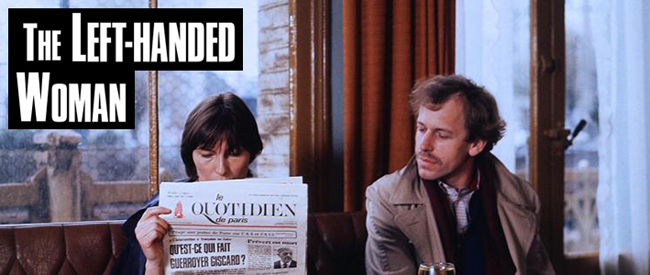
Peter Handke, one of the most celebrated Austrian writers of the post-war generation, was primarily a playwright and a novelist, but he also tried his luck in the cinema. Between 1971 and 1992 he directed four feature films and worked on the screenplays for THE GOALIE’S ANXIETY AT THE PENALTY KICK (1972), THE WRONG MOVE (1975), and WINGS OF DESIRE (1987), all for Wim Wenders to direct. THE LEFT-HANDED WOMAN is Handke’s second self-adaptation, this time directed by himself and produced by Wenders.

Despite boasting an international cast, THE LEFT-HANDED WOMAN is an understated and unadorned portrayal of a single mother’s quotidian life, comparable in its sensibility to some of the work of Margarethe von Trotta, Helke Sander, and Helma Sanders-Brahms. Edith Clever (the star of Eric Rohmer’s Kleist adaptation, The Marquise of O) plays Marianne, a German living in Paris with her young son, Stefan. Her husband Bruno Ganz (WINGS OF DESIRE, THE AMERICAN FRIEND, DOWNFALL) returns from Helsinki, where he has spent several months and learned only one word in Finnish: olut (‘beer’). After a night of luxurious squandering in a hotel restaurant—where Bruno admires the centuries-old feudal tradition that headwaiter Michael Lonsdale (Truffaut’s STOLEN KISSES, Marcel Hanoun’s SPRING) represents—Marianne tells Bruno they should separate. The film is thus framed as a chronicle of this new turn in Marianne’s life: she resumes working as a translator, oscillates between resentment and tenderness toward her son, dreads Bruno’s increasingly aggressive visits, and becomes closer with Franziska, a German expatriate elementary school teacher played by Angela Winkler (Schlöndorff’s THE LOST HONOR OF KATHARINA BLUM).

Like the films of another part-time-cinéaste author, Marguerite Duras, THE LEFT-HANDED WOMAN is characterized by very deliberate pacing and precise, measured dialogue. But unlike Duras, Handke’s film is punctuated with sight gags, like Marianne in high heels walking on stilts in her living room and a cameo by a europunk Gérard Depardieu. There is also a walk-on part for Rüdiger Vogler (Wenders’ ALICE IN THE CITIES, von Trotta’s THE GERMAN SISTERS) as a milquetoast actor. In all its sparseness, THE LEFT-HANDED WOMAN is an exceptionally moving film about escaping from oppressive relationships, reactivating stagnating ones, and becoming open to new ones.