COVENS, CULTS, AND CABALS

Covens, Cults, & Cabals

There’s something diabolically attractive about being in a cult. The acceptance, the belonging, the fun new name they give you. But there’s also something horribly distrustful about them. Their secrecy, their brainwashing, and what they must get up to behind closed doors. The horrors they must be perpetuating upon the good people of this planet. At least that’s what we assume, they wouldn’t let us join the fun. We can only expect (and showcase) the worst…

This Spectober, join us as we carve out a small selection of international films surrounding one our most beloved macabre subjects: the evil ritualistic conspiracy.


THE PYX

THE PYX
(aka THE HOOKER CULT MURDERS)
Dir. Harvey Hart, 1973
Canada. 107 min
In English

TUESDAY, OCTOBER 3 – 7:30 PM
FRIDAY, OCTOBER 20 – 5 PM
THURSDAY, OCTOBER 26 – 7:30 PM

GET YOUR TICKETS!

This October is the 50th Anniversary of Harvey Hart’s diabolical thriller THE PYX. In order to honor the occasion, we’ve decided to resurrect this Spectacle Classic, which originally screened in 2015 and subsequently streamed as part of SPECTOBER IN EXILE following the onset of the Covid-19 Pandemic.

Somewhere between ROSEMARY’S BABY and KLUTE, this Canadian supernatural mystery offers plenty to satisfy police procedural fans as Dr. Sgt. Jim Henderson (played by Christopher Plummer) investigates the murder of Elizabeth Lucy (Karen Black). As the film moves back and forth between Henderson’s investigation and Lucy’s last days we learn of her connection to a cult of devil worshipers.

While other films would try to drive up the tension, there’s a quiet, sullen feel to THE PYX, from the grubby rain-soaked streets of Montreal to Lucy’s manipulative madam to the minimal orchestral score, supplemented by Karen Black’s songs, all of which build a slow sense of inescapable dread. Lucy’s conflagration of sex, heroin and Catholicism drifts through the entire film, a counterpoint to the increasing paranoia and futility of the detectives seeking to understand what remains beyond them as both storylines mirror the downward spiral of the other.


EL MONTE DE LAS BRUJAS

EL MONTE DE LAS BRUJAS
(THE WITCHES MOUNTAIN)
Dir. Raúl Artigot, 1972
Spain. 86 min
In Spanish with English subtitles

TUESDAY, OCTOBER 3 – 10 PM
MONDAY, OCTOBER 16 – 10 PM
SUNDAY, OCTOBER 29 – 5 PM

GET YOUR TICKETS!

After an opening that a written description would only spoil, Carla shows up unannounced at the home of her (ex?)boyfriend, Mario, who wants little to do with her. To avoid Carla, Mario forgoes his vacation time and heads north to the mountains on assignment as a photojournalist. Arriving at a beach, Mario, and his godlike handlebar mustache, luridly comes across a young sunbather named Delia. Smitten, Delia decides to join Mario on his assignment and the two head deep into the mountains. What follows is a sequence of bizarre and unsettling events: strange cloaked men lingering outside the windows of a mountain inn, the theft of Mario’s car by an unknown entity, unexplainable photographic anomalies, and a nighttime funeral procession. What or who is behind these strange occurrences? What fate is in store for Mario? And what does it have to do with Carla?

What the film may lack in plot and coherence, it more than makes up for in its ethereal mood and striking atmosphere. The true star being the mountains of northern Spain, who’s ancient harsh landscape coated in lush vegetation already feels haunted in its appearance alone. Raúl Artigot’s career was more often spent in the role of cinematographer, having worked on such features as CANNIBAL MAN, THE GHOST GALLIEN, THE EROTIC RITES OF FRANKENSTEIN and many more. WITCHES MOUNTAIN would be his directorial debut, and only one of his 3 total features. Knowing this, the film’s tendency for style-over-story makes perfect sense (as well as Mario’s profession). If you enjoyed Spectacle’s summer screenings of LE ORME, and the vibes it exuded, WITCHES MOUNTAIN may be right for you.

Similar to LA PAPESSE, WITCHES MOUNTAIN was banned in its home country (fuck you Franco), and gained an undeserved reputation for being violent and misogynistic due to its censorship. However, it should be noted that the film only appeared in front of investigators/censors because some of the actors in the film felt they were being shortchanged on night shoots and in wanting fair compensation snitched to the review board. In light of the recent and ongoing SAG and writer’s union strikes, we must point out that this could be your film’s fate if you skimp on paying your workers. Languishing in obscurity for decades, and then having a short run at an ex-bodega in Brooklyn for $5 tickets. Chilling.

Special thanks to Mondo Macabre.


LA PAPESSE

LA PAPESSE
(THE POPESS or THE HIGH PRIESTESS; aka A WOMAN POSSESSED)
Dir. Mario Mercier, 1975
France. 94 min
In French with English subtitles

SATURDAY, OCTOBER 7 – MIDNIGHT
THURSDAY, OCTOBER 19 – 10 PM
MONDAY, OCTOBER 30 – 10 PM

GET YOUR TICKETS!

CONTENT WARNING: This film contains violence against animals and depictions of rape.

Laurent and Aline are newlyweds. Laurent is a self-described artist who pines for a life of hedonism amongst the local sex cult, and to learn the teachings of its Popess. Aline? Not so much. They squabble over the direction of their lives. To Laurent’s dismay, the cult isn’t interested in only him, they want his wife as well. In order to overcome Aline’s reluctance, the cult begins a process to break her down including, but not limited to: flogging, drugs, imprisonment, branding, the male gaze, animal sacrifice, and a poison challenge akin to THE PRINCESS BRIDE’s Battle of Wits. A tale of warning for those who seek acceptance from the right crowd to further their art careers.

The cult’s Popess, from whom Laurent seeks absolution, is a dark-haired woman named Géziale, played by—get this—a mysterious woman named Géziale. She has no other on-screen credits and is purported to be an actual occultist leader. Is she real? At what point does the film blur between fiction and documentary? Are we seeing a retelling of the occult dabblings of director Mario Mercier and his initiation into a magical sect lead by the very same Géziale? Or is this just BLAIR WITCH levels of marketing and promotion?

With a firm grasp of the ritual practices of esotericism and occult magic, LA PAPESSE finds itself sitting comfortably within the venn diagram of psychedelica and S&M/fetish/power and domination play. Featuring quite inventive lo-fi camera and editing work that may be the film’s most redeeming and inspiring qualities. Mercier achieves beautiful images and sequences, some of which bring fellow magician Kenneth Anger’s oeuvre to mind.

Despite some of its more extreme contents, LA PAPESSE is often unfairly derided as euro-sleaze trash. This assessment was fueled by the French government’s censorship of the film upon its release. Originally pulled in its first week and re-released with an X rating (or the French equivalent?) back into the pornography theater circuit where it was not well received. Not sleazy enough for the porn theaters, but too sleazy for the general public. This censorship process seemingly ended Mercier’s short filmmaking career, with him choosing to shift his focus back to writing, painting and practicing shamanism.

And is it just me, or does the film’s theme music bear a remarkable resemblance to Wendy Rene’s After Laughter?

SPECTOBER 2023

CAMPFIRE TALES
dir. William Cooke, Paul Talbot, 1991
United States. 86 min.
In English.

FRIDAY, OCTOBER 6 – 5 PM
SUNDAY, OCTOBER 15 – 7:30 PM
WEDNESDAY, OCTOBER 25 – 7:30 PM

GET YOUR TICKETS!

Once Upon a Time…You’re Dead

A grizzled derelict tells a quartet of horror tales to a trio of young campers.

Not to be confused with the 1997 anthology film also titled CAMPFIRE TALES, this original edition stars the infamous Gunnar Hansen as the grizzled derelict in question telling scary stories to the three teens he finds gathered around a campfire.

Each tale is prompted by something one of the teens does – oh you have a knife? How about a hook-handed killer story? Is that weed you’re about to smoke? Get ready for the only body-horror anti-weed story you’ve ever heard – and while the pacing is a little wonky (as it frequently is in anthology movies), Gunnar’s presence and some ingenious practical effects are more than enough to make this worth any horror freaks while.

CRYPTIC PLASM
dir. Brian Paulin, 2015
United States. 80 min.
In English.

TUESDAY, OCTOBER 10 – 10 PM
SATURDAY, OCTOBER 21 – 10 PM
FRIDAY, OCTOBER 27 – MIDNIGHT

GET YOUR TICKETS!

Absorb the plasm…

The story is about David Gates, a cryptozoologist who is hired to film his investigations. One of them being a mysterious town where all of its inhabitants have vanished without a trace. David uncovers far more than he anticipated and puts his own life at risk. Afterwards David begins to feel the bizarre effects from the town within his own biology. Meanwhile he is sent by his investor to film an exorcism. Something that is completely outside of his expertise. Already suffering from unnatural symptoms, David, who is now reluctantly in the presence of pure evil, fears that multiple inhuman forces are tearing him apart from inside.

Cryptic Plasm takes the tired ‘ghost hunter reality show encounters actual ghost’ premise and turns it on its ear. When a cryptozoologist is hired by a sleazy TV producer to film his research into the paranormal, we’re treated to a series of escalating close encounters of the spooky kind, including a swamp monster, a ghost town, and one of the worst exorcisms this programmer has ever seen, all culminating in an otherworldly gore soaked climax that has to be seen to be believed.

Brian Paulin has been cranking out homemade bloody epics from the Massachusetts area since the mid 90s, and his love of the craft is evident in every frame. The effects work is truly fantastic, working with his limitations to create something truly nightmarish and memorable in a sea of shot-on-DV crud.

RICHARD LAYMON’S IN THE DARK
dir. Clifton Holmes, 2000
United States. 106 min.
In English.

FRIDAY, OCTOBER 6 – 10 PM
SUNDAY, OCTOBER 15 – 5 PM
WEDNESDAY, OCTOBER 18 – 10 PM
MONDAY, OCTOBER 23 – 7:30 PM

GET YOUR TICKETS!

Play a game with only one rule … keep playing

*NEW YORK PREMIERE*

We are very excited to screen this never-officially-released adaptation of the never before-or-since adapted Richard Laymon novel, IN THE DARK.

The novel follows librarian Jane, who finds a note one day from the unseen and unheard ‘Master of Games’, daring her to complete increasingly more drastic challenges for money as she gets drawn further into the perverse world of the game.

Laymon’s writing typically leaned toward the extreme and the splatter, but Clifton’s adaptation focuses on the discomfort of what goes unseen, steeping us in Jane’s mundane world as she sinks deeper into the game, seemingly unable to stop herself, and brilliantly tapping into the human impulse to find out what happens if we go just a little further. IN THE DARK feels like an art-house slow burn SAW without the on screen torture.

Shot on mini-DV on a miniscule budget, what Clifton Holmes’ Chicago-set adaptation lacks in budget, it more than compensates for in pure mood and dread, entering the rare pantheon of films that manage to improve upon their source material.

Spectacle is proud to present this early oughts lost gem – you won’t regret catching this on the big screen!

THE LAKE
(บึง/กาฬ)
dir. Lee Thongkham, 2022
105 mins. Thailand.
In Thai with English subtitles.

THURSDAY, OCTOBER 5 – 10 PM
THURSDAY, OCTOBER 12 – 7:30 PM
SATURDAY, OCTOBER 21 – 5 PM
MONDAY, OCTOBER 30 – 7:30 PM followed by remote Q+A with filmmaker Lee Thongkham!
(This event is $10.)

GET YOUR TICKETS!

As part of our annual Halloween programming, Spectacle is thrilled to offer a limited engagement of Lee Thongkham’s giant kaiju thriller THE LAKE (never before shown on the big screen in New York City.)

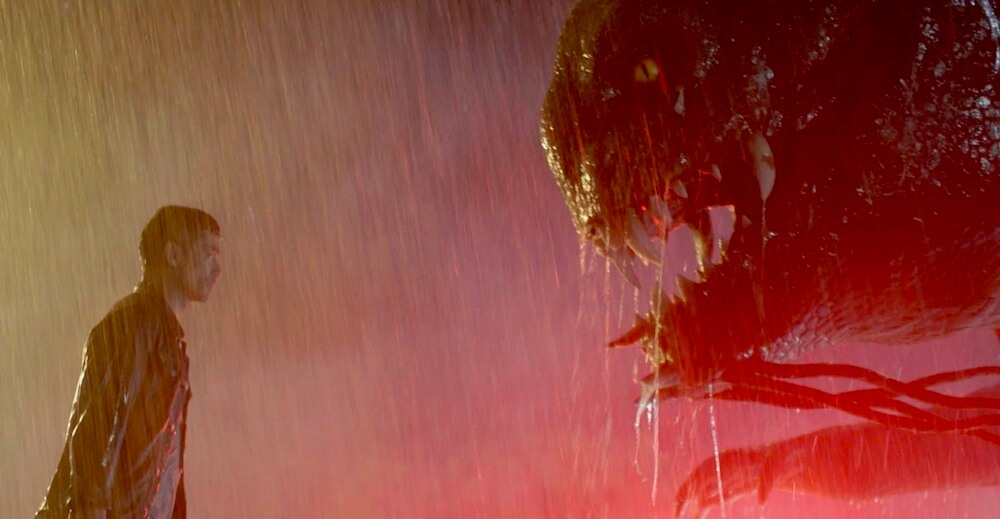
A young girl finds an egg near a lake in Bueng Kan (“black marsh”), near the northernmost part of Thailand facing the Mekong River. Not long after she’s brought the egg back to her home village, an amphibious monster over thirty feet tall emerges, terrorizing the town in search of its young. Designed by SFX maestro Jordu Schell (of NEMESIS, STARSHIP TROOPERS, Tim Burton’s PLANET OF THE APES, CLOVERFIELD and many many others), this monster is a triumph of combined practical and computer-generated effects, hulking and menacing like a shapeshifting mutant dinosaur. Cut off from the rest of the outside world, the residents of Bueng Kan must band together to stop the carnage before it’s too late.

Visceral, moody and drenched in darkness, THE LAKE foregoes the slow-burn exposition of more traditional monster movies. It’s a kaiju lover’s feast of a film, equally indebted to Godzilla and Gamera as to Spielberg’s original JURASSIC PARK. In an interview with PopHorror, director Lee Thongkham emphasized THE LAKE as a loving homage to the creature feature as well as “a story about religion, the human spirit, and science… But most importantly, it’s about finding one another through the chaos that one does not understand.”
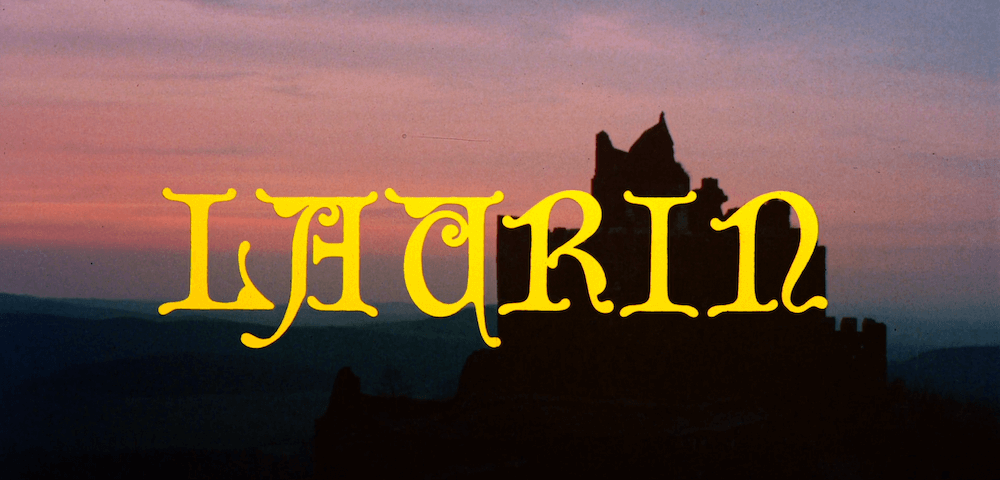

LAURIN
(aka LAURIN: A JOURNEY INTO DEATH)
dir. Robert Sigl, 1989
83 mins. Germany.
In (dubbed) English.

FRIDAY, OCTOBER 13 – 5 PM
MONDAY, OCTOBER 16 – 7:30 PM
SUNDAY, OCTOBER 29 – 7:30 PM followed by remote Q+A with filmmaker Robert Sigl!
(This event is $10.)

GET YOUR REGULAR TICKETS!
GET YOUR Q&A TICKETS!

Robert Sigl’s debut feature LAURIN takes place in a small port town in Germany at the turn of the 20th century, where children have begun to go missing. After her pregnant mother is murdered, nine year old Laurin (Dóra Szinetár) must contend with visions both dreamlike and nightmarish – and laced with possible clues towards the mystery encircling the village.

Made when Sigl was just 25 years old, LAURIN is a gothic fairy tale of ethereal beauty, evenly evoking Fritz Lang’s M., Victor Erice’s SPIRIT OF THE BEEHIVE and Richard Blackburn’s LEMORA: A CHILD’S TALE OF THE SUPERNATURAL. Shot on location in Hungary and heavy on ambience (abetted greatly by the work of cinematographer Nyika Jancsó, son of Miklos), the film barely qualifies as horror; it’s more of a gothic fairy tale, ruminating on innocence lost, suppression of sexuality and the concentric nature of abuse handed down across generations.

THE MIDNIGHT HOUR
dir. Jack Bender. 1985.
United States. 94 mins.
In English.

SUNDAY, OCTOBER 8 – 5 PM
FRIDAY, OCTOBER 20 – MIDNIGHT
TUESDAY, OCTOBER 31 – 7:30 PM

GET YOUR TICKETS!

It’s Halloween night in Pitchford Cove, Massachusetts. When five high school friends accidentally summon an undead army, the teens must rectify their mistake and save the town before the midnight hour.

An early effort by legendary TV producer and director Jack Bender (LOST, UNDER THE DOME, MR MERCEDES), THE MIDNIGHT HOUR is a bewitching comedy horror with incredible production value, by TV standards. Criminally underseen and effortlessly nostalgic, THE MIDNIGHT HOUR is the perfect movie for Halloween.

Although the film can be tonally cacophonous, switching between slapstick comedy and dramatic violence on a dime, Bender masterfully toes the line between absurdity and horror. THE MIDNIGHT HOUR will provide a healthy dose of Halloween nostalgia this October, featuring zombie dance numbers, vampire transformations to The Smiths, and even a GREASE (1978) callback.

PIN
dir. Sandor Stern. 1988.
Canada. 104 mins.
In English.

MONDAY, OCTOBER 2 – 10 PM
SUNDAY, OCTOBER 22 – 5 PM – FEATURING REMOTE Q&A WITH DIRECTOR SANDOR STERN AND AUTHOR ANDREW NEIDERMAN – THIS EVENT IS $10
FRIDAY, OCTOBER 27 – 7:30 PM

GET YOUR Q&A TICKETS!
GET YOUR TICKETS!

Leon, a troubled child, befriends his father’s lifesized medical dummy, Pin. Leon’s reality crumbles following the death of his parents, and his obsession with Pin takes a dangerous turn.

The best way to describe PIN is by its full title, ‘PIN: A PLASTIC NIGHTMARE.’ Although the film might seem like a classic killer doll movie, à la PUPPET MASTER (1989), the true terror of PIN comes from within. Pin explores themes of childhood trauma, authoritarian parenting and object attachment in this emotionally driven psychological horror.

Based on the novel by the author of THE DEVIL’S ADVOCATE, Andrew Neiderman, and directed by Sandor Stern, screenwriter of THE AMITYVILLE HORROR (1979). Together, they have reimagined the killer doll subgenre without the comfort of childhood nostalgia. The result is a harrowing film starring David Hewlett (STARGATE: ATLANTIS, CUBE) and Terry O’Quinn (LOST, THE STEPFATHER).

For one night only, join us on October 22nd for a remote Q&A with director Sandor Stern and author Andrew Neiderman!

PLAYROOM
dir. Manny Coto, 1990
United Kingdom. 90 min.
In English.

WEDNESDAY, OCTOBER 11 – 7:30 PM
TUESDAY, OCTOBER 17 – 10 PM
SUNDAY, OCTOBER 22 – 7:30 PM

GET YOUR TICKETS!

“Where the terror is child’s play”

An archaeologist is haunted by a nightmare in which his family is murdered.

The debut feature of director Manny Coto (DR. GIGGLES, STAR KID), PLAYROOM follows the increasingly unhinged Chris (played by Christopher McDonald aka Shooter McGavin in a rare leading-man role) as he revisits the archaeology site in search of a mythological place his father was looking for before he was killed.

Is it his imagination, or is something supernatural at work?! Will unaddressed childhood trauma come to a happy conclusion?! Only one way to find out!

Also features niche 90’s child actor Aron Eisenberg (PUPPETMASTER III, HOUSE III, AMITYVILLE: THE EVIL ESCAPES) and the dinosaur pajamas from DON’T PANIC. Don’t miss this!

Sidenote: googling this title pulls up some late-movie moments that are best experienced ice cold, so avoid that if you can!
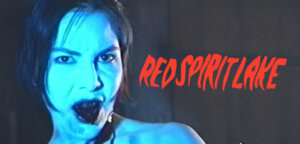

RED SPIRIT LAKE
dir. Charles Pinion, 1993
United States. 69 min.
In English.

FRIDAY, OCTOBER 6 – MIDNIGHT
WEDNESDAY, OCTOBER 25 – 10 PM
SATURDAY, OCTOBER 28 – MIDNIGHT

GET YOUR TICKETS!

After a vengeful sorceress is tortured and killed by a corrupt industrialist looking to harness the spectral powers of Red Spirit Lake, her niece arrives in snow covered Angel Falls to settle her aunt’s estate.

The sleazy crown jewel of this month’s Spectober is the SOV trashterpiece RED SPIRIT LAKE. Directed by Charles Pinion (Twisted Issues, We Await) and featuring a who’s-who grab bag of late 80s/early 90s underground NYC talent (including Spectacle favorite Tessa Hughes-Freeland in a blink and you’ll miss it cameo) Red Spirit Lake is the rare SOV flick that manages to transcend its scuzzy trappings into something more than the sum of its parts.

Not for the faint of heart (almost every content warning applies – no animals harmed though!) and borderline actively repellent, it’s a fever dream of a movie that lands somewhere between a snuff film and Picnic at Hanging Rock, featuring aliens, angels, witches, nymphs, 80s workouts, nude galavanting in the snow, Victorian flashbacks and a killer soundtrack featuring Cop Shoot Cop, Lydia Lunch, Clint Ruin and The Lunachicks.

Special thanks to Saturn’s Core Video
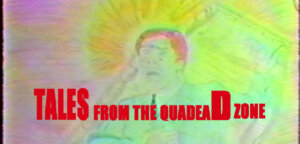

TALES FROM THE QUADEAD ZONE
dir. Chester Novell Turner, 1987
United States. 62 min.
In English.

WEDNESDAY, OCTOBER 11 – 10 PM
SATURDAY, OCTOBER 21 – MIDNIGHT
SATURDAY, OCTOBER 28 – 11 PM

GET YOUR TICKETS!

3 Tales of Evil Beyond Belief

A woman reads two spooky tales to the ghost of her dead son, Bobby: the first, about a poor family who takes drastic measures to allot more food to their members; the second, about a pair of adversarial brothers and what happens when one of them dies and the other attempts to humiliate his corpse.

The follow up to Black Devil Doll from Hell, Chester Novell Turner’s Tales from the Quadead Zone has achieved a deserved cult status over the years as one of the more unsettling and esoteric horror anthologies ever assembled (some video stores refused to carry the tape because they were so uncomfortable with its lo-fi nightmare aesthetics).

Legends aside, the lean 62 minute run time packs in a breathtaking amount of creativity and ingenuity – including one of the best anthology theme songs this programmer has ever heard. The hand crafted effects and props, occasionally inaudible dialogue, warped tracking, and messy rotoscoping all combine to create a transportive, chaotic stew of SOV derangement that miraculously manages to pack an emotional punch as well.
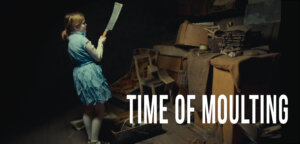

TIME OF MOULTING
dir. Sabrina Mertens, 2020
Germany. 82 min.
In German with English subtitles.

WEDNESDAY, OCTOBER 4 – 7:30 PM
THURSDAY, OCTOBER 19 – 7:30 PM
TUESDAY, OCTOBER 24 – 10 PM

GET YOUR TICKETS!

In 1970s West Germany, young Stephanie (Zelda Espenschied) lives with her emotionally stunted parents, sequestered from life outside their cluttered home. Her father oscillates between ignoring and denigrating her, while her unstable mother’s cloying affection may actually be the most sinister thing happening within their walls. Discouraged from playing with the neighborhood children, Stephanie’s only friend is her own imagination, which absorbs every decrepit family “heirloom” in the house, from the grandfather’s old butcher’s tools to her grandmother’s dentures. Years later, the curious little girl has matured into a cold, frightening young woman (Miriam Schiweck) whose oppressive surroundings cultivated in her a disturbing erotic life. She is an animal growing up in captivity, unable to molt.

Described by director Sabrina Mertens as a “still life of a family in 57 pictures,” TIME OF MOULTING creates a Gothic portrait out of a series of vignettes, private moments from which we can construct a murky idea of what went wrong with Stephanie. Unable to crawl out from under the rubble of her parents’ repression, she also cannot escape the shadow of violence wrought by the country’s previous generation. Dark fantasies and isolation coalesce in one girl, building to an unforgettable conclusion. While the film lets the viewer in on plenty of secrets, the most disturbing parts of this family’s life are perhaps what we do not see.

ОСЕНЬ (FALL)


ОСЕНЬ (FALL)
dir. Vadim Kostrov, 2022
109 mins. Russia.

GET TICKETS
SUNDAY, SEPTEMBER 10, 5PM
TUESDAY, SEPTEMBER 19, 10PM

SPECIAL EVENT TICKETS
TUESDAY, SEPTEMBER 5, 7:30PM – w Q+A!
SATURDAY, SEPTEMBER 23, 5PM – w Q+A!

Therefore remove sorrow from your heart,
And put away evil from your flesh,
For childhood and youth are vanity.

Spectacle and UnionDocs partner again to observe the start of autumn with the second entry of KOSTROV’S SEASONS, a recurring series spotlighting Russian experimental documentarian Vadim Kostrov’s growing corpus of diaristic and meditative work. In the interim between last June’s introductory mini-retrospective and Kostrov’s stunning array of winter films later on, we are drawing special attention to FALL, one of the three completed works in the filmmaker’s seasons tetralogy and his last feature before leaving his home in protest of the invasion of Ukraine.

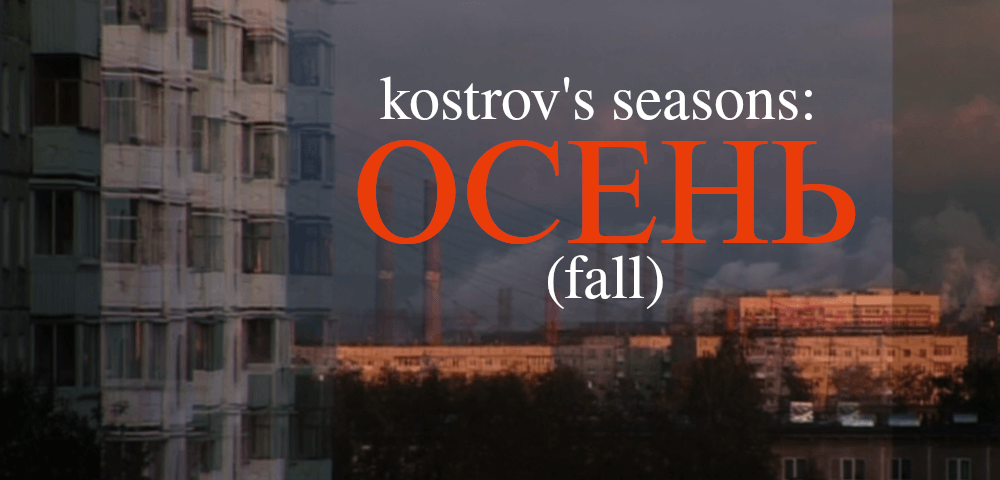
Straying from the beaming, youthful, and dialogue-driven conceits of SUMMER (2021), Kostrov’s FALL marks an ambivalent crossfade in tempo and tone for a return to Nizhny Tagil through the eyes of 10-year-old flaneur Vadik (reprised by Vova Karetin) as he wanders amongst the colossal scale of billowing smoke stacks, housing blocks, and humming sunsets. The patient exploration of Kostrov’s autobiographical stand-in eventually highlights the city’s historical contribution to Russia’s war machine. This realization and the absence of the previous entry’s supporting cast of characters suffuse FALL with a far more lonely and worrisome quality, paradoxically rendered in calm, sumptuous fashion by Kostrov’s ever-developing talent for composing enrapturing miniDV landscapes that are as celestial as they are lo-fi.

Presented in partnership with UnionDocs Center for Documentary Art. Special Thanks to Vadim Kostrov, Jenny Miller, and Mal de Mer Films.


SCOTT BARTLETT: THE MEANING OF THE UNIVERSE

This September, Spectacle is proud to present a retrospective of the luminary American experimental filmmaker SCOTT BARTLETT in collaboration with The Film-Makers’ Cooperative. Thank you to the generosity of the Co-Op and joint programmer Robert Schneider, the films in this program will be projected on 16mm.

Scott Barlett (1943 – 1990) was a traveling man with a fancy for strobing lights and fast motion. His films are pure psychedelia. Patching together philosophical ramblings on mystic traditions, hit songs from the ‘60s and ‘70s, and wobbly light patterns, Bartlett creates pithy works of genius. To this day, he remains best known for 1968’s OFFON, a gleaming vision of the cosmos that tested the limits of early video technology and set Bartlett down a path of stalwart experimentation within the cinematic tradition.

After OFFON’s success, Bartlett relocated to San Francisco where he became a light-show pioneer, creating flicker films for concerts and art shows all over the city. His films caught the attention of Stanley Kubrick (who took inspiration from OFFON for 2001: A SPACE ODYSSEY), Ken Russell, and Movie Brats George Lucas and Francis Coppola who tried but failed to get his science fiction epic INTERFACE off the ground. Nonetheless, his keen graphic sensibilities are sprinkled throughout many Hollywood films, including ALTERED STATES and MORE AMERICAN GRAFFITI. But his true talent is best displayed throughout his unbridled directorial ventures which combine his fascinations with psychedelics, mysticism, and outer space into visual portals that open gateways into unseen dimensions of cinematic splendor.

PROGRAM ONE: To the Moon and Beyond

MAKING OFFON. 1981. 10 mins.
METANOMEN. 1966. 8 mins.
SERPENT. 1971. 14 mins.
MOON 1969. 1969. 10 mins.
OFFON. 1968. 9 mins.

Total runtime approx 50 mins.

SATURDAY, SEPTEMBER 16 – 3:00 PM, this event is $10
ADVANCE TICKETS

Scott Bartlett was haunted by outer space throughout his life. In a lecture at the Carnegie Museum of Art, he said he wanted to express “the meaning of the universe” by depicting visions of the cosmos that surpassed the limits of human consciousness. His crowning achievement, OFFON, might represent the zenith of these ambitions, but Bartlett’s intense curiosity in space is shared across many of his short films.

Made in 1981, while Bartlett was teaching in Los Angeles, MAKING OFFON dives back into his origins as a filmmaker and sets the scene for his artistic mission. His first film, METANOMEN, still sees him stuck on Earth. Collaging images of skyscrapers into a rollicking city tour, the film foretells Bartlett’s consuming interest with worlds beyond our own. SERPENT — a magic mushroom-inspired retelling of the Eden myth — finds Bartlett playing with recycled imagery in an attempt to link various historical narratives into a short parable about humanity’s destructive tendencies. MOON 1969 and OFFON take Bartlett elsewhere and are best described by film critic Gene Youngblood as “the cosmos in continual transformation” and explorations of the “fundamental realities below the surface of normal perception” respectively.

PROGRAM TWO: It was the ‘70s

1970. 1972. 30 min.
A TRIP TO THE MOON. 1968. 32 min.

Total runtime approx. 62 mins.

SATURDAY, SEPTEMBER 23 – 3:00 PM, this event is $10
ADVANCE TICKETS

Bartlett’s longest works are also the most emblematic of his era. The tragicomic 1970 is a city symphony unlike any other. Moving between personal documentary and city portrait, 1970 displays Bartlett’s incredible ability to shift between the world’s micro and macro elements in his artistic practice. In A TRIP TO THE MOON, he films a conversation between seven artists discussing astrology and I Ching. Bartlett’s effortless control of the edit complements the artists’ metaphysical conversation, as he superimposes talking heads and cuts away to abstract images that illustrate their heady ideas.

PROGRAM THREE: Cultural Studies

LOVEMAKING. 1970. 13 min. (Not on 16mm; New Restoration from BAMPFA)
GREENFIELD. 1977. 13 min.
HEAVY METAL. 1979. 13 min.
MEDINA. 1976. 15 min.
SOUND OF ONE. 1976. 11 min.

Total runtime approx 65 mins.

SATURDAY, SEPTEMBER 30 – 3:00 PM, this event is $10
ADVANCE TICKETS

Always absorbed by his surroundings, Bartlett made exceptional ethnographic works and personal portraits throughout his life. In LOVEMAKING, he tackled his eponymous subject matter head on, creating an anti-sexploitation film that luxuriates in its romantic imaging of sex. GREENFIELD sees him venture to a commune in Northern California where he becomes absorbed in the free rhythms of its residents’ work and leisure. For HEAVY METAL, Bartlett used elaborate optical techniques to explore early gangster films. MEDINA and SOUND OF ONE both center Bartlett’s interests in non-Western traditions. Here, Bartlett surrenders himself to his environs, letting their patterns and actions guide his camera’s movement.

>Special thanks to Robert Schneider at The Film-Makers’ Co-Op.

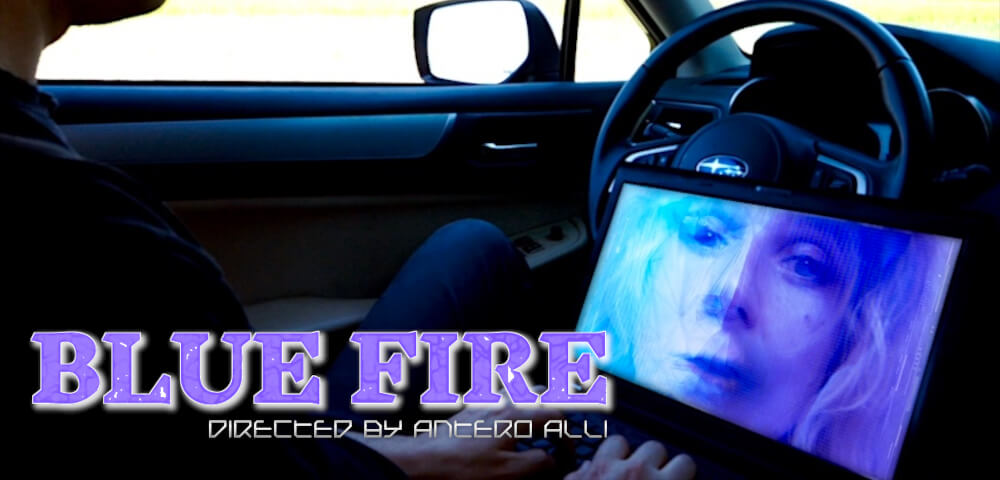
BLUE FIRE


BLUE FIRE
Dir. Antero Alli, 2023
United States. 90 min.
In English.

TUESDAY, SEPTEMBER 26 – 7:30 PM (This event is $10)

GET YOUR TICKETS!

“A CYBER-FI FEVER DREAM”

Flexing an extensive body of work spanning three decades, Finnish-born artist and actor Antero Alli has frequently explored the bleeding edge of technological paranoia. Beginning with his stark predictions for 2023 in 1995’s THE DRIVETIME, expanding into “video poems” and experimental theater, and finally culminating in his return to 2023 with the AI and VR warnings of BLUE FIRE. Throughout his career, Alli has never been afraid of putting his personal mindscape in front of an audience. We invite you to join us for the New York premiere of his latest Cyber-Fi masterpiece, BLUE FIRE followed by a remote Q&A session with the director. Moderated by Philip Ginley.

An elite A.I.coder faces a head-on collision between the algorithms of the VR worlds he’s creating and the archetypal dimensions of the greater Collective Unconscious.


LETTRIST CINEMA

LETTRIST CINEMA

“If the desire of the Nouvelle Vague’s protagonists was to take over the industry and make it more pliable (notably by creating independent economic structures, in the manner of Eric Rohmer and François Truffaut), then the Lettrists’ strategy, by contrast, entailed resisting the least compromise with the film industry, just as with the art market” —Nicole Brenez, Introduction to Lettrist Cinema

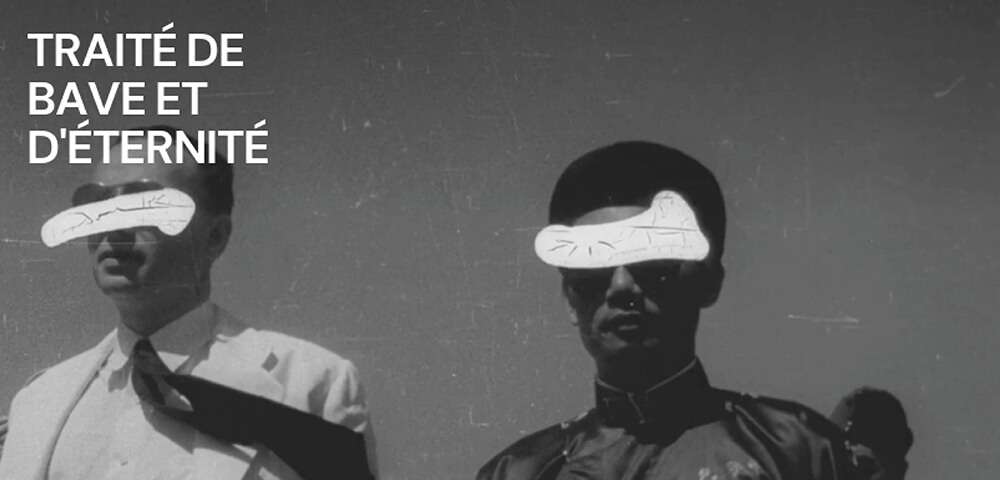
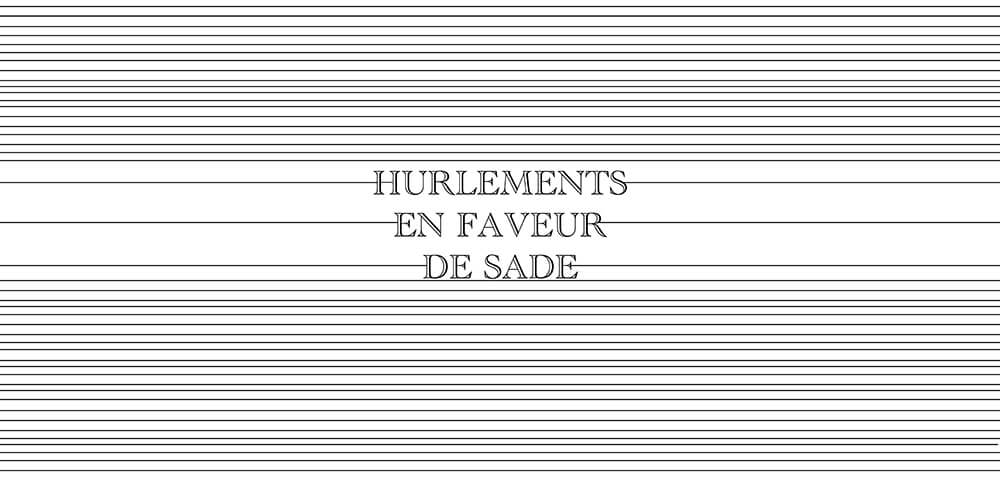
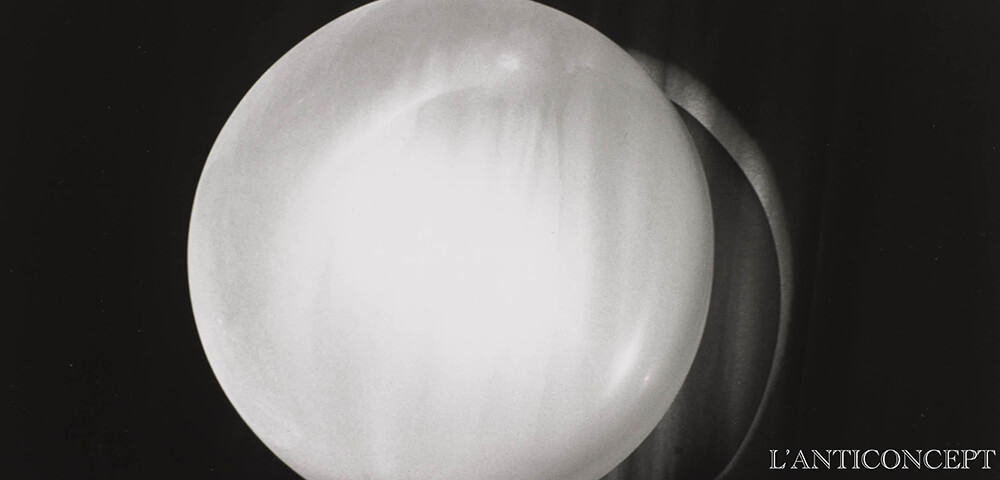
Beginning in 1951, Lettrist filmmakers set out to destroy all of cinema’s existing rules. The art movement which sought out chiseled, infinitesimal, and imagined cinema, was short-lived and remains under-researched barring a few key texts by art historians Nicole Brenez and Kaira M. Cabañas. Among its members were Jean Isidore Isou, whose unfinished 9-hour cut of TRAITÉ DE BAVE ET D’ÉTERNITÉ caused a ruckus at the 1951 Cannes Film Festival. Isou’s scratched images and complimentary discordant soundtrack set the tone for future experiments in Lettrist Cinema: Guy Debord weaponized the black-screen in his feature debut HURLEMENTS EN FAVEUR DE SADE (1952), Gil Wolman created a flickering and vanishing film with L’ANTICONCEPT (1952), and François Dufrêne abandoned images altogether by projecting an imaginary film, TAMBOURS DU JUDGEMENT PREMIER (1952).

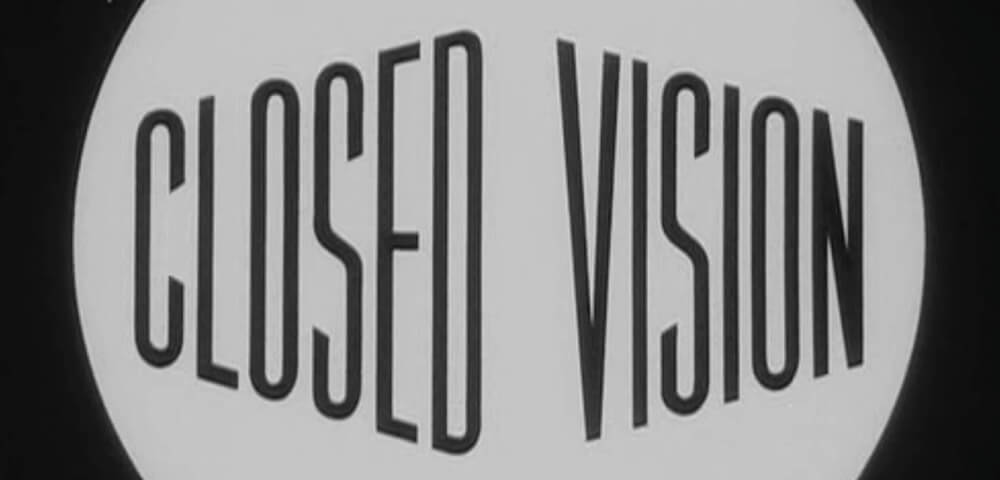
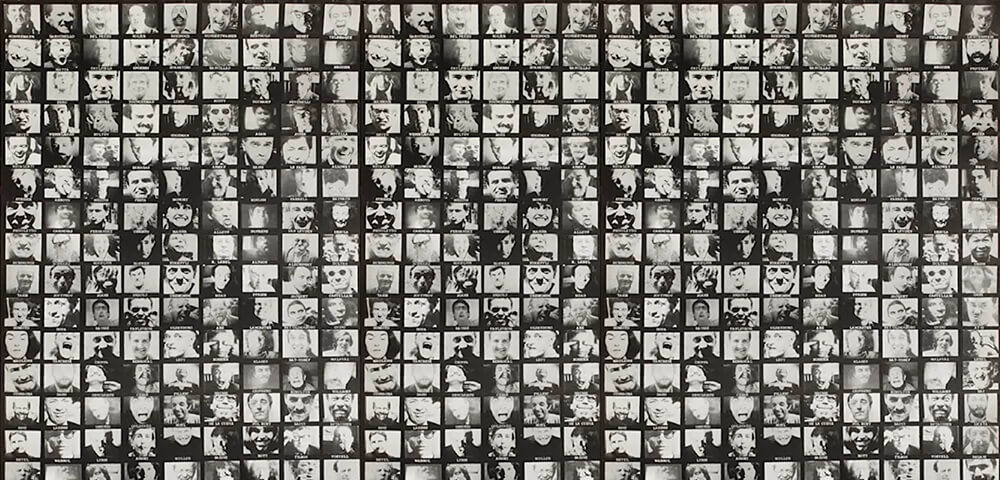
This September, Spectacle Theater is thrilled to present a small selection of Lettrist films as they were originally intended to be screened. As noted above, Isidore Isou’s TRAITÉ DE BAVE ET D’ÉTERNITÉ remains the most well-known film to come out of the Lettrist Movement, as its sustained lashing out against cinema’s conventions in all manner of offensive aesthetic and narrative gestures have made it a lodestar for filmmakers looking to reimagine the seventh art. Released around the same time is Maurice Lemaître’s LE FILM EST DÉJÀ COMMENCÉ?, a self-destructive instructional film that the director cheekily described as “a boring jumble of commonplace ideas.” HURLEMENTS EN FAVEUR DE SADE and L’ANTICONCEPT continue the Lettrist investigation into a counter-cinema, engaging a negative image that bestows creative authority to the audience. In counterpoint, Marc-Gilbert Guillaumin’s (aka Marc’O) CLOSED VISION (1954) brings together an excess of images in a Joycean attempt at creating a stream-of-consciousness film. In GRIMACE (1967), Gudmundur Gudmundsson Ferro (aka Erró) returns to the Lettrist mission to separate cinema from its stars, stitching together amusing portraits of artists including Andy Warhol and Marguerite Duras into a playful visual poem.


TRAITÉ DE BAVE ET D’ÉTERNITÉ

TRAITÉ DE BAVE ET D’ÉTERNITÉ
(VENOM AND ETERNITY)
dir. Isidore Isou, 1951
France. 123 mins.
In French with English subtitles.

SUNDAY, SEPTEMBER 3 – 5 PM
THURSDAY, SEPTEMBER 7 – 7:30 PM
MONDAY, SEPTEMBER 11 – 7:30 PM
FRIDAY, SEPTEMBER 29 – 7:30 PM

ADVANCE TICKETS


“Isou turns pictures upside down, scratches on them arbitrarily and does everything he can think of to spit upon and destroy the film image” —Stan Brakhage

To invoke Lettrism is to call on VENOM AND ETERNITY. Also known as SLIME AND ETERNITY, Isidore Isou’s sole feature is a film full of scratches that chisels its way to the beating heart of cinema. “If we can’t get past the photographic screen and reach something deeper, then cinema just doesn’t interest me,” he said. Looking to break away from the regressive sanctification of representation upheld by theorists like André Bazin, Isou’s film revels in its obscene and destructive character, tearing up the traditions of the medium to dream up a new alternative.

After premiering at Cannes Film Festival in 1951 and causing a scandal among festival attendees, VENOM AND ETERNITY was awarded the “Prix des spectateurs d’avant-garde” by Jean Cocteau. The award placed it in the same category as Maya Deren’s similarly lauded MESHES OF THE AFTERNOON (1943), marking it an essential text in the canon of experimental cinema that would have a lasting influence on filmmakers ranging from Jean-Luc Godard to Stan Brakhage. Isou would later remark that Godard and Debord ripped him off.


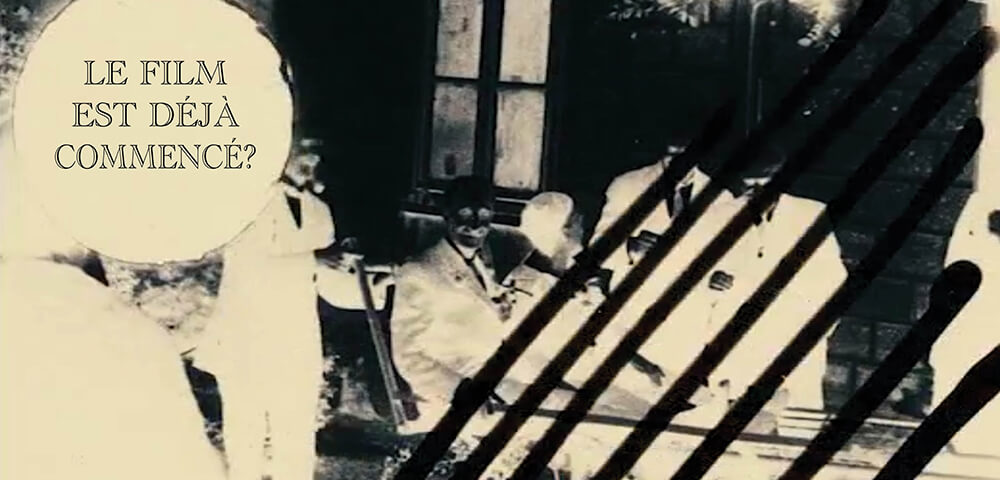
LE FILM EST DÉJÀ COMMENCÉ?

LE FILM EST DÉJÀ COMMENCÉ?
(HAS THE FILM ALREADY STARTED?)
dir. Maurice Lemaître, 1951
France. 62 mins.
In French with English subtitles.

SATURDAY, SEPTEMBER 16 – 7:30 PM, this event is $10

ADVANCE TICKETS

After working on Isou’s VENOM AND ETERNITY as an assistant director, Maurice Lemaître set out to make a film that not only attacked the conventions of filmmaking, but of filmgoing too. LE FILM EST DÉJÀ COMMENCÉ? is a film that spills from the screen, as instructed by its script which expands upon the body of the film to include what should occur in the viewing room as it’s projected. Hellbent on provocation, Lemaître thought up LE FILM EST DÉJÀ COMMENCÉ? as a way to shake up the moviegoing experience. Throughout the film, he directly addresses the audience with questions such as “Why are you here?” while they sit in the dark watching the movie also subject to the insults of “extras” taunting their ability to watch the whole thing through.

The film is made up of a series of kaleidoscopic images. Unlike Debord and Wolman, Lemaître stresses the visual quality of his cinema. LE FILM EST DÉJÀ COMMENCÉ? is colorful, fun, and wholly unruly, reflecting the spirit of a passionate young filmmaker meddling with the rules of his craft.


HURLEMENTS EN FAVEUR DE SADE

HURLEMENTS EN FAVEUR DE SADE
(HOWLINGS IN FAVOR OF DE SADE)
dir. Guy Debord, 1952
France. 64 mins.
In French with English subtitles.

MONDAY, SEPTEMBER 11 – 10 PM
THURSDAY, SEPTEMBER 21 – 10 PM

ADVANCE TICKETS

In his first film, Guy Debord abandons the photographic image. Over the course of HURLEMENTS EN FAVEUR DE SADE, Debord along with fellow Lettrists Isou, Gil Wolman, Serge Berna, and Barbara Rosenthal speak over each other in aphorisms. The screen is white when they talk and black whenever there is silence. The film’s refusal to represent foretells Debord’s future critiques of image-culture, most notably the text from which this theater derives its name: SOCIETY OF THE SPECTACLE (1967). Eventually, Debord and Wolman would break away from the Lettrist Movement to carry out new acts of detournement as Situationsists. As such, their goals were more directly aligned with a Communist agenda. Yet, in their early works resides a conceptual spark that they would build upon throughout their careers as artists. This would become clearer in a Lettrist bulletin from 1956, in which Wolman declared their objective to be the creation of “a unitary urbanism” that synthesizes “arts and technology” in accordance “with new values of life.”


L’ANTICONCEPT

L’ANTICONCEPT
(The Anticoncept)
dir. Gil J. Wolman, 1952
France. 60 minutes
In French. An English Transcript will be provided.

THURSDAY, SEPTEMBER 21 – 7:30 PM, this event is $10

ADVANCE TICKETS

“Wolman is one of the great inventors of negative forms after Hegel” —Nicole Brenez, Introduction to Lettrist Cinema

L’ANTICONCEPT is a sound film that alternates between black and white flickers. The film is projected on a helium-inflated balloon approximately two meters in diameter. A year after the film premiered at the Ciné-Club Avant-Garde 52, Debord declared L’ANTICONCEPT was “more offensive… than the images of Eisenstein, which frightened Europe for so long.” Although the Lettrists shared a proclivity for hyperbole, Debord’s statement accounts for Wolman’s incredible ability to leave behind all of cinema’s precepts and create a frightening alternative to the medium with his film.


CLOSED VISION

CLOSED VISION
dir. Marc’O, 1954
France. 65 mins.
In English.

FRIDAY, SEPTEMBER 01 – 10:00 PM
SUNDAY, SEPTEMBER 03 – 7:30 PM
SATURDAY, SEPTEMBER 09 – 10:00 PM
THURSDAY, SEPTEMBER 28 – 10:00 PM

ADVANCE TICKETS

Marc-Gilbert Guillaumin aka Marc’O played a major role in the history of Lettrism. With close ties to Jean Cocteau, Marc’O convinced the Cannes Film Festival in 1951 to screen Isidore Isou’s VENOM AND ETERNITY. He similarly organized screenings for his colleagues’ work, encouraging them to adopt new approaches to cinema and agitate audiences in viewing rooms to create more visceral encounters with the medium. Many of his suggestions—aquarium-cinema, aquatic-sports cinema, carousel cinema—were never actualized, yet his genius pervades in the work of his contemporaries.

Funnily enough, his own feature debut CLOSED VISION might be the film with the clearest narrative to come out of the Lettrist Movement. A consciousness collage in the style of James Joyce, CLOSED VISION works its way from a series of disparate images into a straightforward denouncement of cinema’s calcified classical form. At the time of its release, the film was praised by Luis Buñuel and Jean Cocteau, who called it “the most important experimental work since his own BLOOD OF THE POET.”


GRIMACE

GRIMACE
dir. Erró, 1967
France. 45 mins.
Gibberish.

SATURDAY, SEPTEMBER 30 – 5 PM, this event is $10

ADVANCE TICKETS

“GRIMACES is just what it says: grimaces. You see 180 internationally known artists making faces. The soundtrack is Lettrist poetry.” –Jonas Mekas

The Icelandic artist Erró’s GRIMACE was made over several years as he toured the globe snapping vignettes of famous artists. Edited together with a Lettrist poem in which Erró phonetically plays around with each artist’s name as its soundtrack, the film becomes a meditation on stardom and identity. Warping and renegotiating the relationship between the viewer and the celebrities on screen, GRIMACE’s simple premise proves effective.


Special thanks to RE:VOIR, Light Cone, Barbara Wolman and Hedy Wolman, Cristina Bertelli, Marc’O, Ed Halter and Thomas Beard at Light Industry, Julia Curl and Robert Schneider at the Film-Maker’s Cooperative, Connor Keep, Steve Macfarlane, and Isaac Hoff.

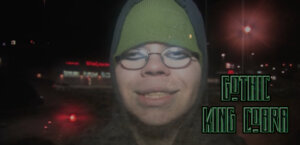
GOTHIC KING COBRA

GOTHIC KING COBRA
dir. Joel Patrick (aka trappped), 2014.
United States. 63 min.
In English.

SATURDAY, SEPTEMBER 2 – 7:30 PM (This event is $10)

GET YOUR TICKETS!

“The daily pursuits of metal musician, YouTube personality, and Wendy’s employee Josh Saunders in his hometown of Casper, Wyoming.”

Frequently argued to be the best YouTube documentary ever made, GOTHIC KING COBRA transcends the oft-misaligned genre and creates a stunning, lonely portrait of life in Fly-Over Country, USA while capturing the exploits of the ever eclectic and strangely charming outsider musician/vlogger Josh Saunders AKA KingCobraJFS.

Join us for a one-night screening of GOTHIC KING COBRA, featuring a rare appearance and Q&A with director Joel Patrick (aka trappped). Only at Spectacle.


FLUID DYNAMICS: FILMS BY MAXIMILIEN LUC PROCTOR

This September, Spectacle is thrilled to welcome avant-garde filmmaker and multidisciplinary artist Maximilien Luc Proctor for two consecutive nights of films and discussion, including the first-ever NYC screening of Proctor’s 16mm works. This program was organized in collaboration with Phil Coldiron, who prefaces Proctor’s work as follows:

Lately, it can feel like a bleak joke to apply the adjective “independent” to anything related to the movies. Criticism mostly exists as content marketing for VC-backed corporations. The world of the indie narrative film is a dispiriting swamp of calling cards, and the spaces that once housed the historical avant-garde are clotted with interlopers from the blue-chip art world making work that often feels like sitting through a grant proposal. Still, there are scattered reasons for hope, chief among them the new small-scale lyricism that’s recently blossomed across Europe: films shot on 8- and 16mm with Bolexes passed between friends, processed on the cheap in cooperative labs, and shown in venues that make no promise of anything besides an audience that actually cares.

This is the context from which the Oklahoma-born, Berlin-based Maximilien Luc Proctor has emerged. Over the last few years, beyond running Ultra Dogme, a gratifyingly scrappy platform for criticism and streaming, and playing in the decidedly algorithm-unfriendly band Two Nice Catholic Boys (alongside UD editor Ruairí McCann), Proctor has produced a few dozen films, most of them single rolls of celluloid edited in camera. Ranging from the Arcadian village of Raftis to the American Southwest, he records oblique impressions with a sharp eye for composition and an intuitive sense of rhythm, gently arguing in favor of the minor and the fleeting. This early-career survey brings together a selection of his shorts along with the digital feature, SREĆAN PUT, and offers a rare opportunity to chart the ongoing refinement of a young artist’s craft in real time.

PROGRAM ONE: NESTED FOCUS
FRIDAY, SEPTEMBER 22 – 7:30 PM with Maximilien Luc Proctor in person for Q+A!
(This event is $10.)

ONE NIGHT ONLY! ADVANCE TICKETS

ALL THE BEST
2022. 3 min. 16mm.

CRUCES
2023. 6 min. 16mm.

WASHINGTON (UNTITLED)
2022. 4 min. 16mm.

FLUID DYNAMICS: STEADY FLOW
2022. 4 min. 16mm.

FLUID DYNAMICS: UNSTEADY FLOW
2022. 2 min. 16mm.

RAFTI(S)
2022. 2 min. 16mm.

(against interpretation)
2023. 4 min. 16mm.

FLUID FRAGMENTS
2023. 4 min. 16mm.

PROGRAM TWO: HAPPY TRAILS
SATURDAY, SEPTEMBER 23 – 7:30 PM with Maximilien Luc Proctor in person for Q+A!
(This event is $10.)

ONE NIGHT ONLY! ADVANCE TICKETS

the sound of the sky reflected in water
2021. 3 min. Super 8mm-to-digital.

summercycle iii
2022. 3 min. Super 8mm-to-digital.

summercycle iv
2023. 3 min. Super 8mm-to-digital.

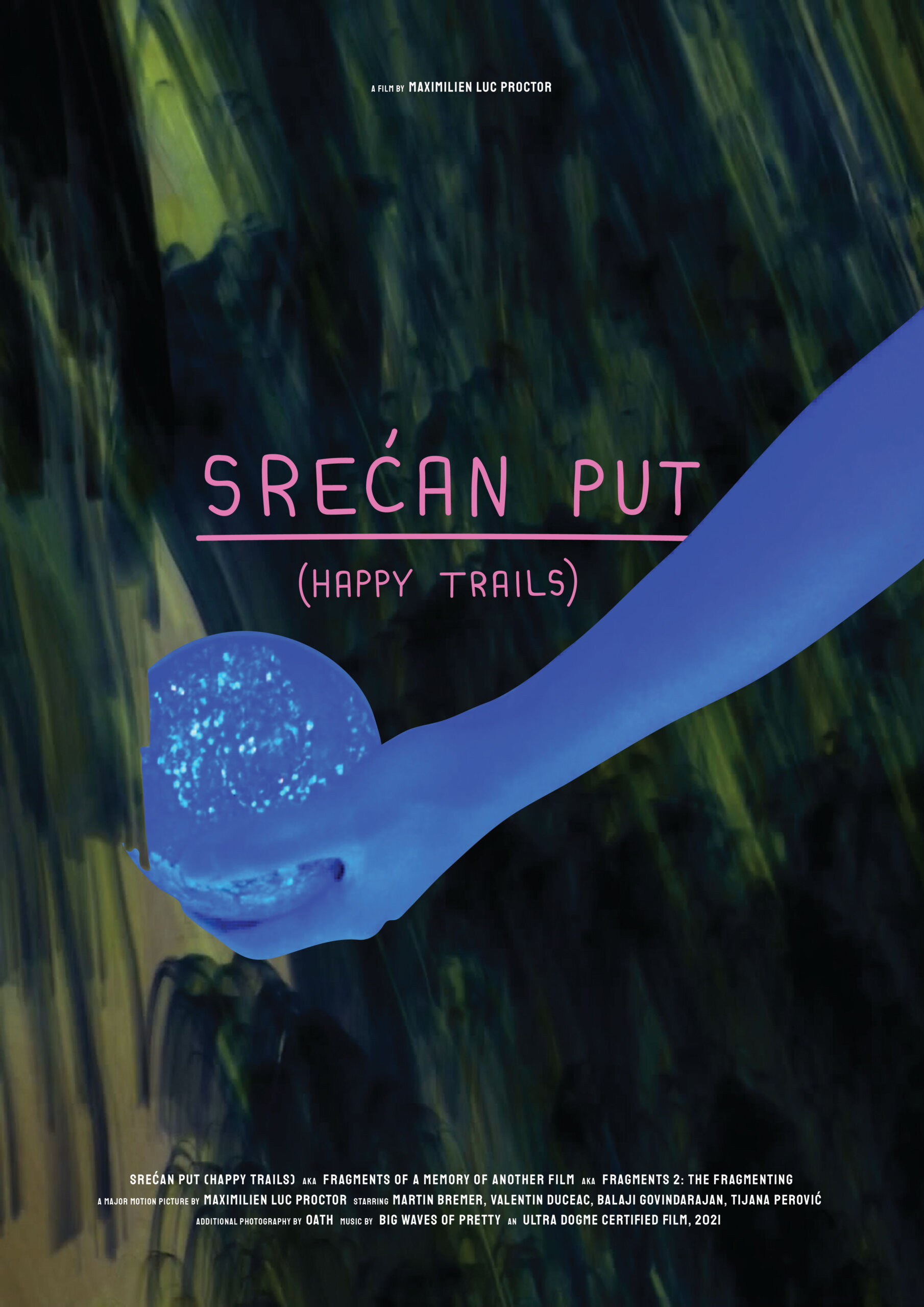
SREĆAN PUT
(HAPPY TRAILS)
2021. 93 min. Digital.

MAXIMILIEN LUC PROCTOR is a French-American filmmaker, critic and curator. He graduated from the University of Oklahoma with honors in Film and Media Studies in 2014 before moving to Heidelberg, where he shot his first feature film, FRAGMENTS OF A MEMORY OF A FILM, while working as a barista and karaoke host. In 2017 he moved to Berlin and completed his second feature film, SREĆAN PUT, in 2021. He records music in the band Two Nice Catholic Boys and co-hosts a monthly analog screening salon with Christian Flemm. He is the founder and co-editor of Ultra Dogme, and the avant-garde instructor for Berlin’s Art-on-the-Run film school.

The filmmaker would like to give special thanks to the people who helped make these films possible: phili c, Christian Flemm, Ruairí McCann, Martin Bremer, Malkah Manouel, Florian Weigl, Nicholas Christenson, Tijana Perović, Oath, Valentin Duceac, Bali Govindarajan, Big Waves of Pretty, Bobi, and my families

SREĆAN PUT poster by Đorđe Vidojević

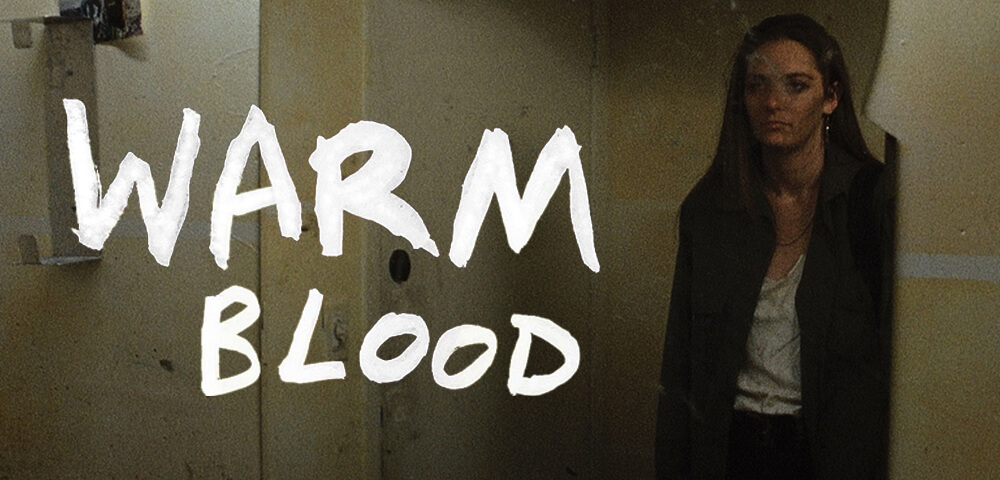
WARM BLOOD AND THE FILMS OF SIX STAIR

WARM BLOOD AND THE FILMS OF SIX STAIR

This September, Spectacle is proud to present a week long run of Rick Charnoski’s new experimental feature film WARM BLOOD, alongside skate films and documentary collaborations between Rick Charnoski and Buddy Nichols, founders of SIX STAIR FILMS, including FRUIT OF THE VINE, DEATHBOWL TO DOWNTOWN, and the roadtrip documentary NORTHWEST.


WARM BLOOD

WARM BLOOD
dir. by Rick Charnoski, 2023
USA. 86 minutes
In English.

WEDNESDAY, SEPTEMBER 13 – 7:30PM
THURSDAY SEPTEMBER 14- 7:30PM
FRIDAY, SEPTEMBER 15 – 7:30PM, Q&A MODERATED BY JOHN VEIT
SATURDAY, SEPTEMBER 16 – 5:00PM, Q&A MODERATED BY JOHN VEIT
SUNDAY, SEPTEMBER 17 – 7:30PM
MONDAY, SEPTEMBER 18 – 7:30PM
TUESDAY, SEPTEMBER 19 – 7:30PM

ALL WARM BLOOD SCREENINGS FEATURE A Q&A WITH THE FILMMAKERS / $10 TICKETS

SPECIAL EVENT TICKETS

Set in the underbelly of 1980s Modesto, California, Warm Blood uses the real-life diary of a teenage runaway named Red (newcomer Haley Isaacson) returning home to find her father. In his narrative feature debut, director Rick Charnoski’s history as a skate video director informs the frenetic storytelling style, as he combines Red’s nihilist musings with a collage of documentary and B-movie meta-narratives that paint a seedy picture of life on the outskirts of town. Talk-radio bits and punk music underscore the auditory cacophony of doom, while frequent Kelly Reichardt collaborator Christopher Blauvelt (First Cow, The Bling Ring) lends his immersive, naturalist lens shooting on gritty 16mm film. While Red searches the streets, a constant foreboding presence looms around the chemically toxic river polluting the town. Via a cable-access news reporter interviewing the local residents about its impact, Charnoski infuses today’s growing apathy around the insurmountable nature of our man-made ecological disasters into this raw, politically subversive tale.


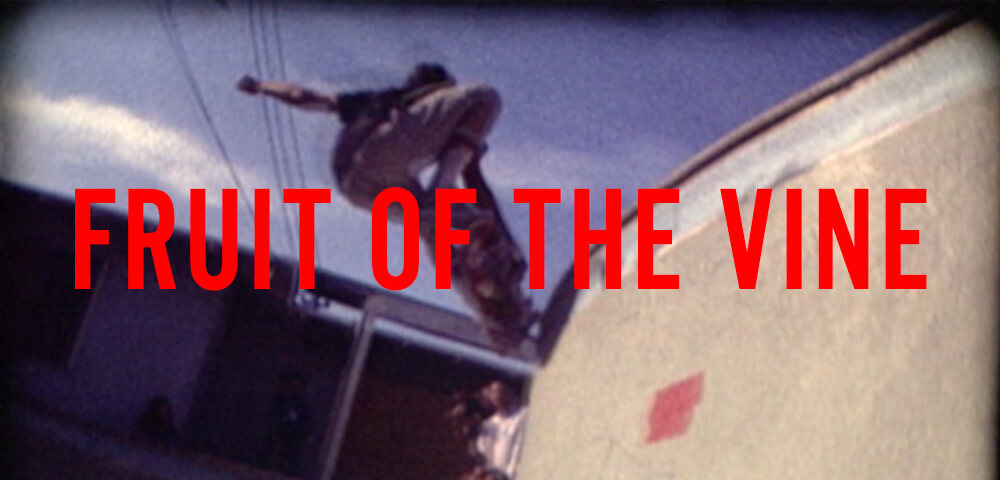
FRUIT OF THE VINE

FRUIT OF THE VINE
dir. Rick Charnoski and Buddy Nichols, 2002
USA. 74 minutes
In English

TUESDAY, SEPTEMBER 12 – 10PM – THIS EVENT FEATURES A Q&A MODERATED BY JOCKO WEYLAND
FRIDAY, SEPTEMBER 15 – 10PM
TUESDAY, SEPTEMBER 26 – 10PM

SPECIAL EVENT TICKETS

GENERAL ADMISSION TICKETS

FRUIT OF THE VINE is a super 8mm film that documents the incredible and often dangerous lengths that skateboarders go to in order to ride deserted, empty swimming pools. It is not a historical documentary, but a collection of stories shot in 1999 while Coan and Rick traveled from southern California to Seattle and around the east coast in search of pools to ride. FRUIT OF THE VINE profiles the people who search for, find, break into, and ultimately glean some use out of these pieces of the American suburban wasteland. With skate luminaries like Tony Alva, Lance Mountain, Steve Baily, Salba, Shaggy, Chris Senn, Pete the Ox, Tony Farmer, Tom Groholski, Mark Hubbard, Pat Quirk and many more. Soundtrack features Bad Religion, The Clay Wheels, Steel Wool, The Loudmouths and more.


DEATHBOWL TO DOWNTOWN

DEATHBOWL TO DOWNTOWN
dir. Rick Charnoski and Buddy Nichols, 2008
USA. 86 minutes
In English

MONDAY, SEPTEMBER 4 – 7:30PM
THURSDAY, SEPTEMBER 14 – 10PM
SATURDAY, SEPTEMBER 30 – 10PM

GENERAL ADMISSION TICKETS

On one level Deathbowl to Downtown is about street skating, but it’s also an overview of skateboarding’s shift from the parks and pools of the 70s, to the ramp skating in the 80s, to the street ascendancy of the 1990s and beyond. An entertaining, thought provoking take on why the action on New York’s hectic streets represents skateboarding to millions of people worldwide.


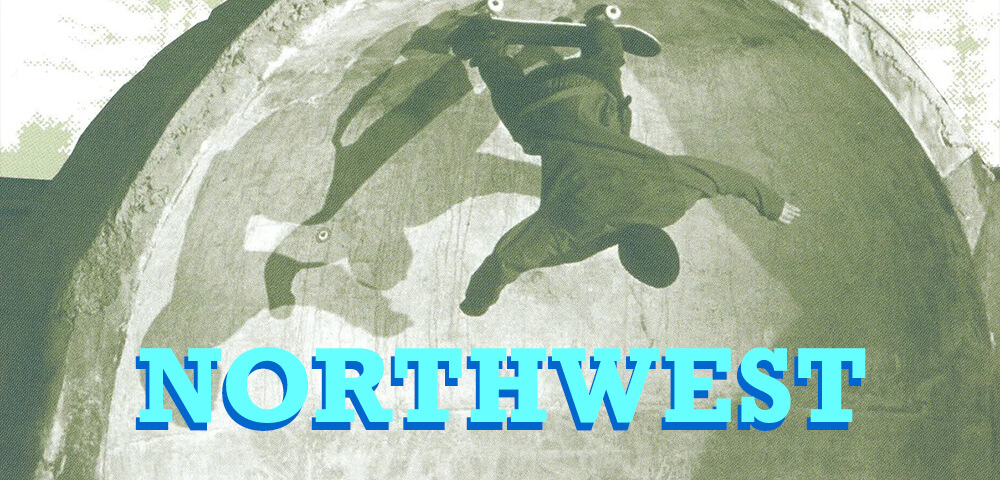
NORTHWEST

NORTHWEST
dir. Rick Charnoski and Buddy Nichols, 2003
USA. 74 minutes
In English

SATURDAY, SEPTEMBER 9 – 5PM
SATURDAY, SEPTEMBER 16 – 10PM
MONDAY, SEPTEMBER 18 – 10PM

GENERAL ADMISSION TICKETS

In this real-life road movie, Coan Nichols and Rick Charnoski focus their lenses on hand-sculpted concrete skate parks, and the skaters who build and ride them, while making friends, visiting old ones, and wreaking havoc across the Pacific Northwest.

After the underground success of their first film, the super 8mm skateboard classic Fruit of the Vine (1999), Coan “Buddy” Nichols and Rick Charnoski founded the independent production company Six Stair, which operates under the same DIY ethics of the subculture that raised them: skateboarding and punk rock. Since 1999 Nichols and Charnoski have charted an unorthodox path, making a broad range of films that consistently go beyond tired tropes to illuminate deeper truths.

After catching the eye of renowned cinematographer Christopher Doyle for their specialty in Super 8mm and 16mm filmmaking, he tapped Charnoski and Nichols to shoot the dream sequences for Gus Van Sant’s Paranoid Park (2007). They have since worked with a wide range of respected artists and filmmakers including Cameron Crowe, Richard Serra, Peter Beard, Julian Schnabel, and NeckFace as well as on commercial projects for Vans, Nike, Converse, Mountain Dew and the Gold Effie Award winning Ouch! campaign for Tylenol.

Their documentary work includes Tent City (2003), which followed the notorious Anti Hero skate team throughout Australia; Pearl Jam‘s Vote for Change? (released 2008), capturing the band’s “Vote For Change” tour across America; the feature length Deathbowl to Downtown (2009) narrated by Chloe Sevigny as well as many other short films. Other subjects they have turned their attention and cameras to are Christo’s “Gates” project, fashion shows, music videos, surfing, airplane flight, and Jamaican dub pioneers.

They’ve shown their work worldwide at countless skate shops and hole-in-the wall venues, as well as the Harvard University’s Graduate School of Design, The Graduate School of Architecture, at Columbia University, Wexner Center for the Arts in Columbus, Ohio, the MU Art Foundation in The Netherlands, the Melbourne International Film Festival in Australia, MOCA Tucson and MoMA New York.

Currently they produce and direct the popular web series “Love Letters to Skateboarding” for Vans and are in development of their first narrative feature (Warm Blood) and continue to work on a variety of both independent and commercial projects out of their back alley studio in Hollywood, CA.

Special thanks to Factory 25

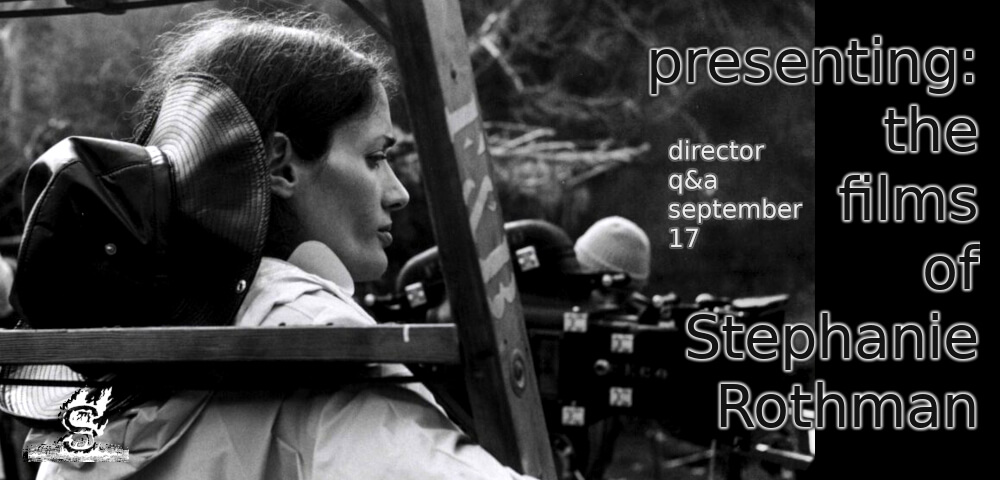
THE FILMS OF STEPHANIE ROTHMAN

THE FILMS OF STEPHANIE ROTHMAN

This September, Spectacle Theater is honored to present this once-in-a-lifetime retrospective of the work of renowned independent filmmaker, Stephanie Rothman. Though often labeled as an exploitation filmmaker, Rothman’s work stands as some of the most politically and socially astute works documenting the period of transition between 1960s and 70s America.

Rothman got her start in the early 1960s working as an assistant to Roger Corman, tasked with performing a variety of odd jobs on his productions that ranged from casting and location scouting to re-writing and editing scenes. This experience would eventually land Rothman in the director’s chair on a couple of mid-60s Corman releases: Conducting reshoots on BLOOD BATH (for which she shares directorial credit with Jack Hill), and making her solo directorial debut with the beach party film, IT’S A BIKINI WORLD.

It wasn’t until the early 1970s, though, that Rothman would break out with her work on THE STUDENT NURSES (1970) and THE VELVET VAMPIRE (1972) for Corman’s newly-established production and distribution company, New World Pictures. With few opportunities available to woman directors at the time, Rothman was relegated to making exploitation films with a high volume of sexual content. Despite this, and with the creative freedom afforded to her at New World, Rothman was able to suffuse these works with her own ideological positions and ethics, incorporating plots— and by extension, her own commentary— that openly tackled issues of abortion, drug use, immigration, policing, and sexual empowerment; issues directly relevant to contemporary audiences but that largely absent from major studio productions.

Rothman and her husband, fellow Corman alum, Charles S. Swartz, would eventually leave New World to establish Dimension Pictures alongside Lawrence Woolner, where she continued her streak of progressively-minded productions with GROUP MARRIAGE (1973), TERMINAL ISLAND (1973), and THE WORKING GIRLS (1974). Each of these works expanded the scope of her films’ social politics further, now incorporating topics of queerness, sex work, polyamory, domestic abuse, incarceration, and capital punishment.

Rothman struggled to find work with major studios after leaving Dimension Pictures in 1975, discovering, rather ironically, that she had been stigmatized by her earlier exploitation-adjacent work, despite the obvious filmmaking talent behind them. Regrettably, Rothman wound up leaving the industry less than a decade later, though the legacy of her filmmaking career, its cultural relevance and its importance in the history of women’s filmmaking labor, endures to this day.

Join us on Sunday, 9/17 for a remote Q&A with Stephanie Rothman following a special screening of her final film, THE WORKING GIRLS.


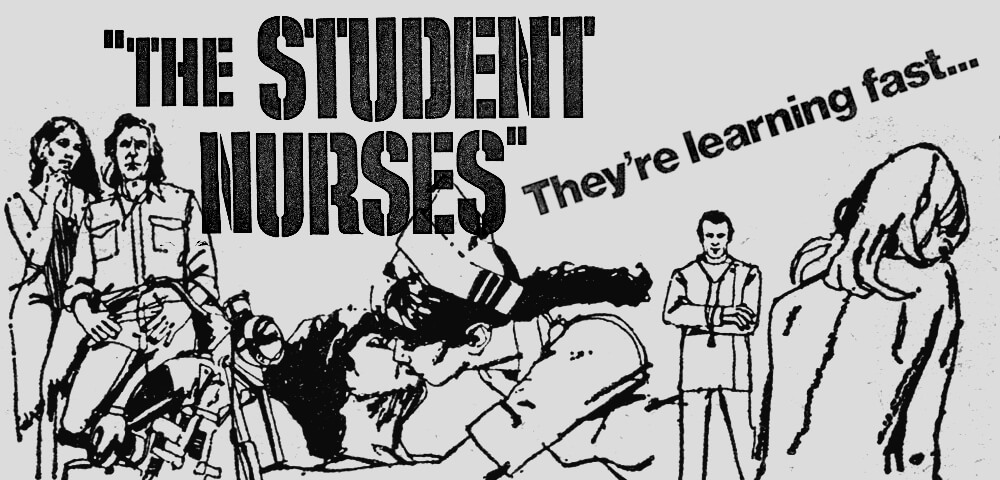
THE STUDENT NURSES

THE STUDENT NURSES
dir. Stephanie Rothman, 1970
United States. 82 min.
In English.

FRIDAY, SEPTEMBER 1 – MIDNIGHT
FRIDAY, SEPTEMBER 8 – 7:30 PM
SUNDAY, SEPTEMBER 24 – 7:30 PM
SATURDAY, SEPTEMBER 30 – MIDNIGHT

GET YOUR TICKETS!

Chronicles the romantic and comedic adventures of four young women living together in California and studying to become nurses. Each forges their own wild path through their final year of nursing school: Sharon falls in love with a dying patient, Lynn becomes involved with a Chicano revolutionary, Phred falls into trouble with a young doctor, and Priscilla has an affair with a drug addict. All the while, graduation and the beginning of life in the Real World lie just around the corner.

Rothman’s second solo directorial effort was a landmark release for New World Pictures. The film was only the company’s second release, but would go on to become a box office hit, grossing upwards of a million dollars on a $120,000 budget, and establish New World’s extensive “nurses” cycle of releases (PRIVATE DUTY NURSES, NIGHT CALL NURSES).

For her part, Rothman turned what was originally envisioned by Corman and Larry Woolner as a tawdry sexploitation cash-in into a work of incisive social commentary. With Corman out of the country for most of its production, Rothman was given free reign over the tone, style, and content of the film, so long as it maintained the studio-mandated quotas of nudity and violence.


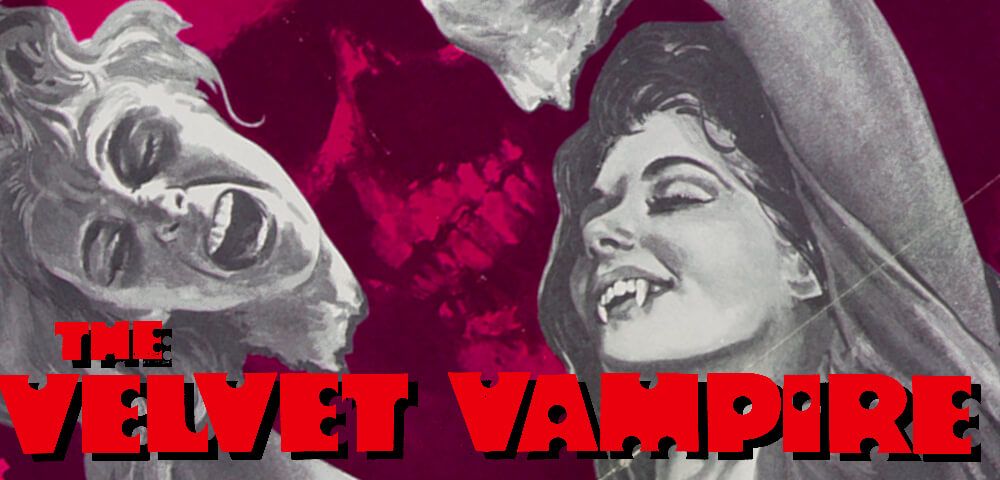
THE VELVET VAMPIRE

THE VELVET VAMPIRE
dir. Stephanie Rothman, 1971
United States. 80 min.
In English.

FRIDAY, SEPTEMBER 1 – 7:30 PM
WEDNESDAY, SEPTEMBER 6 – 7:30 PM
SUNDAY, SEPTEMBER 10 – 7:30 PM
FRIDAY, SEPTEMBER 15 – MIDNIGHT
FRIDAY, SEPTEMBER 29 – 10 PM

GET YOUR TICKETS!

Lee and his wife, Susan, accept the invitation of the mysterious vixen, Diane LeFanu, to join her at her secluded desert estate. Tensions begin to arise when the couple, unaware at first that Diane is really a centuries-old vampire, realize that they’ve both become the object of the temptress’ seductions.

Following the success of THE STUDENT NURSES, Rothman and Swartz reteamed with Larry Woolner on this unorthodox modern-day vampire tale. Rather than approach it as a straightforward horror story, Rothman used the film as an opportunity to subvert common vampire tropes by making the vampire figure a woman, equally deadly and desirous, and painting Susan’s character as a protagonist rather than a victim.

Visually, the film is Rothman’s most surreal, drawing inspiration from works of Cocteau and Franju as much as it did the adjacent European erotic vampire scene (DAUGHTERS OF DARKNESS, VAMPYROS LESBOS). Rothman’s vampire is less a horror icon than a totem of limitless pleasure, one who eschews a coffin for a lush king-size bed, large enough for three.


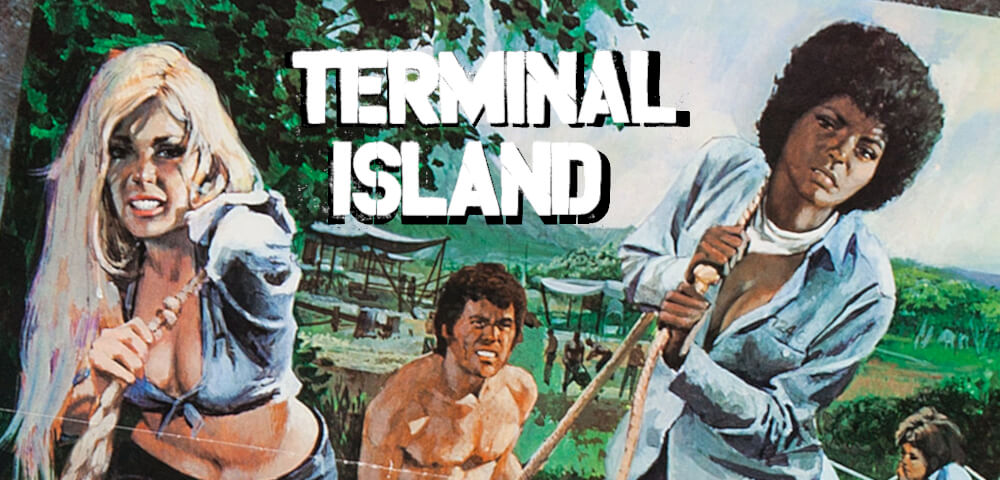
TERMINAL ISLAND

TERMINAL ISLAND
dir. Stephanie Rothman, 1973
United States. 88 min.
In English.

TUESDAY, SEPTEMBER 5 – 10 PM
FRIDAY, SEPTEMBER 8 – 10 PM
SATURDAY, SEPTEMBER 23 – MIDNIGHT
THURSDAY, SEPTEMBER 28 – 7:30 PM

GET YOUR TICKETS!

In the wake of a Supreme Court decision that deemed the death penalty unconstitutional, California passes an initiative that designates San Bruno Island as a dumping ground for dangerous convicts, free to do whatever they want except leave. When a new group of women convicts is taken to the island prison they must fight to protect themselves against the iron-fisted rule of the tyrannical Bobby and take control of the island for themselves.

Ironically, the film that seems like it would be most outside of Rothman’s wheelhouse— a provocative action-thriller with touches of women-in-prison and blaxploitation fare— wound up arguably being her most explicitly feminist film: It’s plot centering around a group of women’s literal fight for agency within a sado-patriarchal dystopia.


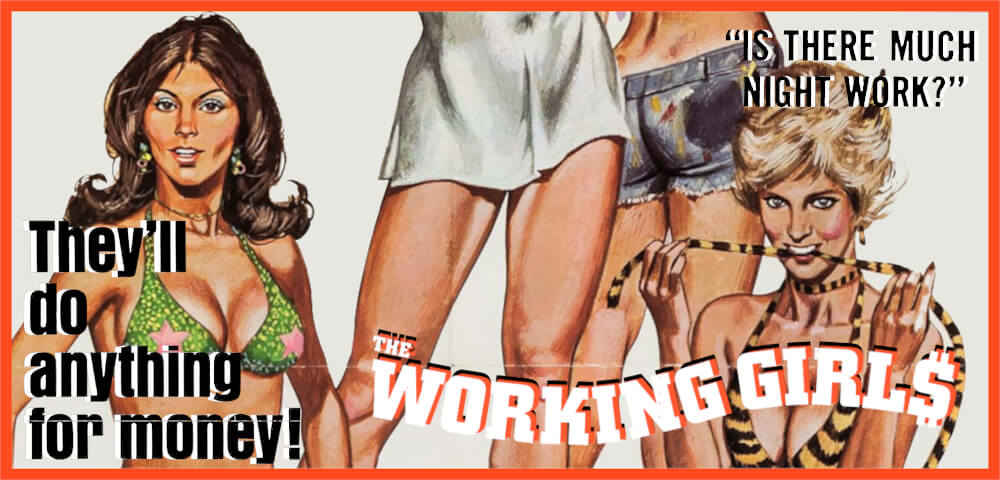
THE WORKING GIRLS

THE WORKING GIRLS
dir. Stephanie Rothman, 1974
United States. 81 min.
In English.

SATURDAY, SEPTEMBER 9 – 7:30 PM

GENERAL ADMISSION TICKETS

SUNDAY, SEPTEMBER 17 – 5 PM with filmmaker Q&A (This event is $10.)

SPECIAL EVENT TICKETS

Honey arrives in Los Angeles in search of a new life, and soon moves in with Denise and Jill. Honey is broke, but resourceful, eventually convincing an eccentric millionaire to hire her as his companion and confidant. Meanwhile, Denise falls in love with a shady musician while nightclub waitress, Jill, winds up in over her head when pressured by her boss to take on other responsibilities. All three women become endangered by the activities of the men in their lives, before realizing that they have to take matters into their own hands.

Rothman’s final film, and the only one for which she is the sole credited writer (or as she puts it, “means I take all the blame for it.”), may just be her masterpiece. By the end of her tenure in the film industry, the political subtext that had colored her earlier works had become the outright text, with sex work, equity in the workplace, and abuse becoming the focal points to each of her characters’ conflicts. What the film may lack in production values compared to her New World productions, it more than makes up for in the sophistication of Rothman’s compositions. While still undoubtedly a sex comedy, Rothman finds subtle ways of visually expressing the film’s themes. Case-in-point: With Jill being a nightclub waitress-cum-manager, of course the film includes gratuitous sequences of women stripping on stage (including a pre-“Elvira” Cassandra Peterson), but before Rothman makes a point of including POV inserts of the hideous men in the club’s audience, their presence lingering over what, in another director’s hands, would have been a lustful rather than dangerously leery affair.


Special thanks to Vinegar Syndrome and to Dr. Alicia Kozma of Indiana University, author of The Cinema of Stephanie Rothman: Radical Acts in Filmmaking, without whom this program would not be possible.