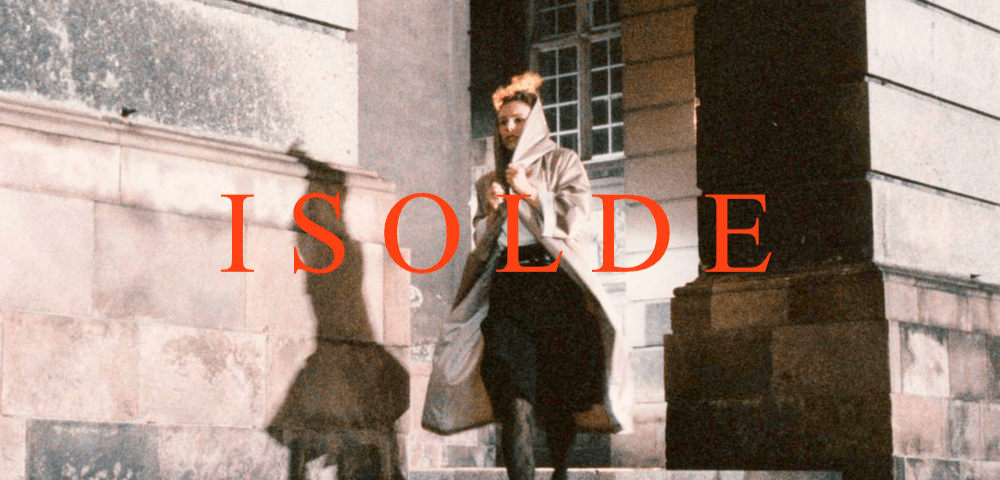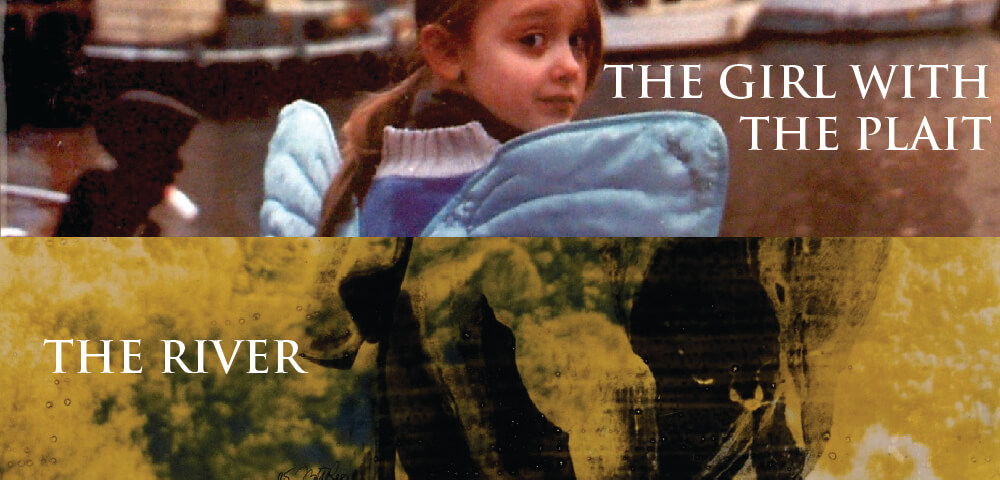
DEPTHS OF FIELD: RARE TAPES FROM EZTV

DEPTHS OF FIELD: RARE TAPES FROM EZTV

In 1979, Hollywood Reporter correspondent and aspiring filmmaker John Dorr made his first feature using nothing more than a Betamax VCR and a borrowed bank security camera and began a revolution. Within four years, he’d make three additional features and launch EZTV: a production co-op and first-of-its-kind “Video Gallery” with regular weekly programming akin to what we’d now call a microcinema. From more traditional narrative dramas, comedies, horror, erotica, and documentaries to an increasing emphasis on cutting-edge video, digital, and performance art, EZTV provided the space and equipment for independent artists of all stripes and backgrounds to realize their visions.

Designed as a companion to the series EZTV: Alternative Visions from West Hollywood (running at Anthology Film Archives from August 15th through the 20th), Depths of Field: Rare Tapes from EZTV offers a diverse sampling of the hundreds of in-house and outside productions that played at EZTV’s screening space during the first decade of its existence. From experimental narratives (Dreamland Court) and concert documentaries (D.U.I.: The Movie) to cyberpunk (Radio World), queer horror (Mantra), and new age comedies (The Case of the Missing Consciousness) and beyond, Depths of Field is a testament to the sheer breadth of work that graced EZTV’s CRTs and Videobeam projector.

Programmed and co-presented by Elizabeth Purchell and Hollywood Entertainment

Thank you: Michael J. Masucci, Ken Camp, James Williams, John Hays, Matthew Causey, Reg Oberlag, Dan Sallitt, Spike Stewart, Strawn Bovee, Pat Miller, Jackie Forsyte, Jessica G.Z., Erik Varho, Pascaline Morincome, Sibylle De Laurens, Gaspard Nectoux, Loni Shibuyama, ONE National Gay & Lesbian Archives Archives.

MISSING CONSCIOUSNESS

THE CASE OF THE MISSING CONSCIOUSNESS
Dir. John Dorr. 1980.
United States. 80 min.
In English.

FRIDAY, AUGUST 1 – 5:00 PM 
WEDNESDAY, AUGUST 13 – 10:00 PM 
THURSDAY, AUGUST 28 – 7:30 PM

BUY TICKETS

“John Dorr’s video s-f comedy stars Sheila Day and Strawn Bovee as rival women scientists in a brain research laboratory.” – L.A. Weekly

“ …I saw Serge Daney laugh again, at dawn, on the first of the eight days that would comprise the forty-ninth year of his life, when I recounted to him the plot of one of four videos by John Dorr, THE CASE OF THE MISSING CONSCIOUSNESS. The protagonist of this piece, played by Dorr himself, is pulled back and forth between two rival workers in a laboratory—both of them women—who perform experiments on him that are sometimes terrifying, sometimes absolutely loony, and sometimes both.

The next day, as the ambulance came to take Serge to the hospital, where his life would end, he found himself able to laugh once again at the strange similarity of what was happening to him then and the story I had told him the day before…” – Jean-Claude Biette, Cahiers du Cinema

DREAMLAND COURT

DREAMLAND COURT
Dir. Dale Herd and Barry Hall. 1983.
United States. 59 min.
In English.

SATURDAY, AUGUST 9 – 5:00 PM 
SUNDAY, AUGUST 24 – 5:00 PM 

BUY TICKETS

“Penelope Milford, Oscar-nominated for Best Supporting Actress in Coming Home, stars with Wynston Jones in this unusual story of two men and two women involved in a life of violence. Proceeding by interior monologues, experimental narrative shows us an inside-the-gut reality of people few of us would otherwise know. Described by LA poet Lewis MacAdams as a study of “Optimists in Hell.” Adapted from the novel by Dale Herd, who co-directed with Barry Hall. Produced by Beth Van de Water for Goliard Video at the Long Beach Museum of Art Video Annex. starring Mark Solomon and Susan Van Benthuysen.” – EZTV Guide

DUI: THE MOVIE

DUI: THE MOVIE
Dir. Spike Stewart and Cathleen Doyle. 1986.
United States. 80 min.
In English.

SATURDAY, AUGUST 2 – 10:00 PM 
FRIDAY, AUGUST 15 – 10:00 PM 
SATURDAY, AUGUST 23 – 10:00 PM 

BUY TICKETS

“A no-holds-barred look at the underground music scene in L.A. (circa 1982-85), directed by Spike Stewart. The bands preserved for posterity here include Severed Head in a Bag, Jon Wayne, Ugly Janitors of America, Three Day Stubble, Krew Kuts Klan, and Tequila Mockingbird.” – L.A. Weekly

“Begins where Penelope Spheeris’ Decline of Western Civilization left off…” – Los Angeles Times

ERIC BOGOSIAN’S FUNHOUSE!

ERIC BOGOSIAN’S FUNHOUSE!
Dir. Lewis MacAdams. 1986.
United States. 80 min.
In English.

SUNDAY, AUGUST 10 – 7:30 PM 
THURSDAY, AUGUST 28 – 10:00 PM 

BUY TICKETS

Eric Bogosian’s FunHouse is a terrifyingly hilarious, recklessly entertaining journey through the performer’s mind. Fundamentalist preachers, winos, exercise instructors, rednecks, disk-jockies, male strippers, street toughs, junkie-killers and ordinary Joes parade rapid-fire across the stage in an intense, intricately woven series of monologues that illuminate the nightmare side of the American dream.

Eric Bogosian’s FunHouse was recorded at the Matrix Theatre in Los Angeles, after two years of sold-out shows across America and Europe, the last two nights this pioneer performance piece was ever presented.” – EZTV Videocassettes

MANTRA

MANTRA
Dir. Ken Camp. 1993.
United States. 120 min.
In English.

FRIDAY, AUGUST 1 – MIDNIGHT 
WEDNESDAY, AUGUST 6 – 10:00 PM 
FRIDAY, AUGUST 22 – MIDNIGHT 
WEDNESDAY, AUGUST 27 – 10:00 PM 

BUY TICKETS

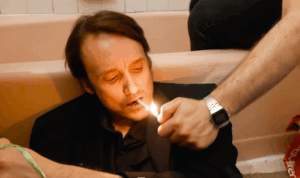
Kenny Martinez (Mike Gonzalez) is a Los Angeles-based conceptual artist who decides to set up a confessional telephone answering machine as part of his latest project. As the constant deluge of traumatic and obscene voicemails threatens to create a rift in Kenny’s relationship with his girlfriend, Jill (Regina Oh!), a bizarre serial killer (Glen Meadmore) begins using the hotline to menace the couple.

Inspired by artist Allan Bridge’s Apology Line project, Ken Camp’s Mantra is a queer shot-on-video “sexual thriller” that’s as shockingly outrageous as it is lyrically erotic. As the original poster proclaims, it’s “precisely the kind of picture that Dan Quayle—or GLAAD, for that matter—doesn’t want you to see!” New digital preservation from videomaker Ken Camp’s personal VHS copy.

WOMEN IN VIDEO

WOMEN IN VIDEO:

FRIDAY, AUGUST 8 – 7:30 PM 
FRIDAY, AUGUST 22 – 5:00 PM 
SATURDAY, AUGUST 30 – 5:00 PM 

BUY TICKETS

One of EZTV’s staple programs was a recurring showcase of works by female videomakers. For this program, we’ll present two of these—Lorrie Oshatz’s THE LAST SLUMBER PARTY and Susan Rogers’s GOOD GRIEF—plus John Dorr and Terry Mack Murphy’s early adaptation of Murphy’s play THE OTHER WOMAN starring EZTV founding member Strawn Bovee.

THE OTHER WOMAN
Dir. John Dorr and Terry Mack Murphy. 1982.
United States. 30 min.
In English.

“A biting comedy by LA playwright Terry Mack Murphy (whose work is currently being showcased by the Dejas Vu Theatre). An aspiring actress (Strawn Bovee) and her maid (Jamielle Stanley) get drunk together and critique the men in their lives; and we find that they have more in common than expected.” – EZTV Guide

THE SLUMBER PARTY
Dir. Lorrie Oshatz. 1985.
United States. 35 min.
In English.

“A caustic comedy about three women who hate men.” – EZTV Guide

GOOD GRIEF
Dir. Susan Rogers. 1983.
United States. 21 min.
In English.

“A painter (Lois Chiles) is killed in an auto accident, but continues to intrude on the life of her husband, who otherwise seems not sufficiently grieved. A video by Susan Rogers.” – EZTV Guide

POLLy PERVERSE STRIKES AGAIN!

POLLY PERVERSE STRIKES AGAIN!
Dir. Dan Sallitt. 1986.
United States. 98 min.
In English.

SUNDAY, AUGUST 3 – 7:30 
MONDAY, AUGUST 11 – 7:30 PM with Q&A ($10)
FRIDAY, AUGUST 29 – 10:00 PM 

BUY TICKETS

BUY Q&A TICKETS

“Nick Huxley, thirtyish, is becoming successful in his chosen profession, lives with a woman he is fond of, is vaguely unhappy, and doesn’t know why. Out of his past comes Theresa, a social disease who sleeps with anything that moves and who has decided that she wants Nick back. Nick, who seems to have lived a very different sort of life once, is determined to banish Theresa and youthful folly from his conscious life. But neither Nick’s girlfriend Arliss, a modern spirit who believes in driving buried emotions out in the open, nor Theresa, who seems to have an unseen power on her side, is willing to let it go at that…” – Original press synopsis

RADIO WORLD

RADIO WORLD
Dir. Matthew Causey. 1983.
United States. 70 min.
In English.

MONDAY, AUGUST 11 – 10:00 PM 
MONDAY, AUGUST 25 – 10:00 PM 
SUNDAY, AUGUST 31 – 7:30 PM 

BUY TICKETS

“In the not-so-distant future of a de-volved high tech society, a group of displaced suburbanites take refuge in a ruined factory, attempting to fend off the sadistic X-police. A video by Matthew Causey. Mechanical/incendiary effects by Mark Pauline. Music: Joseph Jacobs.” – EZTV Guide. Cinematography by Peter Deming. New digital preservation from producer Reg Oberlag’s personal VHS copy.

TALES OF THE UNLIVING AND THE UNDEAD

TALES OF THE UNLIVING AND THE UNDEAD
Dir. Wallace Potts, Robert Hernandez, Samuel M. Oldham, John Hays. 1988
United States. 90 min.
In English with Spanish Subtitles.

SATURDAY, AUGUST 9 – MIDNIGHT 
THURSDAY, AUGUST 21 – 10:00 PM 
TUESDAY, AUGUST 26 – 10:00 PM 
SATURDAY, AUGUST 30 – MIDNIGHT 

BUY TICKETS

Assembled by the short-lived EZ FILMS, Tales of the Unliving and the Undead is an anthology composed of four short horror films and videos produced by EZTV members: Cheap Thrills by Wallace Potts (Le beau mec, Psycho Cop), an abridged version of Santa Ana Winds by Robert Hernandez, Into the Fire by Samuel M. Oldham, and Death Sentence by John Hays. Released only in South America, Tales of the Unliving and the Undead is a fascinating—and extremely rare—piece of shot-on-video horror history. Digitally preserved from an original Mexican VHS (with trailers and Spanish subtitles).


LOFI FUTURES – 3 CYBERPUNK TALES SHOT ON DV

CYBERPUNK DV SERIES

At the dawn of the millennium, a time when it was likely far more fun and creatively stimulating to speculate on “the future,” the Digital Video (DV) format became the most accessible and inexpensive way to shoot and record footage. This new, scrappy, consumer-grade form of filmmaking resulted in celebrated directors like Spike Lee, Richard Linklater, Danny Boyle, and of course, David Lynch, providing some of their more experimental and chilling works. As our own future grows more incomprehensible by the day, Spectacle is proud to screen these three fuzzy, hypnagogic visions from the early 2000s: RED COCKROACHES, TRAGOS, and TEENAGE HOOKER BECAME KILLING MACHINE IN DAEHAKRO.

RED COCKROACHES 2003, 2025

RED COCKROACHES
dir. Miguel Coyula, 2003
United States. 82 min.

WEDNESDAY, AUGUST 13 – 7:30 PM WITH Q&A 
SATURDAY, AUGUST 23 – 7:30 PM 
FRIDAY, AUGUST 29 – MIDNIGHT

BUY TICKETS

BUY Q&A TICKETS

In what would be Miguel Coyula’s first feature production, RED COCKROACHES is a disturbing urban thriller made with a micro-modest budget of $2000. It’s the first in an auteurist trilogy stemming from Coyula’s transgressive approach to Cuban speculative fiction. Set in a near-future NYC plagued by acid rain and the invasive corporate rule of DNA21, Adam Zarrasky is just another awkward 20-something until his daily routine is upended by a lonely, beautiful woman on a subway platform. What begins like a scene out of a romantic comedy in this poisoned world quickly devolves, opening a hole of lost family secrets and unthinkable psychosexual horrors. Coyula develops a language of singular cinematic unease that must be seen to be believed – audiences will never look at ketchup the same way again. Featuring an in-person Q&A with director Miguel Coyula on August 13th!

CW: incest

Special Thanks to Alfredo Calvino, Miguel Coyula and Ross Snyder of Saturn’s Core

Undeniably inventive, visually stunning, a triumph of technology in the hands of a visionary
—Ronnie Scheib, Variety

TRAGOS

TRAGOS
dir. Antero Alli, 2000
United States. 105 min.

SATURDAY, AUGUST 2 – 7:30 PM 
TUESDAY, AUGUST 5 – 10:00 PM 
THURSDAY, AUGUST 14 – 10:00 PM
MONDAY, AUGUST 18 – 10:00 PM

BUY TICKETS

A CYBER NOIR WITCH HUNT

Following our retrospective on Antero Alli, we’re proud to screen another picture from his poetic imagination. TRAGOS continues in the footsteps of THE DRIVETIME and its anxious judgments towards the dial-up tech of the late 90s. Centered around a virtual reality server’s deadly potential after the mysterious death of technopagan Vivika (producer/art director/music composer Thia Alli), this shot-on-miniDV mystery was impressively produced in-house with a $7000 budget – further establishing Antero and Thia Alli as modest adepts in DIY narrative filmmaking.

One of the most “obscure FMV game” movies ever made!
–Evan Pincus, LB

an outsider art miracle
–erik reeds, LB

TEENAGE HOOKER BECAME KILLING MACHINE IN DAEHAKRO

TEENAGE HOOKER BECAME KILLING MACHINE IN DAEHAKRO
dir. Nam Ki-woong, 2000
South Korea. 60 min.

SATURDAY, AUGUST 2 – MIDNIGHT 
FRIDAY, AUGUST 8 – MIDNIGHT 
TUESDAY, AUGUST 19 – 10:00PM
SATURDAY, AUGUST 23 – MIDNIGHT 

BUY TICKETS

With a translated title that’s as blunt and direct as it gets, TEENAGE HOOKER BECAME KILLING MACHINE IN DAEHAKRO is classic grindhouse sleaze distilled through a Y2K aesthetic. Lee So-woon stars in her first and only film role as a teenage girl given a second chance at life through brutal reconstruction. These new gifts propel her into a vengeful murder spree as she hunts for the perverse teacher (Kim Dae-tong) who killed her. Director Nam Ki-woong wore several hats when he made this picture, and his glowing DV cinematography paired with an entrancing trip-hop influenced score results in what might just be the coziest splatter movie in film history. Spectacle is proud to unleash one of the more operatic examples in extreme cinema to a new generation of tech-infused, bloodthirsty, sophisticated sickos.

The absolute garishness of early digital video pushed to its limit. I honestly kind of love this.
–COBRARocky, LB

One of those rare films who seems to be constant[ly] reinventing its forms, it remains one of the great found objects of the 00’s.
–Felipe Furtado, LB

Special Thanks to Youngin Lee and Kim Dohee of INDIESTORY INC.


KILL THE MOONLIGHT

Kill The Moonlight
Dir. Steven Hanft, 1994
United States, 76 min.
In English.

TICKETS:
FRIDAY, AUGUST 1 – 10:00 PM
WEDNESDAY, AUGUST 6 – 7:30 PM
FRIDAY, AUGUST 15 – 7:30 PM
FRIDAY, AUGUST 22 – 10:00 PM

Chance is a stock car driver with a busted car. He’ll do just about anything to scrape up the cash to race. He’ll collect cans, he’ll feed the fish down at the hatchery, he’ll clean toxic chemical spills, he’ll even sell coke on the highway. Will Chance ever race again? Will he win back his wife Sandra? Will the hacking cough that he picked up cleaning toxic chemicals go away? Find out this August at Spectacle when you see… KILL THE MOONLIGHT!

Written and directed by prolific music video filmmaker Steven Hanft, this movie is a masterpiece of indie Gen-X slacker cinema. Featuring music by Beck, The Pussywillows, The Dynamics, and many more!


LAS MUJERES DEL PUERTO

Her father dies… her fiance dumps her… and she can’t find a job… so she covers the waterfront. And then one night…

French writer Guy de Maupassant’s short story “The Port” first landed on the Mexican silver-screen in 1934, courtesy of Russian exile Arkady Boytler and his directing buddy Raphael J. Sevilla. This classic tale of twisted faith has since been adapted thrice over — although, we’ll leave Luis Quintanilla’s TV-adaptation for another summer — and become a cornerstone of Mexican cinema, its tale of mixed identities reflecting the status of a nation confused about its own.

Now heralded as a classic of Latin American cinema, Boytler and Sevilla’s grim and pointed THE WOMAN OF THE PORT (1934) sets the standard high for all future filmmakers looking to adapt this powerful short story. Set in the docks of Veracruz, THE WOMAN OF THE PORT follows a woman frowned upon by fate, forced into squalor, and made to make a name for herself in infamy. In 1949, Emilio Gómez Muriel tried his hand at the story with an adaptation starring rumbera Maria Antonieta Pons. This version of THE WOMAN OF THE PORT (1949) flips the chronology of the first on its head, setting up a narrative parabola that moves from grime to good to ghastly. It’d take about 40 years for another filmmaker to throw his name in the hat and in 1991, former Luis Buñuel assistant director Arturo Ripstein put forth his own spin on the story: a Rashomon–style vision of despair anchored in a quartet of wonderful performances.

Content warning: These films contain depictions of physical violence, sexual assault, and self-harm.


La mujer del puerto
(The Woman of the Port)
dir. Arkady Boytler & Raphael J. Sevilla, 1934
In Spanish with english subtitles

MONDAY, AUGUST 4 – 7:30 PM
FRIDAY, AUGUST 29 – 5 PM

GET TICKETS!

Arkady Boytler and Raphael J. Sevilla’s THE WOMAN OF THE PORT harbors a curious convergence of artistic currents. Boytler, a former star of the Russian screen who was friendly with Sergei Eisenstein, brought with him a flair for melodrama that gelled perfectly with the wild expressionism of Mexican cinema in the ’30s. What the screen offers is a noir cast in lovelessness, anticipating the grandiose melodramas that further defined Mexico’s Golden Age of Cinema soon after. Bleak, but beautiful, Boytler and Sevilla’s film prefaces an entire history of Mexican cinema; in its shadows, a permeable and unspoken solemnity; in its faces, a bubbling of emotion; in its music, a sad and truthful history.
La mujer del puerto
(The Woman of the Port)
dir. Emilio Gómez Muriel, 1949
In Spanish with english subtitles


THURSDAY, AUGUST 7 – 7:30 PM

GET TICKETS!

Best known for co-directing the landmark REDES (1936) — about a fishermens’ revolt — with Fred Zinnemann, Emilio Gómez Muriel was a prolific studio director whose career started in the late ’30s and ran up until the ’70s. He directed everything from social realist dramas to swashbucklers and Blue Demon wrestling flicks, working with starlets like María Felix, Miroslava, and Maria Antonieta Pons. It’s the latter that takes on the role of the titular Woman, a night dancer and crooner who has developed a propensity for alcohol in light of the darts destiny has thrown her.
La mujer del puerto
(The Woman of the Port)
dir. Arturo Ripstein 1991
In Spanish with english subtitles

MONDAY, AUGUST 18 – 7:30 PM
SATURDAY, AUGUST 30 – 7:30 PM

Get tickets!

Leave it to Arturo Ripstein, enfant terrible of Mexican cinema for fifty years and counting, to make one of its most tawdry tales even more depraved. Split into four chapters, each chronicling the film’s doomed romance from a different perspective, Ripstein’s THE WOMAN OF THE PORT extends his source material’s central wickedness to its extreme, as though taunting viewers with an embodied vision of the Mexico they fear from morbid and shocking news reports worldwide. An incendiary film, as only Ripstein can make them, this most recent adaptation of Mexican cinema’s most intriguing and unpleasant myth foreshadows the squalor Ripstein would continue to burrow himself as a filmmaker while making an opus of what was once a simple expat’s attempt at adapting de Maupassant.

Special thanks to ACERVO-FILMOTECA UNAM, Alebrije Cine y Video, Jesse Trussell, Mónica Lozano, Chloe Roddick, and IMCINE.


XO & STRUGGLE II: THE GEORGE JACKSON BRIGADE AND ABOLITIONIST CINEMA

SATURDAY, AUGUST 9 – 7:30pm

TICKETS

Settle your quarrels, come together, understand the reality of our situation, understand that fascism is already here, that people are already dying who could be saved, that generations more will live poor butchered half-lives if you fail to act. Do what must be done, discover your humanity and your love in revolution.
— George Jackson, “Blood in My Eye,” 1972

Abolition is not absence, it is presence. What the world will become already exists in fragments and pieces, experiments and possibilities. So those who feel in their gut deep anxiety that abolition means knock it all down, scorch the earth and start something new, let that go. Abolition is building the future from the present, in all of the ways we can.
— Ruth Wilson Gilmore, “Making Abolition Geography in California’s Central Valley,” The Funambulist, 2018

Revolutionary organizations must mirror the organization of the future.
—George Jackson Brigade, “The Power of the People Is the Source of Life: Political Statement of the George Jackson Brigade,” 1977

In 1975, just four years after George Jackson’s murder by San Quentin prison guards, an underground group of militant “urban guerillas”—working class, multi-racial, queer, and armed—gathered in Seattle, WA with a shared conviction, red-hot and fueled by Jackson’s proto-abolitionist spirit. They wanted to bring down US imperialism, destroy its growing prison system and the interlocking forces of domination that buoy it.

Over the course of the next two years, the George Jackson Brigade executed a series of bombings and bank expropriations, targeting government buildings and echelons of capital across the Pacific Northwest. On International Women’s Day 1976, they issued a communiqué to self-critique and draw lessons from their most recent action: an attempted robbery of the Pacific National Bank of Washington, which left two of their members injured and incarcerated, and one killed by police.

For the George Jackson Brigade, death and capture invoked both grief and renewed life; they closed their statement as follows:

We are cozy cuddly, armed and dangerous, and we will raze the fucking prisons to the ground!
Love and Struggle, GJB

”XO & Struggle” draws inspiration from George Jackson and the George Jackson Brigade’s embrace of both love and struggle in the slow-burn of revolutionary progress. The filmmakers in this program push and probe these political commitments in form (interviews, verité, animation, and sonic experiments), in content (movement elders, remixed archival footage, and prison uprisings real and imagined), and in practice (collaboration, organizing, making/circulating art). United is their shared belief that art alone cannot transform the conditions that produce carceral violence. The Brigade’s rallying cry—cozy, cuddly, armed and dangerous—resonates in sharp and dulcet tones across these artistic engagements with our abolitionist horizon.

After a first installment at Maysles Documentary Center in December 2022, “XO & Struggle” returns in joyous, critical reflection of the Brigade’s legacy and of the role of filmmaking in the ongoing fight against police and prisons. However, “XO & Struggle II” is neither lament nor call for demolition. It’s a call to action, to creation—for presence, experimentation, abundance, care, and building anew. It’s the invocation of a political project at times mournful and destructive, and yet endlessly invigorated by the preciousness and creativity of human life. 

Featuring work by: Saeedah Cook, Kelly Gallagher, Cameron A. Granger, Christopher Harris, Alex Johnston, and Matazi Weathers.

Post-screening conversation with Christopher Harris, Alex Johnston, Saeedah Cook, and Cameron A. Granger, moderated by Emily Rose Apter.

PROGRAM

COZY CUDDLY, ARMED AND DANGEROUS: A FILM WITH THE GEORGE JACKSON BRIGADE
Dir. Alex Johnston, 2025.
United States. Work-in-Progress Excerpts

An intimate present-day group portrait of three surviving George Jackson Brigade members, the film takes its name from the concluding lines of a 1976 GJB communique, released on International Women’s Day: “We are cozy cuddly, armed and dangerous, and we will raze the fucking prisons to the ground!”

DREAMS UNDER CONFINEMENT
Dir. Christopher Harris, 2021.
United States. 3 min.

Frenzied voices on the Chicago Police Department’s scanner call for squad cars and reprisals during the 2020 uprising in response to the murders of George Floyd, Breonna Taylor, and Ahmaud Arbery, as Google Earth tracks the action through simulated aerial views of urban spaces and the vast Cook County Department of Corrections, the country’s third-largest jail system. In Christopher Harris’s Dreams Under Confinement, the prison and the street merge into a shared carceral landscape

SPEAKING IN TONGUES: TAKE ONE
Dir. Christopher Harris, 2024.
United States. 15 min.

A film about Black ecstasy and the carceral forces arrayed against it.

THE LINE
Dir. Cameron A. Granger, 2021.
United States. 7 min.

Using the history of Columbus’ near east side and its people as an anchor, The Line is a film about Black migrations, urban development, and most of all, love. Featuring the voices of: Ms. Aminah Robinson, Ms. Julialynne Walker, and Mr. William Richardson, with additional audio from WOSU’s documentary on Columbus’ Neighborhoods.

JUST BELOW HEAVEN
Dir. Cameron A. Granger, 2025
United States. 9 min.

Using behavioral theorist BF Skinner’s series of studies on the rock dove, also known as the common pigeon, Just Below Heaven recasts Skinner’s theory of behavior and control as a stage where the cultural scripts and modes that fuel the machinery of American life are brought under scrutiny. A pigeon has a dream, and finds each one of us in it.

PEARL PISTOLS
Dir. Kelly Gallagher, 2014.
United States. 3 min.

A glitter-bomb resurrection of a speech by Queen Mother Moore.

DARKER
Dir. Matazi Weathers, 2024.
United States, 19 min.

In a dystopian Los Angeles, a coalition of Black insurgents, trans hackers, and their POC allies prepare for an uprising.

ABOLITION AFFIRMATIONS 1 & 2
Dir. Saeedah Cook, 2021.
United States, 2 min.

Abolition Affirmations is a really straight forward project, exactly what it sounds like a compilation of tiny video motivations. It is visual self talk. The reality is that film itself can’t do much to change people’s material conditions. People’s power is needed to change our material realities. The affirmation at best can power the people’s imagination to think about a world without prison, and also keep people ignited until the next fight.

TRT: 72 min.

Solidarity Media Network is a media initiative, dedicated to growing social wealth and supporting civic engagement through media production & distribution, research, education, and workforce development. We believe systems change at scale to undo the pernicious effects of mass incarceration on individuals and our society at large. This requires a rigorous commitment to shared resources, community engagement, and capacity building from the grass roots to the industrial. www.solidaritymedianetwork.org ig:@solidarity.media.network

NUDGE NUDGE WINK WINK

Are acts of violence viable and warranted solutions to political oppression? To fascism? Should individuals take it upon themselves to affect political change by going as far as murder or assassination? Do the needs of the many outweigh the needs of the few? The Spectacle as a screening space has no official stance or answers for such trivial questions, but we do have a wholly unconnected and unrelated series of films about the DIY ethos that we are calling: NUDGE NUDGE WINK WINK. Apropos of nothing else going on in the world, we suggest you see the following films:


FAREWELL, MR. PRESIDENT

FAREWELL, MR. PRESIDENT
(JÄÄHYVÄISET PRESIDENTILLE)
Dir. Matti Kassila, 1987.
Finland. 87 min.
In Finnish with English subtitles.

FRIDAY, AUGUST 1 – 7:30 PM – [TICKETS]
SATURDAY, AUGUST 9 – 10 PM – [TICKETS]
TUESDAY, AUGUST 12 – 10 PM – [TICKETS]
SATURDAY, AUGUST 16 – 10 PM – [TICKETS]

Asko Mertanen is a working waiter who is obsessed with two things: the corrupt government’s unfair treatment of the country, and guns. Mertanen’s obsessions combine into a deadly self-assigned edict: to kill the President of Finland. Like any well engineered plan, Mertanen builds to his ultimate act by testing his weapons, his accuracy, and his ability to take a life. A confluence of Mertanen’s savviness as well as a serendipitously timed murder of another waitress lead police detectives Hanhivaara and Kairamo on a confused chase to stop him before he achieves his final goal.

A late work for one of Finland’s most prominent filmmakers of the 1950s and 60s, Matti Kassila. With a screenplay written with his son, Taavi Kassila, and based on the novel of the same name by Pentti Kirstilä. The film’s president, played by accomplished Finnish actor Tarmo Manni, is never mentioned by name but bears a striking resemblance to politician, and Finland’s longest serving president, Urho Kekkonen. Who during his extensive term consolidated government power to the presidency and developed a cult of personality. How about that?


PASSPORT TO DESTINY

PASSPORT TO DESTINY
Dir. Ray McCarey, 1944.
United States. 65 min.
In English.
16mm.

TUESDAY, AUGUST 05 – 7:30 PM – [TICKETS]
FRIDAY, AUGUST 15 – 5 PM – [TICKETS]
SATURDAY, AUGUST 23 – 5 PM – [TICKETS]
SUNDAY, AUGUST 31 – 5 PM – [TICKETS]

“If you had a charmed life, what would you do?”
“I’d find my way to Germany, and I’d give that Mr. bloomin’ Hitler what for!”

Elsa Lanchester (the BRIDE OF FRANKENSTEIN) stars as Ella Muggins, a Cockney cleaning lady who feels proud and empowered in her work attending to the office of the head of the firm. But with the 2nd World War hitting its heights, her working class life in London is soon to be interrupted. After her regimental sergeant major husband perishes (lost not to the war, but underneath a motor truck in Piccadilly Circus) Ella inherits from him a magical amulet. According to her husband who was known for spinning yarns, the amulet—or magic eye—carries with it powers of protection. After a close encounter with a bomb care of the Germans’ air raids, Ella is convinced of her husband’s tall tales, and with a new lease on her ‘charmed’ life, she makes her way to Germany to do what the British military seemingly can’t: kill Hitler.

PASSPORT TO DESTINY is a charmingly hilarious comedic romp, and a lovely piece of anti-Nazi do-it-yourself regime change propaganda care of RKO. With Lanchester turning a brilliant performance as the naively headstrong Muggins, whose fortuitous actions through Germany resemble that of the Mr. Magoo character, who himself would not be created for another 5 years. Released in early 1944 only a handful of months before the Allied forces’ invasion at Normandy, and over a year before Hitler would eventually blow his own brains out.

We are pleased to present the film on 16mm for all engagements.


THE EDGE

THE EDGE
Dir. Robert Kramer, 1968.
United States. 100 min.
In English.

SATURDAY, AUGUST 2 – 5 PM – [TICKETS]
THURSDAY, AUGUST 7 – 10 PM – [TICKETS]
FRIDAY, AUGUST 22 – 7:30 PM – [TICKETS]
MONDAY, AUGUST 25 – 7:30 PM – [TICKETS]

THE EDGE follows Danial Rainer, a disillusioned political activist, over the course of six days as he navigates the inner politics of his organizing group as they struggle to have any effect on the actions of their government and its war on Vietnam. Dan is tired of theory, and wants to take decisive action, but the rest of his similarly white and middle class cohort are going to be difficult to get out of their comfort and on board. The plan? Assassinate the President of the United States.

Robert Kramer presents the events unfolding like an intelligence outfit surveilling and gathering evidence. The cast of characters; introduced like that of a police debriefing or dossier; names, ages, and political histories. The camera; at times a lingering distant voyeuristic point of view like that of an observing agent gathering intel. The audio of conversations; as if they were being picked up by planted bugs.

Kramer deftly showcases that feeling of despair as one hears the numbers of deaths grow daily as war wages on the other side of the globe. The cognitive dissonance of the comfort of your bohemian day to day not lining up with the horrors being perpetrated by your own government. Do you want to affect change with a single violent revolutionary action? Or are you comfortable to play activist while talking shit about the president over a bottle of wine at your friend’s flat? When Dan is driven to the brink, but left high and dry by his comrades, does the plan have any chance of success?

“What interests me is this: How do you understand cinema? How do I understand cinema? Why has nobody seen my films here in the United States, etc.? Most of the time, my films don’t relate to what people believe. Without a doubt this is a flaw in the films. They all deal with such questions as: how people fulfill themselves and assume a role in history, how do or don’t they rejoin the principal current of history. All this, …, in the context of the United States and of the specific kind of isolation that we’ve made for ourselves here—we, the subjects of films. There is this rhythm between political engagement where we lose a lot of things—relations between people, families, children, nature—not as ideas but as bodily experiences. In The Edge, we can see the two very clearly.”
—Robert Kramer, December 1978 Cahiers du Cinéma interview


VICK & TARSTAR’S SCARECROW FACTORY

VICK & TARSTAR’S SCARECROW FACTORY
Dir. Brewce Longo. 2025.
United States. 90 min.
In English.

TUESDAY, AUGUST 12 – 7:30 PM* w/Q&A (This event is $10)
WEDNESAY, AUGUST 20 – 10 PM

SPECIAL EVENT TICKETS

GENERAL ADMISSION  TICKETS

They’re baaaack!!

From the team that brought you BUSTED BABIES, COVEN OF THE BLACK CUBE, and A CORPSE FOR CHRISTMAS comes an all new Experience in Mumblegore. It’s…

VICK & TARSTAR’S SCARECROW FACTORY!

Filmmakers and best friends Vick & Tarstar must juggle life, art, relationships, sex, drugs, sickness, homelessness, and madness in spades as they and their crew of Philly punks race to to finish the new avant-garde trashterpiece SCARECROWED on-time and on-budget! VICK & TARSTAR’S SCARECROW FACTORY is metatextual candy corn goo pile that’s just as much Ryan Trecartin as it is Joe Swanberg. Hilarious, thoughtful, and just fuckin’ out there! You’ll love your new Scarecrow Haircut.

Join us at Spectacle on TUESDAY, AUGUST 12 at 7:30 PM for the New York City premiere of the latest film from Blood Sick Productions, VICK & TARSTAR’S SCARECROW FACTORY – and be sure to stick around for an extra special roadshow Q&A with “Vick”, “Tarstar”, and actress Tina Krause after the show!

Featuring appearances from: Erin Caywood, Nicole Elyse, Gaby Bogdanoff, Josh Christensen, Steven Reifsteck, Slink Skull, Elise Brady, Del Worshim, Hugh Gallagher, Michael DiFrancesco, X Menzak, Tina Krause, Nicholas DeGideo, and David “The Rock” Nelson!

Written by Brewce Longo and Kasper Meltedhair. Directed by Brewce Longo.

IN THE DRAGON’S SHADOW: REINVENTING KUNG FU CINEMA

IN THE DRAGON'S SHADOW: REINVENTING KUNG FU CINEMA

In the wake of Bruce Lee’s passing in 1973, the Hong Kong film industry found itself at a crossroads. How was the industry supposed to sustain the newfound global popularity of kung fu movies in the absence of the country’s most bankable and recognizable star?

Though the “Bruceploitation” trend that followed saw some moderate success, the “Lee-alikes” that populated the genre— mostly marketed on their resemblance or adjacency to Lee himself, by definition incapable of reaching the same heights of fame as their predecessor— could only placate and/or dupe audiences for so long. For studios not named Shaw Brothers or Golden Harvest, the need for an alternative path forward soon emerged.

This July, we look at three radically different approaches Hong Kong studios took towards moving the industry out from under the long shadow cast by Lee’s legacy. Whether falling back on the old masters of the genre, pushing to coin another star of the same caliber, or allowing his very same clones the creative freedom to establish themselves apart from their namesake, each of these films is its own reflection of an industry’s need to reinvent itself following a world-shattering shake-up.


THE CHINESE STUNTMAN

THE CHINESE STUNTMAN (龍的影子)
aka COUNTER ATTACK
Dir. Ho Tsung-tao, 1981
Taiwan. 94 min.
In English (dubbed)

WEDNESDAY, JULY 2 – 10 PM
MONDAY, JULY 7 – 10 PM
WEDNESDAY, JULY 16 – 7:30 PM
FRIDAY, JULY 25 – 10 PM

GET TICKETS

An insurance salesman (who also happens to be a martial arts master) becomes a stunt double for a popular Hong Kong action star, unwittingly throwing himself into a murderous plot by the film’s producers and director to cash in on the star’s insurance policy.

For his final film as both a director and star, Ho Tsung-tao crafted a meta-masterpiece largely drawing from his own experiences as the former Lee-alike “Bruce Li”. By the late-1970s, Ho had made no bones about his displeasure with being pigeonholed as a Bruce Lee clone, all of which is poured into this cathartic, biting satire of the Hong Kong film industry. The film is as cynical as it is action-packed, with Ho pulling no punches in his depiction of the disposability with which the business treats its below-the-line physical performers who have devoted their entire lives to their martial artistry.


MAGNIFICENT BODYGUARDS

MAGNIFICENT BODYGUARDS (飛渡捲雲山)
Dir. Lo Wei, 1978
Hong Kong. 103 min.
In Cantonese & Mandarin with English subtitles

WEDNESDAY, JULY 9 – 7:30 PM
MONDAY, JULY 14 – 10 PM
SATURDAY, JULY 26 – 10 PM

GET TICKETS

A wealthy noblewoman assembles a team of fierce bodyguards to escort her ailing brother to a specific doctor who holds the cure to his illness. Together they must traverse dangerous wild country infested with roving gangs of bandits, savages, and demonic monks intent on his capture.

While much of the industry was preoccupied with maintaining Bruce Lee’s presence via the Bruceploitation trend, Lo Wei, the very filmmaker who directed Lee in his breakout roles in THE BIG BOSS (1971) and FIST OF FURY (1972), turned his sights towards finding the Next Big Thing. Within a few years, Lo would find his new leading man in a fresh-faced stunt choreographer and background performer named Jackie Chan, providing him with his very first starring roles in NEW FIST OF FURY (1976) and MAGNIFICENT BODYGUARDS.

Though not quite Chan’s breakout role (those would come later in the same year via Yuen Woo-ping’s DRUNKEN MASTER and SNAKE IN THE EAGLE’S SHADOW), it’s easy to see why Lo viewed Chan as the heir apparent to Lee’s stardom. Even as a smarmy, hot-headed bodyguard— a far cry from the comedic roles for which he became known— the same charisma, finesse, and obsessive detail that Chan would bring to his later work are still undeniably present.

If Chan’s born stardom weren’t enough to carry the film, MAGNIFICENT BODYGUARDS was also marketed as the first kung fu movie to be presented in 3D, replete with multiple shots of fists, feet, spears, swords, and arrows flying directly towards the camera (alas, though, Spectacle will only be presenting this one in 2D).


RETURN OF THE CHINESE BOXER

RETURN OF THE CHINESE BOXER (神拳大戰快鎗手)
Dir. Wang Yu, 1977
Hong Kong/Taiwan. 99 min.
In English (dubbed)

SATURDAY, JULY 5 – 10 PM
FRIDAY, JULY 11 – 5 PM
WEDNESDAY, JULY 16 – 10 PM
MONDAY, JULY 21 – 10 PM

GET TICKETS

In the wake of the First Sino-Japanese War, a cabal of Japanese ninja warlords contemplate their takeover of China using an array of exotic weaponry and supernatural forces at their disposal. The only thing standing in their way: A master martial artist whose studio was decimated by those same warlords and who’s hellbent on getting his revenge..

Prior to Bruce Lee’s ascension, arguably the only Hong Kong action star that had achieved a shade of the same recognition abroad was Jimmy Wang Yu, star of Shaw Brothers Studio’s international breakout, THE ONE-ARMED SWORDSMAN (1967). As Lee’s stardom began to eclipse his own, Wang turned to roles behind the camera as the director of seminal kung fu classics like ONE-ARMED BOXER (1971), BEACH OF THE WAR GODS (1973), and MASTER OF THE FLYING GUILLOTINE (1976).

After Lee’s passing, some studios fell back on Wang’s legacy as the one-time undisputed king of kung fu cinema, marketing the releases of FLYING GUILLOTINE and RETURN OF THE CHINESE BOXER around the tagline, “Before there was Bruce Lee…”. Unfortunately, dogged by alleged ties to organized crime and legal troubles involving his broken contract with Shaw Bros. (eventually resulting in Wang being banned from making films in Hong Kong), RETURN ended up being Wang’s final film as director, though his legacy as a one-man New Wave who brought a unique cinematic flair to otherwise standard wuxia proceedings has made him as vital a figure in the history of kung fu cinema as Lee.

MIX NYC: F*CK THE FOURTH

THURSDAY, JULY 10 – 7:30 PM
GET TICKETS

MIX NYC PRESENTS: F*CK THE FOURTH

USA. 60 min.

As the second Trump regime barrels swiftly into its ultranationalist and fascist campaign promises, with trans and queer people among the many scapegoats at the heart of its destructive project, the need for queer resistance to the United States has seldom been more obvious. Neither, however, is this resistance historically unique. “F*ck the 4th” is an evening of anti-4th of July counter-programming from queer video artists and filmmakers working from the early 1990s through the present. The works making up the program deconstruct, expose, and reimagine the American nation-state through a distinctly queer, anti-imperialist lens.

UNEARTHLY POETIC VISIONS: THE COMPLETE WILL HINDLE

SUNDAY, JULY 27
LINKS TO BUY TICKETS BELOW

“I see one or two films a year—I don’t have the time.” – Will Hindle

The colorful, quirky style that is associated with the members of the West Coast experimental film scene has long been defined by the foundational work of Bruce Baillie, Robert Nelson, and Pat O’Neill. Despite being every bit as critical to that scene’s origins and their subversions of New Age aesthetics, the small body of work that Will Hindle (1929-87) left behind has frequently resulted in many of his 11 films being far more discussed than seen. The increasing rarity of prints in good condition has further contributed to a certain obscurity, despite praise from writers such as Amos Vogel and Gene Youngblood. Happily, the breadth and depth of his work has experienced something of a revival in appreciation, with Joshua Minsoo Kim of Tone Glow putting together the first complete retrospective of Hindle’s filmography, Unknown Nostalgia, at Chicago’s Sweet Void Cinema in December 2024.

Spectacle is proud to bring its own variation on the second-ever complete Hindle retrospective, functioning as both the first in New York City and the first opportunity to watch all 11 of his films in chronological order. This retrospective encompasses nearly 30 years of filmmaking, with all his films shown on 16mm prints and several being presented via the sole distributable prints in good condition. Gene Youngblood declared Hindle as possessing “an uncanny ability for transforming unstylized reality into unearthly poetic visions,” and “[an] ability to invest a technical device with emotional or metaphysical content [that] is truly impressive.” NYC audiences will now be able to appreciate the technical assurance and beauty behind these poetic visions.

Born in Shreveport, Louisiana and possessing a talent for drawings; Will Hindle served two terms in the U.S. Air Force during WWII and was given his own cartoon feature for the Stars & Stripes military newspaper during his service. This led to him becoming the youngest-ever animator at Walt Disney Animation Studios, before he transitioned to making hundreds of short interstitial programs for CBS/Westinghouse. He used this job to finance the majority of his personal cinema throughout the majority of his filmmaking career, having fallen into Bruce Baillie’s social circles and subsequently becoming increasingly convinced that any art motivated by commercial purposes was fundamentally corrupt and impersonal. He eventually moved down South again and became a teacher at the University of South Florida in 1972, resulting in him only completing two more films before a history of compounding health issues led to his premature passing at age 58, shortly after finally completing his final film Trekkerriff. Despite being gay, he had a long-time partnership of sorts with fellow filmmaker Shellie Fleming, who played a critical role in passing on his legacy to future generations via her subsequent work as a teacher at Chicago’s Art Institute.

Hindle’s technical range expanded over the course of his career (with the CBS work as a training ground), and he managed to innovate cost-saving methods that allowed him a greater degree of control, as detailed by Youngblood: “He shoots original scenes with wide-angle lenses, then ‘crops’ them by projecting and rephotographing this footage using a special single-frame projector. Thus extremely subtle effects are achieved that would be prohibitively expensive, if not impossible, if done through conventional laboratory optical printing.” His sensual and psychedelic visuals tended to involve homoeroticism and humor, he took the design of his countdown leader and title cards as seriously as the substance of the movies, and he remained committed to exclusively making sound films across his entire body of work. These films are best seen big and loud, and this is a chance to do just that from beginning to end.

Co-programmed by Andrew Reichel and Giovanni Santia. Special thanks to Joshua Minsoo Kim, Mark Toscano, and Canyon Cinema.

Program 1: Merci Pour La Musique

SUNDAY, JULY 27 – 5 PM
TICKETS FOR PROGRAM 1

Three of the first four Will Hindle films were a sort of unofficial trilogy centered on synchronizing classical music to images; early reflections of his lifelong interest in the cinematic union of image and sound, along with wanting to avoid overstatement of ideas. (“I don’t see why someone’s first film shouldn’t be a little jewel.”) While Pastorale d’été and Non Catholicam are relatively straightforward documentations, FFFTCM found Hindle seeming to discover the technical fluidity and seamless shapeshifter qualities that would characterize his subsequent films and their union with music. This newfound filmmaking facility was partially the result of the extensive workout he got while making the sprawling change of pace that was 29: Merci, Merci, a work of greater structural complexity that marks the first (but not last) deliberately funny Hindle film.

PASTORAL D’ÉTÉ
1958. United States.
9 min. 16mm.

Soundtrack by Arthur Honegger. Hindle’s first completed film, but not the first film he shot (see below).

Pastorale d’été is one of the nation’s first works of the Personal Film movement. Hindle dovetails the lyrical images of a singular high summer’s day heat. A poignant first work. Initially used camera settings and lens operations. Evidences the mastery of editing to come.” – Canyon Cinema

“It’s as if he’s saying: Big or small, all this nature around you is suffused with humbling, uncomplicated beauty.” – Joshua Minsoo Kim

NON CATHOLICAM
1963. United States.
10 min. 16mm.

Soundtrack by Paul Hindemith. Cinematography assistance from Bruce Baillie.

“In 1958, Will Hindle shot, edited, and printed a film called Catholicam, which does not seem to have been circulated. He returned to this film in 1963, re-edited and augmented it with additional material, and released it as Non Catholicam.” – Mark Toscano

“Another granddaddy of the American Personal Film movement. Set to the music of Hindemith, filmed entirely in a Gothic cathedral and edited to precision counter-point. An almost somber beginning that rises to brilliant exaltation. As with Pastorale, extremely innovative for its day and even now. Entire film was an ‘optical print’ to retain light nuances.” – Canyon Cinema

29: MERCI, MERCI
1966. United States.
30 min. 16mm.

“A rude and abrupt departure from Hindle’s two early visual poems. Between those early works and MERCI, Hindle was sought to film the Winter Olympics, 150 short works for Westinghouse/CBS, and the South Sea voyages of Sterling Hayden’s schooner, ‘Wanderer.’ The inability to get on with his own work produced Merci. A poignant comment concerning the film artist’s dilemma. Aftermaths of Western Civilization. Including never-seen-elsewhere Nazi footage inserts.”-Canyon Cinema

“From a film called 29: Merci, Merci, rust and frustration came out. It was a somewhat crude film, with several layers, with a lot of hate, and it took four awards on the Ann Arbor Tour; then, I signed for a long one-year national tour.” – Will Hindle

FFFTCM
1967. United States.
5 min. 16mm.

AKA Fanfare for the Common Man. Music by Aaron Copland.

“Renewed income and the ability to work on one’s own produced this feeling and work. A Promethean awakening, de-bonding of the human spirit … reaching for the unfiltered blaze of Light and Life. The driving sounds of heart beat, fanfare for the Common Man and devotional chants. A time of sharing … a touch of vision in the night.” – Canyon Cinema

FFFTCM arrived in mid-1967, and it was like a 180-degree turn. It was a film that bet violently on life… for being, for advancement, for the right to look for and get a job. It didn’t look like it was going to be distributed, but a review by Lenny Lipton helped and they bought it. More than one person has told me that they see it as an orgasmic movie. In his new book, R. Pike, from Creative Films, says it’s a movie about ‘male masturbation.’” – Will Hindle

TRT: 54 minutes

Program 2: Champion Filmer

SUNDAY, JULY 27 – 6:30 PM
TICKETS FOR PROGRAM 2

Around the same time as he brought out his once-gone Louisiana accent for the voiceover in Merci, Hindle also conceived his sound design for his breakout psychodrama Chinese Firedrill when he began rambling in a Hungarian accent to parody Jonas Mekas (who was reportedly offended). A self-portrait of Hindle’s frustrations at having to sort IBM cards and feeling creatively entrapped, it delves further into the recesses of his psyche than he’d ever gone. He followed it up with the brief ethereality of Billabong, which would go on to frequently be paired with FFFTCM and Watersmith as part of his studies in homoeroticism. Watersmith, the apex of Hindle’s technical abilities, would combine every visual trick in the book with musique concrete samples from Bach, Leni Riefenstahl’s Olympia, and Carmen Miranda. It’s an experimental film blockbuster, and it brought Hindle offers from Hollywood to show it as a pre-feature short…as long as he cut the film down to 15 minutes. (He declined.)

CHINESE FIREDRILL
1968. United States.
25 min. 16mm.

Cinematography assistance by John Luther Schofill.

“Hindle’s prize-laden work of cataclysmic visual and mental schisms stands as one-of-a-kind. Human universals crammed into a moment (infinity?) in one small enclosure (the universe?). The identifying viewer will judge.” – Canyon Cinema

“Many people appear in the movie (again, it’s like a first time), but very briefly, in the manner of memories or visions. The film focuses on the whirlpool of the room/cell/universe in which a Hungarian gypsy lives. And there is a disjunction. The editing will take the film even further. The Savage 1967.” – Will Hindle

BILLABONG
1968. United States.
9 min. 16mm.

“Winner of the main prize of the Oberhausen (Germany) International Film Festival, Billabong has gone on to even greater acclaim than its much-awarded predecessor. Now in collections and archives on three continents, Billabong … mates verité camera and violently creative and master editing … revealing the mood of youths contained by the government. On location in Oregon. Empathetic in the extreme.” – Canyon Cinema

“A remarkably intimate and at times palpably erotic study of boys in a Job Corps camp on the Oregon coast, Billabong is a sensuously humanist encounter with alienated youth, told in the filmmaker’s trademark undulating lap dissolves and scintillatingly grainy high contrasts. Loneliness and longing-for-elsewhere alternate with horseplay and horniness, and hijinks around urinals and pool tables culminate in an ecstatic moment of onanistic release.” – Chuck Stephens

WATERSMITH
1969. United States.
32 min. 16mm.

“Perhaps Hindle’s magnum opus to date. New York Times critic Vincent Canby calls Watersmith ‘beautiful abstract patterns of lines of energy. A kind of ode to physical grace.’ A deceptively ‘calm’ film requiring an equally calm audience and a superior soundtrack reproduction system, Watersmith weaves its lone visual threads closer and closer until the screen is awash with multiple levels of artistic achievement, technical supremacy, physical and mental demands and rewards … for the relaxed and receptive viewer. Not a flash and funk work. A film to be seen again and again.” – Canyon Cinema

Watersmith is a mind movie. Hindle turns his film into a celebration of the freedom of bodies moving through water, the implacable grace of human forms freed from gravity. It ripples between reality and abstraction. There hasn’t been a movie quite like this since Leni Riefenstahl’s Olympia.” – Entertainment World

“‘I was photographing champion swimmers,’ Hindle said of the Olympic athletes he shot, ‘and I wanted to be a champion filmer.’” – Joshua Minsoo Kim

TRT: 66 minutes

Program 3: Things That Poison You

SUNDAY, JULY 27 – 8 PM
TICKETS FOR PROGRAM 3

Hindle’s work began to take a darker turn in the 1970s. Saint Flournoy was conceived and filmed before the details of the Manson murders were known to the public, suggesting Hindle was more than a little sensitive to the sense of increasing tensions in the air, and the oddity of so many parties in a desert town. It also marked his farewell to California, after which he moved to Alabama (making Later That Same Night) and then Florida (where he made his final two films eleven years apart). Later That Same Night starts to signal a sense of displacement and solitude, but Pasteur³ is the film that finds Hindle telling the story of his life the only way he knew in a self-conscious finale: a return to his Louisiana roots via jokey French, a tour through his filmography, and a reckoning with both his surmounting health problems and the need to take care of his aging mother in spite of this (she’d live past age 100). He badly wanted to make more, but it took 11 years and many false starts to just barely finish Trekkerriff before passing away; a strange coda about highway roads that resembles no other Hindle film except via its quality as a self-portrait.

SAINT FLOURNOY LOBOS-LOGOS AND THE EASTERN EUROPE FETUS TAXING JAPAN BRIDES IN WEST COAST PLACES SUCKING ALABAMA AIR
1970. United States.
12 min. 16mm.

“Presaging details and intent of Charles Manson’s cult and actions was not meant to be one of this film’s greater attributes. It was, however, filmed uncannily months before the facts were known. The resemblance is oblique. The film: the mysticism of a ‘calling,’ a journey to be made, a vision in mid-desert to behold and oneness with it all. Filmed in Death Valley.” – Canyon Cinema

“The title of celebrated ’70s experimental-filmmaking mainstay and current cine-avant-garde Invisible Man Will Hindle’s Saint Flournoy Lobos-Logos and the Eastern Europe Fetus Taxing Japan Brides in West Coast Places Sucking Alabama Air (1970) is almost impossible to remember. The film itself—a gorgeously photographed, fluidly edited slice of fin de siècle ’60s love and dread, shot largely in Death Valley, and both of the Manson Family moment and altogether adrift in time—is impossible to forget. In it, a shirtless bearded dude in flour-sack yoga pants treks and stumbles barefoot through the white-hot desert, pausing occasionally to assume the lotus position and radiate silent “om”s into the shimmering heat—Gus Van Sant’s Gerry (2002) as one man show. Dude might be ‘Saint Flournoy Lobos-Logos’ (whoever that is), we’re never really sure. The ‘Eastern Europe Fetus’ shows up, “crawling” through a fiery mandala in some indeterminate space and looking like a cross between 2001: A Space Odyssey’s (1968) star child and one of those hideous little edible chocolate babies. There are lens flares and eclipse halos, dude’s supple movements mesmerizingly match cut and complexly lap-dissolved one into the next, and there are more dudes, and nudes, dancing on balconies to bongos and the tinkling of ice cubes in drink glasses echoing down through the canyon…then the orange slash of a shadow-play knife in the night.” – Chuck Stephens

LATER THAT SAME NIGHT
1971. United States.
10 min. 16mm.

“Hindle’s first all-southern-made work, filmed shortly after moving his studio from San Francisco to the lower Appalachians. Jackie Dicie sings the song in disruptive out-of-synchronization. It is Hindle’s first-water attempt to express the southern country mode of existence … the alone woman and the lonesome land.” – Canyon Cinema

“If Hindle didn’t know about the Manson murders when making Saint Flournoy, Later That Same Night (1970) functions as a sort of extended coda by feeling like the hangover from a party gone wrong. His first film made after he moved away from San Francisco to Alabama finds him in a lonely mood, with a woman (Jackie Dicie) singing ‘sometimes I feel like a motherless child’ on guitar in a way that keeps going wrong or out of sync. His preoccupations were beginning to take a turn for the darker despite the odd humor being retained.” – Andrew Reichel

PASTEUR³
1976. United States.
22 min. 16mm.

“What occurs to a bodily system following exposure to rabies and golden rod.“ – Canyon Cinema

“The film seemed to me the ultimate portrait of an immigrant, or the Displaced Person – displaced in nature, displaced on the continent. With this pun or metaphor that he makes, and despite all the artifice, it seems quite natural, it comes across as both funny and sad. … How odd it is to walk through this world and find there are things that poison you.” – Stan Brakhage

TREKKERRIFF
1987. United States.
9 min. 16mm.

“Following a move to Alabama at the dawn of the 1970s, Hindle made the wonderful and strange Pasteur³ (1976), which for most would seem to be his final film. For several years, continuing to live in the South and eventually teaching at the University of South Florida, Hindle made no films, and suffered for it. Film was a vitally powerful and emotional mode of expression for him, and his engagement with the medium was deeply felt and even instinctual.

In the early 1980s, thanks to the encouragement and support of Shellie Fleming, Hindle began work on a new film. It was a difficult and troubling process, and the creation of the film was drawn out over a long period of time as Hindle struggled to find its form. The edit wasfinally completed around 1985, but Hindle then threw out the entire soundtrack (a piece of composed music), deeming it inappropriate. Between 1985 and 1987, he created an entirely new soundtrack, finally completing the film in early 1987. It was a difficult labor, and although Hindle was still not utterly satisfied with the film, he decided to release it. He communicated his plan to Canyon Cinema to send the new film there for distribution in Spring of 1987, but the print never made it, as Will Hindle very suddenly and tragically passed away on April 7 of that year.

The film, Trekkerriff, remained in limbo for 24 years. The only people to have ever seen it were a few handfuls of Hindle’s and, later, Shellie Fleming’s students. Working from the only surviving print and Will’s original magnetic sound masters, the Academy Film Archive has restored the film.“ – Mark Toscano

TRT: 55 minutes