Michael Glawogger’s 2014 death, from malaria, at age 54 cut off one of the most singular and accomplished voices in world documentary cinema at the height of its powers. Glawogger categorized his filmmaking as “the opposite of direct cinema,” roundly rejecting the idea that any sort of objective reality could be captured under the observation of a camera. Instead, working closely with cinematographer Wolfgang Thaler and editor Monika Willi, he reenacted and staged events with his subjects, creating an elevated reality in a unique cinematic language that anticipated the work of later filmmakers like Joshua Oppenheimer.
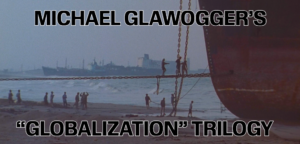
A protege of fellow Austrian Ulrich Seidl, Glawogger was occasionally painted with the brush of “provocateur,” but his deep empathy, humor, and relentless curiosity guides his films even through the most challenging subject matter. His “Globalization Trilogy” is a triptych of documentaries loosely dealing with the effects of shifting economic markets and modernization on some of the world’s most disenfranchised workers — though Glawogger disliked the “Globalization” framing, eschewing academic detachment to emphasize his audience and subjects’ shared humanity. In each of these films, Glawogger avoids ethnographic trappings by placing his protagonists center stage, never trivializing or overtly romanticizing them even as they experience some of the harshest conditions imaginable.
Glawogger contracted his fatal illness in Liberia, where he was shooting what would be his final film. He kept a production diary, in which, three days before his untimely death, he wrote what would turn out to be a fitting eulogy:
“When he was still a child, he used to think: But the world is so big. – He could not imagine how, for example, a wanted criminal should not be able to hide anywhere where he could not be found. … It was not for he himself had committed a crime nor did he intend to. But the possibility of disappearing was alluring and comforting in its abstractness. Then he would lead his life somewhere else, with a different routine, different trouble, and a different sense of time. With some venturous pain and lots of unimagined luck.”
MEGACITIES
dir. Michael Glawogger, 1998
Austria/Switzerland. 94 min.
In English, Hindi, Russian, and Spanish.
FRIDAY, SEPTEMBER 11 – 10 PM
WEDNESDAY, SEPTEMBER 16 – 7:30 PM
TUESDAY, SEPTEMBER 22 – 10 PM
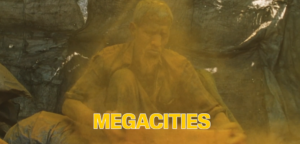
Glawogger’s first major feature documentary, in which his style is already fully crystalized, almost seems like the anti-KOYAANIQATSI. MEGACITIES explores twelve separate narratives throughout four of the world’s largest cities: Mumbai, Mexico City, New York City, and Moscow.
From a man sewing film strips together by hand, to teen pickpockets, to a street hustler caught in the middle of the Giuliani-fication of Times Square, MEGACITIES documents how human beings improvise to survive in the face of urban poverty, providing a fascinating portrait of global ecosystems at the turn of the century.
WORKINGMAN’S DEATH
dir. Michael Glawogger, 2005
Austria/Germany. 122 min.
In English, Pashto, Yoruba, German, Igbo, Indonesian, Mandarin, and Russian.
TUESDAY, SEPTEMBER 7 – 7:30 PM
THURSDAY. SEPTEMBER 17 – 7:30 PM (w/ Intro by Dennis Lim)
SUNDAY, SEPTEMBER 20 – 5 PM
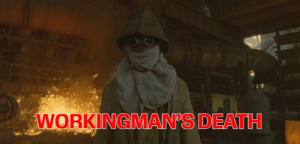
WORKINGMAN’S DEATH serves as both chronicle of a eulogy for modes of manual labor in the 20th century. Told in five chapters, it follows independent coal miners in Ukraine, Indonesian sulphur carriers near a volcano, Nigerian goat slaughterers at an open-air meat market (animal lovers be warned), Pakistani ship breakers, and Chinese steelworkers as they carry out their grueling duties amongst a fast evolving post-industrial landscape.
In the wake of NAFTA and the consolidation of world economic power, Glawogger considers the relationship of labor to personal worth, at a time — much like our own — when imperatives of growth dictated that human capital be measured in terms of output, and devalued through automation. Featuring an uncharacteristically restrained score from John Zorn and breathtaking Steadicam cinematography from Wolfgang Thaler, WORKINGMAN’S DEATH is one of the most accomplished and striking documentaries of the 21st century.
Notes on intro: Dennis Lim is a film critic, author, and artistic director of the New York Film Festival.

WHORE’S GLORY
dir. Michael Glawogger, 2011
Austria/Germany. 110 min.
In Thai, Bengali, and Spanish.
FRIDAY, SEPTEMBER 4 – 7:30 PM (w/ Intro by Lucy Zentgraf)
TUESDAY, SEPTEMBER 15 – 7:30 PM
THURSDAY, SEPTEMBER 24 – 10 PM
Glawogger’s final completed film explores prostitution in three disparate semi-autonomous economic and religious zones: a brightly lit high-end brothel in Bangkok, a claustrophobic urban compound in Bangladesh, and a ghostly border-town motel in Mexico. The film vividly captures the often unseen daily rituals, transactions, and hierarchies of power that anchor these unique environments and the people who converge there.
Glawogger — who compensated his subjects financially for their participation in his film — blends his usual staged reenactments with visceral and often haunting interviews with sex workers and their clients, making for a precarious mix that seems like the natural culmination of the approach he perfected over his career. Made over the course of four years, WHORE’S GLORY raises questions about both the historic portrayal of sex work onscreen, and the inherent exploitative nature of filmmaking itself.
Notes on intro: Lucy Zentgraf is a Brooklyn-based writer, anthropologist, former sex worker, and feminist organizer fighting for the liberation of queer women.