MATCH CUTS PRESENTS: ALEX MAR’S AMERICAN MYSTIC

MATCHCUTS_banner_Mar2017AMERICAN MYSTIC
dir. Alex Mar, 2010.
USA, 80 min.
English.

TUESDAY, MARCH 28 – 7:30 PM
DIRECTOR ALEX MAR IN ATTENDANCE! *ONE NIGHT ONLY!*

GET YOUR TICKETS!

Spectacle Theater is excited to collaborate with critical platform Match Cuts on a new series of screenings.  Scroll down for more information on Match Cuts.

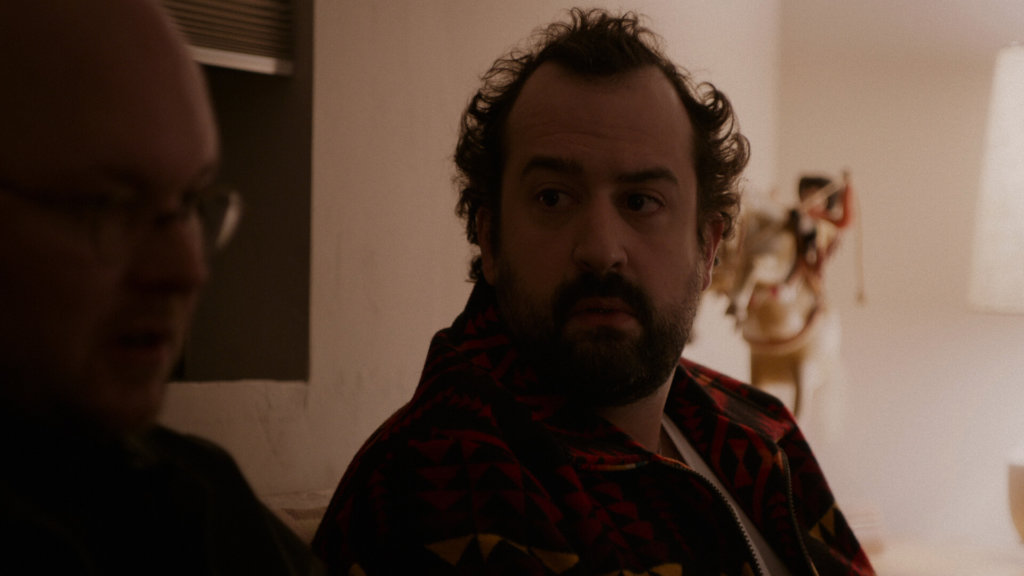
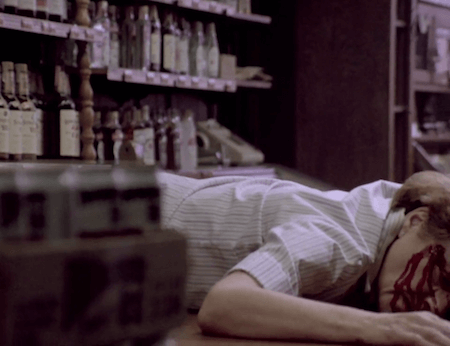
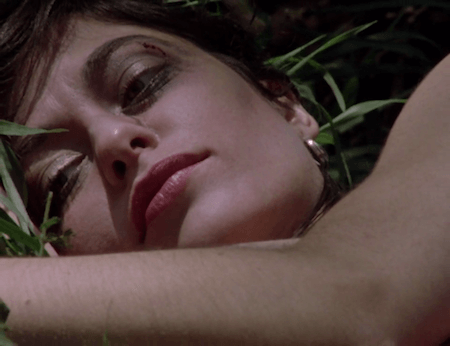
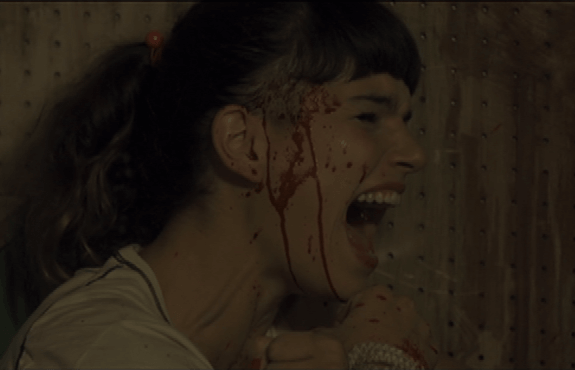
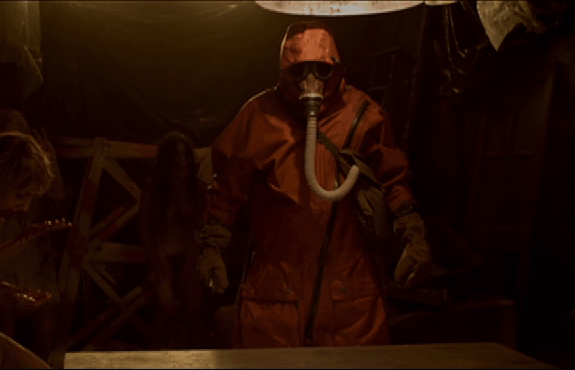
“Set against the rich, color-soaked backdrop of America’s rural landscapes, Alex Mar’s lyrical documentary braids together the stories of three young Americans who have chosen to sacrifice comforts in order to embrace the fringes of alternative religion. The subjects include Chuck, a Lakota Sioux sundancer in the badlands of South Dakota; Morpheus, a Pagan priestess living off the grid in northern California’s old mining country; and Kublai, a Spiritualist medium in the former revivalist district of upstate New York.

In the radical, separatist spirit of early America, each has extracted themselves from the mainstream in order to live immersed in their faith and to seize a different way of life. Mar takes a personal, visually lush approach, enveloping the viewer in the subjects’ experience of their controversial faiths through their own words, their rituals, and the sprawling, majestic imagery that makes up each of their worlds.

Director Alex Mar is also the author of Witches of America, which was inspired by and features some of the subjects of this film. Signed paperbacks will be available at the screening.

The movie was produced by Mar and Nicholas Shumaker, and edited by Andy Grieve (Errol Morris’s Standard Operating Procedure, Alex Gibney’s Going Clear). It features cinematography by Gregory Mitnick and a score by composer Nathan Larson (formerly of the band Shudder to Think).”

Match Cuts is a weekly podcast centered on video, film and the moving image. Match Cuts Presents is dedicated to presenting de-colonialized cinema, LGBTQI films, Marxist diatribes, video art, dance films, sex films, and activist documentaries with a rotating cast of presenters from all spectrums of the performing and plastic arts and surrounding humanities. Match Cuts is hosted by Nick Faust and Kachine Moore.

CATFIGHT

Catfight_bannerCATFIGHT
dir. Onur Tukel, 2016.
US. 96 min.

FRIDAY, MARCH 3 – 10 PM
SATURDAY, MARCH 4 – 7:30 PM
SUNDAY, MARCH 5 – 7:30 PM
MONDAY, MARCH 6 – 10 PM
TUESDAY, MARCH 7 – 7:30 PM
WEDNESDAY, MARCH 8 – 10 PM
THURSDAY, MARCH 9 – 7:30 PM

GET YOUR TICKETS!

*New York Premiere!*
Q&As with Special Guests!

Spectacle is pleased to present the New York premiere and limited theatrical run of local cult filmmaker Onur Tukel’s bloody satire CATFIGHT, coming off of its knockout premiere at the Toronto International Film Festival.

Two former college friends, who now find themselves in very different walks of life, meet up at a fancy cocktail party: Veronica (Sandra Oh) has become the entitled, wine-loving wife of a rich businessman, while Ashley (Anne Heche), along with her lover Lisa (Alicia Silverstone), struggles to make ends meet as an artist. As the two women reconnect, long-buried hostilities, jealousy, and anger explode into a vicious fight that leaves both of them battered and bruised – and ready for more.

CATFIGHT is a brutally hilarious story of two bitter rivals whose grudge match spans a lifetime.

“CATFIGHT blends the sublime and absurd with the concise lunacy of a Kurt Vonnegut novel.”
-Eric Kohn, Indiewire


MUBI presents: LE PARC

ParcBanner

LE PARC
dir. Damien Manivel, 2016
71 minutes. France.
In French with English subtitles.

FRIDAY, FEBRUARY 10 – 7:30 PM
WEDNESDAY, FEBRUARY 22 – 7:30 PM
SATURDAY, FEBRUARY 25 – 7:30 PM

GET YOUR TICKETS!

Spectacle is proud to host the New York premiere of Damien Manivel’s LE PARC, the inaugural title of MUBI Discoveries – a series of festival gems curated and presented exclusively by MUBI.

A teenage boy and girl have their first date in a park. Hesitant and shy at first, they soon discover each other, get closer as they wander, and end up falling in love. But as the sun goes down, it is time to part… And a dark night begins.

Official Selection: Cannes ACID, Vienna Film Festival, Torino Film Festival, Gent Film Festival, CPH:PIX Copenhagen Film Festival, Montreal Festival du Nouveau Cinéma, Mar del Plata Film Festival and Valdivia International Film Festival

“LE PARC plays like a remake of BEFORE SUNRISE directed by Apichatpong Weerasethakul or the late Manoel de Oliveira, offering up a shred of story filled with touches of humor and bizarre occurrences that take place in some sort of dreamlike realm.”
 Jordan Mintzer, The Hollywood Reporter

“Infused with a kind of ‘realist surrealism,’ a simple magic evoked through static shots reminiscent of the work of Pedro Costa or, going back further, Robert Bresson. In the end, its whimsical notions turn out to be as appealing as they are intriguing.” – David Gonzales, Cineuropa

“A beautiful labyrinth of emotions.” – Liberation

“Manivel’s directing enchants” – Le Figaro


Le_Parc-MUBI

REVOLUTIONARY EXILE: SIDNEY SOKHONA

Screen Shot 2017-01-30 at 5.28.53 AM

Sidney Sokhona’s NATIONALITÉ: IMMIGRÉ and SAFRANA (OR, THE RIGHT TO SPEAK) should constitute 11th-hour addendums to the canon of post-colonial Francophone cinema. Made when Sokhona was in his early 20s, recoiling from a rash of exploitations and abuses in France’s African migrant community, the films form a blistering duo: NATIONALITÉ: IMMIGRÉ dramatizes the real-life rent strike undertaken by Sokhona and his neighbors in the Rue Riquet settlement housing, a “docu-fiction” of its own community in collaboration that’s unlike anything you’ve before seen in “world cinema”.

Assuming the position of both French and African filmmaker, Sokhona published a kind of manifesto in Cahiers du Cinema entitled Notre Cinema (Our Cinema), wherein he decried the cultural feedback loop enabled by state funding (especially in postcolonial cases), the incessant use of African landscapes as backdrops for tawdry Western melodramas, and the pigeonholing of black movies in festival programming – citing that the 1976 Cannes Film Festival included CAR WASH in its main slate, but consigned Ousmane Sembene’s CEDDO to competition in Directors’ Fortnight. If SAFRANA closes on an impossibly optimistic note for Sokhona (as the audience has, over the too-brief course of two movies, come to understand him), it reveals itself in hindsight as a byproduct of the French example, wherein the the organizing onscreen bears a utopian fruit that’s nevertheless untrustworthy. (Sokhona alleges that audiences were far more skeptical about the immigrants’ warm countryside reception in discussions following screenings in Paris.) What’s universalized in the humiliations of NATIONALITÉ: IMMIGRÉ remains – or as Sokhona put it to Cahiers, “Immigration has not only served to alienate us but also to teach us to be ashamed of what we were before. Any immigrant with a conscience realizes he has as much to claim on the workers’ side as the farmers’, today.”

A consortium of West African immigrants would band together in Paris to form the Cultural Association of African Workers in France (ACTAF), an organization in solidarity with liberation struggles in former Portuguese colonies. ACTAF would become the Somankidi collective, making a healthier living off the farming practices depicted in SAFRANA – making it a sequel both political and socioeconomic to Sokhona’s first film. The laborers relocated to the Senegal river, where they remain today; founding member (and SAFRANA star/participant) Bouba Touré would later tell multidisciplinary artist Raphaël Grisey that Somankidi Coura was founded “because we didn’t want our brothers, our cousins, to come sell their labor in France.” To see 8mm images from the cooperative’s founding – vibrant young African men in snappy duds, at once relaxing and working together on a shared cane harvest – is to reckon with their post-postcolonial power. Grisey’s split panel documentary COOPERATIVE observes the ongoing collective in juxtaposition with the village’s Parisian roots of origin, whereas BOUBA TOURE, 58 RUE TROUSSEAU, 75011 PARIS FRANCE allows its namesake to contextualize the political struggles of the time (including a tacit, unignorable Pan-Africanism) while surveying the walls of his apartment in Paris.

As the Somankidi Coura celebrated its 40th anniversary this past January (complete with an exhibition of Bouba Touré’s photographs), Spectacle is thrilled to present these rare and invaluable films in their first-ever New York City screenings.

This series is made possible solely thanks to the collaboration of Raphaël Grisey, Tobias Hering of Kino Arsenal, Cinémathèque Afrique/Institut Français, and Amélie Garin-Davet of the Cultural Services of the French Embassy. 

NIbannerNATIONALITÉ: IMMIGRÉ
(Nationality: Immigrant)
Dir. Sidney Sokhona, 1975
France. 70 mins.
In French with English subtitles.
OFFICIAL SELECTION – 1976 CANNES FILM FESTIVAL
THURSDAY, FEBRUARY 9 – 7:30 PM
SUNDAY, FEBRUARY 12 – 5 PM
FRIDAY, FEBRUARY 17 – 7:30 PM
WEDNESDAY, FEBRUARY 22 – 10 PM

GET YOUR TICKETS!

One could hardly be blamed for interpreting NATIONALITÉ: IMMIGRÉ as an endless litany of dehumanizing bureaucratic obstacle courses – as Serge Daney pointed out in his review “On Paper”, the film juts uncomfortably against the militant Left’s emphasis on using rupture theory to delegitimize the legal process, a high-minded option unavailable to immigrants like those depicted here. Sokhona took to filming after the Aubervilliers scandal of January 1970 – when five African migrants died in an overcrowded shelter on the periphery of Paris due to asphyxiation – prompting then-Prime Minister Jacques Chaban-Delmas to declare an end of these settlements, sometimes nicknamed bidonvilles or caves, by 1973. The filmmaker wasn’t so optimistic – but then, what NATIONALITÉ: IMMIGRÉ does offer is a rare glimpse at community organizing coming into praxis on both sides of the camera, with many of Sokhona’s neighbors playing themselves. (Sokhona financed the film in piecemeal fashion once scene at a time while working as a telephone operator.) While the thrust of NATIONALITÉ: IMMIGRÉ is unabashedly polemical, the loose narrative structure allows Sokhona to pursue fascinating side-stories and political tangents, at times dipping from what appears to be pure verite into a purely Brechtian exercise wherein immigrants are handed jobs in the form of huge placards, which they must carry around their necks, denoting their net worth to society in material terms.

In Cahiers, Sokhona would elaborate to Daney and Jean-Pierre Oudart that “I was not sure that he who had loved NATIONALITÉ: IMMIGRÉ would like it – which does not mean that no one can love both. SAFRANA is, for me, the continuation of N:I. At the time it was done, compared to the reality of that time, there were a number of plans in the construction of the film itself on which we had to pass. For the first time, perhaps, people saw things they had never seen – so their membership was much simpler. I think people also ask: should a film about immigration be cinema? N.I. was in black and white, there was a certain desired poverty – it’s unthinkable to film an immigrant’s home in color…. People will go see a movie; of course they will see a subject, but it must be possible to express it in a very simple way. I think a political film – or engagé – can use other weapons, and touch a large number of people taking account of the movies.”

SAFRANAbanner

SAFRANA
(Safrana, Or, The Right To Speak)
Dir. Sidney Sokhona, 1976
France. 98 mins.
In French with English subtitles.
THURSDAY, FEBRUARY 2 – 7:30 PM
SATURDAY, FEBRUARY 4 – 5 PM
TUESDAY, FEBRUARY 7 – 10 PM
MONDAY, FEBRUARY 27 – 7:30 PM

GET YOUR TICKETS!

Like Med Hondo’s SOLEIL O. and Jean Rouch’s PETIT A PETIT, Sidney Sokhona’s SAFRANA (OR, THE RIGHT TO SPEAK) is both a satire of transition after French colonialism and a look at the alienation felt by African migrant communities in nations of their former colonizers. Operating as a reverse ethnography, these films took field notes on European social norms and put their notion of what is standard into question. Alternating between observational comedy and instructional political tract, SAFRANA starts with a quote by Mao about intuitive approaches to figuring out what’s useful for one’s own country in the operations of another, and ends with a documentary on farming techniques for agrarian socialism. A road trip, punctuated by acidic flashback vignettes, gets us from A to B by sketching a former colonizer with less to offer the formerly colonized than vice versa.

The film is built around Somankidi Coura, with its ex-factory workers turned farmers playing fictionalized versions of themselves, along with photographer/activist Bouba Touré. With a number of pointed gags, Sokhona charts the various disenchantments of the workers on their exploratory stay in France meant to pick up useful techniques for their home country – from tertiary status at a factory to secondary status in a union; or the casual racism of a couple that won’t let an African garbageman pick up their dog from a trash can to another that wants to bring home a foreigner for kinks. By the time they end up at the farm, we’re as ready for the possible solutions explored in the climax as they are.

COOPERATIVEbanner

COOPERATIVE
Dir. Raphaël Grisey, 2008
France. 59 mins.
In French with English subtitles.
BOUBA TOURE, 58 RUE TROUSSEAU, 75011 PARIS, FRANCE
Dir. Bouba Touré, 2008
France. 28 mins.
In French with English subtitles.
SUNDAY, FEBRUARY 5 – 7:30 PM
TUESDAY, FEBRUARY 21 – 10 PM
TUESDAY, FEBRUARY 28 – 5 PM

GET YOUR TICKETS!

COOPERATIVE refers to the agricultural cooperative in Mali founded in 1976 by former African immigrant workers who lived through the politics of 1968 in France. The juxtaposition of different spaces (the village, the fields,  the Senegalese city of Kayes, the colonial ruins of the Samé Plantation, the flat of Bouba Touré, Parisian streets with demonstrations of Sans-Papiers, etc) reformulates the context of creation of the community, as well as its daily life and its mode of production. Inevitably, Grisey’s title also refers to a mode of cooperation in the filmmaking process.

BOUBA TOURE, 58 RUE TROUSSEAU, 75011 PARIS FRANCE was shot in its namesake’s home, featuring many photographs, posters and keepsakes. Shot in two takes, the video is led by the images on the wall, while Touré links many political struggles of the last 50 years with his own life.  

Bouba Touré began working in the building sector and the car industry in 1963, when he arrived in France from Mali. He later studied photography and film projection at the free university of Vincennes in 1968 and 1969. In addition to starring in SAFRANA, he served 35 years as projectionist for the arthouse cinema L´entrepôt in Paris, and co-founded the agricultural cooperative of Somankidi Coura in 1976 with West African militant migrant workers. His photographic, video and archive works as well as his writings (a book titled Notre case est à St Denis 93, published in 2015) relate to social and political struggles of the migrant workers in France.

Raphaël Grisey’s video, editorial and photographic work examines various places which are interconnected by collective memories. The photographic series and book Where is Rosa L. (2001-2006) studied the traces or ghosts of various political regimes in Berliner public spaces. Using diverse documentary, fictional or essayist forms, Grisey’s work also deals with social and political issues of the day, such as immigration and post-colonial issues in France and West Africa (Trappes, Ville Nouvelle, 2003; Cooperative, 2008; Becoming Cooperative Archive 2015-present). Recent films lead him to work in Budapest (National Motives, 2011), in French students´ strikes situations (The Indians, 2011), in China (The Exchange of Perspectives, 2011), in Brazil around the social housing complex Pedregulho (Minhocão 2011), the history of the Brazilian Positivist Church (Amor e Progresso 2014) or around Quilombola communities (Remanescentes 2015; A Mina dos Vagalumes). His work includes also collaboration projects such as the films Prvi Deo and Red Star (2006)  with Florence Lazar and the projects Cooperative (2008) and Becoming Cooperative Archive (2015- ongoing) with Bouba Touré.

Sidney Sokhona was born in Tachott, Mauritania, in 1952. He worked in Paris as a day-laborer, sending remittances home to his village before enrolling in film classes at the University of Vincennes. After making SAFRANA he returned to his home country to shoot newsreel and documentary footage, but never made another feature. As of this writing, he works as a diplomat for the government of Mauritania.

FEBRUARY MIDNIGHTS


nightstick banner

NIGHTSTICK
dir. Joseph L. Scanlan, 1987
USA/Canada, 95 minutes
English.

SATURDAY, FEBRUARY 4 – MIDNIGHT
THURSDAY, FEBRUARY 9 – 10 PM *PRIME TIME!*
FRIDAY, FEBRUARY 17 – MIDNIGHT

GET YOUR TICKETS!

A cop tries to prevent a gang of extortionists from blowing up New York City with nitroglycerin in this movie about a cop who tries to prevent a gang of extortionists from BLOWING UP NEW YORK CITY WITH NITROGLYCERIN. This made-for-TV US/Canadian co-production, which is about a cop who tries to prevent a gang of extortionists from blowing up New York City with nitroglycerin, features Robert Vaughan, Leslie Neilsen and John Veron, and is about a cop who tries to prevent a gang of extortionists from blowing up New York City with nitroglycerin.


self-defense banner
SELF DEFENSE
Dir. Paul Donovan, 1983
Canada, 84 min.

SATURDAY, FEBRUARY 11 – MIDNIGHT
FRIDAY, FEBRUARY 24 – MIDNIGHT

GET YOUR TICKETS!

In the Canadian vigilante epic SELF DEFENSE, gang members take advantage of a Halifax police strike to go on a gay bashing rampage, but when they besiege an apartment complex, the residents fight back with booby traps and, yes, self-defense. It’s a near-future Nova Scotian bloodbath in the tradition of DEATH WISH 3 and HOME ALONE. From Paul Donovan, director of video store staple DEF-CON 4 and the unpopular sci-fi series LEXX.


police-captain-banner

CONFESSIONS OF A POLICE CAPTAIN
(aka CONFESSIONE DI UN COMMISSARIO DI POLIZIA AL PROCURATORE DELLA REPUBBLICA)
Dir. Damiano Damiani
Italy, 101 min.
In Italian with English subtitles

FRIDAY, FEBRUARY 10 – MIDNITE 

GET YOUR TICKETS!

“One of these days you’ll turn on the tap and blood will run out.”

Commissario Bonavia (Martin Balsam, in a role originally planned for Ben Gazarra, which is easy to imagine) is the titular police captain, willing to go outside the law to prosecute those protected by the Mafia, whose presence is everywhere, perverting justice to its ends. This is the mob as a Catholic force of evil, a presence which can kill from a distance, an endless network of paid politicians and crooked cops. At his side is Deputy D.A. Traini, played by the equally great Franco Nero (where do you even start with Nero), with elegance to spare, until Certainly a must for polizioteschi fans, though far more in the vein of INVESTIGATION OF A CITIZEN UNDER SUSPICION than, say, LIVE LIKE A COP DIE LIKE A MAN. Director Damiano Damiani (who brought us the insane LA STREGA IN AMORE, A BULLET FOR THE GENERAL and AMITYVILLE 2: THE POSSESSION!) knows exactly how best to play the corruption in which our antagonists find themselves: inescapable, fundamental, and ultimately victorious.

Featuring a jaw-dropping score by master Riz Ortolani, it’s a film perfectly suited to an age where a corrupt politician aided by a diabolical force rewards cronies and lackeys the same as enemies and anyone who stands against them: violent retribution.


snuff_banner

THE EVOLUTION OF SNUFF
Dir. Andrzej Kostenko, Karl Martine, Wes Craven (will explain below), 1979
West Germany, 79 min.

FRIDAY, FEBRUARY 3 – MIDNIGHT
SATURDAY, FEBRUARY 18 – MIDNIGHT

GET YOUR TICKETS!

“The death of the soul begins when the human being no longer sees any sense in his existence.”

There is a certain type of documentary, often German, that combines public domain footage of lurid crimes interwoven with a lurid if muddled primary story line, then overlaid with deadpan narration to make some sort of existential point about the ruination of society. It’s close to a Mondo film, close to underground sleaze, close to a scuzzier Making A Murderer/The Jinx, yet not quite any of those. There must be a German word for it. THE EVOLUTION OF SNUFF is a profoundly confusing example of this genre. Starting with pedophile Roman Polanski, not terribly long after the death of his wife, pontificating on that sad old chestnut: the snuff film. This leads us to believe what we’re going to see is a documentary about a film where a person is murdered on camera, right? Wrong! We get a making-of film about a wigged-out pornographic version of Lysistrata, which probably has some of you confused, until you learn the twist is instead of the solidarity of celibacy the women are going to screw the guys so much they have to submit to their whims. From here we go to a mix of William Kleinian absurdity counterbalanced by the relentlessly sardonic narration as things go from bad to weird to worse. Please stay for what might just be the most insane ending of a film ever, built around stolen outtakes from Last House On The Left! Bring a date! We dare you!

A GRIN WITHOUT A CAT

GrinBanner
A GRIN WITHOUT A CAT
(Scenes from the Third World War 1967-1977)
aka LE FOND DE L’AIR EST ROUGE (The Base of the Air Is Red)
Dir. Chris Marker, 1977/1992
France, 180 min. (in two parts with a break in the middle)
In French, English, German, Japanese, Russian, Czech, Spanish, and more with English subtitles.

Special thanks to Icarus Films.

SATURDAY, FEBRUARY 11 – 3 PM
SATURDAY, FEBRUARY 18 – 3 PM
SATURDAY, FEBRUARY 25 – 1:30 PM
TUESDAY, FEBRUARY 28 – 7:30 PM

GET YOUR TICKETS!

A GRIN WITHOUT A CAT is Chris Marker’s epic film-essay on the worldwide political wars of the 60’s and 70’s: Vietnam, Bolivia, May ’68, Prague, Chile, and the fate of the New Left.

The original French title is roughly translatable as “The Base of the Air is Red,” referring to the high hopes of the radicals at the time built on a foundation of air. Released in France in 1978, restored and “re-actualized” by Marker fifteen years later (after the fall of the Soviet Union), A GRIN WITHOUT A CAT is a masterpiece. Described by Marker as “scenes of the Third World War,” the film is divided into two parts, each weaving together two strands:

Part 1: Fragile Hands
1. From Vietnam to Che’s death
2. May 1968 and all that

Part 2: Severed Hands
1. From Spring in Prague to the Common Program of Government in France
2. From Chile to – to what?

From 1967 (the year Marker argues was the real turning point) on, A GRIN WITHOUT A CAT is a sweeping, global contemplation of a defining ten years’ political history.

“A film without a dogma, celebrating the promise of socialist ideas (the grin) while realizing that the brave new world they envision (the cat) remains elusive and intangible as its twentieth-century trial runs slip farther into the past… On a deeper level, A GRIN WITHOUT A CAT is an essay on historical memory itself.” —David Sterritt, Cineaste

“No scan of Marker’s redoubtable career achievement is complete without strapping oneself to this restless behemoth of a historical documentary… Along the way, Marker is a master weaver of colliding perspectives, forgotten stories and unanswered questions… the poetic questions he raises are never less than stunning.” —Michael Atkinson, Sight & Sound

“Much more than a weapon, more than a history lesson intended to provoke our revolutionary consciousness, this feature film is the result of lucid reflection and profound honesty.” — Michel Perez, Le Matin, November 25, 1977

“A beautiful poem in red, luminous with sensitivity and intelligence.” — Serge Richard, L’Unité, December 9, 1977

“This film is a mirror held up to each of us, a mirror that wanders through all the paths that we have taken or crossed (Vietnam war protests, pro-Latin America movement, May of ’68, the rise and fall of the Left) and encourages us to reflect along with it about the journey and its goal.” — Regis Debray, Rouge, December 28, 1977

“Image, imaginary, imagination, imagery… and revolution. Chris Marker delves into his enormous reservoir of images from the past ten years, both official and candid, sorts, selects, puts them into perspective, in context, into opposition, and by allowing us to re-see, to re-read our recent past, attempts to imagine the future.” — Alain Remond, Telerama, December 3/9, 1977

“A trial for the viewer: One cannot absorb four hours of so much history, kneaded, tormented, perpetually reexamined, without wondering if the end of the world is not near. To interpret the film in that way would be to betray its meaning, and that is where Chris Marker’s work becomes somewhat like a mirror held up to our awareness: not a traditional humanist awareness, but an active awareness. That is where progressivism regains meaning. And especially, that is where film now asserts itself as the possible and practically indispensable tool of awareness, to put back into perspective so many dashed hopes, so many betrayals.” — Louis Marcorelles, Le Monde, November 5, 1977

“Fifteen years later, his work as a filmmaker has the density of a Pierre Bourdieu sociological survey or a Fernand Braudel historical opus… In this thoughtful exercise in style, A GRIN WITHOUT A CAT teems with lost illusions, but no errors. Finally, Chris Marker’s film is being used rather than abused. The reason undoubtedly resides in this little phrase slipped into the second episode: ‘You never know what you’re filming. Until years later.’ In 1993, A GRIN WITHOUT A CAT accomplishes the tour de force of avoiding three potential pitfalls. It is not a likable witness to times past; it is not a summation, and still less the act of contrition of a lost generation. It is all about memory and social anthropology.” — Michel Chemin, Libération, April 1993

MATCH CUTS PRESENTS: BRADFORD KESSLER’S -1% w/ PAUL MORRISSEY’S WOMEN IN REVOLT

MATCHCUTS_Feb_2017_banner

Spectacle Theater is excited to collaborate with critical platform Match Cuts on a new series of screenings. Scroll down for more information on Match Cuts.

TUESDAY FEB 21 – 7:30 PM

GET YOUR TICKETS!

-1%
dir. Bradford Kessler, 2014.
USA, 6 min.

“-1% is a sex satire set in an Occupy-esque moment. A cynical world-weary female aristocrat who goes cruising for some ‘Washington Square Park’ idealistic boy. Mayhem ensues. Featuring: Ethel Clavicle, Colton Brock and Cyril Duval.”

WOMEN IN REVOLT
Dir. Paul Morrissey, 1971
USA, 97 min.

Featuring Candy Darling, Jackie Curtis, Holly Woodlawn and Jane Forth. With music by John Cale.

Three of the most indelible transgender icons of all time play militant feminists in this incredible film which is so much more than parody. Jackie Curtis and Holly Woodlawn have had it with men and their foul ways, so they join a militant feminist organization called PIG (Politically Involved Girls). Candy Darling is a wealthy socialite from Park Avenue (or Long Island – they can’t keep it straight) who they draw into the group to give it legitimacy, but it turns out that she’s having an incestuous relationship with her brother. Regardless, the three quickly become enemies: “I could just plunge a knife right into her back.” “Oh no, it’s too bloody!” “Well, I could do it and just not look.” Holly Woodlawn becomes a Bowery bum and Jackie Curtis can’t stop hiring male prostitutes, while Candy becomes a famous actress: ‘I’m sick of incest and lesbianism. I’m ready for Hollywood.’

After WOMEN IN REVOLT previewed on 59th Street, it was protested by a feminist organization, who mistook the film for a caricature of feminism rather than a caricature of the popular discourse around feminism, not to mention a caricature of traditional gender roles. Candy Darling reportedly declared, ‘Who do these dykes think they are anyway? Well, I just hope they all read Vincent Canby’s review in today’s Times. He said I look like a cross between Kim Novak and Pat Nixon. It’s true – I do have Pat Nixon’s nose.'”

Match Cuts is a weekly podcast centered on video, film and the moving image. Match Cuts Presents is dedicated to presenting de-colonialized cinema, LGBTQI films, Marxist diatribes, video art, dance films, sex films, and activist documentaries with a rotating cast of presenters from all spectrums of the performing and plastic arts and surrounding humanities. Match Cuts is hosted by Nick Faust and Kachine Moore, and produced by Meg Murnane.

LOVE MASSACRE

lovemassacrebanner

LOVE MASSACRE (AI SHA)
Dir. Patrick Tam, 1981.
Hong Kong. 91 min.

SATURDAY, FEBRUARY 4 – 7:30 PM
FRIDAY, FEBRUARY 10 – 10 PM
TUESDAY, FEBRUARY 14 – 💔  7:30 PM  💔
SATURDAY, FEBRUARY 18 – 10 PM

GET YOUR TICKETS!

Hong Kong New Wave forerunner Patrick Tam’s second film LOVE MASSACRE was decried on release for its dissonant genre mashup and thin plot, entirely missing its beauty as a formal exercise in color and framing. The oversight is understandable – featuring two of Hong Kong’s most famous stars, Brigitte Lin and Charlie Chin (who, at the time of filming, were embroiled in a love-triangle scandal), audience expectations were set for a straightforward romance. Instead, the film’s split is blunt as its title implies, and after an initial San Francisco pas de quatre between young beauty Ivy (Lin), her obsessive (and ironically named) roommate Joy, Joy’s boyfriend Louie (Chin) and Joy’s brother Chiu Ching, the film follows Chiu Ching back to Hong Kong and into slasher territory. Promising to return and marry Ivy, Chiu Ching’s revealed to already have a wife, his former doctor in fact – Chiu Ching suffers from the same vague mental illness that destroyed his sister.Determined to be with Ivy at any cost, Chiu Ching hacks a bloody path back to her, holing up in her claustrophobic apartment building and taking on her housemates one by one.

Tam sees his first seven films “as exercises, as attempts at cinema, not as complete and accomplished works,” and of LOVE MASSACRE in particular that “the form and content are schizophrenic.” A hands-on perfectionist, Tam’s dismissal of his own film belies its clever use of genre. Brutal violence and obsession undercut traditional ‘love’ at every turn – despite good intentions, nice guy Louis rescues no one, and the love of a patient wife doesn’t save Chiu Ching. Tam’s San Francisco is strangely empty, with entire fields, bridges, highways and houses void of crowds, echoed by bookending shots of a lone desert trek. A feeling of isolation permeates, with characters hemmed in by objects. Tam’s right that the clunky dialogue is at odds with the gorgeous imagery – frequent Wong Kar-Wai collaborator William Chang uses a minimal color palette of blue, red, black and white in bold geometrics to create a De Stijl world characters pose in, where staging elicits emotions, not dialogue. The incongruous tension between lowbrow plot and high art, cool palette and fiery emotion, sudden gore and quiet interludes, make LOVE MASSACRE Tam’s most fascinating ‘failure’.

DESIRE WILL SET YOU FREE

Day 2

DESIRE WILL SET YOU FREE
dir. Yony Leyser, 2016.
Germany. 92 min.

2/24 7:30 PM
2/25 5 PM
2/26 7:30 PM

GET YOUR TICKETS!

New York Premiere Weekend
Q&A with Special Guests

The second film from director Yony Leyser, DESIRE WILL SET YOU FREE is a dizzying, vibrant guided tour contemporary Berlin seen from the point of view of two immigrants — an America writer and a Russian escort. DESIRE unravels the history of Berlin’s hedonistic queer underground, prodding into the unique subcultures of the landscape as the two travel through the perennial nightlife.

Featuring an über-large cast including Nina Hagen, Rosa von Praunheim, Peaches, and Blood Orange’s Dev Hynes (who also contributed music), this richly-detailed sensory overload made its US debut at Outfest last year.

Special thanks to Wavelength Pictures and Altered Innocence.

RIOT HOUR: INAUGURATION DAY 2017

Riot_hour_bannerRIOT HOUR: INAUGURATION DAY 2017
USA. Total runtime: 55 min.

SATURDAY, FEBRUARY 11 – 10:00 PM
MONDAY, FEBRUARY 13 – 10:00 PM

SATURDAY, FEBRUARY 25 – MIDNIGHT

GET YOUR TICKETS!

A homespun assembly of clips from this past month’s historic Women’s March events and other protests in response to Donald Trump’s January 20th inauguration.

State Cities attendance (APPROX) Notes
 California Los Angeles 750,000 The Los Angeles Police Department stated that “well past” 100,000 people attended the march, but did not attempt to make a more specific estimate. Officials stated that the march was the largest in Los Angeles since a 2006 immigration march attended by 500,000 people.[75] The Los Angeles Daily News reported that 750,000 people were in the crowd.[76]Organizers also said that 750,000 people had participated in the march.[77]
500,000[2][3] Virginia Governor Terry McAuliffe announced that he would attend the march instead of the inaugural parade. McAuliffe said he would be marching in Washington with his wife Dorothy, Lt. Gov. Ralph Northam and Cecile Richards, president of the Planned Parenthood Federation of America.[4] There were no arrests.[3]
 New York New York City 400,000 In Manhattan, hundreds of thousands marched. The rally began at Trump World Tower and One Dag Hammarskjold Plaza (near the Headquarters of the United Nations) and the march proceeded to Trump Tower, Trump’s home.[372][373] The Office of the Mayor of New York City announced that the number of attendees was over 400,000.[374][375]
 Illinois Chicago 250,000[212] Organizers for the sister march in Chicago, Illinois, initially prepared for a crowd of 22,000.[213] An estimated 250,000 protesters[214] gathered in Grant Park for an initial rally to be followed by a march, with attendance far more than expected.[215] As a result, the official march was cancelled, although marchers then flooded the streets of the Chicago Loop.[216] Liz Radford, an organizer, informed the crowd, “We called, and you came. We have flooded the march route. We have flooded Chicago.”[215]
 Washington Seattle 175,000[555] The Women’s March on Seattle march took place from Judkins Park to the Space Needle in Seattle, Washington. Participants filled the entire length of the 3.6-mile (5.8 km) route.[556][557] Sound Transit and King County Metro rerouted many bus routes and added additional Link light rail service in anticipation of disruption to the city’s transportation grid.[558]
 Massachusetts Boston 150,000–175,000[274][275][276] A women’s march took place at the Boston Common in downtown Boston, Massachusetts. United States Senators Elizabeth Warren and Ed Markey spoke to the crowd.[277] An estimated 150,000[276] to 175,000[278] people attended.
 California Oakland 100,000[84]
 California San Francisco 100,000–150,000[102][103] The rally was held at Civic Center Plaza, where San Francisco City Hall was lit pink in observance of the protest.[104] Performer and activist Joan Baez serenaded the crowd with “We Shall Overcome” in Spanish.[105]
 Colorado Denver 100,000–200,000[137] A protest occurred at the Civic Center.[137]
 Oregon Portland 100,000 People attended the Women’s March on Portland.[441]
 Minnesota St. Paul 90,000–100,000[314] People marched to the Minnesota State Capitol from various parts of the city. A spokesman for the St. Paul Police stated it was the largest protest in the city since the 2008 Republican National Convention.[315]
 Wisconsin Madison 75,000–100,000[576] The protest occurred around the Wisconsin State Capitol and along State Street in Madison.[576]

Media related to Madison Women’s March at Wikimedia Commons

 Georgia Atlanta 60,000[182] John Lewis attended the Atlanta rally, which saw more than 60,000 march to the Georgia State Capitol.[182]
 Pennsylvania Philadelphia 50,000[451][452] The event included an actual march from Logan Square to Eakins Oval, and a rally at Eakins Oval.[453]
 California San Diego 40,000–50,000 Two marches were held. One march in downtown San Diego had an estimated 30,000 to 40,000 attend, and another in neighboring San Marcos, California had an estimated 10,000 attend.[99][100] A march with 50 senior citizens took place at the Seacrest Village retirement center.[101]
 Texas Austin 40,000–50,000[484] The crowd gathered at the Texas State Capitol and marched through the streets of downtown Austin for the Women’s March on Austin. The Austin Police Department estimated that the crowd was about 40,000 to 50,000, becoming the largest march in Texas history.[485][486][487][488]
 Iowa Des Moines 26,000[242] The march near the Iowa State Capitol included women, men and children supporting women’s rights and healthcare, environmental issues, and immigration[242]
 California San Jose 25,000[106][107][104]
 North Carolina Charlotte 25,000[392] Lasting from 10 a.m. to noon, attendance was ten times what had been expected, according to event organizers.[393] Some participants came from surrounding communities, including Concord, Rock Hill and Indian Trail. Attendees included Mayor Jennifer Roberts, U.S. Rep. Alma Adams (D-Charlotte) and state Senator Jeff Jackson (D-Mecklenburg). According to the CMPD, the march was peaceful, with no arrests or disturbances reported.[394]
 Pennsylvania Pittsburgh 25,000[454] Marched through the city to Market Square.
 Texas Houston 22,000[502] Starting at the Sabine Street Bridge, protesters marched through downtown to Houston City Hall.[502][503] Houston Mayor Sylvester Turner spoke out during the event.[504]
 Arizona Phoenix 20,000[37] The march progressed from the Capitol south to Jefferson, east to 15th Avenue, north to Monroe Street, west to 17th Avenue and back to the Capitol. Speakers at rallies before and after the march included State Rep. Athena Salman (Tempe), U.S. Rep. Ruben Gallego, disability-rights activist Jennifer Longdon, who noted that moments after Trump was sworn in as the 45th president of the United States, the White House website was overhauled to remove pages dedicated to disabilities, civil rights, and LGBT issues, Jodi Liggett, Planned Parenthood‘s vice president of public affairs, and Maricopa County Recorder Adrian Fontes.[37]
 California Sacramento 20,000[96] 20,000 Marched from Southside Park to the California State Capitol.
 California Santa Ana 20,000–25,000[111][69]
 Florida St. Petersburg 20,000+ Over 20,000 people marched in downtown St. Petersburg, making it the largest demonstration in the city’s history.[176][177]
 Vermont Montpelier 20,000[376] Bernie Sanders attended the event.[524]
 North Carolina Raleigh 17,000 People demonstrated peacefully at the Raleigh Women’s March. U.S. Representative David Price also attended.[400]
 Arizona Tucson 15,000[37][41][42] The demonstration was peaceful,[37] whith no incidents or arrests reported.[43]
 California Santa Cruz 15,000+[114] Several people commented that it was the largest march in Santa Cruz history.[115]
 Ohio Cleveland 15,000 Protesters gathered at Public Square and then marched through Downtown.[410]
 Tennessee Nashville 15,000+[479] Participants marched about one mile (1.6 km) through downtown Nashville. The march started at Cumberland Park near Nissan Stadium, crossed the Cumberland River on the John Seigenthaler Pedestrian Bridge, and ended at Public Square.[479]
 Florida Tallahassee 14,000+[178] Over 14,000 people of the capital’s communities showed up to protest. Despite forecasts for heavy rain, the crowd poured into the Railroad Square Arts location before marching up the road to the Florida A&M University Recreation center. Most of the protesters turned out for the march, and due to the small indoor venue, less than a tenth of those attending were able to view the speakers rally. This may be the largest protest in Florida’s capitol history.
 Missouri St. Louis 13,000 People marched peacefully in downtown St. Louis from Union Station to a rally at Luther Ely Smith Square.[322]
 Nebraska Omaha 12,000–14,000[329]
 Oklahoma Oklahoma City 12,000+ Demonstrations were held in front of the Oklahoma State Capitol.[418]
 Michigan Ann Arbor 11,000 Protesters rallied in Ann Arbor, Michigan, and attended a speech afterwards by U.S. Representative Debbie Dingell (pictured) on the University of Michigan campus.[290]
 California Walnut Creek 10,000[125] Streets were closed as thousands marched in downtown Walnut Creek. Speakers included Nancy Skinner, Eric Swalwell, Steve Glazer and Mark DeSaulnier.[125]
 Connecticut Hartford 10,000 The march had the support of Governor Dannel Malloy.[145][146]
 Florida Miami 10,000+ The demonstration at Bayfront Park in Miami, Florida reached capacity of more than 10,000 and demonstrators began flooding the streets.[166][167]
 Florida Sarasota 10,000 Author Stephen King participated in the march.[173]
 Louisiana New Orleans 10,000–15,000[254]
 Maine Augusta 10,000+[256] There were 5,000 people registered to attend the rally in Augusta. In fact, 10,000 people attended, making this the largest Women’s March in the state. The crowd assembled for speeches at the State House.[257]
 Maine Portland 10,000+ People marched in one of the largest protest marches ever held in Portland and drew far more people than expected. Portland police said the size of the orderly protest crowd was “of historic proportions”.[263]
 Michigan Lansing 10,000 Thousands gathered at the Michigan State Capitol in solidarity of all groups who have been marginalized by the actions of the man now leading this country.
 Missouri Kansas City 10,000[320] The demonstration was held at Washington Square Park in downtown Kansas City.[320]
 Montana Helena 10,000[323] People marched through the city and around the Montana State Capitol.[324][325]
 Nevada Reno 10,000[330] Protesters marched in Reno, Nevada.[332]
 New Mexico Albuquerque 10,000 Protesters rallied at the Civic Plaza.[354][355]
 New Mexico Santa Fe 10,000–15,000[359] Thousands of Santa Feans and other northern New Mexicans marched and held signs in a rally that surrounded the Roundhouse.[360]
 New York Ithaca 10,000 The demonstration began and ended on the Ithaca Commons.[370]
 New York Seneca Falls 10,000 The event started at the Women’s Rights National Historical Park, the Seneca Falls Convention, an early convention on women’s rights in 1848.[382]
 Washington Olympia 10,000[550][551]
 Tennessee Memphis 9,000+[478] Marchers gathered at the Judge D’Army Bailey Courthouse and marched 1.2 miles to the National Civil Rights Museum.
 Oregon Ashland 8,000[420] Ashland police estimated 8,000 participants in the Ashland Women’s March.[420][421]
 Utah Park City 8,000[517] Celebrities protested at the Sundance Film Festival against Trump and for women’s rights. One of the messages was “Love Trumps Hate”. Celebrities in attendance included Charlize Theron, Kristen Stewart, John Legend, Kevin Bacon, Chelsea Handler, and Benjamin Bratt. It was supported by Justice Party, Planned Parenthood Association of Utah, Equality Now, Sentry Financial, and other organizations.[518]
 Washington Spokane 8,000[560]
 Arkansas Little Rock 7,000[47][48] Protesters marched to the Arkansas State Capitol Building.
 California San Luis Obispo 7,000–10,000[108] Protesters marched through downtown.[109]
 Colorado Colorado Springs 7,000[133] People marched through downtown Colorado Springs.[133]
 New York Albany 7,000+ A crowd of 7,000 exceeded the initial prediction of 2,000.[361]
 North Carolina Asheville 7,000–10,000[389] A women’s march took place in downtown Asheville, North Carolina. The march began at Park Square and then moved throughout downtown Asheville. Estimated attendance is between 7,000 and 10,000 people making it the largest assembly in Asheville since 2013.[390]
 Ohio Cincinnati 7,000+[408] The Women’s March started at noon at Washington Park, and after representatives from several civic groups spoke, the march started towards City Hall, and back to Washington Park.[409]
 Oregon Eugene 7,000+ 7,000 participate in women’s March in Eugene.[429]
 California Santa Barbara 6,000 More than 6,000 protestors rallied in De La Guerra Plaza. Both women and men participated.[112][113]
 New Jersey Asbury Park 6,000 Protesters marched in Asbury Park, New Jersey.[341] Singer/songwiter Patti Scialfa attended the march as did U.S. Rep. Frank Pallone.[342]
 New Jersey Trenton 6,000–7,500 Protesters marched from an overflowing rally in and around the Trenton War Memorial auditorium to another rally outside the State House.[350][351][352]
 Utah Salt Lake City[521] 5,700[522]
 Alabama Birmingham 5,000–10,000[5] The march started at Kelly Ingram Park.[6]
 California Eureka 5,000–8,000[59][60] Thousands Flood Eureka’s Streets in Solidarity With Women’s March on Washington[59] Thousands Gather for Women’s March on Eureka[60]
 California Redwood City 5,000 The rally was “inspired by and held in solidarity with” Saturday’s Women’s March on Washington, organizers said. Joan Baez performed and Rep. Anna Eshoo, D-Menlo Park, and state Sen. Jerry Hill, D-San Mateo spoke.[92]
 California Santa Rosa 5,000 People marched through downtown Santa Rosa. Former representative Lynn Woolsey and Representative Jared Huffman spoke.[116]
 Connecticut Stamford 5,000 People marched peacefully in Stamford, Connecticut, after a rally in the Mill River Park.[152] The protesters marched around the city blocks surrounding the Trump Parc Stamford building, a building owned by the Trump Organization,[153] in a display of resistance to President Donald Trump’s policies. The number of demonstrators was reportedly four times larger than organizers expected.[152]
 Florida West Palm Beach 5,000–7,000[179][180] The event was at the Meyer Amphitheatre.[156]
 Idaho Boise 5,000[199] The march took place in initially heavy snow that turned to rain.
 Illinois Champaign-Urbana 5,000[211] 5,000 people gathered at West Side Park in downtown Champaign.
 Kentucky Lexington 5,000[248]
 Kentucky Louisville 5,000[249] People showed up at Louisville’s Metro Hall for The Rally To Move Forward in Louisville, Kentucky.[249] Congressman John Yarmuth from Louisville was scheduled to speak.[250]
 Maryland Baltimore 5,000[269] A sister women’s march took place outside of Johns Hopkins University in North Baltimore. Notable figures included former Maryland Senator Paul Sarbanes and State’s Attorney for Baltimore Marilyn Mosby.[270]Additional marchers en route to Washington, D.C., were lined up around the block at Pennsylvania Station waiting for MARC express trains to Union Station.
 Nevada Las Vegas 5,000+[330] People marched from East Fremont Street, south on Las Vegas Boulevard to outside the Lloyd D. George Federal District Courthouse.[331]
 New York Poughkeepsie 5,000 The march took place on the Walkway over the Hudson.[379]
 Oregon Bend 5,000[424] A rally was held at Drake Park followed by a rally through Downtown.[425]
 Rhode Island Providence 5,000 The R.I. Women’s Solidarity Rally was held on the Rhode Island State House lawn. Governor Gina Raimondo participated.[464][465] Young people from Classical High School spoke to the crowd.
 Texas Fort Worth 5,000–9,000[498] The march began at the Tarrant County Courthouse and moved down Main and back up Houston Street. This was a Unity march that organizers say gives voice to people from “every cross-section of culture”.[499][500][501]
 Washington Bellingham 5,000 to 10,000[539]
 Indiana Indianapolis 4,500–5,000[227] The protest at the Indiana State Capitol[228] is the largest rally in recent memory.[229]
 Kansas Topeka 4,200[245][246]
 California Riverside 4,000 Thousands marched along the Downtown Main Street Mall.[94][95]
 Michigan Detroit 4,000 People protested at the campus of Wayne State University in Midtown Detroit.[293][294]
 Virginia Roanoke 4,000[532] Estimates from crowd higher.[533]
 Alaska Anchorage 3,500[12][13] Thousands protested at the Delaney Park Strip.[12]
 South Dakota Sioux Falls 3,300[473]
 Florida Key West 3,200 Crowds marched down Duval Street to Mallory Square. Marion County Commissioner Heather Carruthers spoke at the event and organizer Jamie Mattingly led the crowds in a rendition of John Lennon’s Imagine.[163][164]
 California Napa 3,000+[82] Protesters lined up roads in downtown Napa.
 California San Marcos 3,000–10,000[110][100]
 California Sonoma 3,000 Marchers proceeded around the historic Sonoma Plaza, blocking traffic for over an hour.[117]
 Hawaii Honolulu (Oahu) 3,000–8,000[189][190] Thousands of people marched.[191]
 Hawaii Kona 3,000–3,500[196]
 Kansas Wichita 3,000 Protesters marched to City Hall.[247]
 Michigan Traverse City 3,000[303]
 New Hampshire Portsmouth 3,000–5,000[339]
 New York Binghamton 3,000 The march was held downtown and exceeded initial estimates for the event.[362]
 North Carolina Greensboro 3,000–6,000 Downtown Greensboro[395]
 North Carolina Wilmington 3,000[401] A Women’s March on Washington sister event was held in Wilmington, NC. Taking place at the intersection of Third and Princess streets, the rally began at 10 am and was attended by between 1,000 and 1,500 participants.[402]
  North Dakota Fargo < 3,000[405]
 Ohio Columbus 3,000 Protesters gathered at the Ohio State House.[411]
 Ohio Dayton 3,000 Protesters rallied at the Courthouse Square.[412]
 Tennessee Chattanooga 3,000[475]
 Texas Dallas 3,000–7,000,[493]10,000[494] Marchers gathered at City Hall and marched through downtown, Deep Ellum and East Dallas.[493]
 West Virginia Charleston 3,000[566]
 California Fort Bragg 2,500–2,800[61]
 California Ventura 2,500[122][123]
 Florida Naples 2,500 Protesters gathered at Cambier Park and then marched through the streets.[168]
 Idaho Moscow 2,500+ Titled “Women’s March on the Palouse“, the event was centered in Moscow, ID near Washington State University and University of Idaho. The march started at Moscow City Hall and ended at East City Park.[204]
 New York Buffalo 2,500–3,000 A march in Niagara Square drew demonstrators and local politicians.[363]
 Pennsylvania Erie 2,500[447] A demonstration was held in Penn Square.
 Texas Denton 2,500[495] A United Denton organized the Women’s March to be held in Denton, Texas. The downtown square was packed by 12:30 pm.[494]
 Alaska Fairbanks 2,000[18] People rallied in subzero temperatures.[12]
 California Fresno 2,000[62] Protesters gathered at an intersection in North Fresno.[62]
 California Ukiah 2,000 Attendees gathered at Alex R. Thomas Jr. Plaza. Joelle Schultz, director of Ukiah’s Planned Parenthood, address the crowd along with local activists.[120]
 Florida Jacksonville 2,000–3,000[161] Thousands marched through the streets to the Jacksonville Landing.[162]
 Florida Pensacola 2,000[172] A demonstration was held at the Plaza de Luna.
 Florida St. Augustine 2,000+[174] Marchers walked across Bridge of Lions and a rally was held in the Plaza de la Constitucion.[175]
 Massachusetts Greenfield 2,000+[280]
 Missouri Columbia 2,000 Participants marched from Courthouse Plaza through downtown.
 Missouri Springfield 2,000+ People marched to Park Central Square in downtown Springfield. The parade made its way from the parking lot at Springfield’s municipal court building, across the Martin Luther King Jr. Bridge and over to Park Central Square where several speakers addressed the crowd. The rally touched on political issues in addition to women’s rights. One speaker, Bethany Johnson, a transgender woman, spoke and drew some of the loudest cheers. She also mentioned the 2015 vote that repealed the city’s ordinance banning LGBT discrimination in the workplace. Johnson banged the podium and called on the marchers to contact their politicians.[321]
 Nebraska Lincoln 2,000–3,000[327] Approximately 2,000 to 3,000 people gathered outside the University of Nebraska-Lincoln Student Union. 40 members of the fraternity Phi Gamma Delta held a counter protest by waving Trump flags off their balcony.
 New York Hudson 2,000–3,000[369]
 New York Port Jefferson 2,000[377]
 New York Syracuse 2,000 Over 2,000 people gathered at the James Hanley Federal Building.[383]
 Oregon Salem 2,000 Governor Kate Brown participated in the march.[442]
 Pennsylvania Doylestown 2,000[446] Organizers began planning 6 days before originally anticipating 300 or less attendees.
 South Carolina Charleston 2,000+ The Charleston Women’s March began as a convey from nine parking garages downtown and converged at Brittlebank Park at noon. More than 2,000 attended this peaceful rally.[467]
 South Carolina Columbia 2,000–3,000 “Stand Up” rally for women’s rights and social issues attended by 2,000–3,000 was held in Columbia, South Carolina. The participants gathered at the South Carolina State House grounds and marched to the Music Farm.[469]
 South Carolina Greenville 2,000 A peaceful rally was held at the Falls Park amphitheater in Greenville from noon until 2 pm. Attendance was estimated at 2,000.[468]
 Tennessee Knoxville 2,000 An assembly was held in Market Square.[477]
 Virginia Norfolk 2,000 Two groups marched separately with similar messages.[528] Both groups eventually joined up to complete the march together.[citation needed]
 Virginia Richmond 2,000[531]
 Washington Walla Walla 2,000[554]
 Washington Wenatchee < 2,000[564]

[ + hundreds more. Full list: https://en.wikipedia.org/wiki/List_of_2017_Women%27s_March_locations]