THE TELEPHONE BOOK

THE TELEPHONE BOOK
Dir: Nelson Lyon. 1971.
80 min. USA.
Premiere of a New Restoration Shown in HD
FRIDAY, MAY 3 – 8:00 PM (LAUNCH PARTY)
SATURDAY, MAY 11 – 10:00 PM
SUNDAY, MAY 19 – 8:00 PM

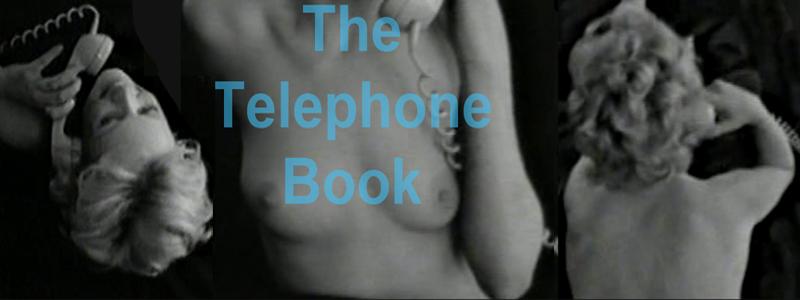
Sexually frustrated gamine Alice (Sarah Kennedy) is freed from her apartment-bound malaise when she receives the world’s greatest obscene phone call from one “John Smith.” Setting out on picaresque journey through the Manhattan white pages in search of its maker, Alice encounters ego-crazed porn directors, perverted psychologists and priapic shut-ins. Her trip grows more and more deranged (interrupted by first-person interviews with phone freaks), climaxing in one of the nuttiest half-hours of 1970s cinema.

Directed by Saturday Night Live writer Nelson Lyon and produced by Merv Bloch, creator of some of the movie industry’s best ad campaigns, The Telephone Book is hilarious and disturbing in equal measure, featuring Warhol Factory regulars, a man with a never-ending erection, and a lurid animation sequence (that is mostly to blame for its X rating). This is the Everything You’ve Always Wanted to Know About Sex But Were Afraid To Ask…for the porn-house crowd, with one caveat: it’s not porn and it never pretends to be.

Teaming up again with Vinegar Syndrome, Spectacle is excited to be hosting a sneak peek of the new digital restoration to be released this month.

Vinegar Syndrome is an exploitation film-focused distribution company founded by genre-film lovers for genre-film lovers. VS was developed to provide us with an opportunity to have a platform in order to cost-effectively restore and release the massive number of exploitation titles in their archive.
CHAPPAQUA

CHAPPAQUA
Dir: Conrad Rooks, 1966.
USA. 82 min.
WEDNESDAY, MAY 10 – 10:00 PM
SUNDAY, MAY 12 – 7:30 PM
FRIDAY, MAY 24 – 7:30 PM

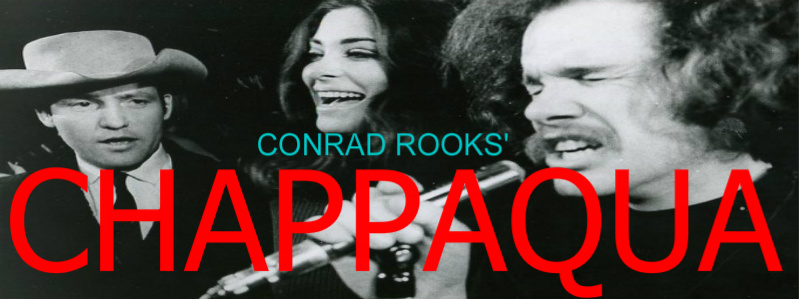
Two years before Easy Rider, Conrad Rooks created a meditation on addiction and self discovery in CHAPPAQUA, a formally restless time capsule which captures the entropic soul searching and self destruction which hung like a long shadow over the 1960s counter culture.

Conrad Rooks’ short filmography (Chappaqua and his 1972 adaptation of Hesse’s Siddhartha) is characterized by the dual journey, without and within. In Chappaqua Rooks plays Russel Harwick, a globetrotting( Chappaqua was filmed in 48 of the United States, France, Mexico England and India), hopelessly addicted young man who checks into a Paris clinic in order to undergo a “sleep cure”. What follows is a hallucinatory journey in the form of a richly textured film poem which reflects Rooks’ own battle with addiction and spiritual awakening.

Rooks’ film is bombastic and strung out, wild and somber. Chappaqua is a mind laid bare, a chronicle of addiction, and an adventurous film experience. In Chappaqua we enter a maze of experimental film techniques and raw improvisation that invites us into the fury of the present, the pleasure and pain of the past, and, after passing through the fire, the dream of a better future.

Chappaqua is the Cannonball Run of the 1960s’ counterculture, featuring such literary, musical, and beat luminaries as William S. Burroughs, Ravi Shankar (who also contributed the film’s unique and powerful score), The Fugs, Ornette Coleman, Moondog, Allen Ginsberg, and Herve Villechaize.

MAD LOVE: THREE FILMS BY EVGENI BAUER

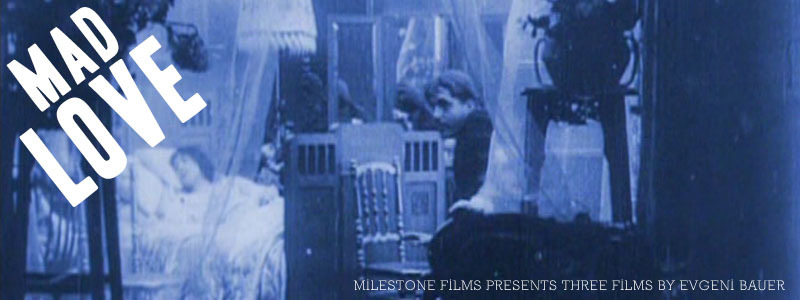
Though his film making career lasted only four short years before his death in 1917 at age 52, Evgeni Bauer is a relatively unknown giant in the world of silent Russian cinema.

Graduating from celebrated set designer to director, Bauer pioneered camera techniques and elegant set pieces that would become popular years later. Though he worked in a number of genres (comedies, political pieces, drama, and tragedy), he is best known for an unmatched eye for detail and the ability to blend the elegance and beauty into the ghastly and macabre. No subject was taboo and his pieces are as startling as they are beautiful. Opulent doesn’t even come close to describing it.

Special thanks to Milestone Films


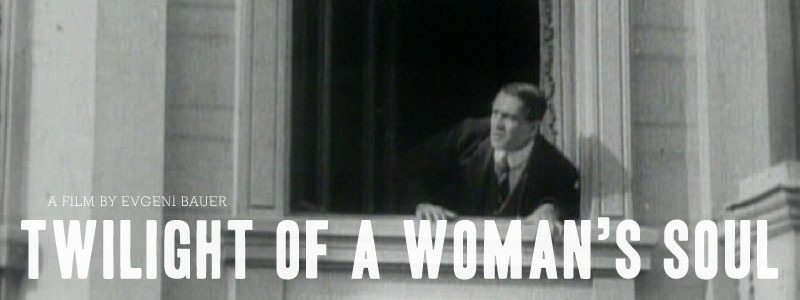
TWILIGHT OF A WOMAN’S SOUL
(aka Sumerki zhenskoi dushi)
Dir: Evgeni Bauer, 1913.
48 min. Russia.
Silent.
THURSDAY, APRIL 18TH – 8PM
WEDNESDAY, APRIL 24TH – 10PM

One of the earliest of Bauers surviving films, Twilight of a Woman’s Soul is the story of a noblewoman named Vera (played by Vera Chernova) who, in  attempt to break the mold of her class, vows to help the poor. This decision doesn’t come without a price.

While visiting the slums, she finds herself attracted to a handsome laborer. Their courtship is short lived and after he attempts to rape her, she defends herself and kills him. Though she escapes with her life, she is shunned by Prince Dolskij and cast out when she tells him what happened.

Defeated and alone, Vera pulls herself up and takes the stage, becoming the star of the opera. When the prince comes back around she must decide what path to take.


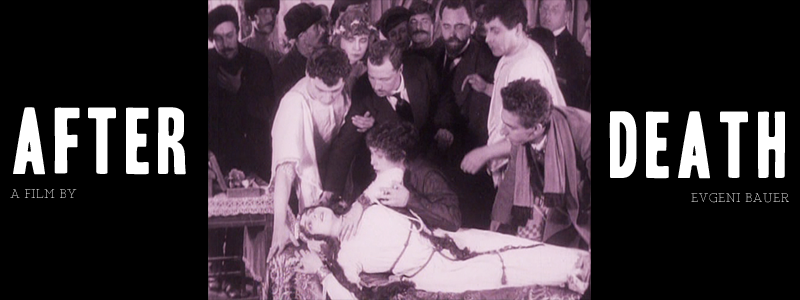
AFTER DEATH 
(aka Posle smerti)
Dir: Evgeni Bauer, 1915.
46 min. Russia.
Silent.
SATURDAY, APRIL 13TH – 8PM
TUESDAY, APRIL 23RD – 10PM

Released the same year as D. W. Griffith’s The Birth of a Nation, Bauer delved deep into not only this haunting tale of romance between the land of the living and that of the spirits, but also into new camera techniques and tints to elevate this film to another level entirely and often finds him referenced as “the Russian answer to Edgar Allen Poe.”

A young woman (played by Vera Karalli) falls hard for a man and, when she feels her desires are unrequited, she commits suicide. Racked with guilt over her death, the young man suffers both terrifying and sensual visions of a his lady love.

Bauers use of tints to denote time of day and the alternating worlds as well as his use of tracking shots is striking and unparalleled. This ghostly love story is a vision to behold and contains a violin-cello-piano score that is the perfect companion.


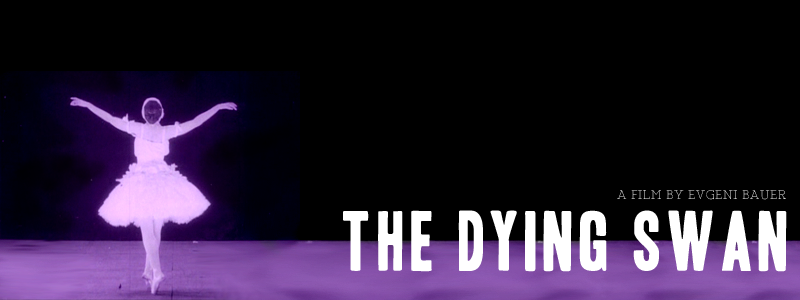
THE DYING SWAN
(aka Umirayushchii lebed)
Dir: Ebgeni Bauer, 1917.
49 min. Russia.
Silent.
TUESDAY, APRIL 9TH – 10PM
SUNDAY, APRIL 28TH – 8PM

Perhaps the best known of Bauers work and far and away the most referenced, The Dying Swan is a classic story and Bauers treatment is nothing short of breathtaking.

When a mute woman, Gizella (again played by Vera Karalli) with a passion for dance finds herself deceived by the man she loves, she takes off in order to began a new life as a ballerina. While on tour performing The Dying Swan, an artist obsessed with death develops an unhealthy fascination with Gizella and goes to great lengths to garner her attention and trust. Needless to say, this ends badly.

In a film with a small cast, Bauer allows his sets and locations to act as characters in their own right. Melancholy reigns in Bauers world.

THE SKEPTIC: THE FILMS OF BASSEK BA KOBHIO

After colonialism, the tidal wave of African independence (starting in Ghana in 1949, ending in South Africa in 1994) produced optimism and elation across the continent. A handful of filmmakers used the medium to promote pan-Africanism and tear open old wounds from white oppression. But Cameroonian novelist and filmmaker Bassek ba Kobhio stands in stark contrast to these trends: his three-film catalog navigates the tricky waters of postcolonial hope, beautifully embodying both the supernova of African freedom and the bitter hangover of best laid plans.

Special thanks to California Newsreel


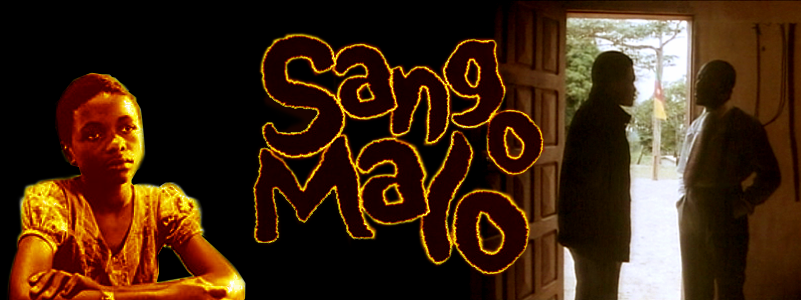
SANGO MALO 
Dir: Bassek ba Kobhio, 1990.
89 min. Cameroon.
In French with English subtitles.
TUESDAY, APRIL 9TH – 7:30PM
TUESDAY, APRIL 23RD – 7:30PM

Ba Kobhio’s debut film is a post-independence classic on the logjam of village and city mores and the ever-elusive definition of “education”.

The crux of Sango Malo is a steady disagreement between Malo (a radical young teacher) and his “Eurocentric” headmistress. At the end of the day, defining education means defining responsibility – and by defining the villagers’ responsibilities from the outside, the supposedly enlightened mode of African being is called into question.

The director pins down root causes of post-independence prejudices- including prejudice against oneself- in a doggedly clear-headed but ultimately warm, humanist fashion, regularly inviting viewers to laugh along at the film’s varying strains of misguidedness.

“Offers a valuable look at the harsh realities of village life in a  little-seen land. The director shines with a lively script and complex characters.” – Variety

“A wonderful script full of scenes of sparkling lightness and humor.” – Cahiers du Cinema


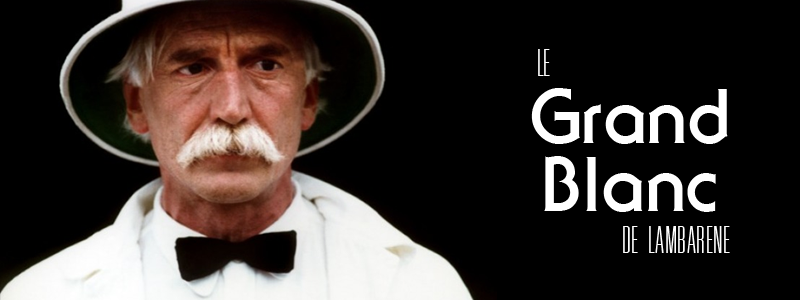
LE GRAND BLANC DE LAMBARENE
Dir: Bassek ba Kobhio, 1995.
94 min. Cameroon/Gabon.
In French with English subtitles.
THURSDAY, APRIL 4TH – 7:30PM
THURSDAY, APRIL 18TH – 10PM

“The independence of the people has never been your concern. You only wanted to share their hell in the hope of reaching your heaven.”

Albert Schweitzer – the world’s first superstar humanitarian – gets a rare biographical dissection in what is arguably Bassek ba Kobhio’s angriest film.

Schweitzer established a missionary hospital on the banks of the Ogooué river in present-day Gabon, a post he maintained until his death (just after the country achieved independence.) Surrounded by European nurses and African patients, Schweitzer controls his public image with an iron fist. But rather than making him an outright monster, the film works overtime to clarify his point of view, stressing a paternalism that can only come from an unrequited longing for worldliness.

Ba Kobhio filmed Le Grand Blanc on the actual site of Schweitzer’s mission, and as “the great white man” feels African opinion turning against him, he brokers a deal with the local chiefs that throws his hypocrisy into plain daylight. With a jarring sense of comedic timing and an overwhelming fidelity to the terrain and mood of Gabon, ba Kobhio comes out swinging, redrawing African independence as the consequence of – rather than a solution to – Western meddling.

“Gripping, vast, animated, with something profoundly magical… In Le Grand Blanc, the cinema truly meets Africa.” – Le Nouvel Observateur

“Challenging. Period detail is painstakingly recreated to present an utterly unromantic view of colonial Africa.” – Variety

“Though the subject is in the past, the filmmaker succeeds in describing today’s Africa of humanitarian NGOs and voluntary doctors of which Schweitzer was, unwittlingly, the forerunner.” – Ecrans d’Afrique


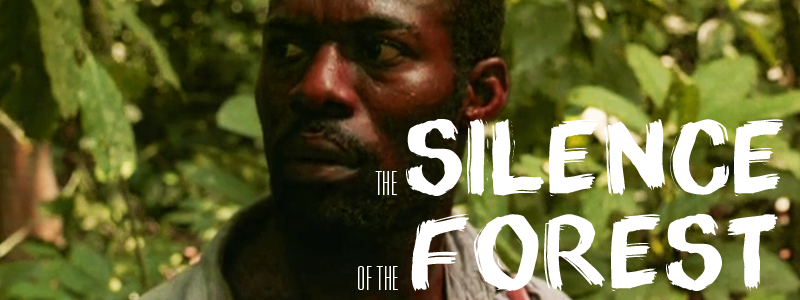
THE SILENCE OF THE FOREST 
Dir: Bassek ba Kobhio & Didier Ouénangaré, 2003.
93 min. Cameroon/Central African Republic/Gabon.
In French/Diaka/Sango with English subtitles.
FRIDAY, APRIL 12TH – 7:30PM
FRIDAY, APRIL 26TH – 10PM

“I can already see the day when I can triumphantly say: ‘Look what I did for this country.’”

ba Kobhio’s most recent work is a bittersweet interrogation of the limits of good intentions, even when native Africans seek to “develop” their countries’ human potential. Gonaba (Eriq Ebouaney, Lumumba) returns from France to his homeland in the Central African Republic with a degree and a cushy government post, but soon finds himself incapable of bringing about the changes in society he promised himself and his “pygmy” neighbors. His search for “authenticity” of culture in the forest’s tribes sees him re-enacting the same mistakes of the long-gone white occupiers, with dire implications.

Native traditionalism vs. throwback “traditionalism” vs. Western-led interventionism: if the flurry of quotation marks didn’t give it away, words come up short on impact inThe Silence of the Forest.

Scored by legendary jazz musician Manu Dibango, this is a singular movie so beautifully textured and dense with post-colonial theory that it invites viewers to sniff out the political substance of every stone or raindrop. Amidst a debate dominated by Invisible Children and the World Bank, ba Kobhio and Ouénangaré’s film stands as a work of supreme heartbreak. This is not your mother’s Central African Republic.

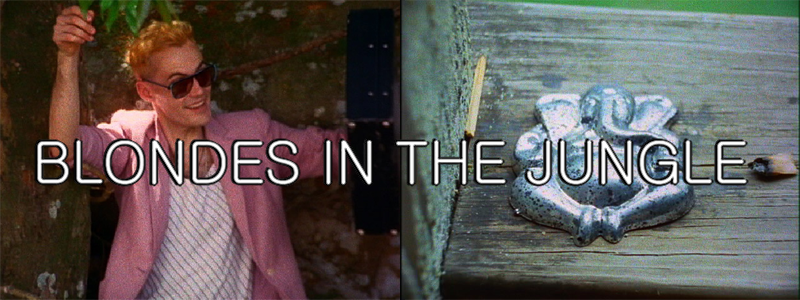
BLONDES IN THE JUNGLE

BLONDES IN THE JUNGLE
Dir: Lev Kalman, 2009.
48 min. USA.
FRIDAY, APRIL 19TH – 8PM (Filmmaker Lev Kalman in person!)
SUNDAY, APRIL 28TH – 10PM

At the serpentine intersection of Degrassi and Wade Davis, you’ll find the dazzling 50-minute Blondes In The Jungle.  Lev Kalman and Whitney Horn’s 48-minute debut is a dazzling “tropical cyclone” – a metaphysical stoner comedy about a trio of spoiled WASP brats searching for the Fountain of Youth in the wilds of Honduras, shot on location. Color-saturated and empty-headedly hilarious, Kalman and Horn’s film is an deep dive into pampered ignorance and a wealth of 16mm riches.

Blondes In The Jungle is a cheerful, genial and strange comedy, yet it’s so good-natured and screwy that it’s easy to go along with all of the improbable happenings – and there’s certainly plenty of those. Plus, the scenery is absolutely beautiful to look at with gorgeous cinematography by Horn.” – Bad Lit

“Long story short, it’s amazing.” -Flavorwire

“We think of ourselves as Eric Rohmer if he were retarded.” -Whitney Horn

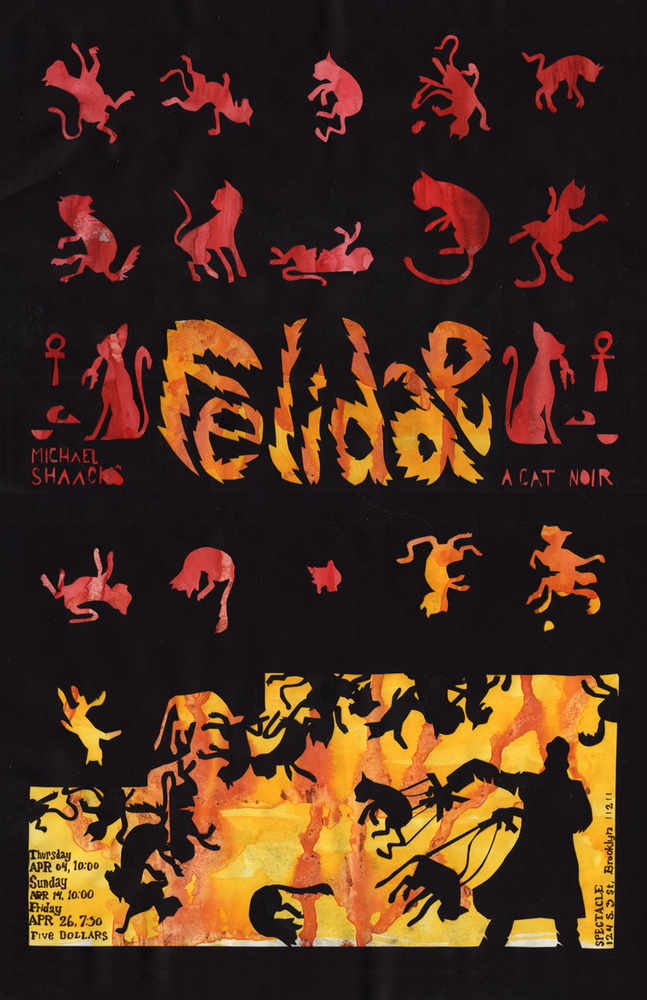
FELIDAE: AN ANIMATED CAT NOIR FROM GERMANY

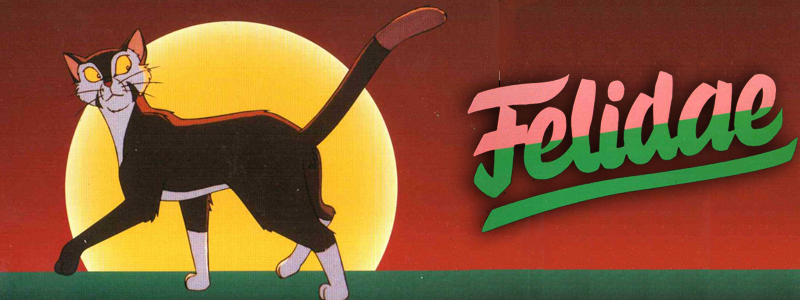
FELIDAE
Dir: Michael Schaack, 1994.
78 min. Germany.
In German with English subtitles.

Special thanks to Senator Film

U.S. PREMIERE!
WITH CUSTOM ENGLISH SUBTITLES CREATED BY SPECTACLE!
THURSDAY, APRIL 4TH – 10PM
SUNDAY, APRIL 14TH – 10PM
FRIDAY, APRIL 26TH – 7:30PM

1994: While children all over America were falling in love with Disney’s The Lion King, Germany was captivated by a different kind of feline…

Adapted from the best-selling book series, Felidae is an animated noir thriller concerning an inquisitive cat named Francis who has just moved into a new neighborhood where a series of grisly cat murders has engulfed the kitty scene. With the help of his trusty (and always hungry) sidekick Bluebeard, Francis sets out to find the identity of the killer, whom he believes to be a cat as well. The clues point towards some dark secrets, as Francis discovers that his new home is charred with the history of something much more sinister…

An incredibly imaginative and downright stunning subversion of traditional cartoon storytelling, Felidae demonstrates tremendous ability to tackle complex, adult themes. Despite being an animated film, this is definitely not for kids.

Featuring depictions of violence, gore, racism, sex, swearing, cults, surreal nightmare sequences, and Holocaust allegories- all involving talking cats-  Felidaewill come as quite a shock to anyone expecting Disneyfied fare like The Aristocats.However, the film never veers into cheap sensationalism and seeks to maintain a serious approach to its subject matter, resulting in one of the most audacious animated films ever made.

The most expensive animated production in Germany’s history and a massive success upon release, Felidae has never received US distribution or English subtitling. However, with the endorsement and support of the film’s original German distributor, Spectacle has created brand-new, custom English subtitles exclusively for these three showings.

Nearly 20 years after its original German debut, Spectacle is honored to host the US premiere of this incredibly unique film.

“Though it doesn’t fit into any existing category of toon, “Felidae” is one of the best animated films to come out of Germany, and certainly the most daring.” -Variety

Oh… and Boy George did the film’s killer theme song…

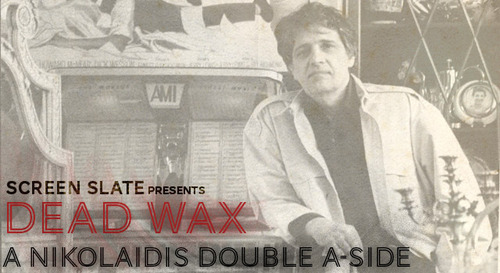
Dead Wax: A Nikos Nikolaidis Double A-Side

Nikos Nikolaidis (1939-2007) is one of Greece’s most masterful and subversive filmmakers, yet his work remains inexplicably neglected abroad. Best known in the States for his transgressive, kinky horror-noir pastiche SINGAPORE SLING, his distinctive oeuvre encompasses many works embraced by radicals, outcasts and misfits, while earning an unexpected place within the pantheon of critically acclaimed national cinema of his native country.

Screen Slate and Spectacle are proud to spotlight two of Nikolaidis’s misanthropic early works: THE WRETCHES ARE STILL SINGING and SWEET BUNCH. Both are unavailable outside of Greece despite SWEET BUNCH recently being included in the Greek Film Critics Association’s list of its all-time top ten films. Steeped in nostalgia, cynicism, perversity, and vintage rock ‘n’ roll, they offer a perfect entry point into Nikolaidis’s warped world.

We gratefully acknowledge the participation of the artist’s son, Simon Nikolaidis, for providing these stunning 2K restorations as-yet unshown anywhere in the world.

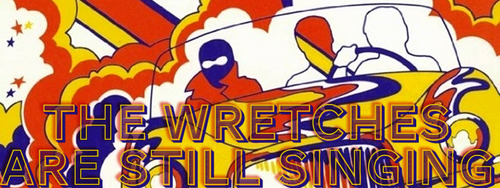
THE WRETCHES ARE STILL SINGING
Dir: Nikos Nikolaidis, 1979.
123 min. Greece.
In Greek with English subtitles.

FRIDAY, APRIL 12TH – 10PM
MONDAY, APRIL 22ND – 7:30PM

In this perverse and darkly comedic elegy for an apolitical generation’s spiritual death, a group of friends in their 40s gather to try to rehash the glory days of their old gang, The Wretches, and lament lost friends. It bears a superficial resemblance to The Big Chill, which it pre-dates: a killer soundtrack packed with 50’s rock and R&B, a return to youthful games, and earnest revelations—but that’s where the similarities stop.

Opening with the solitary host’s suicide and apparent rebirth, it continues as the three fellow Wretches show up one-by-one and their strange gathering takes on a purgatorial character. Fracturing time, perverting language into a code of pop culture-referencing in-jokes, and full of stark narrative ruptures and abject disregard for conventional morality, THE WRETCHES ARE STILL SINGING presents an alternately buoyant and vile universe of ghosts, regrets, and fatalistic jokes.

According to the director, it’s perceived immorality and sympathy toward faded revolutionaries provoked the film’s theatrical banishment by the right-wing government; only after left-wing critics rallied to its cause was the film available to be shown, garnering best picture awards from the Athens Film Critics Association and the Thessaloniki Film Festival. These are the film’s premiere New York screenings.


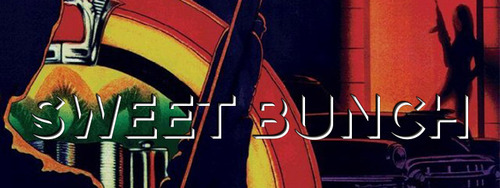
SWEET BUNCH
Dir: Nikos Nikolaidis, 1983.
154 min. Greece.
In Greek with English subtitles.
New restoration presented in HD.

SUNDAY, APRIL 7TH – 8PM
SUNDAY, APRIL 21ST – 8PM

Nikolaidis’s most acclaimed film charts a string of increasingly bizarre circumstances in the lives of four misanthropic housemates. An episodic, surreal, and offbeat paranoid epic in the spirit of Celine and Julie Go Boating, SWEET BUNCH weaves various plot strands as the characters cheat, steal, sleep, swindle and dance their way to oblivion, represented here by an extreme climax that clarifies the title’s allusion to Sam Peckinpah.

Veering between magical effervescence and hard-bitten cynicism, SWEET BUNCH is a neon-bathed yowl from a generation born into immediate obsolescence; what Vrasidas Karalis calls “an elegy and farewell to the innocence of a forgotten generation through poetic realism and colorful expression.” It’s further distinguished by nimble performances; a rich pop soundtrack; deftly choreographic sequences that would make Scorsese blush; and vintage-vortex production design encompassing offbeat knicknacks, Victorian junk, and jukejoint neons.

In it’s most recent list the Greek Film Critics Association (PEKK) ranked SWEET BUNCH among the country’s ten greatest films, and its idiosyncratic influence lingers in the work of Athina Rachel Tsangari and Giorgos Lanthimos. Nevertheless, SWEET BUNCH remains unavailable on DVD outside of Greece and has not been shown in New York in nearly 13 years. Here’s your chance to catch up on a national classic all-too overlooked outside its borders.

HOW TO…

This April, Big Shot Movie Club presents a series of practical films. Films that teach us a skills and examine the process of how things are made. In this series, we learn how to make ends meet, how to feed ourselves, and how people persist, day in and day out, in this complex world.

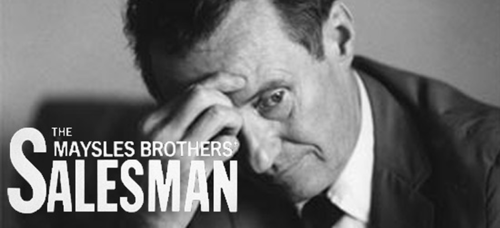
SALESMAN
Dir: Albert and David Maysles, 1969.
85 min. USA.

Special thanks to Janus Films

WEDNESDAY, APRIL 17TH – 7:30PM
SATURDAY, APRIL 27TH – 10PM

In the late 60s, filmmaking team Albert and David Maysles traveled back to the Boston neighborhoods they grew up in to make a film about a group of door-to-door Bible salesmen.

Following them from house to house, to a company meeting in Chicago, and on a business trip to sunny Florida, the resulting picture is an intimate look into the everyday triumphs and tragedy of men who typically pass in and out of our lives. Specifically focusing on the beleaguered Paul Brennan – AKA “The Badger” – the Maysles’ signature verite style brings a sympathetic, yet darkly humorous tone to this document of the ways we get by.

“… It’s such a fine, pure picture of a small section of American life that I can’t imagine its ever seeming irrelevant, either as a social document or as one of the best examples of what’s called cinema vérité or direct cinema”  -Vincent Canby, The New York Times

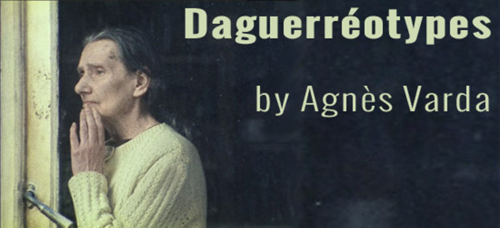
DAGURRÉOTYPES
Dir: Agnès Varda, 1976.
80 min. France.
In French with English subtitles.

Special thanks to The Cinema Guild

TUESDAY, APRIL 2ND – 7:30PM
WEDNESDAY, APRIL 17TH – 10PM

Agnès Varda was firmly establishing herself as the godmother of the French New Wave in 1975 when she released her first feature length documentary,Daguerréotypes.

The film chronicles the daily lives of the shopkeepers on Rue Daguerre, where she has lived for more than 50 years, teeing up the title’s (admittedly decent) pun. A lesson in resourcefulness and shooting what you know, she had to power her camera with a cord running out of her house and along the road, limiting her subjects to the stores within 50 yards of her home. The film rises above it’s simple premise and offers a unique glimpse into a lifestyle not viable today – that of the small shopkeeper.

As in many of her later documentaries, Varda turns the camera on intimate subject matter to reveal a more universal picture of people at work.

“Agnès Varda has shown an extraordinary gift for capturing the theatricality of the mundane…” -Melissa Anderson, The Village Voice

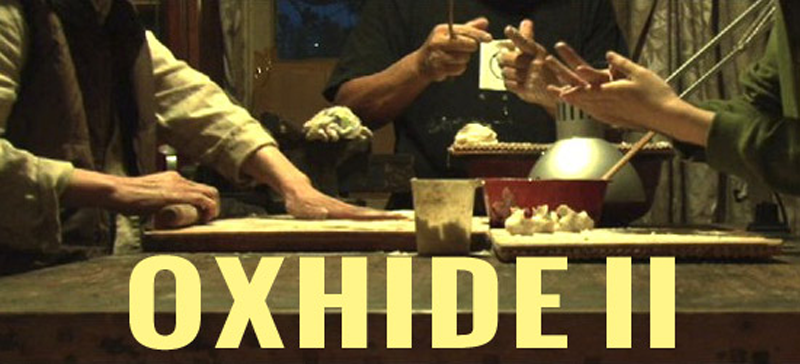
OXHIDE II
Dir: Jiayin Liu, 2009.
132 min. China.
In Mandarin with English subtitles.

Special thanks to Icarus Films

TUESDAY, APRIL 2ND – 10PM
SATURDAY, APRIL 27TH – 7:30PM

In Oxhide II, a family sits together at the table making dumplings. The repeated movements and collective concentration are mesmerizing as the action unfolds in real time. A static camera cuts only eight times, moving around the table in forty five degree angle intervals, giving new perspective to the landscape of knives, vegetables, bowls and busy fingers that inhabit the exaggerated wide screen. A mother, father, and daughter (played by director Jiayin Liu and her parents) adeptly prepare the filling and stuff the dumplings over the course of more than two hours.

Through the mundane and understated, the intricacies of a family dynamic become apparent resulting in a meticulously formalist film that is also surprisingly warm and personal.

“Oxhide II is unpretentiously inventive, quietly virtuosic.” -David Bordwell

“A direct, honest, miniature epic.” -Daniel Kasman, MUBI Notebook