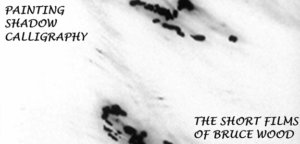
PAINTING SHADOW CALLIGRAPHY – THE SHORT FILMS OF BRUCE WOOD

During his 22 years teaching at the Art Institute of Chicago, the legendary experimental filmmaker Stan Brakhage helped many filmmakers find their own voice. The best of them would produce work that would thankfully avoid being too closely linked to his inescapable influence on the American avant-garde, including such important filmmakers as Bill Brand, Louis Hock, Marjorie Keller, and Saul Levine. One of the lesser-known names to emerge from the Chicago scene was Bruce Wood, a Massachusetts-based painter whose love of Brakhage’s classic Window Water Baby Moving and the animated films of Robert Breer had him specifically coming to the Institute to study under Brakhage. After a five-year period of prolific filmmaking in the 1970s that led to greater recognition in Europe than in the United States, he largely returned to painting and subsequent work as an art dealer.

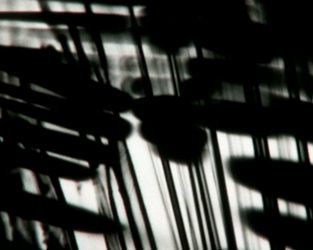
Wood’s almost entirely black-and-white body of cinematic work both predates the B&W works of the better-known Andrew Noren, and suggests an alternative route for monochromatic abstraction that is closer to Franz Kline’s paintings and a private form of calligraphy than conventional photography. His use of multiple exposures and superimpositions, rescaling images, and single-frame manipulations turn initially realistic imagery into sensual shadow motions. Spectacle is pleased to announce the first-ever complete retrospective of Bruce Wood’s 16mm short films, with all titles projected on 16mm, and with Wood in attendance for introductions and Q&As.

Co-programmed by Andrew Reichel & Forrest Sprague. Special thanks to Bruce Wood and The Film-Makers’ Cooperative.


PROGRAM 1: EMERGING FROM THE SHADOWS
SATURDAY, JULY 18 – 5 PM (w/ Intro by Bruce Wood)

PROGRAM 1 TICKETS

ACE NUMBER 5 (RED VERSION)
1974, United States.
8 min, 16mm.
Silent.

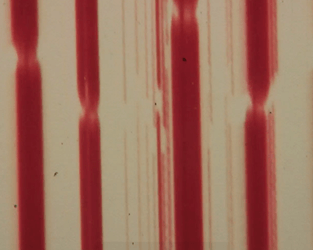
This program of Bruce Wood’s earliest works consists of a rare (and deliberately) red copy of his debut film ACE Number 5. “The breakthrough which led to the rest of them.” – Bruce Wood

LATEX SKY
1975, United States.
8 min, 16mm.
Silent.

“Throughout the sequence of films, a certain tension is maintained by oscillating around the border between what is abstract and what can be referred back to its source – a concern which is reflected in Wood’s choice of [titles:] ‘Latex Sky,’ for example.” – Jeremy Spencer

RIVER OF STARS
1975, United States.
10 min, 16mm.
Silent.

“…as if one were participating in the physical act of painting itself…one feels the sensation of the applying of strokes in black and white, of various feathery textural layers…There is tremendous variety of patterns. They blend effortlessly one into the other through a constant variety of means.” – Bob Cowan

ARCTIC DESIRE
1976, United States.
7 min, 16mm.
Silent.

“Almost without exception both hard vibrating abstract images and softer, slower, sustained images exist within the one film but one may well overcome the other as, for instance, in ‘Arctic Desire’ where the latter predominate.” – Jeremy Spencer

SILVER TRACES
1976, United States.
6 min, 16mm.
Silent.

AIRLESS PASSAGE
1976, United States.
13 min, 16mm.
Silent.

“[Films such as] ‘Silver Traces’ and ‘Airless Passage’ in particular deal more with the assembling of images within time and the resultant superimpositions, some lattice-like, others which tease the eye from one layer to another: but most interesting are those which, especially in ‘Silver Traces,’ appear to interact with the film surface itself.” – Jeremy Spencer

TRT: 52 min + reel changes


PROGRAM 2: BRIDGES AND PASSAGES
SATURDAY, JULY 18 – 7:30 PM (w/ Intro by Bruce Wood)

PROGRAM 2 TICKETS

ISLAND DESIGN
1976, United States.
6 min, 16mm.
Silent.

“In the later films, ‘Island Design’ and ‘Molten Shadow,’ it is the assemblage [of images] over time which has become more important.” – Jeremy Spencer

EDGE FORCES
1976, United States.
11 min, 16mm.
Silent.

“EDGE FORCES is an abstract collage of rapid nebulous forms and calligraphic lines. The frame is used as a “canvas” for thousands of fleeting images that try to expand beyond its confines. Viewers are compelled either to comprehend the dynamic flow of the images, or to make free subjective associations with them.” – Bruce Wood

MOLTEN SHADOW
1976, United States.
8 min, 16mm.
Silent.

THE BRIDGE OF HEAVEN
1977, United States.
32 min, 16mm.
Silent.

“THE BRIDGE OF HEAVEN features elements both starkly structural (frames in frames, grids, x’s, A-frames) and sensually dancing (swirling clouds of grain, creeping white suggestive blobs).” – Josh Mabe

TRT: 57 min + reel changes


PROGRAM 3: FLYING INTO THE VOID
SUNDAY, JULY 19 – 5 PM (w/ Bruce Wood Q&A following screening)

PROGRAM 3 TICKETS

THE SMELL OF DEATH
1977, United States.
16 min, 16mm.
Silent.

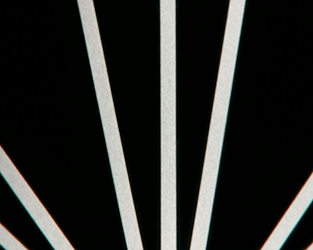
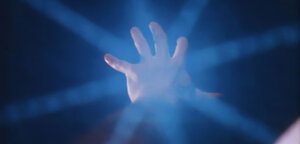
“The probable masterpiece of the night is THE SMELL OF DEATH. The film alternates between three modes. First, the slowly fading image of an “X”–suggestive of a failing system (medical equipment? the body?). Then skeletal fingers caressing the surface of the film (from the viewpoint of the dying’s last sense of this world? or of the dying’s reaching out onto the next?). Finally, stuttering torn pulses of light–something like flesh being destroyed. It’s a great film–and perfectly encapsulates Wood’s talent for giving a fully formed world born of simply Black and White.” – Josh Mabe

FROZEN FLIGHT
1977, United States.
33 min, 16mm.
Silent.

“Many of Wood’s individual frames also involve several different overlays of separate exposures. He really is most crucially involved with producing the virtuoso ‘moment.’ It’s an understatement to say that his [film Frozen Flight], whose…33 minutes’ running time juxtapose[s] hundreds of these complex, hinged-together compositions, [is] overloaded with startling, intense, undeveloped information.” – C.L. Morrison

BETWEEN GLANCES
1978, United States.
14 min, 16mm.
Silent.

“Brakhage’s influence can be felt most keenly in BETWEEN GLANCES which (only half-jokingly) seems like an expression of “closed-eye vision” from inside of one of Warhol’s Silver Clouds.” – Josh Mabe

TRT: 63 min + reel changes

UNEARTHLY POETIC VISIONS: A WILL HINDLE ENCORE

The colorful, quirky style that is associated with the members of the West Coast experimental film scene has long been defined by the foundational work of Bruce Baillie, Robert Nelson, and Pat O’Neill. Despite being every bit as critical to that scene’s origins and their subversions of New Age aesthetics, the small body of work that Will Hindle (1929-87) left behind has frequently resulted in many of his 11 films being far more discussed than seen. The increasing rarity of prints in good condition has further contributed to a certain obscurity, despite praise from writers such as Amos Vogel and Gene Youngblood. Happily, the breadth and depth of his work has experienced something of a revival in appreciation, with Joshua Minsoo Kim of Tone Glow putting together the first complete retrospective of Hindle’s filmography, Unknown Nostalgia, at Chicago’s Sweet Void Cinema in December 2024. Spectacle followed suit with their own complete retrospective, Unearthly Poetic Visions, in July 2025.

Spectacle is pleased to bring back a 6-film sampler of Will Hindle’s films due to collective demand for another dip into the pool. Whether you saw these films previously or not, it’s likely that this might be the last chance for New Yorkers to see the only good print of Watersmith in existence for quite a while, along with the rarity of theatrical screenings for his other titles. Come on in, the water’s fine.

Co-programmed by Andrew Reichel and Giovanni Santia. Special thanks to Joshua Minsoo Kim, Mark Toscano, Canyon Cinema, the Film-Makers’ Cooperative, and Lynne Sachs.

SATURDAY, JUNE 13 – 5:15 PM
SUNDAY, JUNE 14 – 5:15 PM

BUY TICKETS

NON CATHOLICAM
1963. United States.
10 min. 16mm.

Soundtrack by Paul Hindemith. Cinematography assistance from Bruce Baillie.

“In 1958, Will Hindle shot, edited, and printed a film called Catholicam, which does not seem to have been circulated. He returned to this film in 1963, re-edited and augmented it with additional material, and released it as Non Catholicam.” – Mark Toscano

“Another granddaddy of the American Personal Film movement. Set to the music of Hindemith, filmed entirely in a Gothic cathedral and edited to precision counter-point. An almost somber beginning that rises to brilliant exaltation. As with Pastorale, extremely innovative for its day and even now. Entire film was an ‘optical print’ to retain light nuances.” – Canyon Cinema

FFFTCM
1967. United States.
5 min. 16mm.

AKA Fanfare for the Common Man. Music by Aaron Copland.

“Renewed income and the ability to work on one’s own produced this feeling and work. A Promethean awakening, de-bonding of the human spirit … reaching for the unfiltered blaze of Light and Life. The driving sounds of heart beat, fanfare for the Common Man and devotional chants. A time of sharing … a touch of vision in the night.” – Canyon Cinema

FFFTCM arrived in mid-1967, and it was like a 180-degree turn. It was a film that bet violently on life… for being, for advancement, for the right to look for and get a job. It didn’t look like it was going to be distributed, but a review by Lenny Lipton helped and they bought it. More than one person has told me that they see it as an orgasmic movie. In his new book, R. Pike, from Creative Films, says it’s a movie about ‘male masturbation.’” – Will Hindle

CHINESE FIREDRILL
1968. United States.
25 min. 16mm.

Cinematography assistance by John Luther Schofill.

“Hindle’s prize-laden work of cataclysmic visual and mental schisms stands as one-of-a-kind. Human universals crammed into a moment (infinity?) in one small enclosure (the universe?). The identifying viewer will judge.” – Canyon Cinema

“Many people appear in the movie (again, it’s like a first time), but very briefly, in the manner of memories or visions. The film focuses on the whirlpool of the room/cell/universe in which a Hungarian gypsy lives. And there is a disjunction. The editing will take the film even further. The Savage 1967.” – Will Hindle

BILLABONG
1968. United States.
9 min. 16mm.

“Winner of the main prize of the Oberhausen (Germany) International Film Festival, Billabong has gone on to even greater acclaim than its much-awarded predecessor. Now in collections and archives on three continents, Billabong … mates verité camera and violently creative and master editing … revealing the mood of youths contained by the government. On location in Oregon. Empathetic in the extreme.” – Canyon Cinema

“A remarkably intimate and at times palpably erotic study of boys in a Job Corps camp on the Oregon coast, Billabong is a sensuously humanist encounter with alienated youth, told in the filmmaker’s trademark undulating lap dissolves and scintillatingly grainy high contrasts. Loneliness and longing-for-elsewhere alternate with horseplay and horniness, and hijinks around urinals and pool tables culminate in an ecstatic moment of onanistic release.” – Chuck Stephens

WATERSMITH
1969. United States.
32 min. 16mm.

“Perhaps Hindle’s magnum opus to date. New York Times critic Vincent Canby calls Watersmith ‘beautiful abstract patterns of lines of energy. A kind of ode to physical grace.’ A deceptively ‘calm’ film requiring an equally calm audience and a superior soundtrack reproduction system, Watersmith weaves its lone visual threads closer and closer until the screen is awash with multiple levels of artistic achievement, technical supremacy, physical and mental demands and rewards … for the relaxed and receptive viewer. Not a flash and funk work. A film to be seen again and again.” – Canyon Cinema

Watersmith is a mind movie. Hindle turns his film into a celebration of the freedom of bodies moving through water, the implacable grace of human forms freed from gravity. It ripples between reality and abstraction. There hasn’t been a movie quite like this since Leni Riefenstahl’s Olympia.” – Entertainment World

“‘I was photographing champion swimmers,’ Hindle said of the Olympic athletes he shot, ‘and I wanted to be a champion filmer.’” – Joshua Minsoo Kim

SAINT FLOURNOY LOBOS-LOGOS AND THE EASTERN EUROPE FETUS TAXING JAPAN BRIDES IN WEST COAST PLACES SUCKING ALABAMA AIR
1970. United States.
12 min. 16mm.

“Presaging details and intent of Charles Manson’s cult and actions was not meant to be one of this film’s greater attributes. It was, however, filmed uncannily months before the facts were known. The resemblance is oblique. The film: the mysticism of a ‘calling,’ a journey to be made, a vision in mid-desert to behold and oneness with it all. Filmed in Death Valley.” – Canyon Cinema

“The title of celebrated ’70s experimental-filmmaking mainstay and current cine-avant-garde Invisible Man Will Hindle’s Saint Flournoy Lobos-Logos and the Eastern Europe Fetus Taxing Japan Brides in West Coast Places Sucking Alabama Air (1970) is almost impossible to remember. The film itself—a gorgeously photographed, fluidly edited slice of fin de siècle ’60s love and dread, shot largely in Death Valley, and both of the Manson Family moment and altogether adrift in time—is impossible to forget. In it, a shirtless bearded dude in flour-sack yoga pants treks and stumbles barefoot through the white-hot desert, pausing occasionally to assume the lotus position and radiate silent “om”s into the shimmering heat—Gus Van Sant’s Gerry (2002) as one man show. Dude might be ‘Saint Flournoy Lobos-Logos’ (whoever that is), we’re never really sure. The ‘Eastern Europe Fetus’ shows up, “crawling” through a fiery mandala in some indeterminate space and looking like a cross between 2001: A Space Odyssey’s (1968) star child and one of those hideous little edible chocolate babies. There are lens flares and eclipse halos, dude’s supple movements mesmerizingly match cut and complexly lap-dissolved one into the next, and there are more dudes, and nudes, dancing on balconies to bongos and the tinkling of ice cubes in drink glasses echoing down through the canyon…then the orange slash of a shadow-play knife in the night.” – Chuck Stephens

TRT: 93 min + reel changes