
When you tell someone in the US that you’re from Newcastle upon Tyne, it will usually be followed by one of three questions: “I guess you support Newcastle United, then?” “Like the Brown Ale?” or “How far is that from London?” The answers, for the record, are yes, yes, and around 300 miles, which, in UK terms, is incredibly far. Newcastle is a city in the North East of England, sitting on the River Tyne about eight miles from the North Sea. Its roots stretch back to a Roman fort and bridge known as Pons Aelius, before a Norman castle built in the 11th century gave the city its modern name. By the 19th century, Newcastle had become one of the great industrial cities of Britain, a powerhouse of shipbuilding, coal, engineering, and heavy industry that helped drive the Industrial Revolution.
The people of Newcastle and the surrounding Tyneside area are known as Geordies, a name tied to both a distinctive dialect and a fiercely local sense of identity. The origin of the term is debated, but one popular explanation links it to the region’s loyalty to King George II during the Jacobite uprising of 1745, or possibly because they favored safety lamps invented by local engineer George Stephenson. What matters more than the etymology is what the word has come to represent: a culture built around working-class solidarity, humor, and pride in a region that has long existed outside the economic and cultural gravity of London. Today, Newcastle is a city shaped by both its industrial past and its present, where remnants of shipyards, coal staithes, and Victorian engineering sit alongside universities and music venues.
Despite this history and character, Newcastle and the surrounding area are rarely represented on screen. The films GET CARTER (1971), GOAL! (2005), and I, DANIEL BLAKE (2016), probably make up the majority of any list of movies set in or around the city. When Newcastle does appear, it often does so through stories rooted in working-class life and the social realities of the North East. These films hint at a place that is often overlooked within British cinema, overshadowed by the cultural dominance of London, even while the landscapes and communities of the North continue to shape the stories told there.
Tales From the Tyne at Spectacle Theater presents three films showcasing Newcastle upon Tyne and the communities built there: TISH (2023), PURELY BELTER (2000), and STORMY MONDAY (1988). Taken together, they offer glimpses of the city across different eras, from the everyday lives documented by photographer Tish Murtha, to the restless energy of two Newcastle teenagers chasing football tickets, to the rain-soaked jazz clubs and redevelopment anxieties of the 1980s. These films reveal a city shaped by industry, community, and change. Together, they offer a glimpse into a place whose stories and voices are too often overlooked by more than just cinema.
TISH
Dir. Paul Sng, 2023.
United Kingdom. 90 min.
In English.
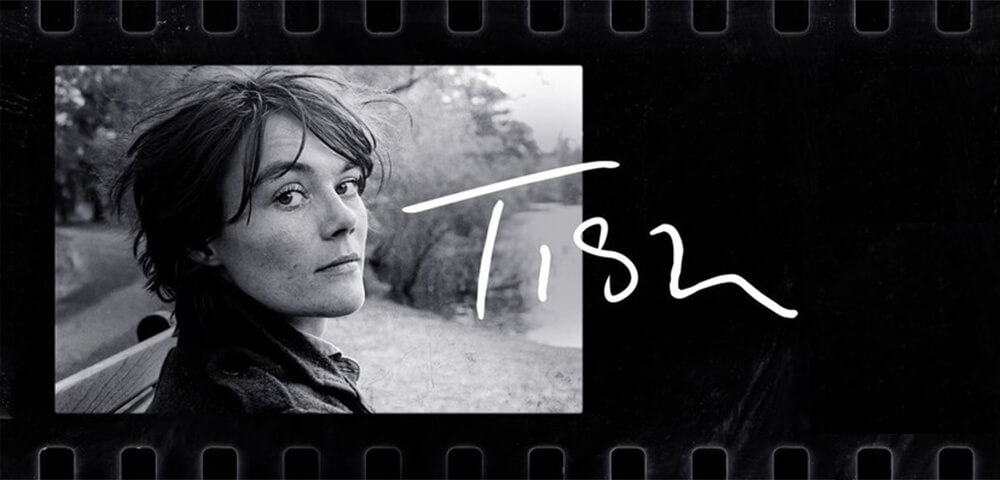
A documentary about the life and work of Tish Murtha, a working-class photographer from Newcastle Upon Tyne.
Growing up in the North East of England, Tish Murtha used her camera to capture the raw truth of life in Newcastle upon Tyne during the turbulent years of Thatcher’s Britain and beyond. Her stark black-and-white photographs show children playing in neglected streets, young people facing unemployment, and communities living with the daily consequences of political decisions made far from their homes. Tish Murtha’s photography didn’t just show everyday life; it highlighted inequality and pushed for social change. TISH is an intimate look at her life, her work, and the lasting impact of her art, showing how her message is still as poignant today as it was during her lifetime.
PURELY BELTER
Dir. Mark Herman, 2000.
United Kingdom. 95 min.
In Geordie with English subtitles.
MONDAY, MAY 4th – 7:30PM
THURSDAY, MAY 14th – 10PM
MONDAY, MAY 25th – 10PM
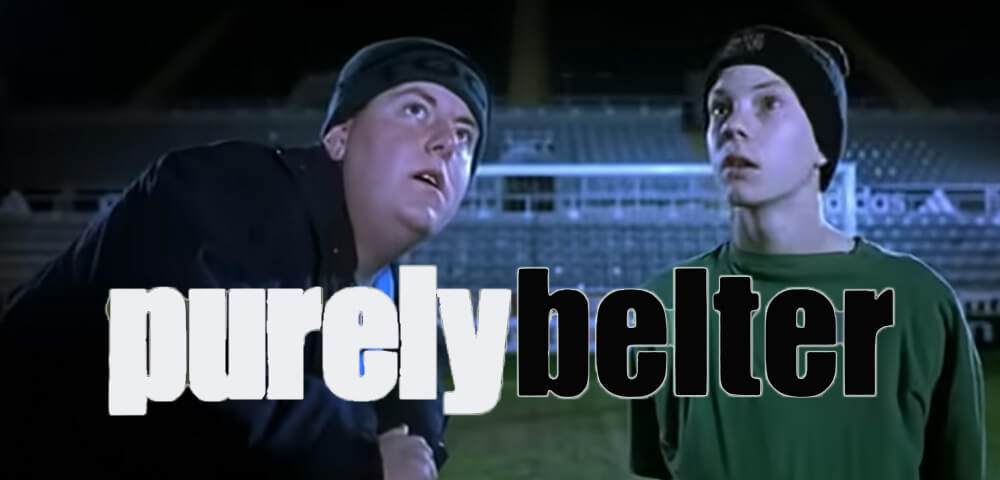
The exploits of Gerry and Sewel, two down-and-out teens trying to raise £1000 to buy season tickets to their favourite football team, Newcastle United.
PURELY BELTER is a film that feels inseparable from the place it comes from. Set firmly in and around Newcastle, the film captures the rhythm of everyday life on Tyneside, a world of tower blocks, back alleys, and football obsession.
What gives PURELY BELTER its unmistakable flavour is its unapologetic embrace of Geordie culture. The title itself comes from Geordie slang: “pure” meaning very, and “belter” meaning brilliant. The film revels in the sounds of Newcastle, thick Geordie accents and dialogue so regional that some screenings reportedly handed out glossaries to help non-locals decode terms like “howay” and “radgie.” This commitment to dialect is part of the film’s charm. Even the film’s cameo from Newcastle United legend Alan Shearer adds to the sense that the story belongs completely to the city and its footballing culture.
Underneath the humour, though, lies a streak of social realism that makes the film more than just a football comedy. Gerry and Sewell grew up surrounded by broken families, poverty, and limited opportunities. PURELY BELTER balances this bleak backdrop with the resilient spirit of its characters: football becomes an escape, a dream that briefly lifts them above the grind of everyday life. For many Geordies, PURELY BELTER is a Newcastle classic, endlessly quoted in schoolyards, even if it never quite received the same recognition beyond the city. In that sense, the film itself feels like a Geordie phrase: rough around the edges, full of heart, and, in its own way, PURELY BELTER.
STORMY MONDAY
Dir. Mike Figgis, 1988.
United Kingdom. 93 min.
In English.
FRIDAY, MAY 1ST – MIDNIGHT
THURSDAY, MAY 7TH – 10PM
SUNDAY, MAY 17TH – 7:30PM
FRIDAY, MAY 29TH – 10PM
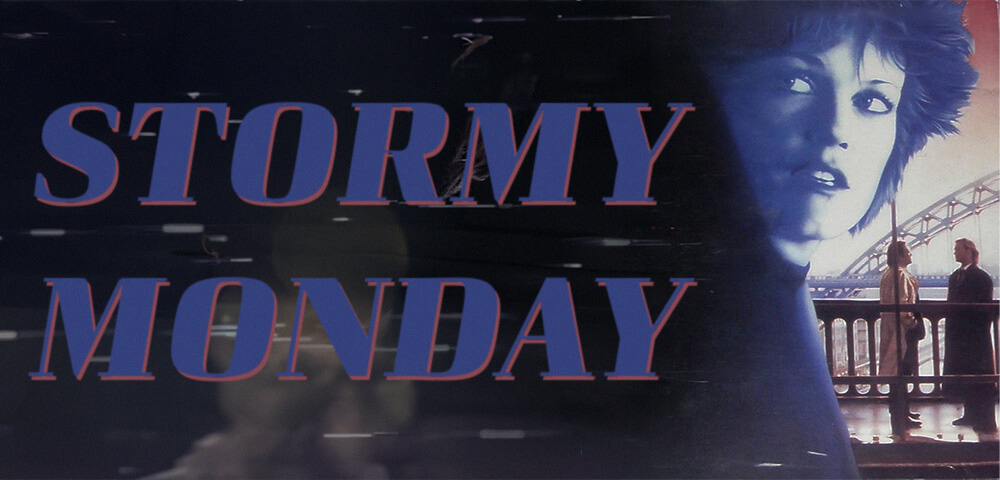
A corrupt American businessman tries to strongarm his way into buying a nightclub in Newcastle. However, Brendan, an employee of the nightclub, discovers a darker motive behind the acquisition.
STORMY MONDAY (1988) marks the debut feature of director Mike Figgis, who spent many of his formative years in Newcastle. The film unfolds as a slow-burning neo-noir set against the decaying streets of late-1980s Newcastle, where smoky jazz clubs and rain-slicked streets become the stage for a web of corruption and uneasy alliances. Figgis brings the classic noir language of outsiders, seduction, and moral ambiguity to a distinctly British landscape, capturing a city caught between its industrial past and an uncertain future.
Roger Deakins’ beautiful cinematography pairs seamlessly with Figgis’s haunting, jazz score, transforming Newcastle’s misty Quayside into a neon dreamscape. Despite a star-studded cast, including Melanie Griffith, Sean Bean, Tommy Lee Jones, and Newcastle local Sting. STORMY MONDAY has fallen into relative obscurity since its initial release.