VICK & TARSTAR’S SCARECROW FACTORY

VICK & TARSTAR’S SCARECROW FACTORY
Dir. Brewce Longo. 2025.
United States. 90 min.
In English.

TUESDAY, AUGUST 12 – 7:30 PM* w/Q&A (This event is $10)
WEDNESAY, AUGUST 20 – 10 PM

SPECIAL EVENT TICKETS

GENERAL ADMISSION  TICKETS

They’re baaaack!!

From the team that brought you BUSTED BABIES, COVEN OF THE BLACK CUBE, and A CORPSE FOR CHRISTMAS comes an all new Experience in Mumblegore. It’s…

VICK & TARSTAR’S SCARECROW FACTORY!

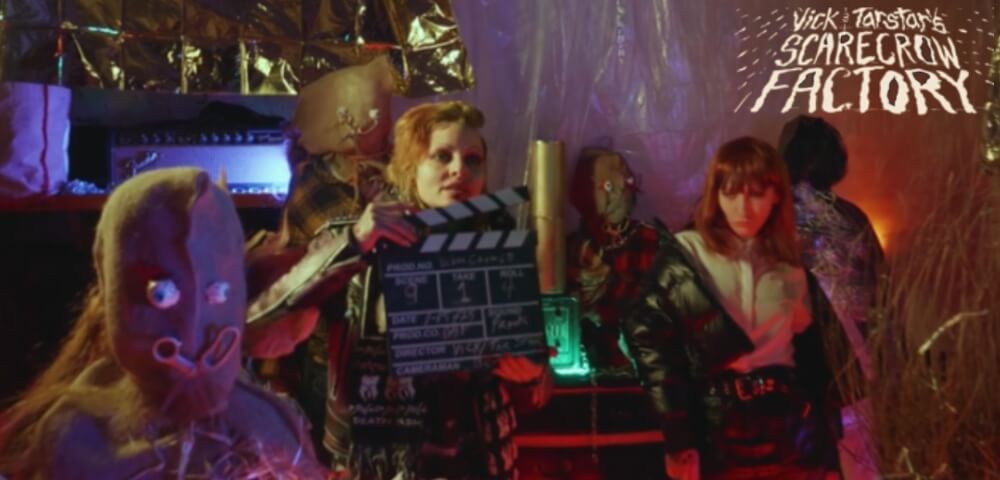
Filmmakers and best friends Vick & Tarstar must juggle life, art, relationships, sex, drugs, sickness, homelessness, and madness in spades as they and their crew of Philly punks race to to finish the new avant-garde trashterpiece SCARECROWED on-time and on-budget! VICK & TARSTAR’S SCARECROW FACTORY is metatextual candy corn goo pile that’s just as much Ryan Trecartin as it is Joe Swanberg. Hilarious, thoughtful, and just fuckin’ out there! You’ll love your new Scarecrow Haircut.

Join us at Spectacle on TUESDAY, AUGUST 12 at 7:30 PM for the New York City premiere of the latest film from Blood Sick Productions, VICK & TARSTAR’S SCARECROW FACTORY – and be sure to stick around for an extra special roadshow Q&A with “Vick”, “Tarstar”, and actress Tina Krause after the show!

Featuring appearances from: Erin Caywood, Nicole Elyse, Gaby Bogdanoff, Josh Christensen, Steven Reifsteck, Slink Skull, Elise Brady, Del Worshim, Hugh Gallagher, Michael DiFrancesco, X Menzak, Tina Krause, Nicholas DeGideo, and David “The Rock” Nelson!

Written by Brewce Longo and Kasper Meltedhair. Directed by Brewce Longo.

IN THE DRAGON’S SHADOW: REINVENTING KUNG FU CINEMA

IN THE DRAGON'S SHADOW: REINVENTING KUNG FU CINEMA

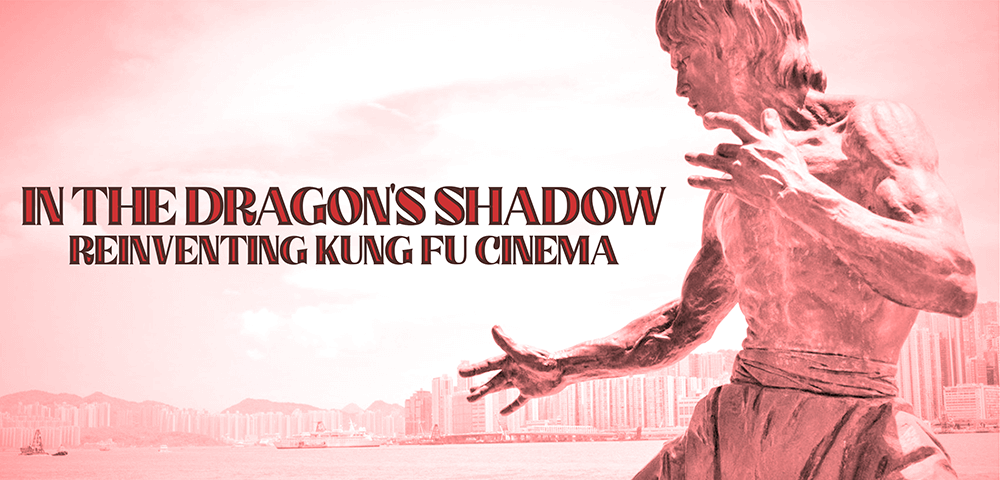
In the wake of Bruce Lee’s passing in 1973, the Hong Kong film industry found itself at a crossroads. How was the industry supposed to sustain the newfound global popularity of kung fu movies in the absence of the country’s most bankable and recognizable star?

Though the “Bruceploitation” trend that followed saw some moderate success, the “Lee-alikes” that populated the genre— mostly marketed on their resemblance or adjacency to Lee himself, by definition incapable of reaching the same heights of fame as their predecessor— could only placate and/or dupe audiences for so long. For studios not named Shaw Brothers or Golden Harvest, the need for an alternative path forward soon emerged.

This July, we look at three radically different approaches Hong Kong studios took towards moving the industry out from under the long shadow cast by Lee’s legacy. Whether falling back on the old masters of the genre, pushing to coin another star of the same caliber, or allowing his very same clones the creative freedom to establish themselves apart from their namesake, each of these films is its own reflection of an industry’s need to reinvent itself following a world-shattering shake-up.


THE CHINESE STUNTMAN

THE CHINESE STUNTMAN (龍的影子)
aka COUNTER ATTACK
Dir. Ho Tsung-tao, 1981
Taiwan. 94 min.
In English (dubbed)

WEDNESDAY, JULY 2 – 10 PM
MONDAY, JULY 7 – 10 PM
WEDNESDAY, JULY 16 – 7:30 PM
FRIDAY, JULY 25 – 10 PM

GET TICKETS

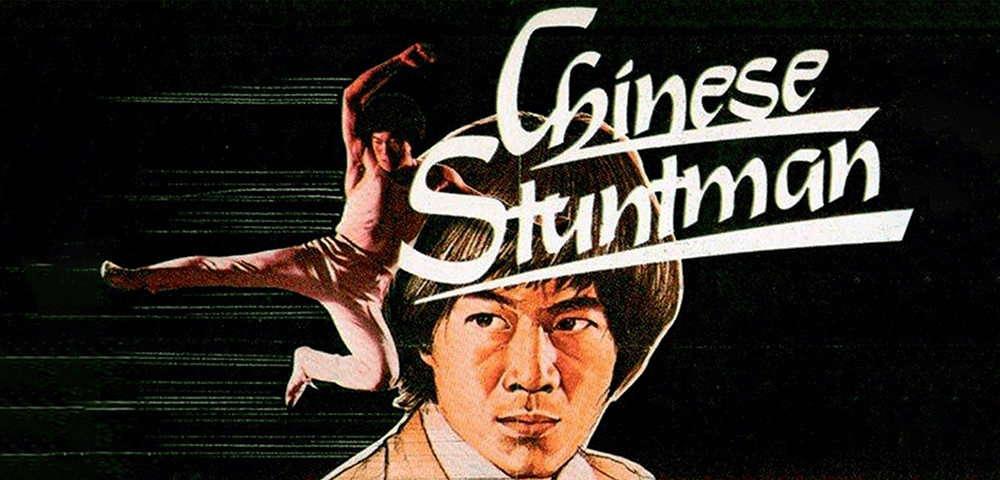
An insurance salesman (who also happens to be a martial arts master) becomes a stunt double for a popular Hong Kong action star, unwittingly throwing himself into a murderous plot by the film’s producers and director to cash in on the star’s insurance policy.

For his final film as both a director and star, Ho Tsung-tao crafted a meta-masterpiece largely drawing from his own experiences as the former Lee-alike “Bruce Li”. By the late-1970s, Ho had made no bones about his displeasure with being pigeonholed as a Bruce Lee clone, all of which is poured into this cathartic, biting satire of the Hong Kong film industry. The film is as cynical as it is action-packed, with Ho pulling no punches in his depiction of the disposability with which the business treats its below-the-line physical performers who have devoted their entire lives to their martial artistry.


MAGNIFICENT BODYGUARDS

MAGNIFICENT BODYGUARDS (飛渡捲雲山)
Dir. Lo Wei, 1978
Hong Kong. 103 min.
In Cantonese & Mandarin with English subtitles

WEDNESDAY, JULY 9 – 7:30 PM
MONDAY, JULY 14 – 10 PM
SATURDAY, JULY 26 – 10 PM

GET TICKETS

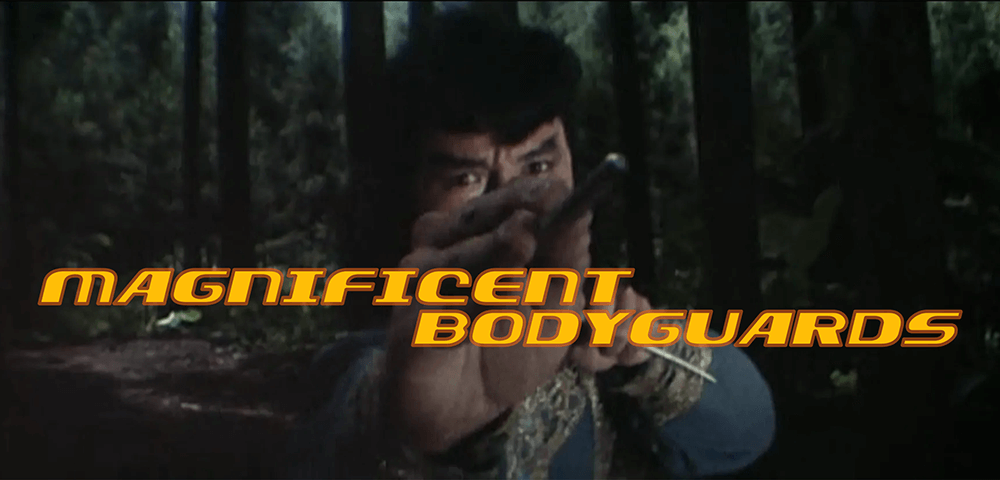
A wealthy noblewoman assembles a team of fierce bodyguards to escort her ailing brother to a specific doctor who holds the cure to his illness. Together they must traverse dangerous wild country infested with roving gangs of bandits, savages, and demonic monks intent on his capture.

While much of the industry was preoccupied with maintaining Bruce Lee’s presence via the Bruceploitation trend, Lo Wei, the very filmmaker who directed Lee in his breakout roles in THE BIG BOSS (1971) and FIST OF FURY (1972), turned his sights towards finding the Next Big Thing. Within a few years, Lo would find his new leading man in a fresh-faced stunt choreographer and background performer named Jackie Chan, providing him with his very first starring roles in NEW FIST OF FURY (1976) and MAGNIFICENT BODYGUARDS.

Though not quite Chan’s breakout role (those would come later in the same year via Yuen Woo-ping’s DRUNKEN MASTER and SNAKE IN THE EAGLE’S SHADOW), it’s easy to see why Lo viewed Chan as the heir apparent to Lee’s stardom. Even as a smarmy, hot-headed bodyguard— a far cry from the comedic roles for which he became known— the same charisma, finesse, and obsessive detail that Chan would bring to his later work are still undeniably present.

If Chan’s born stardom weren’t enough to carry the film, MAGNIFICENT BODYGUARDS was also marketed as the first kung fu movie to be presented in 3D, replete with multiple shots of fists, feet, spears, swords, and arrows flying directly towards the camera (alas, though, Spectacle will only be presenting this one in 2D).


RETURN OF THE CHINESE BOXER

RETURN OF THE CHINESE BOXER (神拳大戰快鎗手)
Dir. Wang Yu, 1977
Hong Kong/Taiwan. 99 min.
In English (dubbed)

SATURDAY, JULY 5 – 10 PM
FRIDAY, JULY 11 – 5 PM
WEDNESDAY, JULY 16 – 10 PM
MONDAY, JULY 21 – 10 PM

GET TICKETS

In the wake of the First Sino-Japanese War, a cabal of Japanese ninja warlords contemplate their takeover of China using an array of exotic weaponry and supernatural forces at their disposal. The only thing standing in their way: A master martial artist whose studio was decimated by those same warlords and who’s hellbent on getting his revenge..

Prior to Bruce Lee’s ascension, arguably the only Hong Kong action star that had achieved a shade of the same recognition abroad was Jimmy Wang Yu, star of Shaw Brothers Studio’s international breakout, THE ONE-ARMED SWORDSMAN (1967). As Lee’s stardom began to eclipse his own, Wang turned to roles behind the camera as the director of seminal kung fu classics like ONE-ARMED BOXER (1971), BEACH OF THE WAR GODS (1973), and MASTER OF THE FLYING GUILLOTINE (1976).

After Lee’s passing, some studios fell back on Wang’s legacy as the one-time undisputed king of kung fu cinema, marketing the releases of FLYING GUILLOTINE and RETURN OF THE CHINESE BOXER around the tagline, “Before there was Bruce Lee…”. Unfortunately, dogged by alleged ties to organized crime and legal troubles involving his broken contract with Shaw Bros. (eventually resulting in Wang being banned from making films in Hong Kong), RETURN ended up being Wang’s final film as director, though his legacy as a one-man New Wave who brought a unique cinematic flair to otherwise standard wuxia proceedings has made him as vital a figure in the history of kung fu cinema as Lee.

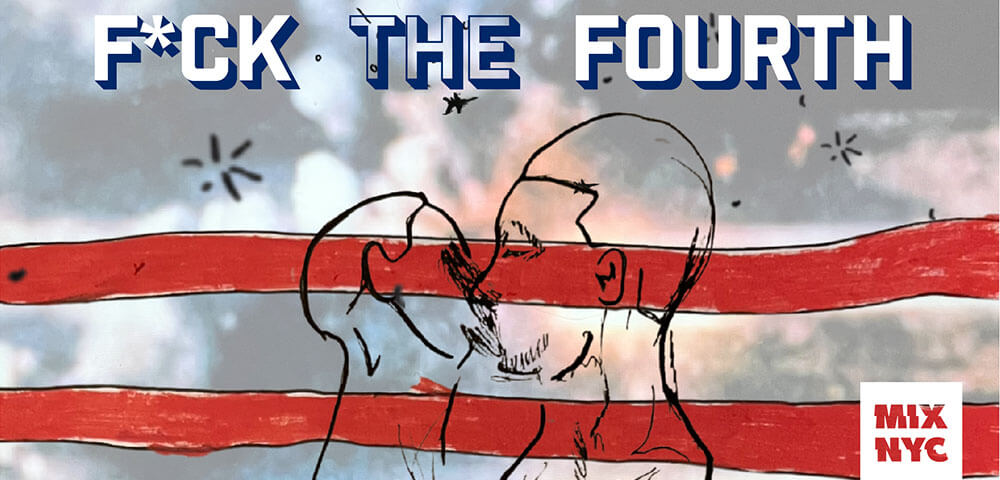
MIX NYC: F*CK THE FOURTH

THURSDAY, JULY 10 – 7:30 PM
GET TICKETS

MIX NYC PRESENTS: F*CK THE FOURTH

USA. 60 min.

As the second Trump regime barrels swiftly into its ultranationalist and fascist campaign promises, with trans and queer people among the many scapegoats at the heart of its destructive project, the need for queer resistance to the United States has seldom been more obvious. Neither, however, is this resistance historically unique. “F*ck the 4th” is an evening of anti-4th of July counter-programming from queer video artists and filmmakers working from the early 1990s through the present. The works making up the program deconstruct, expose, and reimagine the American nation-state through a distinctly queer, anti-imperialist lens.

UNEARTHLY POETIC VISIONS: THE COMPLETE WILL HINDLE

SUNDAY, JULY 27
LINKS TO BUY TICKETS BELOW

“I see one or two films a year—I don’t have the time.” – Will Hindle

The colorful, quirky style that is associated with the members of the West Coast experimental film scene has long been defined by the foundational work of Bruce Baillie, Robert Nelson, and Pat O’Neill. Despite being every bit as critical to that scene’s origins and their subversions of New Age aesthetics, the small body of work that Will Hindle (1929-87) left behind has frequently resulted in many of his 11 films being far more discussed than seen. The increasing rarity of prints in good condition has further contributed to a certain obscurity, despite praise from writers such as Amos Vogel and Gene Youngblood. Happily, the breadth and depth of his work has experienced something of a revival in appreciation, with Joshua Minsoo Kim of Tone Glow putting together the first complete retrospective of Hindle’s filmography, Unknown Nostalgia, at Chicago’s Sweet Void Cinema in December 2024.

Spectacle is proud to bring its own variation on the second-ever complete Hindle retrospective, functioning as both the first in New York City and the first opportunity to watch all 11 of his films in chronological order. This retrospective encompasses nearly 30 years of filmmaking, with all his films shown on 16mm prints and several being presented via the sole distributable prints in good condition. Gene Youngblood declared Hindle as possessing “an uncanny ability for transforming unstylized reality into unearthly poetic visions,” and “[an] ability to invest a technical device with emotional or metaphysical content [that] is truly impressive.” NYC audiences will now be able to appreciate the technical assurance and beauty behind these poetic visions.

Born in Shreveport, Louisiana and possessing a talent for drawings; Will Hindle served two terms in the U.S. Air Force during WWII and was given his own cartoon feature for the Stars & Stripes military newspaper during his service. This led to him becoming the youngest-ever animator at Walt Disney Animation Studios, before he transitioned to making hundreds of short interstitial programs for CBS/Westinghouse. He used this job to finance the majority of his personal cinema throughout the majority of his filmmaking career, having fallen into Bruce Baillie’s social circles and subsequently becoming increasingly convinced that any art motivated by commercial purposes was fundamentally corrupt and impersonal. He eventually moved down South again and became a teacher at the University of South Florida in 1972, resulting in him only completing two more films before a history of compounding health issues led to his premature passing at age 58, shortly after finally completing his final film Trekkerriff. Despite being gay, he had a long-time partnership of sorts with fellow filmmaker Shellie Fleming, who played a critical role in passing on his legacy to future generations via her subsequent work as a teacher at Chicago’s Art Institute.

Hindle’s technical range expanded over the course of his career (with the CBS work as a training ground), and he managed to innovate cost-saving methods that allowed him a greater degree of control, as detailed by Youngblood: “He shoots original scenes with wide-angle lenses, then ‘crops’ them by projecting and rephotographing this footage using a special single-frame projector. Thus extremely subtle effects are achieved that would be prohibitively expensive, if not impossible, if done through conventional laboratory optical printing.” His sensual and psychedelic visuals tended to involve homoeroticism and humor, he took the design of his countdown leader and title cards as seriously as the substance of the movies, and he remained committed to exclusively making sound films across his entire body of work. These films are best seen big and loud, and this is a chance to do just that from beginning to end.

Co-programmed by Andrew Reichel and Giovanni Santia. Special thanks to Joshua Minsoo Kim, Mark Toscano, and Canyon Cinema.

Program 1: Merci Pour La Musique

SUNDAY, JULY 27 – 5 PM
TICKETS FOR PROGRAM 1

Three of the first four Will Hindle films were a sort of unofficial trilogy centered on synchronizing classical music to images; early reflections of his lifelong interest in the cinematic union of image and sound, along with wanting to avoid overstatement of ideas. (“I don’t see why someone’s first film shouldn’t be a little jewel.”) While Pastorale d’été and Non Catholicam are relatively straightforward documentations, FFFTCM found Hindle seeming to discover the technical fluidity and seamless shapeshifter qualities that would characterize his subsequent films and their union with music. This newfound filmmaking facility was partially the result of the extensive workout he got while making the sprawling change of pace that was 29: Merci, Merci, a work of greater structural complexity that marks the first (but not last) deliberately funny Hindle film.

PASTORAL D’ÉTÉ
1958. United States.
9 min. 16mm.

Soundtrack by Arthur Honegger. Hindle’s first completed film, but not the first film he shot (see below).

Pastorale d’été is one of the nation’s first works of the Personal Film movement. Hindle dovetails the lyrical images of a singular high summer’s day heat. A poignant first work. Initially used camera settings and lens operations. Evidences the mastery of editing to come.” – Canyon Cinema

“It’s as if he’s saying: Big or small, all this nature around you is suffused with humbling, uncomplicated beauty.” – Joshua Minsoo Kim

NON CATHOLICAM
1963. United States.
10 min. 16mm.

Soundtrack by Paul Hindemith. Cinematography assistance from Bruce Baillie.

“In 1958, Will Hindle shot, edited, and printed a film called Catholicam, which does not seem to have been circulated. He returned to this film in 1963, re-edited and augmented it with additional material, and released it as Non Catholicam.” – Mark Toscano

“Another granddaddy of the American Personal Film movement. Set to the music of Hindemith, filmed entirely in a Gothic cathedral and edited to precision counter-point. An almost somber beginning that rises to brilliant exaltation. As with Pastorale, extremely innovative for its day and even now. Entire film was an ‘optical print’ to retain light nuances.” – Canyon Cinema

29: MERCI, MERCI
1966. United States.
30 min. 16mm.

“A rude and abrupt departure from Hindle’s two early visual poems. Between those early works and MERCI, Hindle was sought to film the Winter Olympics, 150 short works for Westinghouse/CBS, and the South Sea voyages of Sterling Hayden’s schooner, ‘Wanderer.’ The inability to get on with his own work produced Merci. A poignant comment concerning the film artist’s dilemma. Aftermaths of Western Civilization. Including never-seen-elsewhere Nazi footage inserts.”-Canyon Cinema

“From a film called 29: Merci, Merci, rust and frustration came out. It was a somewhat crude film, with several layers, with a lot of hate, and it took four awards on the Ann Arbor Tour; then, I signed for a long one-year national tour.” – Will Hindle

FFFTCM
1967. United States.
5 min. 16mm.

AKA Fanfare for the Common Man. Music by Aaron Copland.

“Renewed income and the ability to work on one’s own produced this feeling and work. A Promethean awakening, de-bonding of the human spirit … reaching for the unfiltered blaze of Light and Life. The driving sounds of heart beat, fanfare for the Common Man and devotional chants. A time of sharing … a touch of vision in the night.” – Canyon Cinema

FFFTCM arrived in mid-1967, and it was like a 180-degree turn. It was a film that bet violently on life… for being, for advancement, for the right to look for and get a job. It didn’t look like it was going to be distributed, but a review by Lenny Lipton helped and they bought it. More than one person has told me that they see it as an orgasmic movie. In his new book, R. Pike, from Creative Films, says it’s a movie about ‘male masturbation.’” – Will Hindle

TRT: 54 minutes
Program 2: Champion Filmer

SUNDAY, JULY 27 – 6:30 PM
TICKETS FOR PROGRAM 2

Around the same time as he brought out his once-gone Louisiana accent for the voiceover in Merci, Hindle also conceived his sound design for his breakout psychodrama Chinese Firedrill when he began rambling in a Hungarian accent to parody Jonas Mekas (who was reportedly offended). A self-portrait of Hindle’s frustrations at having to sort IBM cards and feeling creatively entrapped, it delves further into the recesses of his psyche than he’d ever gone. He followed it up with the brief ethereality of Billabong, which would go on to frequently be paired with FFFTCM and Watersmith as part of his studies in homoeroticism. Watersmith, the apex of Hindle’s technical abilities, would combine every visual trick in the book with musique concrete samples from Bach, Leni Riefenstahl’s Olympia, and Carmen Miranda. It’s an experimental film blockbuster, and it brought Hindle offers from Hollywood to show it as a pre-feature short…as long as he cut the film down to 15 minutes. (He declined.)

CHINESE FIREDRILL
1968. United States.
25 min. 16mm.

Cinematography assistance by John Luther Schofill.

“Hindle’s prize-laden work of cataclysmic visual and mental schisms stands as one-of-a-kind. Human universals crammed into a moment (infinity?) in one small enclosure (the universe?). The identifying viewer will judge.” – Canyon Cinema

“Many people appear in the movie (again, it’s like a first time), but very briefly, in the manner of memories or visions. The film focuses on the whirlpool of the room/cell/universe in which a Hungarian gypsy lives. And there is a disjunction. The editing will take the film even further. The Savage 1967.” – Will Hindle

BILLABONG
1968. United States.
9 min. 16mm.

“Winner of the main prize of the Oberhausen (Germany) International Film Festival, Billabong has gone on to even greater acclaim than its much-awarded predecessor. Now in collections and archives on three continents, Billabong … mates verité camera and violently creative and master editing … revealing the mood of youths contained by the government. On location in Oregon. Empathetic in the extreme.” – Canyon Cinema

“A remarkably intimate and at times palpably erotic study of boys in a Job Corps camp on the Oregon coast, Billabong is a sensuously humanist encounter with alienated youth, told in the filmmaker’s trademark undulating lap dissolves and scintillatingly grainy high contrasts. Loneliness and longing-for-elsewhere alternate with horseplay and horniness, and hijinks around urinals and pool tables culminate in an ecstatic moment of onanistic release.” – Chuck Stephens

WATERSMITH
1969. United States.
32 min. 16mm.

“Perhaps Hindle’s magnum opus to date. New York Times critic Vincent Canby calls Watersmith ‘beautiful abstract patterns of lines of energy. A kind of ode to physical grace.’ A deceptively ‘calm’ film requiring an equally calm audience and a superior soundtrack reproduction system, Watersmith weaves its lone visual threads closer and closer until the screen is awash with multiple levels of artistic achievement, technical supremacy, physical and mental demands and rewards … for the relaxed and receptive viewer. Not a flash and funk work. A film to be seen again and again.” – Canyon Cinema

Watersmith is a mind movie. Hindle turns his film into a celebration of the freedom of bodies moving through water, the implacable grace of human forms freed from gravity. It ripples between reality and abstraction. There hasn’t been a movie quite like this since Leni Riefenstahl’s Olympia.” – Entertainment World

“‘I was photographing champion swimmers,’ Hindle said of the Olympic athletes he shot, ‘and I wanted to be a champion filmer.’” – Joshua Minsoo Kim

TRT: 66 minutes
Program 3: Things That Poison You

SUNDAY, JULY 27 – 8 PM
TICKETS FOR PROGRAM 3

Hindle’s work began to take a darker turn in the 1970s. Saint Flournoy was conceived and filmed before the details of the Manson murders were known to the public, suggesting Hindle was more than a little sensitive to the sense of increasing tensions in the air, and the oddity of so many parties in a desert town. It also marked his farewell to California, after which he moved to Alabama (making Later That Same Night) and then Florida (where he made his final two films eleven years apart). Later That Same Night starts to signal a sense of displacement and solitude, but Pasteur³ is the film that finds Hindle telling the story of his life the only way he knew in a self-conscious finale: a return to his Louisiana roots via jokey French, a tour through his filmography, and a reckoning with both his surmounting health problems and the need to take care of his aging mother in spite of this (she’d live past age 100). He badly wanted to make more, but it took 11 years and many false starts to just barely finish Trekkerriff before passing away; a strange coda about highway roads that resembles no other Hindle film except via its quality as a self-portrait.

SAINT FLOURNOY LOBOS-LOGOS AND THE EASTERN EUROPE FETUS TAXING JAPAN BRIDES IN WEST COAST PLACES SUCKING ALABAMA AIR
1970. United States.
12 min. 16mm.

“Presaging details and intent of Charles Manson’s cult and actions was not meant to be one of this film’s greater attributes. It was, however, filmed uncannily months before the facts were known. The resemblance is oblique. The film: the mysticism of a ‘calling,’ a journey to be made, a vision in mid-desert to behold and oneness with it all. Filmed in Death Valley.” – Canyon Cinema

“The title of celebrated ’70s experimental-filmmaking mainstay and current cine-avant-garde Invisible Man Will Hindle’s Saint Flournoy Lobos-Logos and the Eastern Europe Fetus Taxing Japan Brides in West Coast Places Sucking Alabama Air (1970) is almost impossible to remember. The film itself—a gorgeously photographed, fluidly edited slice of fin de siècle ’60s love and dread, shot largely in Death Valley, and both of the Manson Family moment and altogether adrift in time—is impossible to forget. In it, a shirtless bearded dude in flour-sack yoga pants treks and stumbles barefoot through the white-hot desert, pausing occasionally to assume the lotus position and radiate silent “om”s into the shimmering heat—Gus Van Sant’s Gerry (2002) as one man show. Dude might be ‘Saint Flournoy Lobos-Logos’ (whoever that is), we’re never really sure. The ‘Eastern Europe Fetus’ shows up, “crawling” through a fiery mandala in some indeterminate space and looking like a cross between 2001: A Space Odyssey’s (1968) star child and one of those hideous little edible chocolate babies. There are lens flares and eclipse halos, dude’s supple movements mesmerizingly match cut and complexly lap-dissolved one into the next, and there are more dudes, and nudes, dancing on balconies to bongos and the tinkling of ice cubes in drink glasses echoing down through the canyon…then the orange slash of a shadow-play knife in the night.” – Chuck Stephens

LATER THAT SAME NIGHT
1971. United States.
10 min. 16mm.

“Hindle’s first all-southern-made work, filmed shortly after moving his studio from San Francisco to the lower Appalachians. Jackie Dicie sings the song in disruptive out-of-synchronization. It is Hindle’s first-water attempt to express the southern country mode of existence … the alone woman and the lonesome land.” – Canyon Cinema

“If Hindle didn’t know about the Manson murders when making Saint Flournoy, Later That Same Night (1970) functions as a sort of extended coda by feeling like the hangover from a party gone wrong. His first film made after he moved away from San Francisco to Alabama finds him in a lonely mood, with a woman (Jackie Dicie) singing ‘sometimes I feel like a motherless child’ on guitar in a way that keeps going wrong or out of sync. His preoccupations were beginning to take a turn for the darker despite the odd humor being retained.” – Andrew Reichel

PASTEUR³
1976. United States.
22 min. 16mm.

“What occurs to a bodily system following exposure to rabies and golden rod.“ – Canyon Cinema

“The film seemed to me the ultimate portrait of an immigrant, or the Displaced Person – displaced in nature, displaced on the continent. With this pun or metaphor that he makes, and despite all the artifice, it seems quite natural, it comes across as both funny and sad. … How odd it is to walk through this world and find there are things that poison you.” – Stan Brakhage

TREKKERRIFF
1987. United States.
9 min. 16mm.

“Following a move to Alabama at the dawn of the 1970s, Hindle made the wonderful and strange Pasteur³ (1976), which for most would seem to be his final film. For several years, continuing to live in the South and eventually teaching at the University of South Florida, Hindle made no films, and suffered for it. Film was a vitally powerful and emotional mode of expression for him, and his engagement with the medium was deeply felt and even instinctual.

In the early 1980s, thanks to the encouragement and support of Shellie Fleming, Hindle began work on a new film. It was a difficult and troubling process, and the creation of the film was drawn out over a long period of time as Hindle struggled to find its form. The edit wasfinally completed around 1985, but Hindle then threw out the entire soundtrack (a piece of composed music), deeming it inappropriate. Between 1985 and 1987, he created an entirely new soundtrack, finally completing the film in early 1987. It was a difficult labor, and although Hindle was still not utterly satisfied with the film, he decided to release it. He communicated his plan to Canyon Cinema to send the new film there for distribution in Spring of 1987, but the print never made it, as Will Hindle very suddenly and tragically passed away on April 7 of that year.

The film, Trekkerriff, remained in limbo for 24 years. The only people to have ever seen it were a few handfuls of Hindle’s and, later, Shellie Fleming’s students. Working from the only surviving print and Will’s original magnetic sound masters, the Academy Film Archive has restored the film.“ – Mark Toscano

TRT: 55 minutes

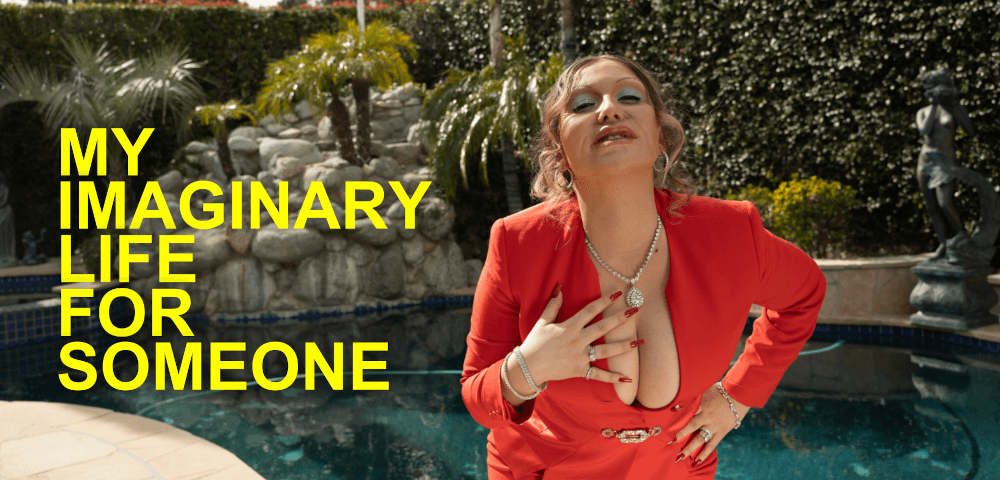
MY IMAGINARY LIFE FOR SOMEONE

MY IMAGINARY LIFE FOR SOMEONE
dir. Ryan McGlade & Molly Wurwand, 2024
United States. 76 mins.
In English.

FRIDAY, JULY 11 – 7:30 PM* w/Q&A
SATURDAY, JULY 12 – 7:30 PM* w/Q&A
WEDNESDAY, JULY 23 – 10 PM
SATURDAY, JULY 26 – MIDNIGHT

SPECIAL EVENT TICKETS
GENERAL ADMISSION TICKETS

An uncanny tour through a labyrinth of mysteriously linked Los Angeles McMansions circa y2k provides a dreamlike glimpse into the lives of five unique women who live behind the front gates.

Join us at Spectacle this July for the NYC premiere of MY IMAGINARY LIFE FOR SOMEONE directed by Ryan McGlade & Molly Wurwand, who will be in-person for audience Q&As after the July 11 & 12 screenings. A kaleidoscope of fantasy and truth, this film envelops us into an abstracted Los Angeles, a dreamlike labyrinth of mysterious mansions where the residents embody this hyperreal city.
One proclaims herself to be the foremost collector of Princess Diana memorabilia in North America. One has meticulously constructed the so-called “house that infinity built.” One listens to a tape of her own voice as she brings a plate of bagel bites out to the pool. One discovers an unexpected guest in her home as she celebrates her husband’s hundredth birthday. One recovers from drastic cosmetic reconstruction while her surgeon attempts to pitch a show to her Hollywood executive husband.
These people are the residents of the Los Angeles of our minds, their lives fully realized with documentarian level detail through painstaking months of research, art direction, and curation. Every detail tells a story and there are no accidents in this truthful simulacrum.

FRANCOMANIA II: ANOTHER JESS FRANCO MARATHON

SATURDAY, JULY 12 – NOON

DAY PASSES

Co-presented by Severin Films and Oscarbate Film Collective

Over the course of his sixty-year career, Spanish writer/director/actor/trumpeter Jesús Franco made nearly 200 unique feature films. Working across just about every genre conceivable—from slashers to spy films; gothic horror to hardcore porn, and beyond—Franco channeled his lifelong obsessions with pulp storytelling, jazz, and sex into a filmography that’s as dense as it is singularly idiosyncratic. This July, Oscarbate Film Collective returns to Spectacle for a sequel to last year’s Franco mystery marathon with four more films drawn from the various depths and crevices of his sizable filmography. Whether you’ve seen one or a hundred of his films, why not take a chance to fall under his spell?

Severin Films Pop-Up Shop before and after the marathon!

Day passes are available online for $20. Single film tickets will be available at the door for $5 on a first-come, first-serve basis.

EUGENIE DE SADE
Dir. Jesús Franco, 1970
Liechtenstein. 91 mins.
In English.

Jess Franco’s second (loose) adaptation of the Marquis de Sade’s story Eugénie de Franval is every bit as magnificent as his earlier Eugenie… The Story of Her Journey into Perversion (1970). With a captivating central performance by Soledad Miranda (Vampyros Lesbos), Eugenie de Sade is one of Franco’s best—yet surprisingly more underseen—films.

NIGHT HAS A THOUSAND DESIRES
Dir. Jesús Franco, 1983
Spain. 93 mins.
In Spanish with English subtitles.

Jess Franco’s longtime muse and partner Lina Romay stars in one of his many, many films about mind control and murder that’s a potent example of the sort of hypnotic dream logic that only he could conjure.

BLACK BOOTS, LEATHER WHIP
dir. Jesús Franco, 1982
Spain. 89 mins.
In Spanish with English subtitles.

One of Jess Franco’s many—and best—films centered around the hardboiled detective Al Pereira, Black Boots, Leather Whip contains some of the most beautiful images he ever committed to celluloid.

LAS CHUPONAS
Dir. Jesús Franco, 1985
Spain. 69 mins.
In Spanish with English subtitles.

A true rarity in Jess Franco’s seemingly never-ending filmography: a never-screened, not commercially available hardcore feature that has been shrouded in mystery for decades. Franco scholar (and Murderous Passions and Flowers of Perversion author) Stephen Thrower calls it one of his very best adult films — high praise.

TEXT2SPEECH: CONTEMPORARY ARAB* PERFORMANCE/ الأداه العربي* الحديث

SATURDAY, JULY 26 – 7:30 PM

GET TICKETS

TEXT2SPEECH: Contemporary Arab* Performance/الأداه العربي* الحديث is a selection of works by artists of or living in the MENA region who are establishing a name for themselves in the world of performance. Fadl Fakhouri curates a range of works by artists whose performance work does not belong in one category or medium as a further refutation of the colonial borders imposed upon us. Some of these works may find themselves under the label of theater while others crossover to fashion or music. Regardless, these are artists to look out for and support as their commitment to performance will lead to their being household names at the turn of the century or hopefully before then.
TEXT2SPEECH is a curatorial project from Fadl Fakhouri which exhibits artists whose work centers borders, whether it be state borders, interpersonal boundaries, patriarchal gender guidelines or linguistic borders. This selection of short films will include works by the following artists:
I/ME

dir. E Rady, 2016
United States. 2 min.

BODY IN MOTION
dir. E Rady, 2018
United States. 2 min.

OCCUPYING A CHAIR
dir. E Rady, 2019
United States. 6 min.

3 studio performances begging the question of masochism’s place in the world of oppression and identity seeking.

VAST GEOGRAPHIES
dir. Muyassar Kurdi, 2020
United States. 5 min excerpt.

Muyassar Kurdi finds new ways to play instruments, although play is not readily interpreted as fun in this performance.

FROM MENA WITH LOVE
dir. Ridikkuluz, 2020
United States, Lebanon, Australia, and France. 2 min.

Ballroom dancers spanning the US and Europe, come together to exhibit the fusion of traditional arab dance and contemporary ballroom dance. Vogue is at stake.

SEA NONNA SEE TETA
dir. Leila Awadallah, 2022
United States. 10 min.

Filmed in Italy, Leila Awadallah utilizes ancestral movement research and improvisation to pursue the creation of hybrid performance.

THE BOOK OF DUST
dir. Fargo Tbkahi, 2024
United States. 17 min excerpt.

Performed in front of a live audience, Fargo Tbakhi’s delusion is the answer to their own definitions of sanity. Process and processing line the audience’s eyes on a prop-filled stage.

REACHING
dir. Noel Maghathe, 2020
United States. 5 min excerpt.

A performance that reveals the tension and tethering of the homeland longing that has the potential to nurture.

ASSIMILATION
dir. Fadl Fakhouri, 2021
United States. 2 min.

WINE, LEMON, EGG, GASOLINE
dir. Fadl Fakhouri, 2021
United States. 2 min.

2 studio performances that play with a color language developed by the artist. Red, white & blue become more than hues and placate the subject’s allegiance to the state.

REBORN!
dir. Ayoub-Jasmina Moumen, 2021
France. 22 min.

Taking place in Paris, Ayoub-Jasmina Moumen along with Refugee Engaged Wear employs the deconstruction of fashion to refute borders of gender and the imposed carnal prison.

*Arab is a catchall term that does not reflect the various ethnic identities within the MENA/SWANA region.
[Curation by Fadl Fakhouri and film descriptions provided by artists]

TRT: 77 minutes

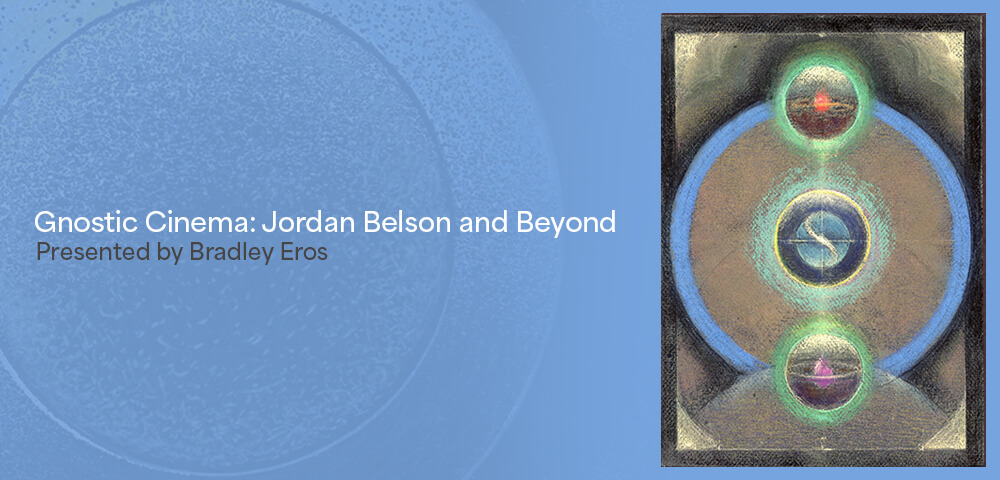
GNOSTIC CINEMA: JORDAN BELSON AND BEYOND

THURSDAY, JULY 24 – 7:30 PM & 10 PM

TICKETS FOR PROGRAM 1
TICKETS FOR PROGRAM 2

Drawing from spiritual systems spanning from Buddhism to alchemy to Kabbalah, Jordan Belson’s films posit sensuous dances of light and color as windows into a wider vision of awareness. From the 1940’s until his passing in 2011, Belson was a trailblazer in the San Francisco art scene and a pioneer in ‘Non-Objectivism,’ which he described as, “[constructing] real events in an unreal world.”

Spectacle is proud to present an evening of rarely seen Belson films. We will be projecting new 16 mm prints made from Belson’s original internegatives. We have invited Bradley Eros to curate a program responding to these works. Belson has been a foundational influence in Eros’s work since he was first introduced to the films as a student of Ron Eppel’s at the University of Illinois Champaign/Urbana. Eros’s first published essay was a 1972 essay on Belson’s films for legendary film zine The MacGuffin.

Works by Bradley Eros (Mediamystics and Vampÿrates) will be interwoven with Belson’s, making use of celluloid and multi-screen projection to transform the theater into a conduit for the numinous.

LIGHT
Dir. Jordan Belson, 1973.
United States. 8 min.
16mm.

CYCLES
Dirs. Jordan Belson & Steve Beck. 1975.
United States. 10 min.
16mm.

MUSIC OF THE SPHERES
Dir. Jordan Belson. 1977.
United States. 10 min.
16mm.

INFINITY
Dir. Jordan Belson. 1979.
United States. 8 min.
16mm.

Specially curated films, projections, video, slides, texts & graphics by Bradley Eros

7:30pm – Belson x Mediamystics: Bradley Eros & Jeanne Liotta

DERVISH MACHINE
Dirs. Bradley Eros & Jeanne Liotta. 1992.
United States. 10 min.
Super-8 to 16mm.

OPEN SESAME
Dirs. Bradley Eros & Jeanne Liotta. 1989.
United States. 7 min.

AERODYNAMICS OF THE BLACK SUN
Dirs. Bradley Eros & Lili Chin. 2006.
6 min.

OBSERVANDO EL CIELO
Dir. Jeanne Liotta. 2007.
17 min.
16mm.

ECLIPSE
Dir. Jeanne Liotta. 2005.
3 min.
16mm.

10:00pm – Belson x Vampÿrates: Bradley Eros & Richard Sylvarnes (2020 – 2025?, or centuries before?) Expanded Cinema with Slides, film, video & digital layers, original & found (stolen) materials

TRANSTRANS (TRANSFORMERS TRANSFORMED)
Dirs. Bradley Eros & Tim Geraghty. 2009.
12 min.

PYROTECHNICS
Dirs. Aline Mare / Erotic Psyche (Eros & Aline Mare). 1985.
11 min.

Bradley Eros is an artist-catalyst actively involved in diverse aspects of the New York underground, working with myriad media: experimental film & video, collage, photography, poetry, performance, sound, text, installation, expanded & contracted cinema, plus a curator, designer, researcher, composer & investigator. Concepts include: Mediamystics, Optipus, ephemeral cinema, Erotic Psyche, subterranean science, Vampÿrates, Mushroom Archive, Ocula, cinema povera, metaBody, poetic accidents, fragmentstein, musique plastique, Oysters of the Id, Narcolepsy Cinema, Artaud-Butoh, The Owl of Minerva, Velvet Hermetic System, Imageless Film, Eros c’est Lamour, kinoSonik & Black Hole Cinema.

Jeanne Liotta makes films, moving image installations, projector performances and other primarily lens-based works. Her cosmic cinema is a lively mix of art, science and natural philosophy, produced by photographing celestial events, researching the sci vis archive and performing experientially with time, light and motion.
She has been making work for over 3 decades, which includes her early collaborations with Bradley Eros, her signature 16mm film of the night skies, Observando El Cielo (2007), which received the Tiger Award at the Rotterdam International Film Festival, as well as Eclipse (2005) which was featured in the Whitney Biennial.
Liotta is the author of a monograph about the Joseph Cornell Collection at Anthology Film Archives, “Joseph Cornell: Films” published by San Francisco Cinematheque and “Enter Germs, Enter the World: Hand processing artists films in the AIDS era” for Millennium Film Journal. She is Professor Emerita at University of Colorado Boulder and Associate Chair of Moving Image in the Bard MFA Program . Her films are distributed by Lightcone, Paris and her artwork is represented by Microscope Gallery, New York.

Richard Sylvarnes is a visual artist, music maker and professional photographer. He has exhibited and performed at a multitude of spaces, venues, clubs and galleries: Anthology Film Archives, The Film-makers’ Coop, Microscope Gallery, Synesthesia, Spectacle, St. Marks Church, Sunview Luncheonette, Chaos Computer, Secret Project Robot, Lincoln Center, Le Petit Versailles, Mono No Aware, Tank Space, St. Ann’s Warehouse, Nancy Driscoll Gallery, Eyebeam, Secret Project Robot, Scott Alan Gallery, Theatre 80 St. Marks, Phyllis Harriman Gallery, Neikrug Gallery, the Kitchen among others in New York City; Emerson Gallery (Berlin), Galerie Du Jour (Paris), The Ragged School (London), the Horse Hospital (London), Galerie Tristesse (Berlin), Subliminal Projects (Los Angeles), Gallery Blütenweiss (Berlin), OK LA (Montreal). In 2009 he received a Creative Capital Grant to work with the four-time Bessie Award winning choreographer David Neumann on a work titled “Big Eater” which premiered at the Kitchen in 2010. Also, in 2008, he was nominated for a Rockefeller Renew Media Fellowship.

HE NEVER DIES: THE FILMS OF KALIL HADDAD

“One of the most important new voices in both queer and avant-garde cinema, Haddad’s work can alternate between languid and truly abrasive rhythms, often inhabiting a POV that feels truly dangerous in a filmmaking landscape for young directors so encouraging of “niceness”.” – Ethan Vestby, Bleeding Edge

Coming in hot from the north, this six-film survey of Canadian filmmaker Kalil Haddad’s incendiary and truly strange work makes its stateside microcinema debut this summer at Spectacle theater. A retrospective screening that shows a young artist’s evolution over the years, the progression of films tells a unique story: one that grows increasingly disturbing and aesthetically bold, culminating in the truly shocking VICTIM OF CIRCUMSTANCE. Spectacle is thrilled to showcase this fulsome array of Haddad’s films, following a February 2024 screening of THE TAKING OF JORDAN alongside the new bizarro Ontarian classic, Nate Wilson’s THE ALL GOLDEN.

THURSDAY, JULY 3 – 10 PM
SATURDAY, JULY 12 – MIDNIGHT
FRIDAY, JULY 18 – 7:30 PM followed by Q&A with Kalil Haddad
TUESDAY, JULY 29 – 10 PM

SPECIAL EVENT TICKETS
GENERAL ADMISSION TICKETS

THE BEAUTIFUL ROOM IS EMPTY
Dir. Kalil Haddad, 2020.
Canada. 20 min.

As her childhood home is emptied for sale, Marie wanders through spaces both concrete and virtual as she attempts to navigate the ghosts of her past.

THE BOYS OF SUMMER
Dir. Kalil Haddad, 2021.
Canada. 6 min.

Some fun in the sun.

HIS SMELL
Dir. Kalil Haddad, 2023.
Canada. 14 min.

Sebastian’s roommate is away for the weekend…

THE TAKING OF JORDAN
Dir. Kalil Haddad, 2022.
Canada. 8 min.

Jordan, an amateur adult performer, recalls the horror of his many former lives.

THE BOY WAS FOUND UNHARMED
Dir. Kalil Haddad, 2024.
Canada. 3 min.

Jody remembers being eleven.

VICTIM OF CIRCUMSTANCE
Dir. Kalil Haddad, 2024.
Canada. 21 min.

Scott and Brandon meet in the 1980s at an orphanage. When Brandon sets off for California, Scott follows closely behind. A story told through the pages of an adult magazine.

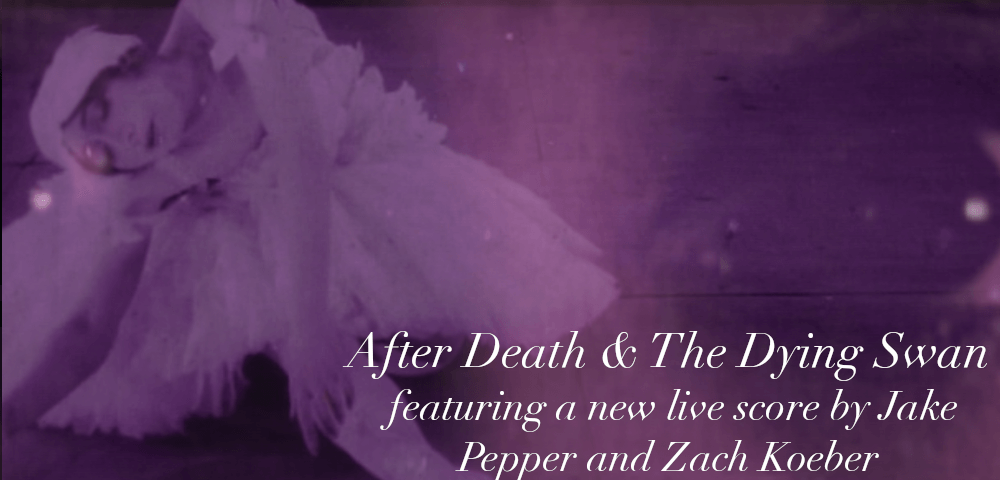
AFTER DEATH and THE DYING SWAN w/ LIVE SCORE BY JAKE PEPPER AND ZACH KOEBER

After Death and Dying Swan

SUNDAY JULY 13 – 5 PM – ONE NIGHT ONLY! LIVE SCORE BY JAKE PEPPER AND ZACH KOEBER – PLAYED BACK TO BACK WITH A 15-MINUTE INTERMISSION

SPECIAL EVENT TICKETS (7/13)

Following their debut as a duo in May, improv music virtuosos Jack Pepper and Zach Koeber return to score two Spectacle silent classics from Russian visionary Yevgeni Bauer

AFTER DEATH
dir. Yevgeni Bauer, 1915
Russia, 46 min.
Silent with Russian intertitles and English Subtitles

Based on a novella by Ivan Turgenev, AFTER DEATH is arguably cinema’s first foray into gothic romance. The pitifully alienated Andrei (Vitold Polonsky) becomes infatuated with enigmatic actress Zoia (Vera Karalli), and then her sudden passing sends him into a pit of obsessive despair. Presented initially as a melodrama before distinctly veering into the supernatural and psychological, AFTER DEATH is an early testament to the ways film illustrates the complex feelings around loss and dwelling on what could have been.

THE DYING SWAN
dir. Yevgeni Bauer, 1917
Russia, 49 min.
Silent with Russian intertitles and English Subtitles

A few years later, Bauer, Polonsky, and Karalli reunited for another morbid tale of obsession and fame. Written by Russian actress Zoya Barantsevich, THE DYING SWAN follows the tragic trajectory of mute ballet dancer Gizella (Karalli) as she encounters heartbreak, breakthroughs in fame, and admirers with pernicious motives. Released in the twilight of Bauer’s career, THE DYING SWAN is also considered his most noteworthy achievement for its gaze into the darker side of inspiration and desire.
—————————————————————————————————————————————————————–
Jake Pepper and Zach Koeber make up half of Ace Bandage, the jam-heavy rock band based in Brooklyn. Their fondness of improvisation and vast knowledge of timbral music allows them to shift seamlessly through varied sonic palettes. Pepper also performed in Brooklyn synth punk outfit Future Punx, while Koeber got his start in the local scene as one-third of Archie Pelago, and he currently collaborates with deep house producer Max in the World. Both Jake and Zach have also guest DJ’d on the prestigious independent station The Lot Radio.

Special thanks to George Schmalz and Kino Lorber.