YOUTH RESURGENCE ‘68: FROM TAKASAKI TO NEW YORK

YOUTH RESURGENCE ‘68: FROM TAKASAKI TO NEW YORK

Spectacle is proud to present this special one-night-only program in celebration of Interference Archive’s exhibition, Resurgence Youth Movement, 1964-67: Teenrevolt, Surrealism, Anarchism. Founded in New York’s Lower East Side in 1964, the Resurgence Youth Movement became a sprawling and boundless web of anti-racist, anti-imperialist, anarchist activity in cities around the country. The exhibition, closing on May 17th, follows the 2023 publication of Resurgence!, the first book devoted to the RYM and its founder Jonathan Leake, which includes selections of all twelve issues of Resurgence, the original mimeographed zine published by Leake and RYM between 1964 and 1967.

From Interference Archive:

The RYM called for the disintegration of the State, the complete destruction of bourgeois society, and a total surrealist-psychedelic revolution of the mind and body. “The Resurgence Youth Movement…advances the new anarchism of body, mind and soul, the psychedelic alchemies of revolution,” RYM wrote in their “Guerilla Manifesto” (Resurgence 6, 1967). Their activities continued until August of 1967, when Walter Caughey was stabbed to death in New York in an unsolved murder that many believe was politically motivated.

Copies of Resurgence! will be available for sale at the theater. We will be joined throughout the evening by special guests including Resurgence! Editor Abigail Susik, underground press scholar Sean Lovitt, and theorist and activist Sabu Kohso.
COLUMBIA REVOLT (Newsreel #14)
Pr. Newsreel, 1968.
United States. 59 min.
In English.

SATURDAY, MAY 16TH 5pm with q+a

BUY TICKETS

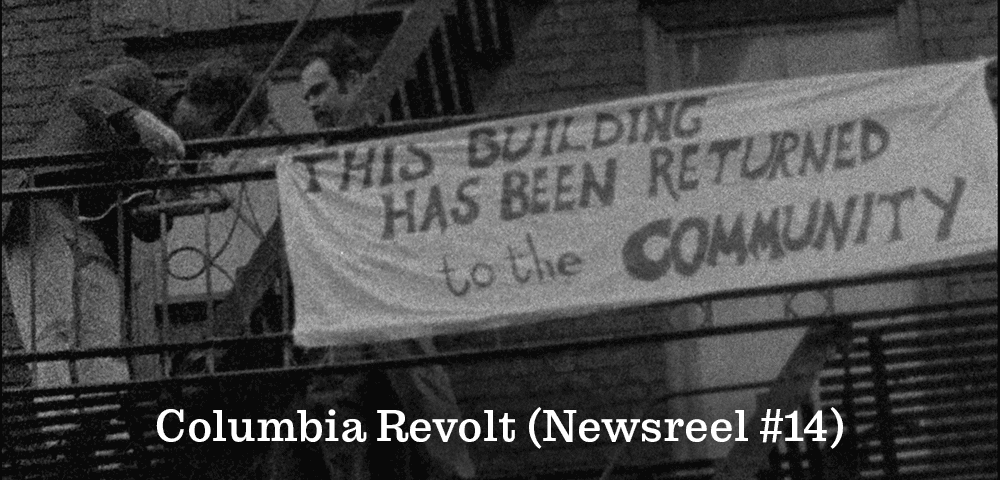
Working between 1967 and 1972, Newsreel was an activist film collective made up of numerous filmmakers who produced dozens of films documenting the political and social unrest of the late 60s and early 70s. Preserved by Third World Newsreel, this is the first opportunity to see the newly digitalized COLUMBIA REVOLT. One of the collective’s longest films, it documents the student occupation of five Columbia University buildings in April 1968.

An early large-scale protest of the Vietnam War, the action exposed links between Columbia’s institutional funding, support of the Vietnam War, and a new gymnasium to be constructed in the nearby neighborhood of Morningside Heights. Led by the Students for a Democratic Society and the Society of Afro-American Students, hundreds of young activists experimented with new forms of organizing, despite violent clashes with the NYPD. The revolt successfully forced the university to abandon its gymnasium project and disaffiliate from the Institute for Defense Analyses, a military research corporation supporting the US invasion of Vietnam. 

preceded by 
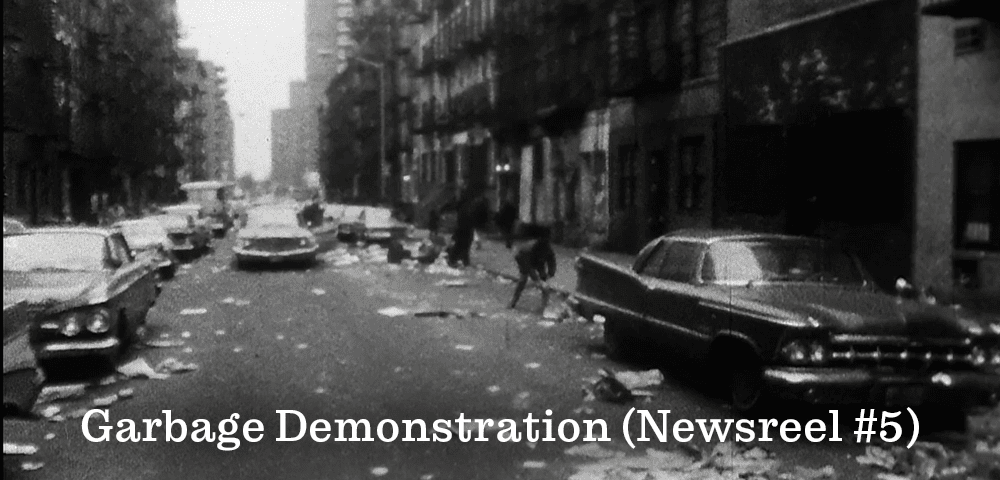
GARBAGE DEMONSTRATION (Newsreel #5)
Pr. Newsreel, 1968.
United States. 10 min.
In English.

This short Newsreel film follows a group of young people as they travel from Manhattan’s rapidly politicizing Lower East Side to its Upper West Side, bringing with them heaps of uncollected garbage from their own neighborhood to relocate on the grounds of Lincoln Center.

Abigail Susik and Sean Lovitt will join us for a Q+A discussion following this screening.
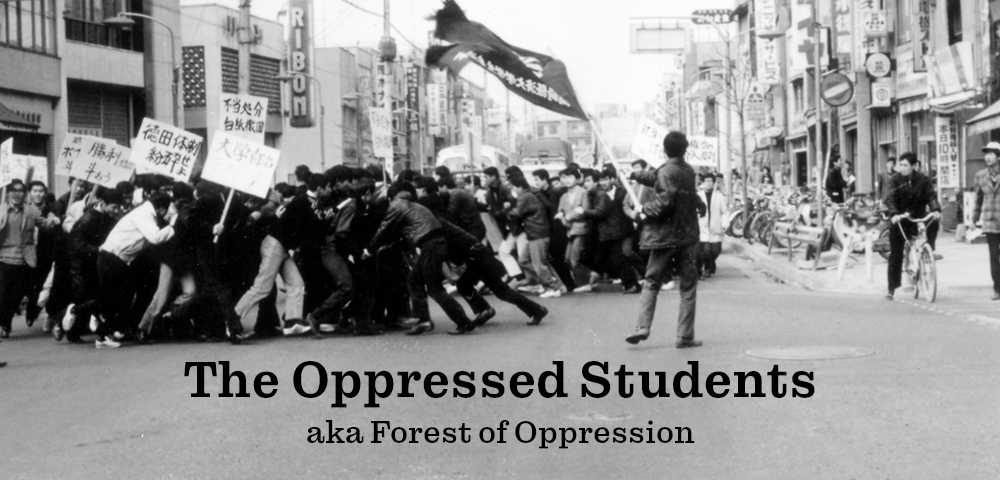
THE OPPRESSED STUDENTS
(aka FOREST OF OPPRESSION – A RECORD OF THE STRUGGLE AT TAKASAKI CITY)
(圧殺の森-高崎経済大学闘争の記録)
Dir. Shinsuke Ogawa, 1967.
Japan. 105 min.
In Japanese with English subtitles.

SATURDAY, MAY 16TH 7:30pm with introduction and q+a

BUY TICKETS

Rarely screened in the United States since their original releases, Shinsuke Ogawa’s films offer invaluable insight into Japanese radical politics and the collective action of workers, students, and villagers. Ogawa dared to imagine a new ethics and approach to documentary production in Japan as he situated himself closely alongside political dissidents and communities and brought the filmmaking process closer to political struggle than had previously been done in Japan.

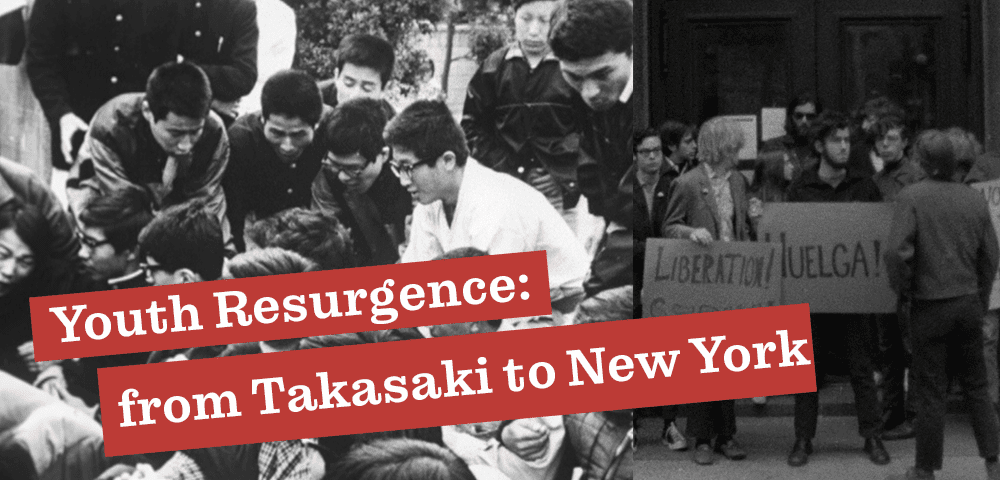
THE OPPRESSED STUDENTS is an undecorated and patient documentation of a multi-year protest at Takasaki University, which reached its peak in 1967 and 1968 with the students’ unprecedented occupation of university buildings. The film follows a relatively small group of young activists as they struggle to maintain their movement against violent Japanese institutions and the powerful cultural pressures surrounding themselves and their peers. An intimate view of long-term resistance, THE OPPRESSED STUDENTS sits with the messiness and uncertainty of grassroots organizing and reflects the changing feeling of time for those on the frontlines, as persistent and slow struggle erupts into sudden and dangerous moments of conflict.

Abigail Susik, Sean Lovitt, and Sabu Kohso will join us to discuss this piece of history, including how a group of teenagers involved with RYM in the Lower East Side caught wind of THE OPPRESSED STUDENTS and were inspired to adapt some of the Japanese students’ tactics.

Sabu Kohso is a theorist, translator, and long-time activist in global and anti-capitalist struggle. A native of Okayama, Japan, Sabu has lived in New York City since 1980. He has published several books on urban space and struggle in Japan and his translations include works by Kojin Karatani and David Graeber. His most recent book is Radiation and Revolution (Duke University Press, September 2020). 


Co-programmed with Abigail Susik and Sean Lovitt.

Special thanks to Abigail Susik, Sean Lovitt, Sabu Kohso, Kelly Mill, Amelia Langas, Brooke Darrah Shuman, Jed Rapfogel, Third World Newsreel, and the Athénée Français Cultural Center.
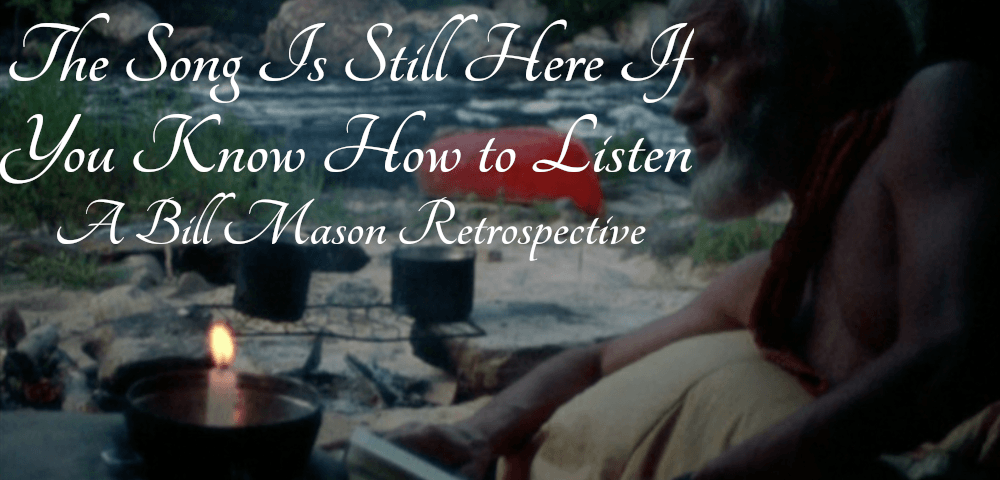
THE SONG IS STILL HERE IF YOU KNOW HOW TO LISTEN: A BILL MASON RETROSPECTIVE

BILLMASON

Born in 1929 and a graduate of the University of Manitoba School of Art, naturalist, author, and artist Bill Mason left behind a legacy showcasing the artistry of the North American wilderness like few others. Long regarded as “the patron saint of canoeing”, Mason would eventually bring extensive camera equipment on his expeditions through the Great Lakes in hopes of instructing the public on canoe techniques and eventually addressing growing ecological concerns.

His rigorous documenting resulted in some of the purest examples of environmental filmmaking and an unintentional antidote to the slop-produced overconsumption of today’s media landscape. With the weather brightening up and summer approaching, we at Spectacle invite you to touch grass with us (albeit metaphorically)

MASONSHORTS

WEDNESDAY, MAY 6 – 7:30 PM
THURSDAY, MAY 21 – 7:30 PM (Virtual Q&A w/ Becky Mason)
SUNDAY, MAY 24 – 5 PM

BUY TICKETS

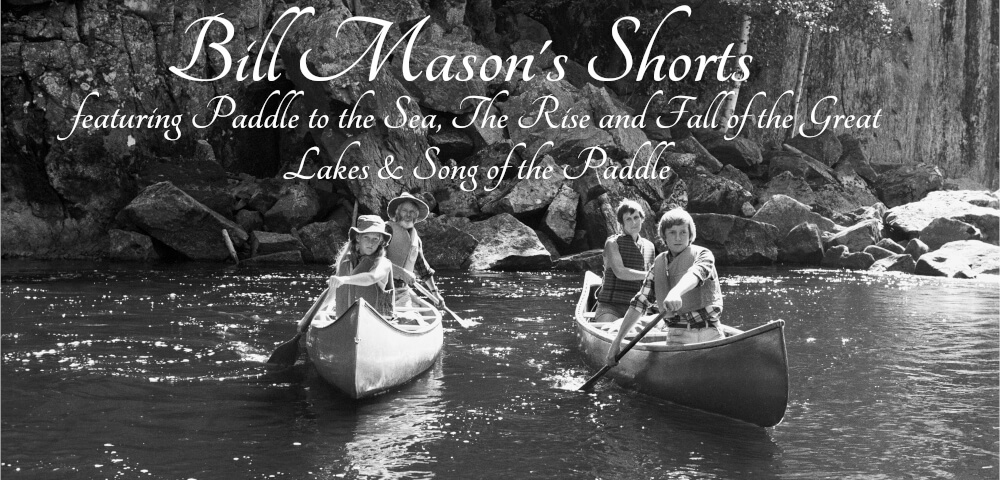
PADDLE TO THE SEA
Dir. Bill Mason, 1966
Canada, 28 min.
In English

Based on Holling C. Holling’s Caldecott award-winning children’s picture book, PADDLE TO THE SEA tells the quaint tale of a wood-carved model’s human-assisted journey through the Great Lakes. Narrated by NFB affiliate Stanley Jackson, Mason modernizes this classic family tale to educate on the negative effects of water pollution.

THE RISE AND FALL OF THE GREAT LAKES
Dir. Bill Mason, 1968
Canada, 17 min.
In English

Accompanied by playful bluegrass and accentuated by match cuts and slapstick gags, THE RISE AND FALL OF THE GREAT LAKES subverts the film travelogues of the time and showcases man’s harm to the natural world through a quirky geography lesson.

SONG OF THE PADDLE
Dir. Bill Mason, 1978.
Canada, 41 min.
In English

The wholesome family vacation is brought to full cinematic scope in SONG OF THE PADDLE. Bill Mason brings his wife and kids along for a camping excursion through Lake Superior, providing insightful and warm anecdotes along the way.

CRYWILD

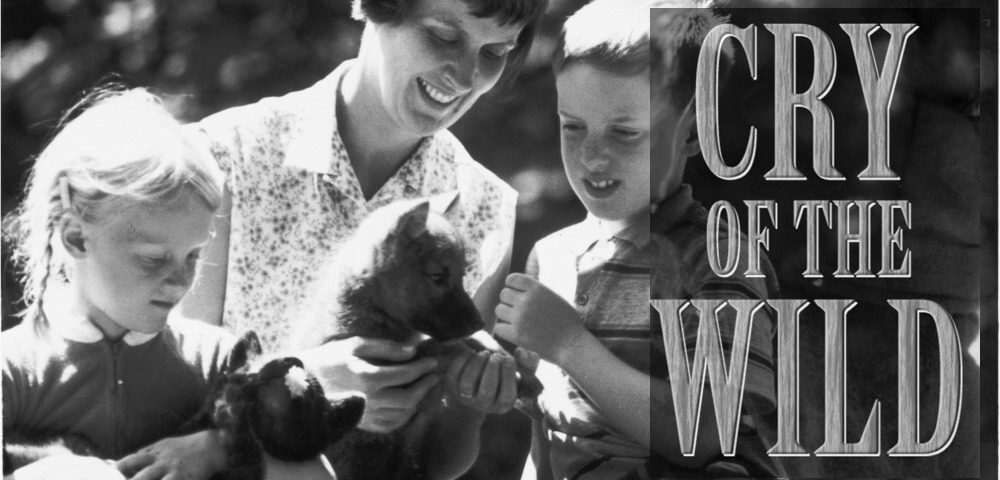
CRY OF THE WILD
Dir. Bill Mason, 1972
Canada, 88 min.
In English

WEDNESDAY, MAY 12 – 7:30PM
WEDNESDAY, MAY 27 – 10PM
FRIDAY, MAY 29 – 7:30PM

BUY TICKETS

Bill Mason’s first foray into feature length documentary filmmaking, he sought to destigmatize wolves and their vicious public perception with this project. Observing them both in their natural habitat and on his own property in the Gatineau Hills, the film also chronicles Mason and his family’s attempt to raise wolf cubs on their own.

Note: this film contains brief scenes of animal death

WATERWALKER

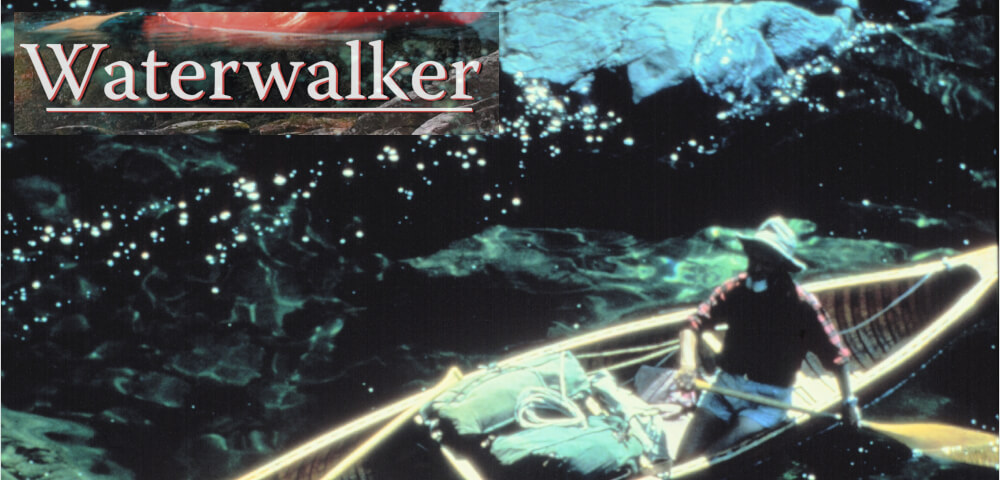
WATERWALKER
Dir. Bill Mason, 1984
Canada, 87 min.
In English

SATURDAY, MAY 2 – 3PM
MONDAY, MAY 11 – 7:30PM
SUNDAY, MAY 31 – 7:30PM

BUY TICKETS

In what would be Mason’s final film project before his passing in 1988, WATERWALKER follows him through a solitary journey down rapids along Lake Superior. Interspersed with quiet, pensive moments of painting landscapes that would put even Bob Ross to shame, Mason’s swan song also incidentally manages to be his most spiritual work. Accompanied by a lush theme song penned by Canadian folk singer icon Bruce Cockburn.

Special Thanks to Frédéric Savard, the National Film Board of Canada, The Canadian Canoe Museum and Becky Mason

DANCES WITH LAOWAI: 3 KUNG FU WESTERNS

DANCES WITH LAOWAI: 3 KUNG FU WESTERNS

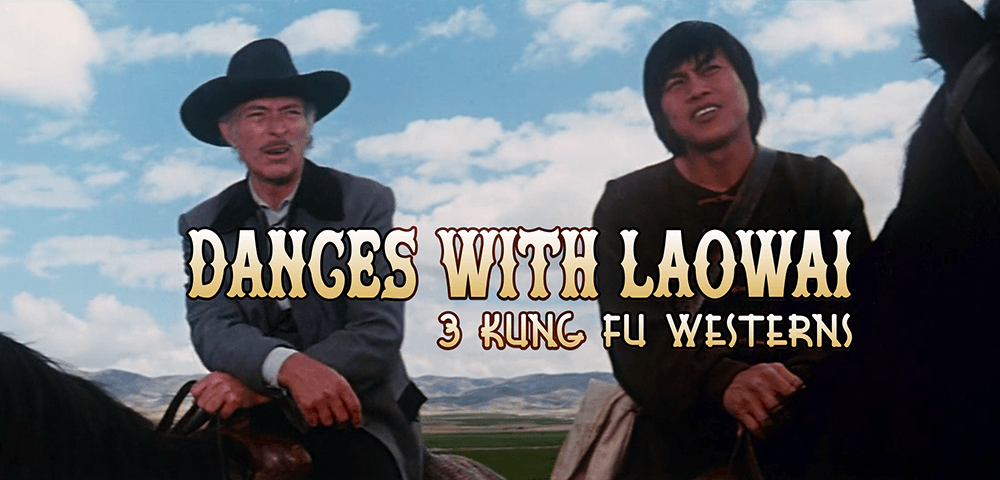
Once upon a time in China and America, there lived two distinct genres of action cinema fated to cross paths. On one side of the world, the western, which combined stylized violence, stoic masculinity, and American cultural mythology to tell tales of honor, loyalty, and vengeance across the Old West. On the other end, the martial arts picture, which combined stylized violence, stoic masculinity, and Chinese cultural mythology to tell tales of honor, loyalty, and vengeance throughout the Middle Kingdom. Two genres operating, two sides of the same coin, separated only by a mere 7,000 miles of distance between countries.

By late-1960s, the traditional western was well past its prime, mostly sustaining via the “spaghetti” westerns coming in from abroad or the New Hollywood and countercultural revisionism taking root at home. At the same time, the martial arts film was in the midst of its own renaissance with the global ascendency of Bruce Lee, Shaw Brothers Studios, and Hong Kong action cinema at large. It didn’t take long for western filmmakers to recognize the thematic overlap between the two genres, and before long the Spanish and Italian film industries began turning out spaghetti westerns with a kung fu twist, beginning with Enzo Peri’s James Shigeta-starring feature, DEATH WALKS IN LAREDO (1967).

The kung fu western trend would arguably hit its peak in 1972 with the major studio release of Terence Young’s RED SUN, a spaghetti western-samurai movie crossover starring Toshirō Mifune and Charles Bronson (coincidentally, stars of both SEVEN SAMURAI and its western reimagining, THE MAGNIFICENT SEVEN), and the debut of the popular television serial KUNG FU, featuring David Carradine as a Shaolin abbot journeying through the Old West. But the trend didn’t end there, nor did it die out as the spaghetti western craze of the 60s & 70s began to flag. On the contrary, Italian and Spanish studios had leaned even heavier into the hybrid-genre gimmick as a way to sustain appeal, leading to a small mid-70s boom of martial arts-spaghetti western crossovers: A final stand of sorts, in classic western fashion.


THE STRANGER AND THE GUNFIGHTER

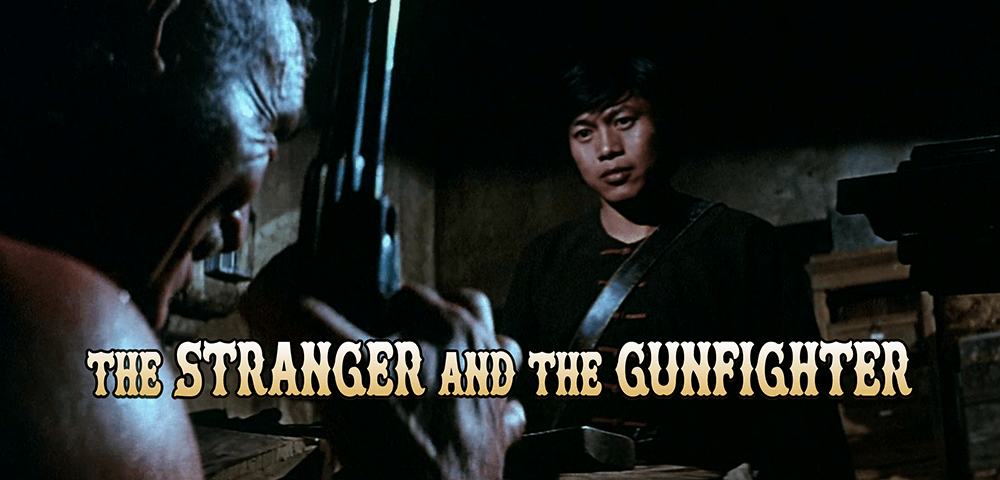
THE STRANGER AND THE GUNFIGHTER (LÀ DOVE NON BATTE IL SOLE)
aka BLOOD MONEY
Dir. Antonio Margheriti, 1974
Italy/Hong Kong/Spain. 100 min.
In English

WEDNESDAY, MAY 6 – 10 PM
MONDAY, MAY 11 – 10 PM
TUESDAY, MAY 19 – 10 PM
SATURDAY, MAY 30 – 7:30 PM

GET TICKETS

Martial artist Ho Chiang (Lo Lieh) travels to the Wild West on a life-or-death mission to recover his family’s hidden fortune, after his uncle is mistakenly killed by the outlaw Dakota (Lee Van Cleef) during a botched robbery attempt. Since Dakota is the only man alive with clues to the fortune’s location, Ho breaks him free from the hangman’s clutches, and the unlikely allies set off on a mission to track down the uncle’s four widows, each of whom holds another piece of the puzzle.

THE STRANGER AND THE GUNFIGHTER is notable for being one in a series of international co-productions by Shaw Brothers Studios, as part of an attempt to branch out into other territories and genres. But unlike their first two Italian co-productions, SUPERMEN AGAINST THE ORIENT (1974) and THIS TIME I’LL MAKE YOU RICH (1974), this one is actually good for a change. An offbeat action buddy comedy that can clearly be seen as the template for a similar Jackie Chan vehicle decades later.


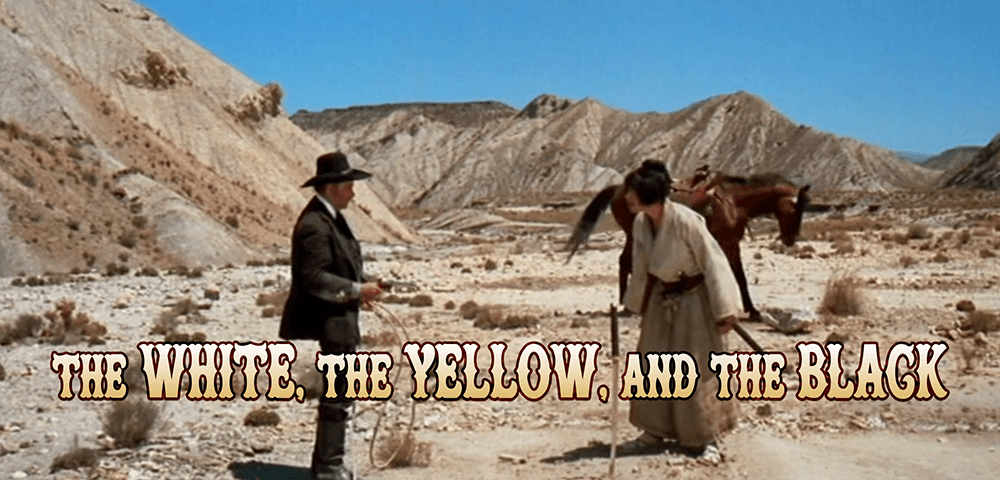
THE WHITE, THE YELLOW, AND THE BLACK

THE WHITE, THE YELLOW, AND THE BLACK (IL BLANCO, IL GIALLO, IL NERO)
aka SHOOT FIRST… ASK QUESTIONS LATER
aka SAMURAI

Dir. Sergio Corbucci, 1975
Italy. 106 min.
In English

TUESDAY, MAY 5 – 10 PM
FRIDAY, MAY 22 – MIDNIGHT
SATURDAY, MAY 30 – 5 PM

GET TICKETS

In the 19th century, a delegation of Japanese samurai travels to the United States to present the president with a gift from the Emperor, in the form of a divine pony. But when the delegation is attacked and the pony is kidnapped for ransom, the group’s inept servant— and wannabe samurai— Sakura (Tomas Milian) turns to the local Sheriff Gideon (Eli Wallach) for help delivering the ransom money. Along the way, they’re joined by the notorious Swiss outlaw Blanc de Blanc (Giuliano Gemma) who has his own plans for the money.

For reasons inexplicable, legendary spaghetti western director Sergio Corbucci (THE GREAT SILENCE, DJANGO) decided to end his tenure in the genre with this slapstick-y buddy comedy, conceived as a send-up of Terence Young’s samurai-western crossover RED SUN, though with some obvious parodic shades of THE GOOD, THE BAD, AND THE UGLY. Action-wise it’s one of the more polished additions to the kung fu-western canon and is altogether a compelling end to Corbucci’s western career… that is, so long as you can stomach Milian’s Sakura in a performance that borders on Mickey Rooney-levels of offensive Asian caricature (viewer be warned).


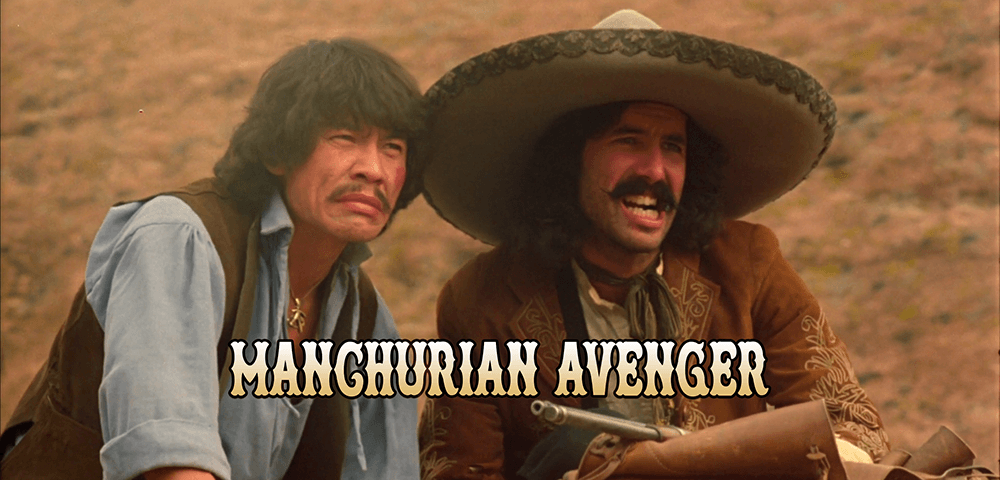
MANCHURIAN AVENGER

MANCHURIAN AVENGER
Dir. Ed Warnick, 1984
United States. 88 min.
In English

TUESDAY, MAY 12 – 10 PM
SATURDAY, MAY 23 – MIDNIGHT
SATURDAY, MAY 30 – 3 PM

GET TICKETS

Joe (Taekwondo champion and “Korean Charles Bronson,” Bobby Kim) returns to his Colorado hometown after many years to reconnect with Kim, the man who helped raise him after Joe’s father was murdered by a gang of outlaws. When Joe learns that Kim has been killed by the villainous Cheng and his henchmen, he teams up with Kim’s sister, her husband, and a local outlaw for revenge.

MANCHURIAN AVENGER is a rare homegrown addition to the kung fu western canon, filmed on location in Fairplay, Colorado and sourcing a large cast of extras from the surrounding South Park region. Despite its modest scale, the film shoots the moon with its production values, featuring a ton of creative special effects work, charmingly anachronistic costuming, visibly dangerous stunt work, and some genuinely breathtaking footage of its Rocky Mountain surroundings.

FROM BRADDOCK TO DADETOWN: 2 RUST BOWL FANTASIES

The wave of deindustrialization that swept through the Great Lakes region of the United States in the latter half of the 20th century left in its wake what’s commonly referred to as the Rust Belt – a wide swath of shuttered factories and economic ruin stretching roughly from upstate New York to Wisconsin. The ramifications of this shift are palpable in local and national politics to this day, as evidenced by each election cycle’s inevitable scramble for the sympathies of the area’s supposedly lost and forgotten “white working class.” The saga of the Rust Belt is as American as they come – a story of the abandonment of the working class at the hands of the ruling class, of the ruthless march of time, and of ordinary citizens contending with major global political and economic currents in their own backyards.

This May, Spectacle is proud to present two films that blend truth and fiction in confronting the neoliberal economic order that created the Rust Belt (or, to use one of the film’s more Great Depression-coded moniker, the Rust Bowl) – legendary Pennsylvania indie filmmaker Tony Buba’s Lightning Over Braddock: A Rust Bowl Fantasy (1988) and the one-of-a-kind lost gem Dadetown (1995).

LIGHTNING OVER BRADDOCK: A RUST BOWL FANTASY
Dir. Tony Buba, 1988.
US. 80 min.
In English.

SATURDAY, MAY 2ND – 10PM
FRIDAY, MAY 15th – 7:30PM (Q&A with director Tony Buba)
TUESDAY, MAY 19th – 7:30PM (Q&A with director Tony Buba)
THURSDAY, MAY 28th – 10PM

TICKETS

After over a decade making short films addressing political issues in his native Braddock, PA, Tony Buba made his feature debut with this freewheeling, diaristic first-person documentary about the economic decline of his hometown following the collapse of the steel industry in Western Pennsylvania. 

From this starting point, Buba creates a brilliantly funny and impassioned reflection on the relationship between labor and capital, whether in manufacturing or the movie business. As much a story of an independent filmmaker negotiating his career as that of a town fighting for its future, Buba’s dry humor, candid self-reflection and flair for imagination (including parodies of major Hollywood films) exist alongside a lucid anger at the capitalist forces waging war on Braddock’s working people. 

On May 15th and May 19th, we’ll be joined by Tony Buba for a Q&A about the film.


DADETOWN
Dir. Russ Hexter, 1995.
US. 93 min.
In English.

WEDNESDAY, MAY 13 – 10PM
FRIDAY, MAY 22 – 7:30PM (Q&A with co-writer John Housley)
SATURDAY, MAY 30 – 10PM

TICKETS

“We arrived in late March, 1994 to film a simple 15-minute segment for a public television special about small towns in America. Although we were only hired to stay for two weeks, our plans would change.”

So begins the story of Dadetown, which follows its titular upstate New York town through a fraught moment of post-industrial transformation. As the paper clip factory that has long served as the town’s chief employer begins closing, a hi-tech computer company called American Peripheral Imaging sets its sights on Dadetown as the location for its newest expansion. The arrival of API (and the legions of yuppie arrivistes they bring with them) exposes deep fault lines in the community, largely between those who stand to gain from the infusion of big business and those who may be left by the wayside.

Director Russ Hexter (who tragically died at age 27 shortly after the film’s Sundance premiere) captures the nuances and absurdities of this escalating conflict through candid interviews with the townsfolk and the API interlopers, invoking both the power and the challenges of working-class solidarity in its tight-knit community. Long before our current firestorms around tariffs and data centers, Dadetown asks urgent questions about labor, tech and capital that we’re still wrestling with to this day.

On May 22nd, we’ll be joined by co-writer John Housley for a Q&A about the film.

Special thanks to John Housley, Jim Carden and Maren Hexter.


TALES FROM THE TYNE

When you tell someone in the US that you’re from Newcastle upon Tyne, it will usually be followed by one of three questions: “I guess you support Newcastle United, then?” “Like the Brown Ale?” or “How far is that from London?” The answers, for the record, are yes, yes, and around 300 miles, which, in UK terms, is incredibly far. Newcastle is a city in the North East of England, sitting on the River Tyne about eight miles from the North Sea. Its roots stretch back to a Roman fort and bridge known as Pons Aelius, before a Norman castle built in the 11th century gave the city its modern name. By the 19th century, Newcastle had become one of the great industrial cities of Britain, a powerhouse of shipbuilding, coal, engineering, and heavy industry that helped drive the Industrial Revolution.

The people of Newcastle and the surrounding Tyneside area are known as Geordies, a name tied to both a distinctive dialect and a fiercely local sense of identity. The origin of the term is debated, but one popular explanation links it to the region’s loyalty to King George II during the Jacobite uprising of 1745, or possibly because they favored safety lamps invented by local engineer George Stephenson. What matters more than the etymology is what the word has come to represent: a culture built around working-class solidarity, humor, and pride in a region that has long existed outside the economic and cultural gravity of London. Today, Newcastle is a city shaped by both its industrial past and its present, where remnants of shipyards, coal staithes, and Victorian engineering sit alongside universities and music venues.

Despite this history and character, Newcastle and the surrounding area are rarely represented on screen. The films GET CARTER (1971), GOAL! (2005), and I, DANIEL BLAKE (2016), probably make up the majority of any list of movies set in or around the city. When Newcastle does appear, it often does so through stories rooted in working-class life and the social realities of the North East. These films hint at a place that is often overlooked within British cinema, overshadowed by the cultural dominance of London, even while the landscapes and communities of the North continue to shape the stories told there.

Tales From the Tyne at Spectacle Theater presents three films showcasing Newcastle upon Tyne and the communities built there: TISH (2023), PURELY BELTER (2000), and STORMY MONDAY (1988). Taken together, they offer glimpses of the city across different eras, from the everyday lives documented by photographer Tish Murtha, to the restless energy of two Newcastle teenagers chasing football tickets, to the rain-soaked jazz clubs and redevelopment anxieties of the 1980s. These films reveal a city shaped by industry, community, and change. Together, they offer a glimpse into a place whose stories and voices are too often overlooked by more than just cinema.


TISH
Dir. Paul Sng, 2023.
United Kingdom. 90 min.
In English.

THURSDAY, MAY 7th – 7:30PM
SUNDAY, MAY 17th – 5PM
MONDAY, MAY 25th – 7:30PM

TICKETS

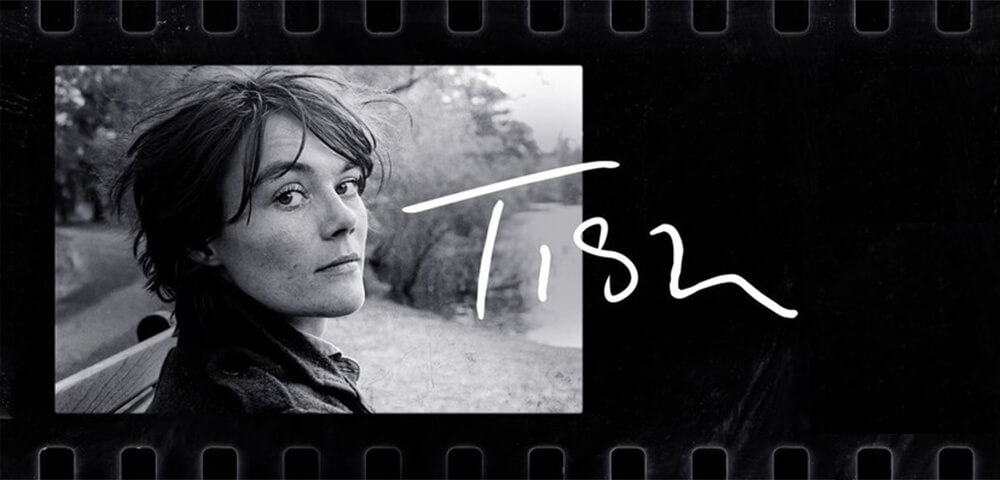
A documentary about the life and work of Tish Murtha, a working-class photographer from Newcastle Upon Tyne. 

Growing up in the North East of England, Tish Murtha used her camera to capture the raw truth of life in Newcastle upon Tyne during the turbulent years of Thatcher’s Britain and beyond. Her stark black-and-white photographs show children playing in neglected streets, young people facing unemployment, and communities living with the daily consequences of political decisions made far from their homes. Tish Murtha’s photography didn’t just show everyday life; it highlighted inequality and pushed for social change. TISH is an intimate look at her life, her work, and the lasting impact of her art, showing how her message is still as poignant today as it was during her lifetime.


PURELY BELTER
Dir. Mark Herman, 2000.
United Kingdom. 95 min.
In Geordie with English subtitles.

MONDAY,  MAY 4th – 7:30PM
THURSDAY, MAY 14th – 10PM
MONDAY, MAY 25th – 10PM

TICKETS

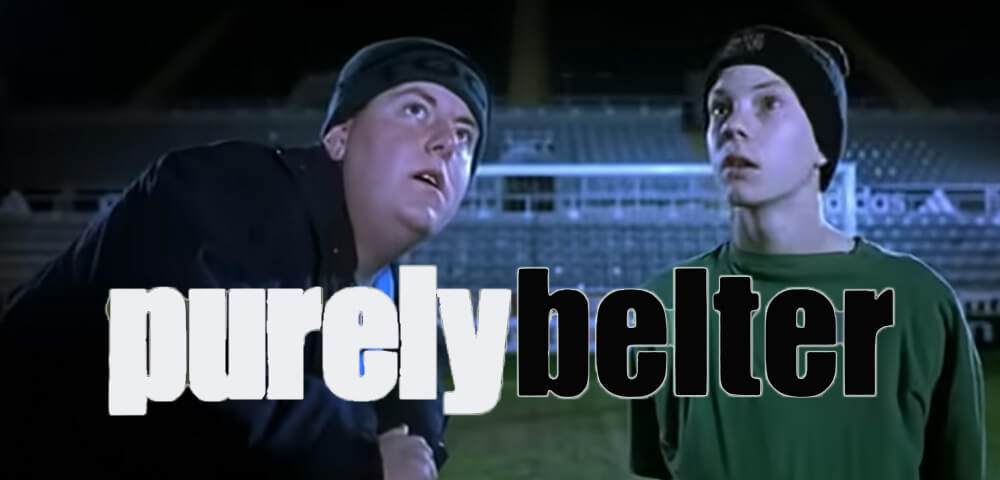
The exploits of Gerry and Sewel, two down-and-out teens trying to raise £1000 to buy season tickets to their favourite football team, Newcastle United. 

PURELY BELTER  is a film that feels inseparable from the place it comes from. Set firmly in and around Newcastle, the film captures the rhythm of everyday life on Tyneside, a world of tower blocks, back alleys, and football obsession.

What gives PURELY BELTER its unmistakable flavour is its unapologetic embrace of Geordie culture. The title itself comes from Geordie slang: “pure” meaning very, and “belter” meaning brilliant. The film revels in the sounds of Newcastle, thick Geordie accents and dialogue so regional that some screenings reportedly handed out glossaries to help non-locals decode terms like “howay” and “radgie.” This commitment to dialect is part of the film’s charm. Even the film’s cameo from Newcastle United legend Alan Shearer adds to the sense that the story belongs completely to the city and its footballing culture.

Underneath the humour, though, lies a streak of social realism that makes the film more than just a football comedy. Gerry and Sewell grew up surrounded by broken families, poverty, and limited opportunities. PURELY BELTER balances this bleak backdrop with the resilient spirit of its characters: football becomes an escape, a dream that briefly lifts them above the grind of everyday life. For many Geordies, PURELY BELTER is a Newcastle classic, endlessly quoted in schoolyards, even if it never quite received the same recognition beyond the city. In that sense, the film itself feels like a Geordie phrase: rough around the edges, full of heart, and, in its own way, PURELY BELTER.


STORMY MONDAY
Dir. Mike Figgis, 1988.
United Kingdom. 93 min.
In English.

FRIDAY, MAY 1ST – MIDNIGHT
THURSDAY, MAY 7TH – 10PM
SUNDAY, MAY 17TH – 7:30PM
FRIDAY, MAY 29TH – 10PM

TICKETS

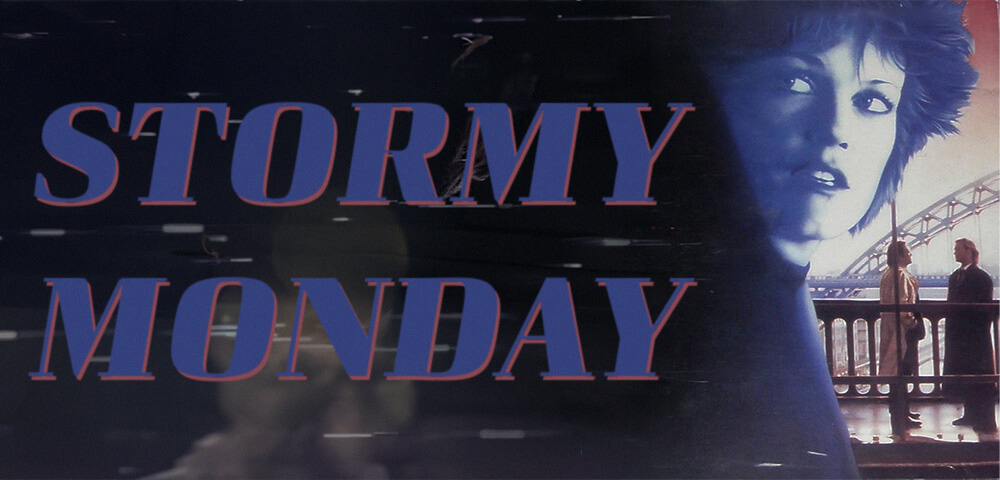
A corrupt American businessman tries to strongarm his way into buying a nightclub in Newcastle. However, Brendan, an employee of the nightclub, discovers a darker motive behind the acquisition. 

STORMY MONDAY (1988) marks the debut feature of director Mike Figgis, who spent many of his formative years in Newcastle. The film unfolds as a slow-burning neo-noir set against the decaying streets of late-1980s Newcastle, where smoky jazz clubs and rain-slicked streets become the stage for a web of corruption and uneasy alliances. Figgis brings the classic noir language of outsiders, seduction, and moral ambiguity to a distinctly British landscape, capturing a city caught between its industrial past and an uncertain future.

Roger Deakins’ beautiful cinematography pairs seamlessly with Figgis’s haunting, jazz score, transforming Newcastle’s misty Quayside into a neon dreamscape. Despite a star-studded cast, including Melanie Griffith, Sean Bean, Tommy Lee Jones, and Newcastle local Sting. STORMY MONDAY has fallen into relative obscurity since its initial release.

STONE ZONE HANGOVER

STONE ZONE HANGOVER

Marijuana is often lauded as being “hangover free”, maybe most famously by Tim Meadows’ character in WALK HARD: THE DEWEY COX STORY, but most stoners can attest to at least a slight fog the next day if one goes hard. And Spectacle went hard in April with the 420 double feature of [REDACTED] and DEALING: OR THE BERKELEY-TO-BOSTON FORTY-BRICK LOST-BAG BLUES. So hard in fact that our licensing agreement allows us to play the titles a few more times to recoup some of those expenses. Thus, this May Spectacle—groggily—presents the return of DEALING, paired with pornographer Alex de Renzy’s classic documentary WEED, for a look back at Marijuana under prohibition and the experience of trafficking bricks across borders, both fictional and non-fictional.


DEALING OR THE BERKELY-TO-BOSTON FORTY-BRICK LOST-BAG BLUES

DEALING: OR THE BERKELEY-TO-BOSTON FORTY-BRICK LOST-BAG BLUES
Dir. Paul Williams, 1972.
United States. 88 min.
In English.

SATURDAY, MAY 2ND – MIDNIGHT
FRIDAY, MAY 8TH – MIDNIGHT
SATURDAY, MAY 16TH – 10PM
WEDNESDAY, MAY 27TH – 7:30PM

[ PURCHASE TICKETS ]

DEALING: OR THE BERKELEY-TO-BOSTON FORTY-BRICK LOST-BAG BLUES, a mouthful of a hyphen-laden title, tells the story of Peter (Robert F. Lyons), a privileged Harvard Law student who parlays his ennui into cross country drug smuggling at the behest of his posh classmate John (John Lithgow in his first film role).

Set against the backdrop of the ongoing Vietnam War, Peter makes his way from Cambridge to California under the alias Lucifer where he picks up a shipment of marijuana and becomes smitten with Susan (Barbara Hersey), who he meets during the basement deal. Safely back in Boston with a suitcase full of bricks, Peter implores John for another mule gig in order to bring Susan to the East Coast. But things don’t quite go to plan and Peter must further immerse himself in a world of corrupt cops, missing evidence, heroin, and the Cuban cartel, to get Susan out of trouble.

Based on the book by the brothers Crichton under the joint nom de plume of Michael Douglas, a combination of their first names respectively: Michael Crichton and Douglas Crichton (not to be confused with the actor Michael Keaton, who had to change his name because the son of Kirk Douglas beat him to the SAG card).


WEED

WEED
Dir. Alex de Renzy, 1972
United States. 117 min.
In English.

SATURDAY, MAY 2ND – 5PM
MONDAY, MAY 18TH – 7:30PM
TUESDAY, MAY 26TH – 10PM

[ PURCHASE TICKETS ]

Presented as an educational film, adult film pioneer Alex de Renzy takes us on a journey through the methods, risks, and logistics of the 1970s drug trade.

In 1970, Alex de Renzy found commercial success with CENSORSHIP IN DENMARK: A NEW APPROACH (1970), a film that documented Denmark’s legalization of pornography while incorporating explicit sexual content. The film was the subject of obscenity challenges in New York, where rulings in its favor helped expand the legal exhibition of explicit films.

However, this win was short lived for de Renzy as this ruling allowed cheaper, less tasteful pornography to flood the market. In regards to this de Renzy said “I made films with style and fought to get them shown, and then this trash comes along and floods the market. It only demeans my own reputation.” As a result of this de Renzy decided to turn his attention to another subject that, in the early 1970s, remained shaped by legal restriction and social stigma.

WEED (1972) traces a path through Mexican border towns, Californian enforcement offices, and international trafficking routes, combining interviews with customs officials, narcotics agents, and small-time dealers. As it details techniques such as maritime transport, air routes, and concealment strategies, it gradually reveals an underlying interest not just in documenting these systems, but in understanding how they function in practice.

A year later, it became evident that WEED was more than just a film for de Renzy. On September 22, 1973, he was arrested by Canadian drug enforcement officers after a tip-off that the decommissioned naval vessel he had taken on an around-the-world trip was being used to smuggle hash. An initial search of the ship turned up nothing, but three days later authorities discovered a cache valued at nearly one million dollars hidden ashore. The charges against de Renzy and his crew were ultimately dropped, and he denied any knowledge of the operation for the rest of his life, famously asking, “Why would I do that for a lousy million dollars?”

JASON & SHIRLEY REVISITED/BIRTH OF THE HIVE QUEEN

Jason & Shirley Revisited
Dir. Stephen Winter, 2025.
United States, 84 min.
In English.

Birth of the Hive Queen
Dir. Tempest Creation, 2025.
United States, 9 min.
In English.

FRIDAY, MAY 1 – 7:30 PM (Q&A with directors Stephen Winter, Tempest Creation and special guests)
SATURDAY, MAY 2 – 7:30 PM (Q&A with directors Stephen Winter, Tempest Creation and special guests)

ENCORE SHOWING: SATURDAY, MAY 23 – 7:30 PM (Q&A with directors Stephen Winter, Tempest Creation and special guests)(Q&A with directors Stephen Winter, Tempest Creation and special guests)

TICKETS HERE

Low-class, disgusting, and politically incorrect, this paired screening of Jason and Shirley Revisited & Birth of the Hive Queen unearths the revolutionary politic of disrespect which had been previously buried alongside John Waters’ early filmography. Jason and Shirley, played by Jack Waters and Sarah Schulmann, gnaw each other apart, splitting gender, sexuality, race and class down the middle, until what remains is the truest and rawest version of each, as they also consume copious amounts of drugs: upper, downers, in-betweeners, psychedelics, psychotropics, narcotics, depressants, scissoring at each other until one might confuse the pair for sisters in this reimagining of what took place during the historic production of Shirley Clarke’s Portrait of Jason. Similarly, Birth of the Hive Queen invents a new birthing technique for the transy hooker who can’t afford to snip the damn thing off and might just grow a pair of ovaries through spiritual communion with a moth. These two outsider flicks frankenstein the disturbing into the poetics of re-animation; remixing and remastering until the husk of the profane splits apart to reveal beautiful creatures of cinema.


FROM THE DEAD OF NIGHT

FROM THE DEAD OF NIGHT
Dir. Paul Wendkos, 1989.
United States, 172 min.
In English.

SATURDAY, MAY 9 – 10:00PM
SUNDAY, MAY 24 – 7:30PM

TICKETS

Joanna (Lindsay Wagner) is a fashion designer whose life is turned upside down when she has a near-death experience and enters a dark tunnel on the other side. As she attempts to move on with her career and relationship, deadly freak accidents start occurring around her. She believes that the shadowy entities who watched her during her brief “death” are not willing to let her go on living and want her back in their world. With the help of her boss (Diahann Carroll), a skeptical boyfriend, a past lover, and a clairvoyant, she tries to unravel these mysterious deaths before death comes for her. She is in a race against time to escape the angry spirits who will take on any form in order to bring her back to her final destination.

This originally aired as a TV movie in 1989 and is based on the book WALKERS by Gary Brandner, author of THE HOWLING.

RETURN TO THE STONE ZONE: 420 DOUBLE FEATURE

RETURN TO THE STONE ZONE 420 DOUBLE FEATURE

It’s that time of year again. When the birds and billionaires return to New York from their migratory trips down south. When the streets smell briefly of pollen and halal meat before it shifts to the summer’s oppressive shit and piss olfactory explosion. And when Spectacle aligns itself with an international counterculture holiday and publicly notes the fact that we’re all getting high and watching movies (even though we do it daily regardless). That’s right, it’s April 20th. 420. Stoner day. A day of rest and respite before we set fire to the banks on May 1st.

Spectacle has a long history of special 420 holiday screenings. Two years ago the holiday landed on a Saturday affording us the ability to screen a day-long marathon of seven choice stoner cinema nuggets. Last year it fell on a Sunday, and we celebrated with a pot-themed Blood Brunch, and two action-packed flicks: the no-budget British kung-fu BRIGHTON WOK and the once lost, but now found, William Greaves trip to Jamaica, THE MARIJUANA AFFAIR. This year 420 is on a Monday, and while it is not an ideal day for the working class to cut loose, we take solace in the fact that, unlike alcohol, smoking weed all night won’t leave you completely debilitated for work the next day. Perhaps a bit foggy, but you can still operate heavy machinery. Maybe.

This year we also return to the mystery movie format of the 2024 STONE ZONE MARATHONE and years past and present a double feature of mystery marijuana movies from the early 1970s that you won’t know until the opening credits start. Just trust us.

Run of Show:
7:30 pm – Film 1
10 pm – Film 2

[ PURCHASE TICKETS ]
$10 guarantees you a seat for both films, $5 single film tickets will be available for cash purchase at the door on a first come, first served basis.


While we can’t allow you to smoke inside, feel free to get baked to your personal comfort level somewhere outside of the theater’s walls, and/or load your purse up with edibles.

END OF HISTORY


END OF HISTORY
Dir. Jacob Gregor, 2025.
United States. 82 min.
In English.

THURSDAY, APRIL 9 – 7:30 PM (Q&A with director Jacob Gregor)
FRIDAY, APRIL 10 – 7:30 PM (Q&A with director Jacob Gregor)
SATURDAY, APRIL 18 – 5PM

ONLINE TICKETS

I am following the process. I am a success. Visualize success. I am following the process. You will not touch your cock. You will not cum. I am visualizing it. My mind is the stock market. I am stoic. You will not touch your cock. You will not touch your cock. You will not touch your cock. The stocks are rising. All time highs. Growing.

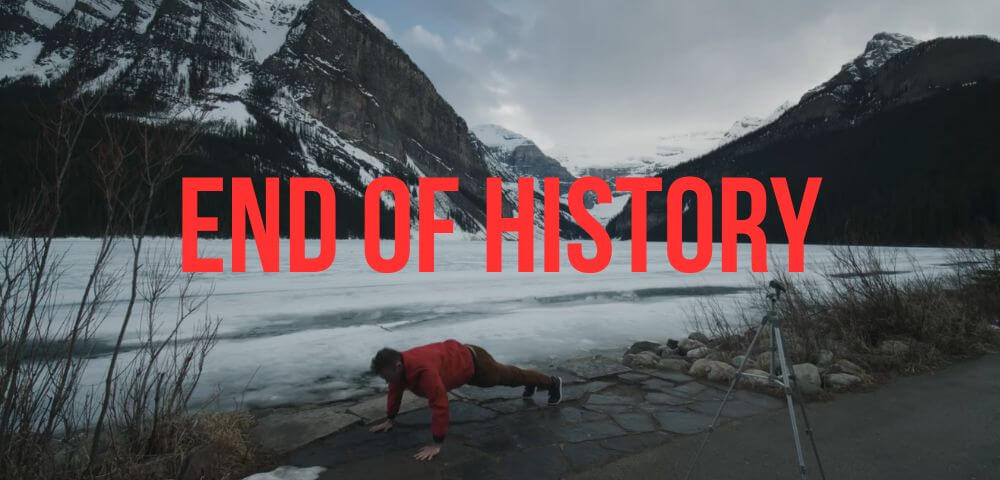
Influenced and accompanied by manosphere mantras and motivational content, a young man sets out on a road trip through the North American continent, from his home in the Midwest all the way to Alaska, on a quest for self-optimization, in Jacob Gregor’s END OF HISTORY, a quiet yet fierce satire that is frequently funny, often absurd and always lonely. The voices of content creators preaching pop stoicism and the grievances of Canadian conservative talk radio haunt the stunning natural vistas and endless suburban sprawl of his northward journey, with nothing to be found and nothing to feel alongside the frozen lakes, at the feet of snow-covered mountains, in strip mall parking lots, gas stations and motel honeymoon suites.

Influenced by the landscape films of James Benning, the film also recalls an old saw from director Alex Cox that every road movie is about the death of the American dream. END OF HISTORY certainly qualifies, but it is notable for the sobriety and wit with which it approaches the current post-dream post-history American nightmare. Unlike the road movies of the seventies and early-eighties that Cox may have had in mind (mentioning this idea in his Moviedrome intro for Robert Aldrich’s 1981 wrestling road movie …ALL THE MARBLES aka THE CALIFORNIA DOLLS), there is no naive belief in the dream to be shattered along the road as the film unfolds. END OF HISTORY doesn’t gradually reveal the hollowness and broken promises so much as use them as its essential foundation and point of departure, situating itself and us in a uniquely hopeless time and place in the American landscape.