FORBIDDEN LOVE: THE UNASHAMED STORIES OF LESBIAN LIVES

FORBIDDEN LOVE: THE UNASHAMED STORIES OF LESBIAN LIVES
dir. Aerlyn Weissman & Lynne Fernie, 1992.
Canada, 84 mins.
In English.

SATURDAY, JUNE 6 — 7:30 PM
WEDNESDAY, JUNE 10 — 7:30 PM (16mm, $10)
WEDNESDAY, JUNE 17 — 7:30 PM (16mm, $10)

TICKETS

2k restoration by the National Film Board of Canada, 16mm print provided by the New York Public Library.  

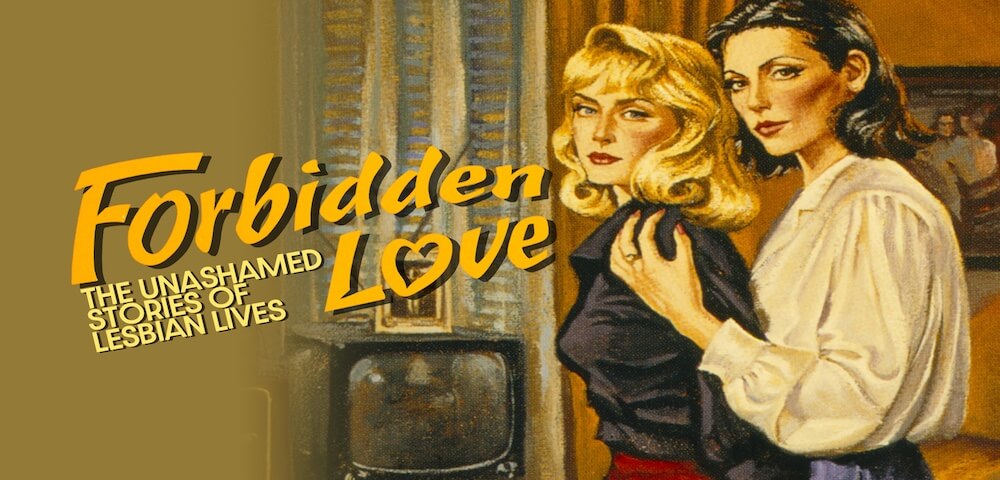
Wryly following in the tradition of the 1965 exploitation “documentary” Chained Girls, Weissman and Fernie’s Forbidden Love is a sweet and tender oral history of mid-century Canadian lesbianism dressed up in pulp trappings. Reveling in the aesthetics of verboten paperbacks and sleazy exposé, this style is merely an ironic wink of a framing encapsulating the true stories of openly gay women in the forties, fifties, and sixties, searching for community, rebellion and love. Nine women dramatize their own personal histories, and the filmmakers additionally interview lesbian pulp novelist Ann Bannon. Along with the feature documentaries of Barbara Hammer and the fictional melodrama of Desert Hearts, Forbidden Love played a role in reclaiming the lesbian narrative from tragedy to triumph, becoming a staple in many young queers’ first KG freeleech queues in the decades since. Lovingly restored by the National Film Board of Canada in 2022 from a 16mm interpositive (the film is shot on a mix of 16mm and 35mm), Spectacle is pleased to show the film both in its recently cleaned-up digital form as well as on a 16mm print, care of the NYPL.

DADDY AND THE MUSCLE ACADEMY

DADDY AND THE MUSCLE ACADEMY
dir. Ilppo Pohjola, 1991.
Finland, 55 min.
In Finnish and English.

playing with:

P(L)AIN TRUTH
dir. Ilppo Pohjola, 1993.
Finland, 15 min.

THURSDAY, JUNE 11 — 7:30 PM
WEDNESDAY, JUNE 17 — 10 PM
SATURDAY, JUNE 20 — 10 PM
MONDAY, JUNE 29 – 7:30 PM

TICKETS


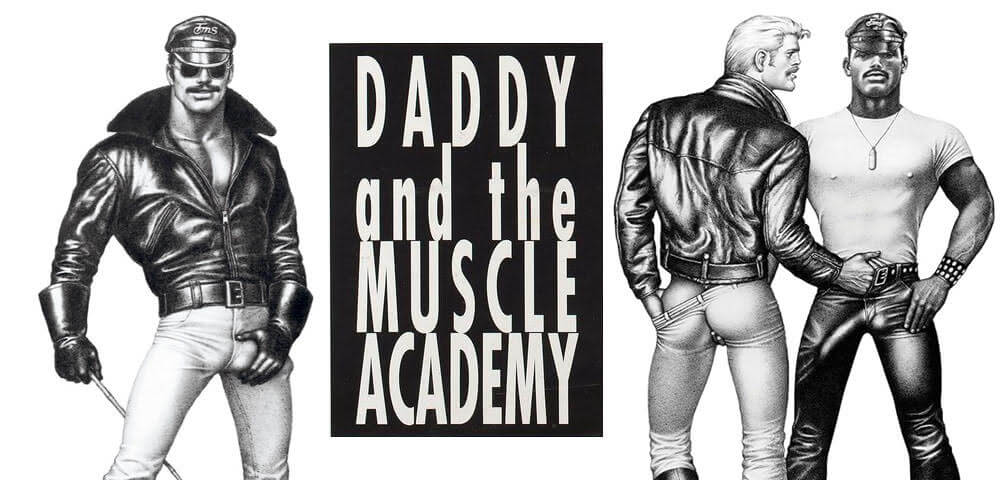
Filmed shortly before his death in 1992, DADDY AND THE MUSCLE ACADEMY stands as the first and only documentary on Tom of Finland (Touko Laaksonen) featuring the artist speaking about his work in his own words.

The film traces Tom’s journey from rural Finland to his time serving in WWII, where the sight of men in uniform (and the intimacy of wartime) ignited a lifelong erotic fixation. His fetishization of these strong, muscular men—heavily influenced by sharply tailored outfits Hugo Boss designed for the Nazi Party, which Finland was allied with at the time—merged with Tom’s private fantasies, ultimately shaping the iconic leather daddy archetype we now see in normie museum gift shops around the globe.

DADDY AND THE MUSCLE ACADEMY features a cacophony of voices: along with Tom, leather daddies from across America share how his drawings shaped their identities. Featuring art world figures including Durk Dehner (director & co-founder of the Tom of Finland Foundation), homoerotic photographer Bob Mizer, and interdisciplinary artist Nayland Blake, the film reveals how private fantasies became highly influential public iconography.

Tom’s men—hyper-masculine, confident and horny beefcakes—shaped the aesthetics and attitudes of gay culture throughout the late 20th century. The film smartly juxtaposes a comprehensive retrospective of Tom’s illustrations with oiled up men’s men reenacting those drawings, set to a hypnotic, thumping industrial score by Elliott Sharp.

Over and over, they chant like a prayer: “I’m one of Tom’s men.”

Spectacle is pleased to reunite DADDY AND THE MUSCLE ACADEMY with Ilppo Pohjola’s 1993 short P(L)AIN TRUTH, which played alongside the feature during its original New York run at Film Forum. A gorgeous 35mm distillation and abstraction of the gender transition of “Rudi,” and acquaintance of the director, P(L)AIN TRUTH juxtaposes the beauty and freedom of transformation alongside the institutional bureaucracies that keep it in check. Utilizing both analog optical printing and early CGI, the film sets an abundance of powerful images to a haunting soundtrack by composer Glenn Branca. A 4k restoration has been provided by the filmmaker.

Special thanks to Zeitgeist Films and Ilppo Pohjola.


MIX NYC PRESENTS: APRIL FOOLS’ DAY

MIX NYC PRESENTS: APRIL FOOLS’ DAY
dir. various, 1984-2025
US, TRT 52 min.

$10 SPECIAL EVENT

WEDNESDAY, APRIL 1 — 10 PM

BUY TICKETS

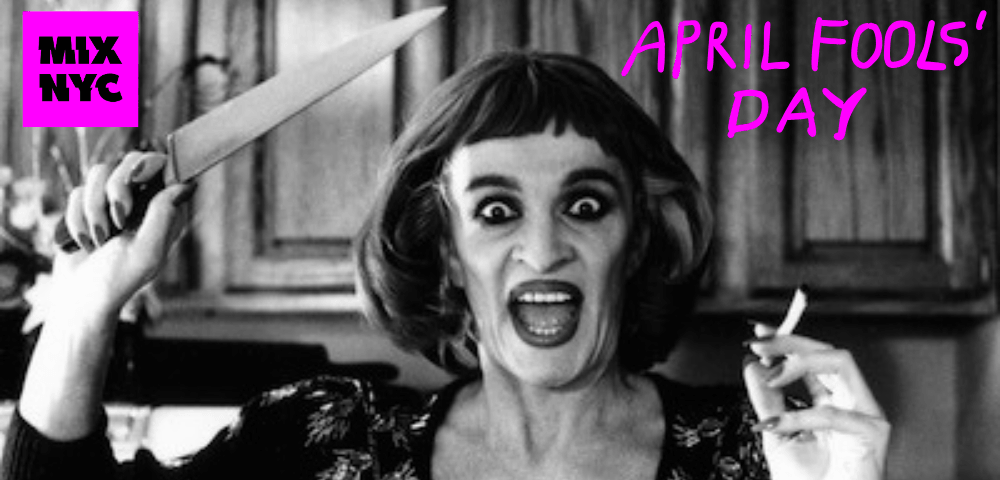
In honor of April Fools’ Day, that most subversive and roguish of holidays, co-programmers Lucy Talbot Allen, Jac Renée Bruneau, Xavy Lang, and Payton McCarty-Simas present an evening of foolish film and video. The selected works make use of parody, satire, absurdity, camp, and the grotesque. Indebted to queer practices from cruising to drag to shitposting, these films remind us of the porous borders between humor and theory, between YouTube poop and abstract collage film, and between goofing off and shifting paradigms.

featuring:

PICKLE SURPRISE
dir. Tom Rubnitz, 1989
US, 2 min.

Rubnitz enlists a legendary lineup of Club Kids in his glittering spoof of early television ads.

BUST UP
dir. Cathy Cook, 1989

US, 7 min.

Presented on 16mm! Milwaukee drag queen Holly Brown stars as a Baby Jane-esque grande dame, her dramatic gestures chopped up and re-sutured with chaotic aplomb.

A VERY ROMANTIC MOMENT
dir. Carter Amelia Davis, 2025
US, 2 min.

@annabelle.sweetie.pumkin fields an onslaught of comments and DMs from pleasure-seeking @spatial_jake. The short utilizes shitpost aesthetics and features an unexpected climax…

SEX BOWL
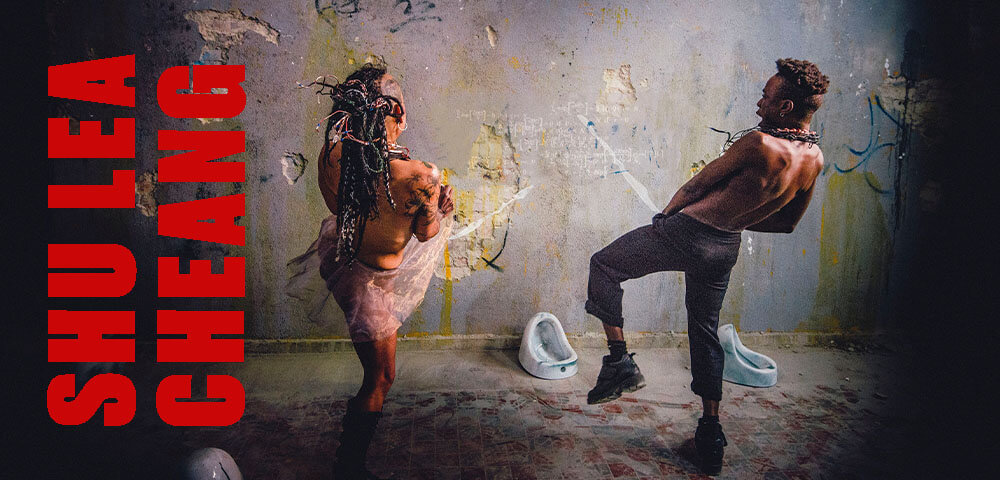
dir. BABY MANIAC (Shu Lea Cheang & Jane Castle), 1994
US, 7 min.

With the bowling alley as a spiritual center, a sultry narrator riffs about an array of lesbian characters and their exploits.

TRUMP BLOWS TRUMP
dir. Christian Meola, 2019
US, 3 min.

The President indulges his carnal side—with himself.

WINNER
dir. Harry Dodge & Stanya Kahn, 2002
US, 16 min.

When a person wins a cruise from a local radio station, the station sends their videographer for a promotional soundbyte—but the winner has other plans for her moment in front of the camera.

FUN WITH A SAUSAGE
dir. Ingrid Wilhite, 1984
US, 16 min.

Wilhite pokes fun at Castro clonedom and lesbian separatism alike by introducing a kielbasa-phallused trickster-masc into these staid San Francisco communities.


MIX NYC (est. 1987) is a non-profit organization dedicated to platforming, promoting, and supporting LGBTQIA2S+ experimental filmmakers and artists. Through our annual MIX FEST and year-round programming, we are committed to showing films that challenge conventional filmmaking practices, test bold ideas, and offer insight into the wide, evolving array of queer experience.

NUMBSKULL REVOLUTION

NUMBSKULL REVOLUTION
dir. Jon Moritsugu, 2026.
US, 95 min.

$10 SPECIAL EVENT

NEW YORK PREMIERE!
FILMMAKER IN PERSON

FRIDAY, MARCH 13 — 7:30 PM
SATURDAY, MARCH 14 — 7:30 PM

BUY TICKETS

We can’t believe we’re saying it—Spectacle’s beloved purveyor of scum-at-large (MOD FUCK EXPLOSION, TERMINAL USA) is headed back to the theater with his first new work in over a decade. We’re thrilled to welcome a true original in person for the New York premiere of NUMBSKULL REVOLUTION, a fully-realized, years in the making DIY opus that concludes Moritsugu’s 29-years of collaboration with his ex-partner, the artist Amy Davis.

Davis stars alongside eternal west coast punk heartthrob James Duval as a duo of warring conceptual artists in a dystopian future plagued by the cyberdrug “Skullfuck.” Shot over a period of two weeks in Marfa, Texas and Sante Fe, New Mexico in a collage of HD and miniDV, NUMBSKULL REVOLUTION is a rapturously colorful satire, full of the filmmaker’s unmistakable capability for endless invention, and a dagger-like salute to the stupidity of it all.

The director describes the film as “a riff on the absurdity of art, warfare of people, material control/secular terror, addictions of every genre, and self-actualization thru internal Jungian conflict,” or more succinctly, “a punk rock BLADE RUNNER for artists.”

“Flash-and-trash attitude… all the ingredients of good revolutionary cinema.”
New York Post

“Moritsugu is a true visionary who knows how to meld images and sound.”
    –Los Angeles Times


STRAY CAT ROCK

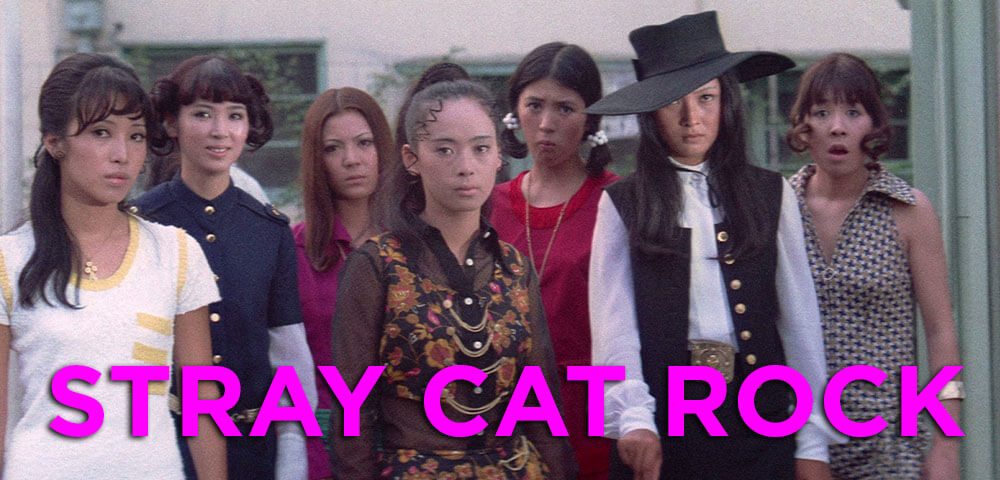
Filmed in rapid succession throughout 1970, the STRAY CAT ROCK series captures a moment of cultural upheaval in post-occupation Japan. The five-film series follow the Alleycats, a girl gang led by the magnetic Meiko Kaji (who goes by many names throughout the series, and would soon go on to star in the iconic LADY SNOWBLOOD (1973) and FEMALE PRISONER SCORPION series (1972-73)). STRAY CAT ROCK latched onto the booming popularity of yakuza films, infusing them with a feminist countercultural energy reflecting the international women’s movement and hippie culture brought over to Japan courtesy of the lingering influence of the American occupation. Each installment of the series tackles the politics of its time, and this April, Spectacle is proud to present three of these films and their accompanying themes: racism in SEX HUNTER, student-led anti-war movements in MACHINE ANIMAL, and the enduring power of countercultural ideals in BEAT ’71. Kaji’s character lives by a strict code of honor, leading the Alleycats through a landscape where Americana, youthful rebellion, early psychedelic rock, club culture, and traditional Japanese values collide in an explosion of pop exploitation.

STRAY CAT ROCK: SEX HUNTER
Yasuharu Hasebe, 1970.
Japan, 86 minutes.
In Japanese with English subtitles.

SATURDAY, APRIL 4 — MIDNIGHT
WEDNESDAY, APRIL 15 — 10 PM
MONDAY, APRIL 27 — 10 PM

BUY TICKETS

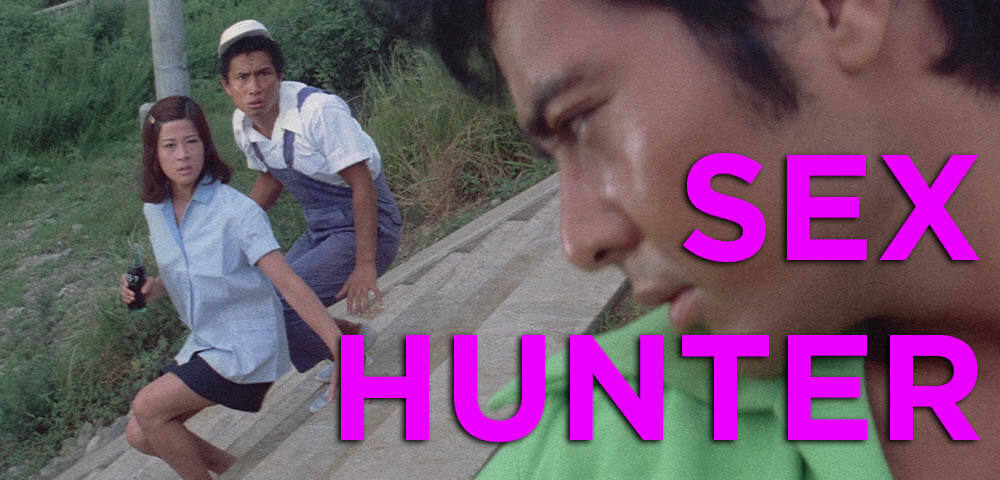
Shot in a small coastal town sitting in the shadows of the Yokosuka US naval base, STRAY CAT ROCK: SEX HUNTER follows the Alleycats as they engage in a turf war with the Eagles, a band of racist macho gangsters. When Mari, one of the Alleycats, rejects the advances of Susumu, an Eagle, because of her love for her half-Black boyfriend Ichiro, the personal slight enrages Baron, the leader of the Eagles. Haunted by memories of mixed race men raping his sister when he was a child, Baron launches a terror campaign to violently purge the town of mixed race men, starting with Ichiro. As the Eagles’ hateful harassment escalates the Alleycats fight back, forging an alliance with the mysterious drifter Kazuma to combat the rising tide of racial violence and help him find his long lost sister.

STRAY CAT ROCK: MACHINE ANIMAL
Yasuharu Hasebe, 1970.
Japan, 82 minutes.
In Japanese with English subtitles.

THURSDAY, APRIL 2 — 10 PM
SATURDAY, APRIL 4 — 7:30 PM
WEDNESDAY, APRIL 15 — 7:30 PM

BUY TICKETS

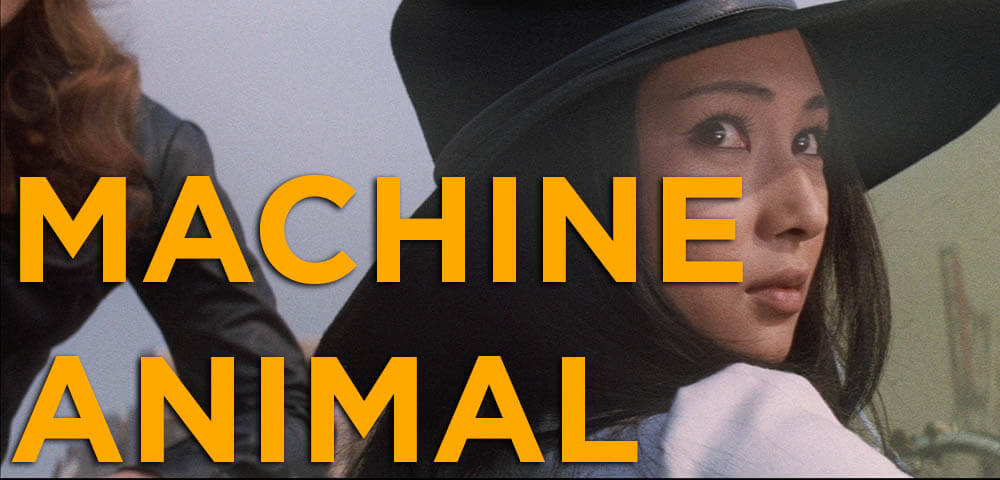
The fourth STRAY CAT ROCK film to be shot & released in 1970, MACHINE ANIMAL begins with an Alleycats gang member stealing a package of LSD pills from a Vietnam war deserter trying to sell the drugs with his buddies so they can buy boat tickets to Sweden and flee Japan. The Alleycats never meant to steal a man’s freedom: after learning the truth — that the drugs are his only ticket to safety — their leader, Maya, is wracked with guilt. She rallies her fierce biker gang to do whatever it takes to make things right and help the boys sell their drugs. Their plans quickly spread throughout the underground, and rival gangs soon descend on them to snatch up the pills for themselves. What begins as an act of solidarity quickly becomes a free-for-all, forcing Maya and her crew to fend them off while racing against time to secure the boy’s escape.


STRAY CAT ROCK: BEAT ‘71

Toshiya Fujita, 1971.
Japan, 87 minutes.
In Japanese with English subtitles.

WEDNESDAY, APRIL 1 — 7:30 PM
SATURDAY, APRIL 4 — 10 PM
SATURDAY, APRIL 18 — MIDNIGHT

BUY TICKETS

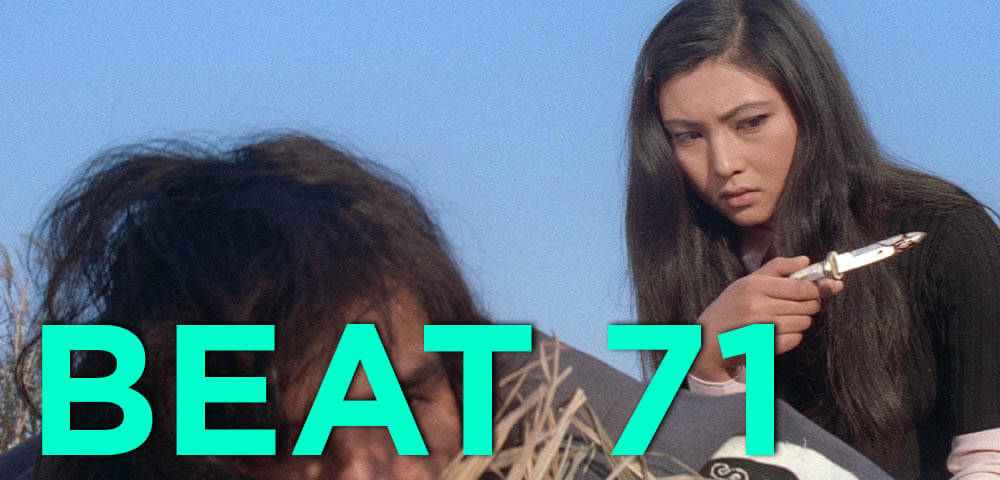
After getting framed for a murder her boyfriend Ryumei committed, Furiko finds herself incarcerated in the Women’s Remand Center. Two months later, she and her chosen sister Ayako escape. While Ayako heads to Shinjuku to rally Furiko’s crew, Furiko returns to her hometown to find Ryumei and confront him. Things get complicated when Furiko and her gang learn Ryumei is poised to inherit his family’s business empire, while his father (who framed Furiko for the murder) is running for mayor: his campaign would be wrecked by a murder scandal, so he kidnaps Furiko and holds her hostage in his mansion. As Furiko’s freewheeling crew schemes to rescue her, they become entangled in a web of political intrigue and corrupt cops. Much lighter fare than the rest of the STRAY CAT ROCK series, BEAT ’71 builds to an explosive climax at an abandoned mine transformed into a fake Western film set just outside of town where hippies, a biker gang, and chimpanzees face off amidst gunfights and dynamite.


SUKEBAN DOYŌBI

SATURDAY, MARCH 28 – 1 PM – 1:30 AM

BUY TICKETS

COME CELEBRATE THE END OF WOMEN’S HISTORY MONTH WITH YOUR BESTIES AND A KNIFE FIGHT!

SPECTACLE THEATER IS DELIGHTED TO PRESENT 12½ HOURS OF TITS, HONOR, AND VENGEANCE

Born the love child of 1960s international feminist movements & student anti-war protests in Japan, the delinquent girl boss and her crew were abandoned in a ditch by their parents and raised by the skyrocketing popularity of yakuza films during the same decade. Dripping cool girl energy in chic outfits (sometimes they even match ˖⁺‧₊˚☆), racing motorcycles, torturing their enemies and dancing until dawn at the club, these aggressive women live by a strict code of honor where breaking the rules is met with violent punishment by the hands of your sisters– or a fight to the death.

IF MEN CAN BE HONORABLE SCUM, THEN WHY CAN’T WE?

All day passes $25, $5 per screening at the door.

1 PM

XXXXXX
1987
, 93 minutes.

STUPID OVERGROWN MAN-CHILDREN
PLAYING
STUPID FASCIST GAMES

3 PM

ANGG
A VERY SPECIAL SUKEBAN EDITION

5:30 PM

XXXXXXXXXXXX
1971, 84 minutes.

OLD GRUDGES, NEW GRUDGES.
WHO WILL MEET THEIR DEATH BY THE SEA?

8 PM 

XXXXXXXX
1973, 83 minutes.

I’LL HELP YOU GET YOUR REVENGE,
BUT DON’T FUCK WITH MY MONEY.

10 PM

XXXXXXXXXXXX
1971, 86 minutes.

MOTORCYCLE MADNESS!

IF YOU WANT TO WIN,
YOU BETTER NOT CUM. 

MIDNIGHT

XXXXXXXXXXXXX
1973, 89 minutes.

IF YOU WEREN’T SO PATHETIC AND HORNY
YOU WOULDN’T BE SO EASY TO BLACKMAIL

WE’RE NOT THE KIND OF GIRLS
YOU’RE USED TO PUSHING AROUND.

warning: some films contain scenes of sexual violence.

ANGST BY AUGUST: ZAPPA and TWIST AND SHOUT

ZAPPA
Dir. Bille August, 1983.
Denmark. 102 min.
In Danish with English subtitles.

SATURDAY, FEBRUARY 7 — 7:30 PM
THURSDAY, FEBRUARY 12 — 10 PM
MONDAY, FEBRUARY 16 — 10 PM
THURSDAY, FEBRUARY 26 — 7:30 PM

BUY TICKETS

Danish director Billie August’s (Academy Award and Palme D’or winning director of PELLE THE CONQUEROR) coming-of-age dramas, ZAPPA (1983) and TWIST AND SHOUT (1984), offer a tender yet unflinching vision of adolescent passion, cruelty, and discovery set to the sounds of early rock ‘n’ roll. Overlooked for decades, these gorgeously photographed and dramatically nuanced films—breathtaking in their candor and heartbreaking in their sincerity–are here for rediscovery in stunning new transfers, along with newly produced bonus features, that help bring August’s powerful films to audiences anew.

Three young boys, Bjørn (Adam Tønsberg), Steen (Peter Reichhardt), and Mulle (Morton Hoff), navigate the transition from boyhood to adolescence in Bille August’s stunning, period drama. Steen and Bjørn have formed their own small gang, and invite Mulle to join, but humiliation, cruelty, and violence follow as Steen leads Bjørn further into his loveless, frustrated, and, ultimately, sadistic world. Gentle, funny, honest, and fearlessly dark, ZAPPA is a richly textured and unforgettable, novelesque film.

TWIST AND SHOUT
Dir. Bille August, 1984.
Denmark. 108 min.
In Danish with English subtitles.

MONDAY, FEBRUARY 2 — 7:30 PM
SATURDAY, FEBRUARY 7 — 10 PM
WEDNESDAY, FEBRUARY 25 — 10 PM
FRIDAY, FEBRUARY 27 — 5 PM 

BUY TICKETS

Denmark’s biggest indigenous hit at the time of its release, TWIST AND SHOUT once again follows Bjørn (Adam Tønsbrerg). During the explosion of Beatlemania in Europe, Bjørn plays drums in a rock ‘n’ roll band while Erik (Lars Simonsen) must care for his mentally ill mother. Amid the excitement of music, romance, and sex, the young men must confront the harsh realities of the adult world in director Bille August’s stark and beautiful film.

Special thanks to Altered Innocence.


DECODER

DECODER
Dir. Muscha, 1984.
West Germany. 87 min.
In German, English, and Portuguese.

SATURDAY, FEBRUARY 7 — 5 PM (with MUZAK on 16mm)
TUESDAY, FEBRUARY 10 — 7:30 PM
THURSDAY, FEBRUARY 12 — 7:30 PM (with MUZAK on 16mm)
WEDNESDAY, FEBRUARY 25 — 7:30 PM

BUY TICKETS

The early 80s of West Berlin was accessible to David Bowie and Nick Cave, however it remained a secluded scene unto itself, a fallen city shared between the French, the Brits, and the Americans. Much of the architecture was unchanged from the war, and a post-war generation of musicians and artists were able to live cheap, work little, squat housing, and stay out all night. Muscha’s DECODER is a Spectacle favorite making a return appearance. This is a must-see on a bigger screen with a bigger sound.

DECODER is a quiet bureaucratic surveillance drama, but then it’s a color-soaked, Benjamin-tinged struggle over information and control. It stars Bill Rice (who you know from Andrew Horn’s DOOMED LOVE), a man impeccably sensitive and equally expressive under vibrant colored lights. There are fast food joints, great tunes, Genesis P-Orridge, Christiane F, and the true answer to whether music recorded from frogs in distress can incite revolution.

“Information is like a bank – some of us are rich, and some of us are poor. ALL OF US CAN BE RICH.”

Special thanks to Vinegar Syndrome and the American Genre Film Archive.

Playing with:

MUZAK
Dir. Rhody Streeter and Tony Ganz, 1972.
United States. 6 min.
In English.

World premiere of new 16mm restoration print.

But just how far-fetched were DECODER’s systems of authoritarian aural control? In the early 1970s, documenteurs of all things uniquely, perversely Americana Rhody Streeter and Tony Ganz ventured into the bowels of a high-tech new industry: MUZAK. Military scientists, organ players for the New York Mets, and record executives collide as they promise the viewer a future of happy labor delivered via audio transmission. Both wry and slightly unnerving, Streeter and Ganz’s documentary uncannily predicts Spotify’s nefarious algorithms and a present where art is not meant to be enjoyed but quantified into how it benefits American capitalism.

The films of Tony Ganz and Rhody Streeter distributed by the Film Desk.

Special thanks to the New York Public Library, Elena Rossi-Snook, Jake Perlin and The Film Desk, and Rhody Streeter and Tony Ganz. 16mm restoration completed by BB Optics in 2025.

BEST OF BEST OF SPECTACLE

Since the dawn of the theater, there have been films that have defined Spectacle’s identity and its ethos—films that transcend the walls of our humble ex-bodega and tap into the sense of radical rediscovery that our collective is always chasing. The weird, the pertinent, the beautiful, and the ineffable—these films have been cataloged in our long-running annual series “Best of Spectacle.” At the end of every calendar year, in a tradition that began in 2013, the collective votes on what films should get a second showing in January. Our January calendars have thus become a repository for some of our fondest memories spent with both packed houses and loyal, solitary midnight Spectacleheads.

September of 2025 marks our 15th anniversary at 124 South 3rd Street, and as such it seems a ripe occasion to play the entire catalog of hits. Unfolding in chronological order until we catch up with the present, Spectacle is excited to unveil the “Best of Best of Spectacle”: a running series of films that built our foundation like bricks and resulted in some of Spectacle’s greatest trailers, posters, screenings and memories.


SEVEN WOMEN SEVEN SINS
dirs. various, 1987.
Various, 101 min.

MONDAY, JUNE 1 – 10 PM

BUY TICKETS

As wide-ranging an omnibus film as there has ever been, a group of some of the most important international filmmakers of the last few decades – all of them female – take on each of the biblical vices. Bette Gordon, Chantal Akerman, VALIE EXPORT, Maxi Cohen, Laurence Gavron and more contribute a contemporary celluloid sin. The result is a thoroughly unpredictable introduction to each filmmaker’s work; encapsulating devious narratives and experimental collages, film and video.

Extended from May in tribute to the late experimental performance icon and Spectacle favorite VALIE EXPORT.

Special thanks to Women Make Movies.


HISTORY LESSONS
dir. Barbara Hammer, 2000.
USA, 70 min.
In English

MONDAY, JUNE 1 – 7:30 PM
THURSDAY, JUNE 18 – 10 PM
THURSDAY, JUNE 25 – 10 PM
TUESDAY, JUNE 30 – 10 PM

BUY TICKETS

The final installment in Barbara Hammer’s groundbreaking “lost queer trilogy,” HISTORY LESSONS imagines a world in which lesbians are as omnipresent as white heterosexual cis men. Manipulating everything from Eleanor Roosevelt studded newsreels to analog skin flicks, Hammer rewrites history with this reclamation of an almost always marginalized demographic.

“Radical sexual politics in a jester’s surprise package of impudent humor and Situationist-style found-footage monkeyshines” – Variety


BUMMING IN BEIJING
( 流浪北京)
dir. Wu Wenguang, 1990.
China, 70 mins.
In Mandarin with English subtitles.

THURSDAY, JUNE 4 – 7:30 PM
SATURDAY, JUNE 14 – 10 PM
MONDAY, JUNE 15 – 7:30 PM
MONDAY, JUNE 22 – 7:30 PM

BUY TICKETS

“In 1990, Chinese documentaries were almost exclusively stodgy, didactic talking head affairs broadcast on state-run media. Then Wu Wenguang’s BUMMING IN BEIJING came out, kicking off an entire independent documentary scene in the country. Shot directly before and after the Tiananmen Square Massacre on cameras taken from a government TV station, BUMMING IN BEIJING follows five broke bohemians (including future art stars like Zhang Dali, long before they found fame) in grimy late 80s Beijing. Shot in a vérité style that would soon be adopted by a new generation of filmmakers, the movie includes an onscreen mental breakdown, a time-capsule view of the emergence of the country’s avant-garde, and proof that the hippest place in China used to be KFC.” – Aaron-Fox Lerner, Time Out Beijing Film Editor

“The prolonged moments of near silence in BUMMING IN BEIJING produce the aesthetic effect of outlasting the remembered roar of government tanks.” – Ernest Larsen, Art In America


THE RIDER OF THE SKULLS
(aka EL CHARRO DE LAS CALAVERAS)
dir. Alfredo Salazar, 1965.
80 minutes, Mexico.
In Spanish with English subtitles.

WEDNESDAY, JUNE 3 — 7:30 PM
WEDNESDAY, JUNE 10 — 10 PM
FRIDAY, JUNE 19 — 10 PM
MONDAY, JUNE 29 — 10 PM

TICKETS

A masked rider (not Zorro) arrives in a sleepy Mexican villa in the midst of a slew of vicious werewolf attacks during what seems like a solid month of full moons. The Rider is given lodging by a señorita and her young son – Perico – who appear to be the next targets of the flannel-clad lycanthrope. The Rider, with the help of a local witch dispatches of the monster who turns out to be the boys father. As he rides off into the sunset with Perico by his side one may expect the credits to roll but don’t rise from the opulent comfort of your seat just yet, viewer, this adventure is far from over. The Rider (now taller and with a different mask) along with the help of a new boy and their manservant Cléofas (the films “comic relief”) fight a vampire in some highly unconvincing day for night photography. It’s worth mentioning that the vampire not only has the giant head of a bat but also has the power to change into an equally unconvincing rubber bat and flies off. Finally, The Rider faces his deadliest foe yet when he teams up with a woman in possession of the cabeza of none other than the Headless Horseman and his two robed skeleton henchmen leading to a machete fight at sunset.

Director Alfredo Salazar is best known for his contributions to Mexican horror in the form of many, many Santo/Blue Demon movies as well as penning such psychotronic fare as THE NIGHT OF THE BLOODY APES and the should-be classic THE MAN & THE MONSTER (produced by and starring his brother Abel). Star Dagoberto Rodríguez had a 30-or-so year career in Mexican film and television, which is more than likely the reason he removes his mask and reveals his identity in the middle of the film. Due to its “monster of the week” feeling and suspicious change of companions/mask/location/etc the working assumption is that THE RIDER OF THE SKULLS is actually three episodes of a serial stitched together to make it feature length. Nevertheless, Salazar wears his love of classic Universal monsters on his sleeve and creates a film unlike any other.


THE SECRET OF THE MUMMY
(aka O Segredo da Múmia)
dir. Ivan Cardoso, 1982.
Brazil, 85 min.
In Portuguese with English subtitles.

THURSDAY, JUNE 4 — 10 PM
FRIDAY, JUNE 12 — 7:30 PM
TUESDAY, JUNE 16 — 10 PM
MONDAY, JUNE 22 — 7:30 PM

TICKETS

A tale as old as time: Dr. Vitus, a disgraced scientist (Wilson Grey who would go on to be one of Cardoso’s go to character actors for the majority of his career) devotes his dying days to the reconstruction of a map that had been divided into 8 parts and scattered to the winds with their owners meeting most mysterious deaths.

On a trip to Egypt he finds a mummy, Runamb, and brings it with him back to Brazil. You aren’t going to believe this – but it comes to life and wreaks havoc on all in his path obsessing over Nadia, a dancer who had scorned him when he was alive – well, more alive anyway.

Fleshing out his vision after NOSFERATO IN BRAZIL, Cardoso again takes advantage of the countryside and finds juicy roles for the legendary José Mojica Marins—better known as Coffin Joe—and Regina Casé (THE SECOND MOTHER).