An Evening with Annalisa D. Quagliata Blanco

CONTENT WARNING: These films contain flashing lights which may not be suitable for those with photosensitive epilepsy, as well as explicit images of violence.

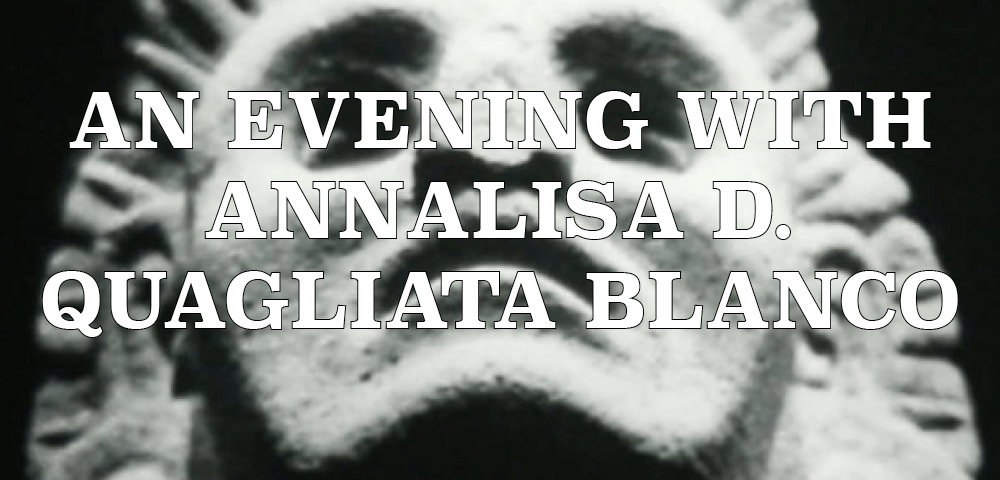
Annalisa D. Quagliata Blanco has built an impressive body of work over the last two decades. Her frenetic and direct cinematic practice melds an interest in formal experimentation with political intervention. Her feature debut, the audacious and refreshingly unusual ¡Aoquic iez in Mexico! (2024), will have its own Spectacle screening, but her earlier shorts constitute their own powerful block of cinematic assaults on the traditions of the medium, Mexican society, and the passive spectator. Quagliata Blanco will present her entire filmography, from work she developed at the Massachusetts College of Art and Design under the tutelage of experimental film luminaries like Saul Levine, to her more recent pieces which anticipate the political fury of her feature.

THURSDAY, APRIL 3 – 7:30 PM

TICKETS

LA OTRA PIEL
2015-2017, 9 min, 16mm

A collection of seven handmade shorts from the beginning of Quagliata Blanco’s career. Demonstrating an emphasis on texture, these films reflect her incipient interest in film as material, and in material as an inherently expressive matter.

CALYPSO
2016, 5 min

Inspired by The Odyssey, Quagliata Blanco crafts a cinematic portrait of the nymph Calypso. Not beholden to the specifics of mythology, she offers a sensuous and surprising queer reinterpretation of the classic.

SE BUSCA (UN MAR DE AUSENCIA)
(Searching for (a sea of absence))
2016, 2 min

Se busca roughly translates to “wanted” in English, but “searching for” is perhaps more fitting within the context of Quagliata Blanco’s film and the ongoing crisis of missing women in Mexico. This short compiles 50 images of missing women, whose “Se Busca” posters are circulated in efforts to find them.

FIN ES UNA PELÍCULA MEXICANO
(The End – A Mexican Movie)
2016. 3 min

Juan Bustillo Oro’s Dos Monjes (1934), a classic of Mexican cinema, is an expressionist work about fraternal hate and masculine violence. This short focuses explicitly on the murdered female protagonist at the heart of Dos Monjes. It’s both a work of criticism and a revelation of Mexico’s age-old violence against women.

CRISÁLIDA
(Chrysalis)
2017, 3 min

A handmade film about metamorphosis. Typical of Quagliata Blanco, the content is as shapeshifting as its form.

A NUESTRO TIEMPO
(Closer to Our Time)
2018, 6 min

Quagliata Blanco turns to the archive once more. Here she samples images from Leobardo López Arretche’s landmark 1968 protest documentary El Grito to stress the unresolved promises of the 1968 cultural revolution in Mexico.

MY CELL PHONE
2018, 2 min

A fun (and troubling) investigation into people’s attachment to their phones.

Special thanks to Annalisa D. Quagliata Blanco.
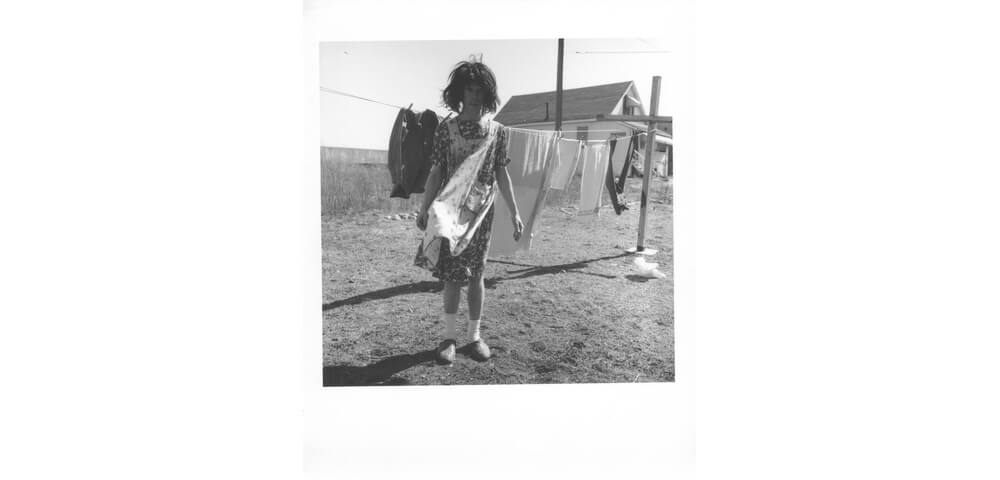
A Tribute to Saul Levine, Luther Price, and the MassArt Film Society

FRIDAY, APRIL 4 – 10 PM

TICKETS

WARNING: These films contain flashing lights which may not be suitable for those with photosensitive epilepsy.

Destiny supplants space and time as La Cueva, Spectacle, and the MassArt Film Society become perfectly superimposed. The show begins with a vintage Super 8 print of Warm Broth (1988), one of Luther Price’s most iconic films from his period of films made under the moniker “Tom Rhodes,” while also highlighting the participation in that film of Laurie McKenna, a former student of Levine and friend + collaborator of Price whose video Why the Long Face (1997) we will also screen. By rendering tribute to Levine, we will also attend to his own talents at rendering tribute to others: to Marjorie Keller, Anne Charlotte Robertson, to Stan Brakhage, to his Father, and—especially in this program—to Luther Price (aided in this tribute by short films by Laurie McKenna, Annalisa D Quagliata Blanco, and Linnea Nugent). Not for the only time in this retrospective, these artists will go searching for each other in that most interstitial space of transit: dreams.

The program notes of the Saul Levine retrospective in Mexico are available here.

WARM BROTH
Dir. Luther Price/Tom Rhodes, 1988
35 mins, Super 8mm
Print provided by Canyon Cinema.

“Everything will be ok, just close
your eyes little thing
go to sleep little fuck
feel my hand on your warm
forehead
It’s cold isn’t it? Ice cold.

“Dream of something real sweet
for mommy
Mommy likes sweet things
Dream of a merry-go-round and
cotton candy

“Mommy’s hand got all warm
resting on your tiny head
See, look at mommy’s hand
It got all warm now

“You’re running a slight fever
Mommy will get you some
water
And you’re running a slight
fever

“Little fuck don’t have to go to
school tomorrow
but no playing in the yard
Someone could see you
And I’ll be an unfit mommy
You’ll have to stay in all day

“but now, dream of the prettiest
flower for mommy
I’ll make you oatmeal first thing
And you could tell me the color
of the –
prettiest flower.”

-Luther Price/Tom Rhodes

WHY THE LONG FACE
Dir. Laurie McKenna, 1997
26 mins

A former student of Levine and collaborator and friend of Price, McKenna made this short about Nancy Luce, a desperate, creative, Martha’s Vineyard oddball of the mid 1800s. Using old photographs, puppets, toy models, and off-the-cuff footage, McKenna creates a lonely work as daring and personal as that of her teachers and peers.

GOODTIME CHARLIE BIRTHDAY
Dir. Laurie McKenna, 1997
2 mins

A film of stuffed animals, haunted by a lullaby. Much like Price, McKenna makes visible the horror hiding beneath the surface of familiar American scene audio: rehearsal cassette recording, vocals: Laurie and Tom Rhodes (Luther), the Fabulous Turquoise Rain and Shines, 1987.

AGGREGATE
Dir. Laurie McKenna, 2020
6 mins

McKenna’s pandemidiario conjures desert punk powering the aggregate of memory and charcoal and grounds national rupture in a sonic package.

“A whole formed by combining several (typically disparate) elements” – Laurie McKenna

OUTCRY (FOR LUTHER)
Dir. Annalisa D. Quagliata Blanco, 2015
1 min

“Luther Price’s handmade film work demonstrated the vagaries of trauma internal to the medium itself: the simultaneously world-destroying and world-repairing possibilities of unmaking and remaking of the body of the film strip. Annalisa Quagliata has taken up the lessons of Price’s handmade film course at MassArt, maintaining their queer resonances while reshaping them with the perhaps unanticipated application to the unmaking and remaking of myths of the Mexican body politic. This 2016 tribute to Luther Price, made in that same MassArt course before Quagliata’s return to Mexico, reminds us of the facilitating possibilities of the body in disintegration. A 16mm optical sound bar is the skeleton on which it all hangs.” – Byron Davies

WAS ONCE ONE
Dir. Linnea Nugent, 2023
3 mins

“Was Once one is the auditory artifact of since lost Luther Price speaking on what was once one film that belonged as two.” – Linnea Nugent

CRESCENT
Dir. Saul Levine and Pelle Lowe, 1993
5 mins, Super 8mm
Print provided by Saul Levine.

“A conversation with Pelle Lowe.” – Saul Levine

SCHMATEH IV & SCRAPE
Dir. Saul Levine, 1986
8 mins, Super 8mm
Print provided by Saul Levine.

Two portrayals on one reel. A Portrait of Pelle Lowe and A Portrait of Laurie McKenna aka Bud Scrape.

READY-MADE
Dir. Saul Levine and Pelle Lowe, 1993
4 mins, Super 8mm
Print provided by Saul Levine.

“A film made by Pelle Lowe and myself, READY-MADE is a single work in itself, and also exists as part of a series of works that Pelle and I made reflecting on Manet’s painting OLYMPIA, including it’s reception, it’s relationship to painting, sex work, imperialism, the Paris Commune, sex, drugs and rock roll, ect.” – Saul Levine

Special thanks to Annalisa D. Quagliata Blanco, Saul Levine, Byron Davies, Lumia Lightsmith, Stephen Cappel, Nicolas Cadena, Mono No Aware, and Kathy Del Beccaro.

Davies and Lightsmith co-curated this screening, in addition to providing the program notes. The banner and poster image for this program come courtesy of David Michael Curry, who participated in the filming of Warm Broth. Davies’ research project “Materialism and Geographic Specificity in the Philosophy of Film” forms the basis for these screenings, which are supported by Salón de Cines Múltiples.

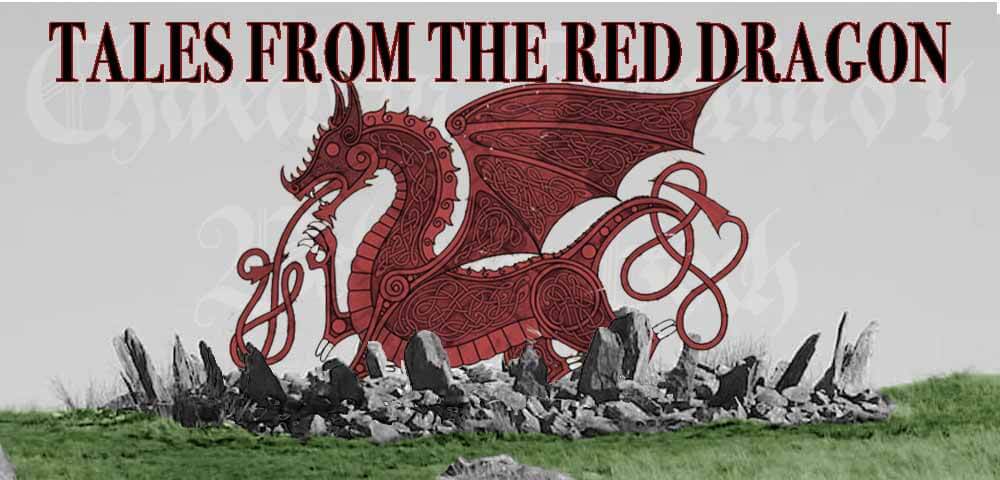
TALES FROM THE RED DRAGON

Playing as a double bill:
WEDNESDAY 4/9 – 10PM
TUESDAY 4/15 – 7:30PM
FRIDAY 4/18 – MIDNIGHT
FRIDAY 4/25 – 10PM

TICKETS

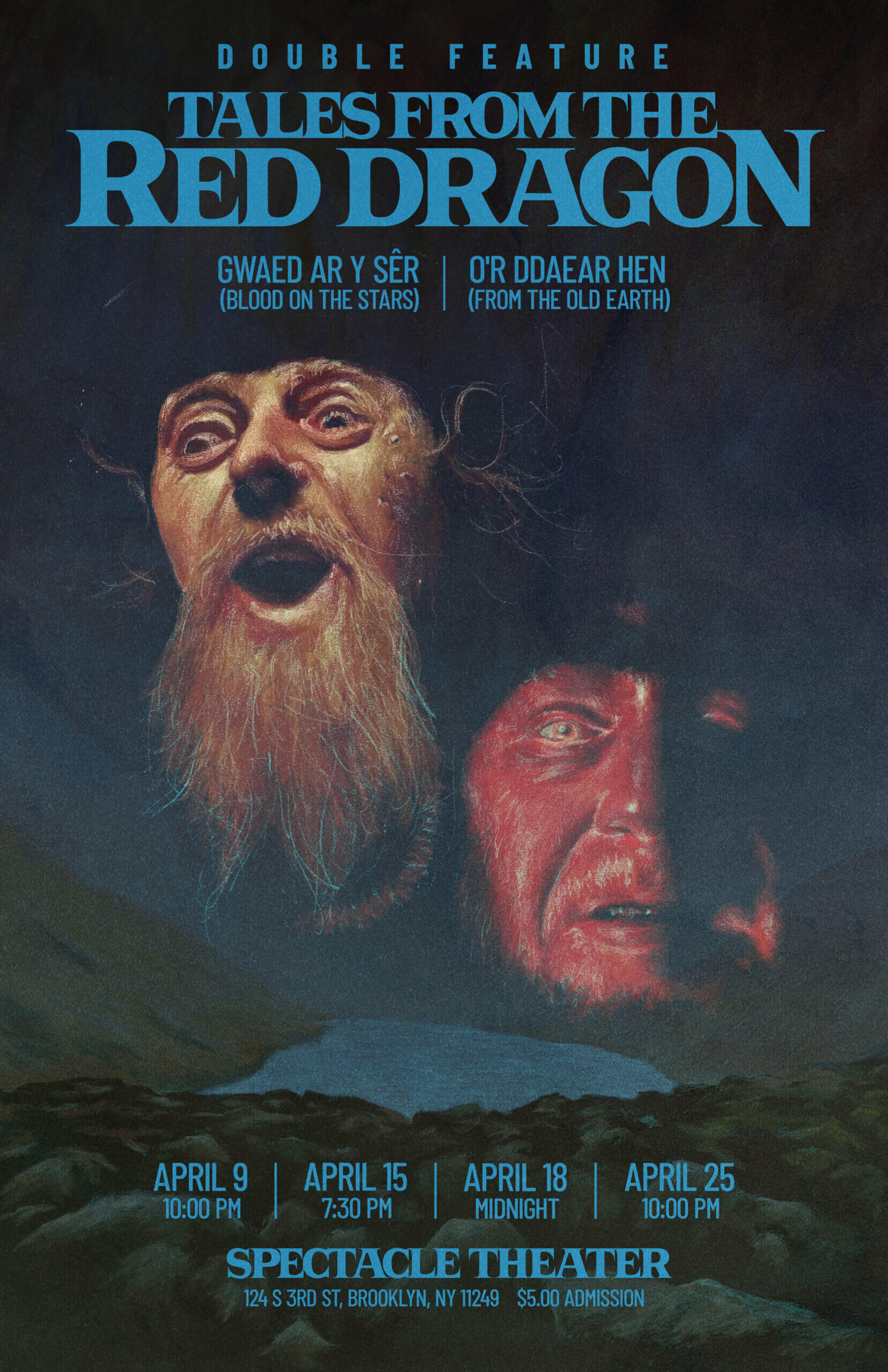
The history of Welsh language film and television has been fraught with challenges, including persistent underfunding and a lack of effective film infrastructure. These obstacles have been compounded by the British government’s reluctance to prioritize Welsh culture and language in media, leading to insufficient support for Welsh-language projects. Additionally, there has been a notable hesitation among British distributors to handle Welsh-language films, which has further restricted their ability to reach larger international audiences. Director Wil Aaron stated in the Welsh magazine Barn “There will be no further developments in Welsh-language film until the BFI is persuaded that the Welsh have as much right as the English to their own celluloid culture”. This sentiment sparked Aaron to create the independent Welsh language television company Ffilmiau’r Nan in 1976.

In 1952, when the BBC launched a transmitter in Glamorgan, Welsh-language television programming was minimal, peaking at just half an hour per week by 1957. The establishment of BBC Wales in 1962 allowed a slight increase to six to seven hours weekly, yet the struggle for substantial recognition and funding persisted. Throughout the 1970s, the campaign for a dedicated Welsh-language channel gained traction, driven by groups like Cymdeithas yr Iaith Gymraeg and Plaid Cymru. However, political pledges made by parties were often unfulfilled, with Thatcher’s Conservative government initially backtracking on commitments made during the 1979 elections. This led to significant unrest, culminating in a protest by Gwynfor Evans, who threatened to fast until the promise of a Welsh channel was realized, dramatized in the 2023 film Y SWN.

During this same period, Welsh-language films were virtually nonexistent, prompting the establishment of the Welsh Film Board (Bwrdd Ffilmiau Cymraeg) in 1971 to promote Welsh-language cinema. Unfortunately, the British Film Institute (BFI) perceived the WFB as a ‘language activity rather than a film project,’ leading to inadequate funding for its initiatives. Filmmaker Wil Aaron, a member of the WFB, produced four films with their support, including two featured in this retrospective, but he remained disillusioned with the organization’s approach, famously stating, “The board has no expertise, no experience of the film.”

In 1982 the Welsh language television channel S4C (Sianel Pedwar Cymru – Channel Four Wales) was finally established, broadcasting 22 hours a week, mostly in primetime slots, and giving Welsh language programming priority over English language shows. Through his television company Ffilmiau’r Nant, Wil Aaron started producing content for the channel very early on, including shows such as ALMANAC (1982 – 1986), C’MON MIDFIELD! (1988 – 1994) and DERYN (1986 – 1992). In his book Wales and Cinema: The First 100 Years, David Berry states that ‘Aaron’s Caernarfon-based company Ffilmiau’r Nant has become one of S4C’s most prolific independent suppliers of films.’

Today, S4C continues to thrive, broadcasting 115 hours of Welsh-language content each week, including news broadcasts and original programming. Despite this robust output, Welsh-language cinema remains underrepresented, with films still struggling to achieve widespread distribution, and filmmakers often facing challenges securing adequate funding for their projects. Nevertheless, there have been notable successes in Welsh-language cinema recently, particularly with the release of the critically acclaimed film THE FEAST (2021). This success underscores the vibrant creativity present in Welsh cinema and the appetite for it when it is supported effectively.

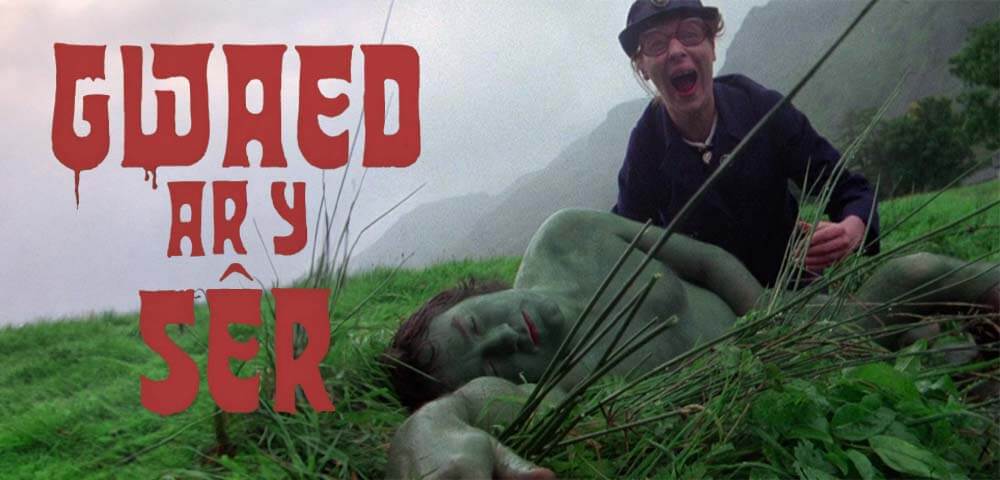
This April, Spectacle proudly presents two of Wil Aaron’s Welsh-language films produced through the Welsh Film Board: O’R DDAEAR HEN (FROM THE OLD EARTH) (1981) and GWAED AR Y SER (BLOOD ON THE STARS) (1975).

O’R DDAEAR HEN
(FROM THE OLD EARTH)
Dir. Wil Aaron, 1981.
Wales. 47 min.
In Cymraeg with English Subs.

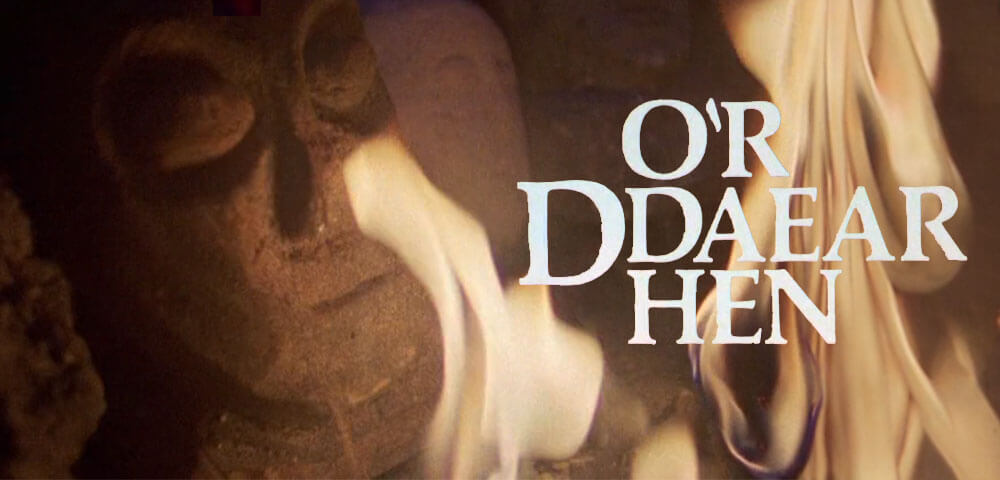
William Jones discovers an ancient Celtic stone head in his garden with horrifying consequences. Can the local archeologists help him shake this ancient curse?

O’R DDAEAR HEN is steeped in Welsh folklore and tradition and is probably the first true horror film to be produced in the Welsh language. In Wales and Cinema: The First 100 Years Berry states ‘the film is a work of undoubted flair’. The plot echoes the classic ghost stories of M.R. James, featuring an unsuspecting character who unearths an ancient artifact, only to find that the past has come back to haunt them. Although the quality of films from the Welsh Film Board was often scrutinized, even by Aaron himself, O’R DDAEAR HEN shines as a beacon of quality and would seamlessly fit into the BBC’s original run of A GHOST STORY FOR CHRISTMAS (1971-1978).

The film was one of Aaron’s first works showcased on S4C, the newly created Welsh-language television network in 1982. While it received acclaim, not all screenings were met with positivity. One mission of the Welsh Film Board was to expose children to the Welsh language, which involved organizing school trips for primary school children aged between five and eleven to view their latest films. The school trip to watch O’R DDAEAR HEN has become notorious for traumatizing a generation of kids. Mari Williams, one such child now in her forties, reminisced about her experience in a BBC article, stating, “I remember lying in my bed that night numb with fear, certain that a man with horns was standing outside the bedroom.”

GWAED AR Y SER
(BLOOD ON THE STARS)
Dir. Wil Aaron, 1975.
Wales. 60 min.
In Cymraeg with English Subs

Welsh celebrities from all over the country are scheduled to perform at a local talent show, however, they start turning up dead in increasingly bizarre ways.

GWAED AR Y SER was Wil Aaron’s third film made with support from the Welsh Film Board, after HEN DYNNWR LLUNIAU (THE OLD PHOTOGRAPHER) and SCERSLI BILIF (SCARCELY BELIEVE). Aaron masterfully walks the line between horror and the blackest of comedy to create a charming, but perhaps somewhat deranged, film. Regarding GWAED AR Y SER Berry wrote  “Aaron delivers the robust gags, the shameless ironies and the shocks with such gusto.”

This achievement becomes even more remarkable given the meager budget of only £6,000, provided by the Welsh Film Board, and given a shooting schedule of just ten days. Many of the actors are locals from Nantperis, with most of the celebrity appearances being friends of Aaron’s from his years in broadcast TV.

The Welsh Film Board also screened this film for primary school children in 1975. While it did not provoke the same level of outcry as O’R DDAEAR HEN, it still managed to traumatize some schoolchildren and received multiple complaints from parents. Aaron commented, “The problem with Welsh films at that time, was that everyone assumed they were the kind of thing that was shown in Sunday School. Did no one consider that there might not be a little bit of sex and a little bit of fear in them…”

This 2K restoration was produced by Severin Films with the support of Matchbox Cineclub. It was restored using the original camera negative and original mono track negatives. All the elements were provided courtesy of the Bwrdd Ffilmiau Cymraeg/Welsh Film Board collection at the National Library of Wales Screen and Sound Archive.

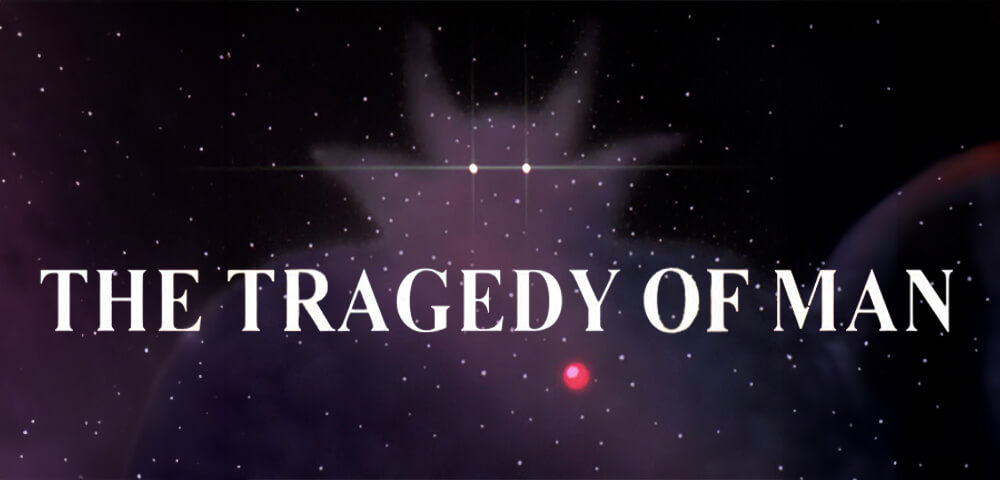
THE TRAGEDY OF MAN

THE TRAGEDY OF MAN
(AZ EMBER TRAGÉDIÁJA)
Dir. Marcell Jankovics, 2011.
Hungary. 166 min.
In Hungarian with English Subs.

SUNDAY 4/6 – 5PM
WEDNESDAY 4/16 – 7PM
SATURDAY 4/26 – 10PM

TICKETS

Adam, Eve, and Lucifer search for the meaning of life and humanity while traveling through mankind’s history and inevitable demise.

In 1957, the Pannónia Film Studio was established, marking the beginning of the golden age of Hungarian animation. Unlike live-action films of the time, animated films faced less scrutiny from political censors, successfully penetrating the Iron Curtain and reaching prestigious Western film festivals like Cannes, and ceremonies such as the Academy Awards. Pannónia became known as one of the top animation studios in the world alongside Disney and Toei. During this period at Pannónia many of Hungary’s most prominent animators honed their craft.

One such director, and probably the most internationally recognized Hungarian animator, is Marcell Jankovics. Jankovics started working at Pannónia as a stage manager, at nineteen, in 1960, before becoming a director there in 1965. In 1973 the government commissioned the first feature-length Hungarian animated film JOHNNY CORNCOB, which Jankovics directed. In 1981 he created his most famous work, SON OF THE WHITE MARE, to international success, even though the film ran into censorship issues because of its anti-marxism interpretation of time. Both films have enjoyed a tenure at Spectacle first playing in 2016 and then in 2022.

In 1983 Jankovics finished writing his magnum opus, THE TRAGEDY OF MAN, based on the dramatic poem by Imre Madách. This epic tale chronicles the journey of Adam and Lucifer from the dawn of humanity to its ultimate demise. Jankovics began production on the film in 1988, just a year before the Iron Curtain fell in 1989. In an interview with Cartoon Brew, he noted, “There were political changes in Hungary which made me freer to express myself and communicate my ideas more clearly.” However, the fall of communism also led to the denationalization of the Hungarian film industry, resulting in the loss of state funding that Jankovics and other animators from the golden age had depended upon.

Jankovics spent the next twenty-three years securing funding, creating one of the fifteen segments of the film, and then waiting for more funding. The film was finally finished in 2011 and is one of the longest-animated films ever made. Some notable funding was received after his Academy Award-nominated short SISYPHUS (1974) was used in a General Motors commercial for the 2008 Super Bowl. Another batch of funding was secured after Rob Allers watched a SON OF THE WHITE MARE bootleg and convinced Disney to hire Jankovics to work on what would ultimately become THE EMPEROR’S NEW GROOVE (2000). Jancovics left pre-production after Disney rewrote the script, stating, “What I had made wasn’t used in the ruined, stupid, kitschy final version.”

Each of the fifteen segments of THE TRAGEDY OF MAN showcases a unique animation style, reflecting various moments in humanity’s past and future. This animation shift enhances the film’s epic scale and deepens its emotional resonance, allowing viewers to experience a broad spectrum of human experiences and philosophies. Despite its critical acclaim, and rich tapestry of artistic expression, THE TRAGEDY OF MAN has rarely screened in the United States outside its original festival run in 2011.

This April, Spectacle invites you to embark on an epic journey through mankind’s past present, and future with Jankovics’ twentieth-century masterpiece, THE TRAGEDY OF MAN.

THE MARIJUANA AFFAIR

THE MARIJUANA AFFAIR

THE MARIJUANA AFFAIR
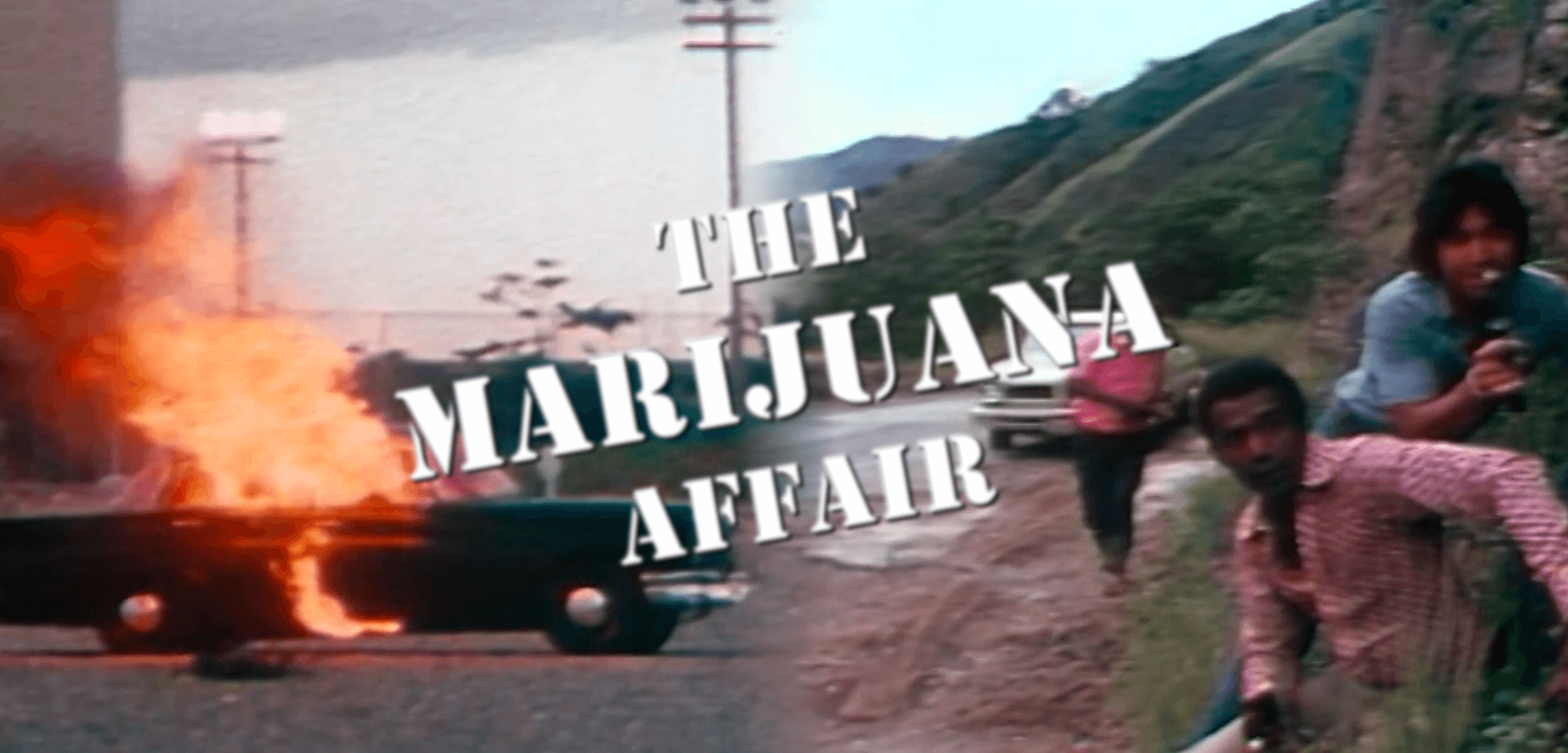
Dir. William Greaves, 1975
Jamaica. 82 min.
In English

SUNDAY, APRIL 20 – 7:30 PM

[ BUY TICKETS ]

A tale of international intrigue from Trinidad to Jamaica, Harlem to Kingston. United States narcotics agent Dick Farrington (Calvin Lockhart) is on sabbatical after inadvertently gunning down a youth who got in his crosshairs on the streets of New York City. But there’s no rest for the wicked, because this is a working sabbatical. The higher-ups have sent him to his hometown of Kingston, Jamaica to look into the marijuana trade, specifically: what sort of illicit activities are going on in U.S. intelligence operations? But everyone keeps telling Dick that Marijuana isn’t where the real action is. Nope, cocaine and heroin are where things are really happening, but the higher-ups aren’t interested in those, they want to break up the ganja ring. Corruption abounds, from the government, to the local cops, and back again.

Thought to be long lost, and recently unearthed from a low quality U-matic cassette tape found in a storage unit. Greaves was purportedly unhappy with the film, with his widow Louise not being interested in a potential re-release in 2018. We are very thankful to the Greaves family for allowing this one-time screening of THE MARIJUANA AFFAIR.

BRIGHTON WOK: THE LEGEND OF GANJA BOXING

BRIGHTON WOK

BRIGHTON WOK: THE LEGEND OF GANJA BOXING
Dir. Gabriel Howard, 2008.
United Kingdom. 90 min.
In English.

SUNDAY, APRIL 20 – 5 PM with Q&A, this event is $10
FRIDAY, APRIL 25 – MIDNIGHT
SUNDAY, APRIL 27 – 5 PM
TUESDAY, APRIL 29 – 10 PM

[ BUY SPECIAL EVENT TICKETS ] | [ BUY REGULAR TICKETS ]

Ninjas, Ganja, Kung Fu.

Terror has befallen the English coastal city of Brighton in the form of the Italian ninja Vafan Cuolo and his army of kung-fu warriors. The people of Brighton’s fate is up to one man, Ryu, who is just recently out of a care home himself and not exactly up to the task. Ryu must find the Ganja Master, learn the ways of Ganja Boxing, uncover the origins of Cuolo, and defeat him once and for all to save Brighton before it succumbs to tyranny.

Low in budget, but high in action, and just high in general; BRIGHTON WOK is 4/20’s answer to St. Patrick Day’s all-time Spectacle classic: FATAL DEVIATION. A completely DIY affair, filming began in 2004, wrapped in 2006, and was finally released in 2008 after post production was split up over a couple years between other responsibilities: jobs, school, and ganja of course. The making of the film was all-hands on deck, and entirely Brighton-made, with fight choreography and stunts even being taken care of by a local martial arts instructor and his pupils. For a ragtag labor of love, its achievements are impressive. And audiences will be charmed by the film’s ambitions and ability to wear its childhood inspirations on its sleeve.

To help celebrate one of our favorite holidays, Spectacle will be joined on April 20th by the film’s director Gabriel Howard, producer Saul Howard, writer/actor Samson Byford-Winter, and editor/cinematographer John MacDonald, virtually for a very special audience Q&A after the film.

BLOOD BRUNCH

BLOOD BRUNCH

EVERY OTHER SUNDAY AT 3 PM
$5 CASH AT THE DOOR. FIRST COME, FIRST SEVERED.

A bimonthly mystery horror matinee.

Calling all Bloodeaters, Love Butchers and Neon Maniacs! The lights go down, the screen lights up and every one of your senses is flooded with ghastly terror from beyond the fetid grave. Spend your Sundays drenched in blood and quivering in fear with a mystery movie—as in, we don’t tell you what we’re showing until you see the title on the screen—that is at least 20 years old.

La Clef Presents: DERNIER MAQUIS

La Clef Presents: DERNIER MAQUIS

DERNIER MAQUIS
dir. Rabah Ameur-Zaïmeche, 2008
France, 90 min
In French with English subtitles

SATURDAY, MARCH 8 – 7:30 PM w/Q&A (this event is $10)

TICKETS

The screening will be followed by a discussion with members of La Clef.

Written on the walls of La Clef, a collectively run cinema in Paris:

“What consoles me, anyway, is knowing that there is always somewhere in the world… a little monotonous noise… and this noise is that of a projector projecting a film. Our duty is that this noise never stops.” – Jean-Luc Godard

Members of La Clef have selected DERNIER MAQUIS by Rabah Ameur-Zaïmeche to screen in New York as a jumping-off point to discuss their work. RAZ’s film is about an industrial pallet and truck repair shop where largely African and Arab immigrant workers push back against the owner (played by the filmmaker).

FOR PERVERTS ONLY: 3 BDSM/SW’ER-FOCUSED FILMS

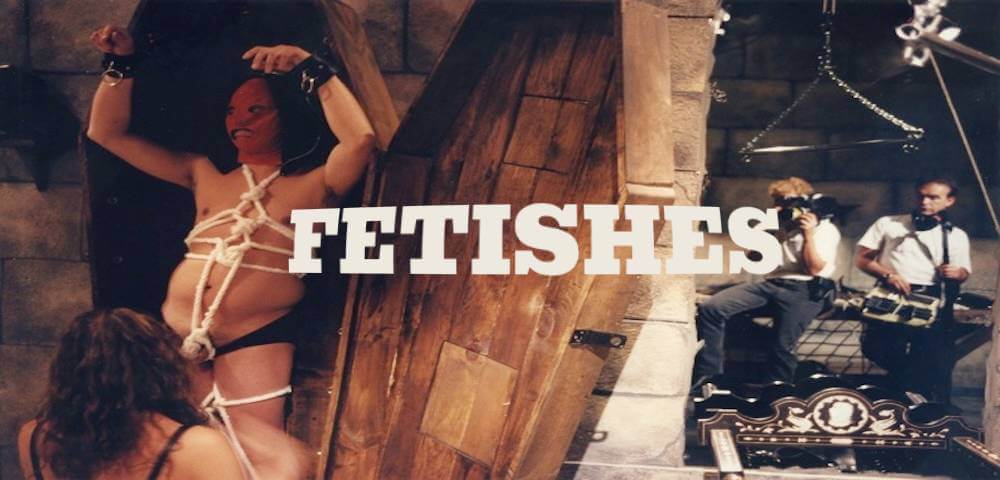
Fetishes

Films that portray BDSM or sex work are often not made for people in the lifestyle or community. These three films stand out because they were in some form collaboratively made with people who were active in the lifestyle in the late 1990s. This series is intended for us: the femdoms, SWers, gay hustlers, sissies, sluts, masochists, foot freaks, submissive men… the list goes on. Enjoy the late ’90s fetish outfits, hot scenes, and general perversion!

<3 The March 16 screening of FETISHES is for SW’ers ONLY and FREE <3 The HUSTLER WHITE screening on the same day is FREE for SW’ers <3

Fetishes

FETISHES
dir. Nick Broomfield, 1996
United States, 84 minutes

MONDAY, MARCH 3 – 7:30 PM
TUESDAY, MARCH 11 – 7:30 PM
SUNDAY, MARCH 16 – 7:30 PM – FREE! SWers only!
FRIDAY, MARCH 21 – MIDNIGHT

TICKETS

Filmed at the storied, luxurious NYC S&M parlor Pandora’s Box, FETISHES explores in both a humorous and informative manner the full range of fetishes, from rubber and infantilism to asphyxiation and mummification. Clients pay upwards of $10,000 a night to submit to a mistress who creates highly elaborate role-playing scenarios designed to meet their specific desires. Doctor-and-nurse scenes, naked wrestling, bullwhipping, and more play out in diverse themed rooms, ranging from one styled after Versailles to an OR.

We will host a free screening only for SW’ers on Sunday, March 16!

Hustler White

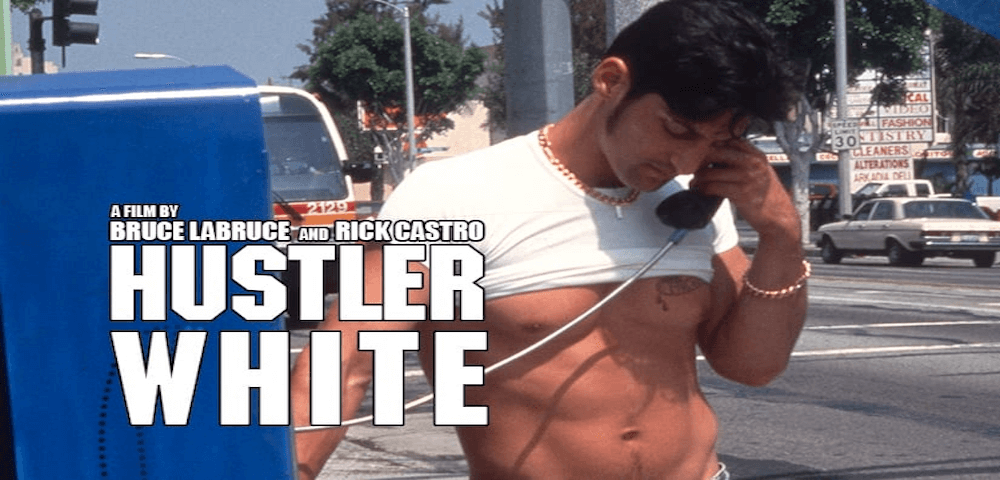
HUSTLER WHITE
Dir. Bruce LaBruce and Rick Castro, 1996
United States, 79 minutes

WEDNESDAY, MARCH 5 – 10 PM
SATURDAY, MARCH 15 – MIDNIGHT
SUNDAY, MARCH 16 – 5 PM – FREE for SWers!
MONDAY, MARCH 24 – 7:30 PM

TICKETS

Bruce LaBruce teams up with photographer Rick Castro in a wild reimagining of SUNSET BOULEVARD set in the hot hustling scene of Santa Monica Boulevard in the ’90s. Lovelorn anthropologist Jurgen Anger (LaBruce) heads to LA to research hustling, but after spotting angel-faced Montgomery Ward (supermodel Tony Ward), he falls hopelessly in love. Featuring cameos by Ron Athey and Vaginal Davis, HUSTLER WHITE is a roller coaster ride of sex, money, depravity… and romance!

The Sunday, March 16 screening is free for SW’ers!

the life and death of bob flanagan, supermasochist

SICK: THE LIFE AND DEATH OF BOB FLANAGAN, SUPERMASOCHIST
Dir. Kirby Dick, 1997
United States, 92 minutes

FRIDAY, MARCH 7 – 7:30 PM
MONDAY, MARCH 17 – 10 PM
WEDNESDAY, MARCH 26 – 7:30 PM
SATURDAY, MARCH 29 – 10 PM

TICKETS

This internationally acclaimed documentary profiles comedian and performance artist Bob Flanagan, whose experiences with S&M helped him manage his painful experience living with cystic fibrosis. A deeply moving, often hilarious profile of one of the unique artists of this century, the film follows Flanagan’s strikingly singular art and life as he explores the limits of pain, sexuality, love, and death.

CW: This film contains documentation of terminal illness and death.

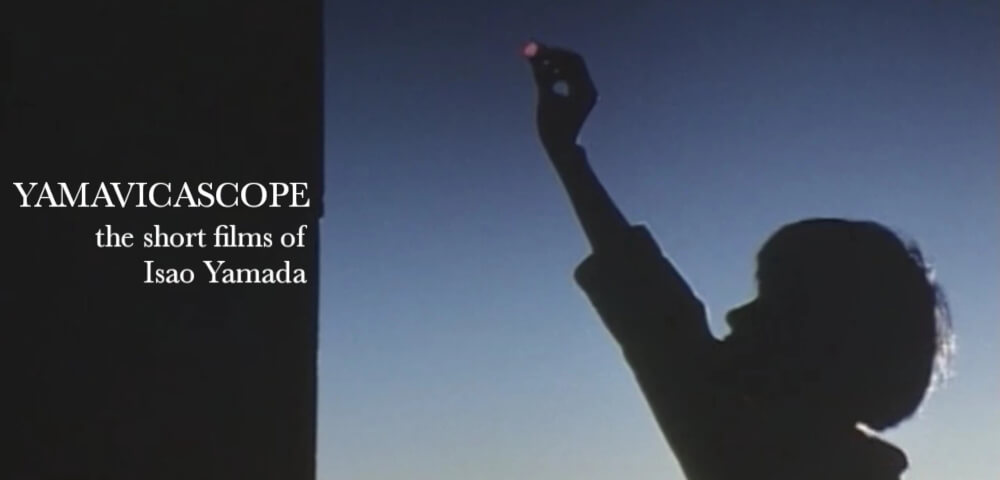
YAMAVICASCOPE: THE SHORT FILMS OF ISAO YAMADA

Since 1977, Isao Yamada, director of instant Spectacle classic I’VE HEARD THE AMMONITE MURMUR, has produced over a hundred experimental short film-poetries in a collection he calls Yamavicascope. These films emphasize the “non-digital optical sensation” produced by the 8mm (and occasionally 16mm) film with which they are shot and hand-edited by Yamada. This emphasis on materiality is seen throughout his artistic output, which includes paintings, manga, graphic design, and a calligraphic font known as “Yamada-moji,” which he uses for the titles and type in his films.

This March, Spectacle is honored to present a two-night Yamavicascope retrospective. These four programs, titled by Yamada himself, invite a career-spanning glimpse into the director’s “private films.”

Special thanks to Eiichi Aso, Yamavica Film, and YHI.

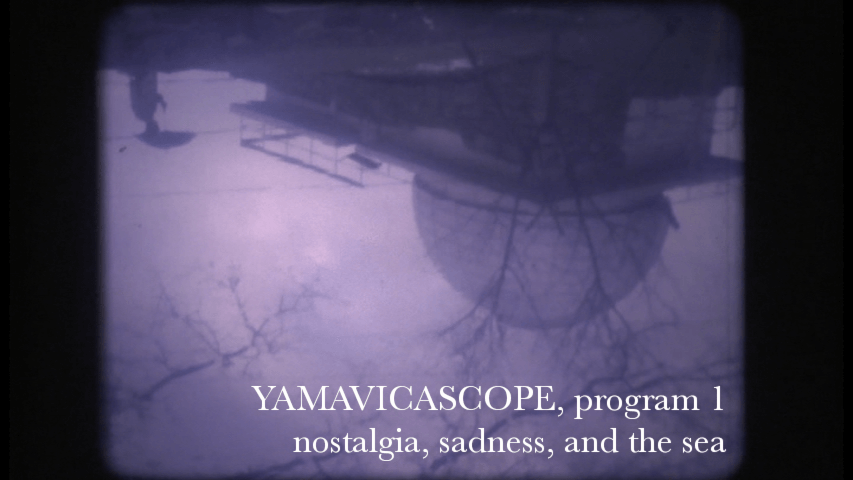
PROGRAM 1: NOSTALGIA, SADNESS, AND THE SEA

FRIDAY, MARCH 14 – 7:30 PM

TICKETS

Yamada was 21 years old when he joined the Tenjo Sajiki theater troupe, one of the most provocative forces in the emerging avant-garde angura scene, co-founded and led by Shuji Terayama. Yamada credits his relationship with Terayama and working on the art direction of his features as his awakening to film. Following this, Yamada co-founded the Gingagahou-sha Film Club in Sapporo with manga artist Yumekichi Minatotani. The works in this program make up some of Yamada’s earliest forays into film and introduce his first major collaborator in Minatotani.

AN INCIDENT OF NIGHT
(スバルの夜)
Dir. Isao Yamada, 1977
Japan, 25 min

Yamada’s directorial debut and the first film released by the Gingagahou-sha Film Club.

NIGHT OF THE MILKY WAY RAILROAD
(銀河鉄道の夜)
Dir. Isao Yamada, 1982
Japan, 45 min

THE FAN OF SPIRAL SHELL
(巻貝の扇)
Dirs. Isao Yamada, Yumekichi Minatoya, 1983
Japan, 12 min

Yamada’s first film shot on 16mm.

SAD GADOLF
(悲しいガドルフ)
Dirs. Isao Yamada, Yumekichi Minatoya, 1984
Japan, 20 min

Total running time: 102 min

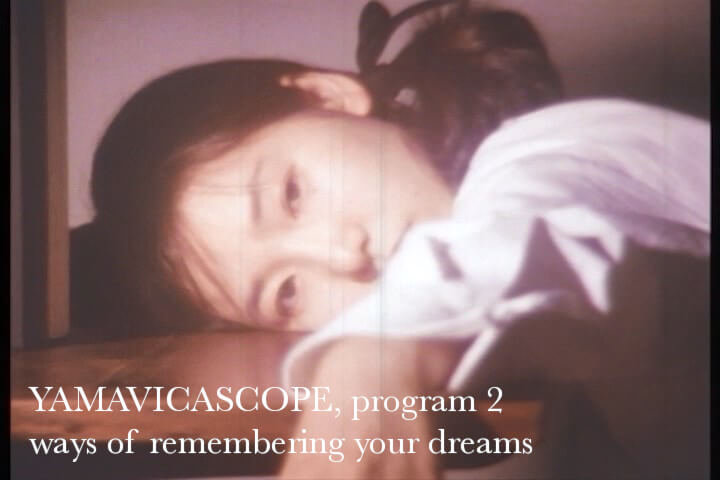
PROGRAM 2: WAYS OF REMEMBERING YOUR DREAMS

FRIDAY, MARCH 14 – 10:00 PM

TICKETS

This program features two more of Yamada’s collaborators: Hiroko Ishimaru (who stars in I’VE HEARD THE AMMONITE MURMUR) and Mizuho Kudo.

CRYSTAL
(水晶)
Dir. Isao Yamada, 1988
Japan, 12 min

THE CROWN OF DREAMS
(夢を冠に)
Dir. Isao Yamada, 1990
Japan, 16 min

THE DESCENDENT OF ANDROGYNOUS
(アンドロギュヌスの裔)
Dir. Isao Yamada, 1995
Japan, 25 min

FRAGMENTATION OF NIGHT
(夜のフラグメント)
Dir. Isao Yamada, 1996
Japan, 12 min

SWAMP
(沼)
Dir. Isao Yamada, 1999
Japan, 12 min

A STAR AND A PROPELLER
(星とプロペラ)
Dir. Isao Yamada, 2000
Japan, 13 min

Total running time: 90 min

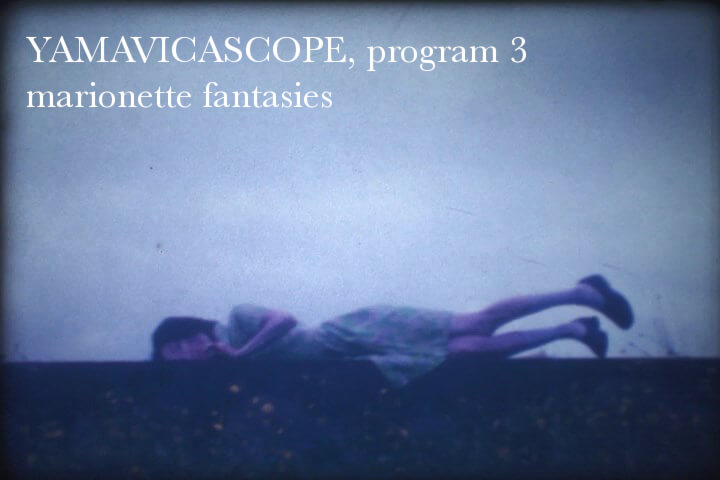
PROGRAM 3: MARIONETTE FANTASIES

SATURDAY, MARCH 15 – 5:00 PM

TICKETS

フィルムの死が先か、「私」の死が先か、という状況にある。 (The situation is whether the death of 8mm film comes first, or the death of ’I’ comes first.) – Yamada (2017)

GIRL ORPHEE
(少女オルフェ)
Dir. Isao Yamada, 2001
Japan, 20 min

WINTER FLOWER
(逢魔ヶ時)
Dir. Isao Yamada, 2003
Japan, 15 min

FEEL
(そして彼女の手は優しく触れる)
Dir. Isao Yamada, 2004
Japan, 15 min

CHRYSANTHEMUM INSPIRATION
(Chrysanthemum綺想)
Dir. Isao Yamada, 2005
Japan, 20 min

WINTER HAS A DREAM
(白昼夢)
Dir. Isao Yamada, 2008
Japan, 20 min

Total running time: 90 min

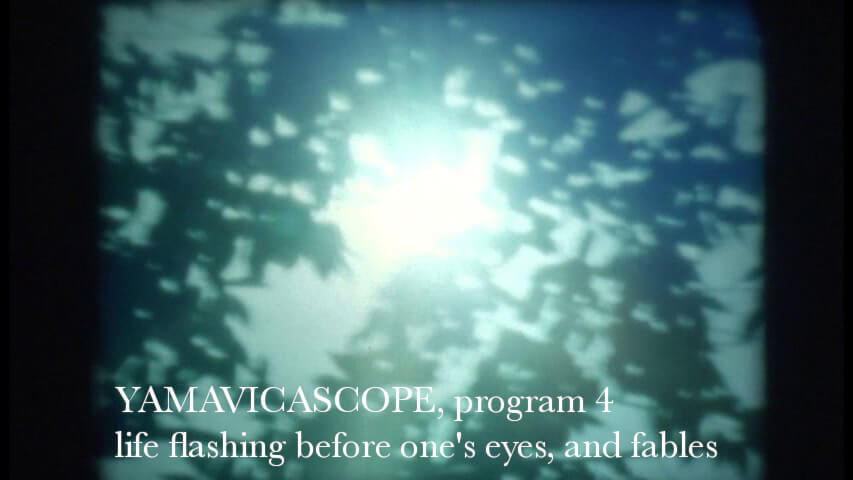
PROGRAM 4: LIFE FLASHING BEFORE ONE’S EYES, AND FABLES

SATURDAY, MARCH 15 – 7:30 PM

TICKETS

DESPAIR ARABESQUE
(絶望アラベスク)
Dir. Isao Yamada, 2011
Japan, 34 min

REFLECTION
(Kioku)
Dir. Isao Yamada, 2014
Japan, 23 min

An official selection of the 61st International Short Film Festival Oberhausen.

APPARITION’S MOMENT
(幻視の一瞬)
Dir. Isao Yamada, 2017
Japan, 3 min

THE NIGHT OF COPERNICUS
(コペルニクスの夜)
Dir. Isao Yamada, 2020-21
Japan, 28 min

Total running time: 88 min