THE DUMB GIRL OF PORTICI

THE DUMB GIRL OF PORTICI
dirs. Phillips Smalley and Lois Weber, 1916
United States, 115 min.
Silent with English intertitles.

SATURDAY, MAY 10 – 7:30 PM – ONE NIGHT ONLY! LIVE SCORE BY JAKE PEPPER AND ZACH KOEBER

GET TICKETS

Spectacle is proud to present one of American cinema’s first true epics, with a new original score performed by esteemed local musicians Jake Pepper and Zach Koeber. 

With a production budget of $250K and based on the 1828 French opera La muette de Portici, THE DUMB GIRL OF PORTICI was Universal’s first blockbuster gamble, showcasing ballerina Anna Pavlova’s elegant dancing against the backdrop of a tragedy of star-crossed lovers. Pavlova plays Finella, our titular “dumb girl,” whose hopelessly romantic personality attracts a powerful Spanish duke (Wadsworth Harris). However, this affair complicates Finella’s relationship with her brother Masaniello (renowned silent filmmaker Rupert Julian), a determined fisherman slowly rallying the people toward revolution. 

Elevating melodrama to violent heights, THE DUMB GIRL OF PORTICI is one of the earliest examples of movie magic, with biblical images of public chaos and heavenly, spellbinding dance footage from Pavlova and company. The film originally screened with orchestral accompaniment; while we don’t necessarily have the space for a full symphonic group, we are pleased to work with two of the DIY music scene’s finest, Jake Pepper and Zach Koeber. Appearing for the first time at Spectacle, they’ll provide a music accompaniment to match the picture’s majestic presentation. 

…a crucial rediscovery—as are the art of Weber over all and, for that matter, the celebration of Pavlova’s single screen performance … Along with the specifics of their genius, “The Dumb Girl of Portici” is a welcome reminder that the history of cinema still belongs to the future.

—Richard Brody, The New Yorker

Jake Pepper and Zach Koeber make up half of Ace Bandage, the jam-heavy rock band based in Brooklyn. Their fondness of improvisation and vast knowledge of timbral music allows them to shift seamlessly through varied sonic palettes. Pepper also performed in Brooklyn synth punk outfit Future Punx, while Koeber got his start in the local scene as one-third of Archie Pelago, and he currently collaborates with deep house producer Max in the World. Both Jake and Zach have also guest DJ’d on the prestigious independent station The Lot Radio.

Special thanks to George Schmalz and Kino Lorber.

THE TIJUANA TRILOGY

This May, Spectacle presents three recent feature films (plus one short) by the Tijuana-based filmmaker Diego Hernández. Starting in 2021, Hernández began to release a series of short, low-budget features that explore Tijuana’s many idiosyncrasies from a personal perspective. His approach to filmmaking — unhurried and spontaneous — combines a documentary approach to filming micro-communities with a frank specificity that reveals an adept understanding of form and style. This recent trilogy of breezy but perceptive films offer an intimate glimpse at previously unseen facets of the Mexican border-city and zero in on the lives of student protestors, carpenters, and theater actors.

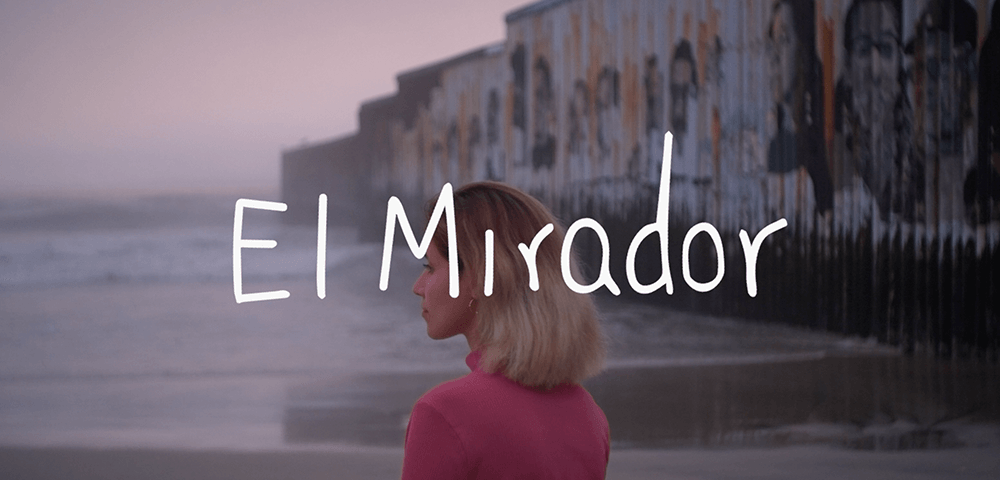
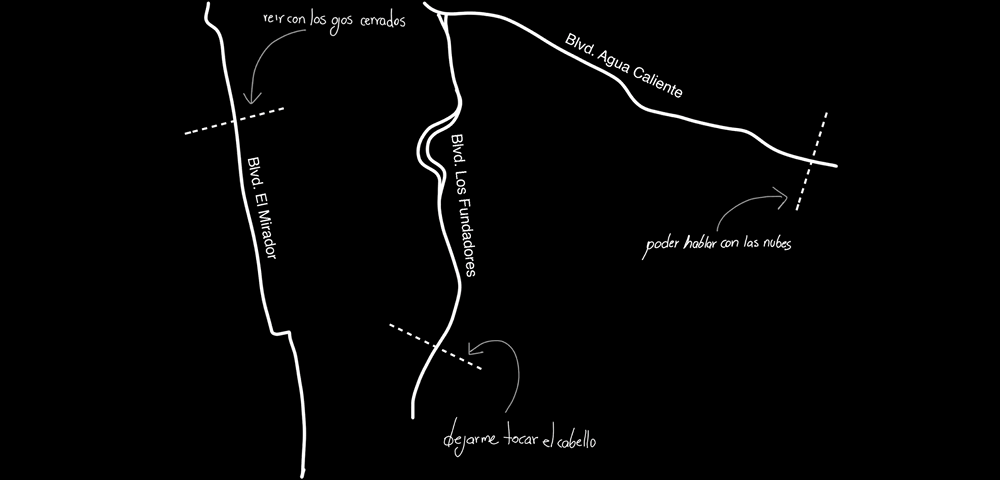
LOS FUNDADORES (2021) follows three university students whose education is put on pause due to government corruption and student protests. Filmed in locked, long shots, this debut feature demonstrates Hernández’s preternatural understanding of compositional values and human relationships. AGUA CALIENTE (2022) is a pandemic film, but of a tender and subtle sort. The film examines the relationship between the filmmaker and his mother during lockdown — a broken boiler throws a wrench in their day-to-day rituals. EL MIRADOR (2024) –– Hernández’s longest film to date at 76 minutes — takes his interest in Tijuana’s history and arts-community in a new direction. Charting the relationship between two improv actors who are hired to star in a rich kid’s film about cartel violence in Tijuana, the film offers a smart satire of tired tropes in Mexican cinema.

LOS FUNDADORES
(THE FOUNDERS)
dir. Diego Hernández, 2021
Mexico. 62 mins.
In Spanish with English subtitles.

SUNDAY, MAY 4 – 5 PM
THURSDAY, MAY 8 – 7:30 PM followed by remote Q+A with Diego Hernández
SATURDAY, MAY 17 – 5 PM
MONDAY, MAY 26 – 7:30 PM

GET TICKETS

Diego (Hernández) and Andres (Madrueño) make doors for a living. Both of their artistic pursuits are on pause because Tijuana’s public university is on strike and cultural budgets are nil. At some point, Andres meets an actress-cum-taco vendor named Renee (Ortiz). They rehearse for a play together. THE FOUNDERS won a Silver Puma for Best Mexican Film at FICUNAM in 2021 and Special Mention in the Premier Film Competition at FIDMarseille.

AGUA CALIENTE
(HOT WATER)
dir. Diego Hernández, 2022
Mexico. 64 mins.
In Spanish with English subtitles.

MONDAY, MAY 5 – 7:30 PM
WEDNESDAY, MAY 14 – 7:30 PM followed by remote Q+A with Diego Hernández
FRIDAY, MAY 23 – 5 PM
TUESDAY, MAY 27 – 7:30 PM

GET TICKETS

Diego (Hernández) and his mother, Graciela (Rodríguez), share a home together during the Covid-19 lockdown. Diego interviews his mom to fend off boredom. Together, they carry out chores. A broken boiler interrupts their life. Melissa (Castañeda), Diego’s girlfriend, and her impending birthday force Diego to reconsider a lot of decisions in his life.

EL MIRADOR
(THE VIEWPOINT)
dir. Diego Hernández, 2024
Mexico. 76 mins.
In Spanish with English subtitles.

MONDAY, MAY 5 – 10 PM
SUNDAY, MAY 18 – 5 PM followed by remote Q+A with Diego Hernández
WEDNESDAY, MAY 28 – 7:30 PM
SATURDAY, MAY 31 – 5 PM

GET TICKETS

Annya (Katerina) and Guillermo (López) are two aspiring actors unsure about what the future has in store for them. Annya works as an uber driver. Guillermo works at a call center. A misunderstanding leads them to star in a film about Tijuana that explores the city’s uptick in violence during the 2010s. It’s a bit of a goof, but a real opportunity.

all films screening with

CALLEJONES
(ALLEYWAYS)
dir. Diego Hernández
Mexico. 13 mins.
In Spanish with English subtitles

In 13 minutes, Hernández relates three stories about three different film screenings. A skeleton key of sorts for the rising filmmaker, as well as a terse and poetic look at his life and hometown. Musical interludes complement his reminiscing.

Special thanks to Diego Hernández.

RED BONE GUERILLAS

RED BONE GUERILLAS
dir. Pierre Bennu, 2003
100 mins. United States.
In English.

TUESDAY, MAY 6 – 7:30 PM
SUNDAY, MAY 18 – 7:30 PM followed by Q+A with Pierre Bennu (ONE NIGHT ONLY!)
WEDNESDAY, MAY 21 – 10 PM 
FRIDAY, MAY 30 – 7:30 PM

GENERAL ADMISSION TICKETS

SPECIAL EVENT (Q&A) TICKETS

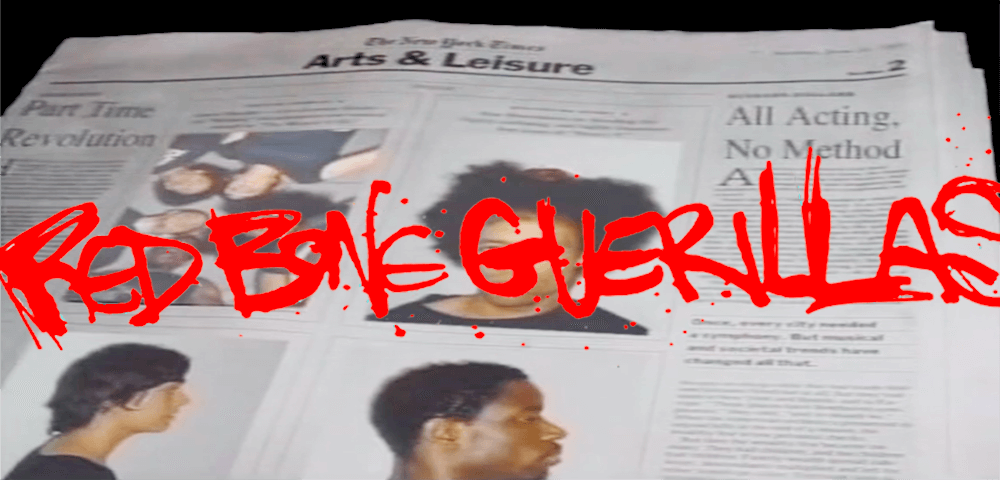
Spectacle is thrilled to invite interdisciplinary artist PIERRE BENNU back to present his film RED BONE GUERILLAS, which the theater showed in 2013 after it was recommended by filmmaker Terence Nance (AN OVERSIMPLIFICATION OF HER BEAUTY, RANDOM ACTS OF FLYNESS).

Shot on miniDV, Bennu’s zero-budget feature debut follows a troupe of young acting students who seek revenge after being bullied by their teacher, an overhyped Broadway has-been named Magenta Bergenstein (“You clap for yourself, not me!”)

Led by aspiring filmmaker Bonita Evans, the Red Bone Guerillas initially set out to document Magenta’s downfall, but soon find themselves staging public interventions that combine Situationist philosophizing with revolutionary politics, striving for an “aesthetic towards freedom” even as their lives can’t help but pull them in other directions.

While Bennu’s film begins like a Christopher Guest-style sendup of theater-kid narcissism and the eternal question of whether capital-A art can effect political change, it soon reveals itself as brilliant study of forms and clichés. Some scenes feel like gripping reality television, others like performance pieces ala Andrea Fraser. And while the film makes sure to entertain, its final act unravels like a political thriller, tackling the blurring of the private and public self in ways that recall both SUNSET BOULEVARD and any number of unfolding real-time celebrity meltdowns. Maybe the funniest thing about the RBGs is how easy it is for them to get to the top: while Bennu’s prescient vision of socially mediated paranoia mostly takes place offline, it’s telling that a cell phone or a suite of computer monitors signals both distraction and power – a lurch forward in conspicuous consumption.

PIERRE BENNU is an award winning filmmaker, writer, artist and performer. He is the principal creative of Exittheapple, an alternative media and arts company specializing in film and digital media, visual arts, gift books, and music.

WINDOW ON YOUR PRESENT

WINDOW ON YOUR PRESENT
dir. Cinqué Lee, 1988
60 mins. United States.
In English.

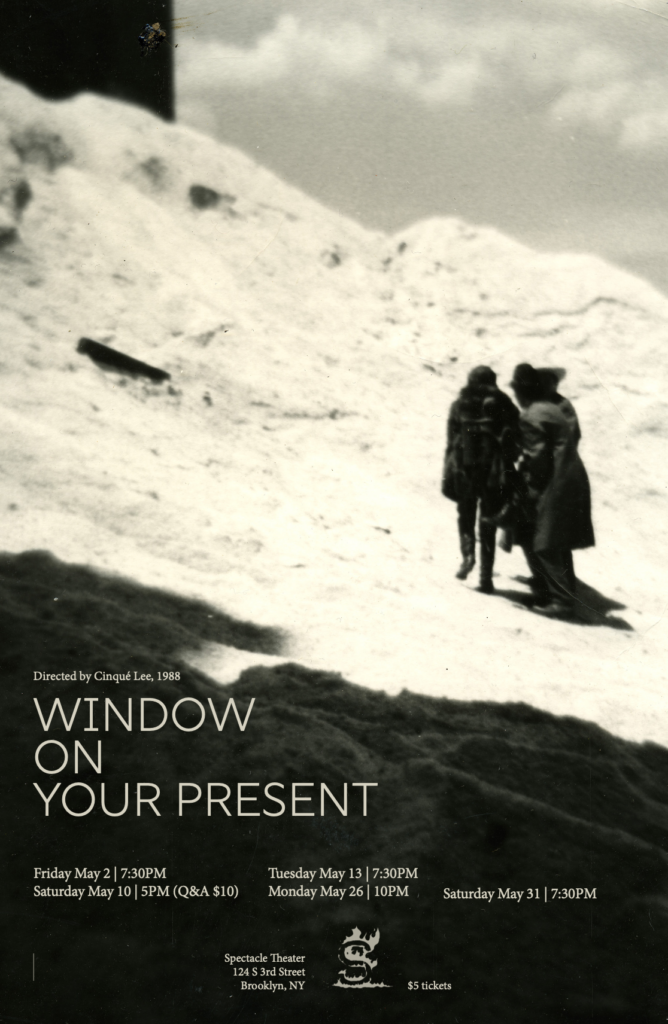
FRIDAY, MAY 2 – 7:30 PM
SATURDAY, MAY 10 – 5 PM followed by Q+A with Cinque Lee, sound designer Stuart Argabright and cinematographer Leslie Mentel (ONE NIGHT ONLY!)
TUESDAY, MAY 13 – 7:30 PM
MONDAY, MAY 26 – 10 PM
SATURDAY, MAY 31 – 7:30 PM

GENERAL ADMISSION TICKETS

SPECIAL EVENT (Q&A) TICKETS

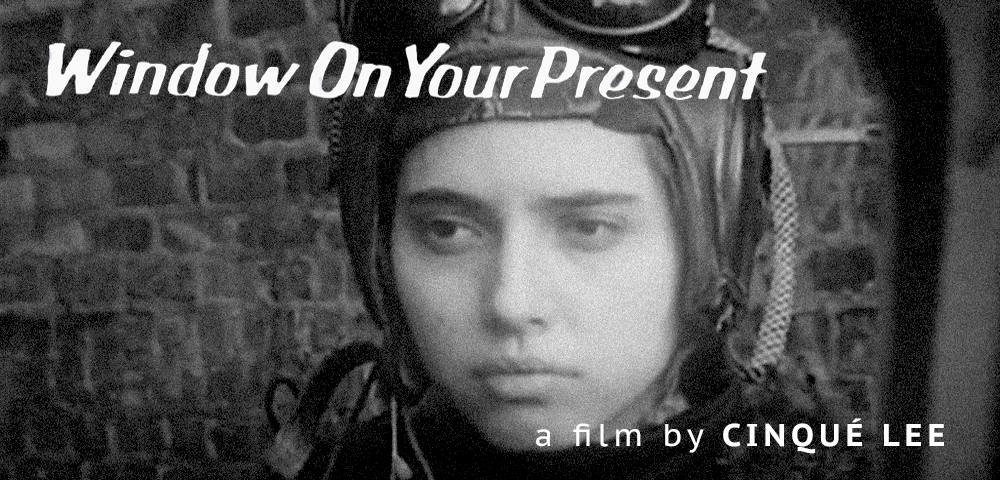
15 years after being released on DVD (and almost 40 years after it was shot), artist Cinqué Lee’s WINDOW ON YOUR PRESENT returns to the flaming S – this time, with Cinqué Lee in person for Q+A.

Collaborating with Jim Jarmusch on his directorial debut, Lee – who appeared in Jarmusch’s MYSTERY TRAIN and served as both cowriter and coproducer on his brother Spike’s CROOKLYN – gives us an unsettling dreamscape taking place in the rubble and ruins of a post-apocalyptic Brooklyn neighborhood.

WINDOW ON YOUR PRESENT creates a morbid and lonely atmosphere seen through the eyes of two protagonists, Europa and Lever. Surrounded around a colorless existence, the dialogue-free film shows us horrors of neglect, abuse, and dangerous lonesome through the eyes of this young couple while they search for something special outside of their dreary world.

Filmed on the cusp of the No Wave movement specific to New York filmmakers expanding outside of a small screening room on St. Mark’s Place, Lee leans into gritty and guerilla style filmmaking that movement is really known for. Between the visuals from cinematographer Leslie Mentel, the voiceover by Maria Pieneres, and the incredible jazz score by Spike and Cinqué’s father Bill Lee, this collaboration of artists makes WINDOW ON YOUR PRESENT feel less like a movie and moreso a collaborative work of art.

“Genetically much closer to maudit French literature than to mainstream American cinema, Cinqué Lee’s visually haunting 1980s post-apocalyptic narrative tone-poem should be regarded as a true underground classic!” – Jim Jarmusch

CONTENT WARNING: This film includes a scene of sexual assault.

STUART AGRABRIGHT is a veteran musician and composer known for his experimental and innovative work across various genres, including punk, post-punk, industrial, and electronic music. He is associated with the New York City music scene of the late 1970s and 1980s. He was influenced by hard rock, glam rock (like David Bowie), and then the emergence of punk (Sex Pistols, The Clash). Argabright moved to NYC, where he became part of an exciting and dynamic music scene where experimentation and the creation of new genres were common. Argabright has consistently explored new technologies and media in his work, reflecting on how they have shaped the perception of music and art across generations. He is interested in the evolution of media and its impact on culture. He’s described as a veteran “cyberpunk composer” for his interest in the intersection of technology and society in his music.

LESLIE MENTEL is a filmmaker and director known for work in music videos and documentaries, with a notable connection to the musician Q Lazzarus. Leslie directed the 1988 music video for “Goodbye Horses”, which is significant in the context of Q Lazzarus’s work and her reappearance in the public eye after a long absence; the video features Q Lazzarus, along with Bill Garvey and dancer Danny Z. Leslie also appears in the documentary “Goodbye Horses: The Many Lives of Q Lazzarus,” directed by Eva Aridjis Fuentes. The documentary delves into Q Lazzarus’s life, music, and mysterious disappearance. Mentel’s participation in the documentary highlights an ongoing contribution to preserving and sharing the story of this unique artist.

CINQUÉ LEE is a filmmaker, writer, and actor whose career began with Super 8mm films in high school and has grown into a body of work marked by bold, genre-defying storytelling. He made his directorial debut with WINDOW ON YOUR PRESENT, a black-and-white feature that has since become an underground classic. Throughout his career, Lee has collaborated with directors including Jim Jarmusch, Matthew Barney, Spike Lee, and William H. Macy, contributing to a diverse range of distinctive, often boundary-pushing film and performance projects. Lee’s most recent feature, A RARE GRAND ALIGNMENT, stars Gustaf Skarsgård, Roman Griffin Davis, and Kristofer Hivju. The film blends science fiction and psychological drama and was shot using an LED volume soundstage to create a vivid and emotionally charged visual world. The son of acclaimed jazz bassist and composer Bill Lee, Cinqué continues to be a singular voice in independent cinema.

MOTHERS

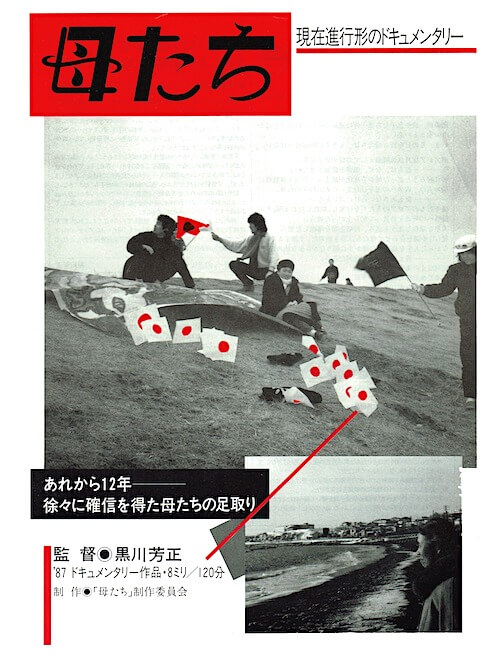
Screening for the first time ever in New York City, Kurokawa Yoshimasa’s MOTHERS is a rare primary-source document of radical dissent during the era of Japan’s supposed postwar economic miracle. Spectacle presents the film alongside a reprise of Kim Mirye’s 2017 documentary LOOKING FOR THE WOLF (aka EAST ASIA ANTI-JAPAN ARMED FRONT.)

MOTHERS
(母たち)
dir. Kurokawa Yoshimasa, 1987
120 mins. Japan.
In Japanese with English subtitles.

FRIDAY, MAY 2 – 5 PM
SUNDAY, MAY 11 – 7:30 PM
SATURDAY, MAY 17 – 7:30 PM followed by Q+A with Ken Sasaki and Hajime Imamasa
TUESDAY, MAY 28 – 10 PM

GET TICKETS

MOTHERS was conceived and directed by the filmmaker while he was in prison, a member of the “Scorpion” cell of the East Asia Anti-Japan Armed Front (EAAJAF), incarcerated after the1974-1975 bombings of major construction companies Kashima Corporation and Hazama-Gumi for the massacres of forced laborers. (He remains there to this day, although he maintains an active presence on social media.) During Kurokawa’s incarceration, Ken Sasaki helped complete the project.

“This film depicts transformation the mothers of the members of the East Asia Anti-Japanese Armed Front underwent as they begin to reflect on themselves born and raised in the time and space ruled by Japan’s Emperor System that led Japan into wars of aggression against China and the rest of Asia as well as the post-war corporate economic aggression through the struggles of their sons and daughters. I hope the audience learn that people can change and that we can also change our attitudes toward the wars that are happening now, and discrimination and oppression of others.” – Ken Sasaki

Program notes from the 1997 Yamagata Documentary Film Festival read:

“As testimony to Kurokawa’s idea that “the emperor system is not only an incarnation of the patriarchal principle but also the embodiment of the female principle,” the film aims “to critically examine the essence of the Japanese maternal image.”

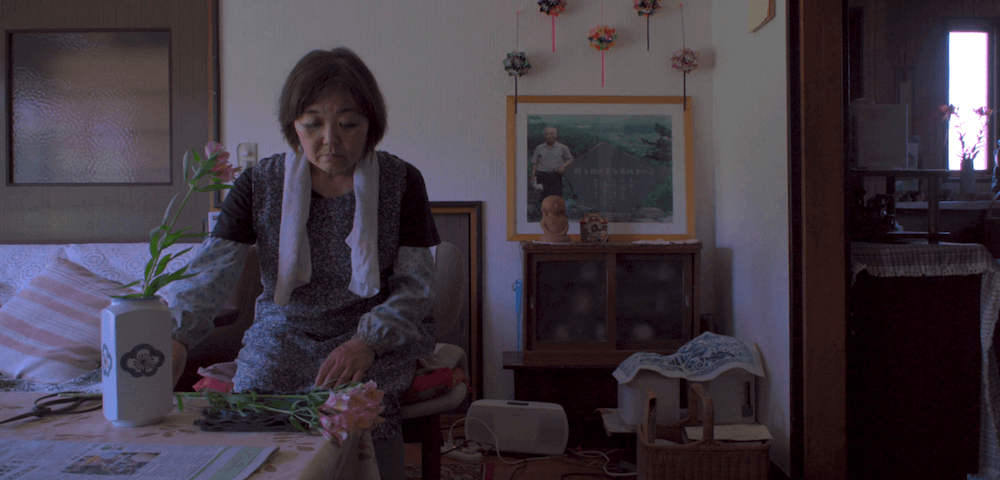
In it, Sasaki Ken and other film crew members interview the mothers of those in prison, including Kurokawa’s mother, on 8mm camera. Daidoji’s and Kurokawa’s mothers gradually begin to learn more about the “emperor system” because of the crime their sons committed, and another woman chooses to adopt Masunaga Toshiaki as her son after the incident. The film describes the mothers shouldering the heavy burden of the bombing and their calm acceptance of reality, even as they continue the campaign against their sons’ death sentences. The mothers’ honest discussion of their feelings is interspersed with humorous analytical short plays and scenes of Hokkaido, which refer to Daidoji’s most central experience. The film concludes with a confession of the “pathos of self-hatred for having no choice but to live as a native of Imperial Japan.”


LOOKING FOR THE WOLF
(aka EAST ASIA ANTI-JAPAN ARMED FRONT)
(동아시아반일무장전선)
dir. Kim Mirye, 2018
74 min. South Korea.
In Japanese with English subtitles.

SATURDAY, MAY 3 – 7:30 PM
FRIDAY, MAY 16 – 5 PM
TUESDAY, MAY 20 – 10 PM
WEDNESDAY, MAY 28 – 10 PM

GET TICKETS

A blast shook the office buildings in Tokyo on August 30th, 1974. A time bomb had detonated and blown up part of the headquarters of Mitsubishi Heavy Industries, leaving eight people dead and hundreds injured. The ‘Wolf’ cell, a unit of the East Asia Anti-Japan Armed Front, claimed responsibility. Others, claiming to belong to the cells ‘Fangs of the Earth’ and ‘Scorpion’, carried out a series of bombings, targeting major corporations. Deeply conscious of Japan’s imperialist heritage, the members of the horizontal network EAAJAF were committed to ending the history of Japanese capitalist exploitation in Asia. More than 40 years have passed since then. Some members are no longer in the world, others remain incarcerated, while still others remain at large. In search of traces of these revolutionaries, the Korean documentarist Kim Mirye makes a painstaking trip through the Japanese archipelago, from the day-laborer district in Osaka to the northern marshes of Ainu Mosir (known as Hokkaido). Looking straight in the eyes of those who came together in support of the EAAJAF, despite the glaring shortcomings of the group’s project, she challenges us to discover what is left unthought and unimagined within our notions of Japan and East Asia.

KIM MIRYE‘s work has constantly zoomed in on the experience of exclusion in the everyday life of ordinary people, compelled by their energy. While her films investigate a nd uncover the structural and historical roots of their dehumanization, they invite viewers to share in the protagonists’ perspectives on life, prompting them to reflect on their own grasp of life in relationship to others and the world. Her films have won awards at Fribourg International Film Festival (2004) and DMZ International Documentary Film Festival (2015). Spectacle first showed LOOKING FOR THE WOLF as well as her documentary NOGADA – about the migrant laborers who constitute “the scorned base of the pyramidal system that rules the construction sector in South Korea and Japan” – in 2022.

Special thanks to Hajime Imamasa, Sabo Kohso, Ken Sasaki and Kim Mirye.

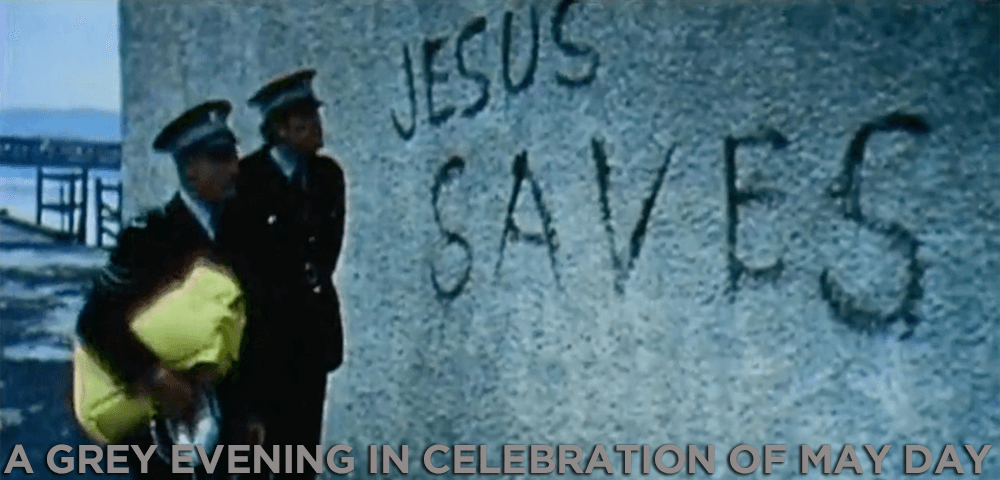
A GREY EVENING IN CELEBRATION OF MAY DAY

THURSDAY, MAY 1 — 10:00 PM
ONE NIGHT ONLY

$5 DONATION (IRL ONLY)

Spectacle is proud to present (something as similar as possible to) the original director’s cut of a certain unnamed. May Day, folk-horror classic —complete with spliced-in VHS scenes of an infamous missing 7 minutes of footage — presented in a night for all senses by local electronic music purveyors and friends-of-the-theater STICE.

With the original negatives long buried under a major highway outside London, this version, among countless others that have called themselves definitive over the decades, represents the closest we may ever come to the director’s original vision of this seminal classic. No longer must we suffer under the tyranny of the sub-par Theatrical Cut being passed off as the real thing.

Buttressing the feature is a thematically-related short film  “When We Remove The Fixation Then We Have Removed Ourselves With The Identifying”, free Scottish food for all attendees and a live musical performance of possibly medieval origin.

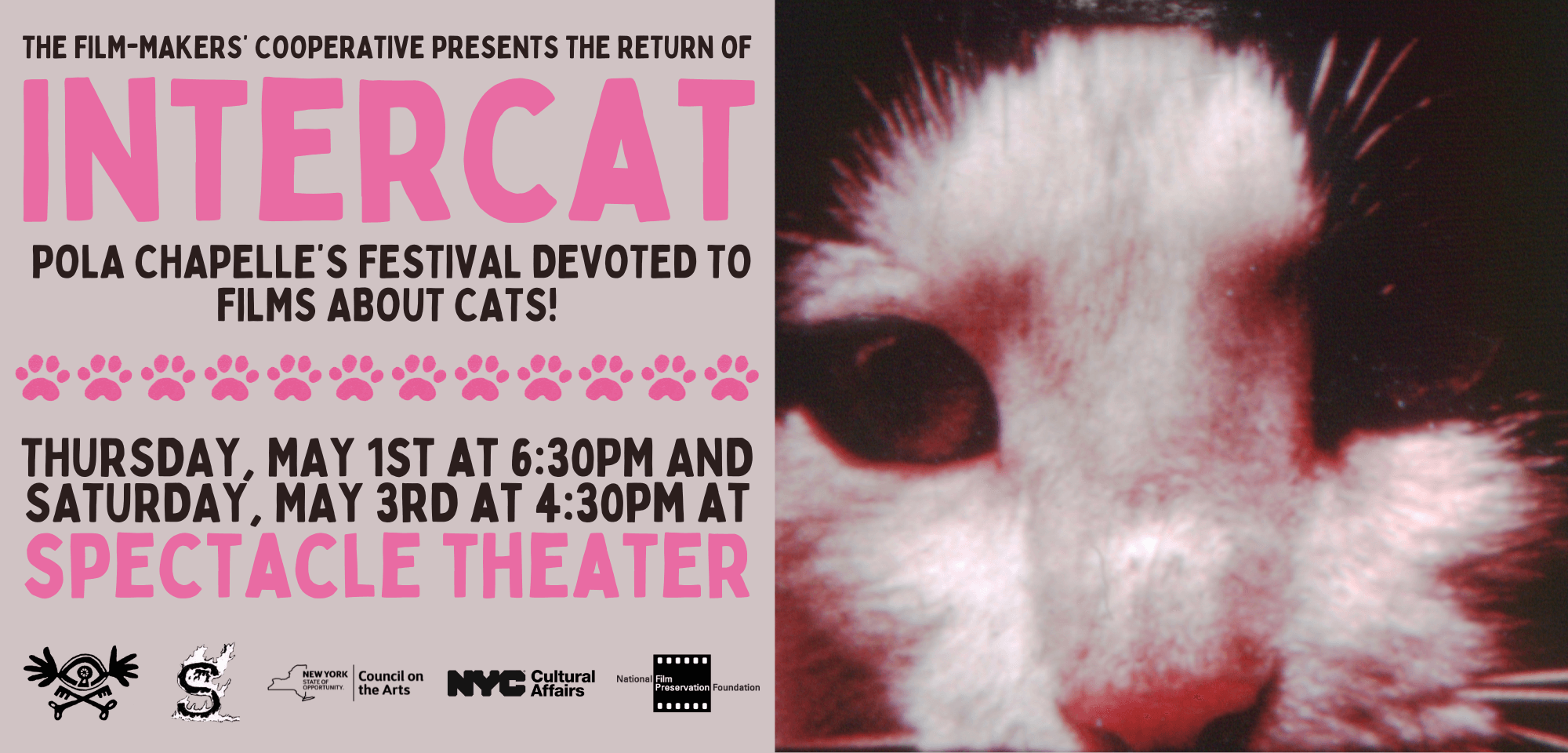
INTERCAT 2025

In 1969, Pola Chapelle founded INTERCAT: The First International Cat Film Festival, which began as a five-hour program of films about cats that played at New York City’s Elgin Theatre. Through 1976, INTERCAT reappeared intermittently and toured Boston, Philadelphia, Paris, Berlin, Amsterdam, Sydney, and Winnipeg. Among the numerous feline flicks that screened at INTERCAT in those years were the kitten sequence from François Truffaut’s DAY FOR NIGHT (1973) and Maya Deren and Alexander Hammid’s collaboration made three years after MESHES OF THE AFTERNOON, titled THE PRIVATE LIFE OF A CAT (1946). In 2016, the festival was briefly revived at Bard College. 56 years after its original incarnation, Spectacle is cat-atonic with excitement to host the Film-Makers’ Cooperative to bring INTERCAT back to New York City.

THURSDAY, MAY 1 – 6:30PM
SATURDAY, MAY 3 – 4:30PM

SPECIAL EVENT TICKETS!

INTERCAT’s appeal is immediate: a festival devoted entirely to films about cats is catnip for any cat lover. Moreover, with INTERCAT, Chapelle forecasted the ubiquity of cat images and videos in the digital age. Dubbed by Thought Catalog as the “unofficial mascot of the Internet,” cats are easily the most-viewed and shared domesticated animal on the net. From the widespread proliferation of cat memes and TikTok videos, to viral feline celebs like Grumpy Cat and Lil Bub, there’s no denying cats’ domination of visual media on the World Wide Web in the 21st century. This phenomenon has even been the subject of the book How to Make your Cat an Internet Celebrity: A Guide to Financial Freedom, the Museum of the Moving Image’s 2015 exhibition How Cats Took Over the Internet, and the annual Internet Cat Video Festival (of which INTERCAT is an obvious progenitor).

The 2025 revival of INTERCAT includes a number of films from the Coop’s collection that appeared in Chapelle’s original iterations of the festival, as well as cat-themed Coop titles making their INTERCAT debuts on both 16mm and digital formats. Among the returning films are Chapelle’s own FISHES IN SCREAMING WATER (1969) and HOW TO DRAW A CAT (1973) — the latter described by Jonas Mekas as “the most perfect film about how to draw a cat” — as well as Joyce Wieland’s CATFOOD (1968). New additions include Stan Brakhage’s NIGHTCATS (1956) and MAX (2002), Tom Chomont’s OPHELIA / THE CAT LADY (1969), Sarah Jane Lapp’s THE NEIGHBORHOOD CAT (1999), Peggy Ahwesh’s MY CAT GETS AN AURA READING (2011), and recent Oscar-nominee Bill Morrison’s feat of GoPro filmmaking, CURLY’S THANKSGIVING (2020), which can be viewed as a precursor to the recent promulgation of cat POV videos on social media. Concluding this program is a new 16mm restoration print of Roberta Cantow’s IF THIS AIN’T HEAVEN (1984), another popular cat-themed title from the Coop’s collection. This restoration print, struck by BB Optics, comes from the New York Public Library’s Reserve Film and Video Collection.

Chapelle (known, according to a 1976 Boston Globe article, as “The Cat Woman”) was one of the founding members of the Film-Makers’ Cooperative. Her husband was filmmaker Adolfas Mekas, director of acclaimed experimental feature HALLELUJAH FOR THE HILLS (1963) and the brother of Jonas Mekas, once the Coop’s de facto leader. Chapelle’s life and work is often overshadowed by the well-documented lives and oeuvres of her husband and brother-in-law. (Even the countercultural avant-garde has tended to foreground the contributions of its men while overlooking those of its women).

Yet, Chapelle was a prolific and multi-talented artist who made a significant impact on the underground film movement of the 1960s and ‘70s. An accomplished filmmaker in her own right, her films THOSE MEMORY YEARS (1972) and A MATTER OF BAOBAB (1970) — the latter of which features the Brothers Mekas, Storm de Hirsch, and Louis Brigante among its colorful cast of characters — are among the cornerstone works of the Coop’s 16mm collection. As an actor, Chapelle appeared in a number of her husband’s and brother-in-law’s films. As a singer, she released the album Pola Chapelle Sings Italian Folk Songs in 1961 and sang the theme song for Storm de Hirsch’s only feature-length film, the Rome-set dramatic narrative GOODBYE IN THE MIRROR (1964), which was once described by Shirley Clarke as “the first real woman’s film.” INTERCAT remains one of Chapelle’s most endearing — and enduring — contributions.

At each screening, printed program notes will include scans of articles — from the Boston Globe, VarietyWinnipeg Tribune, Chelsea Clinton News, and Harvard University’s Film Study Center newsletter — about INTERCAT. Also featured are the original programs for INTERCAT ‘69 and ‘73, as printed in the Film-Makers’ Cooperative’s official catalogue, as well as handwritten booking cards from the original ‘69 festival.

Co-programming and text co-written by Matt McKinzie and Robert Schneider (the Film-makers’ Cooperative). Special thanks to Roberta Cantow, Mackenzie Lukenbill, Will Hair, Stephanie Monohan, and Nate Dorr.

HOW TO DRAW A CAT
Dir. Pola Chapelle, 1973.
United States. 3 min. 16mm.

FISHES IN SCREAMING WATER
1969. United States.
6 min. 16mm.

NIGHTCATS
Dir. Stan Brakhage, 1956.
United States. 8 min. 16mm.

MAX
2002. United States.
4 min. 16mm.

OPHELIA / THE CAT LADY
Dir. Tom Chomont, 1969.
United States. 3 min. Digital.

MY CAT GETS AN AURA READING
Dir. Peggy Ahwesh, 2011.
United States. 1 min. Digital.

CATFOOD
Dir. Joyce Wieland, 1968.
United States. 13 min. 16mm.

THE WHITE CAT
Dir. Mary Ann Spencer, 1969.
United States. 2 min. 16mm.

THE NEIGHBORHOOD CAT
Dir. Sarah Jane Lapp, 1999.
United States. 2 min. 16mm.

MEOW, MEOW
Dir. Yvonne Andersen, 1970.
United States. 7 min. 16mm.

INTERCATMISSION

CURLY’S THANKSGIVING
Dir. Bill Morrison, 2020.
United States. 12 min. Digital.

IF THIS AIN’T HEAVEN
Dir. Roberta Cantow, 1984.
United States. 27 min. 16mm.

Total Run Time: 87 min. + 5 min. intermission

KERSTI JAN WERDAL: WORK 2017-25

In the spirit of previous collaborations with filmmakers like Lev and Whitney, Nuotama Bodomo and James Edmonds, Spectacle invites Seattle-born filmmaker KERSTI JAN WERDAL to join us for two nights this April. The first program on April 18th is a presentation of short-to-medium-length works spanning the last ten years, culminating in the New York City premiere of her latest short, TEST PIECE; the second, on April 19 is the New York City premiere of Werdal’s feature debut LAKE FOREST PARK.
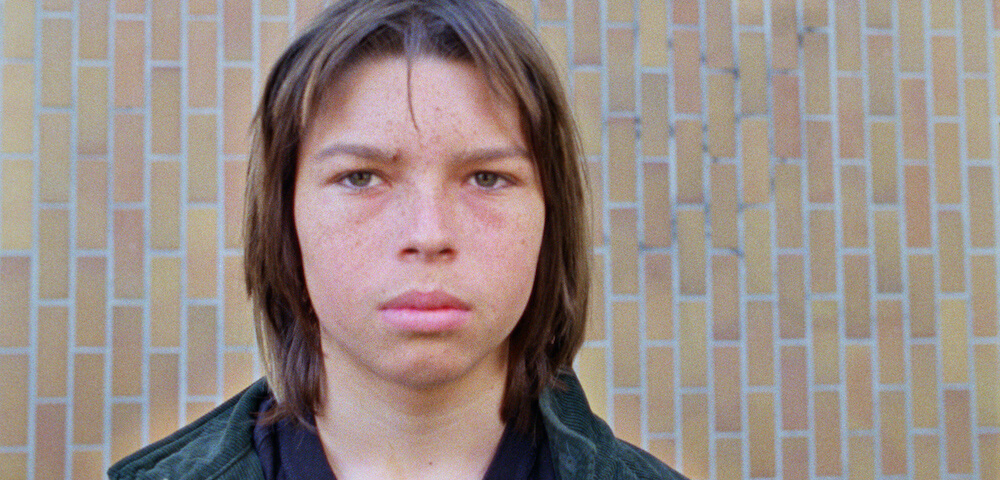
WORK 2017-25
dir. Kersti Jan Werdal, 2017-2025
80 min. In English.
United States.

FRIDAY, APRIL 18 – 7:30 PM followed by a discussion with Kersti Jan Werdal moderated by film curator Inney Prakash

ONE NIGHT ONLY!

TICKETS

This program of selected short films demonstrates the evolution over the past decade of Kersti Jan Werdal’s mastery of film form, her eye for composition, her historical fascinations and the interdisciplinary nature of her overall approach to cinema. WORK 2017-2025 spans documentary, reenactment, essay and dance films, culminating in the juxtaposition of 2017’s CEDAR ROSE (which forms a perfect complement with Werdal’s haunting debut feature LAKE FOREST PARK due to its use of archival material and its Pacific Northwestern locale) and her latest film TEST PIECE.

“Spending hours and hours over large stretches of time with objects, ephemera, photographs, and artworks which encompass a person’s life, I began to consider the concept of an archive, and how the elusive slippery elements of memory can be imposed upon materials and live on once the person has passed. As the archive takes shape, what’s required is a person or institution making a choice of what is kept or discarded, reflecting and informing a history which can be accurate to that history or not. I feel this is similarly tied to field-work, and the role of the anthropologist, which is impossibly problematic. Things are left out, often one or just a handful of viewpoints are reflected, and what’s left is something which many present as objective, which is in truth, inherently subjective. I feel this is also why I tend to avoid the term documentary, I’m not sure it exists, or rather – if the term holds the same meaning that it used to. I’m always considering this when making and think it’s partially why archival materials wind up in my work.” – Kersti Jan Werdal, interview with the Grand Cinema
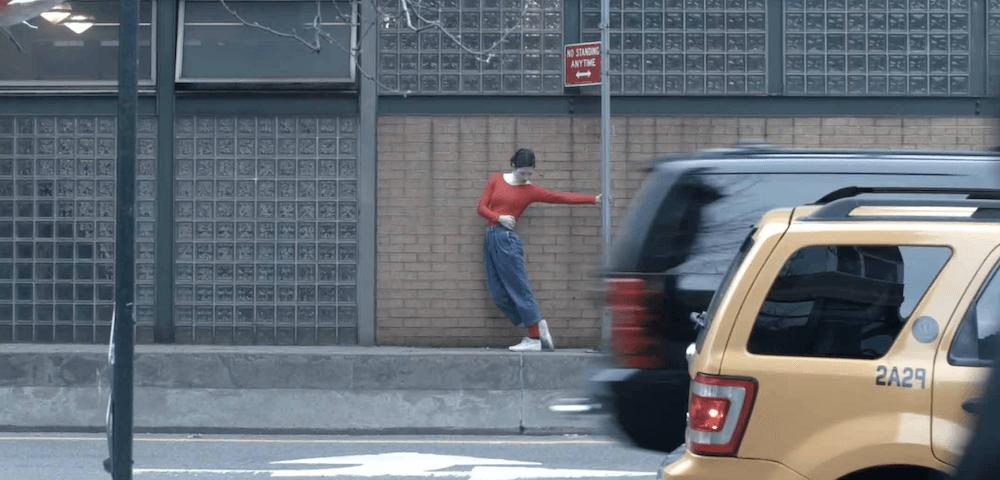
SLOW SHAPES
2017. 12 min.

Shot in Manhattan, Brittany Bailey uses sidewalks and roadside monuments as a proxy for a stage, or dance studio. Her body creates improvised shapes utilizing the negative space between limbs, concrete, vehicles, and locals walking to where they are going.
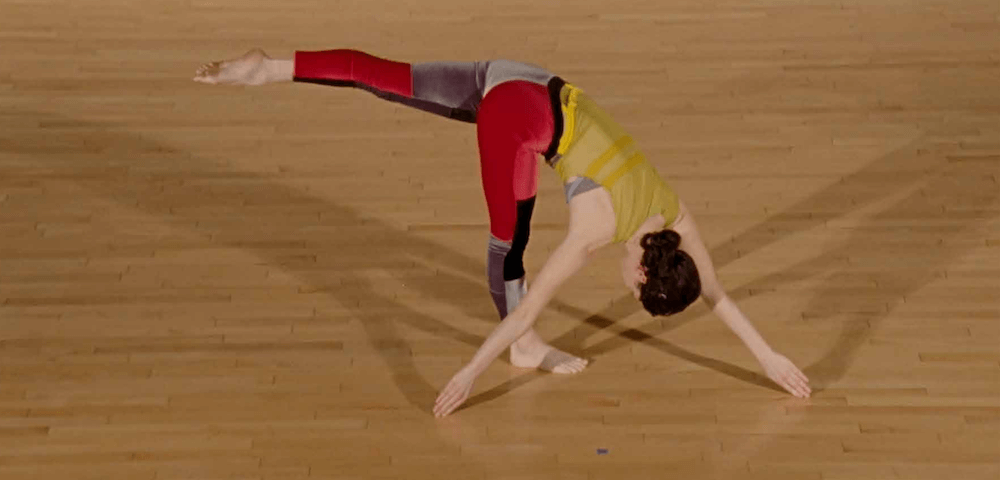
PROMENADE
2018. 15 min.

PROMENADE is an observational portrait of dancer-choreographer Brittany Bailey, as she prepares to debut a new work at Judson Memorial Church. The film engages with archival possibility, while interrogating if or how performance, a live time based medium, may be represented in the memory of moving image.
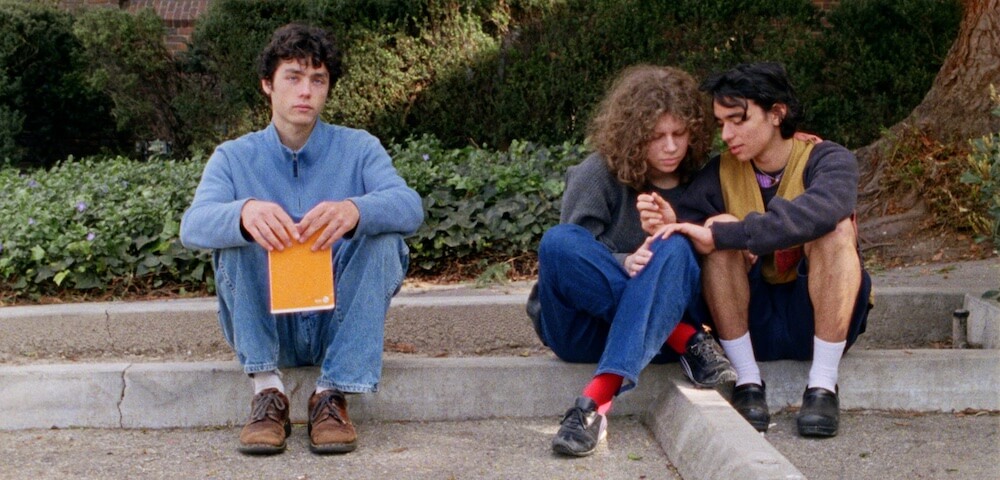
I CANNOT NOW RECALL
2023. 15 min.

In I CANNOT NOW RECALL, Kersti Jan Werdal guides the viewer through a selection of Yvonne Rainer’s dreams, chosen by the filmmaker from a collection of Rainer’s journals archived at The Getty Museum. Constellated first through Werdal’s selections, and then refracted through the readings of a street-cast filmed in LA High Memorial Park, Rainer’s dreams appear as nodes on an anxious psychic ecosystem. As the material distills from private reflection into script into performance, what emerges is a vital interchange between desire and disquiet. References to the medium of film seem to further entangle the relationship between filmmaker and subject, as well as the relationship between film and viewer. Joined by doubles and guides, in unfinished buildings and the depths of outer space, the dreamer explores her subconscious with a probing appetite for expansion and wholeness – but who the dreamer is exactly remains an open question.
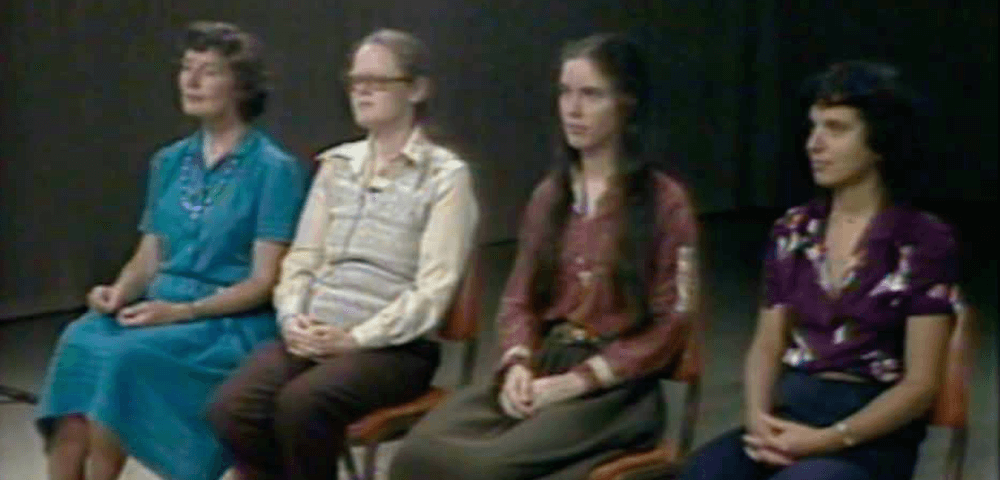
CEDAR ROSE
2017. 8 min.

“In CEDAR ROSE, Werdal’s approach provides a productive space in which a forgotten language and archive is presented as it is, without being explained or argued. Werdal allows for this dark margin of the archive, as Trond Ludemo describes it, this gap, in her bold decision of only having archival footage of the seemingly mundane language course coupled with her observational shots of the land the tribe was erased from, bearing the weight of landscape and the consequences and effects of accelerated technology and capitalism. However, Werdal does not explain this approach, and so there is a respect to the culture as it is and was through the opacity Werdal allows it in her film.” – Lucy Kerr
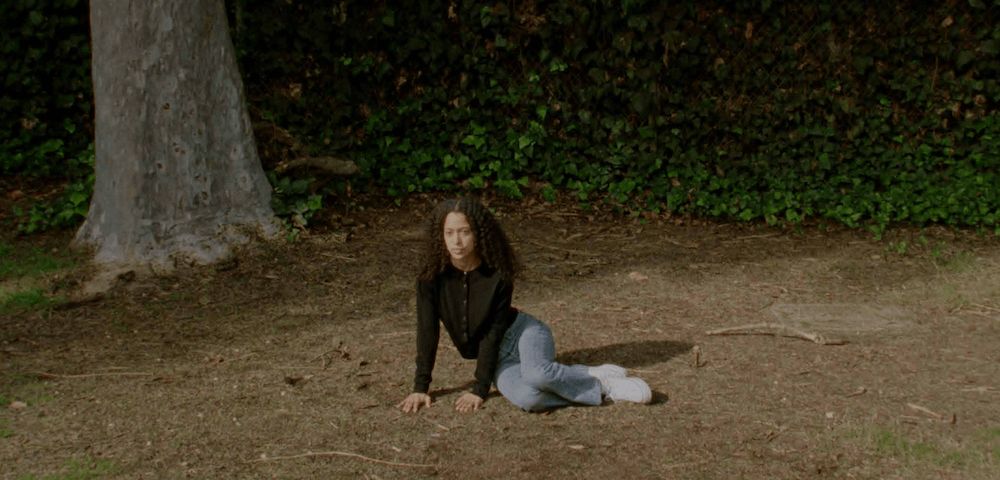
TEST PIECE
2025. 19 min.

Kersti Jan Werdal’s TEST PIECE dismantles cinematic conventions through a disjunctive, non-narrative layering of images, sounds, and text. From an archer in a natural landscape to a theatrical dark void where sounds are described rather than heard, and finally to a diverse collection of source texts narrated in a park, TEST PIECE constructs a dynamic and evolving cinematic space that invites viewers to critically engage with the film’s conceptual and intellectual potential. 
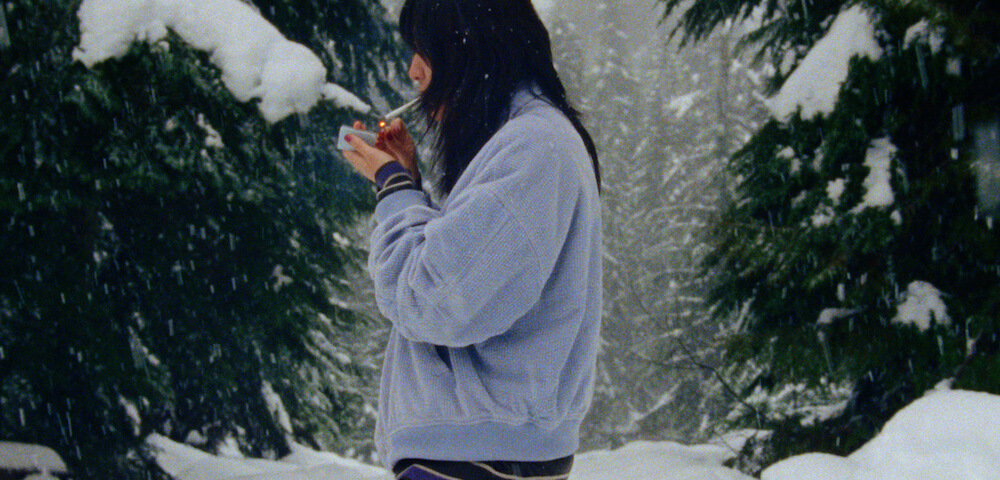
LAKE FOREST PARK
dir. Kersti Jan Werdal, 2021
60 mins. United States.
In English.

SATURDAY, APRIL 19 – 5 PM followed by a discussion with Kersti Jan Werdal moderated by filmmaker Lucy Kerr

ONE NIGHT ONLY!

TICKETS

Kersti Jan Werdal’s official synopsis for LAKE FOREST PARK is deceptively simple, calling it “a coming-of-age story about a group of friends dealing with the secret of a classmate’s death.”

Understated and enigmatic, LAKE FOREST PARK accepts the mystery of everyday life in its fragmented and observational approach. The film’s empty spaces, damp greenery and austere beauty perfectly capture the environment of the film’s Washington state locale, to say nothing of the real-life Lake Forest Park – a suburb just north of Seattle (and, crucially, the filmmaker’s hometown.)

LAKE FOREST PARK is set in the early 21st century; Werdal told an interviewer she was drawn to the era’s lack of social media, and the fact that “Escape and connection had to be accessed through other modes.” But only the closest of watchers will register that context, as Werdal’s bigger project suffuses the eternal ups and downs of the classic American adolescent experience with a palpable sense of melancholy. If not for that undercurrent of mourning – and the filmmaker’s clear fascination with human behavior, down to minute details worked out beautifully with her teenage cast – LAKE FOREST PARK would deserve serious praise as a master class in Pacific Northwestern minimalism (or so-called “slow cinema”.) Beyond that, Werdal’s film is a haunting meditation on grief, and one of the most exciting feature debuts of the decade thus far.

“With LAKE FOREST PARK, I thought of Western music, the first five minutes before the title being the epigraph and the final scene as the coda: ‘a reverberation of something already heard’…. There are certain things I gravitate towards in the edit, such as inconclusive endings, steering away from any fabricated drama, and leaning into restraint rather than spelling out what is happening or why to the audience. I’d prefer the viewer have more agency rather than dictate how they should feel. I’d like the viewer to participate, rather than sit passively.” Kersti Jan Werdal, interview with the Grand Cinema

“LAKE FOREST PARK was photographed on 16mm film, giving it the patina of an aged object (the lovely grain patterns and warm tone here are a far cry from the flat, hard edges and cool colors of much current digital photography). Quite simply, it’s a beautiful object to look at… A very fine film from an exciting young filmmaker.”Daniel Gorman, In Review Online

“If Gus Van Sant can be seen as an influence, this film is arguably the inverse of his PARANOID PARK, wherein a fictitious story was lent legitimacy through the application of a form of documentary realism. Here, a documentary subject is realised through a fiction film method. Closer to reinterpretation than recreation, the film becomes a fabrication responding to reality.”Matt Turner, nonlinearities

screening with
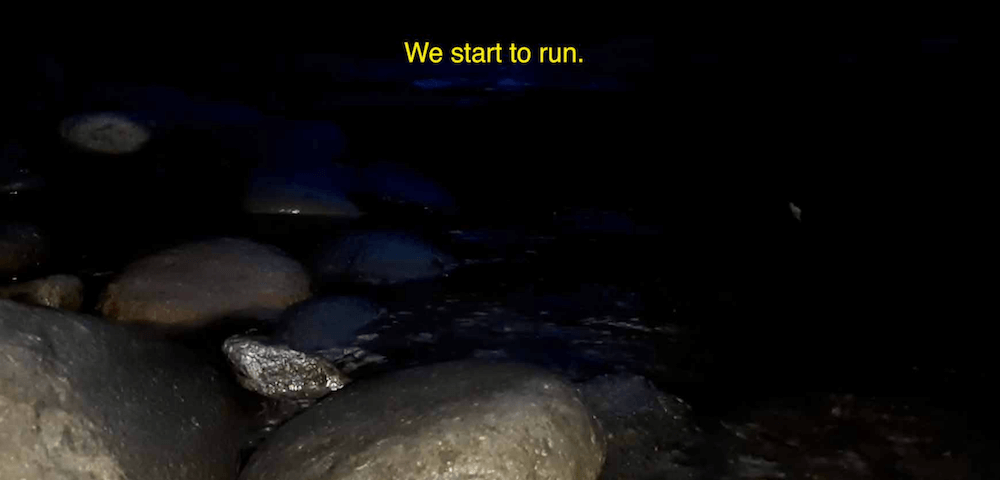
NIGHT RUN
dir. Kersti Jan Werdal, 2023
4 mins. United States.

Memory of a night.

INNEY PRAKASH, a film curator and critic originally from Detroit, Michigan, is the founder and director of Prismatic Ground, an avant-garde film festival in New York City. His previous roles include Co-Director of Programming at Maysles Documentary Center and Curatorial Lead for the San Diego Asian Film Festival. Prakash has also contributed to festivals like Sundance and SXSW. His writings have appeared in Filmmaker Magazine, Film Comment, and several other platforms, reflecting his deep engagement with the film community. He is presently the Film Curator at Asia Society NYC.

LUCY KERR is a filmmaker, artist, and choreographer from Texas and currently based in New York. She was named one of the 25 New Faces of Independent Film in Filmmaker Magazine in 2022. Her debut feature film, FAMILY PORTRAIT, garnered her the Boccalino d’Oro for Best Director at Locarno Film festival, the Best Director Award from Black Canvas Film Festival, the Best Picture, Best Actress, and the Best Artistic Contribution Awards from Hainan Island International Film Festival. The film made its theatrical premiere at Metrograph after making its world premiere at Locarno Film Festival and screening at festivals including Chicago International Film Festival, El Gouna Film Festival, American Film Festival, among others. Kerr’s short films have screened at IFFRotterdam, FIDMarseille, San Sebastian International Film Festival, DocLisboa, and others.

KERSTI JAN WERDAL is a filmmaker whose work centers around collective memory, hidden cultural truths, and place. Demanding the audience take a direct role while viewing, she typically situates specific plot-points opaque, and prefers to pivot away from the expository. Her films focus on off-screen sound and framing of the subject to tell a story, while often working within a structuralist form. 

Her films have shown at IDFA, Camden International Film Festival, Prismatic Ground, Pesaro International Festival, Festival Ecrã, Blum & Poe, Galerie Allen, Anthology Film Archives, Northwest Film Forum, and Metrograph.

Werdal has also collaborated as Editor on films made by other Directors. These works have screened at MoMA, Dokufest International, Visions du Reel, Metrograph, and Ji.hlava. 

She received her BFA from Columbia University in Sociocultural Anthropology and Art History, as well as an MFA in Film/Video from California Institute of the Arts.

Presently, she is in pre-production for her next film, to be shot in Italy this Summer.

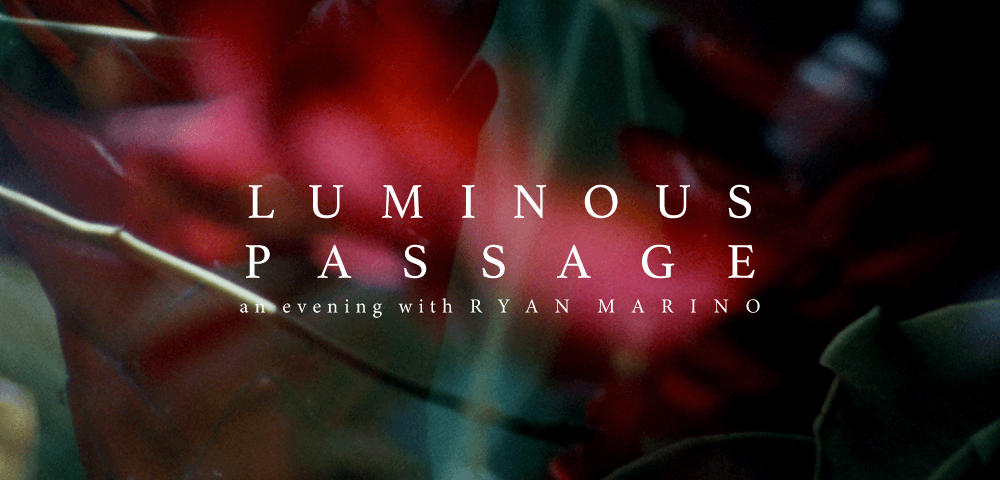
LUMINOUS PASSAGE: An Evening with Ryan Marino

SATURDAY, APRIL 26 – 7:30PM with filmmaker in person for Q+A
ONE NIGHT ONLY!

TICKETS

This April, interdisciplinary artist and longtime friend of Spectacle Ryan Marino joins us for a one night presentation of short films spanning nearly two decades – the first time Marino’s films have been collected in one program. Shot and projected on 16mm film, Marino’s work interrogates the interplay of light and dark, texture and negative space, happenstance and design; he follows in the tradition of avant-garde filmmakers like Nathaniel Dorsky and Rose Lowder, while his practice as a noise artist and recordist of wild field audio informs the relationship between documentation and fragmentation (which, in turn, these highly impressionistic works make into cinema.)

ALL THAT REMAINS
2008. 8 mins. 16mm.

A study in the light, textures and ghosts that make up the abandoned.

​THE LUMINOUS PASSAGE
2010. 6 mins. 16mm.

A meditation on the passage of time and light, an evocation of the season of autumn.

A DISTANT HORIZON
2012. 6 mins. 16mm.

Remote landscapes marred by time unfold in a natural show of light and shadow play.

OLD GROWTH
2014. 8 mins. 16mm.

Amid the arboreal giants and temperate organisms of a primeval rain forest lurks an elusive luminous force.

AURA OF UNCERTAINTY
2016. 6 mins. 16mm.

Ominous passages of time and light provide a fleeting glimpse into the unknown.

DEPTHS
2020. 5 mins. 16mm.

Traversing the darkness and emerging into the light.

RADIANT FORMS
2022. 7 mins. 16mm.

Luminous forms merging in time.

HALF LIGHT
2023. 10 mins. 16mm.

Shot over a period of three years in a single interior space, this film explores sensory perception through the textural surface of expired film stock, light and layered images. Ephemeral moments meld into voids of grain.​

THE VISIBLE MATERIAL
2024. 8 mins. 16mm.

Through means of rephotography and refracted projection, the movements and luminescent surfaces of Berlin’s Alexanderplatz are transformed into vibrant fields of moving color.

RYAN MARINO is a New York–based artist working with film and sound. His 16mm films have screened at film festivals and venues worldwide, including: Anthology Film Archives, Crossroads, New York Film Festival, Milwaukee Underground Film Festival, Uplink, RPM Festival, San Francisco International Film Festival, WNDX Festival of the Moving Image, Fracto Experimental Film Encounter, Transient Visions, Celluloidra Revolverrel, Ribalta Experimental Film Festival, Spectacle Theater, Engauge Experimental Film Festival and the Pacific Film Archive.

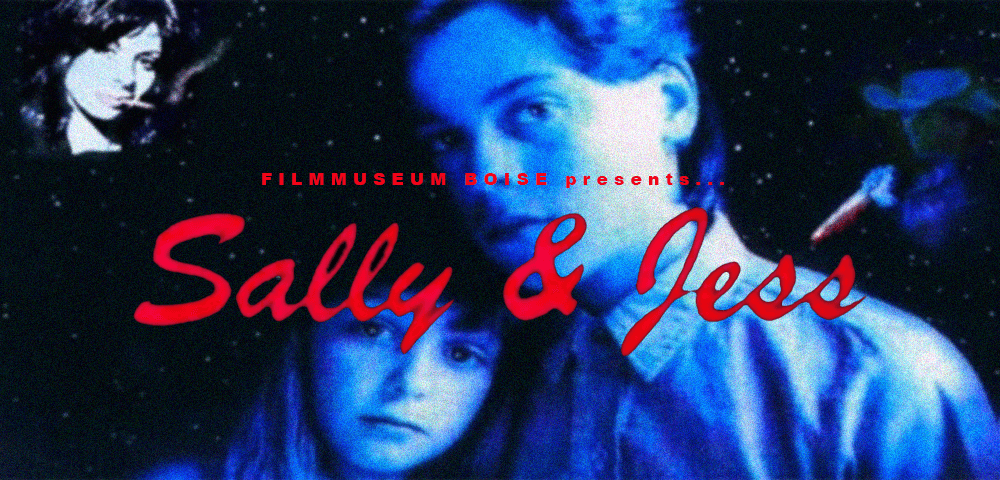
FILMMUSEUM BOISE PRESENTS: SALLY & JESS

SALLY & JESS
dir. John Wintergate, 1989
United States. 94 mins.
In English.

SATURDAY, APRIL 12 – 5pm – ONE NIGHT ONLY!

TICKETS

Spectacle is thrilled to collaborate with our friends from Filmmuseum Boise on a rare screening of SALLY & JESS, John Wintergate’s little-seen (and Idaho-shot) followup to the infamous BOARDINGHOUSE.

A “family film” in content and production, SALLY & JESS is John Wintergate’s unreleased follow-up to BOARDINGHOUSE, his noted 1982 SOV feature. Filmed in 1989 in McCall, Idaho, the film follows the titular brother and sister (played by Wintergate’s children, Shanti and Kodey) as they navigate the fallout of their parents’ (Wintergate and his wife, Kalassu) deaths, fleeing from foster care while a child murderer operates in the area.

Less a horror film than an adventure film with some peril (a specialty of the Mouse House once upon a time) the film is at its best when it’s focused on the Wintergate family spending time together and with friends. It uses the big skies and nearby swaths of forest to make the movie feel larger than its budget. The close knit nature of the small town, pop. 2000, where it was made manifests on screen as actual community resources assemble to aid in the fictional search for the runaways.

SALLY & JESS is a snapshot of a time before the 90s boom turned “indie film” into a cottage industry where you follow every book and manual, trying your best to pass for legitimate studio product, hoping to be rise within reach of the brass ring and cash in on the promise of fame and acclaim, when making an independent movie could simply be a novelty, made for the hell of it, something you show to your friends, and then years later reminisce, “remember when they made that movie in town? What a time that was.”

“Idaho sees a lot of filmmaking among the locals, but not a lot of filmgoing. Until recently, the only repertory screenings run would be the yearly reruns of the usual franchise titles. Filmmuseum Boise (and its earlier iterations) was started to fill the void in film programming. If the only way to view a film I would see in NYC is to run it myself, then I guess that’s what I gotta do. I am very pleased to flip things around in this case and bring an Idaho film to the city.”Alex Hansen, founder + curator of Filmmuseum Boise