NOSTOS: THE RETURN

NOSTOS: THE RETURN
(NOSTOS: IL RITORNO)
Dir. Franco Piavoli, 1989
Italy. 87 min.
In a fictional language with no subtitles.

SATURDAY, AUGUST 1 – 7:30 PM
WEDNESDAY, AUGUST 19 – 7:30 PM
FRIDAY, AUGUST 28 – 7:30 PM
TICKETS

Sing in me, Muse, and through me tell the story
of that man skilled in all ways of contending,
the wanderer, harried for years on end
—Robert Fitzgerald

Sing to me of the man, Muse, the man of twists and turns
driven time and again off course
—Robert Fagles

Tell me about a complicated man.
Muse, tell me how he wandered and was lost
—Emily Wilson

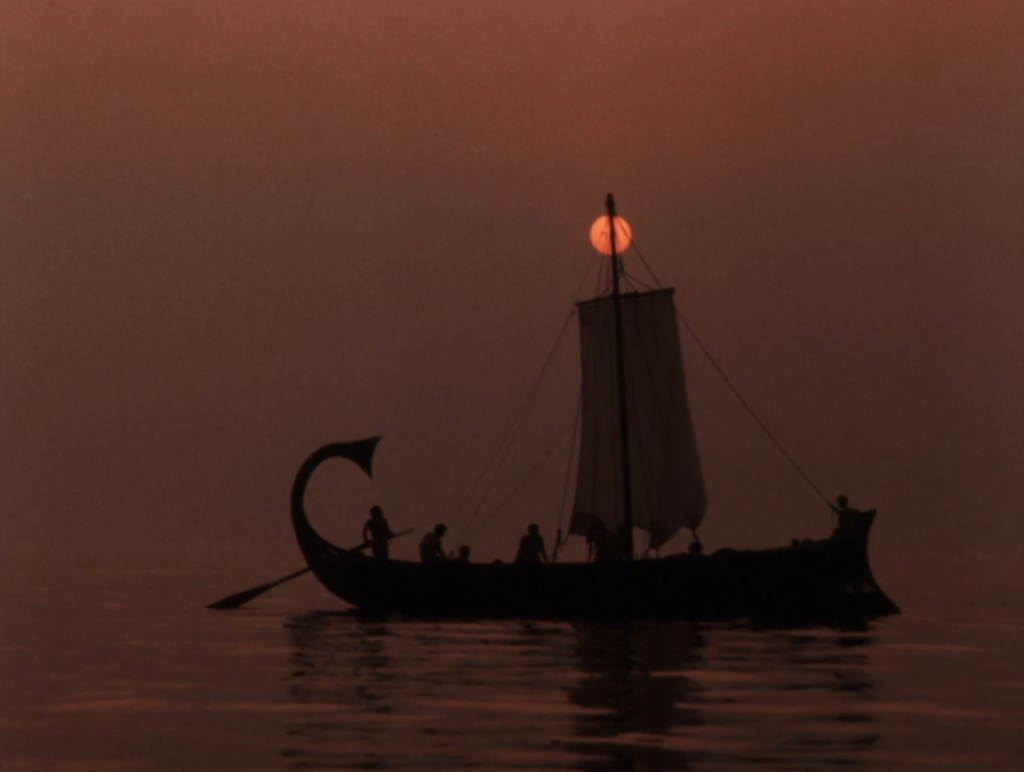
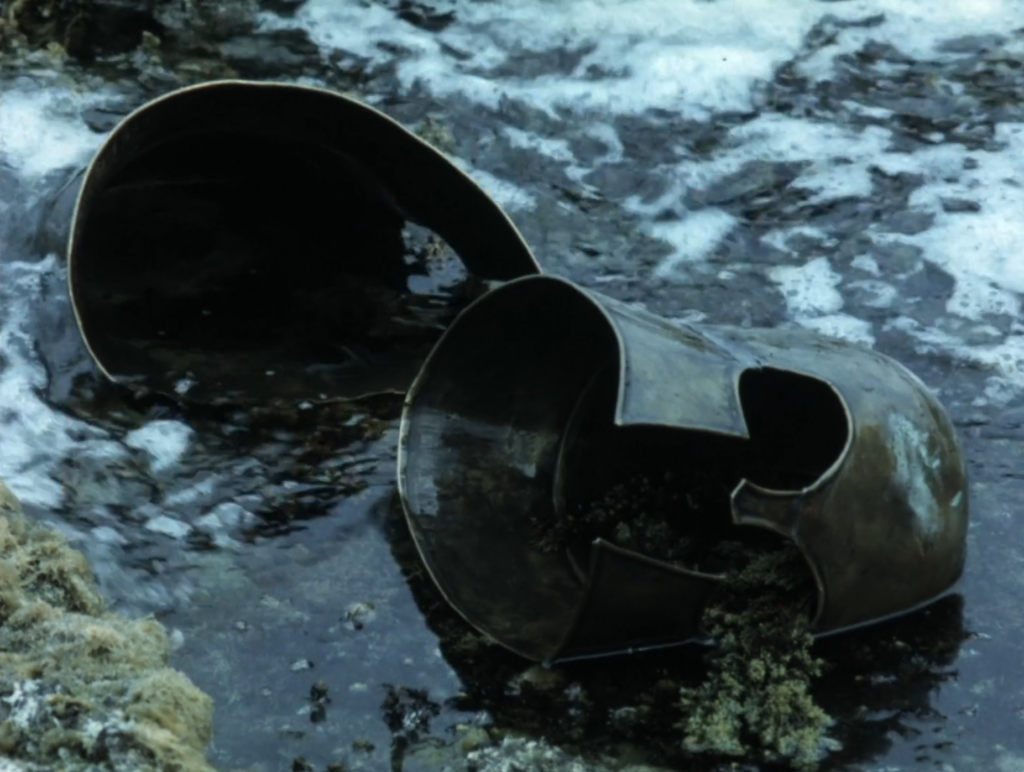
For millennia, interlocutors have found diverse ways to interpret The Odyssey. Franco Piavoli’s version of the Homeric epic (his first fiction feature) translates its poetry through purely cinematic terms. The film forsakes literal intelligibility, its scant dialogue delivered in a conlang patois of dead languages, all unsubtitled. Piavoli takes for granted that we all know the story of Odysseus’ long journey home, even if we only recognize the broad strokes from its inescapable osmosis into popular culture. The movie’s episodes freely remix elements of the poem, its characters and events recalling rather than directly adapting the text, evoking the questing protagonist’s jumbled memory.
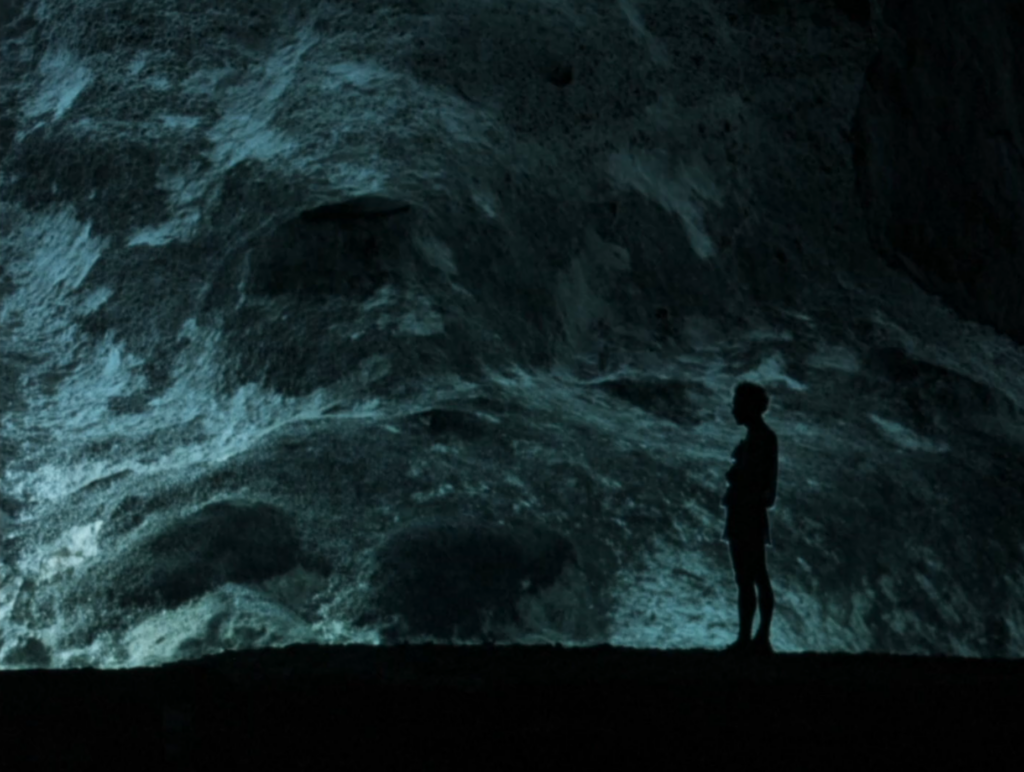
Piavoli aimed to create symphonic cinema, to express the timeless tale through vivid sensory experiences—the wine-dark sea, the terror of nature, the dread of war trauma, and above all else, the stubborn ache of homesickness. He conveys the myth in human terms while losing none of its wonder.

With a certain other adaptation of The Odyssey doing reasonably well around the world, Spectacle is thrilled to present this offbeat alternative to the blockbuster. Seldom screened and absolutely indelible, NOSTOS is not to be missed.

Special thanks to Steve Macfarlane and Cinecittà.
INCUBUS

INCUBUS
(INKUBO)
Dir. Leslie Stevens, 1966
United States. 74 min.
In Esperanto with English subtitles.

TICKETS

Thursday, October 2 – 10PM
Tuesday, October 7 – 7:30PM
Friday, October 17 – 5PM
Thursday, October 30 – 7:30PM

Malbono neniam estis tiel alloga

Living as a Jew in the Russian Empire through the latter half of the 19th Century, ophthalmologist L.L. Zamenhof was dismayed at the innumerable conflicts around him spawned by ethnic tensions, religious differences, and rising nationalist sentiment. Convinced that world peace would be achieved if disparate peoples could communicate easily with each other, Zamenhof developed Esperanto to act as a universal auxiliary language. His pet project became the center of a global community of goodwill and intercultural communication in the early 20th Century, a poignant example of the Utopian aspirations of the age (the word esperanto means “one who hopes”). Esperanto remains the most widely spoken constructed language in the world.

In 1965, after the cancellation of his television series THE OUTER LIMITSLeslie Stevens began production on a horror film to keep his crew (which included future three-time Oscar-winning cinematographer Conrad Hall) working. Stevens figured that having all the dialogue spoken in Esperanto would be a neat way to inject some uniqueness into the picture, and would help it get into arthouses, “where subtitles were.” The distinctly OUTER LIMITS-esque story features a village with a well that yields healing waters, attracting a soldier, Marc, who seeks to recover from his war wounds. A local succubus, Kia (Stevens’ wife Allyson Ames), tries to tempt Marc and secure his soul for Hell, but since he’s played by William Shatner, she naturally falls for his charms instead, incurring the wrath of the titular incubus (Alain Delon’s stunt double/bodyguard Milos Milos).

Shot in two weeks in NorCal, INCUBUS ultimately premiered to jeers from Esperanto speakers at the 1966 San Francisco Film Festival. The performers all learned their lines phoetically, which is obvious even if you don’t know the language. Still, Stevens was correct that it lends the movie an eerie, otherworldly quality. The film only received a theatrical run in France before ignominiously fading into a curio. Stevens blamed the lack of interest not on the movie’s dialogue being spoken in what was essentially an alien language, but on its assocation with Milos, who had killed his lover Barbara Ann Thomason (Mickey Rooney’s estranged wife) and then himself. Shatner would, of course, in short order become involved with a much better-known Utopian project. (By the way, the Esperanto term for “a blade”? Klingon.) Esperanto cinema never really caught on–INCUBUS remains one of only a handful of features shot wholly in the language–but Zamenhof’s dream endures.

INCUBUS was believed lost for decades before a well-worn 16mm print was discovered in the Cinémathèque Française in the late ’90s, which served as the basis for a new 35mm version and a DVD release. A 35mm copy in much better condition was found in 2023, and Le Chat Qui Fume used it to restore the film in 4K. Spectacle is excited to present the New York premiere of this restoration.

Thanks to Phil Ginley, Esther Rosenfield, and the American Genre Film Archive.