
This June, Spectacle proudly hosts a trinity of films from polymath filmmakers Robinson Devor and Charles Mudede, both based in the Pacific Northwest. While Devor broke onto the indie scene with his gloriously scrappy 1999 adaptation of pulp novelist Charles Willeford’s THE WOMAN CHASER starring Patrick Warburton, Mudede has chiseled a mountain of idiosyncratic culture criticism (on subjects including but by no means limited to film) alongside hyperlocal reportage with an unapologetic Frankfurt School bent, much of it for Seattle’s iconic alternative weekly The Stranger. If you grew up in Seattle these last 25 years, you’ve probably read Mudede, but opportunities to see his and Devor’s films can be elusive. In advance of the duo’s new documentary SUBURBAN FURY – about Sarah Jane Moore’s 1975 attempt to assassinate Gerald Ford – we are honored to revisit their first two collaborations, POLICE BEAT and ZOO. The films are wildly different despite the fact each riffs directly on real-life events in the Puget Sound area, collapsing the easy remove of dramatic reenactment or durable genre tropes; the series is rounded out by a limited engagement of Mudede’s 2020 directorial debut THIN SKIN. The filmmakers will join us for select Q+As after each film.
Special thanks to Charles Mudede, Robinson Devor and Bayview Entertainment.
POLICE BEAT
dir. Robinson Devor, 2005
United States. 90 min.
In English, and Wolof with English subtitles.
WEDNESDAY, JUNE 4 – 10 PM
SATURDAY, JUNE 14 – 3 PM followed by Q+A with Charles Mudede and Robinson Devor
MONDAY, JUNE 16 – 7:30 PM
SATURDAY, JUNE 28 – MIDNIGHT
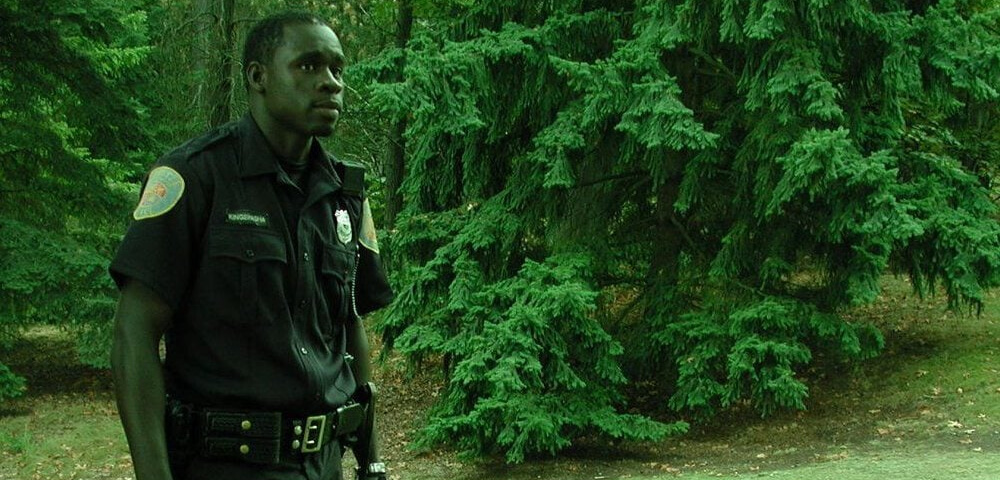
Adapted from Mudede’s eponymous police blotter column in The Stranger, Devor’s second feature follows the misadventures of a West African immigrant-turned-bike cop named Z (played by professional footballer Pape Sidy Niang) in Y2K-era Seattle. After his white girlfriend leaves town on a camping trip with another man, Z experiences a bigger detachment from his alleged calling, hollowing out the high-minded principles of law and order he nevertheless espouses in a voiceover monologue across the film (crucially delivered in his native language of Wolof). The banality of his work leads to an unvarnished, Kafkaesque meditation on Seattle that is starkly beautiful yet also gives face to its bourgeois indifference. This is a major switch-up from the customary Hollywood depiction of the city as a liberated technopolis, and also rebuffs Seattle’s self-image as a progressive melting pot; POLICE BEAT’s fearless depiction of Z’s alienation anticipates what we call inceldom today, as well as the overall atomization of culture that would ramp up in the 2010s and 2020s.
“POLICE BEAT is an object so gorgeously odd, and so completely at peace with its own oddness, it’s hard to compare it to anything else. One could say a kinder, gentler David Lynch, but that skews the emphasis a little too much toward the shock of the otherworldly. Devor steps into Lynchian Americana, but chooses to keep one foot in the real. The result is a deceptively quiet, and completely genuine, thing of beauty.” – Chris Chang, Film Comment
“It’s enough of a feat to find genuinely new ways of rendering heartbreak and longing, but POLICE BEAT manages that and more. Gorgeously photographed and startlingly addictive, mesmerizing and mysterious, Robinson Devor’s unlikely-sounding triumph is a sensual immersion into the consciousness of a lovelorn Senegalese-American cop in Seattle.” – Nicolas Rapold, New York Sun
ZOO
dir. Robinson Devor, 2007
United States. 80 min.
In English.
FRIDAY, JUNE 6 – MIDNIGHT
MONDAY, JUNE 9 – 7:30 PM
TUESDAY, JUNE 17 – 7:30 PM followed by Q+A with Charles Mudede and Robinson Devor
SATURDAY, JUNE 28 – 10 PM
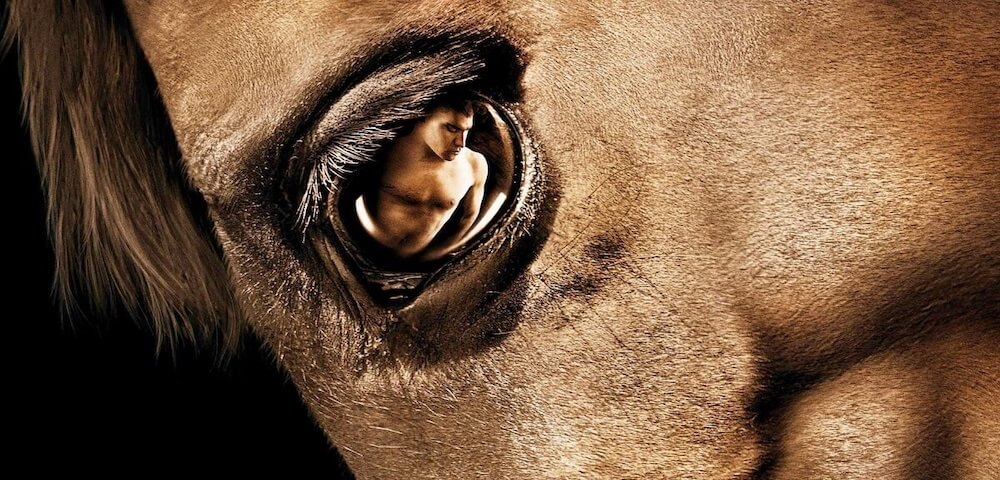
In 2005, Kenneth Pinyan, a Boeing engineer in Enumclaw, WA died after suffering injuries from – yes – being penetrated by a horse. After his body was dropped off anonymously at the nearby hospital, the authorities retraced his network of connections to uncover a group (some would even say a community) of Seattle-area men who used the Internet to organize meetups involving farm animals; they called themselves “zoos”, short for zoophiles. The eyebrow-raising story led Washington lawmakers to make bestiality a felony; nobody followed it closer than The Stranger contributor Mudede, who kept on the case throughout 2006 (and beyond), resulting in his groundbreaking journalistic essay The Animal In You.
In telling the movie version of this story, Mudede and Devor sought to meet the subject matter with requisite seriousness. Their attempts to engage Pinyan’s real-life zoophile community were mostly unsuccessful, but three audio interviews with zoos identified only by their online monikers (Pinyan’s was “Mr. Hands”, which is the only way he is referred to in ZOO) form the backbone for the film’s impressionistic reenactment sequences. The filmmakers’ disinterest in true-crime salaciousness is obvious; ZOO demonstrates their shared refusal to sacrifice aesthetic style for ripped-from-the-headlines urgency. As years go by, it’s not hard to understand why ZOO was hotly discussed after its premiere at the 2007 Sundance International Film Festival, nor why it has been largely on the margins since. ZOO is a docufiction hybrid (from before the term became a total cliche) that refuses to compromise: Devor and Mudede take things way beyond the facile punchline of the film’s inciting news story, opting instead to receive their interviewees as human beings, warts and all, resulting in a haunting (and gnarly!) viewing experience.
‘”This topic is not something people want to think about,” Mr. Devor said in an interview at Sundance, summing up both the challenge of marketing the film and the reason he and his writing partner, Charles Mudede, were compelled to make it. Speaking at the premiere Mr. Mudede called ZOO a “thought experiment.” He added, “If someone can go there physically, I can go there mentally… It was fascinating that there was a community of close friends, that there were basic human interactions happening alongside things that seemed completely alien,” Mr. Mudede said.
ZOO minimizes its freak show aspect by emphasizing the coexistence of the mundane and the bizarre, a strategy it shares with the pair’s 2005 Sundance entry, POLICE BEAT, an enigmatic reverie inspired by Mr. Mudede’s crime-blotter column. What emerges here is a sad, even tender portrait of a group of men who met from time to time at a farm, where they would drink slushy cocktails, watch some television and repair to the barn to have sex with horses. The film’s nonzoophile perspective is provided by Jenny Edwards, the founder of a local rescue organization called Hope for Horses, who helped investigate potential animal abuse in the Enumclaw case. “I don’t yet quite know how I feel about that,” she says in the film, referring to the intense feelings that zoophiles claim to have for animals, “but I’m right at the edge of being able to understand it.” ZOO invites the viewer out onto that ledge of near comprehension.’ – Dennis Lim, The New York Times
THIN SKIN
dir. Charles Mudede, 2020
United States. 90 min.
In English.
FRIDAY, JUNE 6 – 10 PM
WEDNESDAY, JUNE 11 – 10 PM
FRIDAY, JUNE 20 – MIDNIGHT
SATURDAY, JUNE 28 – 7:30 PM followed by Q+A with Charles Mudede
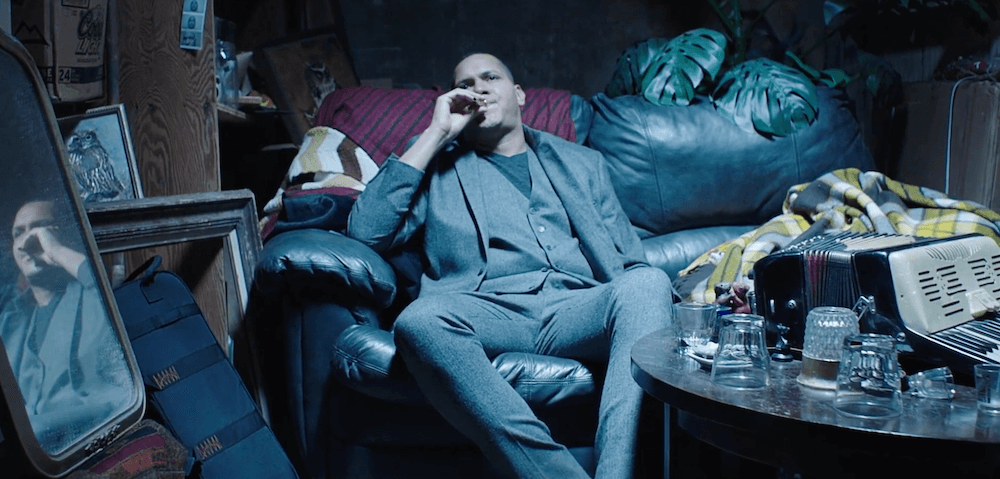
Charles Mudede’s first solo outing as director stars Ahamefule Joe Oluo and their sister Ijeoma Oluo (author of So You Want To Talk About Race) as fictionalized versions of themselves, grappling with the legacy of their long-absent father Nigerian father alongside the interminable fallout from Aham’s recent divorce. Given the drudgery of Aham’s concentration-cubicle office job, it seems his only respite comes from playing trumpet at a small nightclub in South Seattle; THIN SKIN introduces itself as a droll slice-of-life dramedy (ably assisted by Oluo’s friends, the comedians Hari Kondabolu and Dwayne Kennedy) before permutating into something far weirder, closer to a horror film about the real-world consequences of unprocessed family trauma. Writing to Stranger critic Jas Kiemig, Mudede said “A key feature of my film THIN SKIN is that no attempt was made to make it familiar to a person who has not spent some time in, first, Seattle, and, second, the Pacific Northwest. This is the lonely region of America I really love… Its story about Ahamefule Oluo and the ghost of his Nigerian father is also, visually, a story about experiencing this part of the world, which used to not have so many hot days.”
Described by its makers as “a music-infused drama about keeping it together when you’re falling apart”, THIN SKIN’s screenplay credit is shared by Ijeoma, Mudede, and Lindy West, creator of Shrill and one of Mudede’s longtime collaborators at The Stranger. The film as developed off of Oluo’s 2014 experimental opera “Now, I’m Fine” which, itself, went on to perform at theater festivals (including Under the Radar in New York) and was also adapted into the This American Life episode “The Wedding Crasher”. Shot in 2018, THIN SKIN’s intended 2020 release was severely hampered by the COVID-19 pandemic, a setback Mudede et al met with characteristic resourcefulness. We are honored to give it this limited engagement at Spectacle.
“THIN SKIN moves in directions you couldn’t imagine and leaves you contemplating the connections between family, responsibility, and doing what you love… The film was fully shot in South Seattle and features beautiful shots of the city throughout. In one scene, Oluo sits on a bus, as the camera pans outside to a fog-filled South Jackson Street. But this is not an artistic portrait of Seattle; this is a portrait of an artist in Seattle. The city itself isn’t overly romanticized. It feels like an authentic view through the eyes of an artist struggling to balance passion for the arts with the reality of an unfulfilling corporate job.” – Mike Davis and Sarah Leibovitz, KUOW
CHARLES TONDERAI MUDEDE is a Zimbabwean-born cultural critic, filmmaker, college lecturer, and writer. He is the Senior Staff writer of the Stranger, a lecturer at Cornish College of the Arts, and has collaborated with the director Robinson Devor on three films, two of which (POLICE BEAT and ZOO) premiered at Sundance, one of which (ZOO) screened at Cannes, and the most recent of which, SUBURBAN FURY, premiered at New York Film Festival. (POLICE BEAT is now part of MOMA’s permanent collection.) Mudede’s essays regularly appear in e-Flux and Tank Magazine.
ROBINSON DEVOR‘s newest feature documentary SUBURBAN FURY debuted at the 2024 New York Film Festival and has gone on to win the Grand Prize for Documentaries at the 2025 Seattle International Film Festival. The film achieved a 100% percent Rotten Tomatoes score, with Variety calling it “a rapt documentary thriller.” Devor’s 2018 feature documentary POW WOW: AN ANTHROPOLOGICAL STUDY OF THE MEMBERS OF THE INDIAN WELLS COUNTRY CLUB debuted at Locarno and then at Lincoln Center/Art of the Real; the film was hailed by New Yorker film critic Richard Brody as “one of the best films of this or any year”, while Slate called the multi-character film “ambitious, surreal and intoxicating”. Named one of Variety’s “10 Directors To Watch” for his directorial debut, Devor premiered THE WOMAN CHASER at The New York Film Festival and then at Sundance. His first short documentary ANGELYNE was a half hour, black and white 16mm film capturing a day in the life of the eponymous LA billboard queen. The Village Voice called it “a visual knockout”.