NUMBSKULL REVOLUTION

NUMBSKULL REVOLUTION
dir. Jon Moritsugu, 2026.
US, 95 min.

$10 SPECIAL EVENT

NEW YORK PREMIERE!
FILMMAKER IN PERSON

FRIDAY, MARCH 13 — 7:30 PM
SATURDAY, MARCH 14 — 7:30 PM

We can’t believe we’re saying it—Spectacle’s beloved purveyor of scum-at-large (MOD FUCK EXPLOSION, TERMINAL USA) is headed back to the theater with his first new work in over a decade. We’re thrilled to welcome a true original in person for the New York premiere of NUMBSKULL REVOLUTION, a fully-realized, years in the making DIY opus that concludes Moritsugu’s 29-years of collaboration with his ex-partner, the artist Amy Davis.

Davis stars alongside eternal west coast punk heartthrob James Duval as a duo of warring conceptual artists in a dystopian future plagued by the cyberdrug “Skullfuck.” Shot over a period of two weeks in Marfa, Texas and Sante Fe, New Mexico in a collage of HD and miniDV, NUMBSKULL REVOLUTION is a rapturously colorful satire, full of the filmmaker’s unmistakable capability for endless invention, and a dagger-like salute to the stupidity of it all.

The director describes the film as “a riff on the absurdity of art, warfare of people, material control/secular terror, addictions of every genre, and self-actualization thru internal Jungian conflict,” or more succinctly, “a punk rock BLADE RUNNER for artists.”

“Flash-and-trash attitude… all the ingredients of good revolutionary cinema.”
New York Post

“Moritsugu is a true visionary who knows how to meld images and sound.”
    –Los Angeles Times


STRAY CAT ROCK

TICKET LINK & PROGRAMMING DATES TO BE ANNOUNCED IN APRIL

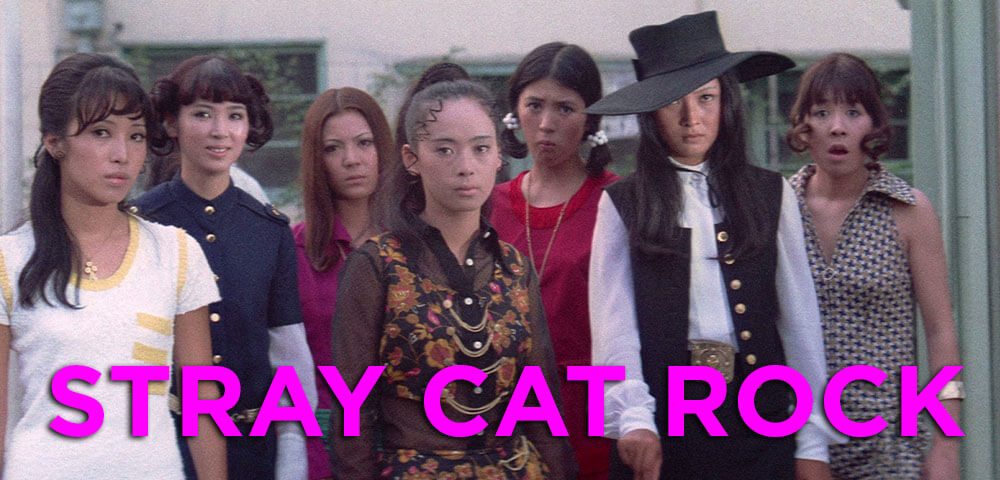
Filmed in rapid succession throughout 1970, the STRAY CAT ROCK series captures a moment of cultural upheaval in post-occupation Japan. The five-film series follow the Alleycats, a girl gang led by the magnetic Meiko Kaji (who goes by many names throughout the series, and would soon go on to star in the iconic LADY SNOWBLOOD (1973) and FEMALE PRISONER SCORPION series (1972-73)). STRAY CAT ROCK latched onto the booming popularity of yakuza films, infusing them with a feminist countercultural energy reflecting the international women’s movement and hippie culture brought over to Japan courtesy of the lingering influence of the American occupation. Each installment of the series tackles the politics of its time, and this April, Spectacle is proud to present three of these films and their accompanying themes: racism in SEX HUNTER, student-led anti-war movements in MACHINE ANIMAL, and the enduring power of countercultural ideals in BEAT ’71. Kaji’s character lives by a strict code of honor, leading the Alleycats through a landscape where Americana, youthful rebellion, early psychedelic rock, club culture, and traditional Japanese values collide in an explosion of pop exploitation.

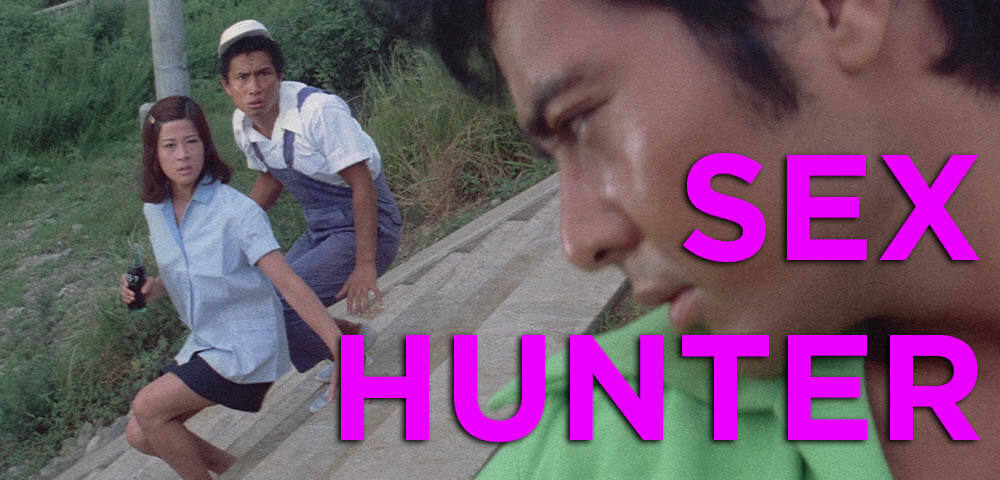
STRAY CAT ROCK: SEX HUNTER
Yasuharu Hasebe, 1970.
Japan, 86 minutes.
In Japanese with English subtitles.

Shot in a small coastal town sitting in the shadows of the Yokosuka US naval base, STRAY CAT ROCK: SEX HUNTER follows the Alleycats as they engage in a turf war with the Eagles, a band of racist macho gangsters. When Mari, one of the Alleycats, rejects the advances of Susumu, an Eagle, because of her love for her half-Black boyfriend Ichiro, the personal slight enrages Baron, the leader of the Eagles. Haunted by memories of mixed race men raping his sister when he was a child, Baron launches a terror campaign to violently purge the town of mixed race men, starting with Ichiro. As the Eagles’ hateful harassment escalates the Alleycats fight back, forging an alliance with the mysterious drifter Kazuma to combat the rising tide of racial violence and help him find his long lost sister.

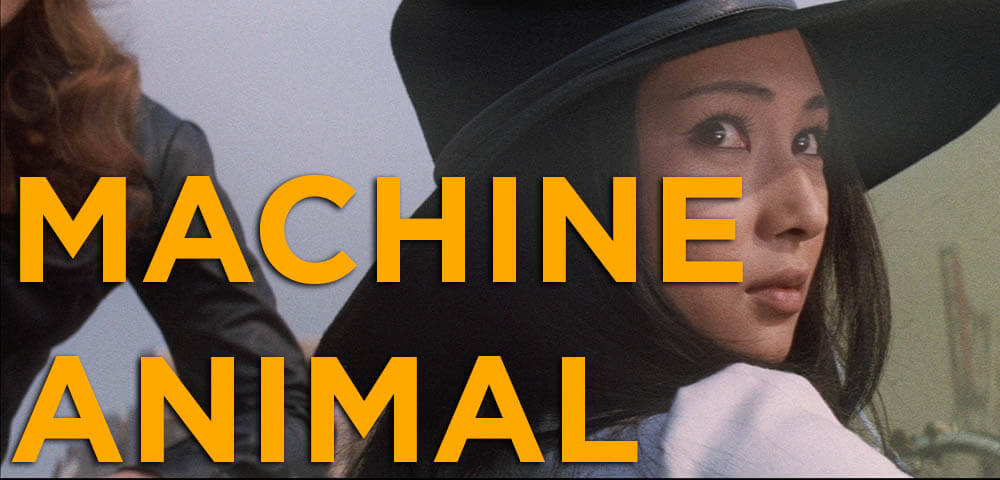
STRAY CAT ROCK: MACHINE ANIMAL
Yasuharu Hasebe, 1970.
Japan, 82 minutes.
In Japanese with English subtitles.

The fourth STRAY CAT ROCK film to be shot & released in 1970, MACHINE ANIMAL begins with an Alleycats gang member stealing a package of LSD pills from a Vietnam war deserter trying to sell the drugs with his buddies so they can buy boat tickets to Sweden and flee Japan. The Alleycats never meant to steal a man’s freedom: after learning the truth — that the drugs are his only ticket to safety — their leader, Maya, is wracked with guilt. She rallies her fierce biker gang to do whatever it takes to make things right and help the boys sell their drugs. Their plans quickly spread throughout the underground, and rival gangs soon descend on them to snatch up the pills for themselves. What begins as an act of solidarity quickly becomes a free-for-all, forcing Maya and her crew to fend them off while racing against time to secure the boy’s escape.


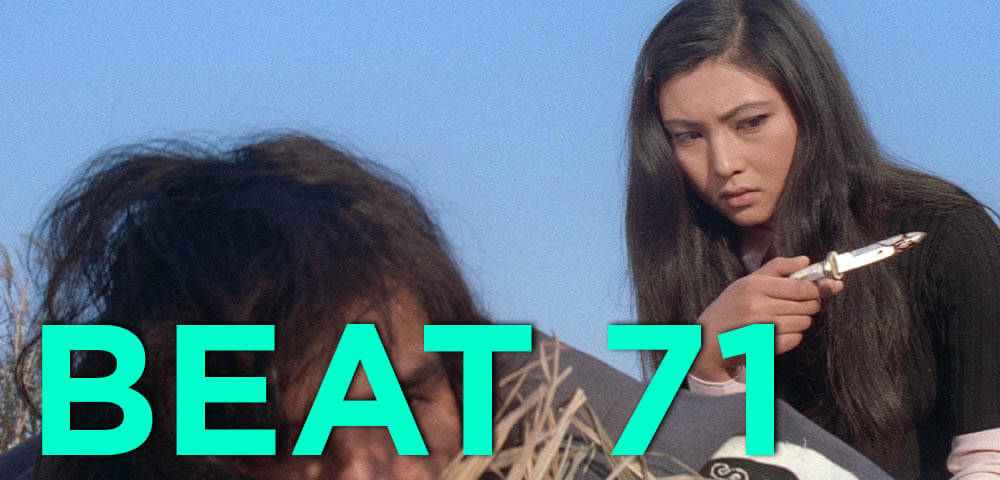
STRAY CAT ROCK: BEAT ‘71

Toshiya Fujita, 1971.
Japan, 87 minutes.
In Japanese with English subtitles.

After getting framed for a murder her boyfriend Ryumei committed, Furiko finds herself incarcerated in the Women’s Remand Center. Two months later, she and her chosen sister Ayako escape. While Ayako heads to Shinjuku to rally Furiko’s crew, Furiko returns to her hometown to find Ryumei and confront him. Things get complicated when Furiko and her gang learn Ryumei is poised to inherit his family’s business empire, while his father (who framed Furiko for the murder) is running for mayor: his campaign would be wrecked by a murder scandal, so he kidnaps Furiko and holds her hostage in his mansion. As Furiko’s freewheeling crew schemes to rescue her, they become entangled in a web of political intrigue and corrupt cops. Much lighter fare than the rest of the STRAY CAT ROCK series, BEAT ’71 builds to an explosive climax at an abandoned mine transformed into a fake Western film set just outside of town where hippies, a biker gang, and chimpanzees face off amidst gunfights and dynamite.


SUKEBAN DOYŌBI

SATURDAY, MARCH 28 – 1 PM – 1:30 AM

BUY TICKETS

COME CELEBRATE THE END OF WOMEN’S HISTORY MONTH WITH YOUR BESTIES AND A KNIFE FIGHT!

SPECTACLE THEATER IS DELIGHTED TO PRESENT 12½ HOURS OF TITS, HONOR, AND VENGEANCE

Born the love child of 1960s international feminist movements & student anti-war protests in Japan, the delinquent girl boss and her crew were abandoned in a ditch by their parents and raised by the skyrocketing popularity of yakuza films during the same decade. Dripping cool girl energy in chic outfits (sometimes they even match ˖⁺‧₊˚☆), racing motorcycles, torturing their enemies and dancing until dawn at the club, these aggressive women live by a strict code of honor where breaking the rules is met with violent punishment by the hands of your sisters– or a fight to the death.

IF MEN CAN BE HONORABLE SCUM, THEN WHY CAN’T WE?

All day passes $25, $5 per screening at the door.

1 PM

XXXXXX
1987
, 93 minutes.

STUPID OVERGROWN MAN-CHILDREN
PLAYING
STUPID FASCIST GAMES

3 PM

ANGG
A VERY SPECIAL SUKEBAN EDITION

5:30 PM

XXXXXXXXXXXX
1971, 84 minutes.

OLD GRUDGES, NEW GRUDGES.
WHO WILL MEET THEIR DEATH BY THE SEA?

8 PM 

XXXXXXXX
1973, 83 minutes.

I’LL HELP YOU GET YOUR REVENGE,
BUT DON’T FUCK WITH MY MONEY.

10 PM

XXXXXXXXXXXX
1971, 86 minutes.

MOTORCYCLE MADNESS!

IF YOU WANT TO WIN,
YOU BETTER NOT CUM. 

MIDNIGHT

XXXXXXXXXXXXX
1973, 89 minutes.

IF YOU WEREN’T SO PATHETIC AND HORNY
YOU WOULDN’T BE SO EASY TO BLACKMAIL

WE’RE NOT THE KIND OF GIRLS
YOU’RE USED TO PUSHING AROUND.

warning: some films contain scenes of sexual violence.

ANGST BY AUGUST: ZAPPA and TWIST AND SHOUT

ZAPPA
Dir. Bille August, 1983.
Denmark. 102 min.
In Danish with English subtitles.

SATURDAY, FEBRUARY 7 — 7:30 PM
THURSDAY, FEBRUARY 12 — 10 PM
MONDAY, FEBRUARY 16 — 10 PM
THURSDAY, FEBRUARY 26 — 7:30 PM

BUY TICKETS

Danish director Billie August’s (Academy Award and Palme D’or winning director of PELLE THE CONQUEROR) coming-of-age dramas, ZAPPA (1983) and TWIST AND SHOUT (1984), offer a tender yet unflinching vision of adolescent passion, cruelty, and discovery set to the sounds of early rock ‘n’ roll. Overlooked for decades, these gorgeously photographed and dramatically nuanced films—breathtaking in their candor and heartbreaking in their sincerity–are here for rediscovery in stunning new transfers, along with newly produced bonus features, that help bring August’s powerful films to audiences anew.

Three young boys, Bjørn (Adam Tønsberg), Steen (Peter Reichhardt), and Mulle (Morton Hoff), navigate the transition from boyhood to adolescence in Bille August’s stunning, period drama. Steen and Bjørn have formed their own small gang, and invite Mulle to join, but humiliation, cruelty, and violence follow as Steen leads Bjørn further into his loveless, frustrated, and, ultimately, sadistic world. Gentle, funny, honest, and fearlessly dark, ZAPPA is a richly textured and unforgettable, novelesque film.

TWIST AND SHOUT
Dir. Bille August, 1984.
Denmark. 108 min.
In Danish with English subtitles.

MONDAY, FEBRUARY 2 — 7:30 PM
SATURDAY, FEBRUARY 7 — 10 PM
WEDNESDAY, FEBRUARY 25 — 10 PM
FRIDAY, FEBRUARY 27 — 5 PM 

BUY TICKETS

Denmark’s biggest indigenous hit at the time of its release, TWIST AND SHOUT once again follows Bjørn (Adam Tønsbrerg). During the explosion of Beatlemania in Europe, Bjørn plays drums in a rock ‘n’ roll band while Erik (Lars Simonsen) must care for his mentally ill mother. Amid the excitement of music, romance, and sex, the young men must confront the harsh realities of the adult world in director Bille August’s stark and beautiful film.

Special thanks to Altered Innocence.


DECODER

DECODER
Dir. Muscha, 1984.
West Germany. 87 min.
In German, English, and Portuguese.

SATURDAY, FEBRUARY 7 — 5 PM (with MUZAK on 16mm)
TUESDAY, FEBRUARY 10 — 7:30 PM
THURSDAY, FEBRUARY 12 — 7:30 PM (with MUZAK on 16mm)
WEDNESDAY, FEBRUARY 25 — 7:30 PM

BUY TICKETS

The early 80s of West Berlin was accessible to David Bowie and Nick Cave, however it remained a secluded scene unto itself, a fallen city shared between the French, the Brits, and the Americans. Much of the architecture was unchanged from the war, and a post-war generation of musicians and artists were able to live cheap, work little, squat housing, and stay out all night. Muscha’s DECODER is a Spectacle favorite making a return appearance. This is a must-see on a bigger screen with a bigger sound.

DECODER is a quiet bureaucratic surveillance drama, but then it’s a color-soaked, Benjamin-tinged struggle over information and control. It stars Bill Rice (who you know from Andrew Horn’s DOOMED LOVE), a man impeccably sensitive and equally expressive under vibrant colored lights. There are fast food joints, great tunes, Genesis P-Orridge, Christiane F, and the true answer to whether music recorded from frogs in distress can incite revolution.

“Information is like a bank – some of us are rich, and some of us are poor. ALL OF US CAN BE RICH.”

Special thanks to Vinegar Syndrome and the American Genre Film Archive.

Playing with:

MUZAK
Dir. Rhody Streeter and Tony Ganz, 1972.
United States. 6 min.
In English.

World premiere of new 16mm restoration print.

But just how far-fetched were DECODER’s systems of authoritarian aural control? In the early 1970s, documenteurs of all things uniquely, perversely Americana Rhody Streeter and Tony Ganz ventured into the bowels of a high-tech new industry: MUZAK. Military scientists, organ players for the New York Mets, and record executives collide as they promise the viewer a future of happy labor delivered via audio transmission. Both wry and slightly unnerving, Streeter and Ganz’s documentary uncannily predicts Spotify’s nefarious algorithms and a present where art is not meant to be enjoyed but quantified into how it benefits American capitalism.

The films of Tony Ganz and Rhody Streeter distributed by the Film Desk.

Special thanks to the New York Public Library, Elena Rossi-Snook, Jake Perlin and The Film Desk, and Rhody Streeter and Tony Ganz. 16mm restoration completed by BB Optics in 2025.

BEST OF BEST OF SPECTACLE


THE SNOW WOMAN
aka Kaidan Yukijorô
dir. Tokuzô Tanaka, 1968.
Japan, 79 min.
In Japanese with English subtitles.

FRIDAY, MARCH 6 – MIDNIGHT
THURSDAY, MARCH 12 – 7:30 PM
SATURDAY, MARCH 21 – MIDNIGHT

TICKETS

The story of Yuki-Onna, the Snow Woman, who kills any man who sets his eyes upon her, is best-known to western audiences as one of the segments in Masaki Kobayashi’s 1965 portmanteau horror classic KWAIDAN. Made just three years later, Tokuzô Tanaka’s poetic and haunting feature-length interpretation adheres to the basic outline of the folk tale (which is also referenced in Kurosawa’s DREAMS), infusing it with added emotional depth and political subtext and one-upping Kobayashi’s version with some truly inspired and terrifying set-pieces.

Shigetomo, a master sculptor, and his apprentice Yosaku set out for the Mino Mountains to find the suitable wood from which to carve the Buddhist statue for the state temple. Caught in a blizzard, they take refuge in a hut, where the Snow Woman finds them asleep. She murders the sculptor but, struck by Yosaku’s “youth and beauty”, impulsively decides to spare him if he promises to never tell anybody what he witnessed. He returns safely to his village but soon falls in love with a new arrival named Yuki, who is really the Snow Woman disguised as a human.

ANNA
dir. Pierre Koralnik, 1967
France, 85 mins.
In French with English subtitles.

MONDAY, MARCH 2 – 7:30 PM
FRIDAY, MARCH 13 – 10 PM
SATURDAY, MARCH 21 – 3 PM

TICKETS

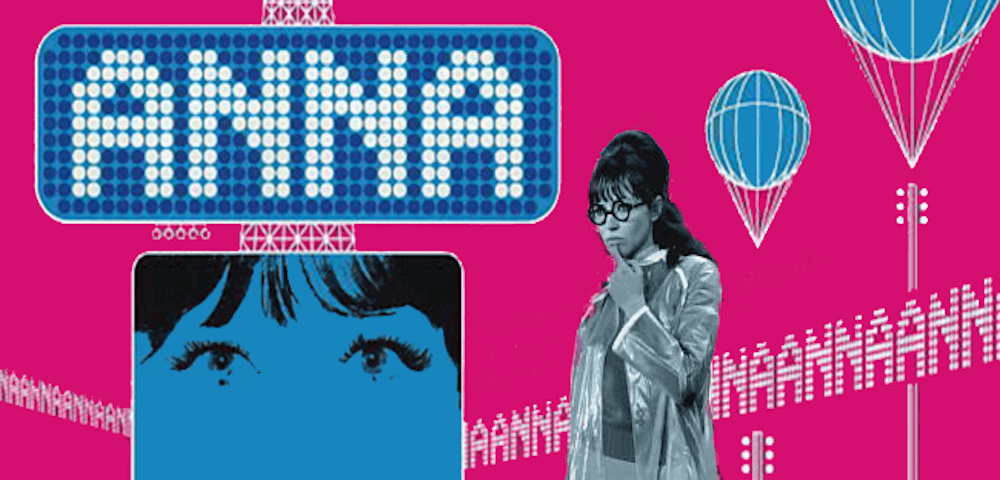
A kaleidoscopic, energetic burst of bright colors, infectious musical numbers, and absurdly charming performances, ANNA, which played Spectacle in 2014, is a pop-art musical masterpiece that has been locked away for far too long.

Originally made as the first color film for French TV, Anna Karina stars as a shy artist who is unknowingly photographed one day and soon becomes the obsession of an advertising executive (played by French New Wave stalwart Jean-Claude Brialy). The Yé-Yé music, scored and soundtracked by French pop icon Serge Gainsbourg (who also makes several on-screen appearances), is some of the most infectious and catchy work of his career, with Karina’s vocals shining throughout. Anna Karina also reunited with key Godard personnel, including editor Françoise Collin (BAND OF OUTSIDERS, PIERROT LE FOU, 2 OR 3 THINGS I KNOW ABOUT HER) and DP Wally Kurant (MASCULINE FEMININE).

Impossible to resist, the film feels like a pitch-perfect melding of Godard’s A WOMAN IS A WOMAN and Demy’s THE UMBRELLAS OF CHERBOURG, with Karina’s adorable beauty and effervescent charm as the center of attention. And be on the lookout for a Marianne Faithfull cameo. The film was a hit on French television in the late 60s and received a brief Japanese theatrical run in the 90s, but has since vanished and, to the best of our knowledge, has never screened before in the US. Working with Universal Music, Spectacle is enthralled to once again revive this lost gem of 60s French cinema.

GAEA GIRLS
dir. Kim Longinotto & Jano Williams, 2000.
England/Japan, 106 min.
In Japanese with English subtitles.

TUESDAY, MARCH 3 – 7:30 PM
TUESDAY, MARCH 10 – 10 PM
SUNDAY, MARCH 22 – 7:30 PM

TICKETS

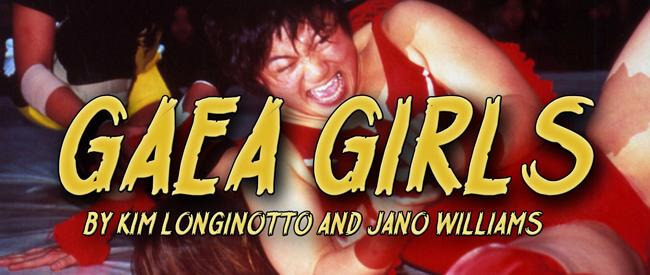
This fascinating film follows the physically grueling and mentally exhausting training regimen of several young wanna-be GAEA GIRLS, a group of Japanese women wrestlers who are just as violent as any member of the World Wrestling Federation. One recruit, Takeuchi, endures ritual humiliation not seen on screen since the boot camp sequences of FULL METAL JACKET.

“Longinotto and Williams’s ability to penetrate facades is remarkable. The filmmakers build their story in a way that’s more compelling and suspenseful than many narrative films.”        – Chicago Film Festival

Special thanks to Women Make Movies.


DIGITAL MAN
dir. Philip J. Roth, 1995
United States, 91 min.
In English.

SATURDAY, MARCH 7 – MIDNIGHT
THURSDAY, MARCH 12 – 10 PM
FRIDAY, MARCH 20 – 7:30 PM

TICKETS

Spectacle offers up this late-night cyberwar curio fielded from the pixelated precipice between Atari and THE MATRIX. Starring an Altmanesque corps of noteworthy surnames, Philip Roth’s DIGITAL MAN concerns a glitch in national security so cruel, it’d be divine if it weren’t so damn digital: a time-traveling supercyborg touches down in the small-town Southwest just in time to hijack an apocalypse’s worth of nuclear launch codes.

Fresh off a realm too insane in its violence and punishment for mere humans to enter, the Digital Man must be stopped—and it’s up to a motley crue of wisecracking heavyweights (some military experts, some shotgun-toting salt of the earth) to take him out, analog style. Tons and tons and tons and tons of fireball explosions (replete with slo-mo backflips and brutal, spaghetti-worthy shootouts) ensue, culminating in one night you can’t merely “attend” while on your laptop.

TURKISH PARANORMAL ACTIVITY
Dir. Hasan Karacadağ, 2012
Turkey, 119 min.

THURSDAY, MARCH 5 – 7:30 PM
FRIDAY, MARCH 20 – MIDNIGHT
TUESDAY, MARCH 31 – 7:30 PM

TICKETS

Though the seasoned Z-grade movie explorer is no doubt familiar with Turkey’s circa-1980 mockbusters like TURKISH STAR WARS, TURKISH WIZARD OF OZ, TURKISH E.T., TURKISH BATMAN, TURKISH STRAW DOGS, et al, one might believe this practice has been displaced by such contemporary arthouse darlings such as Nuri Bridge Ceylan, Rasit Celikezer, and Fatih Aiken. And yet it continues through the efforts of those such as Islamic Turkish horror filmmaker Hasan Karacadağ, who over the last decade has produced a steady stream of remarkably effective (and truly scary) unofficial horror remakes that unabashedly reinterpret hits from trend genres like J-horror, found footage, and torture porn via the The Quran — sort of like if Hollywood worshipped Allah instead of Mammon.

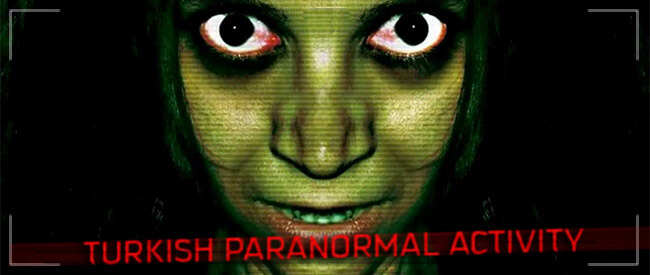
The plot of this one is simple: after a young woman experiences intensified sleepwalking episodes, her husband places cameras around the house to monitor her activity. As more unexplained, increasingly malevolent experiences occur during the night, including those which threaten their young daughters, the couple consult with a holy man and learn that they are being persecuted by the Quranic spirits of the Dabbe and Jinn — and may be under possession themselves. Because the PARANORMAL ACTIVITY films are so quintessentially formulaic, the well-studied, brazen appropriation of TURKISH PARANORMAL ACTIVITY renders it, at minimum, exactly as good as its North American counterparts (and, pleasantly, more gory). Only by framing its consumer-tech-steeped narrative in Islamic belief and folklore, it also presents a dialectic between tradition and modernization, portending grim consequences of secular living. The simple virtue of its existence amid a revitalized, international appreciation for Turkish arthouse cinema also suggests something of the country’s uneasy, unreconciled relationship to its history of exploitation cinema.

But maybe we’re over-explaining ourselves: TURKISH PARANORMAL ACTIVITY is totally awesome and scary as fuck.