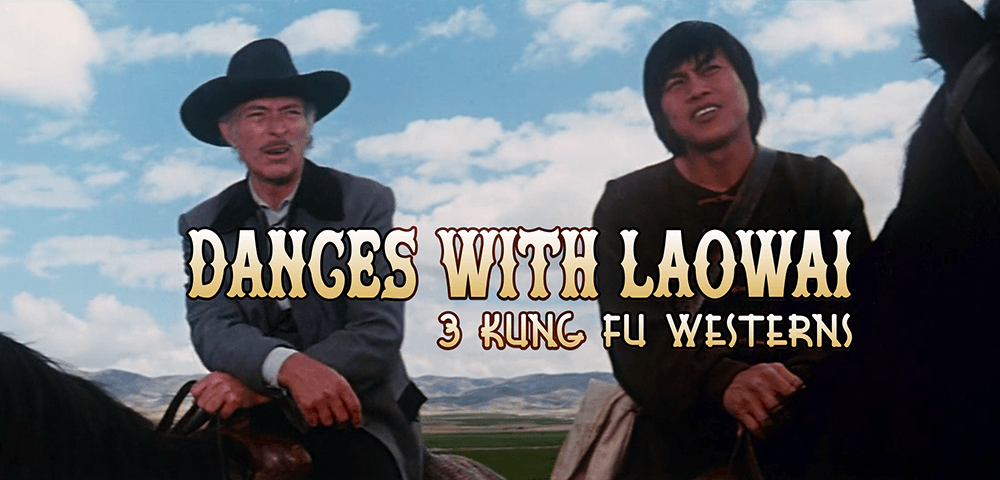
Once upon a time in China and America, there lived two distinct genres of action cinema fated to cross paths. On one side of the world, the western, which combined stylized violence, stoic masculinity, and American cultural mythology to tell tales of honor, loyalty, and vengeance across the Old West. On the other end, the martial arts picture, which combined stylized violence, stoic masculinity, and Chinese cultural mythology to tell tales of honor, loyalty, and vengeance throughout the Middle Kingdom. Two genres operating, two sides of the same coin, separated only by a mere 7,000 miles of distance between countries.
By late-1960s, the traditional western was well past its prime, mostly sustaining via the “spaghetti” westerns coming in from abroad or the New Hollywood and countercultural revisionism taking root at home. At the same time, the martial arts film was in the midst of its own renaissance with the global ascendency of Bruce Lee, Shaw Brothers Studios, and Hong Kong action cinema at large. It didn’t take long for western filmmakers to recognize the thematic overlap between the two genres, and before long the Spanish and Italian film industries began turning out spaghetti westerns with a kung fu twist, beginning with Enzo Peri’s James Shigeta-starring feature, DEATH WALKS IN LAREDO (1967).
The kung fu western trend would arguably hit its peak in 1972 with the major studio release of Terence Young’s RED SUN, a spaghetti western-samurai movie crossover starring Toshirō Mifune and Charles Bronson (coincidentally, stars of both SEVEN SAMURAI and its western reimagining, THE MAGNIFICENT SEVEN), and the debut of the popular television serial KUNG FU, featuring David Carradine as a Shaolin abbot journeying through the Old West. But the trend didn’t end there, nor did it die out as the spaghetti western craze of the 60s & 70s began to flag. On the contrary, Italian and Spanish studios had leaned even heavier into the hybrid-genre gimmick as a way to sustain appeal, leading to a small mid-70s boom of martial arts-spaghetti western crossovers: A final stand of sorts, in classic western fashion.
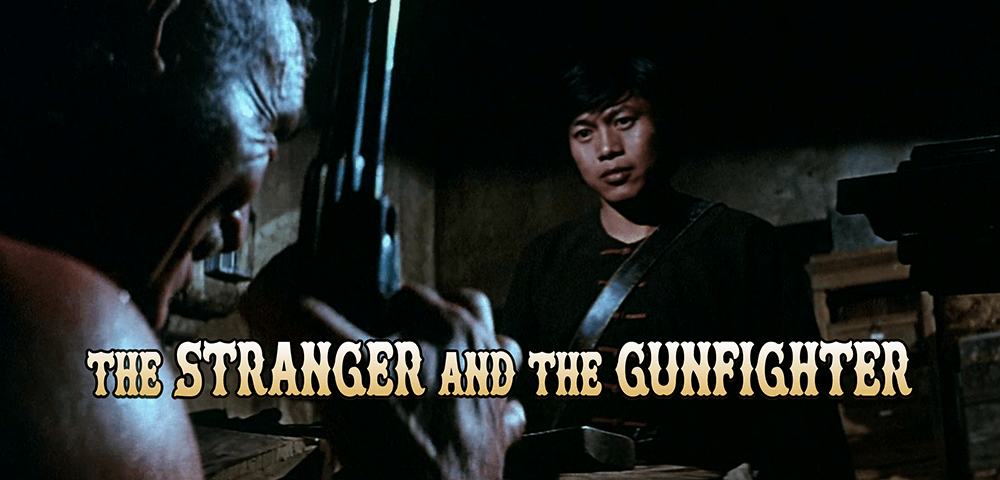
THE STRANGER AND THE GUNFIGHTER (LÀ DOVE NON BATTE IL SOLE)
aka BLOOD MONEY
Dir. Antonio Margheriti, 1974
Italy/Hong Kong/Spain. 100 min.
In English
WEDNESDAY, MAY 6 – 10 PM
MONDAY, MAY 11 – 10 PM
TUESDAY, MAY 19 – 10 PM
SATURDAY, MAY 30 – 7:30 PM
Martial artist Ho Chiang (Lo Lieh) travels to the Wild West on a life-or-death mission to recover his family’s hidden fortune, after his uncle is mistakenly killed by the outlaw Dakota (Lee Van Cleef) during a botched robbery attempt. Since Dakota is the only man alive with clues to the fortune’s location, Ho breaks him free from the hangman’s clutches, and the unlikely allies set off on a mission to track down the uncle’s four widows, each of whom holds another piece of the puzzle.
THE STRANGER AND THE GUNFIGHTER is notable for being one in a series of international co-productions by Shaw Brothers Studios, as part of an attempt to branch out into other territories and genres. But unlike their first two Italian co-productions, SUPERMEN AGAINST THE ORIENT (1974) and THIS TIME I’LL MAKE YOU RICH (1974), this one is actually good for a change. An offbeat action buddy comedy that can clearly be seen as the template for a similar Jackie Chan vehicle decades later.
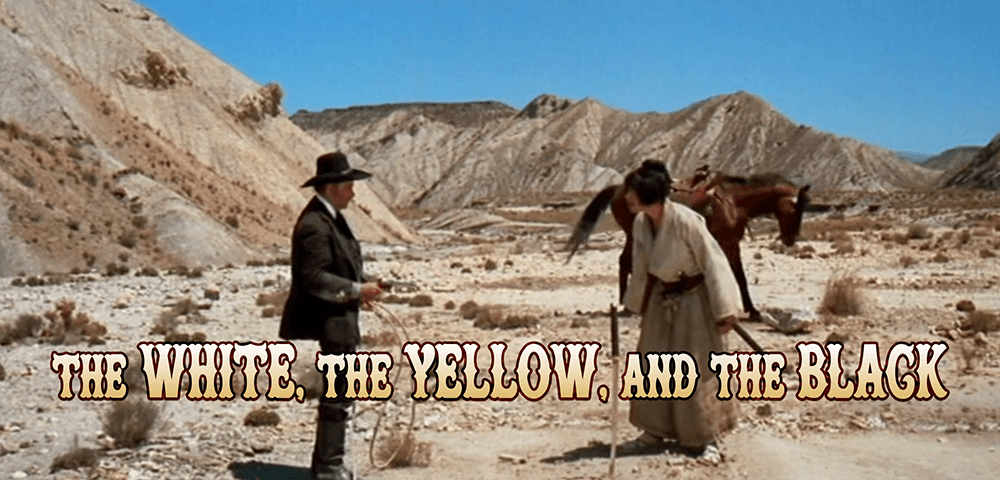
THE WHITE, THE YELLOW, AND THE BLACK (IL BLANCO, IL GIALLO, IL NERO)
aka SHOOT FIRST… ASK QUESTIONS LATER
aka SAMURAI
Dir. Sergio Corbucci, 1975
Italy. 106 min.
In English
TUESDAY, MAY 5 – 10 PM
FRIDAY, MAY 22 – MIDNIGHT
SATURDAY, MAY 30 – 5 PM
In the 19th century, a delegation of Japanese samurai travels to the United States to present the president with a gift from the Emperor, in the form of a divine pony. But when the delegation is attacked and the pony is kidnapped for ransom, the group’s inept servant— and wannabe samurai— Sakura (Tomas Milian) turns to the local Sheriff Gideon (Eli Wallach) for help delivering the ransom money. Along the way, they’re joined by the notorious Swiss outlaw Blanc de Blanc (Giuliano Gemma) who has his own plans for the money.
For reasons inexplicable, legendary spaghetti western director Sergio Corbucci (THE GREAT SILENCE, DJANGO) decided to end his tenure in the genre with this slapstick-y buddy comedy, conceived as a send-up of Terence Young’s samurai-western crossover RED SUN, though with some obvious parodic shades of THE GOOD, THE BAD, AND THE UGLY. Action-wise it’s one of the more polished additions to the kung fu-western canon and is altogether a compelling end to Corbucci’s western career… that is, so long as you can stomach Milian’s Sakura in a performance that borders on Mickey Rooney-levels of offensive Asian caricature (viewer be warned).
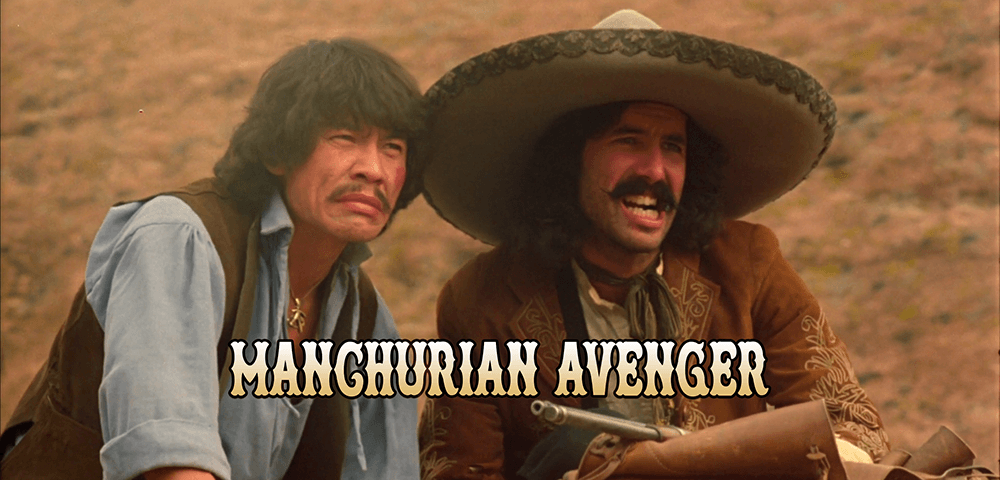
MANCHURIAN AVENGER
Dir. Ed Warnick, 1984
United States. 88 min.
In English
TUESDAY, MAY 12 – 10 PM
SATURDAY, MAY 23 – MIDNIGHT
SATURDAY, MAY 30 – 3 PM
Joe (Taekwondo champion and “Korean Charles Bronson,” Bobby Kim) returns to his Colorado hometown after many years to reconnect with Kim, the man who helped raise him after Joe’s father was murdered by a gang of outlaws. When Joe learns that Kim has been killed by the villainous Cheng and his henchmen, he teams up with Kim’s sister, her husband, and a local outlaw for revenge.
MANCHURIAN AVENGER is a rare homegrown addition to the kung fu western canon, filmed on location in Fairplay, Colorado and sourcing a large cast of extras from the surrounding South Park region. Despite its modest scale, the film shoots the moon with its production values, featuring a ton of creative special effects work, charmingly anachronistic costuming, visibly dangerous stunt work, and some genuinely breathtaking footage of its Rocky Mountain surroundings.