
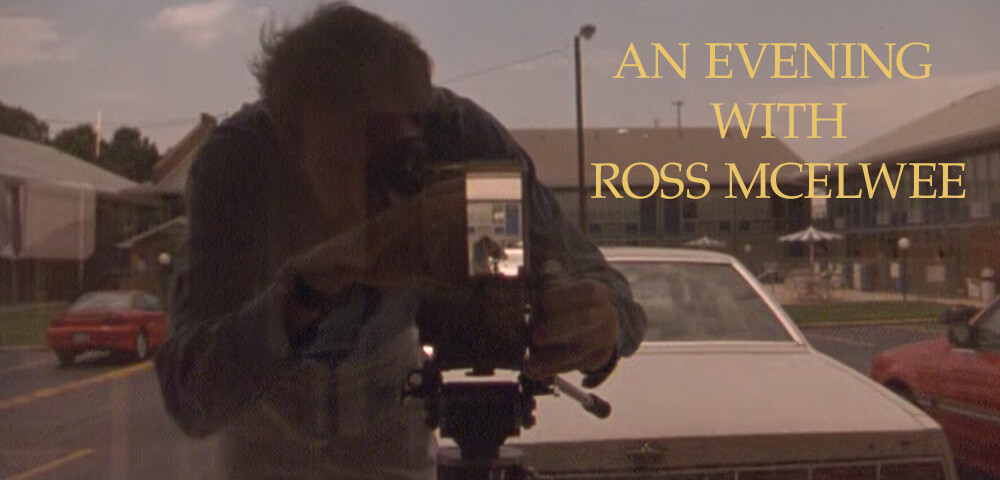
A pioneer of the self-reflective first-person documentary form, Ross McElwee is known for his highly personal, digressive, and darkly humorous style. Often focusing on his southern heritage and family life, his work is defined by dry, metaphysical voiceover that helps turn diverse life-events into essayistic musings on American history, cinema, and daily life. A single film can cover topics as disparate as nuclear war, sexual conquest, Burt Reynolds, the ongoing reverberations of the American Civil War on the south, and the reality principle in documentary cinema. While McElwee is in New York to present his newest film, Remake, at Doc Fortnight, we are honored to host him for a night of screenings of two significant earlier works, Time Indefinite and Bright Leaves.
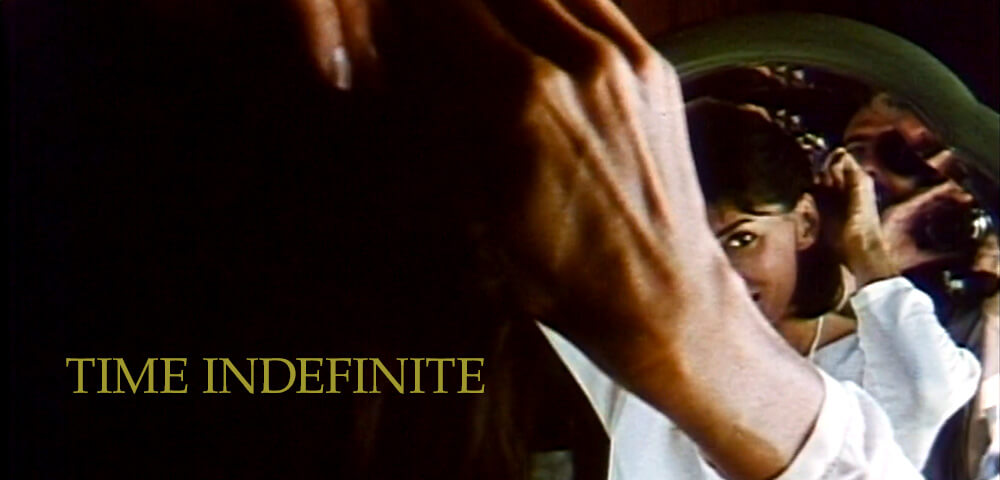
TIME INDEFINITE
Dir. Ross McElwee, 1993
U.S.A., 114 min.
In English
WEDNESDAY, MARCH 11 – 7:00 PM (w/ Q&A)
ONLINE TICKETS ($10)
Turning the camera once more on his souther heritage after his breakthrough film, Sherman’s March, Time Indefinite catches McElwee contemplating family heritage and mortality on the cusp of middle-age. Starting with his marriage proposal to his sound recordist and moving through a series of unexpected family tragedies, the film is one of McElwee’s most melancholic works. Fatherhood – the anxiety of raising a child of one’s own and the imprint of McElwee’s father on his life – looms large in the film, serving as catalyst for an exploration into the inescapable persistence of the past onto the future. How we contemplate and come to terms with time, is in many ways McElwee’s main theme here, and with his understated black humor and sharp attention to all the diverse quirky figures he meets on a daily basis, Time Indefinite is the type of diaristic cine-poem only he can produce.
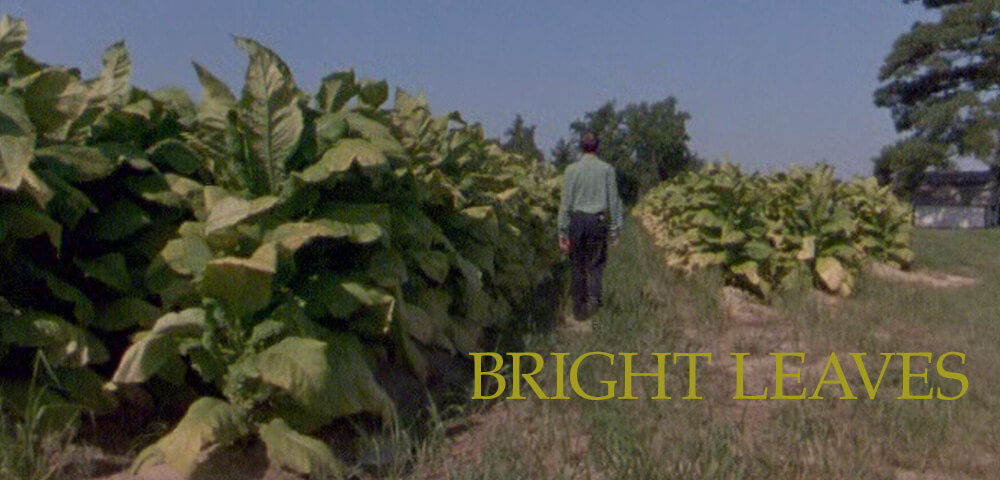
BRIGHT LEAVES
Dir. Ross McElwee, 2003
U.S.A., 108 min.
In English
WEDNESDAY, MARCH 11 – 10:00 PM (w/ Introduction)
ONLINE TICKETS ($10)
One of McElwee’s most intricately woven films, Bright Leaves takes as its point of departure McElwee’s great-grandfather’s role as a 19th century tobacco plantation owner in the south. Upon discovering that there was a 1950 hollywood movie, Bright Leaf, based on his family’s history, McElwee muses over fact and fiction, trying to trace the legacy of his great grandfather’s business on his own family and the south at large. Moving between tobacco plantations, family gatherings, lectures in film theory, and recurring dreams he’s had, Bright Leaves is an amorphous work filled with the philosophical richness unique to McElwee’s eclectic, rambling style.
“McElwee’s films are always, in a way, about why he makes them. He looks at faded home movies of his father, trying to recapture his memories of the man, and then he films his son and wonders how the son will feel, some day, seeing this film. Always at his back he hears time’s winged chariot, hurrying near, and is fascinated by the way film seems to freeze time, or at least preserve it. He doesn’t really much care that his family lost an incalculable fortune to the Dukes; he is content to be who he is, doing what he does, and his motivation for making the film is not to complain, but simply to meditate on how events in the past reverberate in our own lives.”
– Roger Ebert