
Are acts of violence viable and warranted solutions to political oppression? To fascism? Should individuals take it upon themselves to affect political change by going as far as murder or assassination? Do the needs of the many outweigh the needs of the few? The Spectacle as a screening space has no official stance or answers for such trivial questions, but we do have a wholly unconnected and unrelated series of films about the DIY ethos that we are calling: NUDGE NUDGE WINK WINK. Apropos of nothing else going on in the world, we suggest you see the following films:
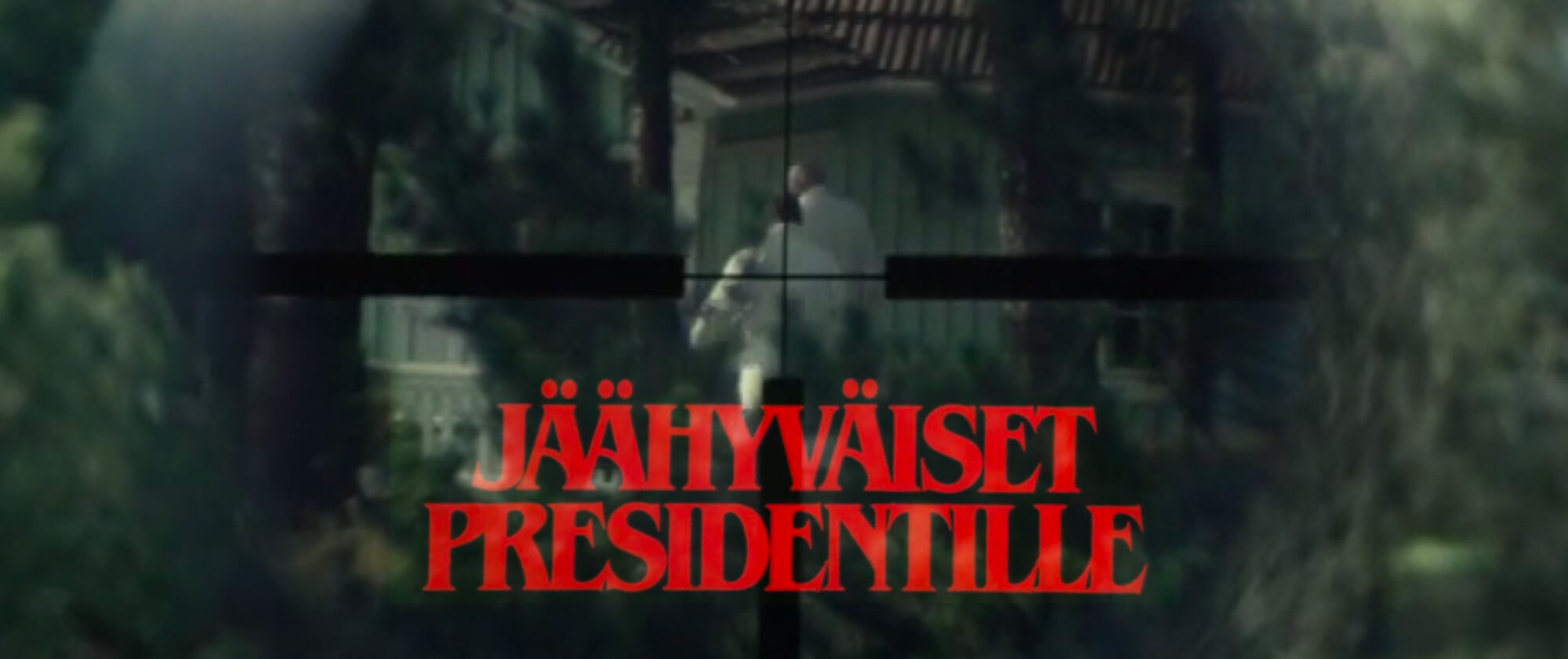
FAREWELL, MR. PRESIDENT
(JÄÄHYVÄISET PRESIDENTILLE)
Dir. Matti Kassila, 1987.
Finland. 87 min.
In Finnish with English subtitles.
FRIDAY, AUGUST 1 – 7:30 PM – [TICKETS]
SATURDAY, AUGUST 9 – 10 PM – [TICKETS]
TUESDAY, AUGUST 12 – 10 PM – [TICKETS]
SATURDAY, AUGUST 16 – 10 PM – [TICKETS]
Asko Mertanen is a working waiter who is obsessed with two things: the corrupt government’s unfair treatment of the country, and guns. Mertanen’s obsessions combine into a deadly self-assigned edict: to kill the President of Finland. Like any well engineered plan, Mertanen builds to his ultimate act by testing his weapons, his accuracy, and his ability to take a life. A confluence of Mertanen’s savviness as well as a serendipitously timed murder of another waitress lead police detectives Hanhivaara and Kairamo on a confused chase to stop him before he achieves his final goal.
A late work for one of Finland’s most prominent filmmakers of the 1950s and 60s, Matti Kassila. With a screenplay written with his son, Taavi Kassila, and based on the novel of the same name by Pentti Kirstilä. The film’s president, played by accomplished Finnish actor Tarmo Manni, is never mentioned by name but bears a striking resemblance to politician, and Finland’s longest serving president, Urho Kekkonen. Who during his extensive term consolidated government power to the presidency and developed a cult of personality. How about that?
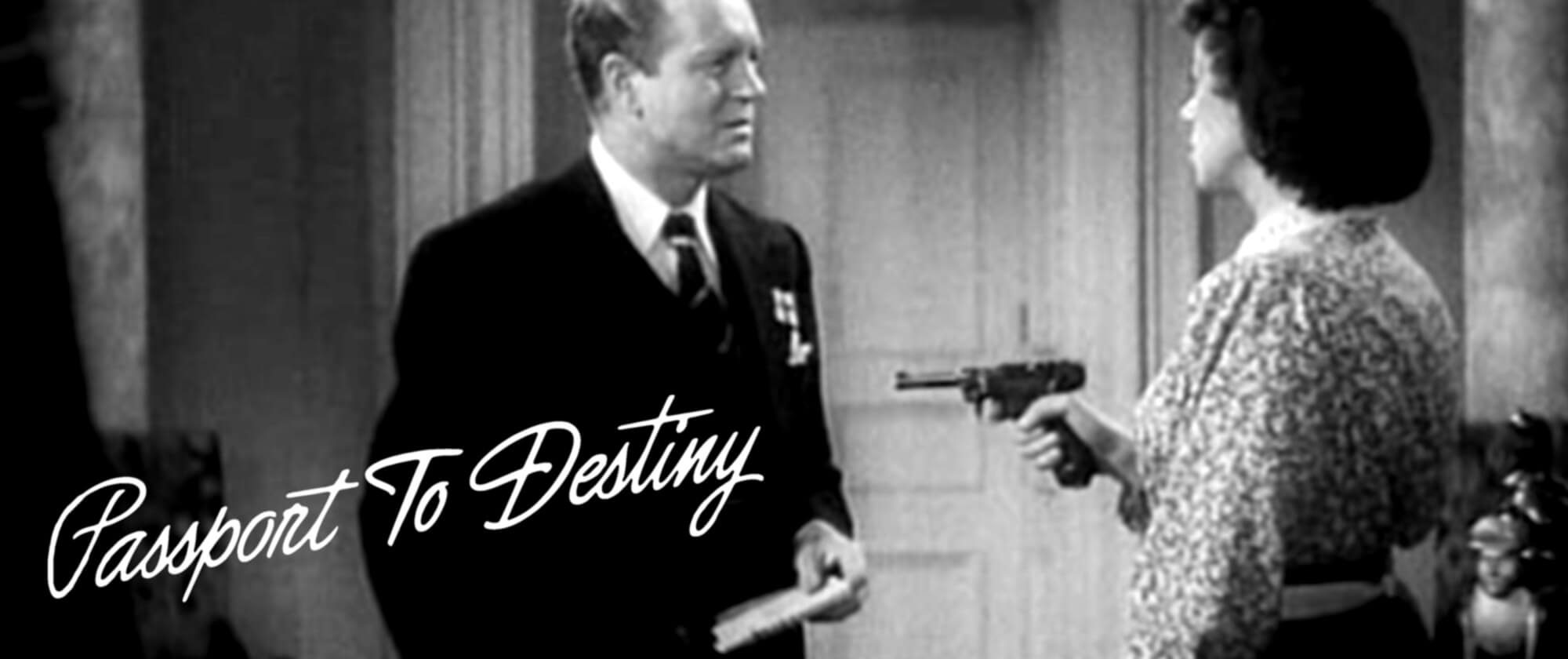
PASSPORT TO DESTINY
Dir. Ray McCarey, 1944.
United States. 65 min.
In English.
16mm.
TUESDAY, AUGUST 05 – 7:30 PM – [TICKETS]
FRIDAY, AUGUST 15 – 5 PM – [TICKETS]
SATURDAY, AUGUST 23 – 5 PM – [TICKETS]
SUNDAY, AUGUST 31 – 5 PM – [TICKETS]
“If you had a charmed life, what would you do?”
“I’d find my way to Germany, and I’d give that Mr. bloomin’ Hitler what for!”
Elsa Lanchester (the BRIDE OF FRANKENSTEIN) stars as Ella Muggins, a Cockney cleaning lady who feels proud and empowered in her work attending to the office of the head of the firm. But with the 2nd World War hitting its heights, her working class life in London is soon to be interrupted. After her regimental sergeant major husband perishes (lost not to the war, but underneath a motor truck in Piccadilly Circus) Ella inherits from him a magical amulet. According to her husband who was known for spinning yarns, the amulet—or magic eye—carries with it powers of protection. After a close encounter with a bomb care of the Germans’ air raids, Ella is convinced of her husband’s tall tales, and with a new lease on her ‘charmed’ life, she makes her way to Germany to do what the British military seemingly can’t: kill Hitler.
PASSPORT TO DESTINY is a charmingly hilarious comedic romp, and a lovely piece of anti-Nazi do-it-yourself regime change propaganda care of RKO. With Lanchester turning a brilliant performance as the naively headstrong Muggins, whose fortuitous actions through Germany resemble that of the Mr. Magoo character, who himself would not be created for another 5 years. Released in early 1944 only a handful of months before the Allied forces’ invasion at Normandy, and over a year before Hitler would eventually blow his own brains out.
We are pleased to present the film on 16mm for all engagements.
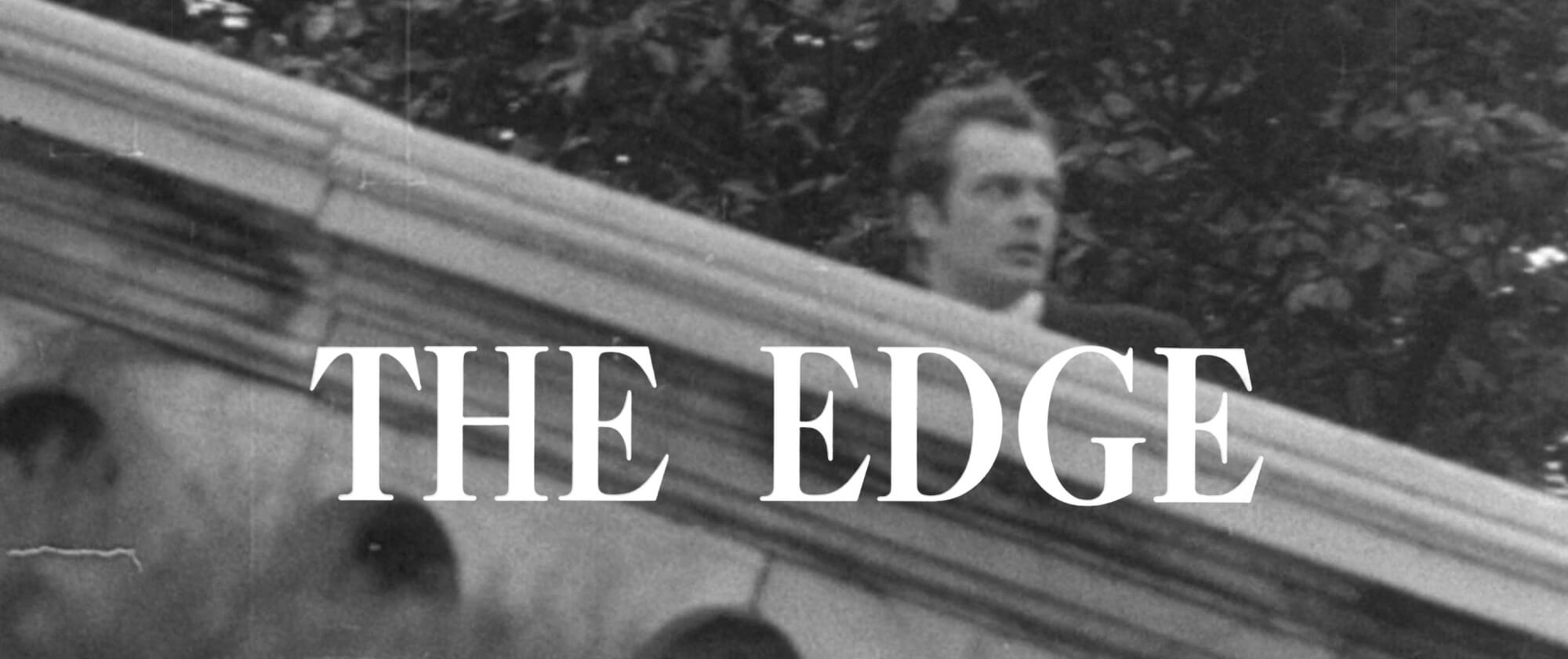
THE EDGE
Dir. Robert Kramer, 1968.
United States. 100 min.
In English.
SATURDAY, AUGUST 2 – 5 PM – [TICKETS]
THURSDAY, AUGUST 7 – 10 PM – [TICKETS]
FRIDAY, AUGUST 22 – 7:30 PM – [TICKETS]
MONDAY, AUGUST 25 – 7:30 PM – [TICKETS]
THE EDGE follows Danial Rainer, a disillusioned political activist, over the course of six days as he navigates the inner politics of his organizing group as they struggle to have any effect on the actions of their government and its war on Vietnam. Dan is tired of theory, and wants to take decisive action, but the rest of his similarly white and middle class cohort are going to be difficult to get out of their comfort and on board. The plan? Assassinate the President of the United States.
Robert Kramer presents the events unfolding like an intelligence outfit surveilling and gathering evidence. The cast of characters; introduced like that of a police debriefing or dossier; names, ages, and political histories. The camera; at times a lingering distant voyeuristic point of view like that of an observing agent gathering intel. The audio of conversations; as if they were being picked up by planted bugs.
Kramer deftly showcases that feeling of despair as one hears the numbers of deaths grow daily as war wages on the other side of the globe. The cognitive dissonance of the comfort of your bohemian day to day not lining up with the horrors being perpetrated by your own government. Do you want to affect change with a single violent revolutionary action? Or are you comfortable to play activist while talking shit about the president over a bottle of wine at your friend’s flat? When Dan is driven to the brink, but left high and dry by his comrades, does the plan have any chance of success?
“What interests me is this: How do you understand cinema? How do I understand cinema? Why has nobody seen my films here in the United States, etc.? Most of the time, my films don’t relate to what people believe. Without a doubt this is a flaw in the films. They all deal with such questions as: how people fulfill themselves and assume a role in history, how do or don’t they rejoin the principal current of history. All this, …, in the context of the United States and of the specific kind of isolation that we’ve made for ourselves here—we, the subjects of films. There is this rhythm between political engagement where we lose a lot of things—relations between people, families, children, nature—not as ideas but as bodily experiences. In The Edge, we can see the two very clearly.”
—Robert Kramer, December 1978 Cahiers du Cinéma interview