
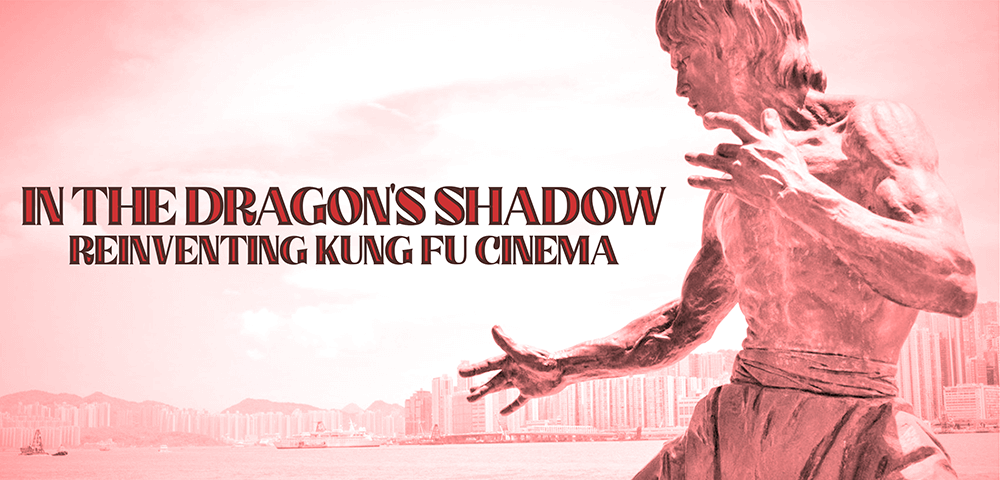
In the wake of Bruce Lee’s passing in 1973, the Hong Kong film industry found itself at a crossroads. How was the industry supposed to sustain the newfound global popularity of kung fu movies in the absence of the country’s most bankable and recognizable star?
Though the “Bruceploitation” trend that followed saw some moderate success, the “Lee-alikes” that populated the genre— mostly marketed on their resemblance or adjacency to Lee himself, by definition incapable of reaching the same heights of fame as their predecessor— could only placate and/or dupe audiences for so long. For studios not named Shaw Brothers or Golden Harvest, the need for an alternative path forward soon emerged.
This July, we look at three radically different approaches Hong Kong studios took towards moving the industry out from under the long shadow cast by Lee’s legacy. Whether falling back on the old masters of the genre, pushing to coin another star of the same caliber, or allowing his very same clones the creative freedom to establish themselves apart from their namesake, each of these films is its own reflection of an industry’s need to reinvent itself following a world-shattering shake-up.
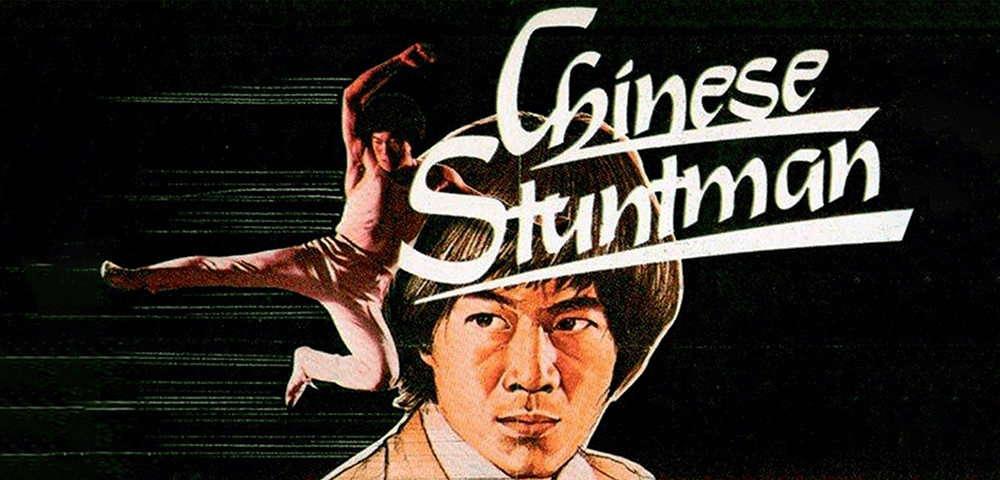
THE CHINESE STUNTMAN (龍的影子)
aka COUNTER ATTACK
Dir. Ho Tsung-tao, 1981
Taiwan. 94 min.
In English (dubbed)
WEDNESDAY, JULY 2 – 10 PM
MONDAY, JULY 7 – 10 PM
WEDNESDAY, JULY 16 – 7:30 PM
FRIDAY, JULY 25 – 10 PM
An insurance salesman (who also happens to be a martial arts master) becomes a stunt double for a popular Hong Kong action star, unwittingly throwing himself into a murderous plot by the film’s producers and director to cash in on the star’s insurance policy.
For his final film as both a director and star, Ho Tsung-tao crafted a meta-masterpiece largely drawing from his own experiences as the former Lee-alike “Bruce Li”. By the late-1970s, Ho had made no bones about his displeasure with being pigeonholed as a Bruce Lee clone, all of which is poured into this cathartic, biting satire of the Hong Kong film industry. The film is as cynical as it is action-packed, with Ho pulling no punches in his depiction of the disposability with which the business treats its below-the-line physical performers who have devoted their entire lives to their martial artistry.
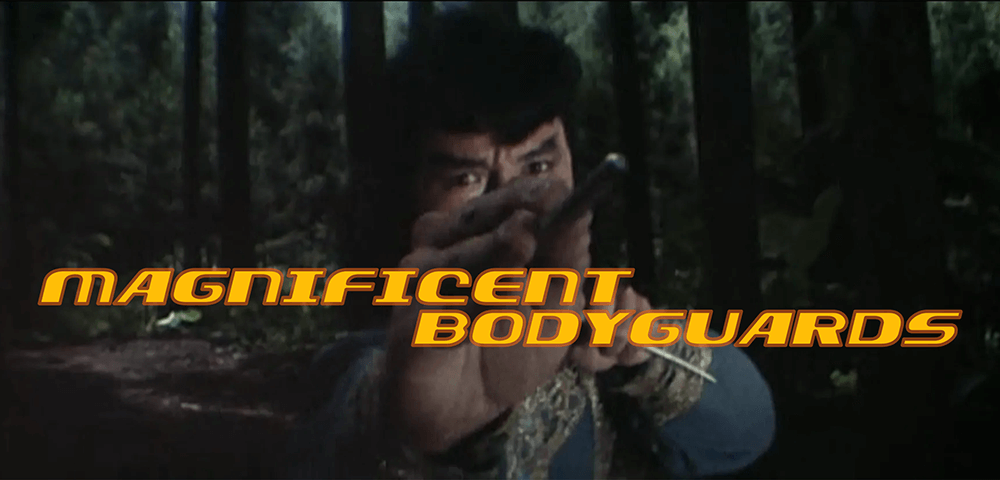
MAGNIFICENT BODYGUARDS (飛渡捲雲山)
Dir. Lo Wei, 1978
Hong Kong. 103 min.
In Cantonese & Mandarin with English subtitles
WEDNESDAY, JULY 9 – 7:30 PM
MONDAY, JULY 14 – 10 PM
SATURDAY, JULY 26 – 10 PM
A wealthy noblewoman assembles a team of fierce bodyguards to escort her ailing brother to a specific doctor who holds the cure to his illness. Together they must traverse dangerous wild country infested with roving gangs of bandits, savages, and demonic monks intent on his capture.
While much of the industry was preoccupied with maintaining Bruce Lee’s presence via the Bruceploitation trend, Lo Wei, the very filmmaker who directed Lee in his breakout roles in THE BIG BOSS (1971) and FIST OF FURY (1972), turned his sights towards finding the Next Big Thing. Within a few years, Lo would find his new leading man in a fresh-faced stunt choreographer and background performer named Jackie Chan, providing him with his very first starring roles in NEW FIST OF FURY (1976) and MAGNIFICENT BODYGUARDS.
Though not quite Chan’s breakout role (those would come later in the same year via Yuen Woo-ping’s DRUNKEN MASTER and SNAKE IN THE EAGLE’S SHADOW), it’s easy to see why Lo viewed Chan as the heir apparent to Lee’s stardom. Even as a smarmy, hot-headed bodyguard— a far cry from the comedic roles for which he became known— the same charisma, finesse, and obsessive detail that Chan would bring to his later work are still undeniably present.
If Chan’s born stardom weren’t enough to carry the film, MAGNIFICENT BODYGUARDS was also marketed as the first kung fu movie to be presented in 3D, replete with multiple shots of fists, feet, spears, swords, and arrows flying directly towards the camera (alas, though, Spectacle will only be presenting this one in 2D).

RETURN OF THE CHINESE BOXER (神拳大戰快鎗手)
Dir. Wang Yu, 1977
Hong Kong/Taiwan. 99 min.
In English (dubbed)
SATURDAY, JULY 5 – 10 PM
FRIDAY, JULY 11 – 5 PM
WEDNESDAY, JULY 16 – 10 PM
MONDAY, JULY 21 – 10 PM
In the wake of the First Sino-Japanese War, a cabal of Japanese ninja warlords contemplate their takeover of China using an array of exotic weaponry and supernatural forces at their disposal. The only thing standing in their way: A master martial artist whose studio was decimated by those same warlords and who’s hellbent on getting his revenge..
Prior to Bruce Lee’s ascension, arguably the only Hong Kong action star that had achieved a shade of the same recognition abroad was Jimmy Wang Yu, star of Shaw Brothers Studio’s international breakout, THE ONE-ARMED SWORDSMAN (1967). As Lee’s stardom began to eclipse his own, Wang turned to roles behind the camera as the director of seminal kung fu classics like ONE-ARMED BOXER (1971), BEACH OF THE WAR GODS (1973), and MASTER OF THE FLYING GUILLOTINE (1976).
After Lee’s passing, some studios fell back on Wang’s legacy as the one-time undisputed king of kung fu cinema, marketing the releases of FLYING GUILLOTINE and RETURN OF THE CHINESE BOXER around the tagline, “Before there was Bruce Lee…”. Unfortunately, dogged by alleged ties to organized crime and legal troubles involving his broken contract with Shaw Bros. (eventually resulting in Wang being banned from making films in Hong Kong), RETURN ended up being Wang’s final film as director, though his legacy as a one-man New Wave who brought a unique cinematic flair to otherwise standard wuxia proceedings has made him as vital a figure in the history of kung fu cinema as Lee.