Tuesday, March 17 – 9:30PM w/ an introduction by Zach Hart.
ONE NIGHT ONLY. SPECIAL EVENT TICKETS HERE.
In 1945, WWII ended with a nuclear explosion. As a result, the Nazi’s couldn’t finish many planned infrastructural projects, and the production of a hydroelectric power plant on the Drava River remains incomplete. The power plant was finished by Yugoslavia in 1960. In 1957, Iran and the US signed an agreement to conduct civil nuclear research. The same year, Iran began the production of the seventy-six million dollar Karaj Dam constructed by the Morrison-Knudsen firm of B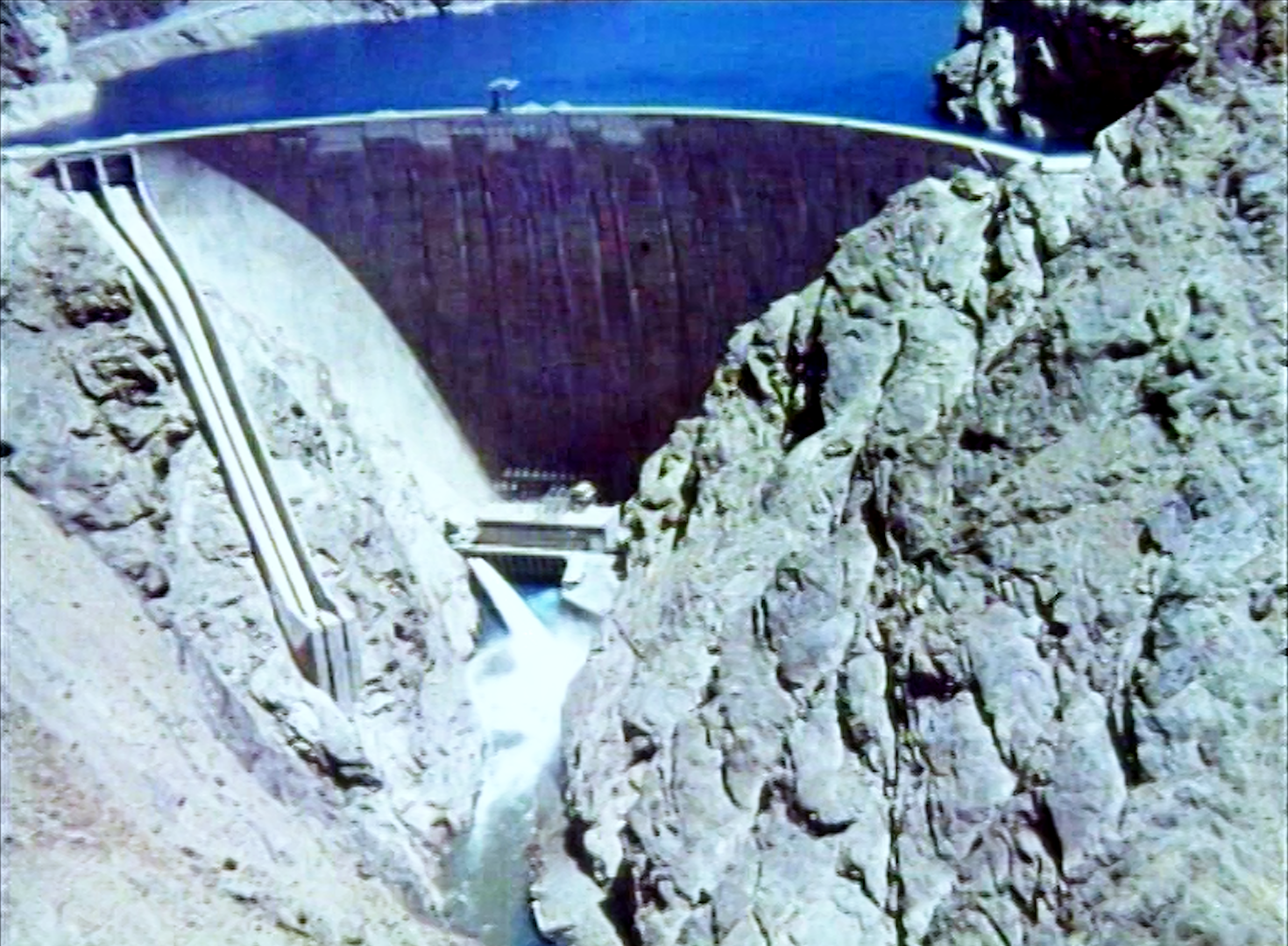
Energy takes on multiple forms and fills different shaped containers. It often moves before it gets released. It can move from one state to another, across oceans or from liquid to solid. Its form can become quite abstracted from the real world implications which raw energy is thought to produce. For instance, money itself can be energy, as it fuels the production of huge infrastructural projects that in turn generate less abstracted forms like electricity. Electricity, which can be generated from hydropower, can then be used to fuel AI factories in Slovenia. Perhaps the electricity generated from the Keraj Dam provides the power which allows Iranian’s in the region to connect to the internet. But, as we know now, energy is not so democratically distributed, but its production has been democratically rejected. Any finite resource can be used as a tool of political repression. Regardless of an energy‘s shape, once harnessed it’s rarely released without some form of supervision, or at least some documentation of all its potential. This program juxtaposes the intricate, problematic and occasionally interwoven histories of Iranian, Slovenian and Austrian energy infrastructures; their production and use, their documentation and their eventual reception from the population.
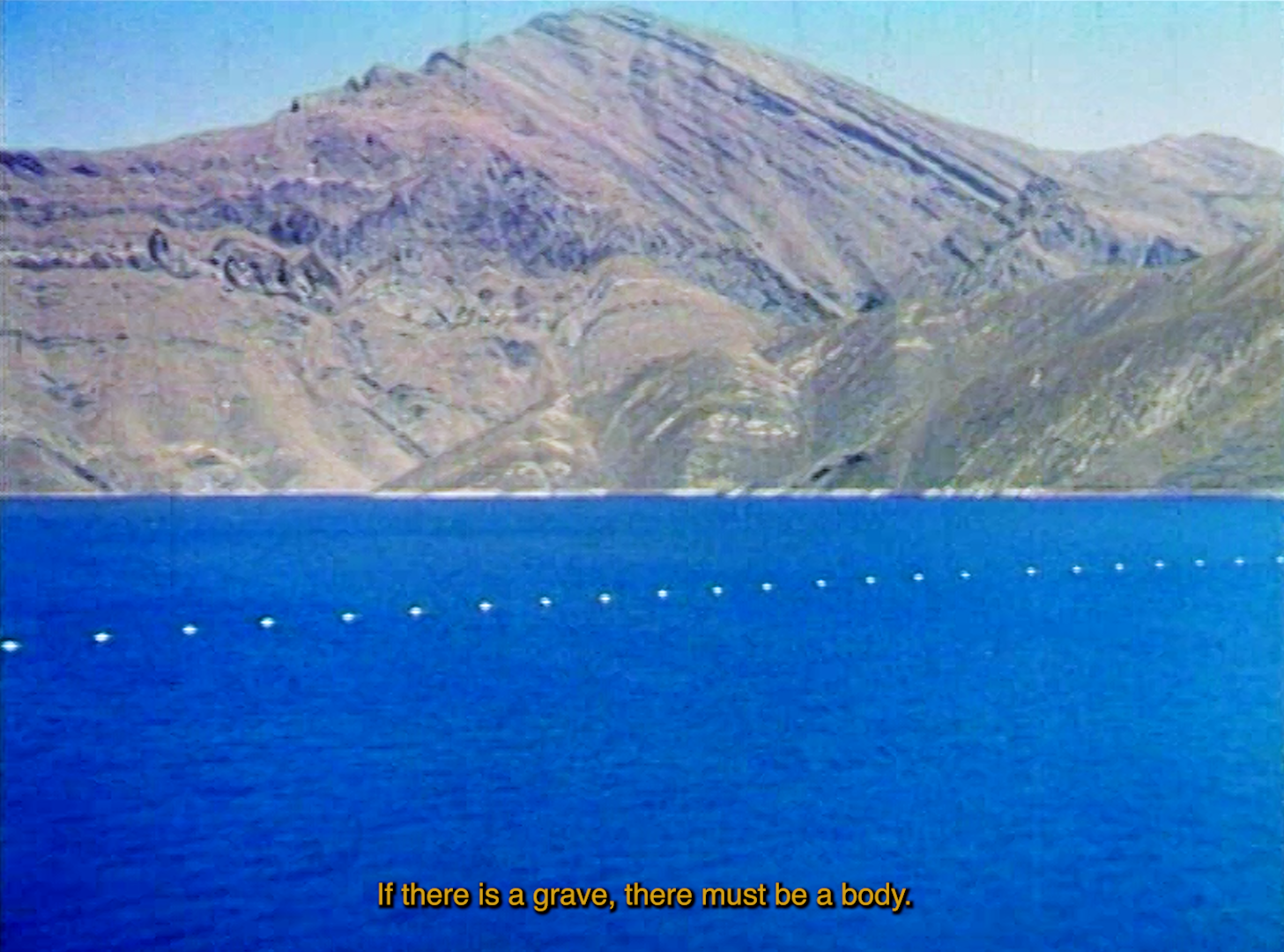
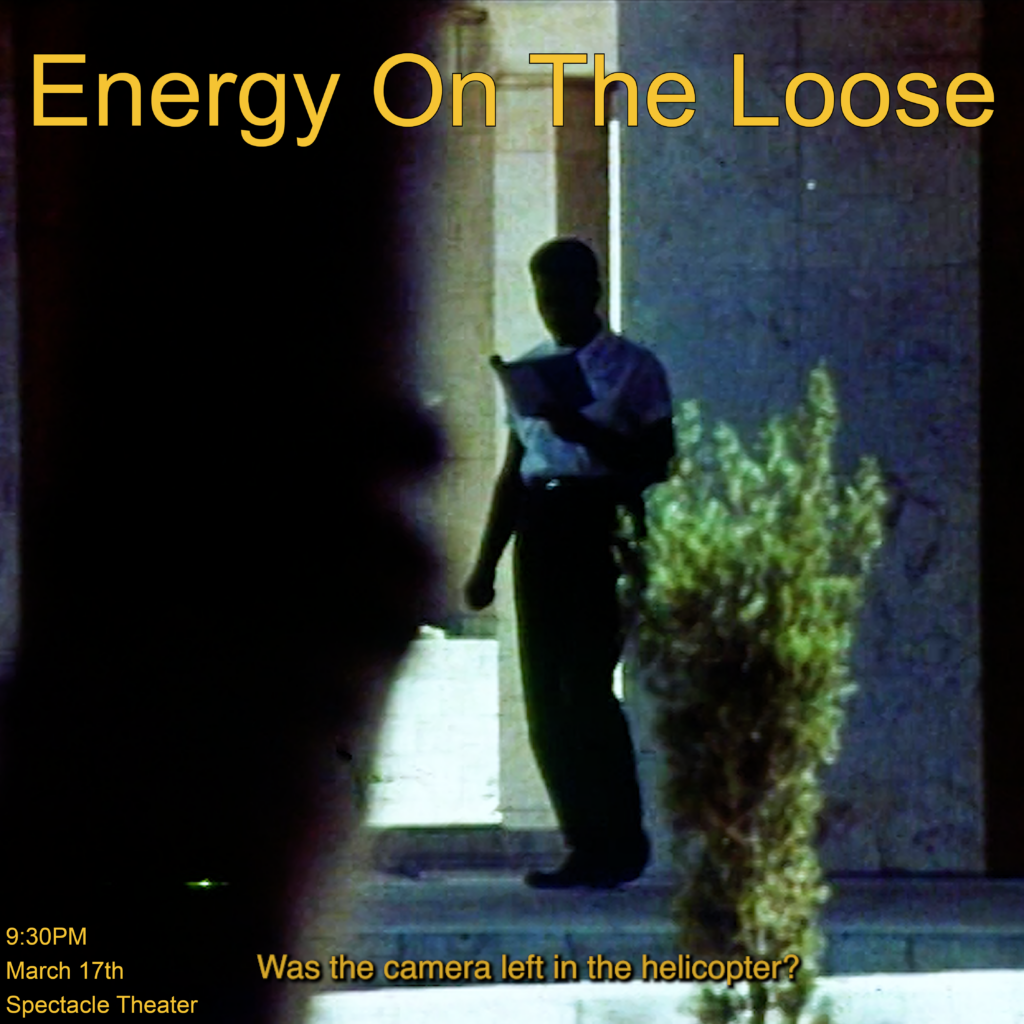
dir. Parastoo Anoushahpour, Faraz Anoushahpour, Ryan Ferko, 2021
Canada. 30 min. In Farsi with English subtitles.
30 min | 16mm to HD | Canada | 2021
We know Albert Lamorisse for his red balloon floating in the Parisian sky, yet we know less about how he was finally caught out by gravity. Invited in 1968 by the Shah to make a film glorifying the history and flourishing development of Iran, the French filmmaker died two years later during a helicopter shoot that he wanted to make into the narrational throughline of The Lovers’ Wind, or in the Farsi version, Bād-e Sabā, after the name of a northeast wind, perhaps the one that hastened his crash. Shedding light on this story, the work of Parastoo and Faraz Anoushahpour and Ryan Ferko first materialised as a multi-channel video installation in 2024 at the Mercer Union in Toronto. While Lovers’ Wind restaged and manoeuvred elements from the original film and its author’s life – particularly, another forgotten fact, that he was the inventor of Risk, a board game of conquest – to assess his legacy and give new meaning to his fragments. Postscript combines a phone conversation between Faraz Anoushahpour and a curator from the Iranian National Film Archive with the last images filmed by Lamorisse, supposedly recovered from the wreck. During a conversation whose tone shifts from interrogation to investigation and speculation, the anonymous interlocutor cites her different sources, describes the diverse versions and twists and turns, methodically points up their ecosystem, so effectively that the document seems to fall apart in the historical and symbolic network that it ignites.
– Antoine Thirion, Cinema du Réel
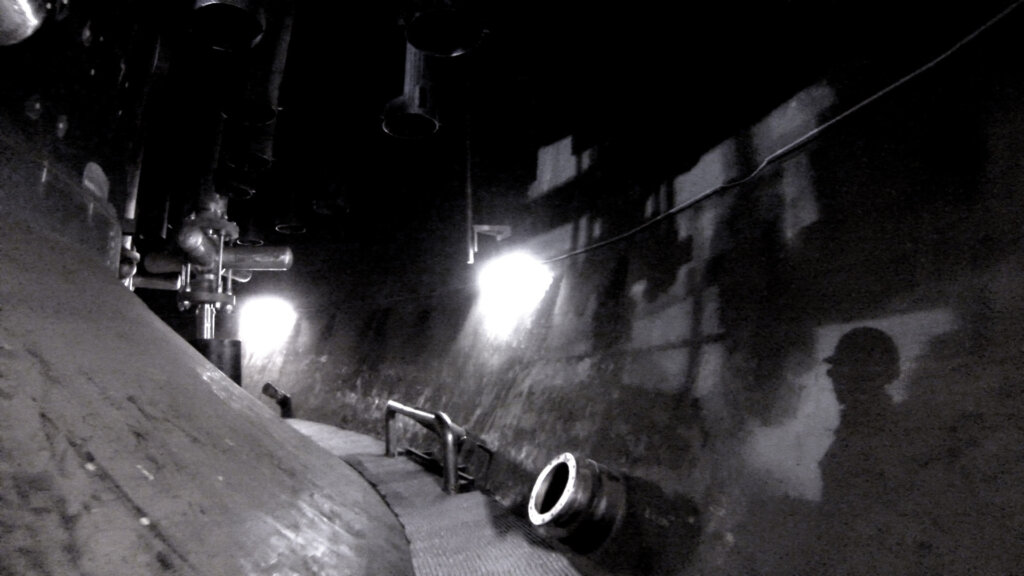
Atomkraftwerk Zwentendorf
dir. Hope Tucker, 2018
Austria/United States. 17 min.
Forty years ago Austrians voted against opening a nuclear power plant that had already been built. Atomkraftwerk Zwentendorf is a monument to the power of public protest and the potential of a democratic vote. After catastrophic flooding across Europe, Hope Tucker visited the nuclear power plant outside of Vienna that would have been powered by the same model reactor as Fukushima. Atomkraftwerk Zwentendorf has an edit structure based on the chain of action in a boiling water reactor power plant and the path of protest that kept this plant from opening. Sound design incorporates a recording of the Tohoku earthquake.
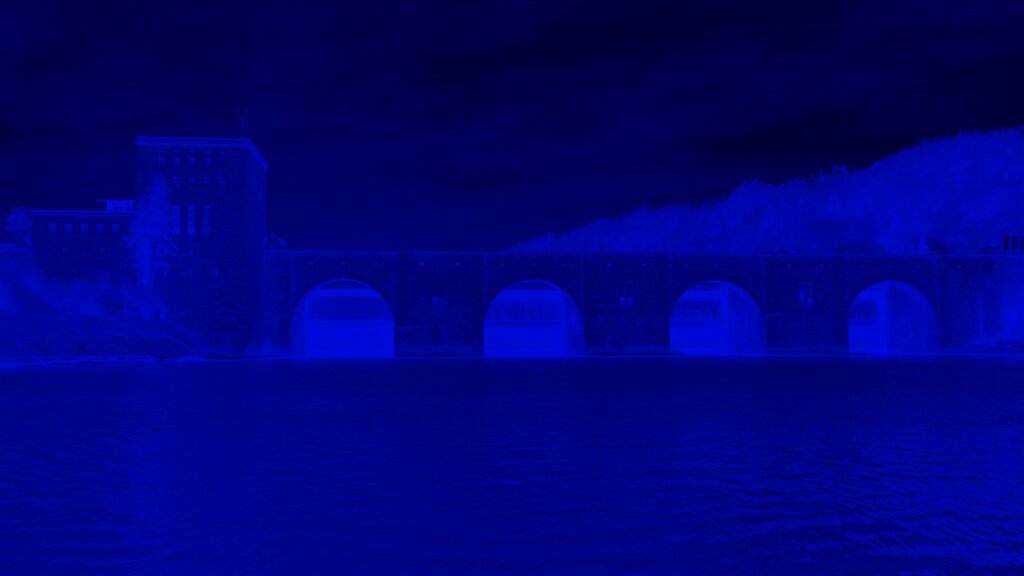
the sun that fell into the water
dir. Lena Kocutar, 2025
Germany/Slovenia. 21 min.
the sun that fell into the water imagines human presence at the intersection of the intimate, the mechanical, and the political. An entry point and a case study is the story of a hydropower plant, narrated by a child. To fuel the war, NS-Germany set to expand energy infrastructure in the territories annexed and occupied. The construction of the plant at the Maribor river island, present-day Slovenia, began under the occupation regime and was completed in 1960, Yugoslavia. It is operational ever since.
The plant will now power an Al Factory, a high-performance computing and data centre, currently in construction, with some of the river sidetracked as cooling water for the centre. Its promoted application is to monitor the waters of the world, presented in the aftermath of extensive floods in the region.
The work is partly recorded with thermal camera, infrared vision that prioritises heat over visible light. It is vision that maps presence that lingers, blurs the line between inside and out, between the living and nonliving, revealing something of the world heating up.