WRONG NUMBER: FILMS BY FRANK HEATH

WRONG NUMBER

    One couldn’t be blamed for mistaking artist and filmmaker Frank Heath for a time traveler sent back with the impossible task of figuring out where it all went wrong. Government surveillance? Technological arms races? Nuclear fallout or an act of God? Each as plausible as the last if you’re inclined to believe what Heath uncovers across an array of conspiratorial prank phone calls, metadocumentaries, and room-shaking music videos.

    Heath’s work can be seen as a part of a post-9/11 aesthetic shift in art away from subjectivity that curator Paolo Cirio refers to as evidentiary realism, which aims to make visible the complex networks of capital and bureaucracy that construct our reality. Grounded in rigorous journalistic research, Heath uses historical events, declassified materials, and government facilities as the backdrop for a cast of real-life characters who are more often than not in the middle of doing their job. The videos often resemble portraiture, catalyzed by conversations with customer service and caretakers of hidden spaces. We learn intimate details about attitudes and interiorities of Heath’s subjects. All the while, it’s unclear if they’re coconspirators in Heath’s agenda or simply playing along because of their obligations to their employers.

    In Heath’s phone call videos, an actor speaks with real people to file fake complaints or order bizarre custom products. Elsewhere, a “documentary” crew searches through a KMart while working on a project about the Large Hadron Collider. This playful mix of documentary, fiction, and improvisation infuses Heath’s work with its signature uncanny and comedic tone. Heath deploys this humor to push bureaucratic capitalism past its ability to anticipate the needs of consumers, forcing its functionaries to answer questions beyond the scope of their duties into the realm of the implausible where phone booths spout molten metal.

    We first highlighted Heath’s films in 2013 in our “& Other Works” series organized by C. Spencer Yeh. In the thirteen years since, Heath has continued tirelessly producing films that reflect back to us the absurdity, doom, and humor of our time. Wrong Number offers a comprehensive four part series showcasing an almost complete retrospective of Heath’s diverse oeuvre. Spectacle is thrilled to host the world premiere of Heath’s latest work, A REAL GREY AREA, as well as the second ever screening of Heath’s critically under-seen, landscape horror film, CENTRALIA.

    From burial rites, to spy networks, to numerology and gene banks, Heath probes at what lies below the surface of our world and of ourselves. His films are at times portentous, at others hilarious and often a mix of both. A sense of synchronicity suffuses his work — a feeling that there’s no such thing as a wrong number.
 
Program 1

PROGRAM 1

THURSDAY, MARCH 5 – 10PM 
WEDNESDAY, MARCH 25 – 7:30PM + Q&A with Heath moderated by Jon Dieringer (This event is $10)

BUY TICKETS

THE HOLLOW COIN
Dir. Frank Heath, 2016
English, 12min

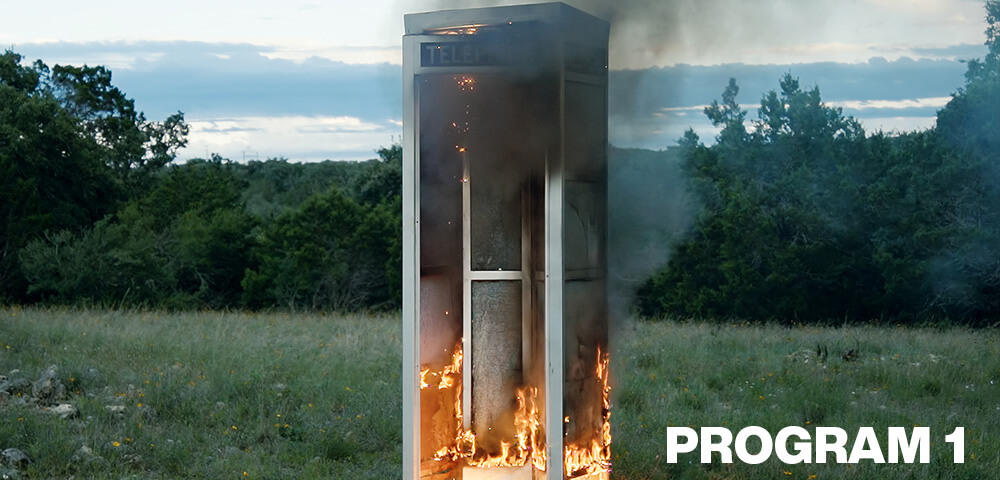
A caller reaches 311 attempting to leak information regarding the combustion of a phone booth and its possible significance as it relates to the AT&T Long Lines Building, a windowless skyscraper in downtown Manhattan. Depositing a hollow nickel containing a microSD card, the individual speaks with a telephone operator who assists in discerning the essence of this ominous image. Shortly after the film was made, the building was reported to be a major communication node in a covert NSA surveillance network.

THERE IS NOTHING UNDERNEATH THE WEST VIRGINIA WING
Dir. Frank Heath, 2018
English, 16min

Deep below the Greenbrier Hotel in White Sulphur Springs, West Virginia, is a vast and elaborate underground bomb shelter. Established as part of the secret Continuity of Government program, to house members of Congress in the event of a nuclear attack, the bunker is now declassified and open for public tours. This film documents the eerie spaces of the vacant shelter, its remarkable blast doors which were engineered by the Mosler Vault Company, and the dedicated staff who continue to care for it.

PROTECT YOUR HOME
Dir. Frank Heath, 2021
13min

Spanning the 1950s to the present, this montage of archival commercials and DIY footage explores the many permutations of ‘home security,’ from alarm systems and end-times bunkers to gun ownership and sage-burning rituals—revealing a persistent undercurrent at the intersection of personal, social, and environmental anxieties. Music: Ches Smith, ‘Interpret It Well.’

WAR PIGEON
Dir. Frank Heath, 2017
English, 13min

Recounting an unnerving encounter involving a building from the Manhattan Project, a suspicious bird, and a Shamrock Shake, a caller consults with a customer service representative from a bank regarding his apparently corrupted memory and the ethical imperatives of one’s vocation.
 
PROGRAM 2

PROGRAM 2

MONDAY, MARCH 9 – 7:30PM
WEDNESDAY, MARCH 25 – 10PM + Q&A with Heath and actor/collaborator Jesse Wakeman moderated by Jon Dieringer (This event is $10)

BUY TICKETS

INVASIVE SPECIES
Dir. Frank Heath, 2012
English 11min
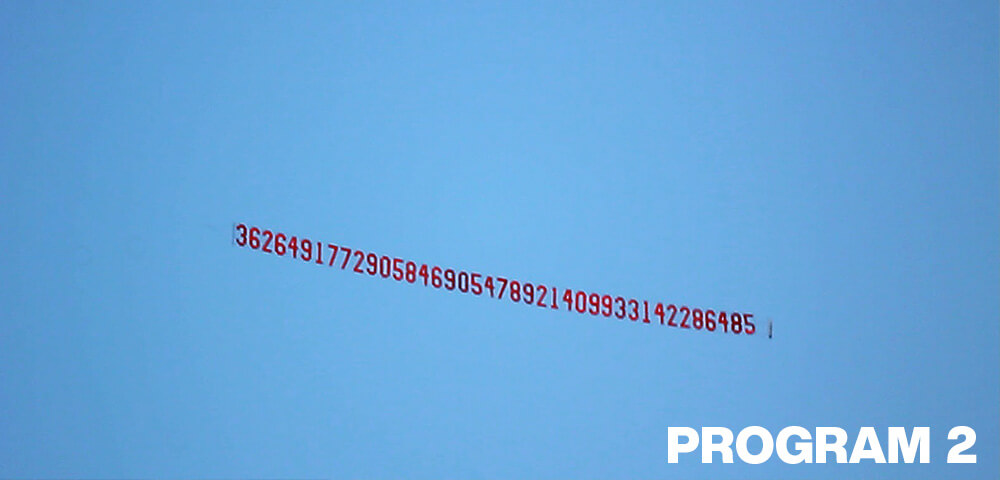
Haunted by a cipher transmitted from invasive wildlife in Greenwood Cemetery, a caller hires a local advertising firm to address the situation and assess the link between organic systems and encrypted data.

MINIMALISM
Dir. Frank Heath, 2024
2min
A chronicle of shrinking technology that follows the drive towards miniaturization, from early cell phone ads and pocket-sized gadgets to neural implants and simulated realities. Music: Laugh Ash (Ches Smith), ‘Minimalism.’

ON THE BEACH

Taking its name from a Cold War novel by Nevil Shute, which follows the sole survivors of a global nuclear fallout as they wait for the radiation to drift overseas, On the Beach traces the urgent and miscalculated efforts of a two-person film crew as they attempt to document and preserve key facets of modern civilization before it’s too late. Interviews with figures working at crucial sites related to the future of humanity—the Large Hadron Collider at CERN, an underground vault for the storage of films, and a gene bank carved into the side of an Arctic mountain—send the protagonists searching department stores, subway video retailers, and supermarkets for commercial solutions to their existential problem. Originally produced as a web series for the online magazine Triple Canopy, this is the first time the work has been screened in its entirety.

ON THE BEACH 01: MADE TO BE FOUND
Dir. Frank Heath, 2014
English, 21min

Peter and Dwight struggle with their assignment as they survey a department store in search of props for a film shoot inspired by the wisdom of CERN physicists.

ON THE BEACH 02: A PRIME CONDITION
Dir. Frank Heath, 2017
English, 19min

Peter and Dwight study the contents of a massive underground storage facility for Hollywood films, located in a salt mine in Kansas, to ascertain the crucial monuments of cinema history with the guidance of a local video retail expert.

ON THE BEACH 03: MIDNIGHT SUN
Dir. Frank Heath, 2018
English, 15min

Peter reports a supernatural occurrence he experienced at a local supermarket while contemplating footage sent from the Svalbard Global Seed Vault.
 
PROGRAM 3

PROGRAM 3

SUNDAY, MARCH 15 – 5PM + Q&A with Heath and composer Nate Wooley moderated by Isaac Hoff (THIS EVENT IS $10)
FRIDAY, MARCH 27 – 7:30PM 

BUY TICKETS

SMOKE GETS IN YOUR EYES
Dir. Frank Heath, 2022
5min.

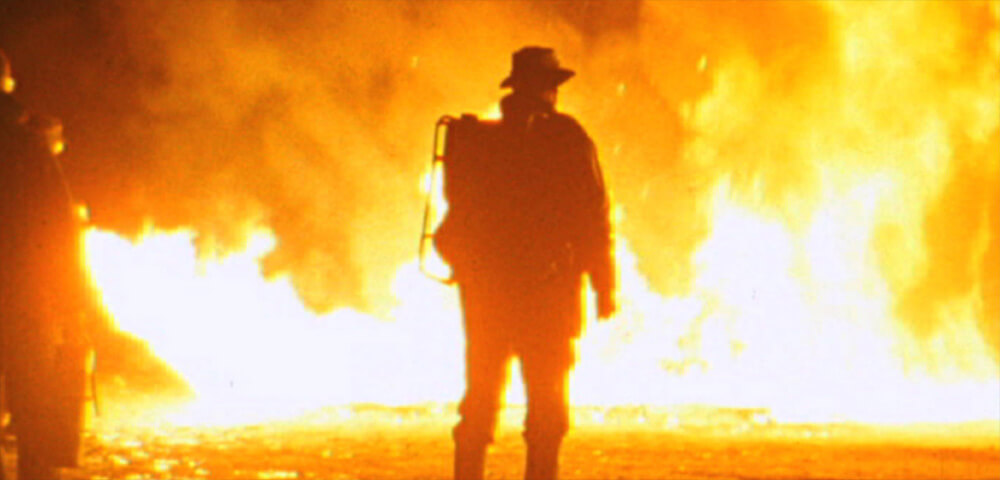
Despite an encroaching inferno, the party rages on in this video, compiled entirely from film and television programs that include the eponymous 1933 song by Jerome Kern and Otto Harbach. Music: ‘Combustion 2’ by Cory Smythe from the album Smoke Gets In Your Eyes (2022).

ASYMPTOMATIC CARRIER
Dir. Frank Heath, 2013
English, 14min

The lone resident of North Brother Island in the East River attempts to procure a new flag and finds out just how long he’s been away during his self-imposed isolation, which has surprising correspondence with the infamous quarantine of Mary Mallon (aka “Typhoid Mary”) on the same island nearly a century before.

CENTRALIA
Dir. Frank Heath, 2022
English, 57min

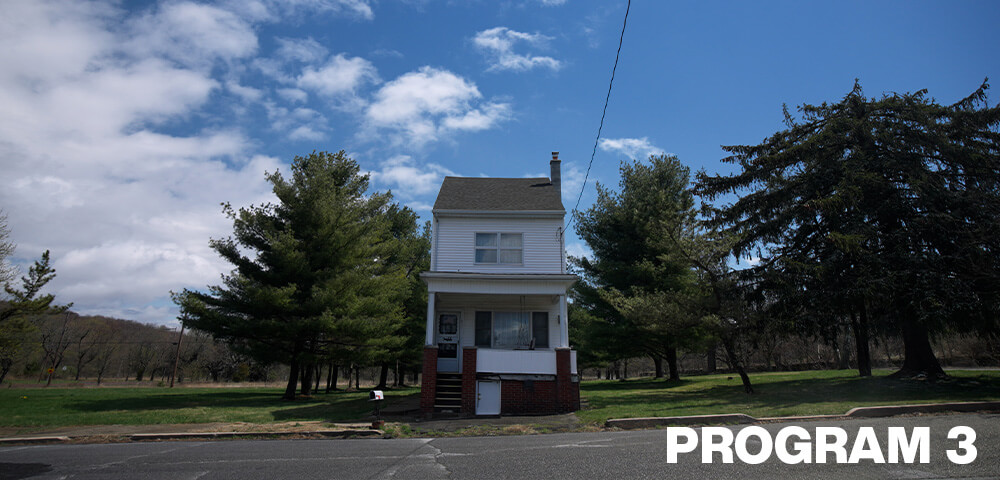
This portrait of Centralia, Pennsylvania—a near ghost town slowly consumed by what lies beneath—captures the blighted and largely depopulated landscape, widely known as the inspiration for the horror franchise Silent Hill, as well as the futile efforts of government agencies to contain the catastrophe and control the local population. Devoid of dialogue or diegetic sound, the film is set to the entirety of Ancient Songs of Burlap Heroes, the LP by Columbia Icefield (Nate Wooley), excavating a sense of synchronicity between the unaltered soundtrack, particularly its use of field recordings, and the uncanny ruins of a once-thriving community of coal miners.
 
PROGRAM 4

PROGRAM 4

WEDNESDAY, MARCH 18 – 7:30PM
FRIDAY, MARCH 27 – 10PM + Q&A with Heath moderated by Manny Unger (THIS EVENT IS $10)

BUY TICKETS

A REAL GREY AREA
Dir. Frank Heath, 2026
English, 11min

Attempting to stage an historical reenactment on Coney Island, a contractor working for a powerful client speaks with a representative from a rental company regarding the unconventional use of an electric generator.

PATH OF TOTALITY
Dir. Frank Heath, 2018
English, 13min

Against the backdrop of a total solar eclipse, this film follows a motley crew of spectators, entertainers, and vendors gathered in St. Joseph, MO—the artist’s hometown—capturing the anxiety, cosmic wonder, and commercial opportunities inspired by the brief moment of darkness at one of the prime locations within the so-called “path of totality.”

CRYPTS OF CIVILIZATION
Dir. Frank Heath, 2021
English, 23min

History professor Paul Hudson discusses The Crypt of Civilization, a time capsule at Oglethorpe University in Georgia, sealed in 1940 and slated to be opened in the year 8113 AD. Hudson comments on the particular material and ethical problems involved in the construction of time capsules and recounts his personal journey from discovering the Crypt as a student to becoming a founding member of the International Time Capsule Society, a group dedicated to the registry and study of all known examples of the form.

LAST WILL AND TESTAMENT
Dir. Frank Heath, 2021
English, 15min

Recent journeys through the Suez Canal and to Onkalo, Finland (home of the world’s first long-term disposal facility for spent nuclear fuel), prompt a man to consult an estate lawyer about an eccentric plan for his mortal remains, drawing a fine line between precious cargo and hazardous waste.

EARENDEL
Dir. Frank Heath, 2024
7min

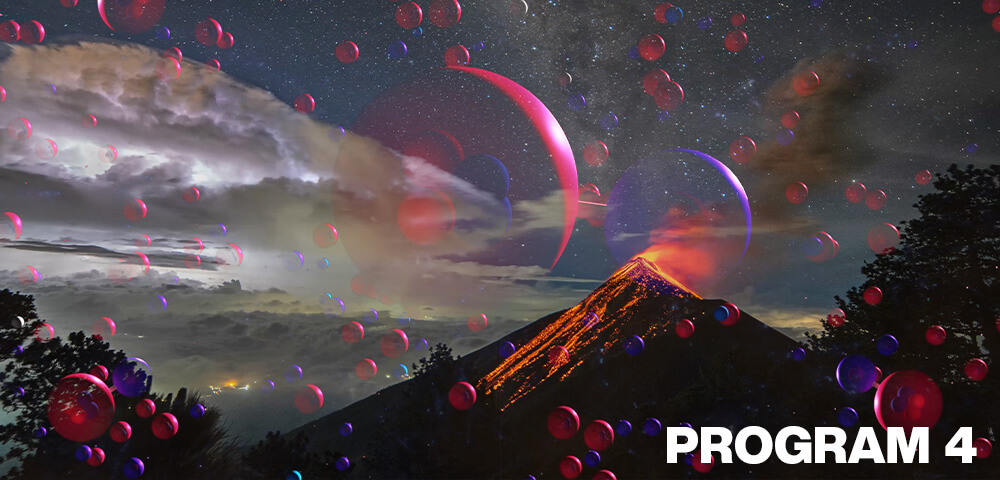
A surreal travelogue from the molten interior of the Earth to the limits of the known universe, this film, assembled primarily from footage made by government agencies including US Geological Survey, NASA, and Space Force, investigates the paradoxical relationship between militarized technologies of visualization and sublime cosmic phenomenon. Music: ‘Earendel,’ by Patricia Brennan.
ROCKUARY: BE GLAD FOR THE SONG HAS NO ENDING


BE GLAD FOR THE SONG HAS NO ENDING
Dir. Peter Neal, 1970
UK. 50 mins.
English

FEBRUARY 7TH-MIDNIGHT
FEBRUARY 19TH-10PM
FEBRUARY 24TH-7:30PM

GET TICKETS

This Rockuary, get ready to smell the patchouli! Although not as well-remembered as some of their peers, The Incredible String Band were an odd and pioneering Scottish psychedelic folk band whose incorporation of Middle Eastern instrumentation and open song structure was a huge influence on The Beatles, Stones, and Led Zeppelin. But while those bands only LARPED in weirdness, The ISB leaned full-tilt into it.

Partially filmed at the ancient Druid stone formation of Pentre Ifan, BE GLAD FOR THE SONG HAS NO ENDING is a half concert doc/ half folk horror film that documents the band at their creative peak. Starting off with several live performances and climaxing with a ritualistic short film that feels like a WICKER MAN precursor, the film is one of the most underseen chronicles of true sixties excess. UK magazine Weird Walk called it “a simultaneously daft and mesmerizing piece of homebrew cinema”, but a more pedestrian elevator pitch might be “THE SONG REMAINS THE SAME meets THE COLOR OF POMEGRANATES”. What else could you ask for?

YUGOSLAV BLACK WAVE: IN COLOR

YUGOSLAV BLACK WAVE: IN COLOR

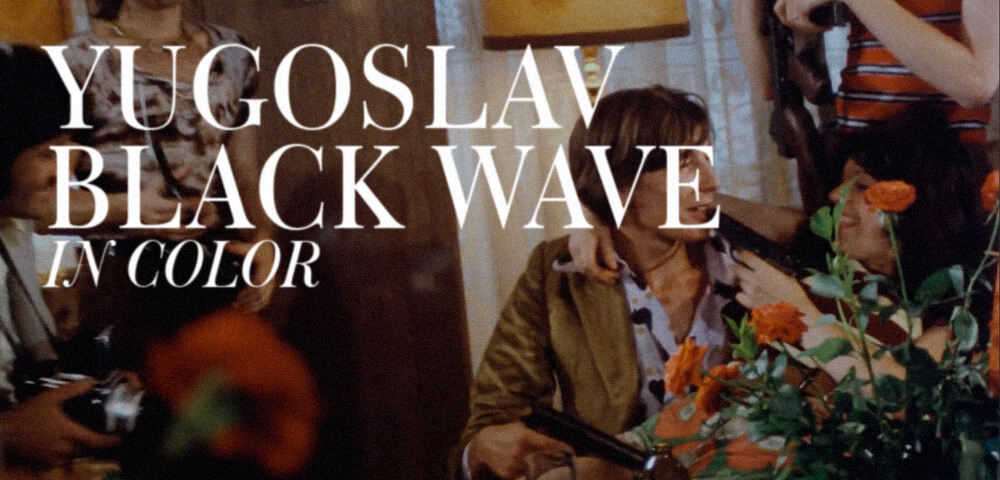
    In the early 60s, after Tito’s split with Stalin, a loose trend emerged in Socialist Yugoslav cinema. Disaffected filmmakers, living in the unrealized promise of a post-war utopia, equipped themselves with the tools of their contemporaries on the vanguard across Europe. The humanistic pessimism of the Italian Neorealists, the rebelliousness of the French New Wave, and the absurdity (and not to mention state funding) of the Czechoslovak New Wave found fertile ground in the rapidly urbanizing Yugoslavian landscape. Elements of satire, violence, polemics, sex, liberation, disillusionment, dark humor, and experimental techniques held together this burgeoning movement across genres.

    It wasn’t until 1969, in the official newspaper of the League of Communists of Yugoslavia, Borba, that journalist Vladimir Jovičić derisively coined the term “Black Wave.” Jovičić called out “the systematic distortion of the present, in which everything is viewed through a monochromatic lens. Its themes are obscure and present improper visions and images of violence, moral degeneracy, misery, lasciviousness and triviality.” Two months later, a meeting was held among Yugoslav officials to discuss the present, film-induced demoralization, and the censorship began in earnest. Films like W.R.: MYSTERIES OF THE ORGANISM (1971), inarguably the most famous contribution to the Black Wave, and BREAKFAST WITH THE DEVIL (1971), which we’re screening in this series, were banned and sealed for decades. PLASTIC JESUS (1971), even led to the filmmaker’s imprisonment for “spreading enemy propaganda.”

    Despite the supposedly “monochromatic lens,” we at Spectacle are pleased to share a selection of Black Wave films entirely in color. The early 70s marked both the end of the movement formally and one of its most productive periods. Shedding some of the severity from the war dramas of the 60’s, the Black Wave films of this era lean into style and cinematic ambition without dulling their political edge.

 
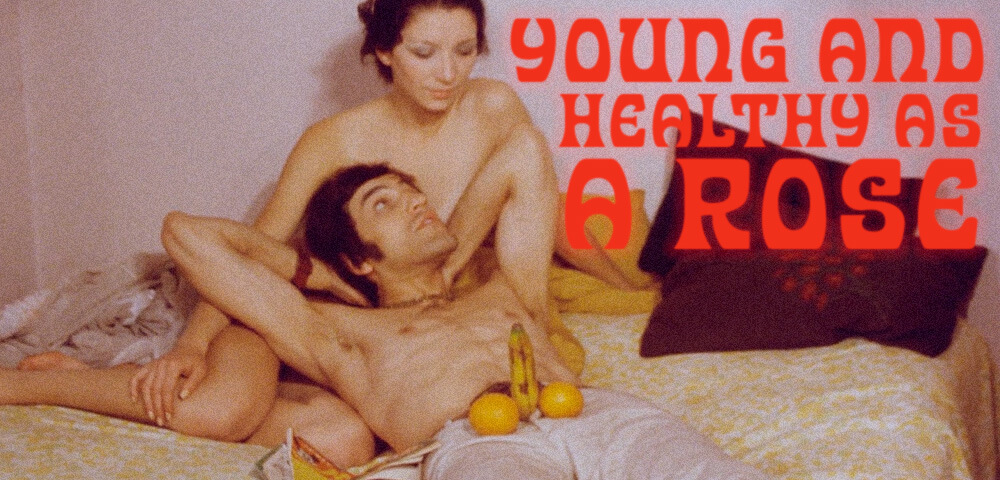
SYOUNG AND HEALTHY AS A ROSE

YOUNG AND HEALTHY AS A ROSE
Mlad i zdrav kao ruža
Dir. Jovan Jovanović, 1971
Yugoslavian. 74 min.
In Serbo-Croatian with English subtitles.

WEDNESDAY, DECEMBER 3 – 10 PM 
WEDNESDAY, DECEMBER 10 – 10 PM 
MONDAY, DECEMBER 15 – 7:30 PM
FRIDAY, DECEMBER 19 – 7:30 PM

BUY TICKETS

A young man who bears an uncanny resemblance to Vincent Gallow brazenly steals, kills, and fucks his way across Belgrade as he makes a name for himself in the criminal underground. Before long, he catches the attention of both competitors and the authorities. Stiv, the rebellious youth of titular vigor, finds himself the unlikely spokesperson of a disaffected generation and an outspoken critic of Tito.

One of the clearest examples of the French New Wave’s influence on Yugoslav Black Wave, viewers will notice more than a touch of Godard, especially BREATHLESS (1960) and WEEKEND (1967). Although not officially banned, it was not shown for 35 years after its initial release due to its anti-establishment content.

 
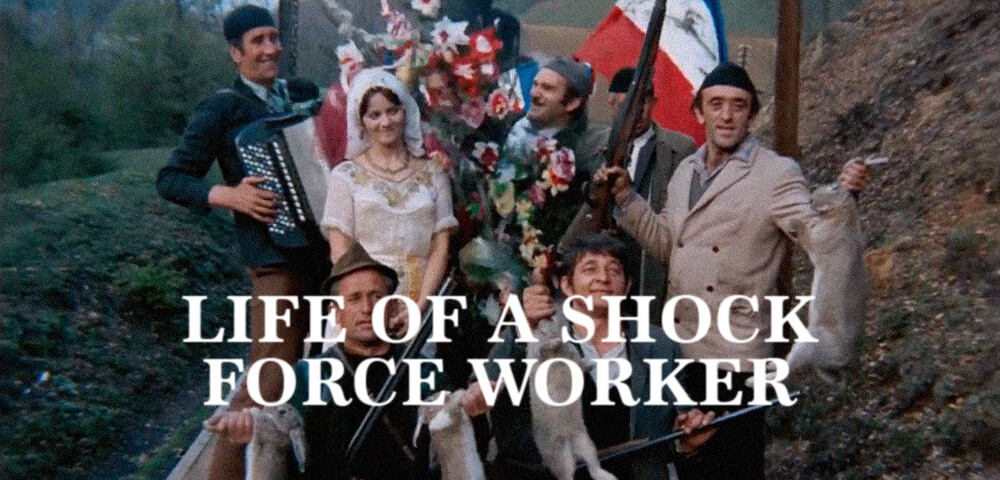
LIFE OF A SHOCK FORCE WORKER

LIFE OF A SHOCK FORCE WORKER
Slike iz života udarnika
Dir. Bahrudin ‘Bata’ Čengić, 1972
Yugoslavian. 75 min.
In Serbo-Croatian with English subtitles.

FRIDAY, DECEMBER 5 – 7:30 PM 
SATURDAY, DECEMBER 6 – 10 PM 
THURSDAY, DECEMBER 18 – 7:30 PM 

BUY TICKETS

Adem, a Bosniak miner, is the exemplar of labor in his small town before the split between Tito and Stalin. Always going above and beyond the call of duty, Adem earns the title of udarnik (shock force worker) – a worker who has been elevated to the status of national hero. With his new status, his identity is bisected. At the same time a small town worker and national icon, family man and appendage of the state. His loyalties are tested while the countryside struggles to urbanize in accordance with Tito’s agenda, and never without a healthy dose of humor.

Beautifully shot by Karpo Aćimović Godina and restored under his direct supervision, LIFE OF A SHOCK FORCE WORKER is singular among its contemporaries in its beauty. Every composition is spellbinding from the mountains to the mines.

 
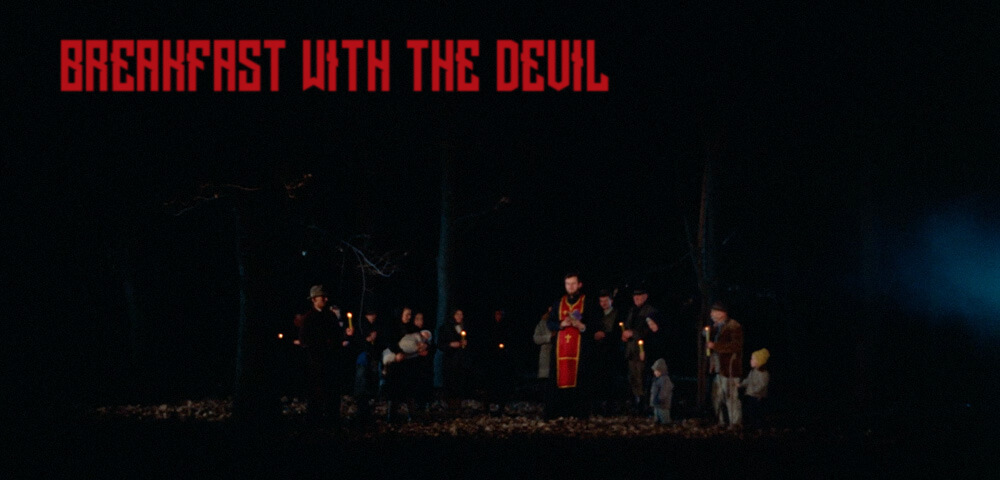
BREAKFAST WITH THE DEVIL

BREAKFAST WITH THE DEVIL
Doručak sa ðavolom
Dir. Miroslav Antić, 1971
Yugoslavian. 84 min.
In Serbo-Croatian with English subtitles.

TUESDAY, DECEMBER 2 – 7:30 PM 
MONDAY, DECEMBER 8 – 7:30 PM 
SATURDAY, DECEMBER 13 – 10 PM 
SATURDAY, DECEMBER 20 – 10 PM 

BUY TICKETS

In the shadow of wartime, a flood threatens a small Serbian village while Communist authorities sent from the city make impossible demands on the villagers. Parallel stories unfold across the village as families quarrel and comrades suffer, while under the muck and mire, love blooms.

With an incredible score and stand-out performance from Serbian icon, Velimir “Bata” Živojnović, BREAKFAST WITH THE DEVIL looks back at the early days of Socialist Yugoslavia and the people left to pick up the pieces after the war. The second and last film by poet turned filmmaker, Miroslac Antić, was banned by the state until 1990.

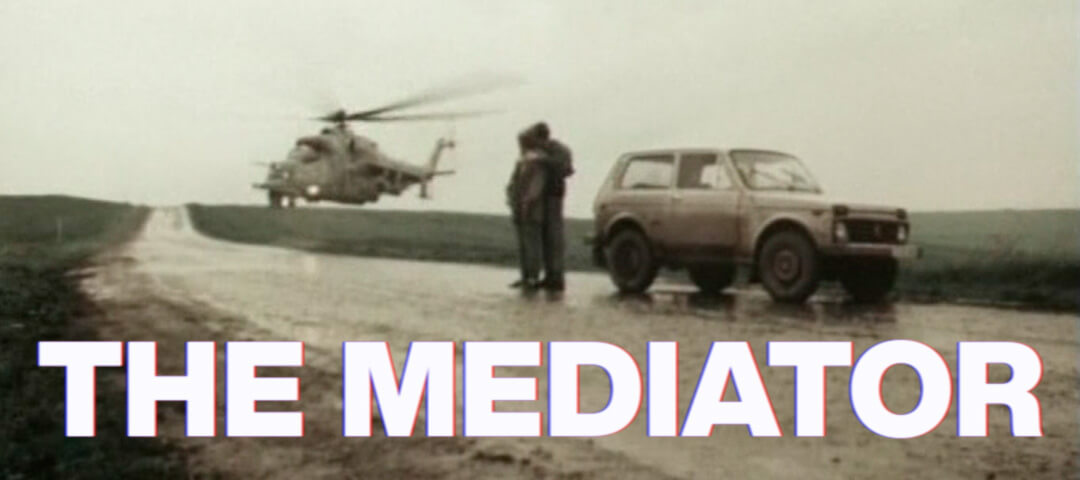
THE MEDIATOR (POSREDNIK)

The Mediator

THE MEDIATOR (POSREDNIK)
Dir. Vladimir Potapov, 1990
USSR. 219 min.

WEDNESDAY, SEPTEMBER 10 – 7:30 PM 
SATURDAY, SEPTEMBER 20 – 7:30 PM 
MONDAY, SEPTEMBER 29 – 7:30 PM

BUY TICKETS

THE LAST SOVIET SCI-FI FILM

Aliens with the ability to implant their consciousnesses inside living people make first contact in a quiet Soviet town. It seems that only children, geniuses and the clinically eccentric are unaffected by the invaders’ mind control device – the mediator. Alien influence spreads through the area without restraint, and it soon becomes difficult to tell comrade from foe. Racing to stop the imposters before they can execute the final stages of their plan, the fate of the world depends on the success of three young friends on a dangerous mission.

Loosely based on the novel Main Noon by Aleksandr Mirer, THE MEDIATOR was released as a three-part TV movie in 1990. The looming dissolution of the Soviet Union hovers right near the surface of the film with outside influence driving a rift in the small industrial town. It’s a war of intellects and ideologies, but don’t think it’s short on artillery and style. Explosions, slow motion machine guns, glowing orbs and attack helicopters abound. Shot in both color and a beautifully moody sepia tone and accompanied by eery, reverb-loaded sound design, THE MEDIATOR succeeds in sending Soviet sci-fi off with a bang.

The film will be shown in its entirety with a 10 minute intermission.


RESET / EJECT

RESET/EJECT SERIES

A series of inside out devices that function by turning back in on themselves, perpetually setting the score back to “0”, and eventually hitting the reset button. Scientific rationales, legal policies, national ideologies and landscape designs are all agents in the production of our shared reality. We have entered a perpetual state of re-invention, with a high speed and a seemingly unstoppable momentum. Re-invention also involves re-production, but as our accepted logical systems and infrastructures re-produce, they are reshaped and reformed. After reaching their functioning capacity, what is stable turns to liquid. All that is solid melts into air. This a film program full of illogical ends, nazi soil scientists and former air force pilots defying the limits of humanity. Films that bend and the history of scientific research, national identity formation, state policy and how they intertwine to hold our fragile world together.

Program 1: Reset

THURSDAY, AUGUST 14 – 7:30
Intro with Filmmaker Mary Helena Clark
BUY TICKETS

The Enlightenment

The Enlightenment
Dir. Stephanie Barber
2023 | 12 minutes | 16mm to HD | Color | sound

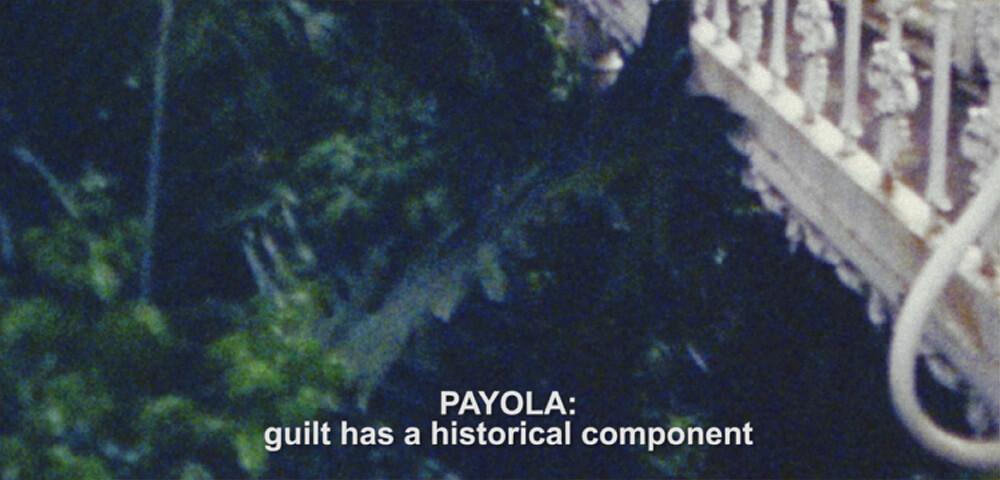
Yon and Payola find themselves in a Victorian conservatory. They are companionable, disoriented and petulant––they whip wildly through these disembodied states. Payola reads an excerpt of their considerable time on the age of enlightenment to Yon. Payola’s research, and presentation of this research, is a purposeful affront to empirical data, the scientific method and other enlightenment ideals, while reveling in the desire for the revolution and intellectual expansion those thinkers championed. The concepts are undermined by the form and register of their delivery OR the concepts are strengthened by the poetry through which they are presented.

Common Sequence

A Common Sequence
Dir. Mary Helena Clark and Mike Gibisser
2023 | 78 minutes | 2K | Color | 5.1

Within the human struggle to live and work on a changing planet, questions of value, extraction, and adaptation echo across seemingly disparate worlds. A Common Sequence examines shifts of life and labor through a critically-endangered salamander and plant patents in the apple industry. Weaving the stories of Dominican nuns running a conservation lab, a group of fisherman attempting to live off of a depleting lake, engineers developing AI-driven harvesting machines, and an indigenous biomedical researcher resisting the commodification of human DNA, the film becomes a meditation on the shifting border between the natural and unnatural world, and the dynamics of power at play.

Program 2: Eject

WEDNESDAY, AUGUST 20 – 7:30 PM 
BUY TICKETS

Sick Landscapes

Sick Landscapes
Dir. Zach Hart
2025 | 24 minutes | Germany | English | B&W and Color | Stereo | 4:3 | 16mm film and
HD Video

Sick Landscapes.2
Dir. Zach Hart
2025 | 17 minutes | Germany | English and German | English Subtitles |
Color | Stereo | 1.896:1 | 4K

Theatrical Premiere of two works developed as a multi-channel installation work. Alwin Seifert said it most directly, “in a sick landscape, there cannot be a healthy people.” He saw landscape design as a means to push forward the German folkish-nationalistic blood and soil agenda. Through his work, landscape became part of an overall concept of racial health and beauty. Reinhold Lingner, a prominent GDR landscape planner, would go on to describe the landscape in similar terms, but with an ecological instead of an ideological intention. He would anthropomorphize the landscape and describe it as an organism, as though the body of the landscape were part of the German people’s body. Lingner was also an advocate for landscape preservation after the second world war; a movement which had started many years earlier and was supported by Nazi soil scientists like Seifert. Lingner designed Berlin’s rubble mountains, hills made from rubble strewn about after WWII. The rubble was sorted by the Trümmerfrauen (rubble women), who were frequently photographed by Berliner Zeitung’s photographer, Eva Kemlein. She was a holocaust survivor who had gone underground during the second world war. Kemlein also photographed the demolition of the Berlin City Palace in 1951. The Palace’s demolition was hotly debated amongst architectural historians, landscape planners and ideologically driven conservationists that wanted to preserve German cultural heritage during the time of denazification. Communists ultimately thought the Palace stood for Prussian Imperialism, so it was destroyed as part of the GDR Ministry of Reconstruction’s effort to rebuild upon only the healthy aspects of German culture. Kemlein, who had trained as a forensic photographer, would survive the second world war and then go on to photograph the sick body of a building. Its spirit was strong enough to survive its initial demolition. Using Kemlein’s scientific documentation, the Palace was rebuilt. It now houses the highly controversial Humboldt Forum.

Unhealthy spirits infest the German landscape, through architecture, language and their accidental reproduction of Nazi ideology. Perhaps they would be most likely to haunt those who continue to work with the land itself. Still today, there are countless actors who unknowingly re-establish the language and behaviors of fascism, and the buildings which stand as monuments to imperialism. What a perfect moment to aestheticize ourselves to the materials which build our surrounding environment and those who oversee it. Whether it be the countless images that we ingest daily, the parks where we can sit on a bench and enjoy the sun, or the institutions we choose to cooperate with.

Germany is still the Israeli army’s second largest arms dealer. As we watch the Israeli government commit genocide in Palestine, it seems that the fascist architecture and the cultural landscape which the Nazi’s left behind was too deeply embedded into the Nation’s spirit to teach German politicians how to truly say “never again means now.”

Another Horizon

Another Horizon
Dir. Stephanie Barber
2020 | 9 minutes | 16mm | Color | sound

the horizon, where the sky and the earth meet, is always elsewhere, is a promised place where these two elements come together. a metaphor, an orienting, a promise of transition, change, transcendence. a place where the corporeal and spiritual meet, or are cleaved apart.

here, the space between narrative and documentary, fact and fiction, is literally scratched between two voices, also cleaved apart or brought beside. jayne love reads a text i wrote for her — short sentences on the concept of the horizon and the briefest suggestion of narrative collide with pieces of richard (oswan) williams’ beautiful, rum-fueled living room sermons to me.

i lived, for a few months, in richard, and his wife mary’s, apartment, the site of their voodoo spiritual temple in new orleans. of course, as priests and priestesses Richard and Mary spoke often of death, transcendence, ethics and health. our days were slow and filled with philosophical rumination, richard, a brilliant old man schooling a young wandering wonderer. i recorded most everything on cassette tapes back then and some of those have made it here to the present. to this horizon we’re at now.

O'er the Land

O’er the Land
Dir. Deborah Stratman
2009 | 51 minutes | United States | English | B&W and Color | Stereo | 4:3 | 16mm film to
HD video

A meditation on the milieu of elevated threat addressing national identity, gun culture, wilderness, consumption, patriotism and the possibility of personal transcendence. Of particular interest are the ways Americans have come to understand freedom and the increasingly technological reiterations of manifest destiny.

While channeling our national psyche, the film is interrupted by the story of Col. William Rankin who in 1959, was forced to eject from his F8U fighter jet at 48,000 feet without a pressure suit, only to get trapped for 45 minutes in the up and down drafts of a massive thunderstorm. Remarkably, he survived. Rankin’s story represents a non-material, metaphysical kind of freedom. He was vomited up by his own jet, that American icon of progress and strength, but violent purging does not necessarily lead to reassessment or redirection.This film is concerned with the sudden, simple, thorough ways that events can separate us from the system of things, and place us in a kind of limbo. Like when we fall. Or cross a border. Or get shot. Or saved. The film forces together culturally acceptable icons of heroic national tradition with the suggestion of unacceptable historical consequences, so that seemingly benign locations become zones of moral angst.

DEPTHS OF FIELD: RARE TAPES FROM EZTV

DEPTHS OF FIELD: RARE TAPES FROM EZTV

In 1979, Hollywood Reporter correspondent and aspiring filmmaker John Dorr made his first feature using nothing more than a Betamax VCR and a borrowed bank security camera and began a revolution. Within four years, he’d make three additional features and launch EZTV: a production co-op and first-of-its-kind “Video Gallery” with regular weekly programming akin to what we’d now call a microcinema. From more traditional narrative dramas, comedies, horror, erotica, and documentaries to an increasing emphasis on cutting-edge video, digital, and performance art, EZTV provided the space and equipment for independent artists of all stripes and backgrounds to realize their visions.

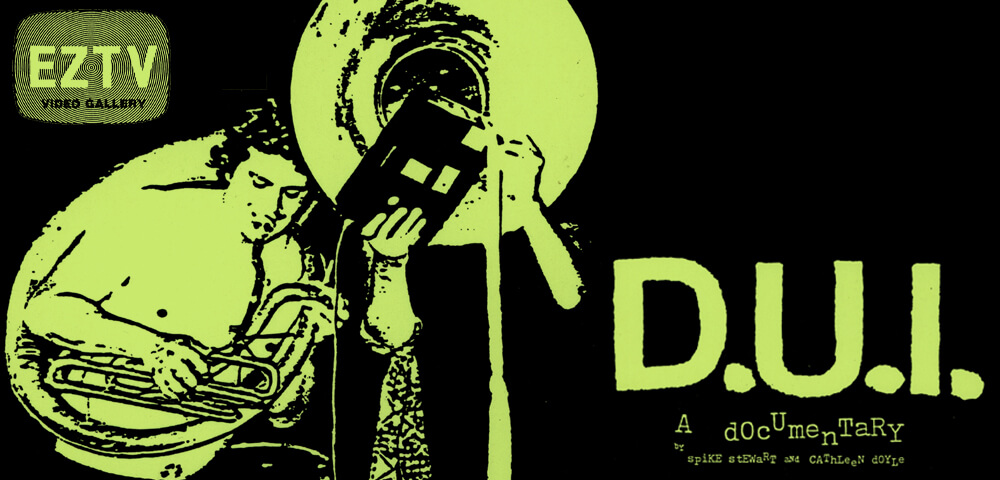
Designed as a companion to the series EZTV: Alternative Visions from West Hollywood (running at Anthology Film Archives from August 15th through the 20th), Depths of Field: Rare Tapes from EZTV offers a diverse sampling of the hundreds of in-house and outside productions that played at EZTV’s screening space during the first decade of its existence. From experimental narratives (Dreamland Court) and concert documentaries (D.U.I.: The Movie) to cyberpunk (Radio World), queer horror (Mantra), and new age comedies (The Case of the Missing Consciousness) and beyond, Depths of Field is a testament to the sheer breadth of work that graced EZTV’s CRTs and Videobeam projector.

Programmed and co-presented by Elizabeth Purchell and Hollywood Entertainment

Thank you: Michael J. Masucci, Ken Camp, James Williams, John Hays, Matthew Causey, Reg Oberlag, Dan Sallitt, Spike Stewart, Strawn Bovee, Pat Miller, Jackie Forsyte, Jessica G.Z., Erik Varho, Pascaline Morincome, Sibylle De Laurens, Gaspard Nectoux, Loni Shibuyama, ONE National Gay & Lesbian Archives Archives.

MISSING CONSCIOUSNESS

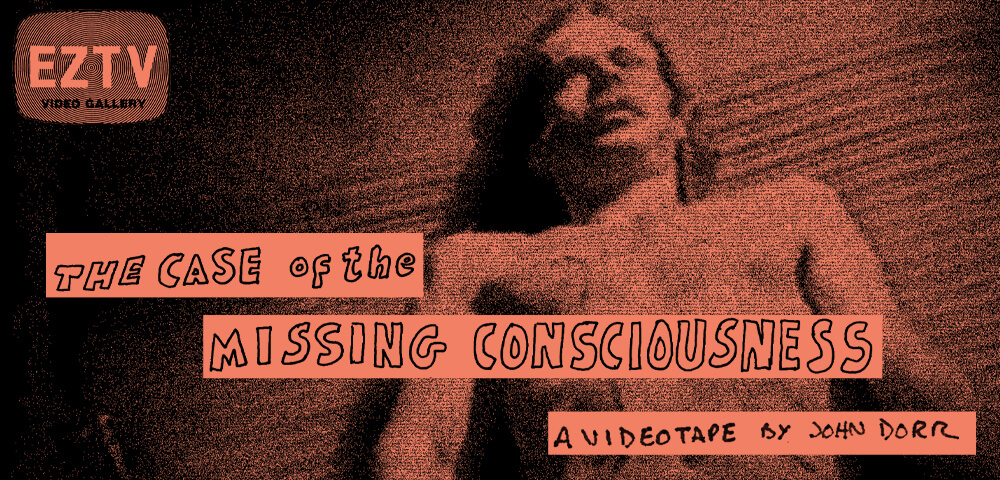
THE CASE OF THE MISSING CONSCIOUSNESS
Dir. John Dorr. 1980.
United States. 80 min.
In English.

FRIDAY, AUGUST 1 – 5:00 PM 
WEDNESDAY, AUGUST 13 – 10:00 PM 
THURSDAY, AUGUST 28 – 7:30 PM

BUY TICKETS

“John Dorr’s video s-f comedy stars Sheila Day and Strawn Bovee as rival women scientists in a brain research laboratory.” – L.A. Weekly

“ …I saw Serge Daney laugh again, at dawn, on the first of the eight days that would comprise the forty-ninth year of his life, when I recounted to him the plot of one of four videos by John Dorr, THE CASE OF THE MISSING CONSCIOUSNESS. The protagonist of this piece, played by Dorr himself, is pulled back and forth between two rival workers in a laboratory—both of them women—who perform experiments on him that are sometimes terrifying, sometimes absolutely loony, and sometimes both.

The next day, as the ambulance came to take Serge to the hospital, where his life would end, he found himself able to laugh once again at the strange similarity of what was happening to him then and the story I had told him the day before…” – Jean-Claude Biette, Cahiers du Cinema

DREAMLAND COURT

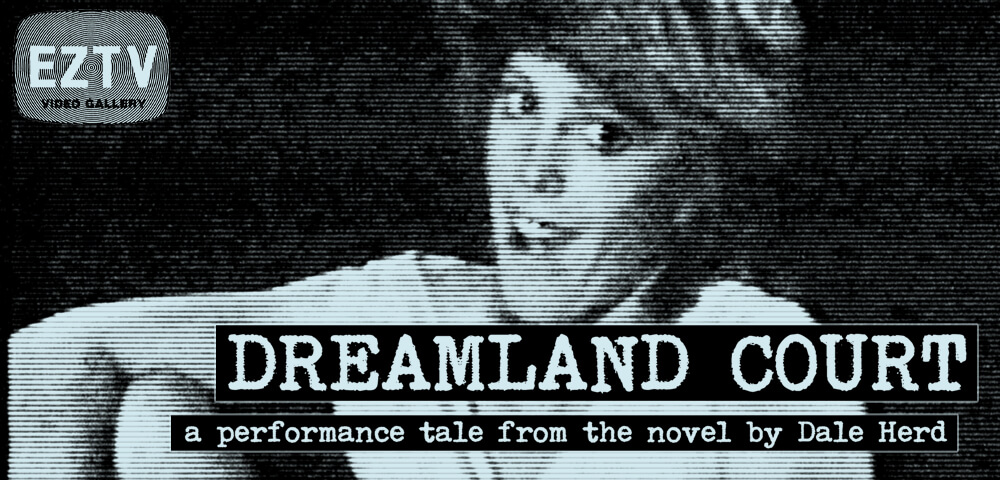
DREAMLAND COURT
Dir. Dale Herd and Barry Hall. 1983.
United States. 59 min.
In English.

SATURDAY, AUGUST 9 – 5:00 PM 
SUNDAY, AUGUST 24 – 5:00 PM 

BUY TICKETS

“Penelope Milford, Oscar-nominated for Best Supporting Actress in Coming Home, stars with Wynston Jones in this unusual story of two men and two women involved in a life of violence. Proceeding by interior monologues, experimental narrative shows us an inside-the-gut reality of people few of us would otherwise know. Described by LA poet Lewis MacAdams as a study of “Optimists in Hell.” Adapted from the novel by Dale Herd, who co-directed with Barry Hall. Produced by Beth Van de Water for Goliard Video at the Long Beach Museum of Art Video Annex. starring Mark Solomon and Susan Van Benthuysen.” – EZTV Guide

DUI: THE MOVIE

DUI: THE MOVIE
Dir. Spike Stewart and Cathleen Doyle. 1986.
United States. 80 min.
In English.

SATURDAY, AUGUST 2 – 10:00 PM 
FRIDAY, AUGUST 15 – 10:00 PM 
SATURDAY, AUGUST 23 – 10:00 PM 

BUY TICKETS

“A no-holds-barred look at the underground music scene in L.A. (circa 1982-85), directed by Spike Stewart. The bands preserved for posterity here include Severed Head in a Bag, Jon Wayne, Ugly Janitors of America, Three Day Stubble, Krew Kuts Klan, and Tequila Mockingbird.” – L.A. Weekly

“Begins where Penelope Spheeris’ Decline of Western Civilization left off…” – Los Angeles Times

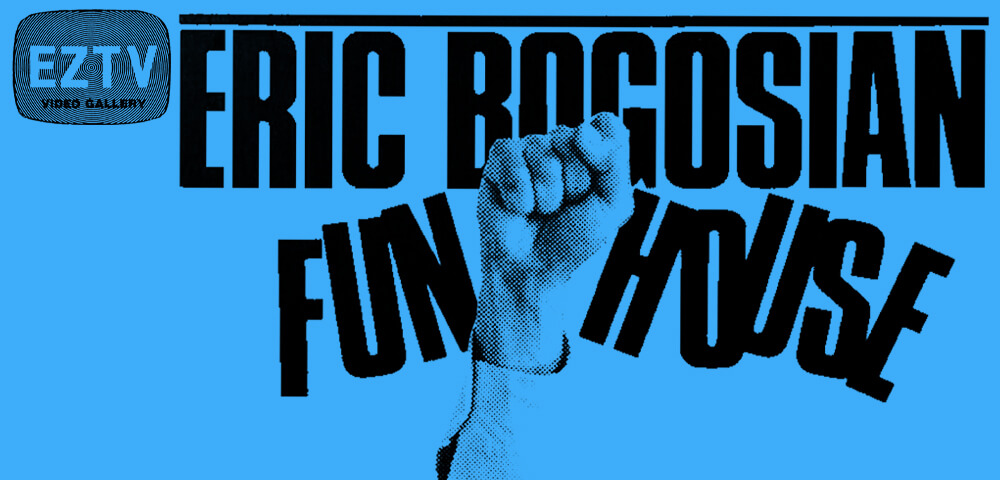
ERIC BOGOSIAN’S FUNHOUSE!

ERIC BOGOSIAN’S FUNHOUSE!
Dir. Lewis MacAdams. 1986.
United States. 80 min.
In English.

SUNDAY, AUGUST 10 – 7:30 PM 
THURSDAY, AUGUST 28 – 10:00 PM 

BUY TICKETS

Eric Bogosian’s FunHouse is a terrifyingly hilarious, recklessly entertaining journey through the performer’s mind. Fundamentalist preachers, winos, exercise instructors, rednecks, disk-jockies, male strippers, street toughs, junkie-killers and ordinary Joes parade rapid-fire across the stage in an intense, intricately woven series of monologues that illuminate the nightmare side of the American dream.

Eric Bogosian’s FunHouse was recorded at the Matrix Theatre in Los Angeles, after two years of sold-out shows across America and Europe, the last two nights this pioneer performance piece was ever presented.” – EZTV Videocassettes

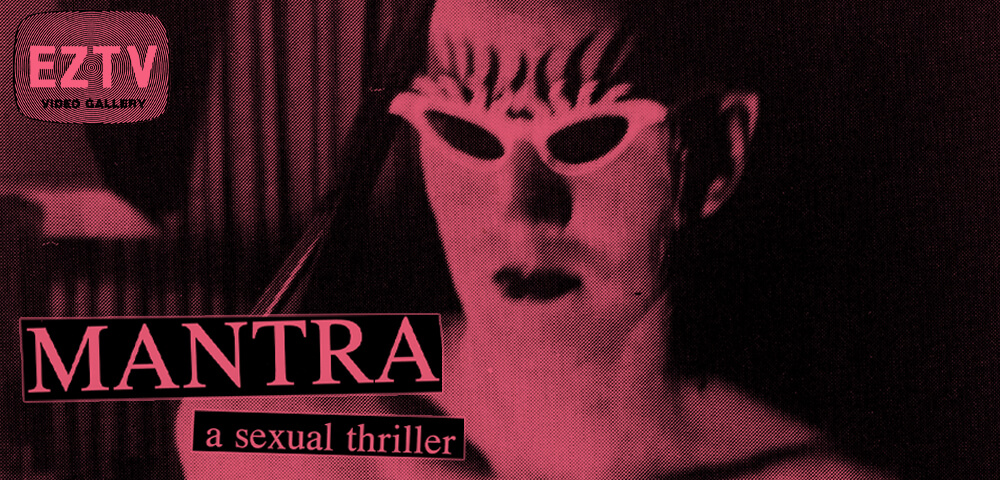
MANTRA

MANTRA
Dir. Ken Camp. 1993.
United States. 120 min.
In English.

FRIDAY, AUGUST 1 – MIDNIGHT 
WEDNESDAY, AUGUST 6 – 10:00 PM 
FRIDAY, AUGUST 22 – MIDNIGHT 
WEDNESDAY, AUGUST 27 – 10:00 PM 

BUY TICKETS

Kenny Martinez (Mike Gonzalez) is a Los Angeles-based conceptual artist who decides to set up a confessional telephone answering machine as part of his latest project. As the constant deluge of traumatic and obscene voicemails threatens to create a rift in Kenny’s relationship with his girlfriend, Jill (Regina Oh!), a bizarre serial killer (Glen Meadmore) begins using the hotline to menace the couple.

Inspired by artist Allan Bridge’s Apology Line project, Ken Camp’s Mantra is a queer shot-on-video “sexual thriller” that’s as shockingly outrageous as it is lyrically erotic. As the original poster proclaims, it’s “precisely the kind of picture that Dan Quayle—or GLAAD, for that matter—doesn’t want you to see!” New digital preservation from videomaker Ken Camp’s personal VHS copy.

WOMEN IN VIDEO

WOMEN IN VIDEO:

FRIDAY, AUGUST 8 – 7:30 PM 
FRIDAY, AUGUST 22 – 5:00 PM 
SATURDAY, AUGUST 30 – 5:00 PM 

BUY TICKETS

One of EZTV’s staple programs was a recurring showcase of works by female videomakers. For this program, we’ll present two of these—Lorrie Oshatz’s THE LAST SLUMBER PARTY and Susan Rogers’s GOOD GRIEF—plus John Dorr and Terry Mack Murphy’s early adaptation of Murphy’s play THE OTHER WOMAN starring EZTV founding member Strawn Bovee.

THE OTHER WOMAN
Dir. John Dorr and Terry Mack Murphy. 1982.
United States. 30 min.
In English.

“A biting comedy by LA playwright Terry Mack Murphy (whose work is currently being showcased by the Dejas Vu Theatre). An aspiring actress (Strawn Bovee) and her maid (Jamielle Stanley) get drunk together and critique the men in their lives; and we find that they have more in common than expected.” – EZTV Guide

THE SLUMBER PARTY
Dir. Lorrie Oshatz. 1985.
United States. 35 min.
In English.

“A caustic comedy about three women who hate men.” – EZTV Guide

GOOD GRIEF
Dir. Susan Rogers. 1983.
United States. 21 min.
In English.

“A painter (Lois Chiles) is killed in an auto accident, but continues to intrude on the life of her husband, who otherwise seems not sufficiently grieved. A video by Susan Rogers.” – EZTV Guide

POLLy PERVERSE STRIKES AGAIN!

POLLY PERVERSE STRIKES AGAIN!
Dir. Dan Sallitt. 1986.
United States. 98 min.
In English.

SUNDAY, AUGUST 3 – 7:30 
MONDAY, AUGUST 11 – 7:30 PM with Q&A ($10)
FRIDAY, AUGUST 29 – 10:00 PM 

BUY TICKETS

BUY Q&A TICKETS

“Nick Huxley, thirtyish, is becoming successful in his chosen profession, lives with a woman he is fond of, is vaguely unhappy, and doesn’t know why. Out of his past comes Theresa, a social disease who sleeps with anything that moves and who has decided that she wants Nick back. Nick, who seems to have lived a very different sort of life once, is determined to banish Theresa and youthful folly from his conscious life. But neither Nick’s girlfriend Arliss, a modern spirit who believes in driving buried emotions out in the open, nor Theresa, who seems to have an unseen power on her side, is willing to let it go at that…” – Original press synopsis

RADIO WORLD

RADIO WORLD
Dir. Matthew Causey. 1983.
United States. 70 min.
In English.

MONDAY, AUGUST 11 – 10:00 PM 
MONDAY, AUGUST 25 – 10:00 PM 
SUNDAY, AUGUST 31 – 7:30 PM 

BUY TICKETS

“In the not-so-distant future of a de-volved high tech society, a group of displaced suburbanites take refuge in a ruined factory, attempting to fend off the sadistic X-police. A video by Matthew Causey. Mechanical/incendiary effects by Mark Pauline. Music: Joseph Jacobs.” – EZTV Guide. Cinematography by Peter Deming. New digital preservation from producer Reg Oberlag’s personal VHS copy.

TALES OF THE UNLIVING AND THE UNDEAD

TALES OF THE UNLIVING AND THE UNDEAD
Dir. Wallace Potts, Robert Hernandez, Samuel M. Oldham, John Hays. 1988
United States. 90 min.
In English with Spanish Subtitles.

SATURDAY, AUGUST 9 – MIDNIGHT 
THURSDAY, AUGUST 21 – 10:00 PM 
TUESDAY, AUGUST 26 – 10:00 PM 
SATURDAY, AUGUST 30 – MIDNIGHT 

BUY TICKETS

Assembled by the short-lived EZ FILMS, Tales of the Unliving and the Undead is an anthology composed of four short horror films and videos produced by EZTV members: Cheap Thrills by Wallace Potts (Le beau mec, Psycho Cop), an abridged version of Santa Ana Winds by Robert Hernandez, Into the Fire by Samuel M. Oldham, and Death Sentence by John Hays. Released only in South America, Tales of the Unliving and the Undead is a fascinating—and extremely rare—piece of shot-on-video horror history. Digitally preserved from an original Mexican VHS (with trailers and Spanish subtitles).


LOFI FUTURES – 3 CYBERPUNK TALES SHOT ON DV

CYBERPUNK DV SERIES

At the dawn of the millennium, a time when it was likely far more fun and creatively stimulating to speculate on “the future,” the Digital Video (DV) format became the most accessible and inexpensive way to shoot and record footage. This new, scrappy, consumer-grade form of filmmaking resulted in celebrated directors like Spike Lee, Richard Linklater, Danny Boyle, and of course, David Lynch, providing some of their more experimental and chilling works. As our own future grows more incomprehensible by the day, Spectacle is proud to screen these three fuzzy, hypnagogic visions from the early 2000s: RED COCKROACHES, TRAGOS, and TEENAGE HOOKER BECAME KILLING MACHINE IN DAEHAKRO.

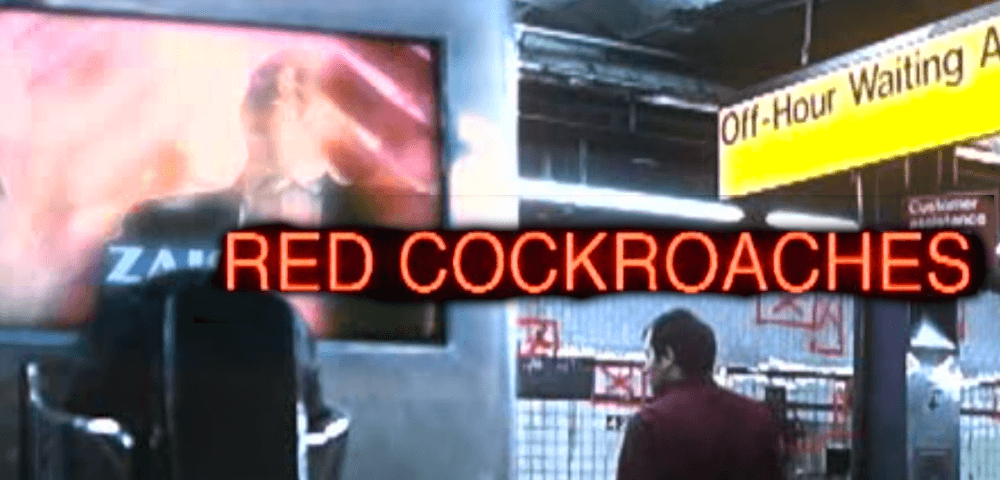
RED COCKROACHES 2003, 2025

RED COCKROACHES
dir. Miguel Coyula, 2003
United States. 82 min.

WEDNESDAY, AUGUST 13 – 7:30 PM WITH Q&A 
SATURDAY, AUGUST 23 – 7:30 PM 
FRIDAY, AUGUST 29 – MIDNIGHT

BUY TICKETS

BUY Q&A TICKETS

In what would be Miguel Coyula’s first feature production, RED COCKROACHES is a disturbing urban thriller made with a micro-modest budget of $2000. It’s the first in an auteurist trilogy stemming from Coyula’s transgressive approach to Cuban speculative fiction. Set in a near-future NYC plagued by acid rain and the invasive corporate rule of DNA21, Adam Zarrasky is just another awkward 20-something until his daily routine is upended by a lonely, beautiful woman on a subway platform. What begins like a scene out of a romantic comedy in this poisoned world quickly devolves, opening a hole of lost family secrets and unthinkable psychosexual horrors. Coyula develops a language of singular cinematic unease that must be seen to be believed – audiences will never look at ketchup the same way again. Featuring an in-person Q&A with director Miguel Coyula on August 13th!

CW: incest

Special Thanks to Alfredo Calvino, Miguel Coyula and Ross Snyder of Saturn’s Core

Undeniably inventive, visually stunning, a triumph of technology in the hands of a visionary
—Ronnie Scheib, Variety

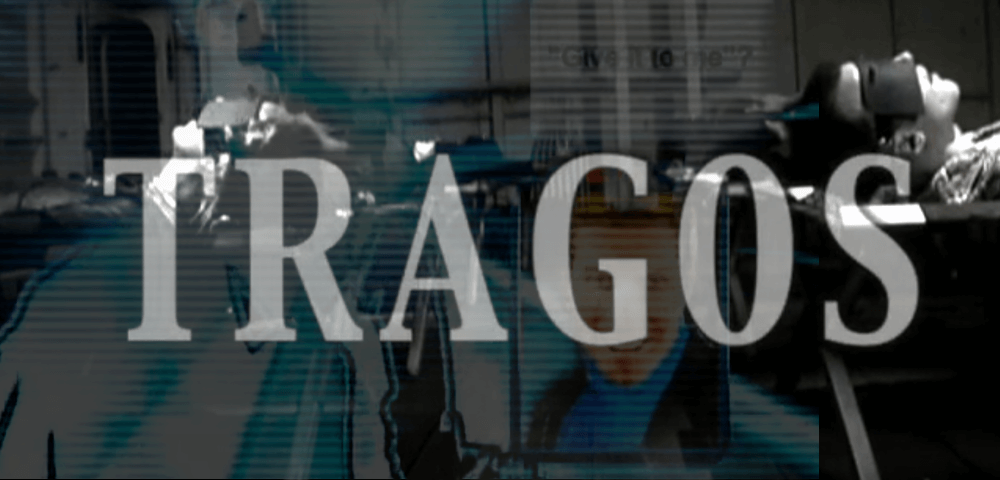
TRAGOS

TRAGOS
dir. Antero Alli, 2000
United States. 105 min.

SATURDAY, AUGUST 2 – 7:30 PM 
TUESDAY, AUGUST 5 – 10:00 PM 
THURSDAY, AUGUST 14 – 10:00 PM
MONDAY, AUGUST 18 – 10:00 PM

BUY TICKETS

A CYBER NOIR WITCH HUNT

Following our retrospective on Antero Alli, we’re proud to screen another picture from his poetic imagination. TRAGOS continues in the footsteps of THE DRIVETIME and its anxious judgments towards the dial-up tech of the late 90s. Centered around a virtual reality server’s deadly potential after the mysterious death of technopagan Vivika (producer/art director/music composer Thia Alli), this shot-on-miniDV mystery was impressively produced in-house with a $7000 budget – further establishing Antero and Thia Alli as modest adepts in DIY narrative filmmaking.

One of the most “obscure FMV game” movies ever made!
–Evan Pincus, LB

an outsider art miracle
–erik reeds, LB

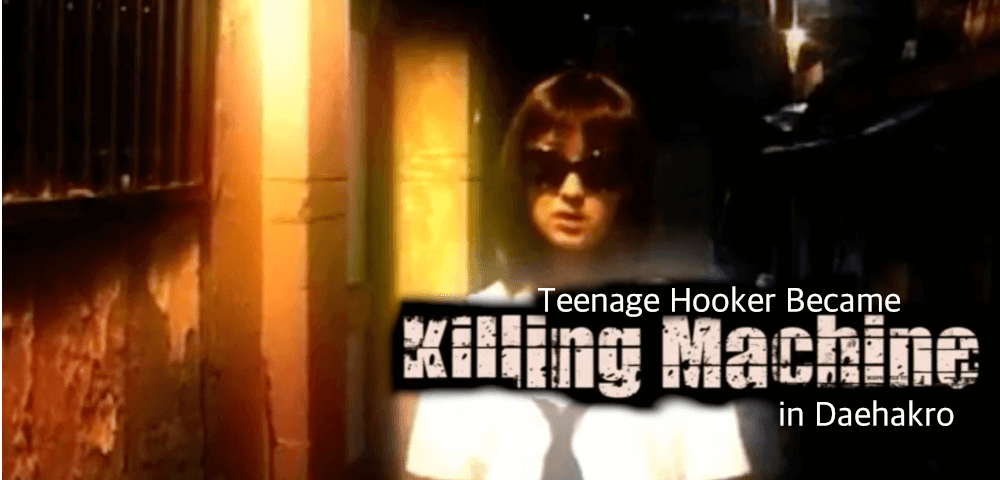
TEENAGE HOOKER BECAME KILLING MACHINE IN DAEHAKRO

TEENAGE HOOKER BECAME KILLING MACHINE IN DAEHAKRO
dir. Nam Ki-woong, 2000
South Korea. 60 min.

SATURDAY, AUGUST 2 – MIDNIGHT 
FRIDAY, AUGUST 8 – MIDNIGHT 
TUESDAY, AUGUST 19 – 10:00PM
SATURDAY, AUGUST 23 – MIDNIGHT 

BUY TICKETS

With a translated title that’s as blunt and direct as it gets, TEENAGE HOOKER BECAME KILLING MACHINE IN DAEHAKRO is classic grindhouse sleaze distilled through a Y2K aesthetic. Lee So-woon stars in her first and only film role as a teenage girl given a second chance at life through brutal reconstruction. These new gifts propel her into a vengeful murder spree as she hunts for the perverse teacher (Kim Dae-tong) who killed her. Director Nam Ki-woong wore several hats when he made this picture, and his glowing DV cinematography paired with an entrancing trip-hop influenced score results in what might just be the coziest splatter movie in film history. Spectacle is proud to unleash one of the more operatic examples in extreme cinema to a new generation of tech-infused, bloodthirsty, sophisticated sickos.

The absolute garishness of early digital video pushed to its limit. I honestly kind of love this.
–COBRARocky, LB

One of those rare films who seems to be constant[ly] reinventing its forms, it remains one of the great found objects of the 00’s.
–Felipe Furtado, LB

Special Thanks to Youngin Lee and Kim Dohee of INDIESTORY INC.


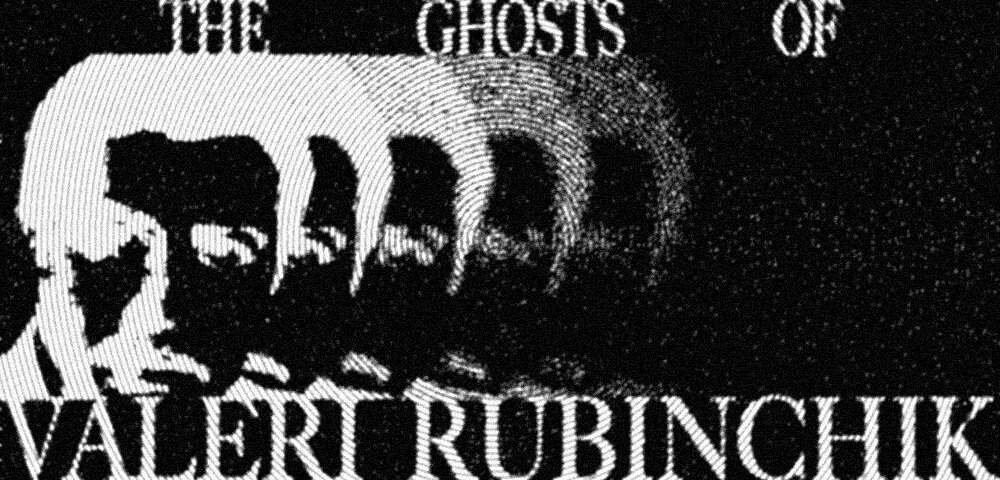
THE GHOSTS OF VALERI RUBINCHIK

This July, Spectacle invites you to experience two films from Valeri Rubinchik in all their gothic glory. A Belarusian director from the twilight years of the USSR, Rubinchik was an exemplar of the more lyrical Soviet counterargument to Hollywood blockbuster films. This is likely the reason that his films have until recently gone largely unseen since their initial release. The two films presented, THE SAVAGE HUNT OF KING STAKH and THE APOSTATE, showcase Rubinchik’s mastery over atmosphere and the psyche. Weaving together massive tableaus, complex camera work, and nonlinear editing, Rubinchik’s two films offer a fresh look at horror and sci-fi from behind the iron curtain.

 
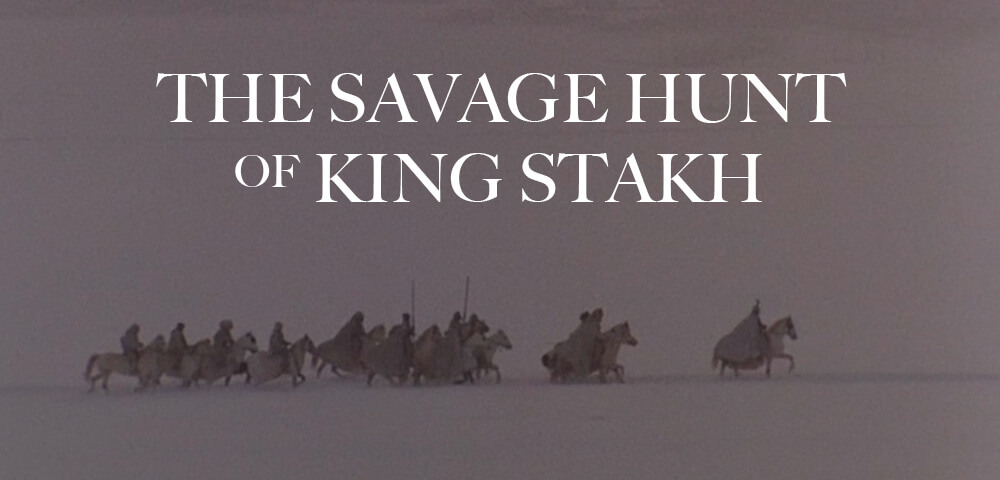
SAVAGE HUNT OF KING STAKH

THE SAVAGE HUNT OF KING STAKH
Dir. Valeri Rubinchik, 1980
Belarus. 134 min.

SUNDAY, JULY 6 – 5 PM 
MONDAY, JULY 14 – 7:30 PM 
WEDNESDAY, JULY 23 – 7:30 PM
THURSDAY, JULY 31 – 7:30 PM

BUY TICKETS

This is a horrible, damned house.

Welcome to Marsh Firs, the gothic mansion at the center of a bloody folktale that a young ethnographer has come to collect. Shortly after his arrival, the erudite skeptic finds himself an unwitting witness to the Wild Hunt, a trope common in Eastern European folklore, lead by the ghost of a vengeful nobleman killed at the mansion while there as a guest hundreds of years prior. But the Wild Hunt may be the least of his worries during his stay with the estate’s unstable mistress who unveils more about her family’s past and the menagerie of ghosts that haunt them.

A rare contribution to the horror genre from Soviet cinema, THE SAVAGE HUNT OF KING STAKH was recently restored by Deaf Crocodile in 2023. Leave your jump-scares at home and settle in for the horrors of paranoia and psychological torture.

 
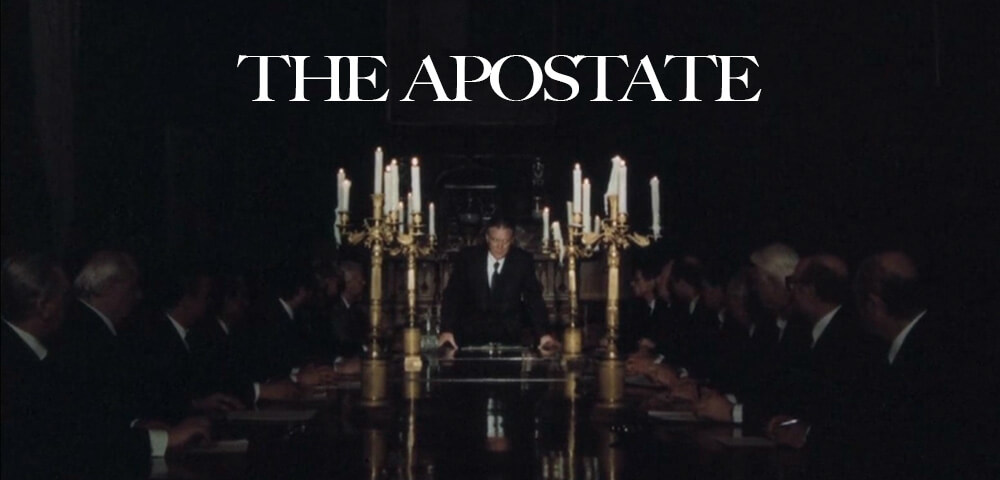
THE APOSTATE

THE APOSTATE
Dir. Valeri Rubinchik, 1987
Belarus. 163 min.

SUNDAY, JULY 6 – 7:00 PM 
THURSDAY, JULY 17 – 7:00 PM 
MONDAY, JULY 21 – 7:00 PM

BUY TICKETS

A scientist develops a method to clone living material. Before long, the government steps in to weaponize this discovery for their own gain. Five genetically identical presidents later, the implications of such technology have already spiraled out of control. Arguing with yourself, facing your own mortality, and questioning who you are have rarely been more literal.

It’s easy to see THE APOSTATE as a commentary on a country at odds with itself, a fracturing of identity, in the wake of the recent relaxations from perestroika two years prior. Rubinchik’s vision of the future isn’t exactly optimistic. A sense of doom, a mood suffused throughout Rubinchik’s late works, hangs over the film as earthquakes shake interiors, sea levels rise, and horse and carriages ride past imposing brutalist architecture.