
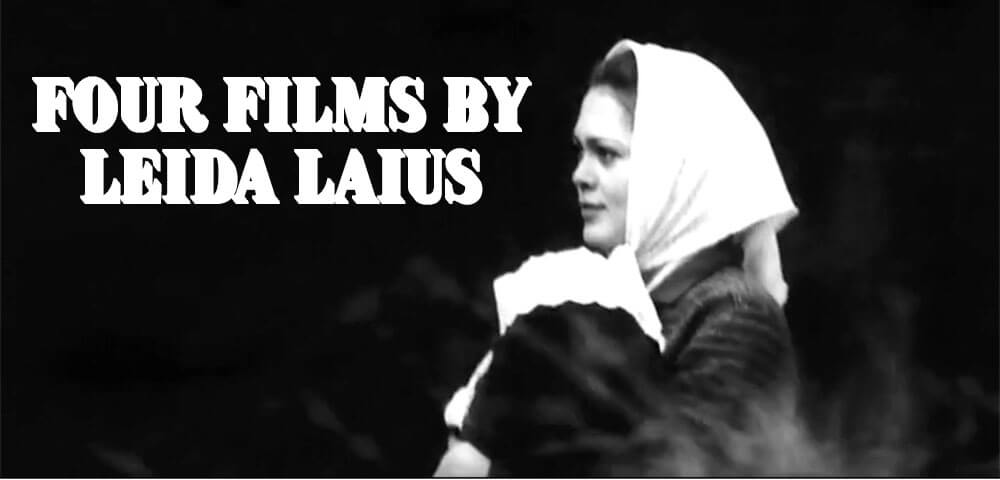
On the occasion of what would be her one hundred and third birthday, Spectacle is proud to present four recently restored films by Leida Laius, one of Estonia’s most renowned film directors. Laius’ cinema is propelled by stories of young, disaffected women. Laius’ richly textured, resilient women often face troubles in motherhood, poverty, friendship, and love. Seamlessly merging the personal and the political, Laius’ films exhibit her trust in both performer and audience to not flinch in the face of malaise.
Born near Saint Petersburg on March 26th, 1923, Laius volunteered for the Red Army during World War II. After the Soviet reoccupation of Estonia in 1944, Laius trained as an actress at the Estonian Theater Institute. She then graduated with a diploma in directing from the All-Union State Institute of Cinematography in Moscow in 1962. Although her long career has been widely celebrated in Estonia for decades–she was honored with the Lifetime Achievement Award by the Estonian Cultural Foundation in 1995, a year before her passing–Leida Laius’ films have flown under the radar in the United States for too long.
Special thanks to Triinu Keedus and the Estonian Film Institute.
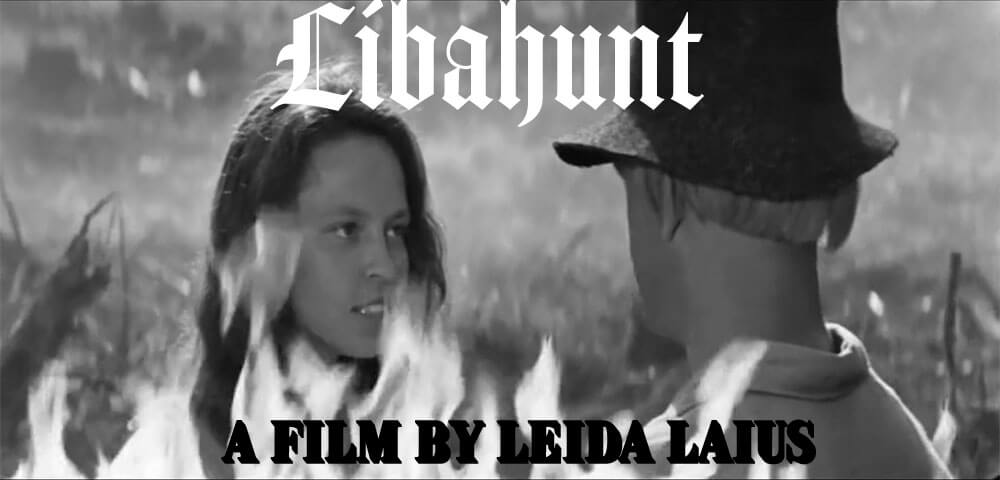
WEREWOLF
(LIBAHUNT)
Dir. Leida Laius, 1968
Estonia. 70 min.
Estonian with English subtitles.
SATURDAY, MARCH 7 – 3 PM
FRIDAY, MARCH 13 – MIDNIGHT
FRIDAY, MARCH 20 – 10 PM
TUESDAY, MARCH 30 – 10 PM
Based on the 1912 tragic play of the same name by August Kitzberg, LIBAHUNT follows the love triangle between Margus (Evald Hermaküla) and two stepsisters: The soft-spoken Mari (Malle Klassen), and the hot-blooded Tiina (Ene Rämmeld). Tiina’s mother was executed long ago for being a witch, and Tiina wears this stigma proudly. Margus’ parents want him to marry Mari, but he visibly prefers the freewheeling Tiina. Mari believes Tiina has cast a bewitching spell over Margus, so she spreads the vicious rumor that Tiina is a werewolf. This sparks a witch hunt with dire consequences.
Taking place in the southwestern Estonian countryside during the early 1800s, Leida Laius’ rare folk-horror gem is at once poetic, rapturous, dizzying, and frightening.
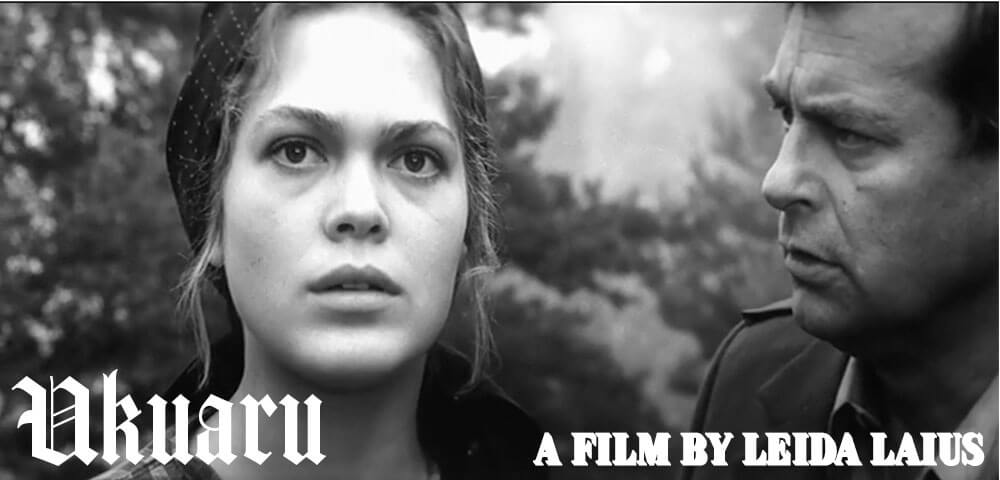
SPRING IN THE FOREST
(UKUARU)
Dir. Leida Laius, 1973
Estonia. 89 min.
Estonian with English subtitles.
WEDNESDAY, MARCH 4 – 7:30 PM
MONDAY, MARCH 9 – 10 PM
SATURDAY, MARCH 21 – 10 PM
TUESDAY, MARCH 24 – 10 PM
Based on the 1969 novel by the same name by Veera Saar, SPRING IN THE FOREST (UKUARU) follows Minna (Elle Kull), a tough working woman who refuses a marriage proposal by a wealthy man in favor of her boyfriend Aksel (Lembit Ulfsak), who has little to offer her apart from his love and his beloved accordion. Poverty doesn’t bother Minna, but when forces outside her village threaten her family, she is forced into action.
In addition to a strong lead performance by Kull, SPRING IN THE FOREST is notable for its playful score by Arvo Pärt. Aksel first enchants Minna with the “Ukuaru Waltz” on his accordion, a piece that repeats throughout the film as a life-affirming auditory motif. The song became widely popular in Estonia and has been rearranged many times.
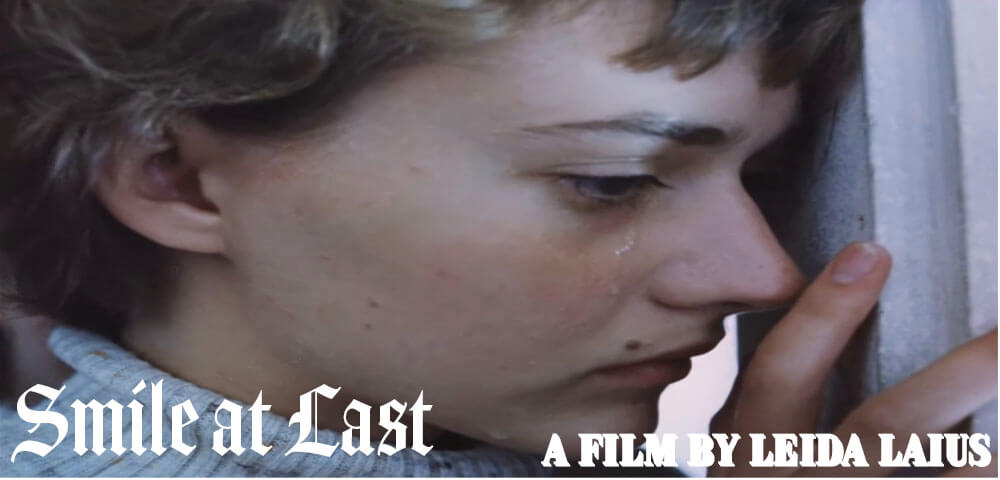
SMILE AT LAST
Dir. Leida Laius & Arvo Iho, 1985
Estonia/USSR. 86 min.
Estonian with English subtitles.
WEDNESDAY, MARCH 4 – 10 PM
SATURDAY, MARCH 14 – 5 PM
THURSDAY, MARCH 19 – 10 PM
TUESDAY, MARCH 24 – 7:30 PM
Sixteen-year-old Mari (Monika Raide, in her only film role) is a perceptive, sensitive young girl. She has been sent away to an orphanage by her widowed alcoholic father, and she vocally dissents against the cruel games of the other teenagers. However, the remote orphanage grants the kids as much freedom as it sequesters them away from society, and it becomes Mari’s home. It’s not exactly Neverland, but the kids stay up late to watch Charlie Chaplin films and rock out to Bob Dylan. Mari soon crushes on the bad boy Robi (Hendrik Toompere), causing a rift between her and other girls. “This was one of the first perestroika movies,” Raide remarked at a post-screening Q&A in Berlin in 2025, regarding the political context of the film. “It showed that no matter what, young people will always find ways to be together.”
Winner of the UNICEF prize at the Berlinale in 1987, SMILE AT LAST was filmed on-location with a cast of non-professional actors, achieving a unique authenticity. Co-directors Leida Laius and Arvo Iho intentionally shot the film as far from Moscow as possible, while remaining inside the borders of the Soviet Union, to avoid any authorities meddling in their rowdy, energetic vision of an environment with no adults in the room where the kids are allowed to make mistakes.
This restoration was supervised by Laius’ co-director, Arvo Iho.
A STOLEN MEETING
Dir. Leida Laius, 1988
Estonia. 102 min.
Estonian & Russian with English subtitles.
SATURDAY, MARCH 7 – 5 PM
TUESDAY, MARCH 10 – 7:30 PM
SUNDAY, MARCH 22 – 5 PM
MONDAY, MARCH 30 – 7:30 PM
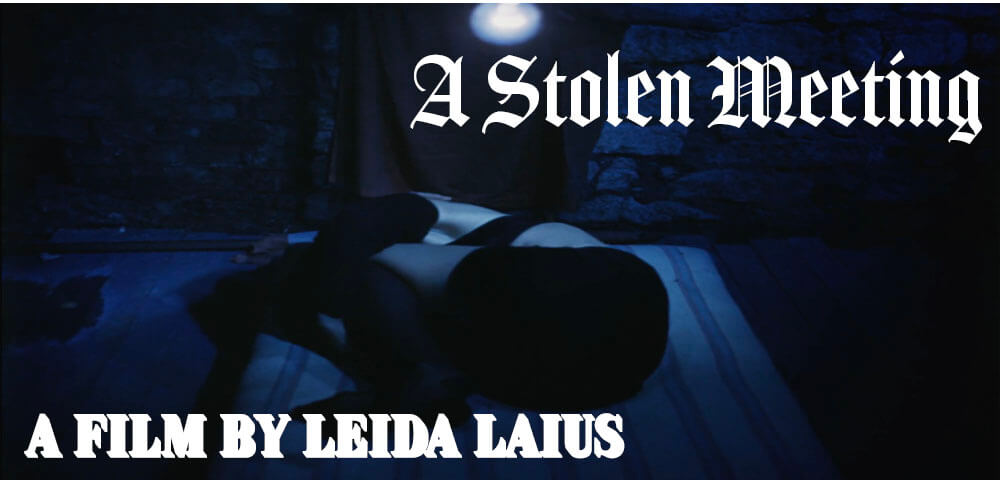
A STOLEN MEETING is best described as a bleak but empathetic indictment of self-dishonesty. Valentina (Maria Klenskaja) is a young mother. After her recent release from a Russian prison camp, Valentina returns to Estonia with a desperate determination to find her young son Jüri (Andreas Kangur), whom she had previously given up for adoption. Valentina loves Jüri, and is convinced that if only they were reunited, all would be right with her world. Valentina herself was raised in an orphanage, and blames all of her misfortunes on her tough upbringing. When Valentina finds Jüri living comfortably with a wealthy family in Tartu, she is faced with a difficult choice.
Leida Laius once described A STOLEN MEETING as a spiritual sequel to SMILE AT LAST. Whereas SMILE AT LAST finds a lively energy in the coming-of-age of an adolescent in less than ideal circumstances, A STOLEN MEETING takes a starker look at the other side of abandonment. A STOLEN MEETING–Leida Laius’ final film–won Best Feature Film at Venice’s Festival of Female Directors in 1990.