SUNDAY, JULY 27
LINKS TO BUY TICKETS BELOW
“I see one or two films a year—I don’t have the time.” – Will Hindle
The colorful, quirky style that is associated with the members of the West Coast experimental film scene has long been defined by the foundational work of Bruce Baillie, Robert Nelson, and Pat O’Neill. Despite being every bit as critical to that scene’s origins and their subversions of New Age aesthetics, the small body of work that Will Hindle (1929-87) left behind has frequently resulted in many of his 11 films being far more discussed than seen. The increasing rarity of prints in good condition has further contributed to a certain obscurity, despite praise from writers such as Amos Vogel and Gene Youngblood. Happily, the breadth and depth of his work has experienced something of a revival in appreciation, with Joshua Minsoo Kim of Tone Glow putting together the first complete retrospective of Hindle’s filmography, Unknown Nostalgia, at Chicago’s Sweet Void Cinema in December 2024.
Spectacle is proud to bring its own variation on the second-ever complete Hindle retrospective, functioning as both the first in New York City and the first opportunity to watch all 11 of his films in chronological order. This retrospective encompasses nearly 30 years of filmmaking, with all his films shown on 16mm prints and several being presented via the sole distributable prints in good condition. Gene Youngblood declared Hindle as possessing “an uncanny ability for transforming unstylized reality into unearthly poetic visions,” and “[an] ability to invest a technical device with emotional or metaphysical content [that] is truly impressive.” NYC audiences will now be able to appreciate the technical assurance and beauty behind these poetic visions.
Born in Shreveport, Louisiana and possessing a talent for drawings; Will Hindle served two terms in the U.S. Air Force during WWII and was given his own cartoon feature for the Stars & Stripes military newspaper during his service. This led to him becoming the youngest-ever animator at Walt Disney Animation Studios, before he transitioned to making hundreds of short interstitial programs for CBS/Westinghouse. He used this job to finance the majority of his personal cinema throughout the majority of his filmmaking career, having fallen into Bruce Baillie’s social circles and subsequently becoming increasingly convinced that any art motivated by commercial purposes was fundamentally corrupt and impersonal. He eventually moved down South again and became a teacher at the University of South Florida in 1972, resulting in him only completing two more films before a history of compounding health issues led to his premature passing at age 58, shortly after finally completing his final film Trekkerriff. Despite being gay, he had a long-time partnership of sorts with fellow filmmaker Shellie Fleming, who played a critical role in passing on his legacy to future generations via her subsequent work as a teacher at Chicago’s Art Institute.
Hindle’s technical range expanded over the course of his career (with the CBS work as a training ground), and he managed to innovate cost-saving methods that allowed him a greater degree of control, as detailed by Youngblood: “He shoots original scenes with wide-angle lenses, then ‘crops’ them by projecting and rephotographing this footage using a special single-frame projector. Thus extremely subtle effects are achieved that would be prohibitively expensive, if not impossible, if done through conventional laboratory optical printing.” His sensual and psychedelic visuals tended to involve homoeroticism and humor, he took the design of his countdown leader and title cards as seriously as the substance of the movies, and he remained committed to exclusively making sound films across his entire body of work. These films are best seen big and loud, and this is a chance to do just that from beginning to end.
Co-programmed by Andrew Reichel and Giovanni Santia. Special thanks to Joshua Minsoo Kim, Mark Toscano, and Canyon Cinema.

Program 1: Merci Pour La Musique
SUNDAY, JULY 27 – 5 PM
TICKETS FOR PROGRAM 1
Three of the first four Will Hindle films were a sort of unofficial trilogy centered on synchronizing classical music to images; early reflections of his lifelong interest in the cinematic union of image and sound, along with wanting to avoid overstatement of ideas. (“I don’t see why someone’s first film shouldn’t be a little jewel.”) While Pastorale d’été and Non Catholicam are relatively straightforward documentations, FFFTCM found Hindle seeming to discover the technical fluidity and seamless shapeshifter qualities that would characterize his subsequent films and their union with music. This newfound filmmaking facility was partially the result of the extensive workout he got while making the sprawling change of pace that was 29: Merci, Merci, a work of greater structural complexity that marks the first (but not last) deliberately funny Hindle film.
PASTORAL D’ÉTÉ
1958. United States.
9 min. 16mm.
Soundtrack by Arthur Honegger. Hindle’s first completed film, but not the first film he shot (see below).
“Pastorale d’été is one of the nation’s first works of the Personal Film movement. Hindle dovetails the lyrical images of a singular high summer’s day heat. A poignant first work. Initially used camera settings and lens operations. Evidences the mastery of editing to come.” – Canyon Cinema
“It’s as if he’s saying: Big or small, all this nature around you is suffused with humbling, uncomplicated beauty.” – Joshua Minsoo Kim
NON CATHOLICAM
1963. United States.
10 min. 16mm.
Soundtrack by Paul Hindemith. Cinematography assistance from Bruce Baillie.
“In 1958, Will Hindle shot, edited, and printed a film called Catholicam, which does not seem to have been circulated. He returned to this film in 1963, re-edited and augmented it with additional material, and released it as Non Catholicam.” – Mark Toscano
“Another granddaddy of the American Personal Film movement. Set to the music of Hindemith, filmed entirely in a Gothic cathedral and edited to precision counter-point. An almost somber beginning that rises to brilliant exaltation. As with Pastorale, extremely innovative for its day and even now. Entire film was an ‘optical print’ to retain light nuances.” – Canyon Cinema
29: MERCI, MERCI
1966. United States.
30 min. 16mm.
“A rude and abrupt departure from Hindle’s two early visual poems. Between those early works and MERCI, Hindle was sought to film the Winter Olympics, 150 short works for Westinghouse/CBS, and the South Sea voyages of Sterling Hayden’s schooner, ‘Wanderer.’ The inability to get on with his own work produced Merci. A poignant comment concerning the film artist’s dilemma. Aftermaths of Western Civilization. Including never-seen-elsewhere Nazi footage inserts.”-Canyon Cinema
“From a film called 29: Merci, Merci, rust and frustration came out. It was a somewhat crude film, with several layers, with a lot of hate, and it took four awards on the Ann Arbor Tour; then, I signed for a long one-year national tour.” – Will Hindle
FFFTCM
1967. United States.
5 min. 16mm.
AKA Fanfare for the Common Man. Music by Aaron Copland.
“Renewed income and the ability to work on one’s own produced this feeling and work. A Promethean awakening, de-bonding of the human spirit … reaching for the unfiltered blaze of Light and Life. The driving sounds of heart beat, fanfare for the Common Man and devotional chants. A time of sharing … a touch of vision in the night.” – Canyon Cinema
“FFFTCM arrived in mid-1967, and it was like a 180-degree turn. It was a film that bet violently on life… for being, for advancement, for the right to look for and get a job. It didn’t look like it was going to be distributed, but a review by Lenny Lipton helped and they bought it. More than one person has told me that they see it as an orgasmic movie. In his new book, R. Pike, from Creative Films, says it’s a movie about ‘male masturbation.’” – Will Hindle
TRT: 54 minutes
Program 2: Champion Filmer
SUNDAY, JULY 27 – 6:30 PM
TICKETS FOR PROGRAM 2
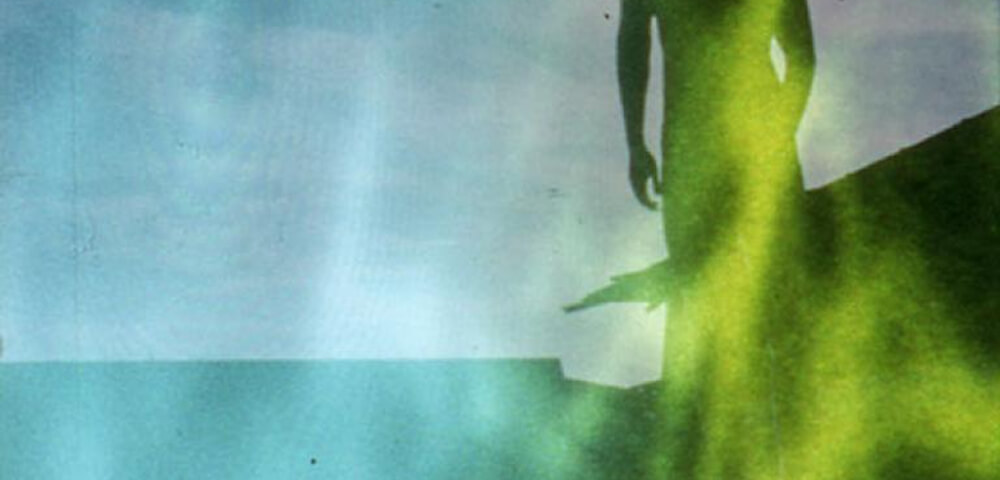
Around the same time as he brought out his once-gone Louisiana accent for the voiceover in Merci, Hindle also conceived his sound design for his breakout psychodrama Chinese Firedrill when he began rambling in a Hungarian accent to parody Jonas Mekas (who was reportedly offended). A self-portrait of Hindle’s frustrations at having to sort IBM cards and feeling creatively entrapped, it delves further into the recesses of his psyche than he’d ever gone. He followed it up with the brief ethereality of Billabong, which would go on to frequently be paired with FFFTCM and Watersmith as part of his studies in homoeroticism. Watersmith, the apex of Hindle’s technical abilities, would combine every visual trick in the book with musique concrete samples from Bach, Leni Riefenstahl’s Olympia, and Carmen Miranda. It’s an experimental film blockbuster, and it brought Hindle offers from Hollywood to show it as a pre-feature short…as long as he cut the film down to 15 minutes. (He declined.)
CHINESE FIREDRILL
1968. United States.
25 min. 16mm.
Cinematography assistance by John Luther Schofill.
“Hindle’s prize-laden work of cataclysmic visual and mental schisms stands as one-of-a-kind. Human universals crammed into a moment (infinity?) in one small enclosure (the universe?). The identifying viewer will judge.” – Canyon Cinema
“Many people appear in the movie (again, it’s like a first time), but very briefly, in the manner of memories or visions. The film focuses on the whirlpool of the room/cell/universe in which a Hungarian gypsy lives. And there is a disjunction. The editing will take the film even further. The Savage 1967.” – Will Hindle
BILLABONG
1968. United States.
9 min. 16mm.
“Winner of the main prize of the Oberhausen (Germany) International Film Festival, Billabong has gone on to even greater acclaim than its much-awarded predecessor. Now in collections and archives on three continents, Billabong … mates verité camera and violently creative and master editing … revealing the mood of youths contained by the government. On location in Oregon. Empathetic in the extreme.” – Canyon Cinema
“A remarkably intimate and at times palpably erotic study of boys in a Job Corps camp on the Oregon coast, Billabong is a sensuously humanist encounter with alienated youth, told in the filmmaker’s trademark undulating lap dissolves and scintillatingly grainy high contrasts. Loneliness and longing-for-elsewhere alternate with horseplay and horniness, and hijinks around urinals and pool tables culminate in an ecstatic moment of onanistic release.” – Chuck Stephens
WATERSMITH
1969. United States.
32 min. 16mm.
“Perhaps Hindle’s magnum opus to date. New York Times critic Vincent Canby calls Watersmith ‘beautiful abstract patterns of lines of energy. A kind of ode to physical grace.’ A deceptively ‘calm’ film requiring an equally calm audience and a superior soundtrack reproduction system, Watersmith weaves its lone visual threads closer and closer until the screen is awash with multiple levels of artistic achievement, technical supremacy, physical and mental demands and rewards … for the relaxed and receptive viewer. Not a flash and funk work. A film to be seen again and again.” – Canyon Cinema
“Watersmith is a mind movie. Hindle turns his film into a celebration of the freedom of bodies moving through water, the implacable grace of human forms freed from gravity. It ripples between reality and abstraction. There hasn’t been a movie quite like this since Leni Riefenstahl’s Olympia.” – Entertainment World
“‘I was photographing champion swimmers,’ Hindle said of the Olympic athletes he shot, ‘and I wanted to be a champion filmer.’” – Joshua Minsoo Kim
TRT: 66 minutes
Program 3: Things That Poison You
SUNDAY, JULY 27 – 8 PM
TICKETS FOR PROGRAM 3
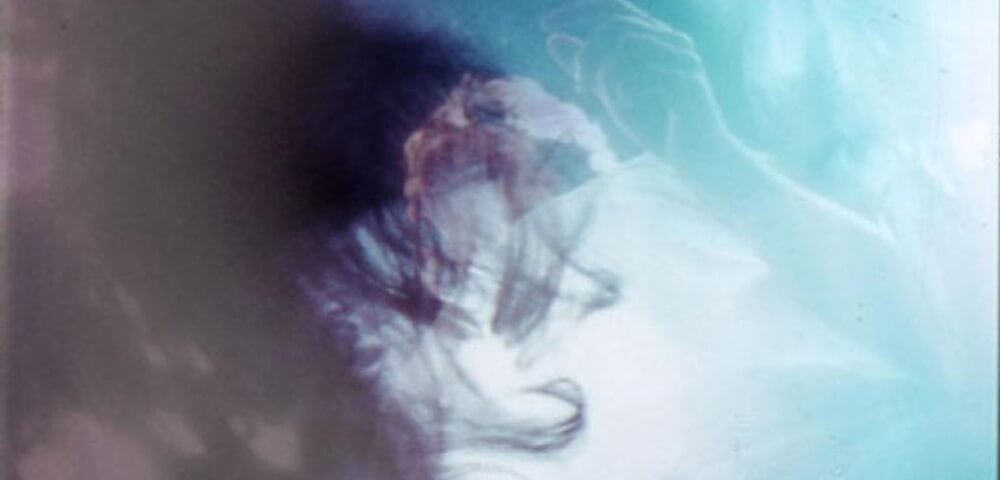
Hindle’s work began to take a darker turn in the 1970s. Saint Flournoy was conceived and filmed before the details of the Manson murders were known to the public, suggesting Hindle was more than a little sensitive to the sense of increasing tensions in the air, and the oddity of so many parties in a desert town. It also marked his farewell to California, after which he moved to Alabama (making Later That Same Night) and then Florida (where he made his final two films eleven years apart). Later That Same Night starts to signal a sense of displacement and solitude, but Pasteur³ is the film that finds Hindle telling the story of his life the only way he knew in a self-conscious finale: a return to his Louisiana roots via jokey French, a tour through his filmography, and a reckoning with both his surmounting health problems and the need to take care of his aging mother in spite of this (she’d live past age 100). He badly wanted to make more, but it took 11 years and many false starts to just barely finish Trekkerriff before passing away; a strange coda about highway roads that resembles no other Hindle film except via its quality as a self-portrait.
SAINT FLOURNOY LOBOS-LOGOS AND THE EASTERN EUROPE FETUS TAXING JAPAN BRIDES IN WEST COAST PLACES SUCKING ALABAMA AIR
1970. United States.
12 min. 16mm.
“Presaging details and intent of Charles Manson’s cult and actions was not meant to be one of this film’s greater attributes. It was, however, filmed uncannily months before the facts were known. The resemblance is oblique. The film: the mysticism of a ‘calling,’ a journey to be made, a vision in mid-desert to behold and oneness with it all. Filmed in Death Valley.” – Canyon Cinema
“The title of celebrated ’70s experimental-filmmaking mainstay and current cine-avant-garde Invisible Man Will Hindle’s Saint Flournoy Lobos-Logos and the Eastern Europe Fetus Taxing Japan Brides in West Coast Places Sucking Alabama Air (1970) is almost impossible to remember. The film itself—a gorgeously photographed, fluidly edited slice of fin de siècle ’60s love and dread, shot largely in Death Valley, and both of the Manson Family moment and altogether adrift in time—is impossible to forget. In it, a shirtless bearded dude in flour-sack yoga pants treks and stumbles barefoot through the white-hot desert, pausing occasionally to assume the lotus position and radiate silent “om”s into the shimmering heat—Gus Van Sant’s Gerry (2002) as one man show. Dude might be ‘Saint Flournoy Lobos-Logos’ (whoever that is), we’re never really sure. The ‘Eastern Europe Fetus’ shows up, “crawling” through a fiery mandala in some indeterminate space and looking like a cross between 2001: A Space Odyssey’s (1968) star child and one of those hideous little edible chocolate babies. There are lens flares and eclipse halos, dude’s supple movements mesmerizingly match cut and complexly lap-dissolved one into the next, and there are more dudes, and nudes, dancing on balconies to bongos and the tinkling of ice cubes in drink glasses echoing down through the canyon…then the orange slash of a shadow-play knife in the night.” – Chuck Stephens
LATER THAT SAME NIGHT
1971. United States.
10 min. 16mm.
“Hindle’s first all-southern-made work, filmed shortly after moving his studio from San Francisco to the lower Appalachians. Jackie Dicie sings the song in disruptive out-of-synchronization. It is Hindle’s first-water attempt to express the southern country mode of existence … the alone woman and the lonesome land.” – Canyon Cinema
“If Hindle didn’t know about the Manson murders when making Saint Flournoy, Later That Same Night (1970) functions as a sort of extended coda by feeling like the hangover from a party gone wrong. His first film made after he moved away from San Francisco to Alabama finds him in a lonely mood, with a woman (Jackie Dicie) singing ‘sometimes I feel like a motherless child’ on guitar in a way that keeps going wrong or out of sync. His preoccupations were beginning to take a turn for the darker despite the odd humor being retained.” – Andrew Reichel
PASTEUR³
1976. United States.
22 min. 16mm.
“What occurs to a bodily system following exposure to rabies and golden rod.“ – Canyon Cinema
“The film seemed to me the ultimate portrait of an immigrant, or the Displaced Person – displaced in nature, displaced on the continent. With this pun or metaphor that he makes, and despite all the artifice, it seems quite natural, it comes across as both funny and sad. … How odd it is to walk through this world and find there are things that poison you.” – Stan Brakhage
TREKKERRIFF
1987. United States.
9 min. 16mm.
“Following a move to Alabama at the dawn of the 1970s, Hindle made the wonderful and strange Pasteur³ (1976), which for most would seem to be his final film. For several years, continuing to live in the South and eventually teaching at the University of South Florida, Hindle made no films, and suffered for it. Film was a vitally powerful and emotional mode of expression for him, and his engagement with the medium was deeply felt and even instinctual.
In the early 1980s, thanks to the encouragement and support of Shellie Fleming, Hindle began work on a new film. It was a difficult and troubling process, and the creation of the film was drawn out over a long period of time as Hindle struggled to find its form. The edit wasfinally completed around 1985, but Hindle then threw out the entire soundtrack (a piece of composed music), deeming it inappropriate. Between 1985 and 1987, he created an entirely new soundtrack, finally completing the film in early 1987. It was a difficult labor, and although Hindle was still not utterly satisfied with the film, he decided to release it. He communicated his plan to Canyon Cinema to send the new film there for distribution in Spring of 1987, but the print never made it, as Will Hindle very suddenly and tragically passed away on April 7 of that year.
The film, Trekkerriff, remained in limbo for 24 years. The only people to have ever seen it were a few handfuls of Hindle’s and, later, Shellie Fleming’s students. Working from the only surviving print and Will’s original magnetic sound masters, the Academy Film Archive has restored the film.“ – Mark Toscano
TRT: 55 minutes