

Trilogía de la Revolución
(The Revolution Trilogy)
For all intents and purposes, Fernando de Fuentes is Mexican cinema. A pioneering studio filmmaker whose work includes one of the earliest examples of the ranchera comedy, as well as the seminal gothic horror film The Phantom of the Monastery, de Fuentes is a fountainhead of Mexican cinema. Not only did he inaugurate numerous popular genres at the domestic box office, but earned Mexico its first major international award at the Venice Film Festival in 1938, in addition to ushering in a national visual language that proliferated during the peak of Mexico’s Golden Age of Cinema.
Born in Veracruz in 1894, de Fuentes studied Philosophy at Tulane University and spent some time working at the Mexican Embassy in Washington, D.C. before returning to post-Revolution Mexico. In 1933, a mere decade after the end of the Mexican Revolution, he directed EL PRISIONERO 13, a satire so caustic its ending had to be re-edited after military authorities objected to its depiction of government corruption in the throes of Mexico’s long and bloody Revolutionary War. What followed were two more films, GODFATHER MENDOZA (1934) and LET’S GO WITH PANCHO VILLA! (1936), of equal ire and bite. His Revolution Trilogy, though controversial upon release, is now acknowledged as a cornerstone of classic Mexican cinema.
As Mexicans everywhere remember their nation’s Revolution this September 20, we’re proud to present de Fuentes’ landmark trilogy in New York City for the first time in 15 years.

EL PRISIONERO 13
(PRISONER 13)
dir. Fernando de Fuentes, 1933
México, 76 min
In Spanish with english subtitles
MONDAY, SEPTEMBER 1 – 7:30 PM
SATURDAY, SEPTEMBER 6 – 5 PM
TUESDAY, SEPTEMBER 16 – 7:30 PM
MONDAY, SEPTEMBER 22 – 10 PM
Fernando de Fuentes’s first installment in his Revolution Trilogy concerns a drunk colonel (Chilean actor Alfredo del Diestro, in one of several wonderfully agonizing roles for de Fuentes) who takes a bribe that ends up biting him in the back. At a lean 76 minutes, de Fuentes’s scathing parable about the price of corruption folds multiple moral dilemmas into a masterclass of melodrama. Del Diestra’s Colonel Carrasco, typifying the naked corruption that seized Mexico in the wake of its revolutionary fervor, provides the Mexican silver screen with one of its slimiest and most memorable characters. With its taut editing, chilling narrative, and distinctive performances, EL PRISIONERO 13 sets the bar high for a filmmaker whose career is full of precise and potent visual storytelling.

EL COMPADRE MENDOZA
(GODFATHER MENDOZA)
dir. Fernando de Fuentes, 1934
Mexico, 85 min
In Spanish with english subtitles
WEDNESDAY, SEPTEMBER 3 – 7:30 PM
SUNDAY, SEPTEMBER 7 – 7:30 PM
WEDNESDAY, SEPTEMBER 17 – 7:30 PM
TUESDAY, SEPTEMBER 23 – 10 PM
The second installment in Fernando de Fuentes’s Revolution Trilogy revolves around Rosalio Mendoza (Alfredo del Diestro, in a weary-eyed performance), a rich landowner whose estate serves both Zapatista revolutionaries and Huertista army men. A rich parable about Janus-faced desperation, EL COMPADRE MENDOZA sees Fuentes double down on his critique of government corruption. The country setting also lets him build upon his cinematic technique, making ample use of landscapes and crowds, as well as optical effects and music, to heighten the drama on the screen.
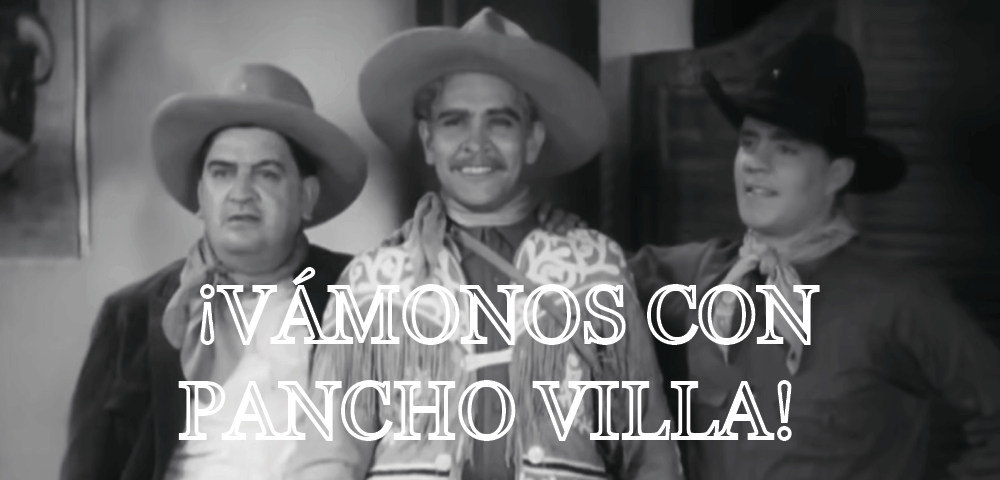
¡VÁMONOS CON PANCHO VILLA!
(LET’S GO WITH PANCHO VILLA!)
dir. Fernando de Fuentes, 1936
Mexico, 92 min
In Spanish with english subtitles
THURSDAY, SEPTEMBER 4 – 7:30 PM
MONDAY, SEPTEMBER 8 – 7:30 PM
FRIDAY, SEPTEMBER 19 – 5 PM
WEDNESDAY, SEPTEMBER 24 – 10 PM
The last chapter in Fernando de Fuentes’s Revolution Trilogy follows the “Lions of San Pablo,” six brave men who join Pancho Villa’s Army. Where Fuentes’ previous two films focus on the rotten rituals of Mexico’s old guard (its government functionaries and rich landowners), ¡VÁMONOS CON PANCHO VILLA! skewers the false promises of its revolutionary class. An early epic of Mexican cinema, de Fuentes’s film shows the Revolution as it was, as no more and no less than a bloody conflict.
Special thanks to ACERVO-FILMOTECA UNAM.