Her father dies… her fiance dumps her… and she can’t find a job… so she covers the waterfront. And then one night…
French writer Guy de Maupassant’s short story “The Port” first landed on the Mexican silver-screen in 1934, courtesy of Russian exile Arkady Boytler and his directing buddy Raphael J. Sevilla. This classic tale of twisted faith has since been adapted thrice over — although, we’ll leave Luis Quintanilla’s TV-adaptation for another summer — and become a cornerstone of Mexican cinema, its tale of mixed identities reflecting the status of a nation confused about its own.
Now heralded as a classic of Latin American cinema, Boytler and Sevilla’s grim and pointed THE WOMAN OF THE PORT (1934) sets the standard high for all future filmmakers looking to adapt this powerful short story. Set in the docks of Veracruz, THE WOMAN OF THE PORT follows a woman frowned upon by fate, forced into squalor, and made to make a name for herself in infamy. In 1949, Emilio Gómez Muriel tried his hand at the story with an adaptation starring rumbera Maria Antonieta Pons. This version of THE WOMAN OF THE PORT (1949) flips the chronology of the first on its head, setting up a narrative parabola that moves from grime to good to ghastly. It’d take about 40 years for another filmmaker to throw his name in the hat and in 1991, former Luis Buñuel assistant director Arturo Ripstein put forth his own spin on the story: a Rashomon–style vision of despair anchored in a quartet of wonderful performances.
Content warning: These films contain depictions of physical violence, sexual assault, and self-harm.

La mujer del puerto
(The Woman of the Port)
dir. Arkady Boytler & Raphael J. Sevilla, 1934
In Spanish with english subtitles
MONDAY, AUGUST 4 – 7:30 PM
FRIDAY, AUGUST 29 – 5 PM
GET TICKETS!
Arkady Boytler and Raphael J. Sevilla’s THE WOMAN OF THE PORT harbors a curious convergence of artistic currents. Boytler, a former star of the Russian screen who was friendly with Sergei Eisenstein, brought with him a flair for melodrama that gelled perfectly with the wild expressionism of Mexican cinema in the ’30s. What the screen offers is a noir cast in lovelessness, anticipating the grandiose melodramas that further defined Mexico’s Golden Age of Cinema soon after. Bleak, but beautiful, Boytler and Sevilla’s film prefaces an entire history of Mexican cinema; in its shadows, a permeable and unspoken solemnity; in its faces, a bubbling of emotion; in its music, a sad and truthful history.
La mujer del puerto
(The Woman of the Port)
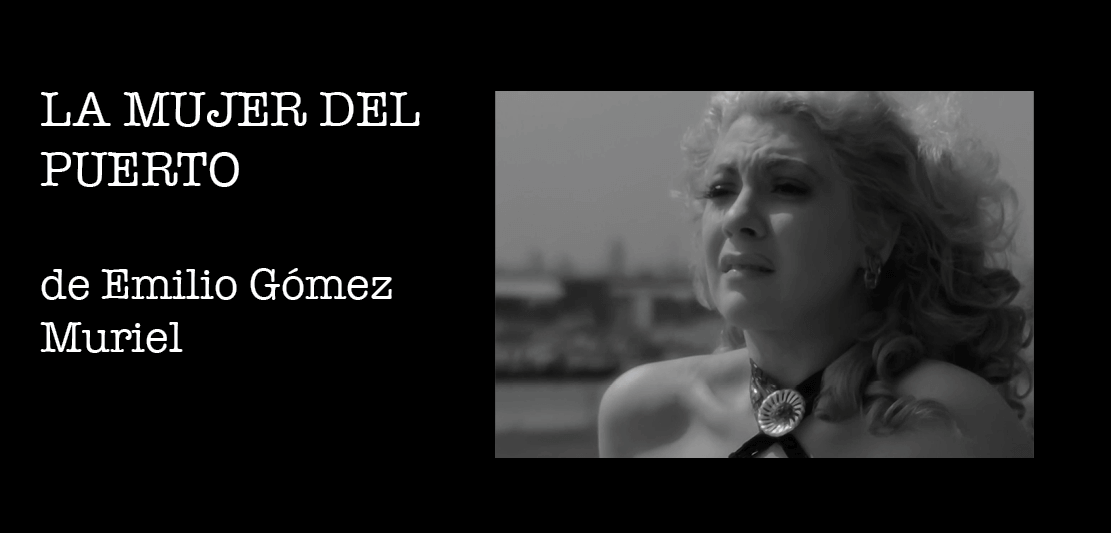
dir. Emilio Gómez Muriel, 1949
In Spanish with english subtitles
THURSDAY, AUGUST 7 – 7:30 PM
GET TICKETS!
Best known for co-directing the landmark REDES (1936) — about a fishermens’ revolt — with Fred Zinnemann, Emilio Gómez Muriel was a prolific studio director whose career started in the late ’30s and ran up until the ’70s. He directed everything from social realist dramas to swashbucklers and Blue Demon wrestling flicks, working with starlets like María Felix, Miroslava, and Maria Antonieta Pons. It’s the latter that takes on the role of the titular Woman, a night dancer and crooner who has developed a propensity for alcohol in light of the darts destiny has thrown her.
Get tickets!
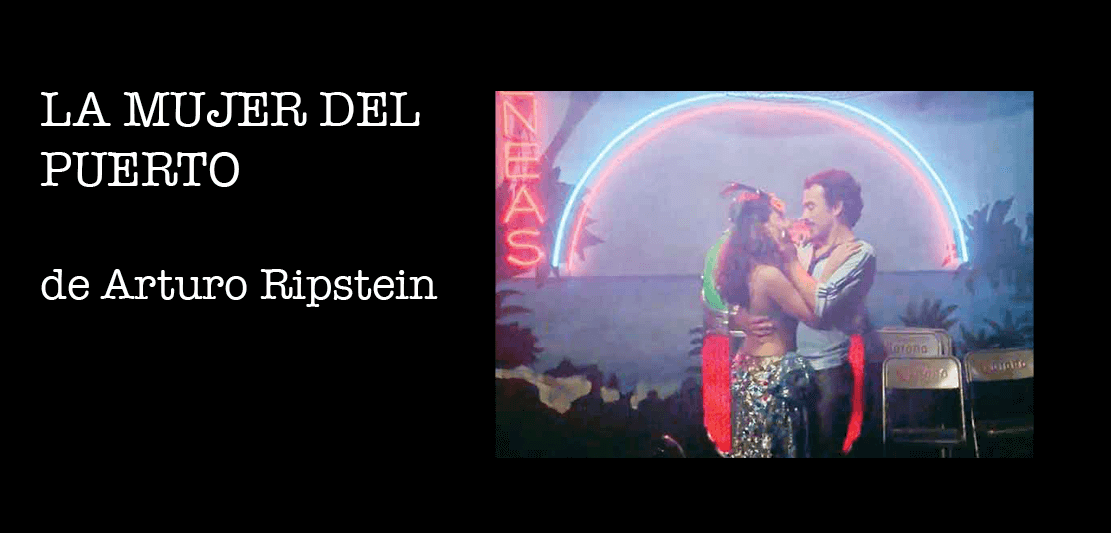
Leave it to Arturo Ripstein, enfant terrible of Mexican cinema for fifty years and counting, to make one of its most tawdry tales even more depraved. Split into four chapters, each chronicling the film’s doomed romance from a different perspective, Ripstein’s THE WOMAN OF THE PORT extends his source material’s central wickedness to its extreme, as though taunting viewers with an embodied vision of the Mexico they fear from morbid and shocking news reports worldwide. An incendiary film, as only Ripstein can make them, this most recent adaptation of Mexican cinema’s most intriguing and unpleasant myth foreshadows the squalor Ripstein would continue to burrow himself as a filmmaker while making an opus of what was once a simple expat’s attempt at adapting de Maupassant.
Special thanks to ACERVO-FILMOTECA UNAM, Alebrije Cine y Video, Jesse Trussell, Mónica Lozano, Chloe Roddick, and IMCINE.